High-volume checkout
A grocery POS built for scanning speed and long baskets
A grocery POS is a checkout built for long baskets and busy lanes. RapidCents Grocery POS keeps scanning speed up through a full basket, prices produce and deli items by weight, runs several lanes from a shared catalogue and shared permissions, and prompts the cashier where an age or restricted-item check is required. At day end, lane totals reconcile against deposits, so cash and card totals on a heavy transaction count can be checked quickly.
- Built for long baskets
- Weighed and priced items
- High-volume day end

- PCI DSS Level 1
- SOC 2 Type II
- Canadian support
- Interchange-plus available
- All major card brands: Visa, Mastercard, Amex, Interac debit
Who it's for
Independent grocers
Full-basket checkout without enterprise complexity.
Supermarkets
Multiple lanes and heavy transaction counts.
Specialty food retail
Weighed and prepared items alongside packaged goods.
Core capabilities
High-speed scanning
Keep lanes moving through long baskets.
Weighed items
Handle produce and deli items priced by weight.
Multi-lane operation
Run several lanes with shared configuration.
Age and restricted items
Prompt staff where a check is required.
Volume reporting
Reconcile high transaction counts against deposits.
How it works
Load the catalogue including weighed items.
Configure lanes and staff permissions.
Cashiers scan and weigh at checkout.
Restricted items prompt the required check.
Day end reconciles lane totals against deposits.
Dashboard and reporting
Transactions, deposits and exceptions visible in the RapidCents merchant dashboard.
Try it, edit values and click buttons
Merchant dashboard
- Today
- $4,218
- Deposits
- $12,482
- Disputes
- 2 open
- In-person
- $842
- Online
- $1,104
- Virtual terminal
- $392
Demonstration data only
Integrations
Merchant dashboard
Every transaction, deposit and exception lands in one dashboard.
APIs and webhooks
Connect the product to your own software with REST APIs and signed webhooks.
Partner connectors
Certified connectors for common POS, ERP and commerce platforms.
Works with Grocery & Supermarket POS
Capabilities on the same account, so the parts below connect without a second integration or a second contract.
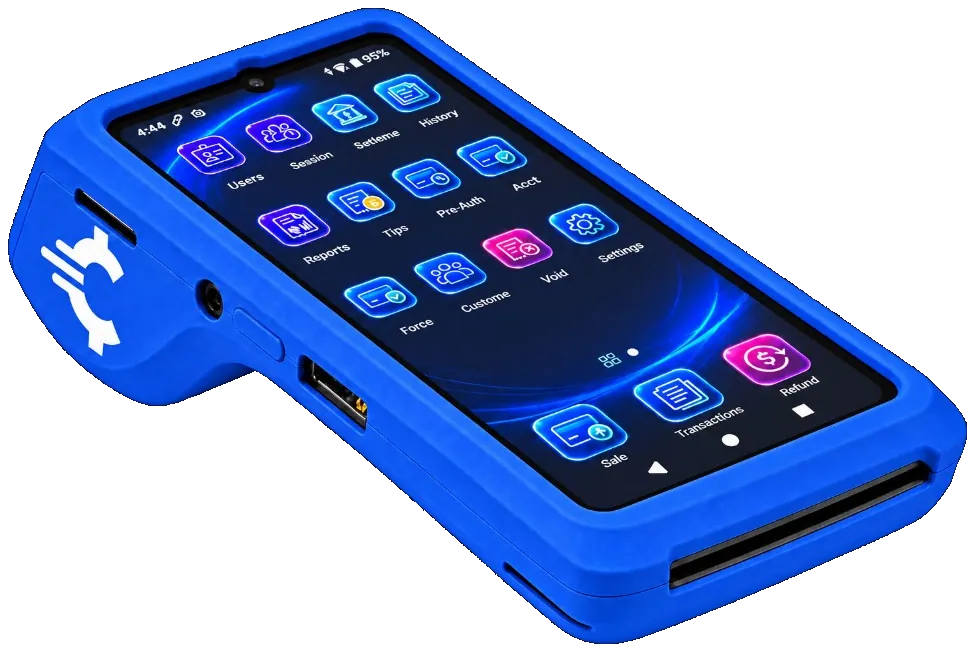
The RapidCents Rivo Go on a counter, the flagship of the Rivo line of countertop, mobile and compact card terminals. Payment terminals
Countertop, mobile and smart terminals for tap, chip and swipe at the counter.
Explore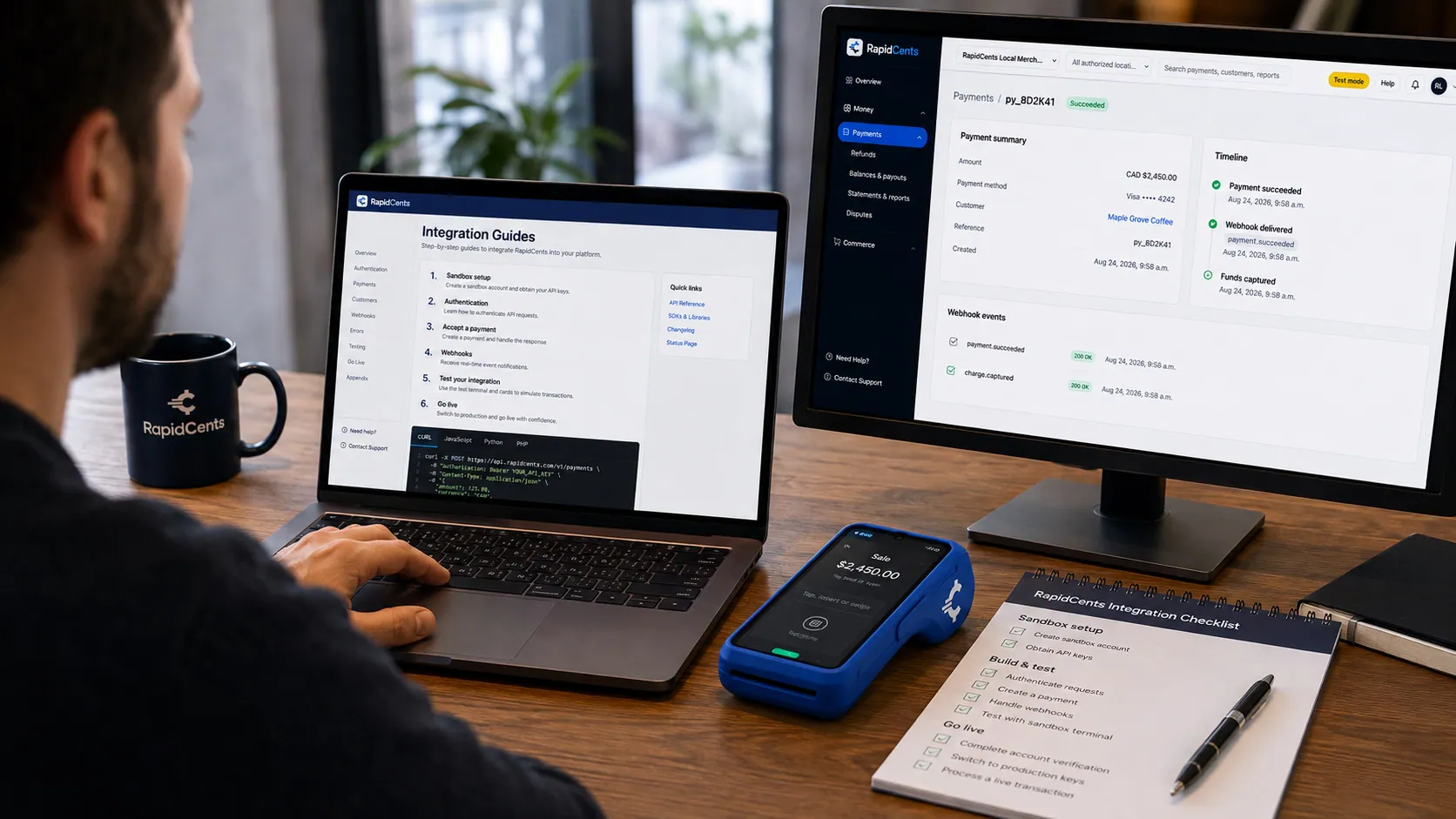
APPIE interoperability on a RapidCents desk: a terminal and host path that can work across processor boundaries. APPIE
The interoperability layer that lets existing point-of-sale software drive RapidCents hardware.
Explore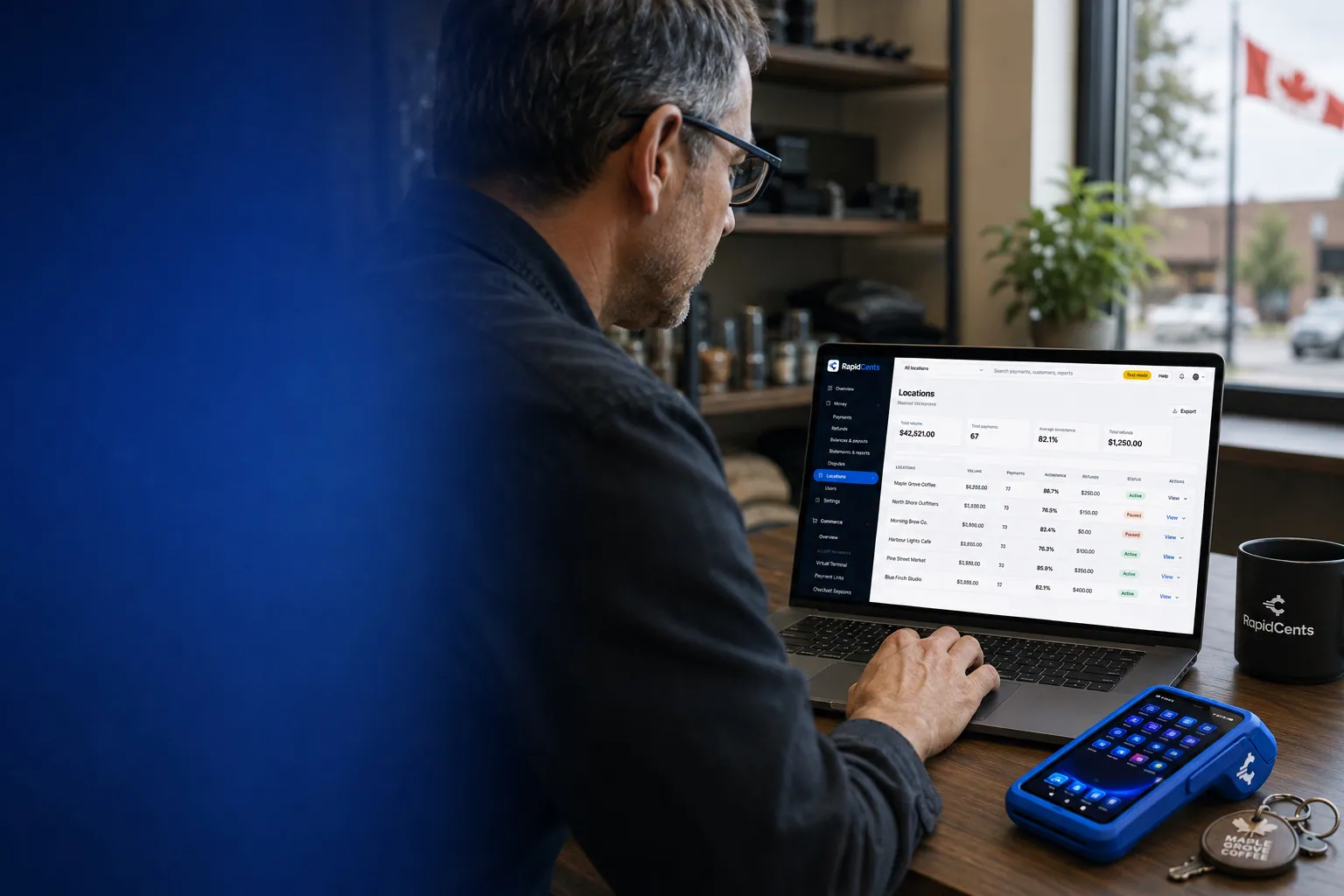
One RapidCents account comparing sales across locations, with a terminal representing the store-level capture. Multi-location
Per-site reporting and permissions under one merchant account.
Explore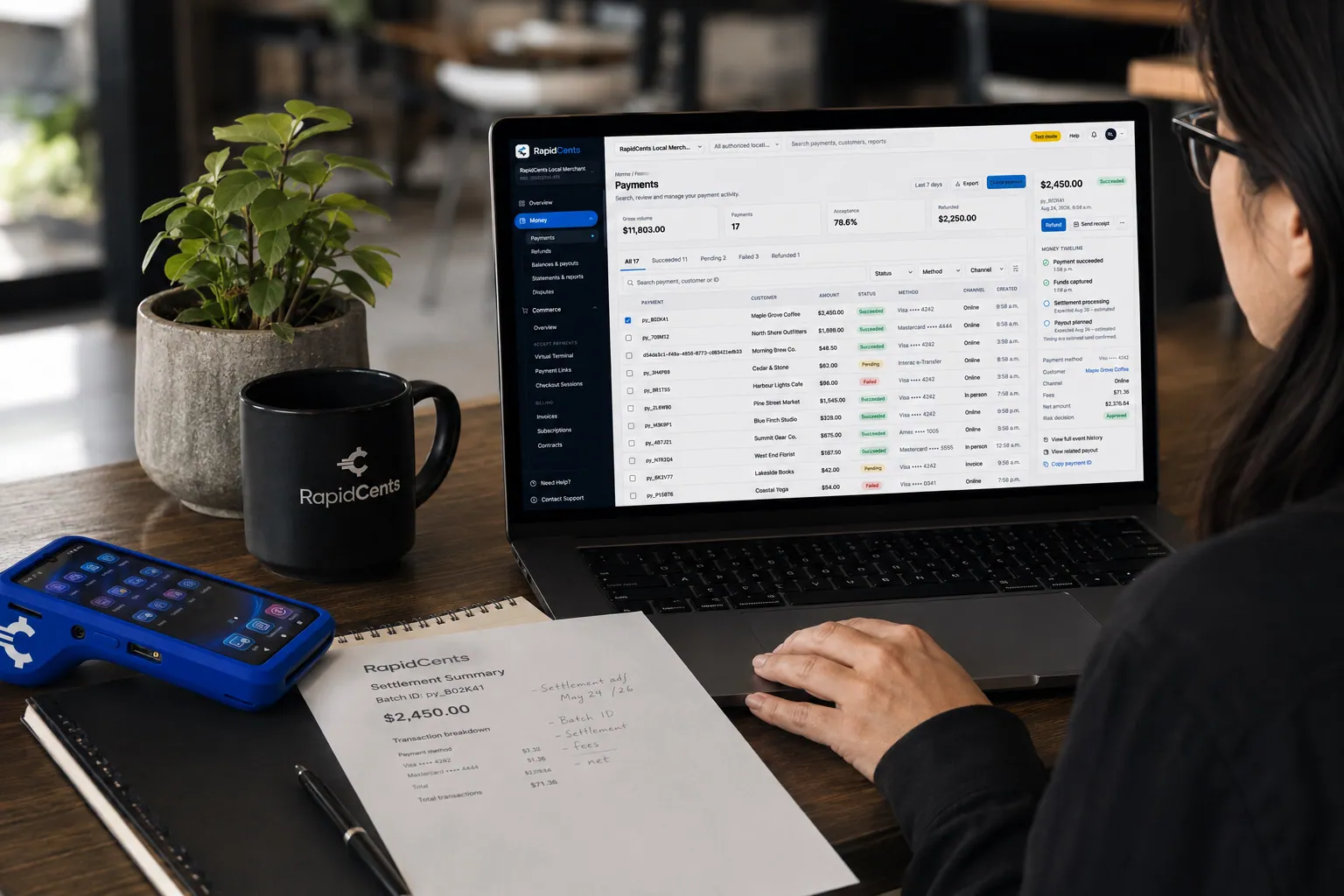
A merchant reviews RapidCents reports for volume, mix and payouts, with the terminal that took the sales on the desk. Reporting and reconciliation
Deposit-level detail that ties settlements back to the transactions behind them.
Explore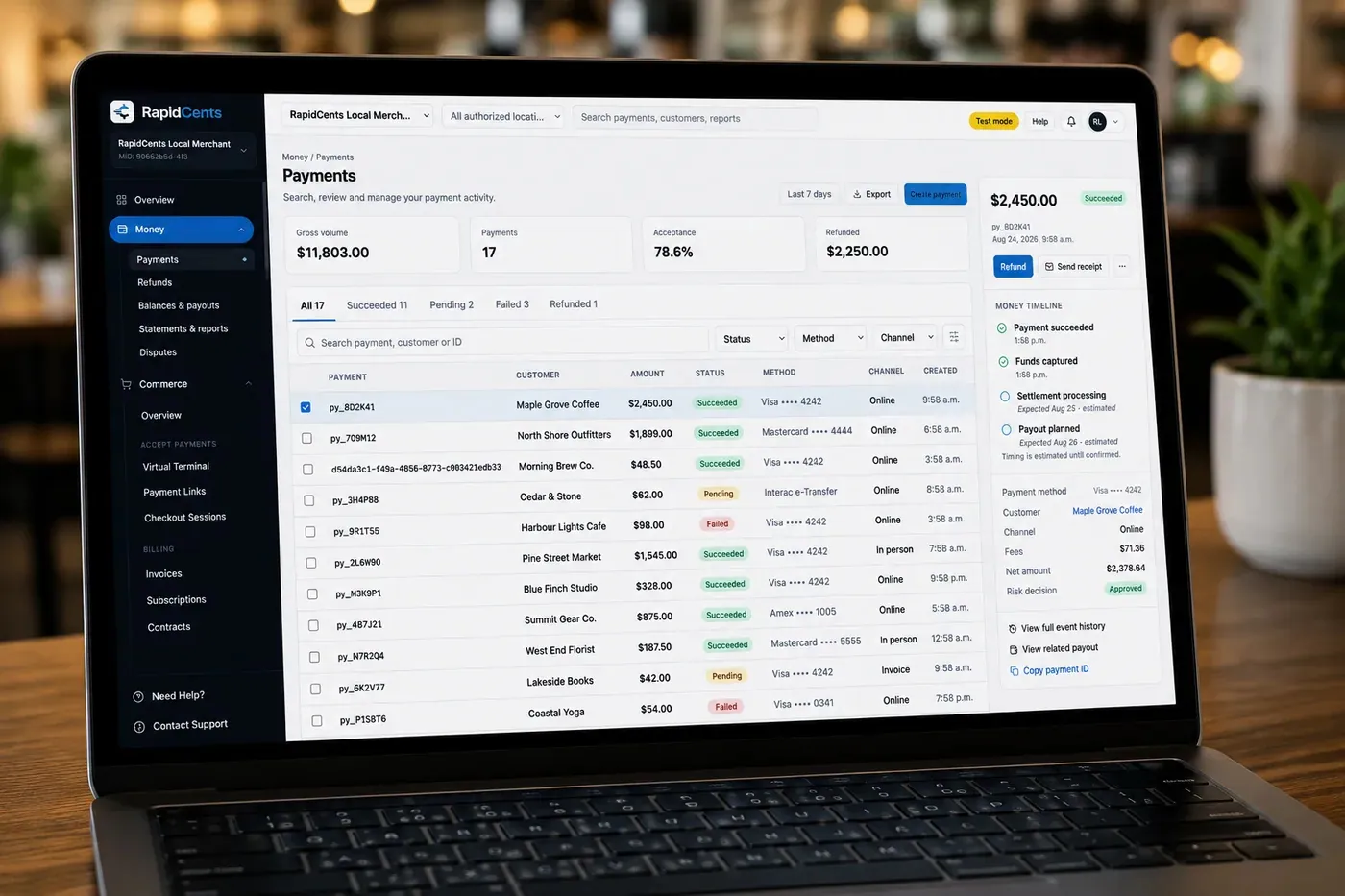
The RapidCents payments screen: gross volume, payment count, acceptance rate and refunds across the top, a filterable transaction list below, and a money timeline on the right tracing one payment from capture to planned payout. Merchant dashboard
Transactions, deposits, refunds and disputes across every channel in one place.
Explore


Security
PCI DSS Level 1
Processing runs on PCI DSS Level 1 audited infrastructure.
Tokenization
Card data is replaced with tokens, keeping raw credentials out of your systems.
Role-based access
Permissions and audit trails control who can see and do what.
Implementation
Discovery
A Canadian specialist reviews how your business gets paid today.
Configuration
Accounts, users and settings are prepared before you go live.
Testing
Run test transactions and confirm reporting before cutover.
Launch and support
Go live with training materials and post-launch support.
Pricing
Transparent pricing
Pricing depends on volume, card mix and configuration. Fee Check compares your current statement before you commit to anything.
Questions about Grocery & Supermarket POS
Does it handle items priced by weight?
Yes, produce and deli items can be weighed and priced at the lane.
Can I run multiple lanes?
Yes, with shared catalogue and permissions across lanes.
How does day end work at high volume?
Lane totals reconcile against deposits so cash and card totals can be checked quickly.
Are restricted items supported?
Yes, the lane prompts staff where a check is required before completing the sale.
What does each lane need in hardware?
Every lane needs a RapidCents payment terminal, and the lane software handles weighed items and the restricted-item prompt. The scanning and weighing equipment on the counter is confirmed with your advisor against the lane you already run.
How is Grocery POS different from Retail POS?
Retail POS is built for a counter with item and variant inventory. Grocery POS is built for volume: weighed produce and deli, several lanes on one shared catalogue and permission set, restricted-item prompts, and a day end that reconciles high transaction counts.
Can it connect to the back-office system we already use?
Yes. REST APIs and signed webhooks expose sales and deposits to your own systems, and certified connectors exist for common POS, ERP and commerce platforms, so the catalogue and the numbers do not have to be kept twice.
How is a multi-lane setup priced?
Hardware is quoted per lane and can be owned or rented; processing is quoted on the account, interchange-plus or bundled. Grocery card mix leans heavily on debit, which is exactly the sort of detail Fee Check reads off your current statement before you commit.
Related products
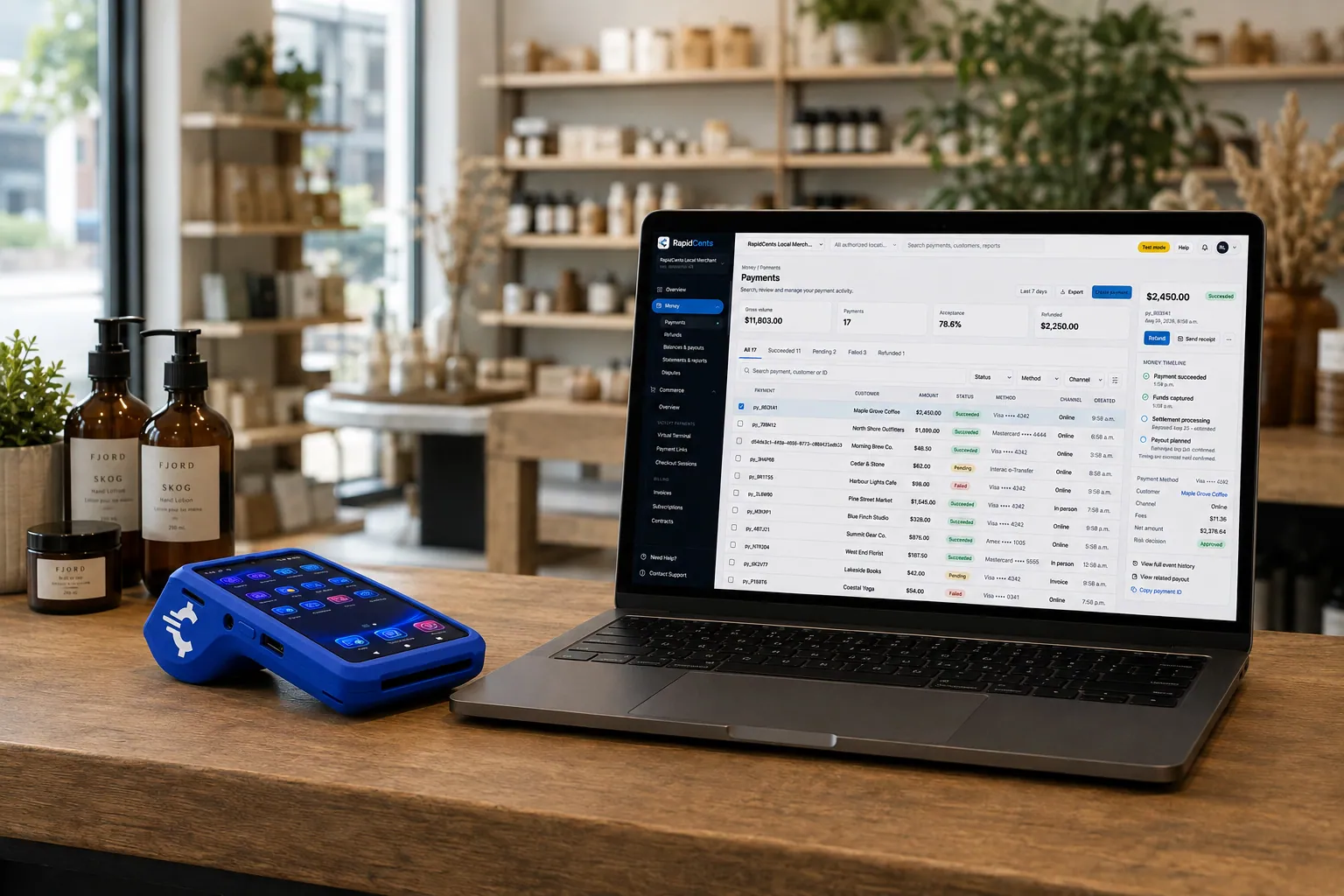
A retail counter ringing a basket on RapidCents POS, terminal taking the card and the dashboard showing the sale. Retail POS
Fast checkout, inventory that reflects what is on the shelf, and reporting that connects in-store…
Explore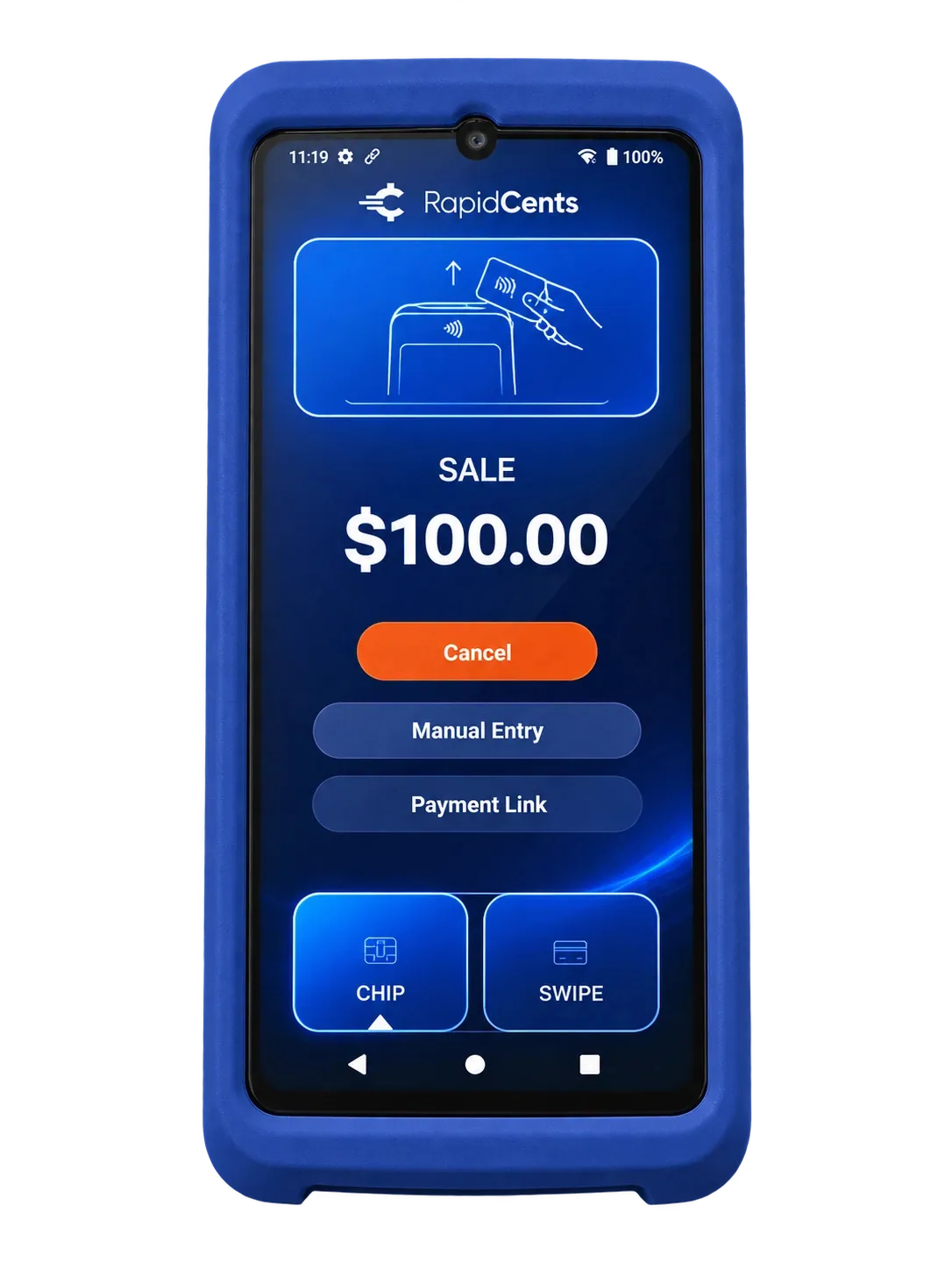
The RapidCents Rivo Go standing upright in its blue silicone case, showing the full-touch sale screen a customer reads across the counter. Payment Terminals
RapidCents payment terminals cover countertop, mobile and smart form factors so you can accept…
ExploreOne RapidCents account comparing sales across locations, with a terminal representing the store-level capture. Multi-Location
RapidCents multi-location tools organize stores, franchises and regions in a hierarchy with…
Explore


Take the next step
Talk to a RapidCents specialist
RapidCents Fee Check reads a processing statement and shows interchange separately from the markup. Upload a statement for an instant breakdown, or open a merchant account and start accepting payments on one account.
- No obligation
- Canadian payment specialists
- Secure statement upload