COMPANY
Partners
RapidCents runs partner programs that differ by how much of the payment experience the partner owns. In a referral arrangement the partner introduces the business and RapidCents handles underwriting, pricing, onboarding, hardware and support. Software and ISV partners present the payment inside their own product through hosted fields or hosted checkout and share revenue on processed volume. Technology partners certify a device, POS or connector against the RapidCents stack. Every program settles the integration path, the commercial terms and the support boundary before launch.
- Referral partners
- Software and ISV partners
- Technology partners
- Platform and marketplace models
Try it, edit values and click buttons
API request
POST /v1/payments
{
  "amount": 24900,
  "currency": "CAD",
  "capture": true,
  "metadata": { "order_id": "4821" }
}Response
Click "Send request" to see the API response
Processing payment…
201 Created
{ "id": "pay_7xK2m", "status": "approved", "amount": 24900 }
Demonstration data only
In detail
Referral partners
Introduce merchants and RapidCents handles onboarding, pricing and support from there. Nothing to build, and the introduction is recorded so attribution is not a conversation months later.
Software and ISV partners
Embed payments in your product using the APIs, with revenue share on processed volume. Hosted fields keep card entry out of your servers, so adding payments does not drag your application into PCI scope.
Technology partners
Hardware, POS and platform vendors certifying integrations against the RapidCents stack, with a test plan that covers the transaction states that actually break: tip adjust, partial refund, void, batch close and timeout.
Platform and marketplace models
Where a partner onboards sub-merchants, connected accounts, platform fees and split payouts apply, and KYC collection sits with RapidCents while the partner’s application controls the interface.
Revenue share on processed volume
Payment revenue is a function of what flows through the integration, which is why the commercial conversation and the integration design belong in the same meeting rather than in sequence.
Support boundary set before launch
Who a merchant calls first, what the partner handles in their own product, and what routes to RapidCents. Deciding this before go-live is the difference between a partnership and a shared inbox.
Related pages
Software & ISV partners
More on how RapidCents handles this.
ExploreReferral partners
More on how RapidCents handles this.
ExploreTechnology partners
More on how RapidCents handles this.
ExploreEnterprise partnerships
Custom payment and infrastructure agreements for larger organizations.
ExplorePartner portal
Referral tracking, marketing material and integration resources.
Explore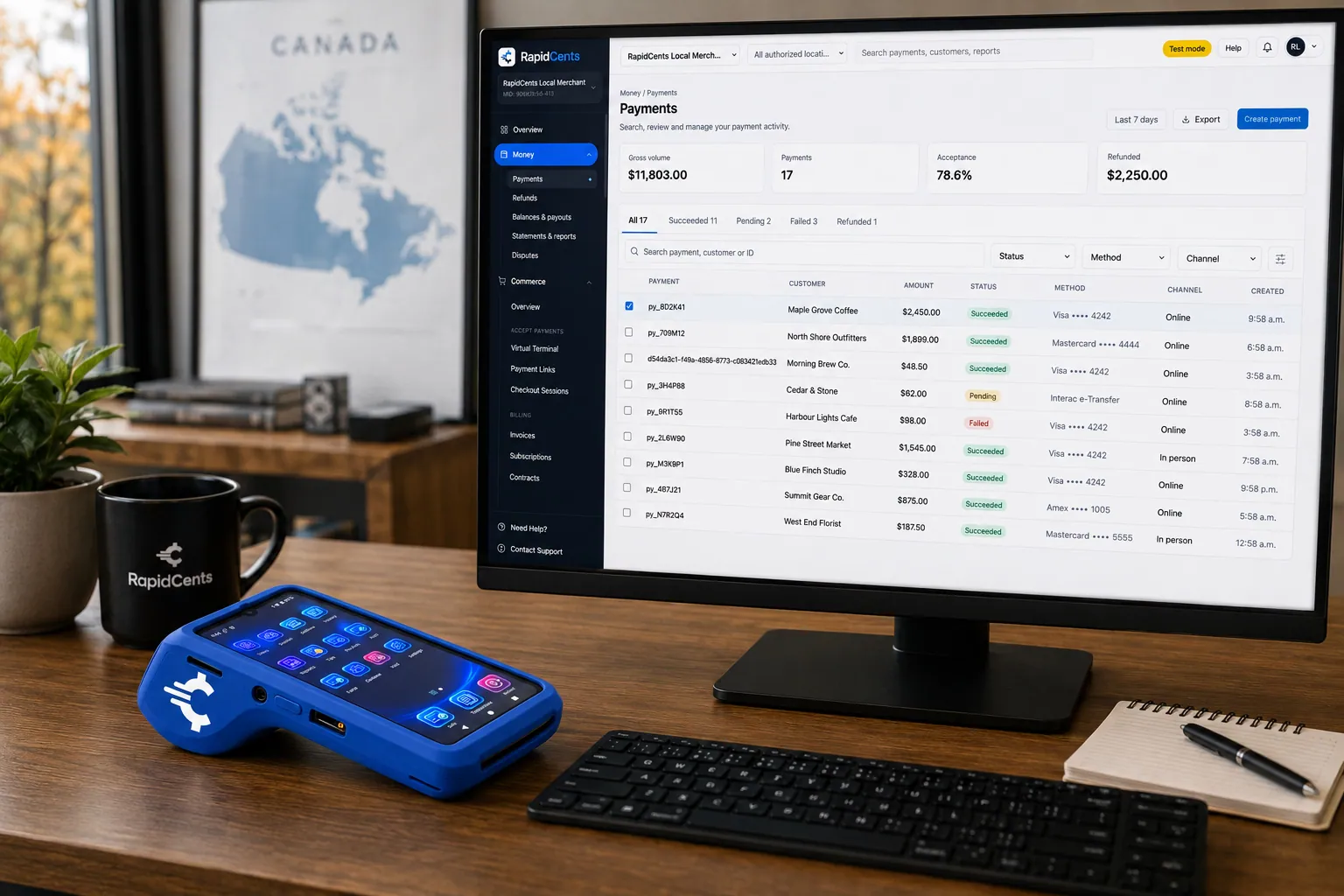
A software platform routes connected-merchant payments through RapidCents, with terminals and settlement in one view. Platform payments
More on how RapidCents handles this.
Explore
Card fields hosted by RapidCents sit inside a merchant checkout, with a terminal and the payments dashboard beside them. Embedded payments
Drop-in components that keep checkout inside your own interface.
ExploreDeveloper platform
APIs, webhooks, sandbox and test cards for the integration path.
Explore


Questions about Partners
How is a partner actually paid?
Referral partners are paid for the merchants they introduce who go live and process. Software and ISV partners share revenue on the volume their integration produces. The rate and the payment schedule sit in the partner agreement rather than on a public page, because they follow the program, the volume and how much of support the partner carries.
Does adding payments drag my software into PCI scope?
It does not have to. Rapid.js hosted fields and hosted checkout post the card from the customer’s browser to RapidCents, so a full card number never reaches your servers, logs or database. Where your own systems do touch card data, your own validation grows to match — which is why the integration surface is worth settling before the build starts.
Can a merchant keep the point of sale they already run?
Often. Certified plugins and connectors cover common platforms so a merchant installs rather than commissions an integration, RapidBridge brings payments to software that was not built for them, and APPIE lets existing point-of-sale software drive RapidCents hardware. Which applies depends on whether the constraint is the software, the hardware or both.
What does a partner get access to?
The partner portal carries referral tracking, current descriptions of what RapidCents does for use in your own material, and the route into the developer platform: documentation, sandbox, test cards and the webhook reference. What is visible depends on the program, since a referral partner and an ISV need almost nothing in common.
Can a merchant we introduce start their security review before signing?
Yes, and that is the point of publishing the material. Evidence about the PCI DSS Level 1 processing environment, the subprocessor categories with what each is engaged to do and can reach, data processing terms, the accessibility statement and the vulnerability disclosure route are all published pages, so a procurement or security review can begin before a call is booked. Section 9 of the subprocessors page publishes the register naming each provider it evidences, and sets out the route for obtaining the current full list.
What happens to a referral if the merchant takes months to decide?
The introduction is recorded when it is made, so attribution does not depend on who remembers what six months later. If the business has already been in contact with RapidCents, say so at the start rather than after the account opens — it is a much shorter conversation at that end.
Take the next step
Talk to a RapidCents specialist
RapidCents Fee Check reads a processing statement and shows interchange separately from the markup. Upload a statement for an instant breakdown, or open a merchant account and start accepting payments on one account.
- No obligation
- Canadian payment specialists
- Secure statement upload