Ecommerce payment gateway, hosted checkout and subscriptions in Canada
An online store is judged on the checkout: every extra field costs conversions, and loose rules invite card testing. RapidCents runs that checkout as a hosted page or through the payment gateway on your own domain, adds recurring payments for subscribe-and-save orders, and handles disputes when a customer charges back instead of returning the item. Settlement reporting ties each deposit to the orders that produced it. General merchandise stores use MCC 5399.

- PCI DSS Level 1
- SOC 2 Type II
- All major card brands: Visa · Mastercard · Amex · Interac debit
- Interchange-plus available
- Canadian support
Operational workflows
Cart handed off to hosted checkout
Authorization held until the order ships
Subscribe-and-save reorder billed on schedule
Deposit matched to the day's orders
Payment challenges
Checkout abandoned at the last field
Every extra step between the cart and the confirmation loses buyers who had already decided to purchase.
A chargeback instead of a return
A customer who could have shipped the item back disputes the charge instead, and the merchant defends it with tracking and the checkout record.
Capture timing against shipping
An authorization taken at order time can expire before an item that ships days later out of backorder actually leaves the warehouse.
Choose the right payment setup for E-commerce
Choose ecommerce payment gateway
For E-commerce, map online checkout and remote payment and the sale and reconciliation with business systems before choosing a setup. Select channels that match those moments, then confirm that the chosen solution genuinely covers each channel.
Payment hardware for E-commerce
For E-commerce, physical hardware may be secondary to the checkout flow. Prioritize gateway or payment-page requirements first, then add a terminal only when an in-person payment point is genuinely needed.
Compare payment processing fees
For E-commerce, request a written fee breakdown covering online checkout and dispute handling. Compare the effective cost across the real card and channel mix; do not choose on a headline rate alone.
Set up or switch E-commerce payments
To set up E-commerce payments, document how payment data moves into business systems and the checkout, confirmation, and refund path, confirm compatibility before purchase, then test a real payment flow before going live.
Recommended products
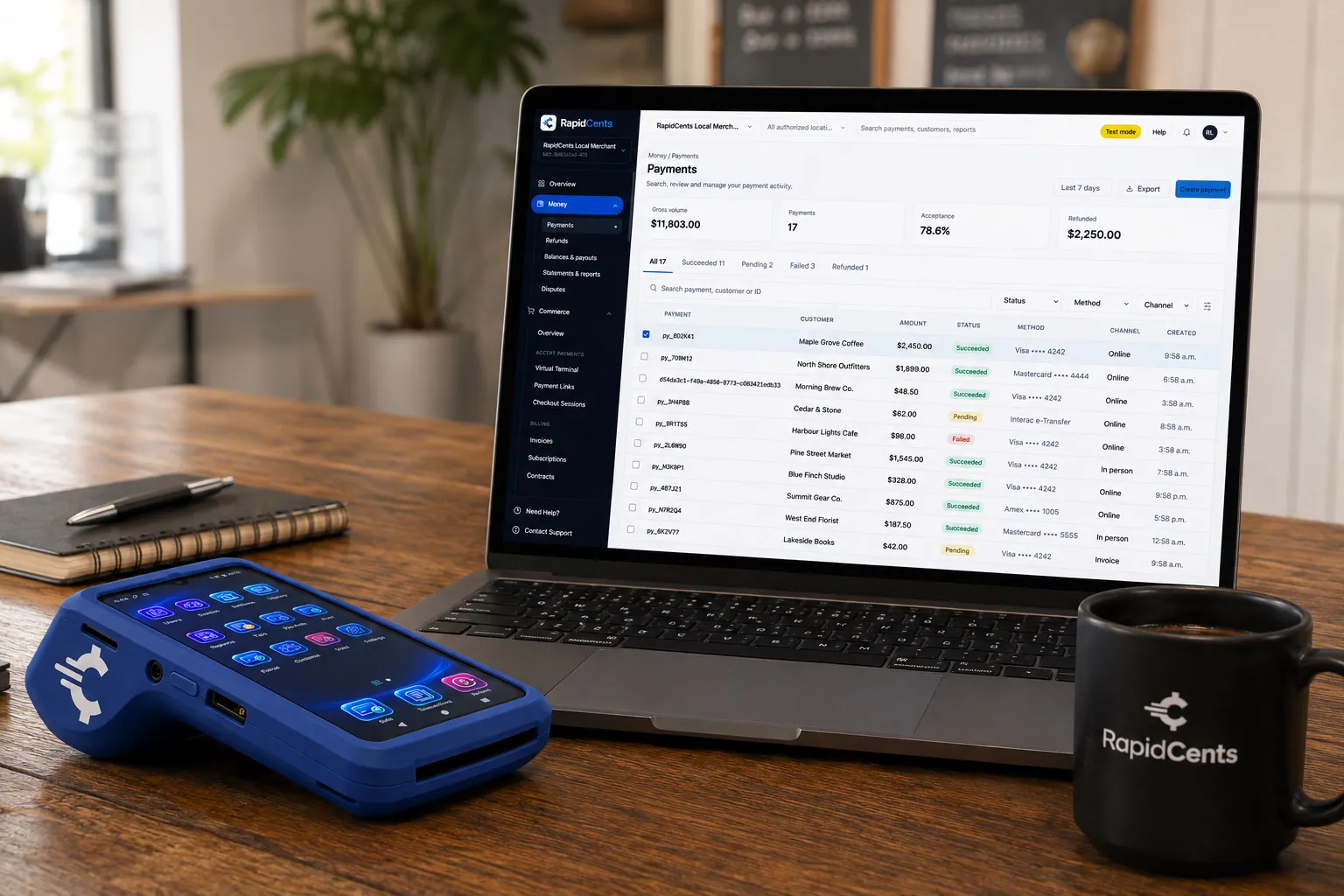
A payment-gateway integration desk: API response on screen, RapidCents terminal ready for a test sale. Payment Gateway
The RapidCents payment gateway exposes REST endpoints for authorize, capture, void, refund and tokenize…
Explore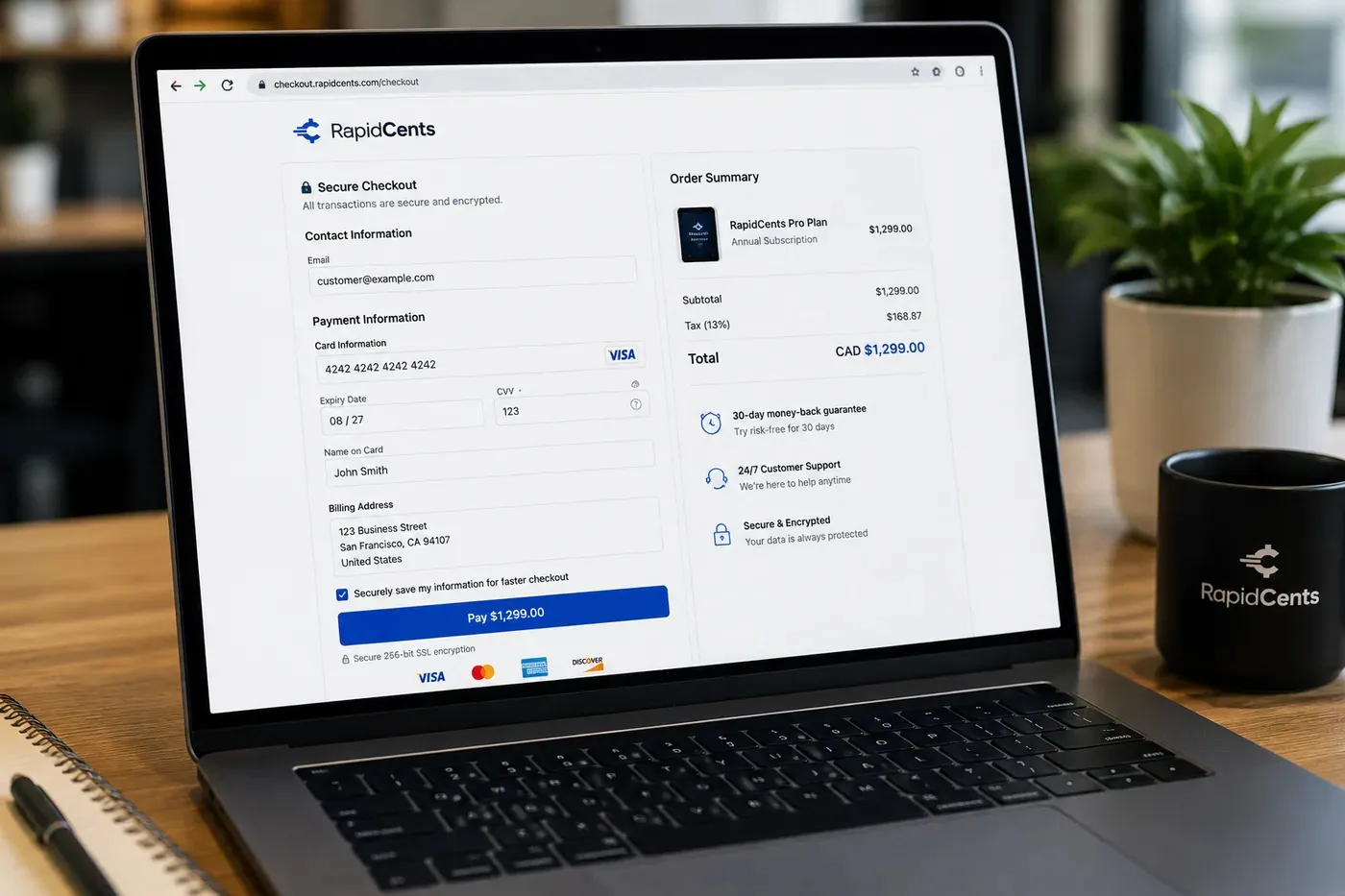
A RapidCents hosted checkout page at checkout.rapidcents.com, with the order summary and totals on the left and the card fields on the right, footed by SSL and PCI DSS assurances. Hosted Checkout
RapidCents hosted checkout delivers PCI-scoped payment pages you redirect customers to or embed via iframe…
Explore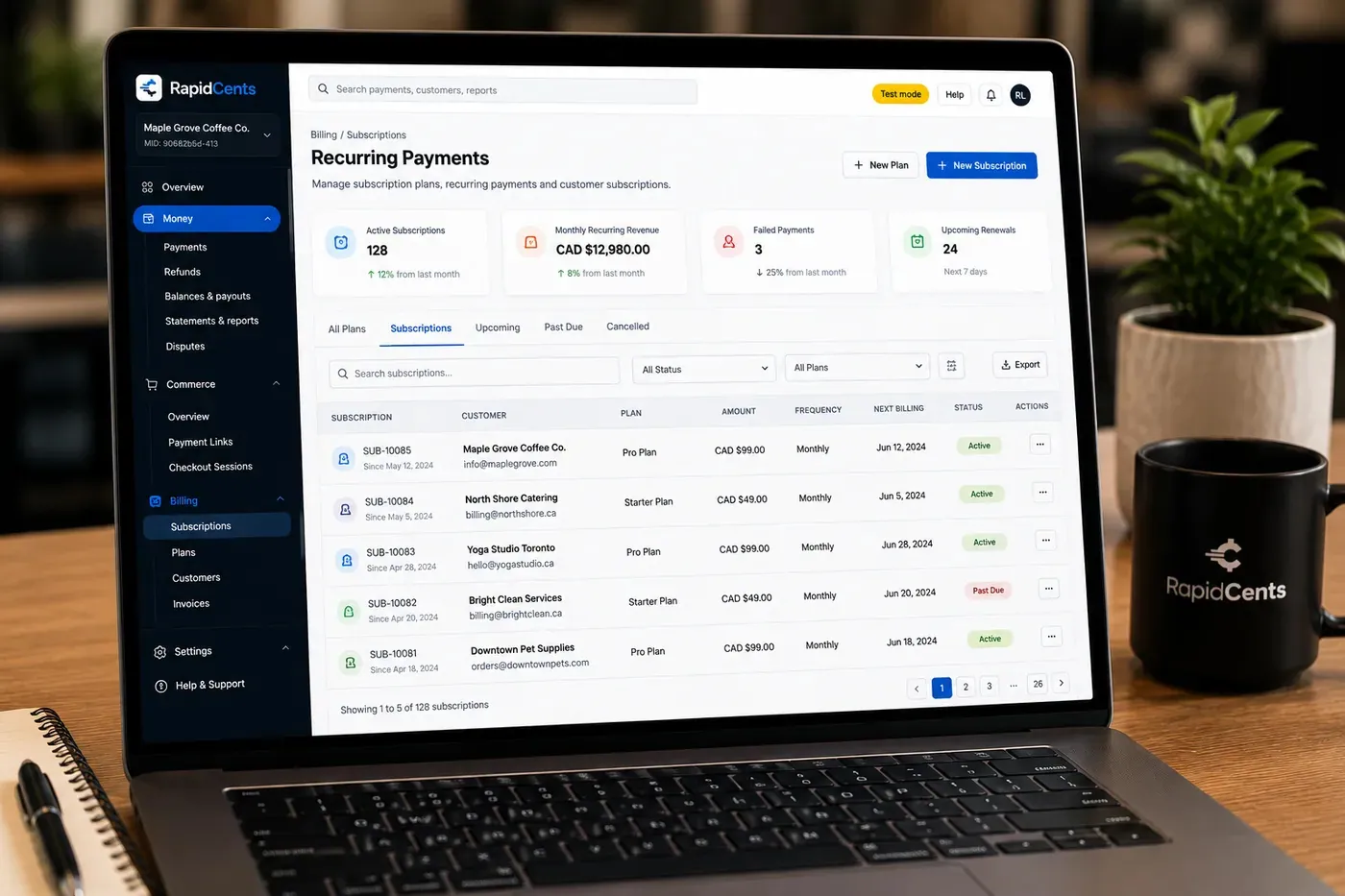
The RapidCents recurring payments screen showing active subscriptions, monthly recurring revenue, failed payments and upcoming renewals, above a list of subscriptions with their plan, amount, frequency and next billing date. Recurring Payments
RapidCents recurring payments manage subscription plans, membership renewals and installment schedules with…
Explore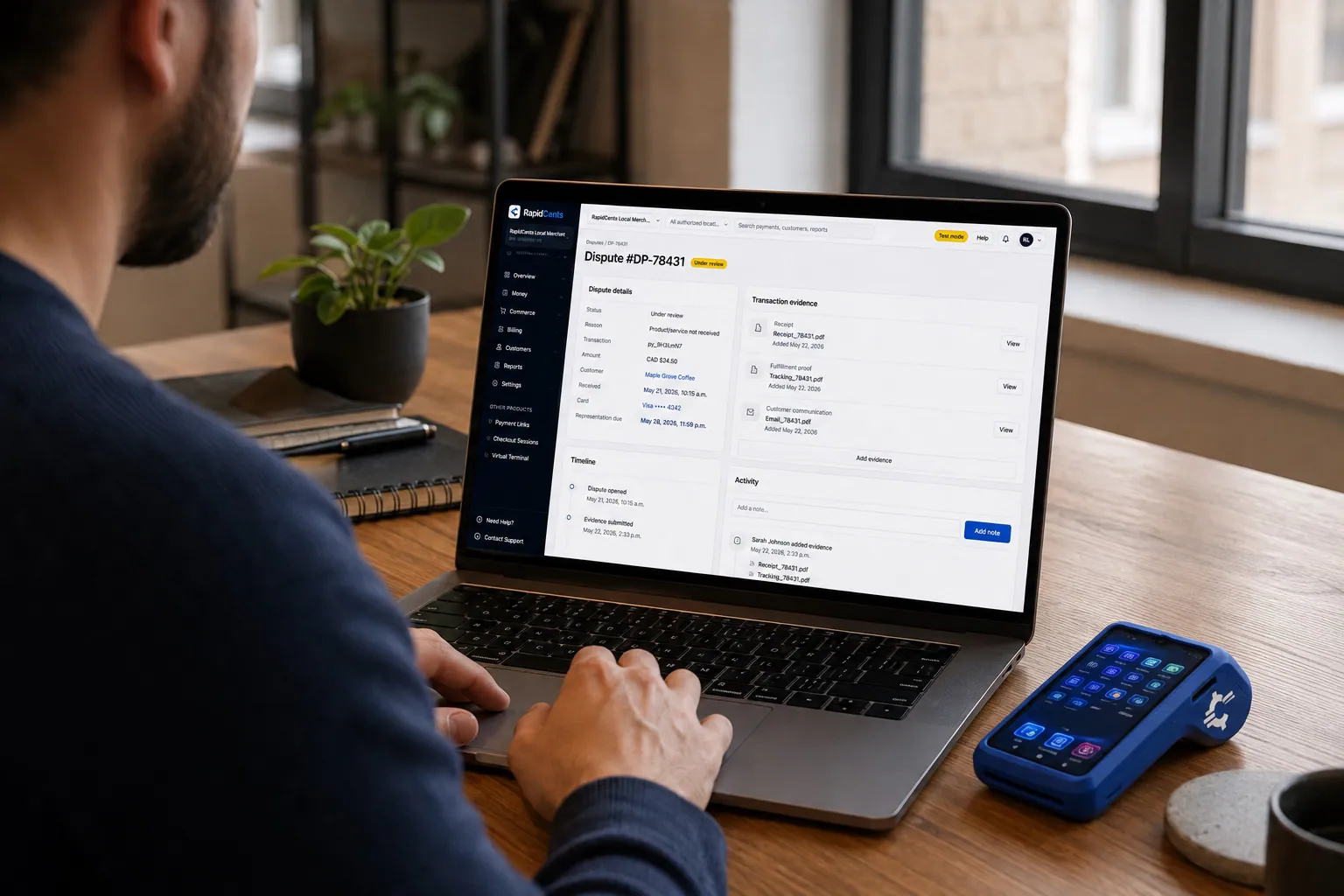
A merchant works a RapidCents dispute case on the dashboard, with the original terminal sale still on the desk. Disputes
RapidCents disputes centralizes chargeback notifications, response deadlines and evidence upload in an inbox…
Explore


How this gets set up
Deciding where the card form lives
Hosted checkout is a page you never maintain; the gateway on your own domain keeps the buyer inside your brand. That choice is made once, before launch.
First real orders, and the first card testing
Gateway rules tighten as soon as live traffic arrives, because a new store is a target for runs of small test authorizations.
Subscribe and save
Recurring payments turn the repeat buyer into a scheduled order on a stored card, with the account updater keeping it valid between shipments.
The dispute instead of the return
A customer who charges back rather than returning the item is answered from the order, the tracking and the delivery record in one response.
Integrations
Shopify
Shopify runs the storefront and the order record while RapidCents authorizes and settles the card behind its checkout.
WooCommerce
The WooCommerce plugin keeps the payment step on your own WordPress site, so the cart never redirects away at the last click.
BigCommerce
BigCommerce passes the cart to the gateway and writes the authorization back onto the order, so fulfilment sees a paid state rather than a pending one.
Operations, security and going live
Every deposit traced to its orders
Settlement reporting groups a payout by the orders inside it, which is the only way a shop reconciles a bank line against its store admin.
Refunds, returns and chargebacks are three different numbers
They cost different amounts and mean different things about the store, so reporting keeps them apart instead of netting them into one figure.
Card data stays off the store platform
Hosted checkout and tokenization mean your platform sees a token rather than a card number, which is what keeps your own PCI footprint small.
Cutover on a quiet day
Switching gateways is a keys-and-test-order change on the platform, done at low traffic with the previous gateway still able to refund old orders.
Payment questions from E-commerce
What should an ecommerce business compare in a payment gateway?
Compare ecommerce payment gateway against the real payment journey: online checkout and remote payment and the sale and reconciliation with business systems. Start with the required channels and hardware, then confirm compatibility and support before committing.
What payment hardware is practical for E-commerce?
If E-commerce sells primarily online, do not choose physical hardware before validating checkout. Add hardware only for a clearly defined in-person payment need.
Which payment channels are relevant for E-commerce?
For E-commerce, start with online checkout and remote payment and the sale and reconciliation with business systems. Keep only the channels that match those moments, then verify the complete customer flow before offering them.
How should payment processing fees be evaluated for E-commerce?
For E-commerce, compare costs related to online checkout and dispute handling using actual transactions. Request a written breakdown of fees and terms rather than relying on an advertised rate alone.
What should be confirmed before setting up payments for E-commerce?
For E-commerce, document how payment data moves into business systems and the checkout, confirmation, and refund path, verify the needed compatibility, and test the flow before going live. This exposes manual steps and exceptions before customers encounter them.
What should be compared in a checkout or payment gateway for E-commerce?
Compare the customer journey, reconciliation data, refund rules, and compatibility with the website or software. Validate the flow before publishing it.
What MCC category applies to E-commerce?
MCC 5399 is commonly associated with E-commerce. Our onboarding team confirms the correct category for your business.
Related industries
Software & SaaS
SaaS companies embed payments, manage platform revenue share and use developer APIs for…
Digital Products
Sell ebooks, templates, media and digital goods with instant checkout, fraud tools and…
Downloadable Software
License keys, one-time purchases and upgrade paths for downloadable software with global…
Edtech & eLearning
Course platforms, bootcamps and LMS providers collect tuition, installments and corporate…
Gaming
Game studios, esports venues and in-game commerce use gateway APIs, recurring battle…
Take the next step
Talk to a RapidCents specialist
RapidCents Fee Check reads a processing statement and shows interchange separately from the markup. Upload a statement for an instant breakdown, or open a merchant account and start accepting payments on one account.
- No obligation
- Canadian payment specialists
- Secure statement upload