


Payment processing for architecture and engineering firms
Payment processing for architecture and engineering firms covers retainers taken before design starts, phase and percentage-complete invoices, and part payments on long projects. RapidCents gives you Invoicing, Payment Links, Recurring Payments, bank payments, Contracts & eSignatures and a Virtual Terminal for phone payments, so every payment carries a project reference your accountant can match.

- PCI DSS Level 1
- SOC 2 Type II
- All major cards: Visa, Mastercard, Amex, Discover, UnionPay, Diners Club & Interac Debit
- Interchange-plus available
- Canadian support
How architecture and engineering firms get paid
Architecture and engineering firms get paid in stages: a retainer at award, invoices at each phase or percentage of completion, part payments between phases and a balance when a change order is approved. Each payment job has its own payer, trigger and record, and we set up each one separately.
Retainer before design starts
The client signs the engagement agreement, then pays a retainer held against the project. You send a payment link with the project number, and finance receives a receipt showing the retainer sits against the file.
Phase and percentage-complete invoices
When schematic design, construction documents or a site review milestone is complete, the principal approves a phase invoice. The client pays by card or bank payment from the invoice link, and the settled payment keeps the invoice number.
Part payments on a long project
A hospital fit-out or bridge study can run past a year. Clients pay in parts between phases, by link or on a schedule you both agreed, and each part is applied to the open invoice balance.
Approved change order balances
After the client approves a change order, you invoice the added fee separately from the base contract. The client pays by link, and the payment record shows which change order it settled.
How does architect retainer payment processing work?
Architect retainer payment processing starts with a signed agreement, then a payment link for the retainer amount tied to the project number. The client pays by card or bank payment, the funds settle to your account, and your accountant applies them against the project. Nothing is charged before the client agrees.
Agreement first, retainer second
Send the engagement agreement through Contracts & eSignatures, then attach the retainer request. The client signs, pays from the same flow, and your file shows both the signed scope and the payment before design starts.
Set up the reference before you send
Put the project number and phase in the invoice reference so the settled payment matches the right job. Agree in writing whether the retainer is refundable, applied to the last invoice or drawn down by phase.
When the payment fails or is reversed
A declined card or a returned bank payment leaves the invoice open. Resend the link, offer the other method, and hold design work per your agreement. A refund goes back to the original payment method and appears in reports.
A $20,000 residential design, retainer first
Say a three-person architecture studio wins a $20,000 residential design contract. The owner signs, pays a $4,000 retainer from the link, and the accountant applies it as a deposit against the final phase invoice.
How do engineering project invoice payments work by phase?
Engineering project invoice payments work best when each phase or percentage-complete milestone gets its own invoice with a payment link. The client pays that invoice, the status moves to paid, and the settled amount carries the invoice and project number into your reports for the project accountant.
One invoice per milestone
Create the invoice in RapidCents Invoicing when the principal signs off a phase, such as 60 percent drawings issued or a structural review complete. The link goes by email or SMS, and status tracks draft, sent and paid.
Card or bank payment by size
Corporate clients with large invoices often prefer a bank payment with their authorization; smaller invoices suit a card. Offer both on the link, and your RapidCents representative will set up the methods you want on your account.
Short payments and disputes
A client may pay only part of an invoice while questioning a deliverable. Record the part payment, leave the balance open, and keep drawing issue dates and transmittals as evidence if the client disputes the charge.
A $45,000 design package at 40 percent complete
Say a civil engineering firm bills a $45,000 design package at 40 percent complete. The client pays $18,000 through the invoice link, and the remaining invoice balance is chased under the same project number.
RapidCents products for architecture and engineering firms
These products cover the retainer, the phase invoice, the bank payment and the signed agreement, so each project payment is collected the way the client prefers and recorded against the project.
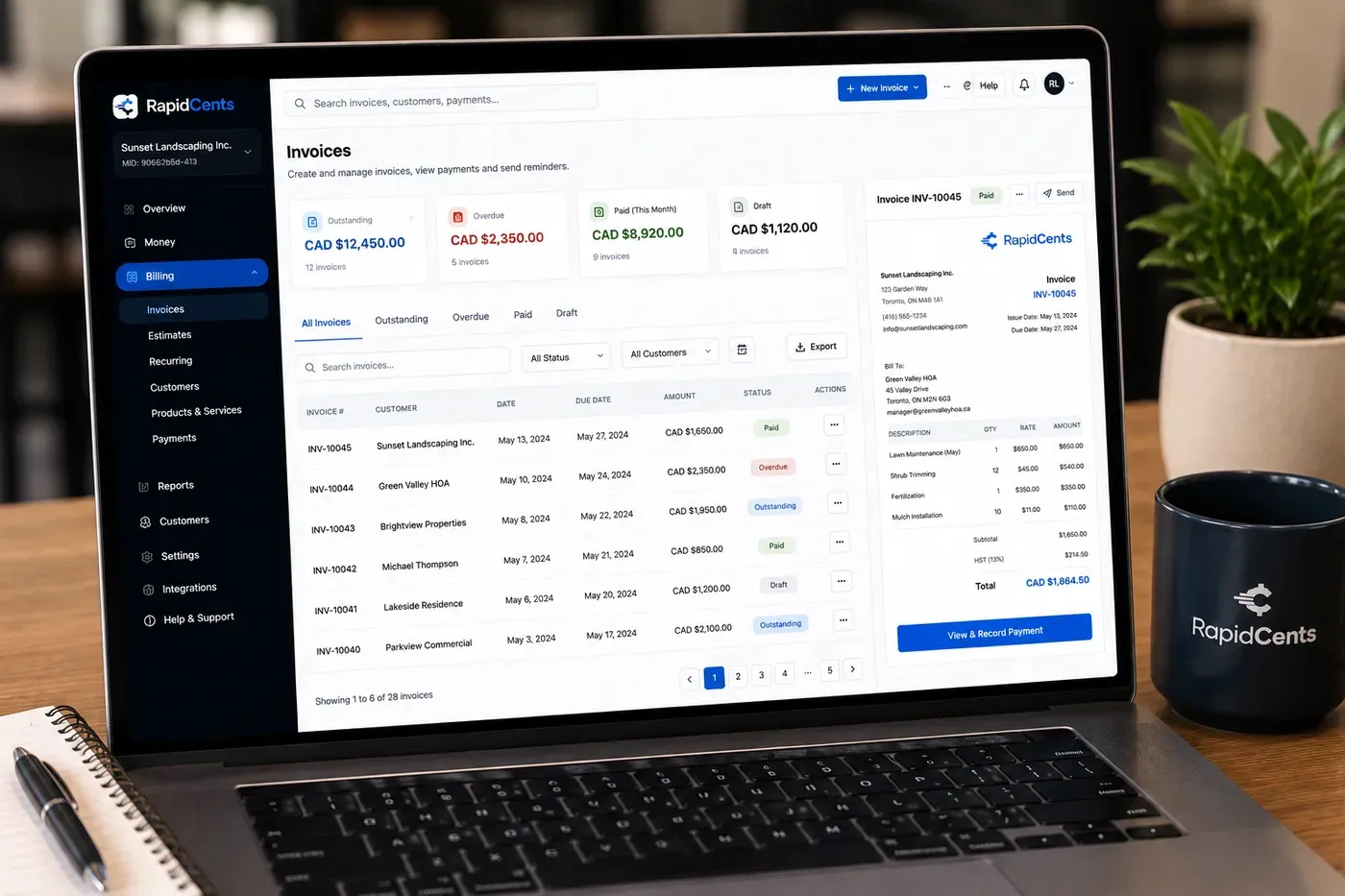
The RapidCents invoices screen: outstanding, overdue, paid and draft totals across the top, the invoice list below them, and a preview of one invoice on the right with its line items and a View & Record Payment button. Invoicing
RapidCents invoicing helps professional services, contractors and B2B suppliers create branded invoices…
Explore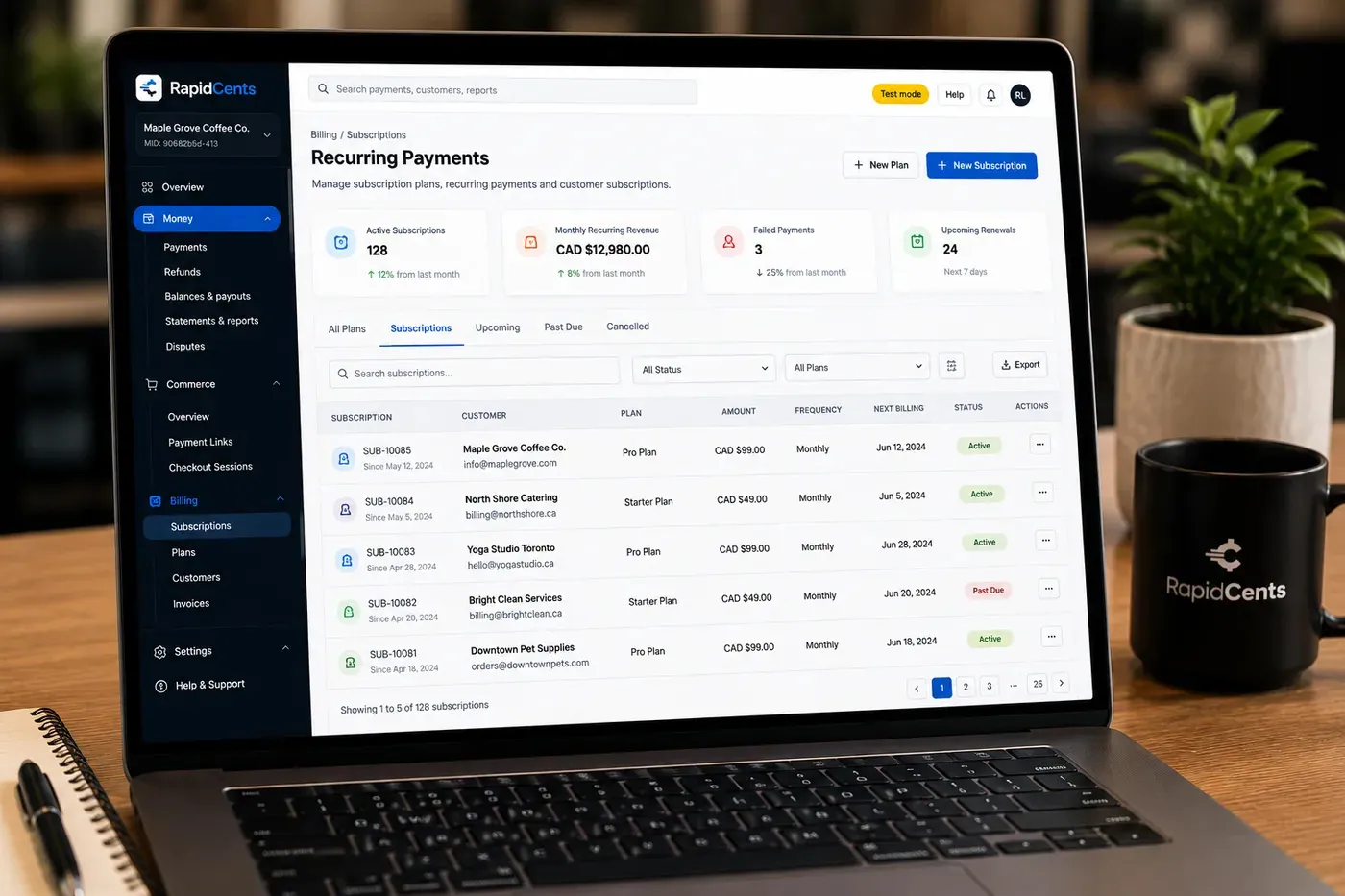
The RapidCents recurring payments screen showing active subscriptions, monthly recurring revenue, failed payments and upcoming renewals, above a list of subscriptions with their plan, amount, frequency and next billing date. Recurring Payments
RapidCents recurring payments manage subscription plans, membership renewals and installment schedules with…
Explore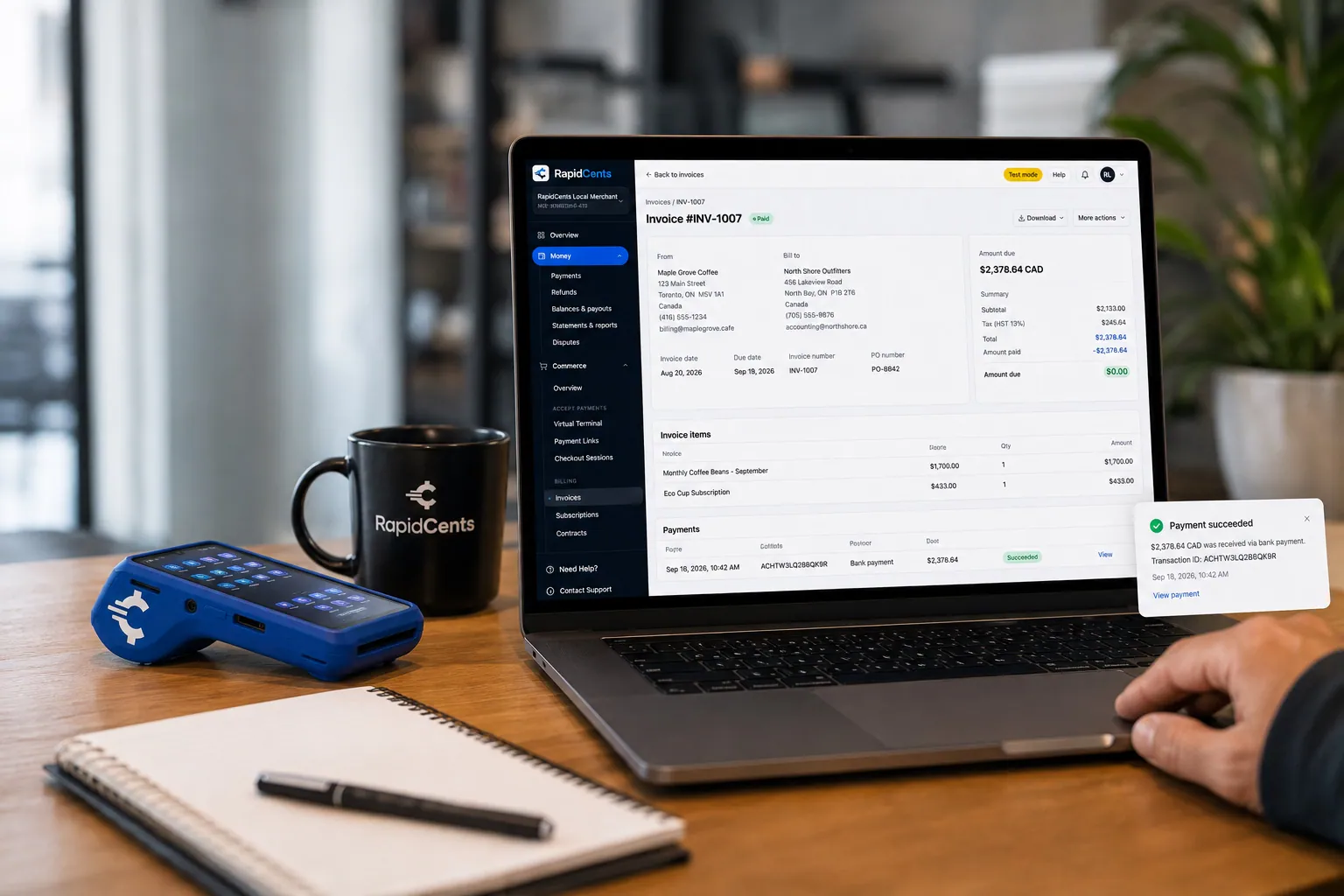
A merchant invoices a customer for bank debit through RapidCents, with card terminal capture available on the same desk. ACH / Bank Payments
Bank payments suit recurring and high-value invoices where card fees are the wrong tool. Collect directly…
Explore
A merchant sends a RapidCents contract for e-signature with payment attached, terminal ready for an in-person counterpart. Contracts & eSignatures
Quotes, service agreements and enrolment forms usually end in a payment. Send the document, capture the…
Explore


How do design firm milestone payment links handle part payments and change orders?
Design firm milestone payment links let a client pay a defined amount at a defined milestone, including a part payment between phases or an approved change order balance. Each link carries its own reference, so the payment record shows exactly which milestone or change it settled.
Link per milestone or change
Create a Payment Link for the milestone amount or the change order fee and send it once the client approves. The link reference names the project and the change order number, which keeps the base contract clean.
Scheduled part payments need agreement
If the client wants to pay in equal parts over several months, use Recurring Payments as a collection schedule, not financing. Agree the amount, timing and cancellation in writing, and store the card only with the client's authorization.
Declines on a schedule
A scheduled part payment can fail when a card expires. Account Updater may refresh the card details, and a failed attempt can retry. If it still fails, contact the client and offer a link or bank payment instead.
A $7,500 drainage-plan change order
Say a landscape architecture firm agrees a $7,500 change order to add a drainage plan. The client approves, pays from a link labelled with the change order number, and the accountant closes it without touching the base contract.
How do you compare fees using your real payment mix?
Compare fees using your real payment mix: card types, how the card is taken, average invoice size, and how much you collect by bank payment. We price every account on interchange-plus, with interchange passed through at cost, your RapidCents markup in your Fee Schedule, and fees for equipment or services if applicable. It is month to month, with no fixed term.
What drives the cost for a design firm
Interchange varies by card type, such as debit, credit, premium or commercial, and by whether the card is tapped, inserted, keyed or paid online. A firm with large keyed corporate card invoices has a different mix than a studio taking small deposits.
What to bring
Bring your last few processing statements, your average invoice, the split between card and bank payments, and your refund and chargeback volume. Fee Check reads the statement and shows interchange separately from markup.
How to read the quote
Ask for the quote in writing and line up each part: interchange, your RapidCents markup, equipment or service fees and any exception fees. Compare like for like, with the same currency and the same channels.
Which project accounting software works with these payments? Start with Deltek Ajera
RapidCents integrates with many major platforms through APPIE and RapidBridge, and the right option depends on your software vendor and version. We connect settled transactions, fees and refunds to QuickBooks Online and Xero, and SAP and NetSuite import settlement files. Your RapidCents representative will walk you through the option for the package you run.
Deltek Ajera
Deltek Ajera holds project billing and receivables for many firms. Tell your RapidCents representative which edition you run, and they will show you how payment links and settlement data line up with your invoices.
BQE CORE
BQE CORE combines time, billing and accounting. Tell your RapidCents representative which edition you run, and they will walk you through how card and bank payments reach it, whether through a connector, an API or a settlement file you import.
Monograph
Monograph tracks project fees and budgets for design practices. A payment link sent beside the invoice works for many studios, and your RapidCents representative will show you how settlement data matches back to its invoices.
Deltek Vantagepoint
RapidBridge works with Deltek Vantagepoint, so a card payment posts against the project invoice you already have open. Larger firms keep the project accounting they know, and your RapidCents representative will walk you through setup for your version.
Unanet AE
Unanet AE manages projects and financials for A&E firms. Your RapidCents representative will explain which payment events reach it, how settlement data maps to invoices, and the integration option that fits your version.
Payment options for architecture and engineering firms in Canada
Canadian architecture and engineering firms can pair credit cards with bank payments for large invoices, settled in Canadian dollars. You choose which methods to quote, and we set them up so clients see the same options on every invoice.
Cards and Interac debit
Credit cards suit retainers and smaller invoices. Interac debit applies when a client pays at a terminal in person, with chip and PIN or contactless, for example at a site office or a planning counter.
EFT and pre-authorized debit
For large phase invoices, EFT payments from the client's bank account suit corporate and public clients. Recurring bank payments by pre-authorized debit (PAD) need the client's written authorization of amount and timing.
CAD settlement and tax lines
Funds settle in Canadian dollars (CAD). GST/HST can appear on invoices where it applies, and provincial rules on holdbacks may differ, so check the treatment with your accountant.
How do you switch processors and reconcile to the project ledger?
Switching processors takes an inventory, a test and a parallel run, not a single cutover day. List stored cards, authorizations, open invoices and retainers, test a sale, a refund and a retainer, then reconcile each deposit to the project ledger. Token portability needs both providers to agree.
Inventory before you move
List every client with a stored card, the authorization they gave, open phase invoices, retainers held and any scheduled part payments. Once your account is approved, your RapidCents representative helps you plan the move; clients authorize stored cards again if the providers cannot move them.
Test, then run in parallel
Run a small sale, a refund and a retainer through the new flow before sending live clients to it. Keep the old processor for open invoices until they are paid, so no client is charged twice.
Reconcile to the project ledger
Match each settled deposit to project numbers, invoices and fees using settlement and fee reports, exported as CSV or PDF. Your project accountant owns the match; the payment record supplies the reference.
Payment questions from architecture and engineering firms
What is the best payment processor for architecture and engineering firms?
The best processor is the one that fits your retainers, phase invoices and software. Compare channels, total fees, software integrations, service and reconciliation tools. Ask each provider to walk through a retainer, a phase invoice and a refund, and compare written quotes. We are glad to do that walk-through with you.
How much does credit card processing cost for architecture and engineering firms?
Cost depends on your card mix, invoice size and channels, so a quote should be itemized. Our pricing is interchange-plus: interchange at cost, the markup in your Fee Schedule and any equipment or service fees. Upload a statement to Fee Check to see interchange separately from markup.
Can Deltek Ajera use RapidCents as its payment processor?
RapidCents integrates with many major platforms through APPIE and RapidBridge, so most firms keep the software they run today. The exact option depends on your Deltek Ajera edition. Tell your RapidCents representative which one you use, and they will show you how payment links, receipts and settlement data connect to it.
How can architecture and engineering firms switch processors without losing payment history?
Keep your history by exporting reports from the old processor and recording references before you move. List stored cards, client authorizations, open invoices, retainers and refunds, and test the new flow first. Stored cards move only if both providers agree; otherwise clients authorize them again.
Which payment options can an architecture or engineering firm in Canada offer?
A firm in Canada can offer credit cards, Interac debit at a terminal and EFT or pre-authorized debit (PAD) bank payments, settled in CAD. PAD requires the client's authorization. Tell your RapidCents representative which methods you want, and they will switch them on for your account before they appear on an invoice.
How can we collect an architect retainer before design starts?
Send the engagement agreement for signature, then a payment link for the retainer with the project number as the reference. The client authorizes the payment, and a failed payment leaves the invoice open. Your accounting software applies the retainer; the payment record supplies the reference and any refund.
How can we bill by phase or percentage complete?
Create one invoice per phase or completion milestone and send it with a payment link. The principal approves the amount, the client pays by card or bank payment, and the status moves to paid. Your project accounting software keeps the percentage complete; RapidCents supplies the payment and settlement record.
How can we accept a part payment on a long project?
Record the part payment against the open invoice and leave the balance open. Use a payment link for each part, or Recurring Payments as a collection schedule if the client agrees to amount, timing and cancellation. A stored card needs the client's authorization, and declines are retried or sent as a new link.
How can we match payments to the project accounting system?
Put the invoice and project number in every payment reference, then reconcile settlement and fee reports to the ledger. RapidCents connects settled transactions, fees and refunds to QuickBooks Online and Xero. For other project accounting packages, your RapidCents representative will walk you through the import or connector route.
How can we collect an approved change order balance?
Invoice the change order separately from the base contract and send a payment link labelled with its number. The client pays once approved, and the settled payment shows which change it covered. A refund or a short payment adjusts the open balance, and your project software keeps the revised fee.
What MCC is used for architecture and engineering firms?
MCC 8911, Architectural, Engineering and Surveying Services, is commonly associated with this type of business. During onboarding we set the merchant category from what your firm actually sells. If your firm also sells other services, tell your RapidCents representative so the category reflects the whole business.
Related industries
Law firms, accounting firms, consultants and other professional services share retainers, milestone invoices and trust-style deposits, so their payment workflows are close to a design firm's.
Law Firms
RapidCents helps law firms collect retainers by payment link, send invoices with a link…
Accounting Firms
Charge monthly bookkeeping and payroll fees on a schedule, collect tax preparation…
Professional Services
Charge monthly retainers, send branded invoice links and collect milestone balances from…
B2B & Wholesale
Collect net-terms invoices by payment link with the PO number attached, take commercial…
Insurance
Collect down payments at binding, monthly installments and agency fees by payment link…
Real Estate
Collect application fees, service fees and keyed deposits by payment link or Virtual…
Property Management
Collect rent by card and bank payment, set up recurring autopay, invoice maintenance…
Freight & Logistics
RapidCents helps carriers, brokers and 3PLs invoice shippers, collect by payment link…
Take the next step
See what your project payments really cost
Upload a recent processing statement to Fee Check and see interchange separated from markup before you change how your firm collects retainers and phase invoices.
- No obligation
- Canadian payment specialists
- Secure statement upload



