


Payment processing for martial arts and dance studios
Payment processing for martial arts and dance studios means billing each student's membership on a schedule, taking grading, competition and uniform payments at the front desk, and recovering declined cards. RapidCents runs recurring payments under a customer profile, accepts cards on terminals and payment links, and gives finance one reporting trail.

- PCI DSS Level 1
- SOC 2 Type II
- All major cards: Visa, Mastercard, Amex, Discover, UnionPay, Diners Club & Interac Debit
- Interchange-plus available
- Canadian support
How martial arts and dance studios get paid
Martial arts and dance studios get paid through monthly memberships and tuition, one-off fees for gradings, competitions and recitals, uniform and gear sales, and the recovery of declined cards. Each job has its own payer, trigger and record, and RapidCents keeps them apart so your books stay clean.
Monthly tuition per student
A parent or adult student agrees to a monthly plan, and the studio charges the stored card on the billing date through Recurring Payments. Each student carries a separate schedule, so siblings and a second class appear as separate charges. Finance sees one record per student.
Grading, competition and recital fees
A parent pays when a belt grading, competition entry or recital fee falls due. Staff send a payment link or take the card at the front desk. The charge stays apart from tuition, so a refund for a withdrawn entry never touches the membership.
Uniforms, gear and shop sales
A student buys a uniform, belt, sparring gear or dance shoes at the desk. Staff take a tapped, inserted or keyed card on a Payment Terminal, or add the item to a payment link. The sale posts as its own line, separate from tuition.
Declined and missed payments
When a monthly charge declines, studio membership failed payment recovery starts with a retry schedule and a payment link so the parent can update the card. Finance sees the original decline, each retry and the final result.
How does martial arts membership billing work for several family members?
Martial arts membership billing works best as a separate recurring charge for each student under a customer profile, not one lump per household. Each student keeps their own plan, sibling rate and billing date, and the parent authorizes the stored card once. Finance sees one line per student on every settlement.
How it runs
The parent signs the membership form and authorizes the card. Staff save the card to a Customer Profile, then create one Recurring Payments plan per student with its own amount and start date. A notice goes out before each charge, and a receipt follows.
What to set up first
Write down the amount, billing day, cancellation notice and what happens after a missed payment before the first charge. Keep the signed form against the profile.
Two karate kids and one dancer, three plans
Say a family enrolls two children in karate and one in a dance class. Staff create three plans, apply the sibling rate to the second child and move one billing day to match payday. When the older child quits, only that plan is paused and the other two keep running.
How do dance tuition recurring payments work across a season?
Dance tuition recurring payments follow the season: monthly, per term, or in installments toward a recital. RapidCents runs these as collection schedules under the family's customer profile, and the family agrees to the amounts and dates first. Nothing is financed. Family studio payment plans are only a way to spread collection.
How it runs
Choose the schedule that matches your season, such as monthly tuition or a set number of installments toward the term. Each charge follows the agreed date. Costume and recital fees can go on a separate payment link so tuition stays clean.
When it goes wrong
A declined card, a card that expired over summer and a family that withdraws mid-term are the usual bumps. Account Updater may refresh some stored cards. A refund or pause applies only to the plan affected, and refunds follow your written tuition policy.
A ten-month season with a spring recital
Say a studio runs ten months with a recital in spring. A family splits tuition across ten monthly collections and pays the costume fee by payment link in November. At season end, the studio matches the schedule report to its deposits.
RapidCents products for martial arts and dance studios
Recurring Payments runs each student's membership, Payment Terminals take front-desk sales, Payment Links collect fees from parents who are not present, and Customer Profiles tie stored cards and history to each family.

The RapidCents recurring payments screen showing active subscriptions, monthly recurring revenue, failed payments and upcoming renewals, above a list of subscriptions with their plan, amount, frequency and next billing date. Recurring Payments
RapidCents recurring payments manage subscription plans, membership renewals and installment schedules with…
Explore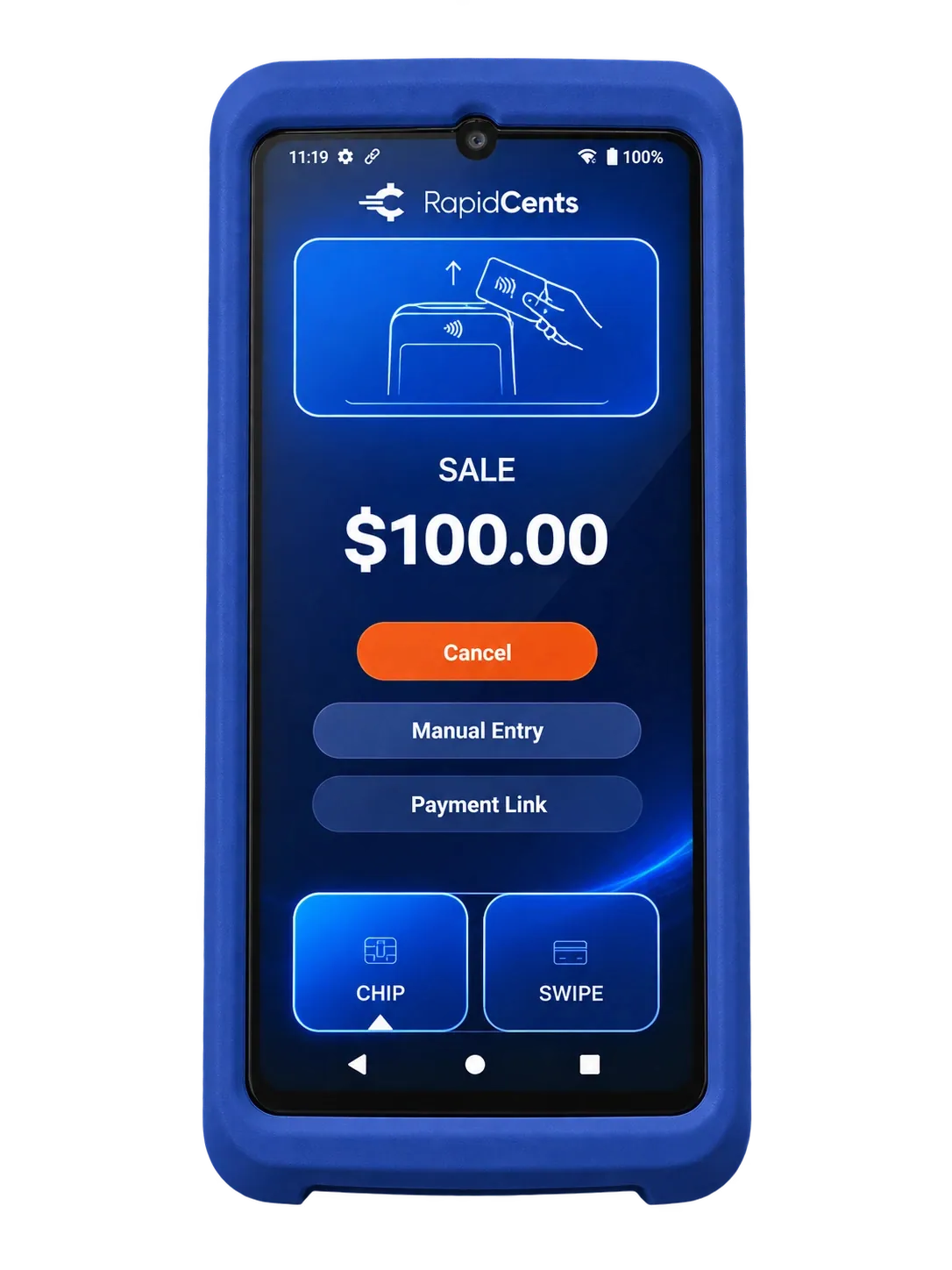
The RapidCents Rivo Go standing upright in its blue silicone case, showing the full-touch sale screen a customer reads across the counter. Payment Terminals
RapidCents payment terminals cover countertop, mobile and smart form factors so you can accept chip…
Explore
The RapidCents payment links screen listing created links with their amount, status, click count and whether they have been paid, beside a phone showing the branded page a customer opens to pay $2,500.00. Payment Links
RapidCents payment links let staff generate branded pay-by-link URLs for invoices, deposits, balances and…
Explore
A RapidCents customer profile holds saved cards and invoices, so a return visit can be charged without re-keying the card. Customer Profiles
A customer profile ties together transactions, stored payment methods, subscriptions and disputes so staff…
Explore


How does grading fee payment processing work apart from tuition?
Grading fee payment processing means taking grading, competition and uniform payments as their own transactions, apart from tuition. Staff charge at the front desk or send a payment link, and each sale carries its own reference. Refunds and event reports stay clear without touching a student's monthly membership.
How it runs
At the desk, staff tap, insert or key the card on a Payment Terminal and add a note such as the belt level or event name. For a parent who is not present, a payment link by SMS or email collects the fee before the entry deadline.
Withdrawals, postponements and size swaps
If a student withdraws from a competition, a grading is postponed or a uniform needs another size, you issue a partial refund or an exchange. Refund the specific transaction, keep the reason in the note, and leave the monthly plan alone. A dispute follows the same trail.
Twenty students, one belt grading
Say twenty students sign up for a belt grading and six of them also need a new uniform. Staff send a payment link for the grading fee and take the uniform payment at the desk. Two parents withdraw, and each gets a refund against that grading transaction only.
Compare fees using your real payment mix
Your cost depends on card type and how each card is taken, so compare using your own mix. We price every account on interchange-plus: interchange passes through at cost, plus your RapidCents markup in your Fee Schedule and fees for equipment or services, if applicable. It is month to month, with no fixed term.
What drives a studio's cost
Cost follows your mix of debit, credit, premium and commercial cards, and whether a card is tapped or inserted, or keyed and stored. Monthly stored-card charges and desk sales can fall into different interchange categories, so one average hides the picture.
What to bring to compare
Bring recent processing statements, your split between recurring tuition and desk sales, your average ticket, refund volume and dispute history. Ask each provider for the same itemized quote so the comparison is fair.
Use Fee Check
Upload a processing statement to Fee Check and see interchange shown separately from markup and other fees. Use it to ask what each line is, which fees are for equipment or services, and what your Fee Schedule says before you decide.
Keep your studio software: Zen Planner, Mindbody and more
Your studio software holds students, classes and agreements, while RapidCents holds the payment record. RapidCents integrates with many major platforms through APPIE and RapidBridge, so most studios keep the software they run today. The right option depends on your vendor and version, and your RapidCents representative will walk you through it.
Zen Planner, TeamUp and Pike13
RapidBridge works with Zen Planner, TeamUp and Pike13, so a card payment posts against the student and membership you already have open. Memberships, belt ranks and attendance stay in your studio software, and the payment record stays with RapidCents.
Jackrabbit Dance and DanceStudio-Pro
Dance studios on these platforms keep their registrations, tuition plans and recital fees where they are. Tell your RapidCents representative which system you run, and they will show you how tuition schedules, refunds and fees reach your ledger.
Mindbody
RapidBridge works with Mindbody, so payments for class packs and memberships post against the booking you already have open. Your RapidCents representative will show you which payment events reach your records and how reports line up with your bookings.
Payment options for martial arts and dance studios in Canada
A studio in Canada can accept credit cards and Interac debit at the desk, and bank payments by EFT or pre-authorized debit (PAD) for monthly tuition, with settlement in CAD. Your RapidCents representative will set up the ones that fit your studio.
Cards and Interac debit
Interac debit by chip and PIN or contactless suits desk sales such as uniforms and gradings. Credit cards cover online payments and stored-card tuition.
EFT or PAD for tuition
An EFT or PAD agreement needs the payer's signed authorization with amount and timing. GST/HST may appear on receipts for taxable items such as uniforms, and provincial consumer rules can affect membership cancellation terms, so review yours.
Switching, reconciliation and answers for buyers
Switching goes in steps: list every stored card and recurring plan, test a sale, a refund and a deposit, run in parallel where needed, and reconcile deposits to your ledger. Once your account is approved, we plan the move around your enrollment cycle, not the other way round.
Inventory first
List every student's plan, billing day, card authorization, open balance and pending refund. Some families may need to re-enter cards, because moving stored card data takes agreement between both providers.
Test, then move in stages
Test a tuition charge, a grading fee, a refund and a deposit before moving live families. Move a single program first, such as a youth class, and take care that no student is billed twice during the overlap.
Reconcile deposits
Match each deposit to its transactions, fees and refunds in the settlement report. RapidCents connects settled transactions, fees and refunds to QuickBooks Online and Xero, and SAP and NetSuite import settlement files, so finance closes the month from one record.
Payment questions from martial arts and dance studios
What is the best payment processor for martial arts and dance studios?
There is no single best processor, because the right one fits your payment mix. Compare how each handles recurring membership billing, desk sales, payment links and failed-payment recovery, then compare total fees, software compatibility, service and reconciliation. Ask every provider for a written, itemized quote and judge them side by side. We will walk you through our flow and give you ours in writing.
How much does credit card processing cost for martial arts and dance studios?
It depends on your mix, so no single figure applies. Cost has three parts: interchange, set by the card networks and passed through at cost, your RapidCents markup in your Fee Schedule, and fees for equipment or services, if applicable. Card type, how the card is taken and your average ticket all matter. Upload a statement to Fee Check for a clear view.
Can Zen Planner use a different payment processor?
Yes. RapidBridge works with Zen Planner, so a card payment posts against the student and membership you already have open, without changing the software. RapidCents also integrates with many other platforms through APPIE and RapidBridge. The right option depends on your vendor and version, and your RapidCents representative will walk you through it.
How can martial arts and dance studios switch processors without losing payment history?
Export your history before you move and plan the stored cards separately. List card authorizations, recurring plans, open balances, refunds and transaction references. Test the new flow, then switch in stages. Moving stored cards between processors takes agreement from both providers, so some families may re-enter cards. Keep old reports for reconciliation.
Which payment options can a martial arts or dance studio in Canada offer?
A studio in Canada can usually offer credit cards, Interac debit and EFT or pre-authorized debit for monthly tuition, all settled in CAD. Interac suits desk sales, cards suit stored recurring tuition, and EFT or PAD needs the payer's authorization. Your RapidCents representative will set up the mix that fits your studio.
How can we bill monthly tuition for several family members?
Create one recurring plan per student under the family's customer profile. Each plan has its own amount, sibling rate and billing day, and the parent authorizes the stored card once. A failed charge affects only that student's plan. Your studio software keeps attendance and enrollment, while RapidCents keeps the payment, refund and settlement record.
How can we collect grading and competition fees separately?
Charge them as separate transactions from tuition, either at the desk or by payment link. Add a note naming the grading level or event so the reference matches your records. A withdrawal then means a refund on that one transaction, with no change to the monthly plan. Your software tracks entries, and RapidCents records the payment.
How can we recover a failed membership payment?
Retry on a set schedule and send the parent a payment link to update the card. Recurring Payments can run automated retries, and Account Updater may refresh some stored cards. If recovery fails, pause or cancel the plan under your written terms. Reports show each attempt.
How can we take a uniform purchase with tuition?
Take the uniform as its own sale, separate from the tuition charge, even when the parent pays for both in one visit. At the desk, charge a tapped or inserted card on a Payment Terminal. Remotely, send a payment link. Separate lines mean a uniform exchange or refund never changes a membership plan.
How can we pause or cancel a membership with a clear audit trail?
Record the request, effective date and reason on the customer profile, then pause or end that student's plan so no further charge runs. Send the parent a written confirmation. Any refund follows your policy and is issued against the specific transaction. Reports show the history, so finance and the front desk see the same record.
What MCC is used for martial arts and dance studios?
MCC 7997 is commonly associated with this type of business. During onboarding, we set the correct merchant category based on what your studio actually sells, such as memberships, classes and uniforms. Tell the onboarding team about every revenue line so the category matches your real business.
Related industries
Studios share recurring-membership workflows with yoga and Pilates studios, sports leagues and clubs, summer camps, childcare, tutoring and coworking spaces. The same family billing, stored-card authorization and failed-payment recovery steps apply in each.
Chambers of Commerce
Collect membership dues, event registrations and sponsorship invoices in one place, with…
Professional Associations
Take annual dues, exam fees, course registrations and employer invoices in one place…
Labour Unions
RapidCents helps union treasurers collect dues, initiation fees and arrears by card or…
Coworking Spaces
Bill desk memberships on a schedule, sell day passes online and charge meeting-room hours…
Subscription Boxes
Charge subscribers on your ship schedule, recover failed renewals before boxes are…
Religious Organizations
Take lobby giving, online gifts, recurring pledges and event fees on one account, with…
Sports Leagues & Clubs
RapidCents helps league administrators and club treasurers collect registration fees…
Summer Camps
Collect booking deposits, spread tuition across payments before the session, add canteen…
Take the next step
Review your studio's payment workflow
Upload a recent processing statement to Fee Check and see interchange separated from markup, then walk through how your tuition, grading and desk sales would run.
- No obligation
- Canadian payment specialists
- Secure statement upload



