Payment industry articles and analysis
Guides explain how something works and are written to stay true. An article is dated writing: it says what it said on the day it was published, and carries the day it was last reviewed as well.
Browse by topic
Industry trends
Market shifts and acceptance behaviour.
ExploreRegulation & Canada
Canadian rules and compliance.
ExploreOperations & finance
Deposits and reconciliation.
ExplorePayments 101
How card acceptance, declines and processing actually work.
ExploreSecurity & fraud
3-D Secure, chargebacks and fraud prevention.
ExploreGrowth & commerce
E-commerce, online ordering and revenue growth.
ExploreCompany news
RapidCents announcements, awards and product releases.
Explore
What is here, and how to read it
An article is dated; a guide is written to stay true
The two collections are not divided by length or by depth. A guide answers how something works — a pricing model, a dispute, a terminal rollout — and is written to be correct on the day you open it, whichever day that turns out to be. An article is a piece of writing with a day attached to it: it describes how things stood when it was written, and it stays attached to that day. Both are worth reading, but only one of them should be read with a glance at the date first. If what you need is the mechanism, start in Guides. If what you need is what moved, and roughly when it moved, start here.
Two dates on every article, answering two different questions
A card in the grids above carries the review date; the article itself carries both, on a line under the headline. They are not the same claim. The published date says when the piece was written, and that is the date that governs whether its picture of the market is still the current one. The reviewed date says when the page was last checked, which is a fact about the page rather than about its subject. So on a topic that moves — a network rule, a compliance deadline, an authentication requirement — a recent review date means someone has looked at the page since, not that the underlying requirement has stopped changing.
The shelves sort by the question you arrived with
Nothing here is filed by recency, because almost nobody arrives wanting the newest thing. Payments 101 is where to go when the vocabulary is the obstacle — declines, settlement, the difference between a gateway and a processor. Security and fraud covers authentication, chargebacks, and the things that go wrong on purpose. Operations and finance is the back office: deposits, reconciliation, and invoices that get paid on time. Growth and commerce is the front of the business — checkout, online ordering, and the reasons a sale does not complete. Industry trends is the shelf that ages fastest, and is meant to. Company news is the RapidCents shelf — releases, integrations and awards — alongside a couple of much older posts that report what other card companies were doing at the time.
Some of this is written for one market and stays there
An article about a rule that applies in one country cannot be made correct for another by swapping the words inside it, so a piece like that is absent from the other market rather than rewritten for it. What that means while you are reading: the shelves above, and the count beside each one, are the ones for the market this site serves you, and a piece someone sends you a link to may live on the other one. Every article also opens with a scope note naming who it was written for and what it covers, which is the quickest way to tell whether it is about your situation before you spend the reading time on it.
Where to start
Net vs Gross Deposits: Why Your Bank Deposit Doesn't Match Your Sales
Start here if the deposit never matches the day’s sales. It separates the two settlement models — fees taken out of every payout, or billed once a month — and ends with a way to tell which one you are on today: compare one day’s batch total against the deposit that followed it.
Credit Card Declines: Common Reasons and Types
The one to read when payments are failing and nobody can say why. It sorts declines into the temporary kind that is worth retrying and the permanent kind that will fail every time until something is fixed, then explains what the code attached to each is telling you.
3D Secure: The Smart Way to Prevent Chargebacks and Fraud
Read this if disputes are the problem rather than outright fraud. It covers what the authentication step does at checkout, what the liability shift changes about who carries a disputed transaction, and what the newer version does to keep that step out of a customer’s way.
The Future of Checkout: 7 Emerging Trends
A survey piece rather than a how-to, and most useful as a planning agenda: seven things changing about the checkout itself, each with the merchant-side consequence attached. Look at the date before you act on it — this is exactly the kind of piece that ages.
Do Credit and Debit Cards Still Dominate Online Payments?
Start here if you are being pushed to add payment methods. It answers the headline question directly and names the sources it answers from, then turns to the less exciting conclusion: that the return is usually in tokenization, authentication and decline handling on the cards you already take.
Payment Card Networks Code of Conduct
Read this before you sign anything or leave anyone. It is a short overview of what a processor is expected to disclose about fees and cancellation, with a checklist for before signing, before switching, and after an account is supposed to have closed.
Questions about this collection
Are these the articles from the RapidCents blog?
Yes. The RapidCents blog was folded into these shelves rather than kept as a separate feed, so a post you remember from it is filed here by subject instead of by date. The archive came across whole rather than trimmed, which is why the oldest pieces here date from 2020 and sit alongside recent ones, and why each still carries the publication date it originally had.
Who writes these articles, and is anyone named as a reviewer?
Every article names its author on the page, just above the dates. Where a piece was reviewed by a named function rather than only edited — legal and compliance on a piece about rules, for instance — that reviewer is named next to the author. Where no reviewer is named, none was recorded, and the piece should be read as editorial background.
An article describes a rule that has changed since. What should I do?
Check the current version with the body that sets the rule, and then with your processor, before you act on it. An article keeps its original publication date rather than being quietly restated, so what you are reading is a record of a moment. The mechanism it explains usually survives the change; the deadline, the threshold or the specific requirement is the part that moves. If the subject is one you have to comply with rather than merely understand, the Guides collection is written to be the reference and is the better place to return to.
Is any of this legal, tax or compliance advice?
No. These articles are background, written to help you ask sharper questions of your processor, your accountant or your own counsel; they are not advice on your circumstances. Nothing here substitutes for a professional who has actually seen your file.
An article and my processor say different things. Which one governs?
Your merchant agreement governs, together with the card network rules sitting behind it. An article describes how something generally works across the market; your contract describes what your provider actually does, including the places where it departs from the general case. When the two disagree, the disagreement is the useful finding — it is worth asking your provider to point at the clause.
Industry trends
Market shifts and acceptance behaviour.

Tokenised card credentials protected inside a payment system Agentic Payments Explained
An AI agent can express intent, choose a product and start a payment. Authentication, authorization and settlement stay with the payment system, and that boundary is what keeps the model safe.
Explore
A laptop on a desk displaying line and bar charts The Great Big History of Payments: From Barley to Biometrics in 5,000 Years
Payments history is one idea iterating for five millennia: strangers finding ways to trust each other's value at greater distance and speed. Commodity money made value portable, coins standardized it, paper and banking made it abstract, cards made it credentialed, networks made the credential global, and tokenized taps made it invisible. Each leap traded a physical assurance for an institutional one, which is why the story of payments is really the story of trust infrastructure.
ExploreA laptop on a desk displaying line and bar charts Buy Now, Pay Later for Merchants: The Real Costs, the Real Lift, the Real Risks
Buy Now, Pay Later moves the instalment loan to checkout: the provider pays the merchant up front (minus a fee of roughly 2 to 8 percent), assumes the consumer credit risk, and collects from the shopper in slices. Merchants adopt it because it verifiably lifts conversion and average order values, especially on discretionary purchases over $100; the honest ledger also includes the fee premium over cards, checkout clutter and a customer relationship partly intermediated by the BNPL brand.
Explore
Moneris Alternatives in Canada: 7 Best Payment Processors for Canadian Businesses in 2026 Moneris Alternatives in Canada: 7 Best Processors for 2026
For Canadian businesses comparing payment processors in 2026, seven Moneris alternatives worth considering are RapidCents (best overall for growing, high-volume and Canada/U.S. businesses), Stripe for developer-led SaaS, Square for simple POS needs, Clover/Fiserv for an all-in-one POS ecosystem, Adyen for multinationals, Elavon for bank-owned global processing, and Chase Payment Solutions for traditional merchant services.
Explore
Customer tapping card Contactless and Interac Trends in 2026
Tap share rises in QSR/retail; Interac Debit dominates in-person, optimize lanes and debit transparency.
Explore
Subscription Fatigue vs. Seamless Billing: Winning Over Burnt-Out Customers Subscription Fatigue vs Seamless Billing
Subscription fatigue is the emotional and financial exhaustion customers feel from managing too many recurring charges, and it drives cancellations, chargebacks, and brand resentment. The fix is smooth billing: transparent pricing with renewal reminders, flexible plans with pause and downgrade options, smart retries for failed payments, and proactive retention triggers. Customers stay longer when they feel in control rather than trapped.
Explore
Why Merchants Are Prioritizing Recurring Payments in 2025 Why Merchants Are Prioritizing Recurring Payments in 2025
Merchants are prioritizing recurring payments in 2025 because automated billing delivers predictable revenue, fewer missed payments, lower churn, and less manual work for finance teams. With the global subscription economy forecast to reach $1.5 trillion in 2025 and 81% of North Americans holding at least one subscription, recurring billing has become a core payment strategy.
Explore
How Instant Payments Can Grow Your Business How Instant Payments Can Grow Your Business
Instant payment systems transfer funds between accounts in seconds, at any time of day, instead of the up-to-three-day wait of card batches and ACH transfers. For businesses this means immediate cash flow, a smaller fraud window, automated reconciliation and a faster customer experience—advantages already proven by systems like India’s UPI, Brazil’s PIX and Sweden’s Swish.
Explore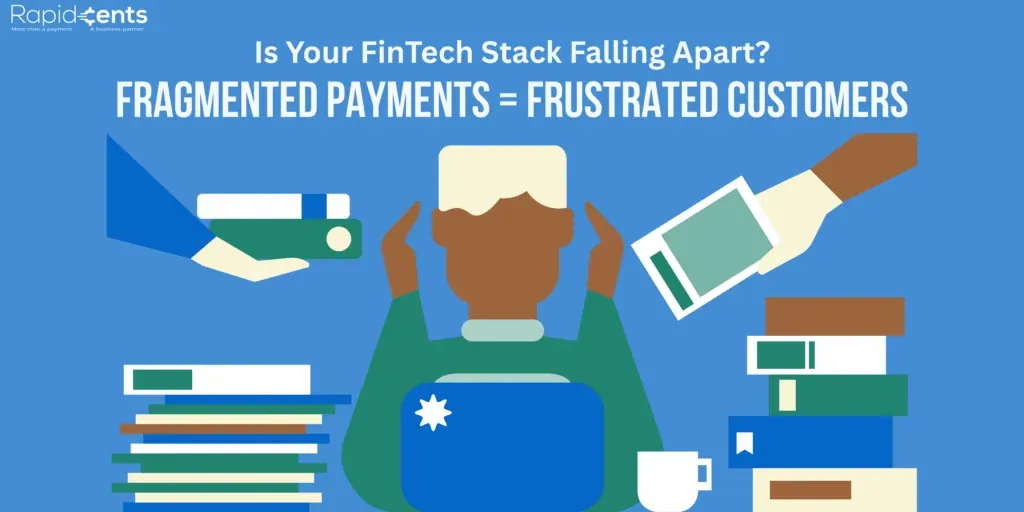
FinTech Fragmentation: When Too Many Payment Options Hurt More Than Help FinTech Fragmentation: When Too Many Payment Options Hurt
Using too many disconnected payment providers hurts merchants in five ways: systems fail to sync and force manual work, stacked vendor fees raise total costs, every extra partner adds compliance and security risk, checkout becomes inconsistent for customers, and support issues get harder to resolve. Consolidating to one or two strong partners keeps payments simple, secure, and scalable.
Explore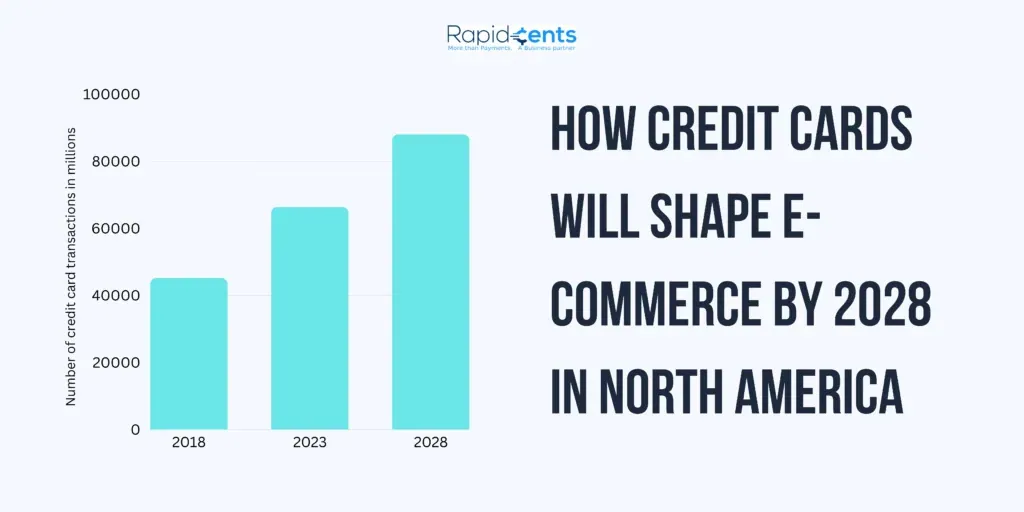
How Credit Cards Will Shape E-commerce by 2028 in North America How Credit Cards Will Shape E-Commerce by 2028
Credit cards will keep shaping North American e-commerce through 2028: the credit card market is expected to continue growing, with over 150 million daily credit card transactions in the US in 2024. Key trends include biometric authentication and AI fraud prevention, contactless and mobile wallet payments, flexible instalment options like BNPL, and AI-personalized rewards.
Explore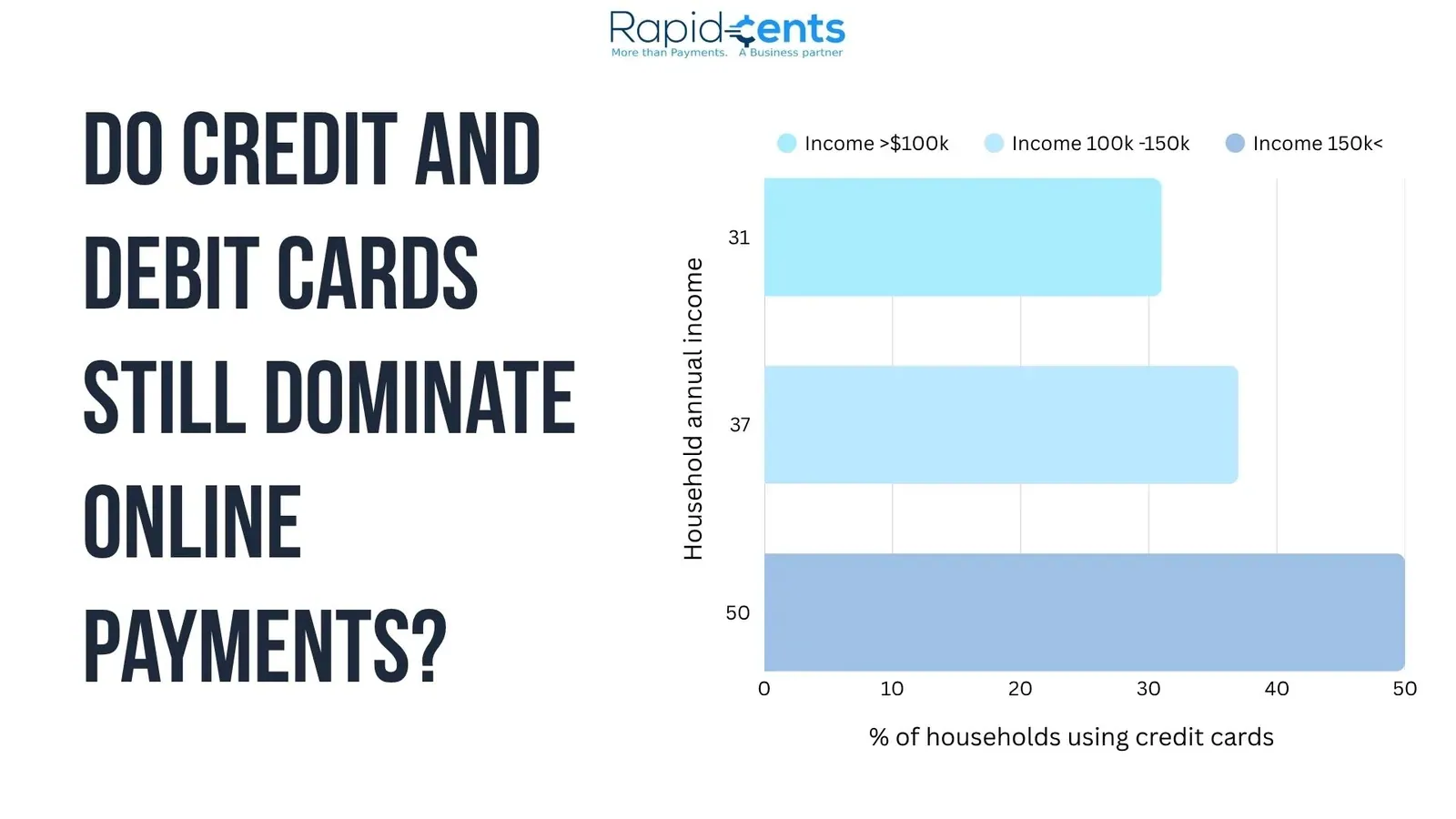
Do Credit and Debit Cards Still Dominate Online Payments? Do Credit and Debit Cards Still Dominate Online Payments?
Yes. Despite digital wallets, buy-now-pay-later, and crypto, 65% of online payments are still credit and debit card-based, according to Payments and Commerce Marketing Intelligence. Consumers stick with cards for trust, rewards, buyer protection, and universal acceptance, so merchants should improve checkout for cards with tokenization, 3D Secure, smart routing, and decline management.
Explore
The State of Subscriptions and Recurring Billing in 2025 The State of Subscriptions and Recurring Billing in 2025
Subscriptions have moved well beyond streaming: the subscription and loyalty industry grew from an estimated $2 trillion in 2023 to $3 trillion in 2024, with subscriptions up 60% in recent years. For small and medium businesses, recurring billing creates predictable cash flow, stronger customer loyalty, and lower acquisition costs without major operational changes.
Explore
Navigating the Future of the Card Payment Industry Future of the Card Payment Industry: Key Trends
The future of the card payment industry is being shaped by contactless payments and mobile wallets, evolving security such as EMV, tokenization, biometrics, and AI-driven fraud detection, regulations like PSD2, the gradual acceptance of cryptocurrencies by major card networks, fintech-driven innovation, and rising customer expectations for smooth, personalized payment experiences.
Explore
Credit Processing and the Canadian Retail Industry Credit Processing and the Canadian Retail Industry
Credit processing is the end-to-end procedure by which retailers enable and manage credit and debit transactions with customers, spanning POS terminals, payment gateways, authorization networks, and back-end settlement. In Canadian retail it directly shapes customer satisfaction, consumer trust, and spending behaviour, and it must comply with regulations such as PIPEDA and PCI DSS.
Explore
Beyond Borders: International Transactions and Canadian Processing Solutions International Transactions and Canadian Processing Solutions
Canadian payment processing solutions have become key players in international transactions by combining advanced technology, strong financial infrastructure, and adherence to international standards. They address the three core cross-border challenges — multi-currency management with real-time exchange monitoring, compliance across differing regional regulations, and security through encryption, multi-factor authentication, and real-time fraud monitoring — while scaling from startups to established enterprises.
Explore
The Future of Wearable Technology in Payment Gateway Card Transactions The Future of Wearable Payment Technology
Wearable payment technology embeds contactless card payments into smartwatches, fitness trackers, rings, bracelets, and even clothing. Powered by NFC, secured with biometrics and tokenization, and increasingly enhanced by AI fraud detection and 5G connectivity, wearables let users pay with a tap or gesture. Businesses preparing for them need compatible POS systems, staff training, and PCI DSS compliance.
Explore
Transitioning to a Cashless Society: The Role of Integrated Card Payments in Canada Cashless Society in Canada: The Role of Integrated Payments
Canada is steadily moving toward a cashless society as consumers favour credit and debit cards, mobile wallets, and contactless payments over cash. Integrated card payments, systems that combine transaction processing, inventory, and reporting on one platform, drive the shift by simplifying operations, cutting cash-handling costs, and improving security and transparency, though accessibility and regulation remain ongoing challenges.
Explore
Emerging Trends in Card Terminal Technologies: What to Watch for in Canada Emerging Trends in Card Terminal Technologies in Canada
Card terminal technology in Canada has evolved from magnetic stripes to chip-and-PIN, contactless NFC, and mobile point-of-sale, and the trends to watch now include expanded contactless capabilities, virtual wallet integration, biometric verification, tokenization, point-to-point encryption, and unified systems that connect in-store terminals with e-commerce platforms for a true omnichannel experience.
Explore
The Rise of NFC Technology in Integrated Credit Card Terminals for Canadian Retailers NFC Credit Card Terminals for Canadian Retailers
NFC (near-field communication) lets customers pay by tapping a card or smartphone on an integrated credit card terminal. For Canadian retailers, NFC delivers faster checkouts, higher throughput, reduced cash handling, and a competitive edge, secured by encryption, tokenization, and secure elements. Adoption requires compatible POS infrastructure, staff training, and compliance with PCI DSS, Interac Flash, and EMVCo standards.
Explore
Customizing Credit Card Processing for Different Industries in Canada Customizing Credit Card Processing for Canadian Industries
Customizing credit card processing means tailoring hardware, software, and security to each industry's needs: retail requires high-volume POS with contactless support, e-commerce needs fraud prevention and encrypted gateways, healthcare demands compliant handling of patient billing, and professional services rely on tailored invoicing and recurring payments. Core technologies include EMV chips, NFC contactless, and mobile wallets.
Explore
The Future of Cash: Examining the Cashless Trend in Canada's Payment Sector The Cashless Trend in Canada's Payment Sector
Canada's payment sector is shifting steadily toward cashless transactions. Contactless cards, mobile wallets, online banking, and debit and credit cards dominate, driven by convenience, security features like biometrics and tokenization, and the pandemic-era move away from physical currency. Businesses that adopt modern POS systems and online payments gain efficiency, wider reach, and traceable records.
Explore
Real-time Payments: What Instant Settlement Changes in Canada Real-Time Payments: What Changes for Canadian Businesses
Real-time payments are financial transfers that settle instantly or within seconds, unlike traditional methods that take 2-3 days to process. For Canadian businesses, they improve cash flow by making funds available immediately, reduce borrowing needs, enhance customer experience, and cut reconciliation work. Systems like Interac e-Transfer and Payments Canada's Real-Time Rail are driving adoption nationwide.
Explore
Canadian Consumer Preferences in Payment Methods Canadian Consumer Preferences in Payment Methods
Canadian consumers increasingly favor digital payment methods — credit and debit cards, contactless tap-and-go, and mobile wallets like Apple Pay and Google Pay — while cash and cheques decline but persist, especially in rural areas and Quebec. Convenience, security, and rewards drive choices, with regional differences across provinces and future trends pointing to open banking, a potential central bank digital currency, and biometric authentication.
Explore
Virtual Card Terminals and the Hospitality Industry in Canada Virtual Card Terminals in Canada's Hospitality Industry
Virtual card terminals let Canadian hospitality businesses process credit and debit card payments from any computer, tablet, or smartphone with no dedicated card reader. For hotels, restaurants, bars, and event venues, they speed up transactions, support contactless payments, cut billing errors, and integrate with reservation, POS, and CRM software, all protected by encryption and tokenization.
Explore
Subscription-based Payments: A Growing Trend in Canada Subscription-Based Payments: A Growing Trend in Canada
Subscription-based payments are a fast-growing trend in Canada: an October Angus Reid survey found more than 85% of Canadians hold some type of monthly subscription. The model spans streaming, software, e-commerce boxes, and wellness services, giving consumers convenience and predictable billing while giving businesses stable recurring revenue, provided they manage privacy, pricing transparency, and compliance.
Explore
The Economic Challenges Facing Canadian Restaurants Economic Challenges Facing Canadian Restaurants
Roughly one in three Canadian restaurants is in serious financial difficulty, driven by rising ingredient, rent and utility costs, persistent labour shortages, and changing consumer preferences. Restaurants are responding with online ordering, reworked menus and new revenue streams, while federal and provincial governments offer financial assistance, wage subsidies, tax relief and regulatory flexibility.
Explore
Contactless Commerce: The Rise of Virtual Card Processing in the Canadian Retail Sector Contactless Commerce and Virtual Card Processing in Canada
Contactless commerce lets customers pay without physically touching a point-of-sale terminal, and virtual card processing — digital cards issued against a user's credit or debit card — is one of its key enablers in Canadian retail. Benefits include tokenized security, faster checkout and stronger customer loyalty, with adoption driven by mobile wallets and contactless-enabled cards and governed by PCI DSS and PIPEDA obligations.
Explore
Online Card Terminals for Restaurants: Streamlining the Dining Experience Online Card Terminals for Restaurants
Online card terminals simplify the dining experience by letting guests view the bill, pay at the table, split checks, and add tips without waiting for a server to run their card. For restaurants, they reduce order errors through digital entry, sync with POS and inventory systems, and protect card data with encryption, tokenization, EMV, and PCI DSS compliance.
ExploreA laptop on a desk displaying line and bar charts International Conflicts and Canada's Economy
International conflicts affect Canada's domestic economy through disrupted exports and imports, trade wars that raise prices for consumers and producers, and lost tourism revenue. Businesses can manage the risk by prioritizing threats, buying insurance, and limiting liability, while multi-currency payment processing helps merchants keep selling across borders during periods of currency instability.
ExploreBest Business Credit Cards 2020 — Get Cashbacks, Loyalty Points and More Best Business Credit Cards 2020: Cashback and Loyalty Points
In 2020, business credit cards offered travel protections, loyalty points, and cashback rewards that helped businesses maintain their supply chain through the reopening phase. Standouts included the American Express Business Gold Card, with up to 4X reward points but a high annual fee, and the Business Platinum Card from American Express, with extensive travel perks and no foreign transaction fee.
ExploreChase Announced New Freedom Flexi Card for Cardholders Chase Freedom Flexi Card: Cashback and Perks for Cardholders
In 2020, Chase launched the Freedom Flexi Mastercard with no annual fee and rotating quarterly bonus categories. Cardholders earn 5% cashback on travel through Chase Ultimate Rewards, cashback on dining and an extra 3% at drug stores, 5% back on Lyft rides, a complimentary three-month DashPass membership, and cell phone protection — with quarterly cashback capped at $1,500 in spending.
ExploreSouthwest Credit Card Offering 65,000 Bonus Points As New Sign Up Reward Southwest Credit Card 65,000 Bonus Points Offer
In 2020, Southwest credit cards offered a 65,000-point sign-up bonus, up from the previous 40,000 points. Cardholders earned the points, valued at about $975, after spending $2,000 on the card. The promotion arrived alongside no-fee ticket cancellations, at a time when online credit card spending surged during COVID-19 lockdowns.
Explore


Regulation & Canada
Canadian rules and compliance.

Canada Real-Time Rail for Businesses vs. Pay by Bank Canada: What Canadian Merchants Need to Know Canada Real-Time Rail vs. Pay by Bank Canada
Canada's Real-Time Rail (RTR) is national payment infrastructure from Payments Canada that clears and settles account-to-account payments in seconds, 24/7/365, with the first phase targeted for Q4 2026. Pay by Bank Canada is a checkout experience that lets customers pay merchants directly from their bank accounts instead of entering a card. RTR is infrastructure; Pay by Bank is a payment method — and in the future they can work together.
Explore
Canadian business compliance Payment Card Networks Code of Conduct
The Code sets expectations for fee clarity and cancellation, know your rights when switching processors.
Explore
How Processing Card Companies Adhere to Regulations How Card Processors Comply with Regulations
Processing card companies adhere to regulations by combining layered security — encryption, multi-factor authentication, and tokenization — with oversight from bodies like OSFI and FINTRAC and standards like PCI DSS. They maintain expert compliance teams, proactively monitor regulatory changes, communicate fees and terms transparently, and invest in AI, blockchain, and RegTech to stay ahead of evolving requirements.
Explore
Data Privacy and Online Credit Processing: What Canadian Consumers Need to Know Data Privacy and Online Credit Processing in Canada
In Canada, online credit processing is governed by PIPEDA, the Digital Privacy Act, the Privacy Act, and CASL, which require consent, minimal data collection, security safeguards, and breach notification. Consumers are protected by end-to-end encryption, tokenization, SSL, and fraud detection, and hold rights to access, correct, and withdraw consent over their personal data.
Explore
Government Regulations and Pay Processing Fees: What You Need to Know Payment Processing Fee Regulations in Canada
In Canada, payment processing fees are overseen by federal and provincial regulators, chiefly the Financial Consumer Agency of Canada (FCAC) and the Office of the Superintendent of Financial Institutions (OSFI). The Payment Card Networks Act and the voluntary Code of Conduct for the Credit and Debit Card Industry require transparent, fair fee practices, giving consumers disclosure rights, dispute resolution, and fraud protection.
Explore


Operations & finance
Deposits and reconciliation.

Tax forms and a calculator laid out on a desk Your Payment Data Is a Business Intelligence Tool You Already Own
Payment data is the one dataset every merchant collects perfectly and most never read: timestamps, amounts, tender types, channels, approval outcomes and dispute fates for every sale. Six practical analyses fall straight out of it, staffing to true peaks, tracking average ticket, watching channel mix, monitoring decline rates, measuring repeat behaviour and auditing fee drift, and none require a data scientist, just reporting that exposes what already happened.
ExploreTax forms and a calculator laid out on a desk Net vs Gross Deposits: Why Your Bank Deposit Doesn't Match Your Sales
With gross deposits, your processor sends the full sale amount to your bank and collects its fees in one monthly debit. With net deposits, fees are subtracted from every payout before it lands. Gross makes bookkeeping and fee auditing dramatically easier because revenue and cost arrive as separate, visible numbers; net smooths cash flow but hides your true processing cost inside every deposit.
Explore
Analytics dashboard Deposit Reconciliation Best Practices
Batch totals, funding delays and fee netting cause gaps, a daily workflow prevents month-end surprises.
Explore
Fintech in Healthcare: Reduce No-Shows, Late Payments & Billing Errors Fintech in Healthcare: Reduce No-Shows & Billing Errors
Modern payment platforms help healthcare providers reduce no-shows, late payments, and billing errors by combining automated appointment reminders with pre-payment links and deposits, instant digital invoicing with multiple payment methods, and automated data entry and reconciliation. The result is faster collections, less administrative work for staff, and a clearer, more predictable billing experience for patients.
Explore
Which Provider Has the Best Virtual Terminal Features? Which Provider Has the Best Virtual Terminal Features?
The best virtual terminal combines an easy interface, recurring billing, multi-user permissions, advanced reporting, custom fields, PCI-DSS security, and integrations with CRM and accounting tools. PayPal, Stripe, Square, and Helcim all offer strong options, while RapidCents stands out with saved customer profiles, industry-specific customization, layered fraud protection, and transparent pricing.
Explore
Tired of Late Payments? 10 Ways to Get Clients to Pay Up on Time 10 Ways to Get Clients to Pay On Time
Getting clients to pay on time comes down to process, not luck: set payment terms in writing before work begins, invoice immediately, accept multiple payment methods, automate reminders, charge modest late fees, and use milestone payments for big projects and recurring billing for retainers. A 2023 PYMNTS survey found 81% of businesses reported an increase in delayed payments.
Explore
A Merchant's Risk Checklist for Choosing a Payment Processor A Merchant's Risk Checklist for Choosing a Payment Processor
Before signing with a payment processor, merchants should vet six risk areas: the provider's financial stability and funding sources, how regulatory compliance costs are passed on, the reliability of its technology infrastructure, the quality and consistency of customer service, its geographic reach for future expansion, and verifiable evidence of scalability — analysis that goes well beyond comparing prices.
Explore
The Hidden Cost of Late B2B Payments for Canadian Businesses The Hidden Cost of Late B2B Payments for Canadian Business
Late B2B payments hurt Canadian businesses far beyond cash flow: per the Atradius Payment Practices Barometer 2024, only 48% of B2B invoices in Canada are paid on time, forcing companies to delay investments, payroll, and supplier payments or increase borrowing. Fixing it means automated invoicing, faster digital payment options, date-triggered follow-ups, and clear early-payment incentives or late fees.
Explore
How Payment Gateway Costs Influence Your Pricing Strategy How Payment Gateway Costs Shape Pricing Strategy
Payment gateway costs—per-transaction fees, setup charges, monthly fees and hidden extras like chargebacks and currency conversion—reduce the revenue kept from every sale. Businesses either raise prices to pass fees on or absorb them to stay competitive. Negotiating volume discounts, comparing providers and steering customers toward lower-fee payment methods keeps pricing profitable.
Explore
How Subscription-Based Businesses Can Manage Online Credit Card Processing Rates Managing Card Processing Rates for Subscriptions
Online credit card processing rates combine interchange charges, network assessment fees and negotiable processor markup. Because subscription businesses pay these fees on every renewal, small rate differences compound into thousands of dollars a year. Managing them means negotiating with volume data, offering lower-fee methods like ACH, seeking interchange-plus pricing and reviewing rates regularly.
Explore
Virtual Terminal Processing for Subscription-Based Businesses Virtual Terminal Processing for Subscription Businesses
Virtual terminal processing lets subscription businesses enter and process card payments through an online interface, no card machine required, and automate recurring billing on custom schedules. That automation keeps revenue predictable, improves cash flow forecasting, reduces administrative overhead, and gives subscribers a hassle-free experience, with PCI compliance, encryption, and tokenization protecting stored payment details.
Explore
The Legal Implications of Payment in Process Disputes Payment in Process Disputes: Legal Implications
A payment in process is a transaction that has been authorized but not yet settled. Disputes at this stage include non-arrival of funds, amount or currency disagreements, chargebacks, and unauthorized transactions. Remedies range from direct negotiation and mediation to arbitration and litigation, while clear policies, strong verification, and thorough records help prevent disputes in the first place.
Explore
How Credit Processing Software Helps Businesses Stay Agile Credit Processing Software for Agility
Credit processing software automates the full payment lifecycle—accepting card payments, electronic transfers and recurring billing—while providing real-time transaction data. That automation removes manual bottlenecks, and live reporting lets businesses adjust pricing, add payment methods and respond to market changes quickly, making the organization more agile, efficient and secure.
Explore
Enhancing Efficiency in Payment Processing with Automation Enhancing Payment Processing Efficiency with Automation
Payment processing automation uses robotic process automation, artificial intelligence, and machine learning to replace manual tasks like data entry, invoice processing, payment verification, and reconciliation. The result is fewer human errors, processing times cut from days to minutes, real-time fraud detection, better scalability, and meaningful cost savings, provided businesses assess workflows, choose the right tools, train staff, and monitor performance.
Explore
Customizing Your Business Card Payment Processing Setup for Maximum Flexibility Customizing Your Card Payment Processing for Flexibility
A flexible card payment processing setup is built in five steps: assess your transaction volume, transaction types, and customer payment preferences; choose customization options such as tailored pricing, multiple payment methods, and branding; negotiate features and contract terms with processors; integrate with your existing systems; then monitor performance and adapt as your business and payment technology evolve.
Explore
Cost-Benefit Analysis: Investing in Virtual Payment Terminal Software for Canadian Businesses Virtual Payment Terminal Software: A Cost-Benefit Analysis
For Canadian businesses, virtual payment terminal software typically pays off when revenue gains — more payment options, better customer experience, new sales channels — and efficiency savings from automation outweigh licensing, implementation, transaction and compliance costs. Calculate ROI as net profit divided by investment cost times 100, and reassess it periodically against security, adoption and integration risks.
Explore
Overcoming Challenges: Implementing Virtual Terminals for Card Payments in Canada Implementing Virtual Terminals for Card Payments in Canada
Implementing a virtual terminal in Canada typically raises four kinds of challenges: technical hurdles like system integration and staff training, payment gateway and customization issues, security requirements including encryption, tokenization, and PCI DSS compliance, and regulatory obligations under PIPEDA and consumer protection rules. Careful planning, staged testing, and layered security measures let businesses overcome each obstacle.
Explore
Exploring the Benefits of Cloud-Based Business Payment Systems in Canada Benefits of Cloud-Based Business Payment Systems in Canada
Cloud-based business payment systems store and process payment data on remote servers accessible over the internet, giving Canadian businesses anytime-anywhere access to financial data, advanced encryption and compliance with Canadian payment legislation, subscription pricing that removes large upfront infrastructure costs, smooth scaling with transaction volume, and automated invoicing, reminders and reconciliation that integrate with accounting, inventory and CRM tools.
Explore
From Invoicing to Insights: How Integrated Payments Software Transforms Operations in Canada How Integrated Payments Software Transforms Operations
Integrated payments software transforms operations by merging payment processing, invoicing, reporting and analytics into one unified platform. Canadian businesses replace fragmented, error-prone manual systems with automated invoicing, real-time transaction processing, simplified reconciliation, and consolidated financial data that yields customer and cash-flow insights, all protected by encryption, tokenization, MFA, and compliance with PCI DSS, PIPEDA and GDPR.
Explore
Decoding the Dollars: Navigating Credit Card Processing Fees in 2024 Navigating Credit Card Processing Fees in 2024
Credit card processing fees have three layers: interchange fees paid to the cardholder's bank and set by networks like Visa and Mastercard, assessment fees charged by the card networks, and negotiable markup fees from the processor. Merchants can lower costs by comparing tiered, interchange-plus, and fixed-rate models, negotiating with processors, and using technology like tokenization and analytics.
Explore
Optimizing Operations: How Gateway Virtual Terminals Benefit Canadian Service Industries How Gateway Virtual Terminals Benefit Canadian Services
A gateway virtual terminal lets Canadian service businesses accept credit and debit card payments from any internet-connected device, without a physical card machine. It securely captures and encrypts payment data, authorizes transactions in real time, reduces manual entry errors, and integrates with accounting and CRM software, making it well suited to card-not-present and service-oriented industries.
Explore
SMEs and E-Payment Platforms: Boosting Efficiency in Canadian Businesses How E-Payment Platforms Boost Efficiency for Canadian SMEs
E-payment platforms let Canadian SMEs send and receive funds digitally, replacing paper checks and manual invoicing. They speed up payment cycles with electronic billing, automate expense tracking and recurring payments, cut administrative costs, and provide real-time cash flow visibility. Adopting one requires attention to security, integration with existing systems, staff training, and compliance with PIPEDA, FINTRAC, and PCI DSS.
ExploreWhy You Should Use RapidCents' Billing and Invoicing System Why Use RapidCents' Billing and Invoicing System
An online billing and invoicing system replaces slow, error-prone paper invoicing with cloud-based invoices you can create in minutes and send instantly to domestic or international clients. RapidCents' system stores client data securely, supports recurring billing with payment reminders for subscription businesses, offers multi-currency invoicing with automatic tax calculation, and speeds up cash flow for merchants and freelancers alike.
Explore
Cost-Effective Solutions: How Transaction Processing Companies Can Save Your Business Money How Transaction Processing Companies Save Businesses Money
Transaction processing companies save businesses money by automating manual financial tasks, reducing errors and reconciliation work, offering competitive and negotiable transaction charges, and bundling extra services such as data analytics, fraud prevention, invoicing, and system integration. They also shoulder regulatory compliance monitoring, helping businesses avoid costly penalties while freeing staff for revenue-generating work.
ExploreReducing Churn Rates with Effective Recurring Credit Card Billing Strategies Reducing Churn with Recurring Credit Card Billing
Recurring credit card billing reduces churn by automating payments so customers never miss a charge. Effective strategies include systems that self-update expired card details, proactive communication about upcoming charges, flexible payment options and grace periods for customers facing temporary hardship, transparent billing terms at signup, and PCI DSS-compliant security with tokenization to protect stored card data.
Explore
Educating Your Team: Training on Gateway Fees for Canadian Business Owners Gateway Fees: Training Your Team for Canadian Businesses
Gateway fees in Canadian credit card processing consist of transaction fees, authorization fees, monthly gateway fees, and chargeback fees. They directly affect profit margins, operational costs and competitiveness, so businesses should train customer-facing, finance and technical staff to understand them, structure training with basics, case studies and Q&A, refresh knowledge regularly, and stay compliant with PCI DSS and PIPEDA.
Explore
The Impact of Business Credit Card Processing Fees on Your Bottom Line in Canada How Credit Card Processing Fees Impact Your Bottom Line
Credit card processing fees in Canada combine non-negotiable interchange fees set by card networks, fixed assessment fees, and negotiable markup fees that represent the processor's profit. Small businesses feel the impact disproportionately because thin margins amplify every fee, but negotiating interchange-plus pricing, comparing providers, adopting efficient technology like POS integration and contactless payments, and following regulations like the Code of Conduct all help protect the bottom line.
Explore
Streamlining Transactions: The Role of Integrated Payment in Small Businesses Integrated Payments for Small Businesses
Integrated payment solutions combine payment processing, invoicing, inventory, and accounting into one automated system, replacing the manual, fragmented workflows that slow small businesses down. The payoff is faster transactions, fewer errors, real-time financial data, stronger security through encryption and tokenization, and a smoother checkout that builds customer loyalty. Implementation starts with a transaction audit and careful provider selection.
Explore
Money Processing for Startups: Navigating Financial Waters in the Early Stages Money Processing for Startups: Getting It Right
Startups navigate early-stage finances by building a financial infrastructure — accounting software, a chart of accounts, and dedicated business bank accounts — then budgeting and forecasting, choosing payment processing that fits their model, and actively managing cash flow. Avoiding common mistakes like underestimating costs and poor invoicing, plus engaging experienced financial advisors, sets the stage for sustainable scaling.
Explore
Credit Card Transaction Fees and Chargebacks: Minimizing Financial Loss Credit Card Transaction Fees and Chargebacks
Credit card transaction fees break down into interchange fees (paid to cardholders' banks), processing fees (charged by payment processors), and assessment fees (charged by card networks like Visa and Mastercard). Chargebacks compound the cost: merchants lose the transaction amount plus dispute fees typically ranging from $15 to $100. Businesses minimize losses by monitoring transactions, publishing clear refund policies, keeping billing descriptors simple, documenting everything, and securing payment processing.
ExploreTax forms and a calculator laid out on a desk How to Better Manage Business Transactions
Better transaction management starts with an improved process: list every recurring task, assign owners and timelines, and review the system periodically. Add structured third-party management, adopt tools like virtual terminals that accept payments from anywhere, automate repetitive work such as invoicing and reconciliation, and set fixed times for transaction reviews and final approvals.
ExploreThe Need of Advanced Billing and Invoicing Software in the 21st Century Why Your Business Needs Advanced Billing Software
Advanced billing and invoicing software replaces error-prone paper invoices and spreadsheets with custom templates, ERP-linked data that stays up to date, and a single dashboard covering invoice creation through sales reporting. It reduces paperwork, tracks paid and outstanding amounts, and lets customers pay invoices online without visiting your shop.
Explore


Payments 101
How card acceptance, declines and processing actually work.
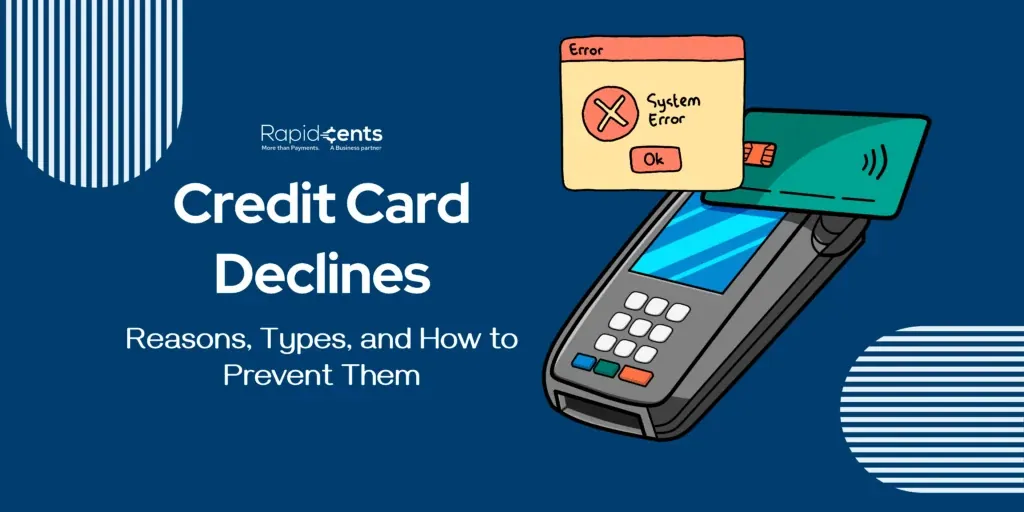
Common Reasons and Codes for Credit Card Declines Credit Card Declines: Common Reasons and Types
A credit card decline happens when the issuing bank cannot authorize a payment, most often because of insufficient funds, an expired card, incorrect card details, an exceeded credit limit, suspected fraud, or a network error. Declines are either soft (temporary and often resolved by retrying) or hard (failing every time until the underlying issue is fixed).
Explore
Virtual Terminals: Myths and Misconceptions Debunked Virtual Terminal Myths, Debunked
Virtual terminals are often dismissed as complicated, insecure, expensive, enterprise-only, unreliable or unsupported — and each belief is wrong. A virtual terminal is a secure, web-based tool for processing payments without physical card machines, protected by SSL/TLS encryption, tokenization and PCI DSS compliance, typically cheaper than traditional hardware setups, and scalable from startups to large corporations across every industry.
Explore
Square vs. RapidCents: Which Payment Processor Suits Your Business? Square vs. RapidCents: Which Processor Suits Your Business?
Square suits new and small Canadian businesses that want simple flat-rate pricing and bundled hardware, while RapidCents is built for growing enterprises that need transparent pricing, next-business-day settlements, hardware flexibility, industry-specific tools for hospitality, retail, e-commerce, and subscriptions, plus dedicated onboarding and support that scales across multiple locations.
Explore
Stripe vs. RapidCents: Which Payment Processor Fits Your Business Best? Stripe vs. RapidCents: Which Payment Processor Fits Best?
Stripe fits startups and developer-led teams that want flexible building blocks and global currency support, but it can bring hidden fees, 2-7 day payouts, and ticket-based support. RapidCents is a Canadian processor offering transparent upfront pricing, faster predictable settlements, built-in POS and subscription tools, and dedicated onboarding — a stronger fit for businesses scaling without large dev teams.
Explore
7 Common Payment Gateway Myths (And the Truth Behind Them) 7 Common Payment Gateway Myths and the Truth Behind Them
Payment gateways are not just for large businesses or online retailers. Modern gateways are scalable, straightforward to implement, and serve industries from healthcare to hospitality. Beyond moving money, they provide encryption, PCI DSS compliance, tokenization, fraud prevention and analytics, and they support multi-currency, cross-border transactions — so the common myths that hold businesses back rarely survive scrutiny.
Explore
Benefits of Online Payments for Businesses Benefits of Online Payments for Businesses
Online payments benefit businesses through instant, anytime payment acceptance, built-in security such as encryption and fraud detection, automated record-keeping that cuts bookkeeping work, and scalability into global markets with multi-currency support and recurring billing. They also improve customer experience and accessibility, while traceable, timestamped transactions remove the risks of cash theft, forged checks and slow wire transfers.
Explore
Are All Payment Processors Equal? Features That Matter Are All Payment Processors Equal? Features That Matter
Payment processors differ widely in the features that matter day to day: transparent pricing, multi-currency support, configurable reporting, PCI DSS-grade security, and integrations with e-commerce platforms and POS systems. Watch for hidden fees such as early termination charges, monthly minimums and statement fees, and use your transaction volume and competing offers to negotiate lower rates.
Explore
Understanding ACH (Automated Clearing House) Payments: The Future of Digital Transactions ACH Payments Explained: The Future of Digital Transactions
ACH payments are electronic funds transfers that move money directly between bank accounts through the Automated Clearing House network, without checks or card networks. Because transactions are batch-processed, fees run lower than credit cards, and NACHA regulations keep transfers secure. ACH suits payroll, direct deposit, bill payments, and recurring subscription billing.
Explore
Card Payment Integration for RapidCents: Improving Your Payment Processing Capabilities Card Payment Integration with RapidCents
Card payment integration lets a business accept payments from multiple providers through its website or application. RapidCents offers simple APIs for integration, PCI-DSS-compliant security, multi-currency support, real-time transaction processing, and complete reporting. Merchants sign up, integrate using API documentation, test, and go live — gaining more sales, faster cash flow, better customer experience, and lower operational costs.
ExploreHow and Why to Add Card Payments to Your Business How and Why to Add Card Payments to Your Business
Adding card payments to your business increases sales and customer satisfaction, improves security through encryption and tokenization, simplifies accounting, and opens access to global customers. To get started, select a payment gateway, open a merchant account, integrate with your POS or e-commerce platform, comply with PCI DSS, then test the system and train staff.
Explore
Credit Card Processing Essentials Credit Card Processing Essentials
Credit card processing lets businesses accept debit and credit card payments through tools matched to how they sell: EMV smart terminals in-store, mobile solutions in the field, shopping carts and gateways online, and virtual terminals for phone or mail orders. PCI DSS and EMV compliance protect card data, while good customer service and accurate merchant applications minimize chargebacks and risk holds.
Explore
How Small Businesses Can Benefit from Gateway Payment Services Gateway Payment Services for Small Businesses
A payment gateway securely captures and transmits customer payment details between the merchant, processor, and banks, encrypting data and screening for fraud along the way. For small businesses, gateways strengthen security and PCI compliance, speed up checkout, support cards, wallets, and international payments, cut cart abandonment, and scale with growth — turning payment acceptance into a driver of sales.
Explore
Top 10 Card Processing Payments Mistakes to Avoid Top 10 Card Processing Mistakes to Avoid
The most common card processing mistakes are misunderstanding processing fees, neglecting security, choosing the wrong payment processor, skipping mobile optimization, a poor checkout experience, unmonitored transactions, unpreparedness for chargebacks, weak customer support, falling behind industry changes, and ignoring system integration. Avoiding them protects profit margins, reduces fraud and chargebacks, and preserves customer trust.
Explore
Adapting E-Payment Solutions for B2B Transactions E-Payment Solutions for B2B Transactions
E-payment solutions adapted for B2B replace slow checks and manual invoicing with automated, secure electronic transactions that integrate with ERP and accounting systems. They speed up payment cycles, improve cash flow visibility, strengthen supplier relationships and cut transaction and labour costs, provided businesses plan for integration, security, regulatory compliance and change management.
Explore
How Virtual Terminals for Payments Support Remote Work and Services How Virtual Terminals Support Remote Work and Services
Virtual terminals support remote work by letting merchants, freelancers, and service providers process card-not-present payments from any internet-connected device, with no POS hardware. They combine encryption, tokenization, and PCI DSS compliance with integrations into accounting and CRM tools, so fully remote businesses can accept payments securely, cut hardware costs, and serve clients across time zones.
Explore
Adapting to Changing Consumer Payment Preferences with Virtual Terminals Virtual Terminals and Changing Consumer Payment Preferences
A virtual terminal is a web-based platform that lets businesses securely process card payments without physical card readers by entering card details from any browser. As consumers shift toward contactless payments, mobile wallets and online shopping, virtual terminals let merchants accept these methods across in-store, phone and online channels, with encryption, tokenization and fraud detection keeping transactions secure.
Explore
Integrating Virtual Credit Card Processing with Your Existing Payment Systems Integrating Virtual Credit Card Processing With Your Systems
Virtual credit card processing generates a unique card number, expiry date, and security code for each online transaction, sharply reducing fraud risk because the details are typically valid for a single purchase. Integrating it with your existing terminals, gateways, and apps unifies transactions in one system, simplifying reconciliation, cutting manual work, and improving the checkout experience.
Explore
Exploring Alternative Secure Payment Methods for Businesses Alternative Secure Payment Methods for Businesses
Businesses today can accept a range of secure alternative payment methods beyond cash, checks and cards: digital wallets like Apple Pay and Google Pay, cryptocurrency payments, mobile payment apps, NFC contactless payments, biometric authentication, peer-to-peer platforms, and blockchain-based systems. Each offers faster checkout, stronger encryption or tokenization, and broader customer reach, balanced against integration costs, fees, privacy rules and third-party dependence.
Explore
Why Your Business Needs to Embrace Integrated Credit Card Processing Why Your Business Needs Integrated Credit Card Processing
Integrated credit card processing embeds payment acceptance directly into a business's existing systems, such as POS terminals, e-commerce platforms and accounting software. It removes separate terminals and manual entry, simplifying the whole payment process from acceptance to reconciliation, which improves efficiency, reduces errors and costs, strengthens security, and gives businesses real-time transaction data for better decisions.
Explore
Comparing Virtual Credit Card Processing Features for Canadian Online Marketplaces Virtual Credit Card Processing for Canadian Marketplaces
For Canadian online marketplaces, the right virtual credit card processor combines native Canadian-dollar support, a reliable payment gateway, layered fraud prevention such as 3D Secure, tokenization and address verification, tight integration with platforms like Shopify, Magento, WooCommerce and BigCommerce, and transparent flat or percentage-based fees. Transaction volume, industry fit, multi-currency needs and scalability should guide the final choice.
ExploreEducational Resources for Canadian Businesses: Mastering Credit Card Processing Mastering Credit Card Processing in Canada
Credit card processing in Canada involves authorization, authentication, and settlement, coordinated by processors and acquiring banks under PCI DSS, OSFI, and FINTRAC oversight. To master it, businesses should compare processors on fees, security, integration, and support, harden checkout security, audit statements for hidden costs, and keep learning through industry associations, courses, and publications.
ExploreThe Impact of an International Payment Gateway on the Business Growth of Merchants How an International Payment Gateway Drives Merchant Growth
An international payment gateway lets merchants accept online payments from customers in other countries, regardless of the payment method they use. Merchants can choose between redirect gateways (simplest setup), off-site gateways (checkout on your site, processing in the back-end), and on-site gateways (full control of the checkout experience), with on-site options generally producing the smoothest customer experience.
Explore
Deciphering Payment Success: A Guide to Confirming Successful Transactions How to Confirm a Payment Was Successful
To confirm a payment was successful, check the confirmation email for the amount, date, and a transaction ID, review your bank or credit card statement for a settled or posted entry, log into the platform where you paid to view its transaction history, and watch your digital wallet or payment app for a completed status.
Explore
Exploring the Intricacies of Debit Card Processing Debit Card Processing Explained
Debit card processing is the electronic sequence that moves funds from a cardholder’s bank account to a merchant when a debit card is used. Transaction details travel from the payment terminal through a payment gateway to the acquiring bank, the issuing bank verifies funds and authorizes the purchase, and funds settle into the merchant’s account over a few business days.
Explore
Breaking Down the Best Website Payment Processors for Canadian Businesses Best Website Payment Processors for Canadian Businesses
The best website payment processor for a Canadian business supports Canadian-dollar transactions natively, carries PCI DSS-grade security, charges transparent fees and integrates easily with your store. Leading options include RapidCents, Square, Moneris, PayPal and Authorize.Net, compared here on integration, security, currency support and pricing transparency, alongside trends like contactless payments and mobile wallets.
Explore
Unveiling the Mysteries of Gateway Credit Card Services in Canada Gateway Credit Card Services in Canada
A credit card processing gateway is the technological bridge that connects a merchant's point of sale with the financial institutions completing a transaction. It encrypts card data, relays it to the issuing bank for authorization, captures approved funds, and completes settlement. Choosing a gateway in Canada comes down to security features, supported payment methods, scalability, integration capability, and cost.
Explore
Navigating Small Business Credit Card Processing in Canada Small Business Credit Card Processing in Canada
Accepting credit cards is now core strategy for Canadian small businesses: Payments.ca reports 54% of consumers prefer card over cash, and contactless and mobile payments keep growing. Card acceptance lifts sales, speeds checkout, and improves customer experience — provided businesses weigh processor fees, hardware compatibility, PCI DSS compliance, and emerging technology like EMV chips, AI fraud detection, and biometrics.
Explore
The Payment Industry Ecosystem Unveiled: A Comprehensive Guide The Payment Industry Ecosystem Explained
The payment industry ecosystem connects payment processors, issuing banks, acquiring banks, and card networks like Visa, Mastercard, and American Express to move funds securely from payers to merchants. Mobile wallets, blockchain and DeFi, contactless payments, and fintech innovation are reshaping the landscape, while encryption, tokenization, and compliance with AML, KYC, and data protection rules keep transactions secure.
Explore
Understanding Debit Holds: What They Are and How They Affect Your Finances Understanding Debit Holds and How They Affect Your Finances
A debit hold, also called an authorization hold or pending transaction, is a temporary deduction that reserves funds from your available balance until a purchase settles. Merchants such as gas stations, hotels, and restaurants use holds to guarantee payment, sometimes for more than the final amount. Holds usually clear within 24 to 48 hours, restoring the difference.
Explore
The ABCs of Business Payment Solutions: A Beginner's Guide Business Payment Solutions: A Beginner's Guide
Business payment solutions are the methods and tools companies use to send and receive payments — from cards and online gateways to mobile wallets and e-commerce platforms. They speed up cash flow, meet customer expectations for convenience, automate administrative work, and secure transactions with encryption and tokenization. Choosing one means weighing business type, transaction volume, fees, integrations, and scalability.
Explore
The Advantages of Virtual Terminals for Small Businesses Virtual Terminals for Small Businesses
A virtual terminal is software that lets a business accept card payments from a computer, tablet, or phone — no physical card reader required — making it ideal for phone, mail, and online orders. For small businesses, the advantages include lower cost than a traditional POS, scalability, tokenization and encryption security, faster processing, and built-in reporting.
Explore
Payment Solutions for Small Businesses: A Comprehensive Guide Payment Solutions for Small Businesses
Payment solutions are the tools that move money between customers, businesses, and financial institutions — POS systems, mobile wallets, and e-commerce gateways. For small businesses, the right solution speeds checkout, improves cash flow through faster settlement and recurring billing, cuts fees, and protects data with PCI DSS compliance, encryption, and tokenization, while trends like contactless, BNPL, and crypto expand options.
Explore
Evaluating Payment Process Companies: What to Look for in a Service Provider How to Evaluate Payment Processing Companies
When evaluating payment processing companies, compare six core factors: reliability and security (uptime, PCI DSS compliance, data protection), supported payment methods, pricing and fee structure (transaction, monthly, chargeback, and cross-border fees), integration capabilities and APIs, customer support responsiveness, and reporting tools. Define your needs, shortlist reputable providers, verify compliance, read reviews, and test before committing.
Explore
Understanding ACH Returns: What Happens When a Payment Bounces? ACH Returns: What Happens When a Payment Bounces
An ACH return is the reversal of a payment initiated through the Automated Clearing House system: instead of being credited to the recipient, the money goes back to the sender. Returns are triggered by insufficient funds (code R01), closed accounts (R02), incorrect account information, or authorization problems. They disrupt cash flow, incur fees, and are best handled by verifying customer data, setting alerts, and acting on return codes promptly.
Explore
Understanding Visa Debit: US vs. Canada Understanding Visa Debit: US vs. Canada
Visa Debit combines a debit card's direct link to your bank account with Visa's global acceptance. In the United States, Visa Debit cards can be run as signature 'credit' transactions and are almost universally accepted; in Canada, they function only as debit cards and often share checkout space with Interac. Regulations such as the US Durbin Amendment also shape fees and routing.
Explore
Are Credit Card Processing Fees Fair? Are Credit Card Processing Fees Fair?
Credit card processing fees — interchange fees to card-issuing banks, assessment fees to card networks, and processor fees — are what businesses pay to accept card payments. Whether they are fair is debatable: they fund convenience, fraud protection, and global commerce, but their opacity, unequal burden on small and high-risk businesses, and lack of merchant control fuel criticism. Merchants can reduce them by negotiating, improving payment technology, and auditing statements.
Explore
Differentiating Between Payment Gateways and Payment Processors Payment Gateways vs. Payment Processors: Key Differences
A payment gateway is the secure front-end checkpoint that validates a transaction and encrypts the customer's card data at checkout, while a payment processor is the back-end engine that authorizes the payment, captures the funds, and settles the transaction between the customer, the merchant, and the financial institution. Both must work together for online payments to succeed.
Explore
Things to Know Before Choosing a Credit Card Processor Things to Know Before Choosing a Credit Card Processor
Choosing a credit card processor comes down to four key factors: the breadth of payment options it supports (cards, digital wallets, alternative methods), its security stack (encryption, tokenization, fraud detection), its pricing model (flat-rate, interchange-plus, or subscription), and how smoothly it integrates with your e-commerce platform, POS, and apps. A processor handles authorization, authentication, clearing, and settlement for every transaction.
Explore
What Are the Different Types of Payment Options? Different Types of Payment Options Explained
Payment options fall into four broad groups: traditional methods like cash, checks, and bank transfers; card-based options including credit, debit, and prepaid cards; digital and mobile methods such as mobile wallets, peer-to-peer apps, and cryptocurrency; and online payment gateways that securely connect e-commerce stores to banks. Each carries different trade-offs in convenience, cost, security, and record-keeping.
Explore
How the Credit Card Process Works: Step-by-Step with RapidCents How the Credit Card Process Works, Step by Step
A credit card payment moves through seven steps: the merchant sets up a merchant account, integrates a payment gateway, the customer submits card details at checkout, the transaction is verified with fraud checks, the issuing bank authorizes it, funds settle to the merchant’s account within one to three business days, and reporting tools record the result.
Explore
Two workers in aprons checking a laptop in a workshop B2B Payment Processing: Everything You Need to Know
B2B payment processing covers payments made between two businesses for goods or services, using methods such as cheques, electronic bank (ACH) transfers, credit cards, and wire transfers. It differs from B2C mainly in who receives the payment, larger order quantities, and settlement after the invoice is turned over rather than at the point of sale.
ExploreThe Unknown Advantages of Having a Virtual Terminal in Your Business The Unknown Advantages of a Virtual Terminal
A virtual terminal lets merchants accept card-not-present payments through a web interface: the customer shares card details by phone or mail, the merchant enters them into the terminal, and the processor completes the transaction. It requires no physical hardware, supports recurring payments, and lets freelancers, local professionals, and delivery businesses process payments remotely.
ExploreThings That You Did Not Know About Virtual Payment Terminals Things You Did Not Know About Virtual Payment Terminals
A virtual payment terminal is a web-based card reader: any laptop or computer becomes a payment device with no hardware or software installation. The merchant receives card details by phone, email, fax, or mail, enters them into the secure web interface, and the processor completes the payment — with support for lower rates, recurring billing, and stored customer details.
ExploreThe True Benefits of Using Online Payment Terminals The True Benefits of Using Online Payment Terminals
Online payment terminals let merchants accept card, contactless, and recurring payments by connecting to the internet: the customer initiates the transaction, the gateway securely passes details to the processor, the card company routes it to the customer's bank, and the bank approves it if funds are available. The payoff is stronger cash flow and a broader customer base.
ExploreTwo workers in aprons checking a laptop in a workshop Why Merchants Need a Recurring Payment System
A recurring payment system lets merchants automatically pull an authorized amount from a customer's account on a set schedule, which suits subscription businesses. It comes in two types: fixed payments like gym memberships and variable payments like utility bills. Merchants gain steady cash flow and on-time payments, while customers avoid invoices, due dates, and late fees.
ExploreTwo workers in aprons checking a laptop in a workshop Top Virtual Terminal Benefits for Your Business
A virtual terminal turns a computer, laptop, or smartphone into a web-based payment tool for card-not-present transactions. Merchants log in, enter the customer's card details, and submit the payment with no card reader or extra hardware. It suits freelancers, delivery services, and professionals who take payments over the phone, and it supports recurring payments.
ExploreLearn About Online Payment Methods Before Starting An Online Store Online Payment Methods to Know Before Starting a Store
Before starting an online store, understand that online payments flow from the checkout page through a secure gateway to the processor, card network, and customer's bank, with settlement typically taking 2 to 3 business days. Merchants need a merchant account and payment processor, and accepting online payments unlocks international customers, better security, and lower transaction costs.
ExploreChoosing the Best Online Payment Processor Choosing the Best Online Payment Processor
To choose the best online payment processor, understand how merchant accounts work: shared master accounts sign you up fast without credit checks but can freeze funds with little support, while designated merchant accounts cost more and take longer to set up but give direct support and faster problem resolution. Before signing, ask about contract terms, the real processing fee, extra charges and how customer service is delivered.
ExploreAll You Need To Know About The Internet Merchant Account What Is an Internet Merchant Account?
An internet merchant account is a type of bank account that connects the merchant, the payment service provider, and the acquiring bank so a business can legally accept credit card, debit card, and mobile wallet payments online. It processes payments in real time and helps protect merchants from chargebacks and fraudulent transactions.
ExploreHow The Virtual Terminal From RapidCents Can Help Merchants Grow Their Business How a Virtual Terminal Helps Merchants Grow Their Business
A virtual terminal is an internet-based credit card machine that turns a computer into a payment processing device, letting merchants accept credit card, debit card, and mobile wallet payments through any popular browser without buying physical equipment. It supports recurring billing with automatic reminders, emailed invoices customers can pay directly, card-not-present transactions, and mail and phone orders.
ExploreOnline Payment Service Changing the Landscape of Digital Payments Online Payment Services: Changing Digital Payments
An online payment service authorizes card transactions over the internet. The customer enters card details, the gateway passes them to the processor, the card network verifies them, and the issuing bank approves or declines based on available funds. Merchants pay a discount rate of roughly 2% to 3% per sale plus a monthly gateway fee.
ExploreHow a Virtual Terminal Puts Small Businesses on the Right Track Virtual Terminal: A Boon for Small Businesses
A virtual terminal is a web-based payment tool that lets merchants accept card-not-present transactions from anywhere, with no physical hardware to buy. The merchant keys in card details received by phone or email, and the processor verifies and approves the payment in real time, making it ideal for remote, service-based, and home-run businesses.
ExploreAdvantages and Disadvantages of Recurring Payment Systems Advantages and Disadvantages of Recurring Payment Systems
Recurring payment systems automate regular bills like subscriptions and utilities. Their advantages are convenience for consumers, predictable cash flow for businesses, fewer late payments and stronger customer retention. The drawbacks are security concerns around stored payment data, difficult cancellation processes, a fixed schedule that can trigger insufficient funds, and dependency on stable technology infrastructure.
Explore


Security & fraud
3-D Secure, chargebacks and fraud prevention.
Understanding and Strengthening Fraud Prevention in the Digital Era Fraud Prevention in the Digital Era
Fraud prevention is the use of strategies and technologies — machine learning, real-time monitoring, automation, and data feedback loops — to stop fraudulent online transactions before they happen. It protects businesses and consumers from financial and reputational damage, deters attacks through layered verification, cuts investigation costs, and builds customer confidence across banking, insurance, healthcare, and the public sector.
Explore
How Secure Credit Card Processing Can Boost Your Sales How Secure Credit Card Processing Boosts Sales
Secure credit card processing protects transactions with encryption, tokenization and PCI DSS compliance. That protection boosts sales in measurable ways: customers who trust a checkout complete more purchases and return more often, fraud losses and chargeback fees fall, and a visibly secure, fast payment experience reduces cart abandonment and sets the business apart from competitors.
Explore
3D Secure: The Smart Way to Prevent Chargebacks and Fraud 3D Secure: The Smart Way to Prevent Chargebacks and Fraud
3D Secure prevents chargebacks and fraud by adding an authentication step, such as a one-time password or biometric check, before an online card payment completes. Authenticated transactions filter out unauthorized charges, make friendly fraud harder to claim, and shift chargeback liability from the merchant to the card issuer, while 3D Secure 2.0 keeps the checkout experience fast and frictionless.
Explore
5 Chargeback Myths That Are Hurting Your Bottom Line 5 Chargeback Myths That Are Hurting Your Bottom Line
Common chargeback myths cost merchants real money. Chargebacks are not always the customer's fault, disputes are winnable with proof of delivery and signed records, chargebacks are not an unavoidable cost of business, refunds and chargebacks are fundamentally different, and prevention tools usually deliver better ROI than manual handling. Fees run $20 to $100 per dispute, and high ratios can raise rates or end a merchant account.
Explore
Common PCI Compliance Mistakes And How to Avoid Them Common PCI Compliance Mistakes and How to Avoid Them
The most common PCI compliance mistakes are assuming outsourcing payments equals full compliance, believing not storing card data removes obligations, using weak or shared passwords, skipping software updates and patches, and failing to reassess compliance annually. Avoid them by completing the right SAQ, enforcing MFA, keeping systems patched, and reducing scope through tokenization and hosted checkout pages.
Explore
Chargebacks & Payment Fraud Prevention in 2025: Tactics, Tools, and Insights Chargebacks & Payment Fraud Prevention in 2025
Preventing chargebacks and payment fraud in 2025 means understanding why disputes happen (fraud, friendly fraud, delivery and billing issues), fighting them through representment with reason codes and evidence submitted within 7 to 30 days, considering chargeback insurance as a backstop, and deploying AI-powered detection with machine learning risk scoring, behavioral biometrics, and device fingerprinting alongside clear policies and billing descriptors.
Explore
Security Tips to Protect Your Merchant Account Online in 2025 Security Tips to Protect Your Merchant Account Online
To protect an online merchant account, adopt AI-powered fraud detection that monitors transaction behavior in real time, comply with PCI DSS v4.0.1, require multi-factor authentication on all logins, screen for synthetic identity fraud, audit third-party integrations, train staff against phishing, patch software promptly, and monitor transactions with live fraud scoring. Layered defenses reduce fraud losses and build customer trust.
Explore
Inside the Numbers: How AI Detects 91.7% of Fraud in Real-Time Financial Transactions How AI Detects 91.7% of Fraud in Real-Time Transactions
DeFiSentinel, RapidCents' AI-powered decentralized financial security architecture, detects fraud with a 91.7% F1 score (92.4% precision, 91.1% recall) at 2.3 ms per transaction. It combines a deep neural network trained on 450,000 transactions with federated learning that keeps raw data local, blockchain ledgers for tamper-proof records, and smart contracts for automated verification.
Explore
The Role of Virtual Terminal Solutions in Reducing Payment Fraud How Virtual Terminals Reduce Payment Fraud
Virtual terminal solutions reduce payment fraud by combining encryption and tokenization of card data, PCI DSS-compliant infrastructure, two-factor and biometric authentication, and risk tools like transaction velocity checks, IP geolocation, and blacklisting. Because merchants process phone, mail, and online payments through a secure web portal, sensitive card data never depends on physical hardware.
Explore
Strategies for Detecting and Preventing Unauthorized Card Usage Detecting and Preventing Unauthorized Card Usage
Unauthorized card usage — from skimming and phishing to card-not-present fraud and account takeovers — is detected through real-time transaction monitoring that flags deviations from a cardholder's baseline spending, machine learning models trained on legitimate and fraudulent transactions, and configurable alerts. Prevention combines two-factor and biometric authentication, encryption, tokenization, and awareness training for customers and employees.
Explore
How AI is Transforming Payment Processing and Fraud Detection How AI Transforms Payment Processing and Fraud Detection
AI transforms payment processing and fraud detection by analyzing vast transaction data in real time, recognizing legitimate behavior patterns, and flagging anomalies as they occur. Machine learning models continuously learn from new data, so they adapt to evolving fraud tactics, achieve higher accuracy than rule-based systems, and reduce false positives that block legitimate customers.
Explore
The Encryption Behind Software Credit Card Processing The Encryption Behind Software Credit Card Processing
Encryption protects credit card data by scrambling card numbers, names, expiry dates, and security codes into unreadable ciphertext that only the holder of the decryption key can restore. Payment software combines SSL/TLS for data in transit, AES for stored data, RSA for key exchange, and PCI DSS-mandated key management to keep transactions secure.
Explore
The Role of Identity Verification in Credit Card Processing The Role of Identity Verification in Credit Card Processing
Identity verification confirms that cardholders and merchants are who they claim to be, using government IDs, address checks, biometrics, and automated database cross-referencing. It prevents unauthorized transactions, identity theft, and account takeovers, satisfies KYC and AML regulations, and reduces chargebacks — making it the frontline safeguard in credit card processing.
Explore
The Evolution of Payment Fraud The Evolution of Payment Fraud
Payment fraud has evolved from forged bills and counterfeit banknotes to card skimming, phishing, large-scale data breaches, advanced persistent threats, and SIM swapping. Each wave has been answered by new countermeasures — SSL/TLS encryption, tokenization, two-factor and biometric authentication, and machine-learning fraud detection — while regulations like PCI DSS and GDPR set baseline security obligations for anyone handling payment data.
Explore
From Vancouver to St. John's: How Secure Payment Software Unifies Canadian Businesses Secure Payment Software for Canadian Businesses
Secure payment software protects Canadian businesses by encrypting and tokenizing transaction data, enforcing multi-factor access controls, and keeping merchants compliant with federal regulations such as anti-money-laundering and know-your-customer rules. From Vancouver startups to Newfoundland exporters, it gives businesses of every size and region a common, trusted foundation for accepting payments.
Explore
E-Payment Fraud Prevention Strategies for Canadian Businesses E-Payment Fraud Prevention for Canadian Businesses
Canadian businesses can prevent e-payment fraud by layering multifactor authentication and biometric verification, deploying AI and machine-learning fraud detection with behavioral analytics, training employees to spot phishing and social engineering, running customer awareness campaigns, monitoring transactions in real time, and partnering with reputable payment processors. Compliance with PIPEDA, AML rules and the Canadian Payments Act is equally essential to avoid penalties.
Explore
Debit Card Security Measures Every Canadian Should Be Aware Of Debit Card Security Measures Every Canadian Should Know
Canadians can protect their debit cards by understanding the two main fraud tactics, skimming and phishing, and by relying on built-in defences like EMV chip technology, which generates a unique code per transaction, and two-factor authentication. Daily habits matter too: check statements regularly, shop only on encrypted sites, verify bank messages, and report lost cards immediately.
Explore
Virtual Payment Gateways and the Art of Fraud Prevention for Canadian Businesses Virtual Payment Gateways and Fraud Prevention in Canada
Virtual payment gateways defend Canadian businesses against online fraud by encrypting data in transit, tokenizing card details, adding multi-factor authentication, and running real-time machine-learning fraud detection. Combined with address verification, device profiling, and compliance with PCI DSS, FINTRAC, and PIPEDA, they let merchants accept digital payments securely while balancing protection with a smooth checkout experience.
Explore
Top Trends in Secure Payment Platforms: What to Look for in 2024 Top Trends in Secure Payment Platforms for 2024
Secure payment platforms in 2024 are defined by seven trends: biometric authentication, AI and machine learning fraud detection, evolving contactless payments, blockchain-based ledgers, stronger data privacy practices, IoT-connected transactions, and user-centric security design. Businesses that adopt these technologies protect sensitive data, cut fraud, and deliver the fast, low-friction checkout experiences customers now expect.
Explore
How to Handle Refunds and Chargebacks in Credit Card Processing How to Handle Refunds and Chargebacks
To handle refunds, locate the transaction in your payment platform, issue the refund matching the original amount, notify the customer with a timeline, and document everything. For chargebacks, respond to notifications within the processor's deadline (often 7-45 days), submit thorough evidence like delivery proof and transaction records, and prevent future disputes with clear billing descriptors, AVS/CVV checks, and fraud detection tools.
Explore
The Benefits of EMV Chip Technology in Credit Card Processing EMV Chip Technology in Credit Card Processing
EMV chip technology secures credit card processing by generating a unique, single-use cryptogram for every transaction, making counterfeit card fraud nearly impossible. Beyond stronger security, EMV shifted fraud liability to the party using less secure technology, built customer trust, achieved global acceptance, and enabled contactless payments — though merchants still need separate protection for card-not-present fraud.
Explore
The Importance of PCI DSS Compliance in Online Payment Security PCI DSS Compliance in Online Payment Security
PCI DSS, the Payment Card Industry Data Security Standard, is a security framework created through the collaboration of Visa, MasterCard, Amex, Discover, and JCB to protect cardholder data. Compliance reduces breach risk, avoids fines and lawsuits, and builds customer trust. Achieving it involves scoping, data flow mapping, risk assessment, gap analysis, remediation, security controls, employee training, and continuous monitoring.
Explore
A padlock resting on a backlit computer keyboard 3D Secure Authentication: How It Works and Benefits
3D Secure authentication, also called payer authentication, is a security procedure for online credit and debit card transactions. Launched by Visa in 2001 as Verified by Visa, it asks the cardholder for an extra password or one-time PIN before a purchase completes, which reduces online fraud and chargebacks and shifts liability for unauthorized transactions from the merchant to the issuing bank.
ExploreSecurity Steps That Internet Merchant Account Holders Should Use Security Steps for Internet Merchant Account Holders
Internet merchant account holders can protect themselves from fraudsters with inexpensive security steps: keep your operating system updated so security holes are patched, store strong, long passwords in an encrypted password manager, never send account passwords by email, and install anti-malware and anti-virus software with a personal firewall on every device, whatever the operating system.
ExploreCoronavirus Has Mitigated the Number of Credit Card Frauds How the Coronavirus Pandemic Reduced Credit Card Fraud
Credit card fraud fell during the COVID-19 pandemic because consumers stopped visiting brick-and-mortar stores, where fraudsters use skimmers and shimmers attached to payment terminals to steal card data for sale on the dark web. Cybersecurity firm Sixgill credited the drop to reduced in-store card use, alongside Russian law enforcement closing dark web markets and shutting down almost 90 websites in March 2020.
Explore


Growth & commerce
E-commerce, online ordering and revenue growth.
Online Payment Processing: The Growth Engine for Modern Businesses Online Payment Processing for Business Growth
Online payment processing lets businesses accept credit cards, debit cards, and mobile wallet payments over the internet. It grows revenue by reducing abandoned carts, speeds up cash flow through automated settlements and recurring billing, and gives merchants transaction insights. To enable it, a business needs a merchant account and a payment processor whose rates fit its needs.
Explore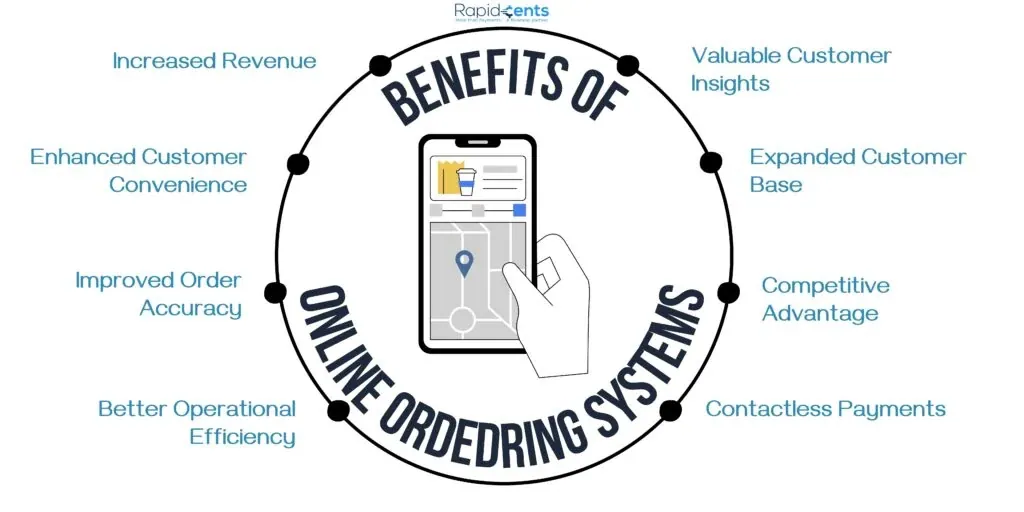
The Benefits of Using an Online Food Ordering System for Restaurants 8 Benefits of an Online Food Ordering System
An online food ordering system benefits restaurants in eight ways: bigger average orders and more revenue, greater customer convenience, improved order accuracy, better operational efficiency, valuable customer data, an expanded customer base beyond the dining room, a competitive edge over restaurants without online ordering, and secure contactless payments collected upfront.
Explore
10 Most Common E-Commerce Challenges 10 Most Common E-Commerce Challenges and How to Solve Them
The most common e-commerce challenges are driving website traffic, poor site usability, low conversion rates, inventory management, customer retention, cart abandonment, weak payment gateways, fraud, slow customer service, and returns. Most are solved by simplifying checkout, offering multiple payment options, automating fraud detection, and responding to customers quickly at every stage of the journey.
Explore
The Future of Checkout: 7 Emerging Trends Redefining Commerce in 2025 The Future of Checkout: 7 Emerging Trends
Checkout in 2025 is a growth and loyalty touchpoint, not a back-end utility. Seven trends are redefining it: contactless and tap-to-pay as the default, native social media checkout, biometric authentication replacing passwords, immersive AR/VR experiences, blockchain-verified transactions, AI-driven personalization of offers and payment methods, and sustainability options like carbon-neutral shipping and digital receipts.
Explore
Loyalty Redefined: How Credit Card Rewards Programs Are Transforming Customer Behavior How Credit Card Rewards Programs Transform Customer Behavior
Credit card rewards programs are redefining loyalty: coupons and discounts are now baseline expectations, so card providers use detailed spending data to deliver personalized rewards. Consumers respond because frequent card use earns rewards quickly, rising confidence encourages spending, and exclusivity builds emotional bonds. For merchants, rewards drive repeat business, higher transaction values, and stronger customer retention.
Explore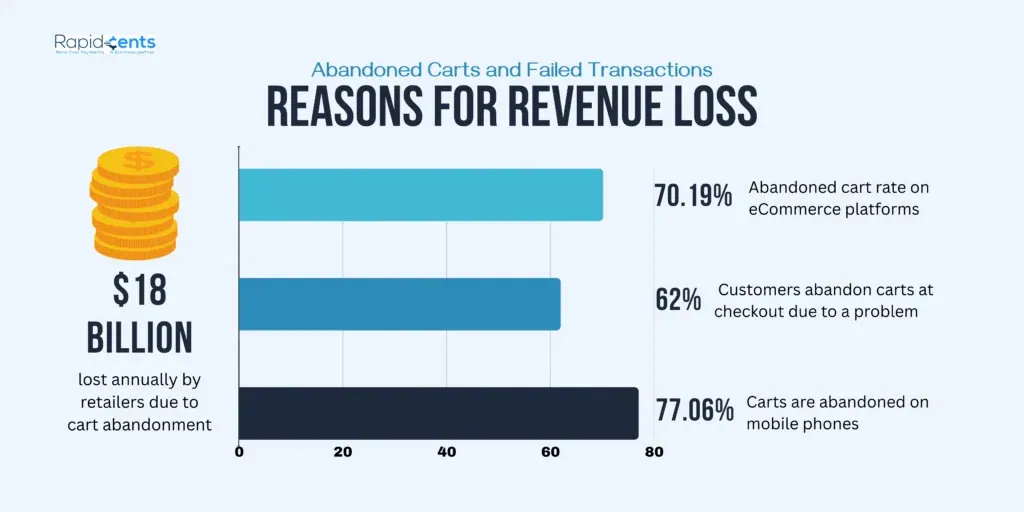
How Abandoned Carts and Failed Transactions Are Killing Sales in 2025 How Abandoned Carts and Failed Transactions Kill Sales
Abandoned carts and failed transactions are payment-processing problems, not marketing errors: retailers lose $18 billion annually to cart abandonment, the average abandonment rate is 70.19%, and 5%–10% of online payment attempts fail worldwide. Fixing them takes supported payment methods, smart routing and retry logic, transparent costs at checkout, and a frictionless, mobile-first payment experience.
Explore
The Entrepreneurs Guide on How to Sell Coffee Online How to Sell Coffee Online Successfully
To sell coffee online, pick a niche and audience, source beans by roasting in-house, partnering with local roasters or buying wholesale, and build a store on a platform like Shopify or WooCommerce. Add subscriptions and reviews, integrate a secure payment gateway with recurring billing, arrange reliable shipping, and grow through SEO, social media and email marketing.
Explore
6 Fundamentals You Need to Successfully Grow an eCommerce Business 6 Fundamentals to Successfully Grow an eCommerce Business
Successfully growing an eCommerce business requires six fundamentals: a data-driven strategy with a clear value proposition, capital to fund inventory and marketing, high-quality products that meet customer demand, the right technology for operations and customer experience, a talented collaborative team, and the patience to treat growth as a marathon rather than a sprint.
Explore
Ways to Improve Online Sales of Your Beard Care Line How to Sell More Beard Care Products Online
To sell more beard care products online, build a distinct brand identity around what makes your products unique, improve your website for mobile with high-quality product images, use SEO keywords and content marketing, engage audiences on social media, run promotions and loyalty programs, deliver responsive customer service, and continuously measure traffic and sales data to refine your approach.
Explore
The ONLY 3 Ways to Increase eCommerce Sales The Only 3 Ways to Increase eCommerce Sales
There are only three ways to increase eCommerce sales: bring more traffic to your online store through SEO, paid ads, and social media; convert more of those visitors into buyers with a simplified checkout, clear policies, and A/B testing; and increase average order value through upsells, bundles, and loyalty programs.
ExploreHow International Payment Gateway Can Expand Your Business? How an International Payment Gateway Expands Your Business
An international payment gateway securely passes transaction details from customers to the merchant processor so a business can accept credit and debit card payments from abroad, not just domestically. It gives international customers the same instant, hassle-free checkout experience, letting merchants expand beyond a competitive domestic market, amplify their customer base, and increase sales and cash flow.
Explore
7 eCommerce Email Marketing Tactics to Increase Traffic & Sales 7 eCommerce Email Marketing Tactics
Seven proven email marketing tactics increase eCommerce traffic and sales: personalize emails around customer behaviour and past purchases, segment your list for targeted messages, send abandoned cart reminders within hours, automate welcome and post-purchase workflows, craft compelling subject lines, improve every email for mobile, and use clear, visually prominent calls-to-action. Together they turn routine campaigns into dynamic sales drivers.
Explore
How Buyer Personas Can Supercharge Your eCommerce Sales Buyer Personas for eCommerce: Boost Your Sales
Buyer personas are semi-fictional profiles of your ideal customers built from market research and real customer data. eCommerce stores use them to target marketing campaigns, create relevant content, guide product development, and segment audiences. To build one, gather customer data, identify shared traits, and write detailed profiles that inform your messaging, channels, and offers.
Explore
5 Reasons Why Customers Aren't Returning to Your Online Store Why Customers Don't Return to Your Online Store
Online stores lose repeat customers for five main reasons: a slow or confusing user experience, a lack of personalized recommendations and offers, inconsistent product quality, inadequate customer service, and no loyalty program rewarding repeat purchases. Fixing these five areas turns one-time shoppers into loyal, repeat customers and drives sustainable, profitable growth for the business.
Explore
Identifying and Leveraging Customer Profiles for Online Commerce: Tactics and Examples Identifying and Leveraging Customer Profiles in eCommerce
A customer profile is a detailed depiction of your ideal customer built from research and data points like location, age, interests, income, and shopping behavior. In e-commerce, profiles identify target customers, guide product selection, and power personalized campaigns. Identify buyer personas through audience research, customer feedback, email list segmentation, and behavioral analytics such as purchase frequency and spending.
Explore
Enhancing eCommerce Conversions: Three Key Strategies Three Key Strategies to Enhance eCommerce Conversions
eCommerce conversion rates improve through three staged strategies: Launch & Grow, which covers market research, website optimization, and email marketing; Accelerate, which adds A/B testing, mobile optimization, and social media marketing; and Elevate, which applies advanced analytics, retargeting, exceptional customer service, paid advertising, and a smooth, secure payment gateway that reduces cart abandonment.
ExploreRapidCents WooCommerce Payment Gateway Plugin RapidCents WooCommerce Payment Gateway Plugin
The RapidCents WooCommerce payment gateway plugin lets online merchants accept payments from major card brands like Visa, Mastercard, American Express, and Discover, plus wallets such as Google Pay and Apple Pay, directly on their own store without redirecting customers to another site. It supports subscriptions and recurring payments, Strong Customer Authentication, PCI DSS compliance, 3D Secure, and chargeback prevention.
Explore
How to Improve Customer Satisfaction through a Seamless Payment Process Customer Satisfaction Through Seamless Payments
To improve customer satisfaction through a smooth payment process, remove checkout friction: speed up page loads, simplify forms, display transparent pricing, offer guest checkout, and support multiple payment methods including mobile wallets. Visible security such as SSL and PCI compliance builds trust, while KPIs like conversion rate and cart abandonment show whether refinements are working.
Explore
How Payment Gateway Companies Can Help You Scale Your E-commerce Business How Payment Gateways Help You Scale E-commerce
Payment gateway companies help e-commerce businesses scale by acting as the secure link between a store and customers' banks. They expand market reach with international payment methods and currencies, reduce cart abandonment through fast, secure checkout, grow revenue via subscription billing and fraud prevention, and simplify operations with automation, real-time data, and high-volume scalability.
Explore
Future-Proof Your Business with Flexible Online Credit Card Processing Options Flexible Online Credit Card Processing Options
Flexible online credit card processing lets a business accept many payment methods—credit and debit cards, digital wallets and buy now, pay later—through one adaptable system. It supports multi-currency sales, mobile payments and subscription billing, which raises conversion rates, improves the customer experience and lets payment operations scale as markets and consumer habits change.
Explore
Optimizing Online Credit Card Gateways for High-Traffic Events and Sales Optimizing Credit Card Gateways for High-Traffic Sales
To improve an online credit card gateway for high-traffic events, load test the infrastructure against simulated peak traffic, plan capacity for the expected transaction volume, reduce latency with CDNs and caching, harden security with encryption, fraud detection, and PCI DSS compliance, and monitor gateway metrics in real time to catch bottlenecks before they cause payment failures.
Explore
Leveraging E-Payment Software for Business Growth and Strategy Leveraging E-Payment Software for Business Growth
E-payment software helps businesses grow by automating transaction processing, invoicing, and reconciliation, cutting administrative costs, and offering customers convenient payment options that lift conversion. It also enables cross-border sales in multiple currencies, generates transaction data for behaviour and trend analysis, and supports strategic moves such as new markets, recurring revenue models, and payment innovation.
Explore
The Impact of Payment Processing on Conversion Rates for Canadian Websites Payment Processing and Conversion Rates in Canada
Payment processing directly shapes conversion rates on Canadian websites. A smooth, secure checkout — multiple payment options, transparent pricing, simplified forms, mobile optimization and visible security measures — turns more visitors into buyers, while friction, surprise fees and security doubts drive cart abandonment. Trends like contactless payments, mobile wallets, BNPL and biometrics give merchants new ways to lift conversions.
Explore
The Competitive Edge: Why Businesses Should Embrace More Payment Options Why Businesses Should Embrace More Payment Options
Offering more payment options gives businesses a competitive edge because customers who face restricted choices often switch to competitors with more flexibility. A diverse mix — contactless, digital wallets, and traditional cards — improves customer satisfaction, builds trust through transparency and security, and widens the addressable audience from tech-savvy millennials to customers who prefer traditional methods.
Explore
Importance of User-Friendly Interfaces in Online Payment Processing Why User-Friendly Interfaces Matter in Online Payments
User-friendly interfaces matter in online payment processing because they reduce friction at checkout, which lifts conversion rates and cuts cart abandonment. Clear calls to action, simplified forms, responsive design across devices, and visible security indicators such as SSL badges build the trust customers need to complete a transaction and return to the platform.
Explore
E-commerce Subscription Models: Streamlining Recurring Transactions E-commerce Subscription Models and Recurring Payments
E-commerce subscription models come in four main types - product, service, curated, and access subscriptions - and succeed when recurring transactions are simplified end to end. That means frictionless onboarding, transparent pricing and cancellation policies, personalization and loyalty programs, secure automated billing through reliable payment gateways, and churn-reduction tactics such as flexible plans, re-engagement campaigns, and data-driven insights.
Explore
How Restaurant Food Ordering Systems Boost Revenue and Cut Costs Food Ordering Systems: Boost Revenue, Cut Costs
Restaurant food ordering systems boost revenue by extending reach through web and mobile storefronts, improving order accuracy, enabling personalized upselling, and driving repeat business with built-in loyalty programs. They cut costs by automating order capture straight to the kitchen, tracking inventory in real time to reduce waste, and using predictive analytics to staff accurately for peak periods.
Explore
Integrating E-commerce with In-Store Transactions: A Guide for Canadian Businesses Integrating E-commerce with In-Store Sales
Canadian businesses integrate e-commerce with in-store transactions by adopting unified commerce platforms and modern POS systems that synchronize sales, inventory, and customer data in real time. Success requires interoperable technology, PIPEDA-compliant data protection, bilingual support, staff training, and a phased rollout — starting with a pilot, migrating data carefully, and continuously testing and refining.
Explore
Strategies for Minimizing Cart Abandonment Through Streamlined Payment Processes Minimizing Cart Abandonment with Streamlined Payments
To minimize cart abandonment, simplify the payment process: reduce checkout steps, design an intuitive interface, improve for mobile, offer diverse payment methods including digital wallets, disclose all costs up front, and provide guest checkout. Visible security measures such as encryption, PCI DSS compliance and trust badges reassure shoppers and keep them from leaving before paying.
Explore
Fast Food for Thought: Analyzing the Impact of Ordering Systems on Restaurant Revenue How Ordering Systems Impact Restaurant Revenue
Digital ordering systems, spanning mobile apps, online platforms, and in-store kiosks, directly increase fast-food restaurant revenue. They speed up throughput so more customers are served, cut order abandonment with pre-ordering, extend reach beyond the local area, enable data-driven menu and pricing decisions, and create upsell opportunities through recommendations, bundle deals, and loyalty rewards.
Explore
E-Commerce Processing Tips for Seasonal Sales and Promotions in Canada E-Commerce Processing Tips for Seasonal Sales in Canada
To handle seasonal sales in Canada, e-commerce businesses should invest in scalable cloud hosting, load test before peak periods, choose reliable payment gateways with multiple payment methods, forecast inventory using historical data, personalize campaigns with customer insights, improve mobile checkout with digital wallets, promote through social commerce, scale customer support, and analyze each season's data to improve the next.
Explore
Streamlining Operations: How Takeaway Ordering Systems Improve Efficiency in Canadian Eateries Takeaway Ordering Systems for Canadian Eateries
Takeaway ordering systems improve efficiency in Canadian eateries by digitizing order capture, sending orders straight to the kitchen, cutting errors and wait times, and integrating with POS, inventory, and CRM tools. When choosing a system, weigh cost, scalability, user-friendliness, mobile support, customization, and customer support; options in the Canadian market include RapidCents, Lightspeed, TouchBistro, and Toast.
Explore
Money Processing and E-commerce: A Crucial Partnership for Online Businesses Money Processing and E-commerce: A Crucial Partnership
Money processing is the financial backbone of e-commerce: it moves funds securely from customer to merchant through payment gateways, validates transactions, and confirms payment. Online businesses that offer diverse payment methods, strong security such as SSL encryption and tokenization, and fast transaction processing build customer trust and stay competitive in the digital marketplace.
Explore
How Online Food Delivery is Supporting Canadian Food Entrepreneurs Online Food Delivery for Canadian Entrepreneurs
Online food delivery platforms give Canadian food entrepreneurs visibility far beyond their neighbourhood, acting as virtual storefronts with reviews, promotions and marketing tools built in. They lower overhead compared with expanding brick-and-mortar operations, simplify payments, surface data on customer preferences and support innovations like delivery-only kitchens—helping small food businesses reach new customers and grow.
Explore
Why Your Restaurant Needs an Online Takeaway Ordering System Why Your Restaurant Needs an Online Takeaway Ordering System
An online takeaway ordering system lets customers order directly from a restaurant's website or app, increasing sales through wider reach and higher average order values while reducing errors and overhead. With 51% of Canadians ordering food online from third-party platforms 2 to 4 times a month, direct online ordering has become essential for restaurant growth.
Explore
How Food Delivery Systems Are Changing the Way We Dine How Food Delivery Systems Are Changing Dining
Food delivery systems have moved from convenience to core restaurant infrastructure. App-based ordering expands a restaurant's reach, adds a revenue stream that is easier to control on slow days, and produces customer data for menu decisions. Success requires balancing delivery with in-store dining, protecting food quality in transit, and, for many restaurants, building a branded delivery platform of their own.
Explore
Food Ordering Systems: Empowering Small Restaurants in the Digital Age Food Ordering Systems for Small Restaurants
A food ordering system is a digital platform, accessed via website or mobile app, that lets customers order from restaurants for takeaway, delivery, or dining in. For small restaurants, these systems increase visibility, provide marketing support, simplify order management, and capture customer data, levelling the playing field against larger chains despite limited capital and IT resources.
Explore
Enhancing Restaurant Operations with Online Ordering Systems Online Food Ordering System for Restaurants
An online food ordering system gives restaurants customer convenience, higher sales from an expanded catchment area and larger orders, better order accuracy through visual confirmation, simplified operations with POS integration, rich customer data, delivery-service integration, and contactless options. Setup and transaction fees are typically recovered through increased revenue, lower labour costs, and fewer order errors.
Explore
Online Ordering vs. Third-Party Delivery Apps: Which Is Better for Your Restaurant? Online Ordering vs Third-Party Delivery Apps
Third-party delivery apps give restaurants convenience and access to a large user base, but they charge commission fees on every order, reduce control over the delivery experience, and keep the customer data. A direct online ordering system offers a branded storefront, menu control, transparent pricing with low or no commissions, and full customer insights, favouring restaurants that want loyalty and margin.
Explore
Restaurant Ordering System That Every Restaurant Should Have Restaurant Ordering System Essentials
A restaurant ordering system is software that lets customers order digitally instead of by phone or in person. Every restaurant needs one with smooth online ordering, menu management, POS integration, real-time order tracking, inventory management, customer relationship tools, loyalty programs, and PCI-compliant secure payments, scalable from a single location to a multi-location chain.
Explore
Optimizing E-commerce: Enhancing Payment Processing for Online Businesses Enhancing Payment Processing for Online Businesses
To improve payment processing for an online business, choose a reliable payment gateway that encrypts transactions, support multiple payment methods, simplify checkout to a few clear steps, enforce security measures like PCI DSS compliance and tokenization, monitor transaction data for failures, and keep pricing and refund policies transparent to build customer trust.
Explore
Mastering Customer Retention: How to Create a Magnetic Online Store that Keeps Shoppers Coming Back Mastering Customer Retention for a Magnetic Online Store
To master customer retention, understand the psychology of loyalty: trust, emotional connection, perceived value, and social proof. Deliver outstanding experiences through user-friendly design, fast pages, simplified checkout, and personalization. Build trust with exceptional service, reviews, and loyalty programs, nurture customers with segmented email and content marketing, and track metrics like repeat purchase rate and churn while A/B testing improvements.
Explore
Effective Strategies to Drive Free Traffic to Your Online Store Effective Ways to Drive Free Traffic to Your Online Store
To drive free traffic to an online store, understand your target audience with market research and buyer personas, improve for search engines with keyword research and quality content, run consistent content marketing, engage audiences on the right social platforms, partner with relevant influencers, build and segment an email list, contribute to online communities, and publish guest posts on industry websites.
Explore
From SEO to Social Media: The Essentials of Digital Marketing for eCommerce Digital Marketing Essentials for eCommerce
Digital marketing for eCommerce rests on a handful of essentials: SEO to rank product and category pages, social media to build reach and engagement, paid advertising for targeted traffic, email marketing for direct personalized outreach, content marketing to build trust, and analytics to measure traffic, conversions, and ROI so campaigns keep improving.
Explore
The Customer Retention Checklist: How to Keep Customers Coming Back to Your Online Store Customer Retention Checklist: Keep Shoppers Coming Back
To keep customers coming back to an online store, learn about them through surveys and data analysis, personalize recommendations and offers, provide responsive multi-channel customer service, resolve complaints quickly, build proactive support like FAQ sections, reward loyalty with points and referral programs, simplify checkout to three steps, communicate through newsletters and social media, and continuously improve the website.
Explore
From Browsing to Buying: How Retargeting Can Convert Customers Retargeting: Turn Browsers Into Buyers
Retargeting is marketing to consumers who have already visited your website or shown interest in your products. Because these shoppers already know your brand, they convert more readily than cold audiences. Effective retargeting combines audience data, segmentation, personalized ads, A/B testing, controlled ad frequency, and cross-channel placement, measured with KPIs like click-through and conversion rates.
Explore
Why Pinterest is the Secret Weapon for Ecommerce Marketing Why Pinterest Is the Secret Weapon for Ecommerce Marketing
Pinterest is an overlooked ecommerce marketing channel with roughly 500 million monthly users who browse for ideas and inspiration rather than entertainment. Brands that post inspirational content, organize product boards, enable buyable pins and shopping ads, and link pins to product pages can reach committed shoppers — studies cited show 85% of weekly Pinterest visitors have purchased from pins they encountered.
Explore
Revolutionizing eCommerce: The Impact of Instagram Revolutionizing eCommerce: The Impact of Instagram
Instagram changed eCommerce by letting brands sell where consumers already spend their time. Shoppable posts let users buy without leaving the app, business accounts add audience analytics, and influencer partnerships extend reach. Combined with affordable targeted advertising and strong visual storytelling, Instagram gives even small businesses a cost-effective way to grow followers, brand awareness and sales.
Explore
Mastering the Art of CRO: Tips and Tricks for Success Mastering the Art of CRO: Tips and Tricks for Success
Conversion rate optimization (CRO) is the process of turning more website visitors into customers or subscribers. To master it, analyze your site with tools like Google Analytics, write a clear value proposition, craft visible calls to action, run A/B tests on design elements, and keep improving user experience with performance data.
Explore
The Impact of Pricing on eCommerce Sales The Impact of Pricing on eCommerce Sales
Pricing is often the deciding factor in whether an online shopper buys from your store or a competitor's. Avoid overpricing, which drives shoppers elsewhere, and underpricing, which signals low quality and erodes profit. Research competitor prices, match the market average while adding perks like free shipping, run well-planned discounts, and apply dynamic pricing carefully during peak demand.
Explore
Grow Your eCommerce Business with Conversion Rate Optimization Conversion Rate Optimization to Grow Your eCommerce Store
To grow an eCommerce business with conversion rate optimization, set clear conversion goals and key metrics, improve the website with visible CTAs, mobile-friendly design, A/B testing, and security, monitor strategies with heat maps, scroll maps, surveys, and metrics like bounce rate, then analyze the results to refine pages, campaigns, and content for higher conversions.
Explore
Exploring the Benefits of Conversion Rate Optimization Exploring the Benefits of Conversion Rate Optimization
Conversion rate optimization (CRO) is the process of increasing the share of website visitors who take action and make a purchase. Its benefits for ecommerce stores include improved user experience, content tuned to what visitors respond to, data-backed decisions through A/B testing, higher mobile conversion rates, better-performing landing pages, and ultimately more leads, sales, and revenue.
Explore
12 Proven Tactics to Boost Your eCommerce Email Marketing 12 Proven Tactics to Boost Your eCommerce Email Marketing
To boost eCommerce email marketing, personalize messages, segment your audience, write clear subject lines, add visible call-to-action buttons, improve for mobile, track analytics, A/B test campaigns, use visuals and interactive elements, offer exclusive deals, automate welcome and abandoned-cart emails, and create urgency with limited-time offers. These tactics increase open rates, engagement, and purchases.
Explore
The Benefits of Automated Email Marketing for Ecommerce The Benefits of Automated Email Marketing for Ecommerce
Automated email marketing helps ecommerce stores convert and retain customers at low cost. It lets you segment audiences and personalize messages, schedule sends for when customers actually read email, run A/B tests, and track opens and clicks instantly. Triggered emails such as welcome messages, cart reminders and price-drop alerts bring shoppers back to your store automatically.
ExploreOnline Payment Gateway: How Enabling One Can Boost Your Business Sales Online Payment Gateway: How It Boosts Business Sales
An online payment gateway is the secure link in an online transaction: it encrypts the customer's card information and forwards it to the payment processor, card company, and bank for approval. Enabling one lets a business accept payments around the clock and boosts sales through last-minute deals, online invoicing, affiliate programs, and automatic recurring payments.
ExploreThe Need of Adaptable Online Payment Tools in Your Business Why Your Business Needs Adaptable Online Payment Tools
Adaptable online payment tools let a business accept payment however the customer prefers — through an online store checkout, a virtual terminal, a QR code, or payment requests sent by text and email. They deliver instant, contactless transactions, better customer convenience, and higher payment reliability and security than relying on cash and cheques.
Explore
Rails of clothing on display in a retail store Why Your Business Needs Online Payment Solutions
Online payment solutions let merchants accept card-not-present transactions, credit and debit payments made through an online marketplace, with funds reaching the bank account within one or two business days. They enable international sales with prices shown in the customer's preferred currency, real-time checkout, and flexible payment modes that increase overall sales.
Explore


Company news
RapidCents announcements, awards and product releases.
RapidCents Wins 2026 IDC CIO Awards Canada Recognition for the Second Consecutive Year as APPIE Takes Payment Interoperability Forward RapidCents Wins 2026 IDC CIO Awards Canada
RapidCents has been named a 2026 IDC CIO Awards Canada winner — its second consecutive recognition, following 2025's win for DeFiSentinel. This year's recognized innovation is APPIE, the patent-pending Adaptive Payment Protocol Interoperability Engine, which normalizes communication between POS systems, terminals, and processors so merchants can change payment providers without rebuilding their technology stack.
Explore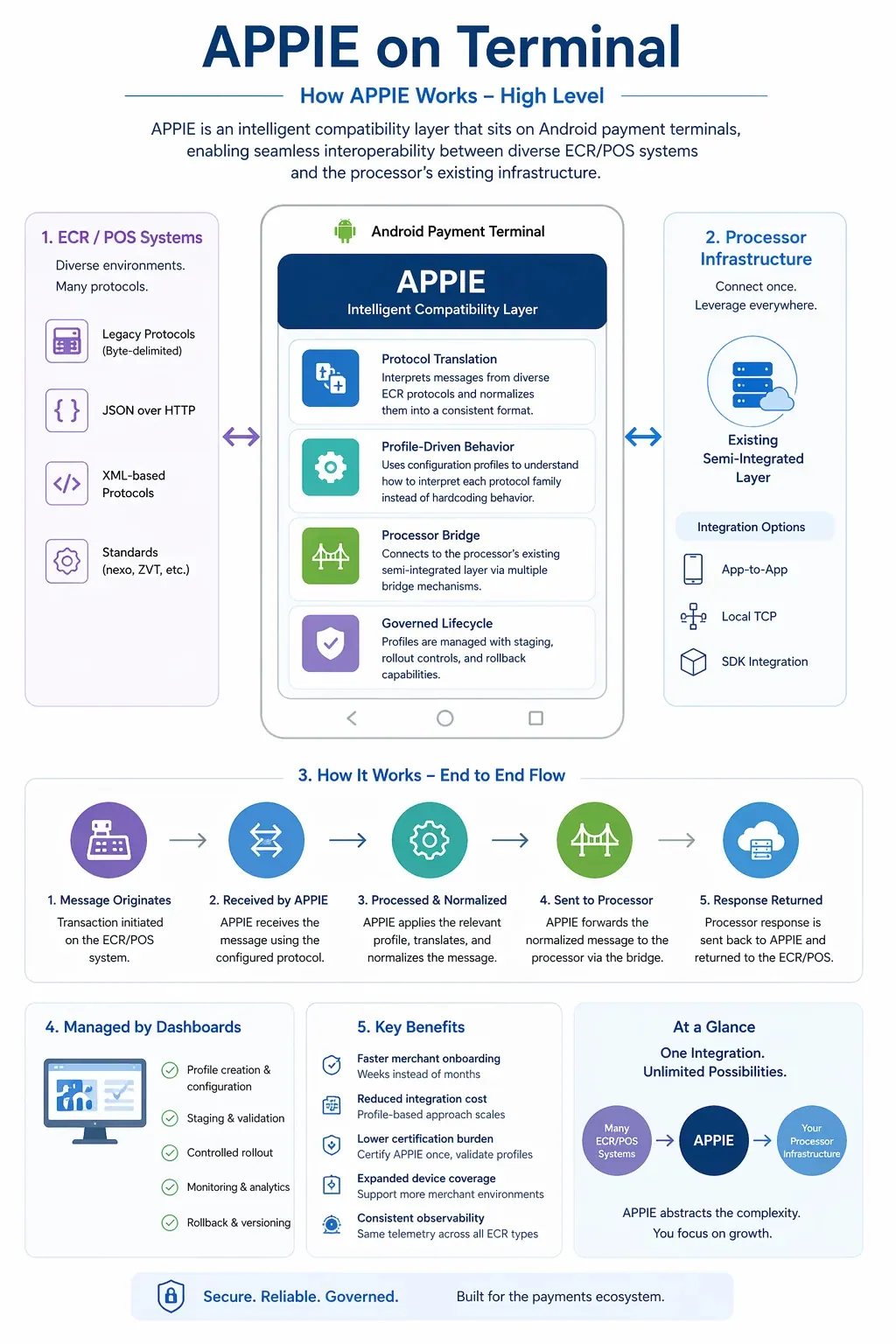
What Is APPIE on Terminal? The Payment Interoperability Engine Processors Need What Is APPIE on Terminal? Payment Interoperability Engine
APPIE (Adoptive Payment Protocol Interoperability Engine) is a patent-pending interoperability platform from RapidCents that makes payment terminals ECR/POS-agnostic. Running as an intelligent compatibility layer on Android terminals, it translates diverse ECR protocols into one consistent format through configuration profiles, so processors build a single integration instead of custom integrations for every POS environment.
Explore
RapidCents Wins CIO Awards Canada for IT Innovation and Business Value RapidCents Wins CIO Awards Canada 2025
RapidCents won the CIO Awards Canada for IT Innovation and Business Value on 13 November 2025. The award recognizes organizations showing outstanding innovation, measurable business impact, and technology leadership. It caps a year in which RapidCents expanded across Canada, earned multiple fintech awards, and delivered faster processing and stronger fraud protection for merchants.
Explore
RapidCents Now Supports Fusebox Integration RapidCents Now Supports Fusebox Integration
RapidCents now supports Fusebox integration, connecting the hospitality-focused Fusebox payment gateway directly to the RapidCents dashboard. Hotels, resorts, and restaurants get consolidated payment tracking, faster payouts with transparent pricing, advanced fraud and chargeback protection, multi-currency acceptance, and 24/7 support — bringing enterprise-grade payments to Fusebox-powered properties from global brands to independent boutiques.
Explore
RapidCents Wins 2025 CIO Awards Canada for DeFiSentinel RapidCents Wins 2025 CIO Awards Canada for DeFiSentinel
RapidCents was named a 2025 CIO Awards Canada winner by IDC Canada and CIO for DeFiSentinel, its AI-powered decentralized finance system. DeFiSentinel helps DeFi platforms detect fraud in real time, stay audit-ready, and run reliably under pressure, showing that security, compliance, and decentralization can work in harmony rather than at odds.
Explore
How Business Card Processing Works with RapidCents Secure, Efficient Business Card Processing
Secure, efficient payment processing combines smooth integration with existing business systems, advanced encryption with PCI DSS compliance, a transparent fee structure that keeps costs predictable, and responsive support. Capabilities such as multi-currency acceptance, purchase-trend analytics, support for multiple payment methods, and fast, reliable transaction processing let businesses of all sizes serve customers confidently.
ExplorePayPal and eBay Are Offering Attractive Cashback Offers for Selected Customers PayPal and eBay Cashback Offers Explained
PayPal and eBay ran cashback promotions for selected new credit card customers. PayPal offered 4% cashback on online purchases every day for the first 90 days, capped at $5,000 in spending for a maximum of $200 back, while eBay's Mastercard offered a $150 statement credit after $500 spent within 30 days, plus reward-point multipliers.
ExploreGoldman Sachs Planning To Buy General Motor's Credit Card Goldman Sachs Eyes GM's Credit Card Business
Goldman Sachs is among the bidders for General Motors' credit card business, competing with Capital One Financial Corp. The bank previously launched a digital card with Apple that supports contactless transactions and lives on the iPhone with no physical card to copy. GM cardholders could reportedly buy takeout, groceries, and gas without leaving the driver's seat.
Explore