Industry trends, Articles
Market shifts and acceptance behaviour. 32 pieces in articles, written for Canadian merchants: what industry trends covers, what to check on your own statement, and the decisions it changes.
Industry trends
Industry trends
Market shifts and acceptance behaviour.
On this shelf

Tokenised card credentials protected inside a payment system Agentic Payments Explained
An AI agent can express intent, choose a product and start a payment. Authentication, authorization and settlement stay with the payment system, and that boundary is what keeps the model safe.
Explore
A laptop on a desk displaying line and bar charts The Great Big History of Payments: From Barley to Biometrics in 5,000 Years
Payments history is one idea iterating for five millennia: strangers finding ways to trust each other's value at greater distance and speed. Commodity money made value portable, coins standardized it, paper and banking made it abstract, cards made it credentialed, networks made the credential global, and tokenized taps made it invisible. Each leap traded a physical assurance for an institutional one, which is why the story of payments is really the story of trust infrastructure.
ExploreA laptop on a desk displaying line and bar charts Buy Now, Pay Later for Merchants: The Real Costs, the Real Lift, the Real Risks
Buy Now, Pay Later moves the instalment loan to checkout: the provider pays the merchant up front (minus a fee of roughly 2 to 8 percent), assumes the consumer credit risk, and collects from the shopper in slices. Merchants adopt it because it verifiably lifts conversion and average order values, especially on discretionary purchases over $100; the honest ledger also includes the fee premium over cards, checkout clutter and a customer relationship partly intermediated by the BNPL brand.
Explore
Moneris Alternatives in Canada: 7 Best Payment Processors for Canadian Businesses in 2026 Moneris Alternatives in Canada: 7 Best Processors for 2026
For Canadian businesses comparing payment processors in 2026, seven Moneris alternatives worth considering are RapidCents (best overall for growing, high-volume and Canada/U.S. businesses), Stripe for developer-led SaaS, Square for simple POS needs, Clover/Fiserv for an all-in-one POS ecosystem, Adyen for multinationals, Elavon for bank-owned global processing, and Chase Payment Solutions for traditional merchant services.
Explore
Customer tapping card Contactless and Interac Trends in 2026
Tap share rises in QSR/retail; Interac Debit dominates in-person, optimize lanes and debit transparency.
Explore
Subscription Fatigue vs. Seamless Billing: Winning Over Burnt-Out Customers Subscription Fatigue vs Seamless Billing
Subscription fatigue is the emotional and financial exhaustion customers feel from managing too many recurring charges, and it drives cancellations, chargebacks, and brand resentment. The fix is smooth billing: transparent pricing with renewal reminders, flexible plans with pause and downgrade options, smart retries for failed payments, and proactive retention triggers. Customers stay longer when they feel in control rather than trapped.
Explore
Why Merchants Are Prioritizing Recurring Payments in 2025 Why Merchants Are Prioritizing Recurring Payments in 2025
Merchants are prioritizing recurring payments in 2025 because automated billing delivers predictable revenue, fewer missed payments, lower churn, and less manual work for finance teams. With the global subscription economy forecast to reach $1.5 trillion in 2025 and 81% of North Americans holding at least one subscription, recurring billing has become a core payment strategy.
Explore
How Instant Payments Can Grow Your Business How Instant Payments Can Grow Your Business
Instant payment systems transfer funds between accounts in seconds, at any time of day, instead of the up-to-three-day wait of card batches and ACH transfers. For businesses this means immediate cash flow, a smaller fraud window, automated reconciliation and a faster customer experience—advantages already proven by systems like India’s UPI, Brazil’s PIX and Sweden’s Swish.
Explore
FinTech Fragmentation: When Too Many Payment Options Hurt More Than Help FinTech Fragmentation: When Too Many Payment Options Hurt
Using too many disconnected payment providers hurts merchants in five ways: systems fail to sync and force manual work, stacked vendor fees raise total costs, every extra partner adds compliance and security risk, checkout becomes inconsistent for customers, and support issues get harder to resolve. Consolidating to one or two strong partners keeps payments simple, secure, and scalable.
Explore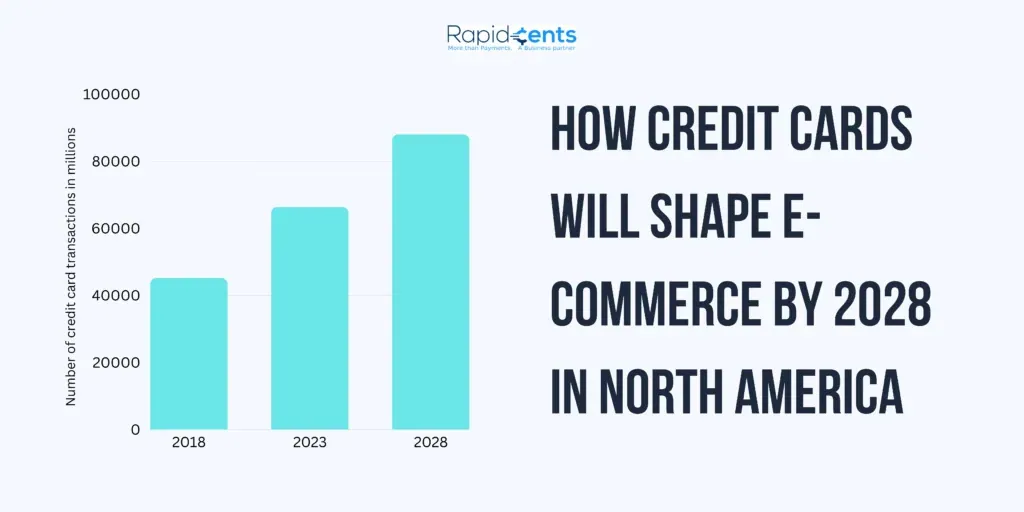
How Credit Cards Will Shape E-commerce by 2028 in North America How Credit Cards Will Shape E-Commerce by 2028
Credit cards will keep shaping North American e-commerce through 2028: the credit card market is expected to continue growing, with over 150 million daily credit card transactions in the US in 2024. Key trends include biometric authentication and AI fraud prevention, contactless and mobile wallet payments, flexible instalment options like BNPL, and AI-personalized rewards.
Explore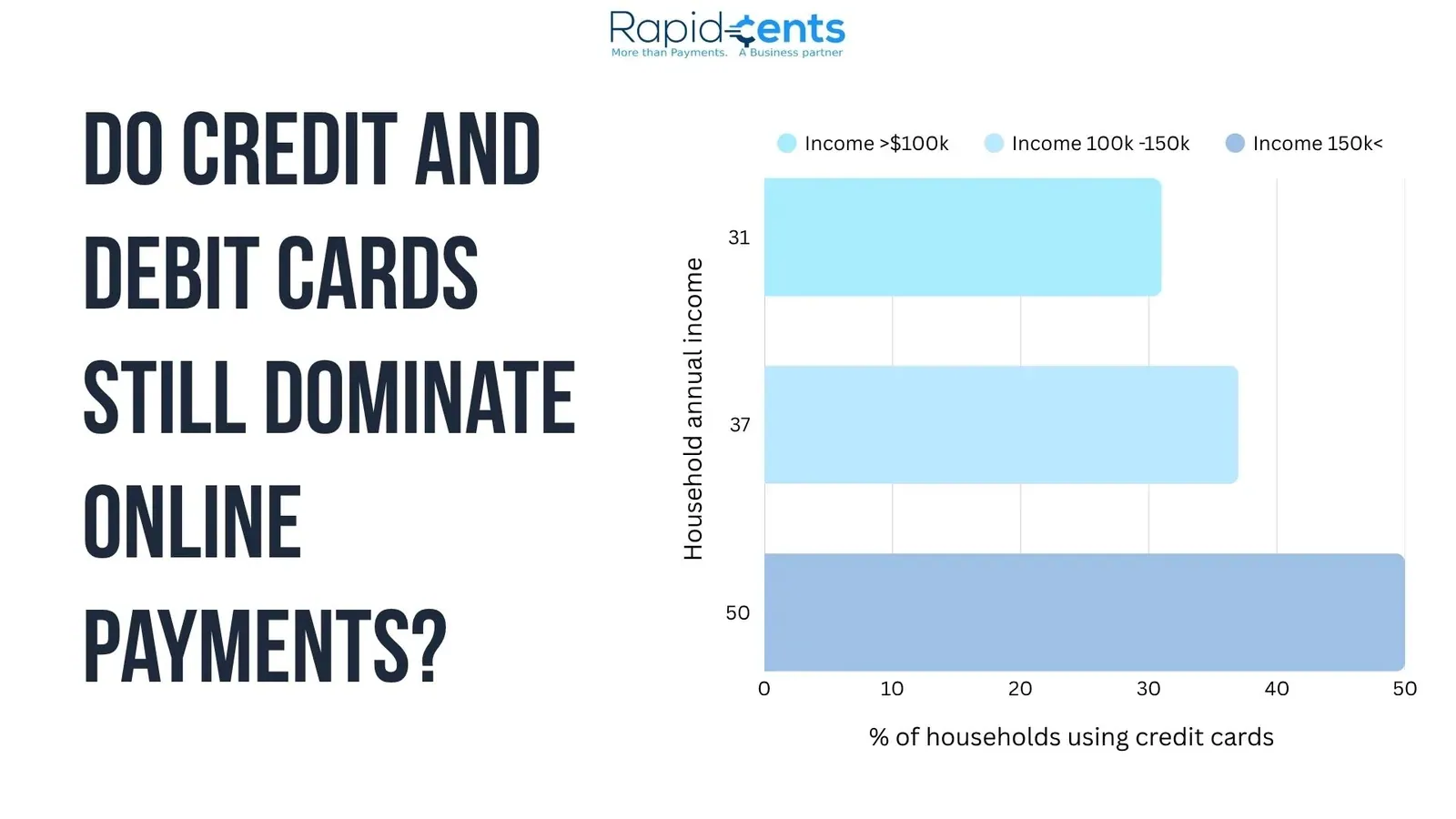
Do Credit and Debit Cards Still Dominate Online Payments? Do Credit and Debit Cards Still Dominate Online Payments?
Yes. Despite digital wallets, buy-now-pay-later, and crypto, 65% of online payments are still credit and debit card-based, according to Payments and Commerce Marketing Intelligence. Consumers stick with cards for trust, rewards, buyer protection, and universal acceptance, so merchants should improve checkout for cards with tokenization, 3D Secure, smart routing, and decline management.
Explore
The State of Subscriptions and Recurring Billing in 2025 The State of Subscriptions and Recurring Billing in 2025
Subscriptions have moved well beyond streaming: the subscription and loyalty industry grew from an estimated $2 trillion in 2023 to $3 trillion in 2024, with subscriptions up 60% in recent years. For small and medium businesses, recurring billing creates predictable cash flow, stronger customer loyalty, and lower acquisition costs without major operational changes.
Explore
Navigating the Future of the Card Payment Industry Future of the Card Payment Industry: Key Trends
The future of the card payment industry is being shaped by contactless payments and mobile wallets, evolving security such as EMV, tokenization, biometrics, and AI-driven fraud detection, regulations like PSD2, the gradual acceptance of cryptocurrencies by major card networks, fintech-driven innovation, and rising customer expectations for smooth, personalized payment experiences.
Explore
Credit Processing and the Canadian Retail Industry Credit Processing and the Canadian Retail Industry
Credit processing is the end-to-end procedure by which retailers enable and manage credit and debit transactions with customers, spanning POS terminals, payment gateways, authorization networks, and back-end settlement. In Canadian retail it directly shapes customer satisfaction, consumer trust, and spending behaviour, and it must comply with regulations such as PIPEDA and PCI DSS.
Explore
Beyond Borders: International Transactions and Canadian Processing Solutions International Transactions and Canadian Processing Solutions
Canadian payment processing solutions have become key players in international transactions by combining advanced technology, strong financial infrastructure, and adherence to international standards. They address the three core cross-border challenges — multi-currency management with real-time exchange monitoring, compliance across differing regional regulations, and security through encryption, multi-factor authentication, and real-time fraud monitoring — while scaling from startups to established enterprises.
Explore
The Future of Wearable Technology in Payment Gateway Card Transactions The Future of Wearable Payment Technology
Wearable payment technology embeds contactless card payments into smartwatches, fitness trackers, rings, bracelets, and even clothing. Powered by NFC, secured with biometrics and tokenization, and increasingly enhanced by AI fraud detection and 5G connectivity, wearables let users pay with a tap or gesture. Businesses preparing for them need compatible POS systems, staff training, and PCI DSS compliance.
Explore
Transitioning to a Cashless Society: The Role of Integrated Card Payments in Canada Cashless Society in Canada: The Role of Integrated Payments
Canada is steadily moving toward a cashless society as consumers favour credit and debit cards, mobile wallets, and contactless payments over cash. Integrated card payments, systems that combine transaction processing, inventory, and reporting on one platform, drive the shift by simplifying operations, cutting cash-handling costs, and improving security and transparency, though accessibility and regulation remain ongoing challenges.
Explore
Emerging Trends in Card Terminal Technologies: What to Watch for in Canada Emerging Trends in Card Terminal Technologies in Canada
Card terminal technology in Canada has evolved from magnetic stripes to chip-and-PIN, contactless NFC, and mobile point-of-sale, and the trends to watch now include expanded contactless capabilities, virtual wallet integration, biometric verification, tokenization, point-to-point encryption, and unified systems that connect in-store terminals with e-commerce platforms for a true omnichannel experience.
Explore
The Rise of NFC Technology in Integrated Credit Card Terminals for Canadian Retailers NFC Credit Card Terminals for Canadian Retailers
NFC (near-field communication) lets customers pay by tapping a card or smartphone on an integrated credit card terminal. For Canadian retailers, NFC delivers faster checkouts, higher throughput, reduced cash handling, and a competitive edge, secured by encryption, tokenization, and secure elements. Adoption requires compatible POS infrastructure, staff training, and compliance with PCI DSS, Interac Flash, and EMVCo standards.
Explore
Customizing Credit Card Processing for Different Industries in Canada Customizing Credit Card Processing for Canadian Industries
Customizing credit card processing means tailoring hardware, software, and security to each industry's needs: retail requires high-volume POS with contactless support, e-commerce needs fraud prevention and encrypted gateways, healthcare demands compliant handling of patient billing, and professional services rely on tailored invoicing and recurring payments. Core technologies include EMV chips, NFC contactless, and mobile wallets.
Explore
The Future of Cash: Examining the Cashless Trend in Canada's Payment Sector The Cashless Trend in Canada's Payment Sector
Canada's payment sector is shifting steadily toward cashless transactions. Contactless cards, mobile wallets, online banking, and debit and credit cards dominate, driven by convenience, security features like biometrics and tokenization, and the pandemic-era move away from physical currency. Businesses that adopt modern POS systems and online payments gain efficiency, wider reach, and traceable records.
Explore
Real-time Payments: What Instant Settlement Changes in Canada Real-Time Payments: What Changes for Canadian Businesses
Real-time payments are financial transfers that settle instantly or within seconds, unlike traditional methods that take 2-3 days to process. For Canadian businesses, they improve cash flow by making funds available immediately, reduce borrowing needs, enhance customer experience, and cut reconciliation work. Systems like Interac e-Transfer and Payments Canada's Real-Time Rail are driving adoption nationwide.
Explore
Canadian Consumer Preferences in Payment Methods Canadian Consumer Preferences in Payment Methods
Canadian consumers increasingly favor digital payment methods — credit and debit cards, contactless tap-and-go, and mobile wallets like Apple Pay and Google Pay — while cash and cheques decline but persist, especially in rural areas and Quebec. Convenience, security, and rewards drive choices, with regional differences across provinces and future trends pointing to open banking, a potential central bank digital currency, and biometric authentication.
Explore
Virtual Card Terminals and the Hospitality Industry in Canada Virtual Card Terminals in Canada's Hospitality Industry
Virtual card terminals let Canadian hospitality businesses process credit and debit card payments from any computer, tablet, or smartphone with no dedicated card reader. For hotels, restaurants, bars, and event venues, they speed up transactions, support contactless payments, cut billing errors, and integrate with reservation, POS, and CRM software, all protected by encryption and tokenization.
Explore
Subscription-based Payments: A Growing Trend in Canada Subscription-Based Payments: A Growing Trend in Canada
Subscription-based payments are a fast-growing trend in Canada: an October Angus Reid survey found more than 85% of Canadians hold some type of monthly subscription. The model spans streaming, software, e-commerce boxes, and wellness services, giving consumers convenience and predictable billing while giving businesses stable recurring revenue, provided they manage privacy, pricing transparency, and compliance.
Explore
The Economic Challenges Facing Canadian Restaurants Economic Challenges Facing Canadian Restaurants
Roughly one in three Canadian restaurants is in serious financial difficulty, driven by rising ingredient, rent and utility costs, persistent labour shortages, and changing consumer preferences. Restaurants are responding with online ordering, reworked menus and new revenue streams, while federal and provincial governments offer financial assistance, wage subsidies, tax relief and regulatory flexibility.
Explore
Contactless Commerce: The Rise of Virtual Card Processing in the Canadian Retail Sector Contactless Commerce and Virtual Card Processing in Canada
Contactless commerce lets customers pay without physically touching a point-of-sale terminal, and virtual card processing — digital cards issued against a user's credit or debit card — is one of its key enablers in Canadian retail. Benefits include tokenized security, faster checkout and stronger customer loyalty, with adoption driven by mobile wallets and contactless-enabled cards and governed by PCI DSS and PIPEDA obligations.
Explore
Online Card Terminals for Restaurants: Streamlining the Dining Experience Online Card Terminals for Restaurants
Online card terminals simplify the dining experience by letting guests view the bill, pay at the table, split checks, and add tips without waiting for a server to run their card. For restaurants, they reduce order errors through digital entry, sync with POS and inventory systems, and protect card data with encryption, tokenization, EMV, and PCI DSS compliance.
ExploreA laptop on a desk displaying line and bar charts International Conflicts and Canada's Economy
International conflicts affect Canada's domestic economy through disrupted exports and imports, trade wars that raise prices for consumers and producers, and lost tourism revenue. Businesses can manage the risk by prioritizing threats, buying insurance, and limiting liability, while multi-currency payment processing helps merchants keep selling across borders during periods of currency instability.
ExploreBest Business Credit Cards 2020 — Get Cashbacks, Loyalty Points and More Best Business Credit Cards 2020: Cashback and Loyalty Points
In 2020, business credit cards offered travel protections, loyalty points, and cashback rewards that helped businesses maintain their supply chain through the reopening phase. Standouts included the American Express Business Gold Card, with up to 4X reward points but a high annual fee, and the Business Platinum Card from American Express, with extensive travel perks and no foreign transaction fee.
ExploreChase Announced New Freedom Flexi Card for Cardholders Chase Freedom Flexi Card: Cashback and Perks for Cardholders
In 2020, Chase launched the Freedom Flexi Mastercard with no annual fee and rotating quarterly bonus categories. Cardholders earn 5% cashback on travel through Chase Ultimate Rewards, cashback on dining and an extra 3% at drug stores, 5% back on Lyft rides, a complimentary three-month DashPass membership, and cell phone protection — with quarterly cashback capped at $1,500 in spending.
ExploreSouthwest Credit Card Offering 65,000 Bonus Points As New Sign Up Reward Southwest Credit Card 65,000 Bonus Points Offer
In 2020, Southwest credit cards offered a 65,000-point sign-up bonus, up from the previous 40,000 points. Cardholders earned the points, valued at about $975, after spending $2,000 on the card. The promotion arrived alongside no-fee ticket cancellations, at a time when online credit card spending surged during COVID-19 lockdowns.
Explore


Frequently asked questions
What is on this shelf?
Articles on where payments are going: contactless and mobile wallets, real-time rails, subscription commerce, the cashless trend and the changes the card networks and regulators are making. Each one says when it was published, because a trend piece ages.
Are these trends Canadian or North American?
Both, and each article says which. Interac, the Real-Time Rail and the Code of Conduct are Canadian; the card networks’ rule changes apply on both sides of the border. The US edition of the site omits the pieces that would not apply there.
Do these articles recommend products?
They describe what is changing and what a merchant can do about it; where a RapidCents product is the answer, the article names it and links to the product page rather than describing it twice. The product page is where the specification lives.
How often is this shelf updated?
As the subject moves. New articles are added when a change is settled enough to describe accurately rather than when it is announced, and older pieces stay published with their dates so a reader can see how the picture developed.