Launch secure online checkout without building payments from scratch
Accepting payments online means choosing where the card is entered, because that decision sets both the build effort and the compliance scope. RapidCents offers three surfaces: a hosted checkout page carrying your branding, a payment link sent by email or SMS, or embedded fields and the gateway API inside your own checkout. Order state should follow the signed webhook rather than the browser redirect, and 3-D Secure is applied by rule instead of to every sale.
- Canadian specialists
- Interchange-plus available
- Guided migration
- Post-launch support
Who this solution is for
Counter businesses adding e-commerce
The card is no longer present, which changes interchange, fraud exposure and who carries liability on a disputed order.
Service businesses collecting deposits
A quote accepted online, a deposit collected before work starts, a balance taken later.
Teams choosing an integration path
Hosted, embedded or API: three different amounts of work, and three different compliance positions.
Common challenges
PCI scope follows the card data
A checkout that touches the card number puts your servers in scope. Hosted pages and embedded fields keep the entry surface on RapidCents, which is what keeps the assessment small.
Card-not-present disputes land on you
Without authentication, fraud liability for an online order generally sits with the business. That is what 3-D Secure changes, and only where its rules apply.
Order state driven by the browser
A customer who closes the tab after paying never returns to your success page. If the order only updates on redirect, that payment is invisible.
The RapidCents approach
Decide where the card is entered: a hosted page, embedded fields inside your own checkout, or a payment link.
Drive order state from the webhook rather than the redirect, so a closed tab does not lose a paid order.
Set 3-D Secure rules by amount, geography or risk signal instead of authenticating every sale.
Test in the sandbox — approval, decline, refund and the authentication challenge — before production credentials are issued.
Reconcile the first online deposits against orders before any previous route is retired.
Recommended capabilities
Hosted checkout
A RapidCents-hosted payment page carrying your logo, accent colour and receipt footer, with wallet buttons on supported browsers and session expiry on abandoned carts.
Payment links
A pay-by-link URL sent by email or SMS, with partial amounts for deposits, custom references for reconciliation and deactivation once paid.
Gateway API
Authorize and capture as separate steps for ship-later orders, customer tokens for repeat purchases, idempotency keys and signed webhooks.
3-D Secure
Issuer authentication triggered by rule. Most authentications complete without a challenge screen, and where one succeeds and network rules apply, fraud chargeback liability moves to the issuer.
Tokenization
The card number is replaced by a token at capture, so your systems hold a reference that cannot be used anywhere else.
Related products
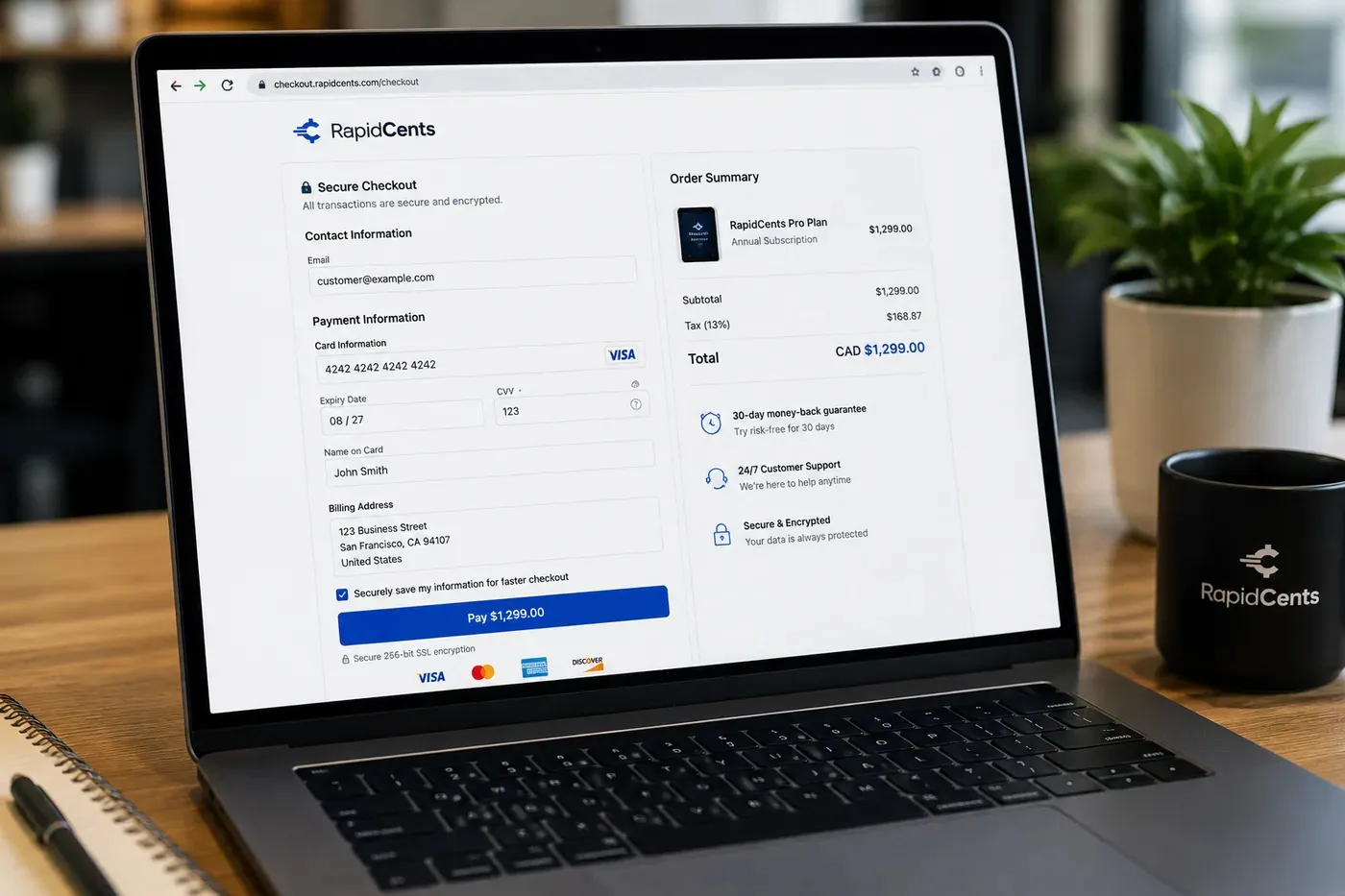
A RapidCents hosted checkout page at checkout.rapidcents.com, with the order summary and totals on the left and the card fields on the right, footed by SSL and PCI DSS assurances. Hosted Checkout
RapidCents hosted checkout delivers PCI-scoped payment pages you redirect customers to or embed via iframe…
Explore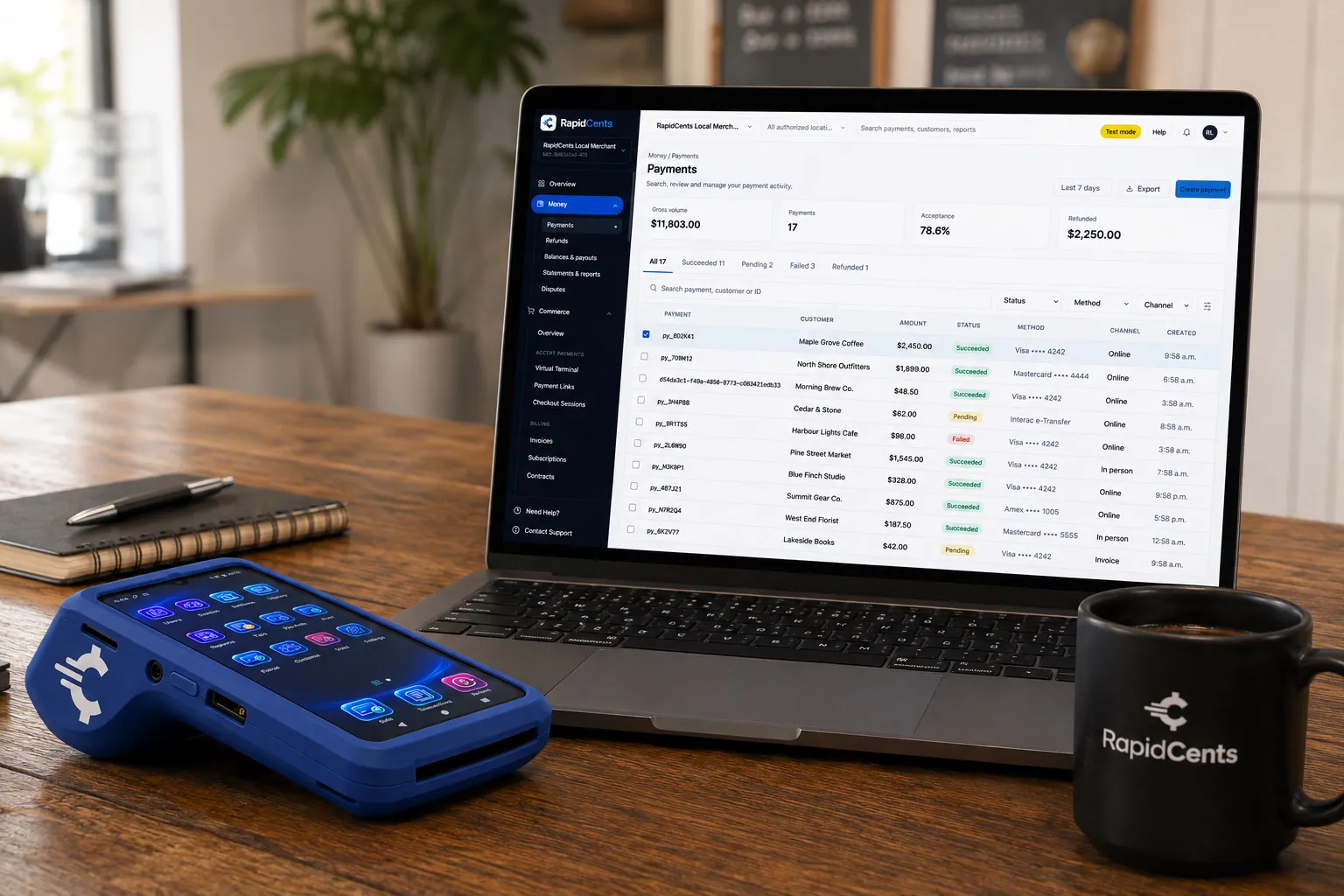
A payment-gateway integration desk: API response on screen, RapidCents terminal ready for a test sale. Payment Gateway
The RapidCents payment gateway exposes REST endpoints for authorize, capture, void, refund and tokenize…
Explore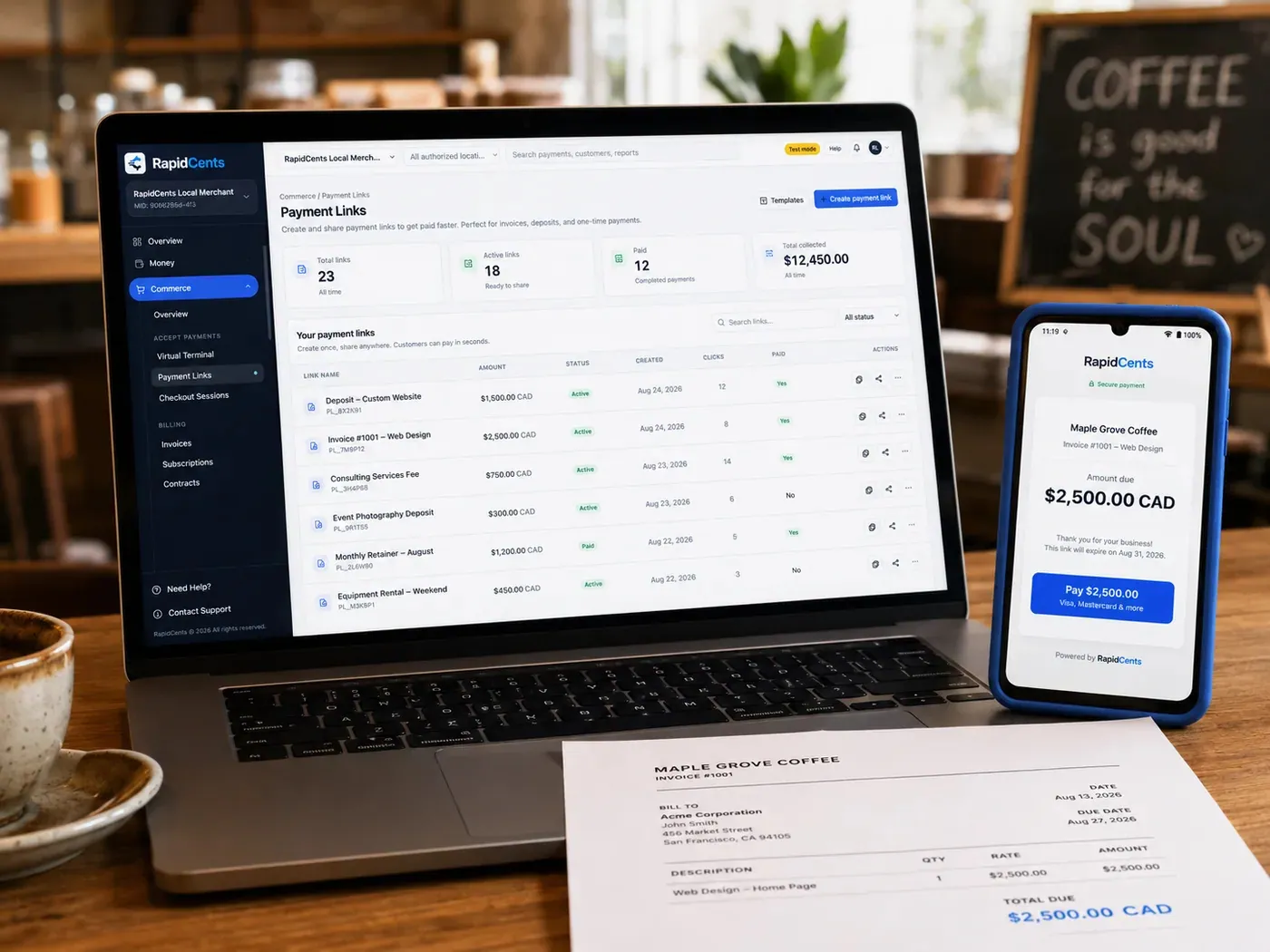
The RapidCents payment links screen listing created links with their amount, status, click count and whether they have been paid, beside a phone showing the branded page a customer opens to pay $2,500.00. Payment Links
RapidCents payment links let staff generate branded pay-by-link URLs for invoices, deposits, balances and…
Explore


Implementation approach
Integration planning
Map your checkout experience to a hosted, embedded or API approach. The decision is mostly about how much of the interface you need to own.
Sandbox certification
Complete the test cases for the flows you will run, refunds and the authentication challenge included.
Webhook setup
Configure and verify the events that drive order state, and confirm your endpoint rejects an unsigned request.
Go-live checklist
Authentication rules, receipt content and support contacts confirmed, then live traffic monitored through the first settlement cycle.
What does not change
Your storefront
Hosted checkout is a step in the flow, not a replacement for your site. Customers return to your pages afterwards.
Your in-person setup
Adding online acceptance does not change the terminals at the counter. Both channels report into the same dashboard.
Your PCI responsibility
Hosted pages and embedded fields reduce what is in scope. Annual validation on the questionnaire matching your integration remains yours.
Frequently asked questions
Do I need a developer?
Not for payment links or a hosted page reached from an existing site. You do for an embedded checkout or an API integration, because order state, refunds and webhook handling are code.
Why is my online rate higher than my counter rate?
Because interchange depends on how the card was presented. A card-not-present transaction carries higher interchange than the same card tapped at a terminal, since the risk profile of the transaction is different.
Should I turn on 3-D Secure for everything?
Applied to every sale, authentication costs conversion. Applied by rule — above an amount, from certain geographies, on risk signals — it protects the transactions where the liability shift is worth the extra step.
When do online payments reach my bank?
Batches settle and eligible accounts fund next day. Online and in-person volume appear on the same deposit report.
What happens if a customer disputes an online order?
The dispute arrives with a deadline and a reason code. Transaction and authorization detail is assembled for the response, and delivery or service evidence is what you add. Whether liability sits with you depends in part on whether the transaction was authenticated.
Can I take an online payment without a website?
Yes. A payment link or a hosted payment page can be sent directly to a customer, which is often enough for a service business that quotes and invoices rather than selling from a catalogue.
What is the difference between a hosted page and embedded fields?
A hosted page is a RapidCents page the customer is sent to, carrying your logo and accent colour. Embedded fields sit inside your own checkout and are styled by you. In both cases the card is entered on a RapidCents surface, which is what keeps your servers out of the assessment.
Can I charge the card when the order ships rather than when it is placed?
Yes. Authorize and capture are separate steps in the gateway API, so funds are held at order time and taken when the goods leave. That is the usual pattern for anything shipped later, and it keeps a refund from standing in for an order that never went out.
Take the next step
Talk to a RapidCents specialist
RapidCents Fee Check reads a processing statement and shows interchange separately from the markup. Upload a statement for an instant breakdown, or open a merchant account and start accepting payments on one account.
- No obligation
- Canadian payment specialists
- Secure statement upload