


Shoe store payment processing for deposits, pickup and returns
Shoe store payment processing from RapidCents covers in-store card acceptance, online pickup orders and pay-by-link balances for a footwear retailer. The defining jobs are special-order size deposits, pickup payments and exchanges or refunds. RapidCents integrates with many major platforms through APPIE and RapidBridge, and your representative finds the right option for your POS.

- PCI DSS Level 1
- SOC 2 Type II
- All major cards: Visa, Mastercard, Amex, Discover, UnionPay, Diners Club & PIN Debit
- Interchange-plus available
- Specialist onboarding support
How shoe stores get paid
Shoe stores get paid through four payment jobs: everyday counter sales, deposits on special-order sizes, online orders collected in store, and exchanges that move money in either direction. Each job uses a different RapidCents product, and each leaves a record that your finance lead can match to inventory and the ledger.
Counter sales
A shopper tries on pairs and pays at the register by tap, insert or swipe, often with a second pair or care products on the same ticket. Staff run the sale on a countertop terminal or Retail POS, and the receipt and settled batch show what was sold.
Special-order size deposits
A customer wants a size or width not on the shelf, and you order it from the brand. The customer pays a deposit when you place the order, by terminal or Payment Link, and you keep the order reference so the balance can be matched at pickup.
Online pickup orders
A shopper reserves a pair on your website and collects it in store. The order is paid at checkout with Online Payments, or by Payment Link if staff built the order by phone, and your team confirms the size and the order number at the counter.
Exchanges and refunds
A customer returns the wrong size and takes another pair, or goes home with nothing. Staff run the exchange or refund against the original sale, and the reports show the sale, the adjustment and any difference paid so finance can reconcile.
How do shoe stores take deposits on special-order sizes?
Shoe stores take a deposit on a special-order size by charging the customer when the order goes to the brand, recording the order reference, and collecting the balance when the pair arrives. The deposit terms and the refund rule are agreed before the card is charged, not after the shoes arrive.
Run the order and the charge together
Write up the special order with the style, size, width and color, then take the deposit on a countertop terminal or send a Payment Link. Put your order number in the reference field. Agree the deposit amount and the return rule with the customer first, and give them the receipt.
Plan for late, wrong or cancelled orders
A brand may back-order a style, ship the wrong width or discontinue it. Agree in advance whether the deposit is refunded or moved to another pair, and tell the customer about delays. Refund to the original card, and if the balance is declined at pickup, ask for another payment method before you release the pair.
A $40 deposit on a wide-width walking shoe
Say a customer needs a wide-width walking shoe that you do not stock. You order it, charge a $40 deposit with the order number in the reference, and the pair arrives. At pickup you charge the balance, link both payments to the same order, and your reports show two transactions for one pair.
How can shoe stores take online pickup orders?
Shoe stores can take online pickup orders by charging the customer at checkout, holding the pair on the shelf under the order number, and confirming identity and size when the customer arrives. Use Online Payments for the website and Payment Links for orders your staff build by phone or message.
Charge at checkout and hold the pair
The shopper pays on your website with Online Payments, and the order appears in your Merchant Dashboard. Staff pull the pair, tag it with the order number and set it aside. Your RapidCents representative will show you how your web store and your store inventory share order data, so you can promise pickup times with confidence.
Cover declines, wrong sizes and no-shows
A card may be declined at checkout, or the customer may arrive and find the size runs small. Send a Payment Link for a corrected order, refund the original charge if the customer walks away, and decide how long you hold a paid pair. Post that hold period on your product pages.
Two pairs of kids' school shoes for Saturday pickup
Say a shopper pays online for two pairs of kids' school shoes to collect on Saturday. One pair is the wrong fit, so staff swap it for the next size up at the counter, charge the small difference on the terminal, and note the web order number on the receipt.
RapidCents products for shoe stores
Retail POS and Countertop Terminals run the counter, Online Payments takes pickup orders on your website, and Payment Links collect size deposits and balances without a checkout page. Together they keep in-store, online and phone payments in one Merchant Dashboard.
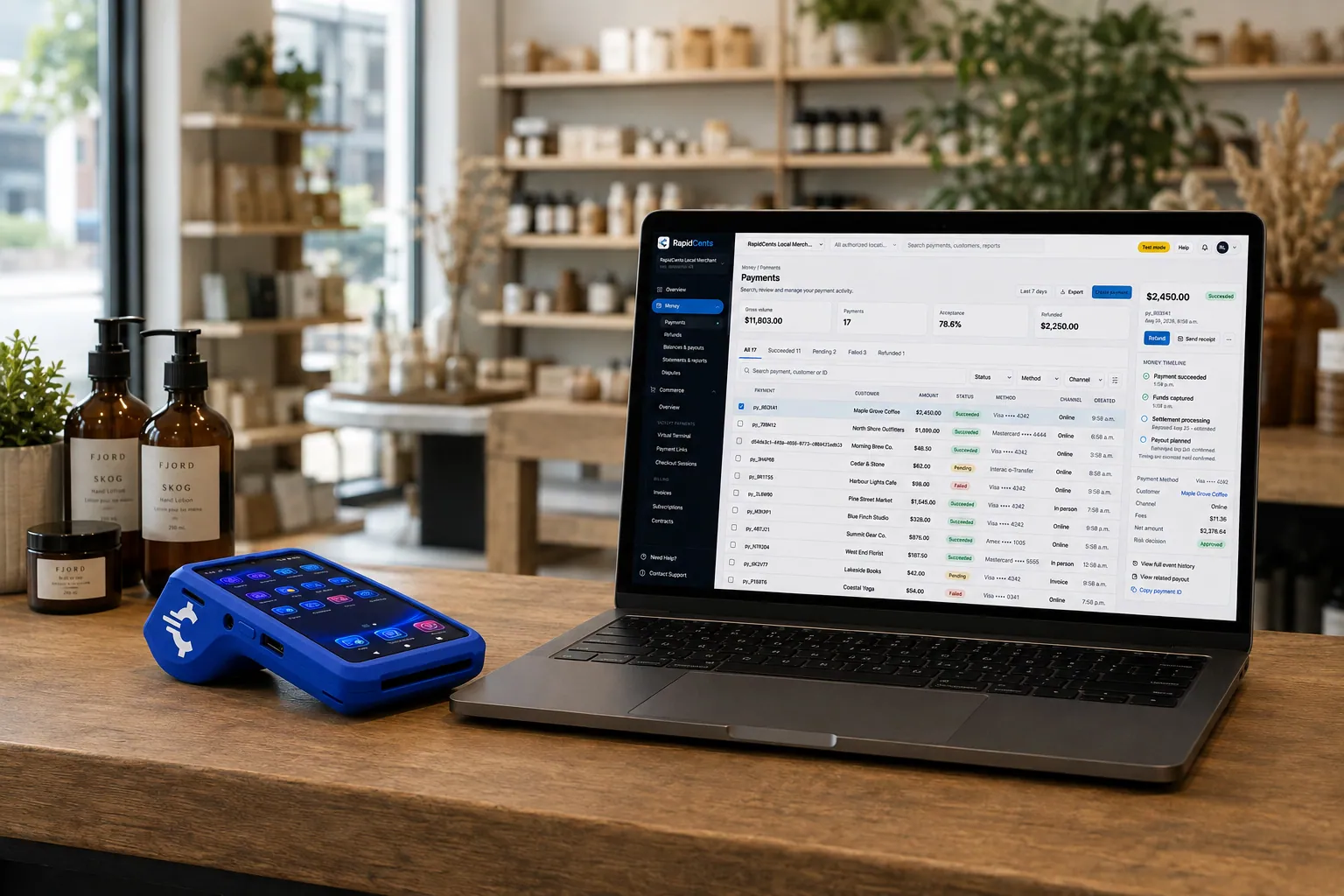
A retail counter ringing a basket on RapidCents POS, terminal taking the card and the dashboard showing the sale. Retail POS
Fast checkout, inventory that reflects what is on the shelf, and reporting that connects in-store and online…
Explore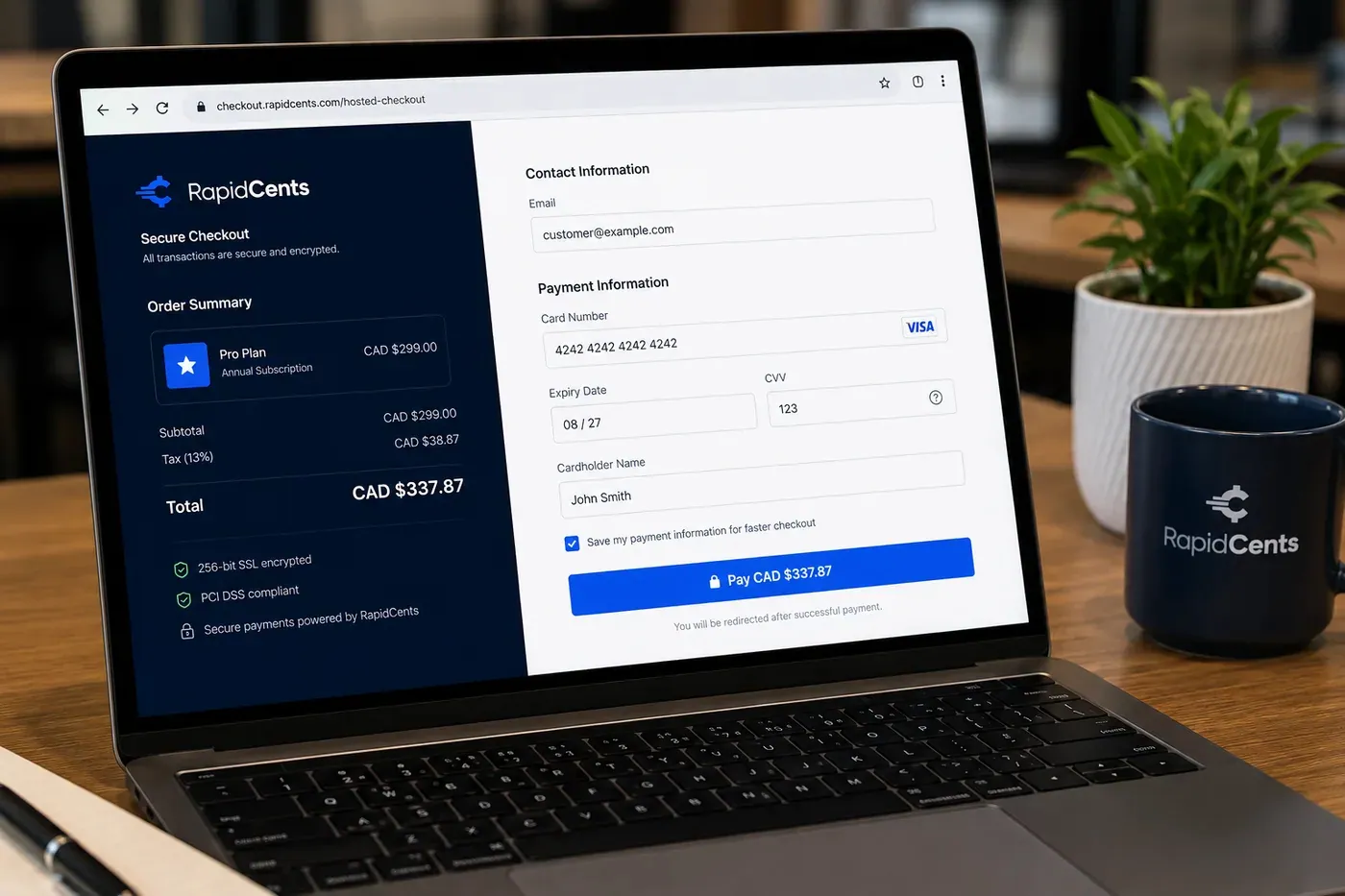
A RapidCents online checkout in a browser, with contact and card fields on the left and an order summary on the right showing the subtotal, tax and total, plus the accepted card brands. Online Payments
RapidCents online payments combine gateway APIs, hosted checkout pages, payment links and 3-D Secure…
Explore
The RapidCents payment links screen listing created links with their amount, status, click count and whether they have been paid, beside a phone showing the branded page a customer opens to pay $2,500.00. Payment Links
RapidCents payment links let staff generate branded pay-by-link URLs for invoices, deposits, balances and…
Explore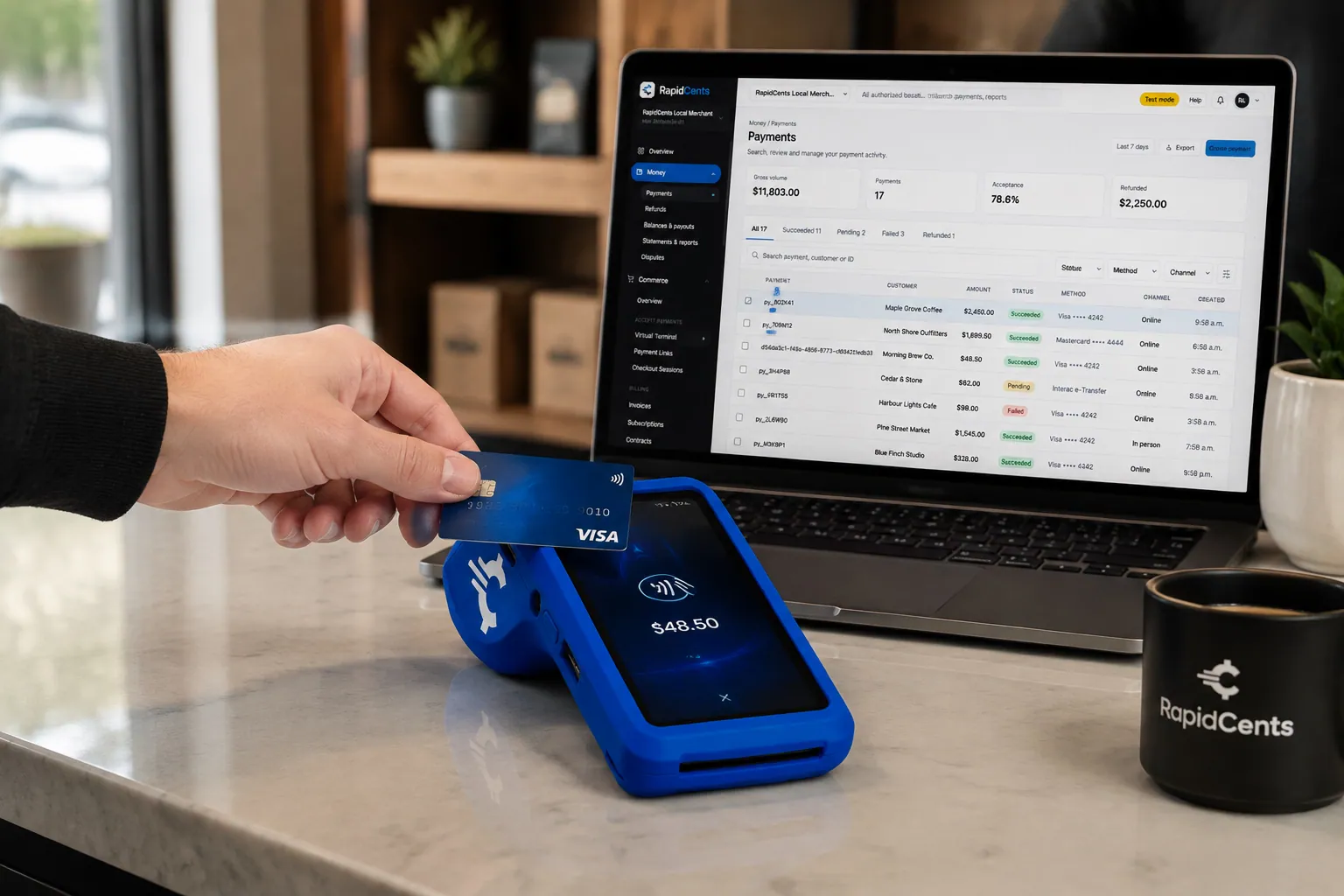
A fixed RapidCents countertop terminal taking card payments at the till, with settlement visible on the dashboard. Countertop Terminals
RapidCents countertop terminals sit at retail counters, restaurant hosts and reception desks where speed and…
Explore


How are shoe store exchanges and refunds handled?
Shoe store exchanges and refunds are handled against the original sale: staff find the transaction, return the amount to the same card, or run a new sale for the replacement pair and the price difference. Your return policy decides who qualifies, and the payment record shows every step.
Start from the original sale
Look up the receipt, the order number or the card, confirm the pair is unworn and within your policy, then refund to the original card from the terminal or Retail POS. For an exchange, refund and rebook the replacement sale so inventory and the ledger both move.
Handle gift returns and disputes
A gift recipient has no card to refund to, so your policy decides on store credit or an exchange, and store credit is tracked in your point-of-sale software, not on the card. If a customer files a dispute instead of returning shoes, gather the receipt, order record and pickup note as evidence.
A boot swapped for a half size down in the seasonal rush
Say that during a seasonal rush a customer swaps a boot for a half size down, then returns a second pair. Staff refund the second pair to the original card and record the swap as an exchange, so the day's report shows the refund, and the replacement stays linked to the first sale.
Compare fees using your real shoe store payment mix
The cost of footwear credit card processing depends on your card mix, average ticket and how many sales are keyed or online. RapidCents prices on interchange-plus: interchange passes through at cost, you pay the RapidCents markup shown in your Fee Schedule, plus fees for equipment or services if applicable. Terms are month to month, with no fixed term.
What moves your interchange
Interchange is set by the card networks and varies with card type, such as debit, credit, premium or commercial, and with how the card is taken. A card tapped or inserted at the counter is priced differently from a keyed phone order or an online checkout. Your channel split matters as much as your volume.
What to bring to a comparison
Bring your last few processing statements, your split between debit and credit, your average ticket, the share of online and pickup orders, and your refund and dispute volume. Returns matter in footwear, so note how many sales come back and how often exchanges add a second charge.
Run Fee Check
Upload a processing statement to Fee Check and it shows interchange separately from the markup. Compare it with the Fee Schedule you are offered, and ask for equipment or service fees in writing. Seasonal months distort averages, so look at a busy month and a quiet one.
Software compatibility for footwear POS payments
APPIE and RapidBridge connect RapidCents to many major platforms, and the right option for your POS depends on the vendor and version. Settled transactions, fees and refunds connect to QuickBooks Online and Xero, and SAP and NetSuite import settlement files. Your RapidCents representative will walk you through it.
Lightspeed Retail
Lightspeed Retail is a retail POS that a shoe store may use for registers and inventory. Tell your RapidCents representative your edition and country, and they will show you how payments, receipts and refunds connect to it.
Shopify POS
Shopify POS is an omnichannel retail POS that a shoe store may use to sell in store and online. RapidBridge works with Shopify, so your web store can take RapidCents payments without changing it. Your RapidCents representative will walk you through the best setup for the counter, and a Payment Link covers phone orders.
Square for Retail
Square for Retail is a retail POS that may bundle its own processing. Tell your RapidCents representative which edition you run. If your setup keeps the processing inside Square, a RapidCents terminal can run beside it, with sales matched by export, and your representative will lay out the options.
Clover
Clover is a retail and restaurant POS, usually bought with its own hardware. Some terminal systems tie the device to one processor, so tell your RapidCents representative your device model. They will walk you through the options, and a RapidCents terminal is there as an alternative.
NCR Counterpoint
NCR Counterpoint is a retail POS that a footwear store with many size variants may use. Share your version and country with your RapidCents representative, and they will walk you through whether payments run through an integrated connection, an API or a standalone terminal.
Payment options for shoe stores in the United States
A shoe store in the United States can accept credit and debit cards in person, online and by link, including PIN debit where the terminal supports it, plus ACH bank payments, with settlement in USD. Your RapidCents representative sets these up with you.
Cards at the counter and online
Customers pay by tap, insert or swipe with Visa, Mastercard, American Express or Discover. A countertop terminal handles debit with a PIN where supported, and Online Payments handles pickup orders on your website. Settlement is in US dollars.
ACH and state rules
ACH bank payments may collect a larger special-order balance once the customer authorizes the debit. State rules can affect your refund policy and the sales tax shown on receipts; ask your accountant. Your RapidCents representative will walk you through ACH before you offer it.
How do shoe stores switch processors and reconcile deposits?
Once your account is approved, switching is a short checklist: list open special orders, deposits and pickup orders, test a sale, a refund and a deposit on the new setup, and run both side by side for a period before closing the old account. Stored cards move only when both providers agree.
Inventory what is open
List every special order with a deposit, every unpaid balance, every online pickup order waiting on the shelf, and any card on file with the customer's authorization. Tell customers with a pending pickup what they will see. Token transfer between processors needs both providers to agree, so ask them.
Test before you go live
Run a sale, a refund, an exchange and a deposit with a balance on the new terminal and your online checkout. Check that order numbers appear in the reference field and in your reports. Run both setups in parallel during a slower week and avoid cutting over right before a seasonal peak.
Reconcile to the ledger
Match each bank deposit to the settled batch, then to the sales, refunds and fees in the report. Map the order reference to your POS or accounting software so deposits and balances close against the same order. Your RapidCents representative can tell you which report formats your accountant can import.
Payment questions from shoe stores
What is the best payment processor for a shoe store?
The right provider of shoe store merchant services fits your counter, your online orders and your return volume. Compare interchange-plus pricing in writing, equipment fees, how refunds and exchanges are reported, settlement reporting, support and software compatibility, and ask for a written quote against the same statement. RapidCents keeps counter sales, pickup orders and deposits in one Merchant Dashboard, and Fee Check separates interchange from markup on your own statement.
How much does credit card processing cost for a shoe store?
The cost depends on your card mix, average ticket and channel split, so the clearest answer comes from your own statement. Pricing is interchange-plus: interchange passes through at cost, you pay your RapidCents markup shown in your Fee Schedule, and fees for equipment or services apply if applicable. Upload a statement to Fee Check to see interchange separated from markup.
Can a shoe store's POS software use a different payment processor?
RapidCents integrates with many major platforms through APPIE and RapidBridge. The right option for Lightspeed Retail, Shopify POS, Square for Retail, Clover or NCR Counterpoint depends on the vendor and version. Tell your RapidCents representative which system you run, and they will walk you through how payments connect to it.
How can a shoe store switch processors without losing payment history?
Keep your old processor's reports and run both setups in parallel until open orders clear. List special orders with deposits, unpaid balances, online pickup orders and any cards on file with authorization. Moving stored cards is possible only if both providers agree. Test a sale, a refund and a deposit on the new setup before you move all traffic.
Which payment options can a shoe store in the United States offer?
A shoe store in the United States can usually offer Visa, Mastercard, American Express and Discover cards, debit with a PIN where supported, contactless and phone wallet payments, and payment links for deposits and balances. ACH bank payments work when the customer authorizes them. Settlement is in USD. Your RapidCents representative will go through the full list for your account.
Can a shoe store take a deposit for a special-order size?
Yes. Charge the deposit on a terminal or send a Payment Link when you place the order with the brand, and record your order number in the reference field. Agree the deposit amount, the refund rule and the pickup window with the customer first and put them on the receipt. Collect the balance at pickup against the same order.
Can shoe store pickup orders be paid online?
Yes. Customers pay with Online Payments at checkout, or by Payment Link when staff build the order, and your team holds the pair under the order number. Your RapidCents representative will show you how your site passes order and fulfillment details, so you can promise pickup times to customers with confidence.
How are shoe store exchanges and refunds handled?
Staff refund to the original card or ring the replacement as a new sale, working from the original transaction. Your return policy decides who qualifies, and gift returns without a card usually become store credit tracked in your POS. RapidCents reports show sales, refunds and fees so finance can reconcile each step against your POS and accounting software.
How do online and in-store shoe sales reconcile?
Match each bank deposit to a settled batch, then to the sales, refunds and fees on the report. Online orders, pickup orders, payment links and counter sales appear in one Merchant Dashboard so you can split them by channel. Use order references to tie special-order deposits to balances. Ask your RapidCents representative which export formats your accountant can import.
How should a shoe store handle seasonal peaks at checkout?
Plan terminals, staff and backup payment options before the rush. Add a countertop terminal for each busy register, keep a mobile or Tap to Pay option to serve the queue where supported, and use Payment Links for phone and message orders. Test refunds and exchanges before the peak, and avoid switching processors in the middle of one.
What MCC is used for shoe stores?
MCC 5661 is commonly associated with shoe stores. Your RapidCents representative sets the merchant category during onboarding based on what your business actually sells, so describe your products and sales channels accurately when you apply, especially if you also sell apparel, accessories or repairs.
Related retail industries
Retail, clothing boutiques, florists, electronics stores and other shops share deposit, pickup and return workflows with shoe stores. Read the Retail parent page and clothing boutiques for counter, online and refund detail that carries across.
Retail
Take tap, chip and PIN payments at every register, sell on your website, refund returns…
Florists
Take counter sales, phone orders, wedding deposits and online orders with receipts, order…
Clothing Boutiques
RapidCents gives clothing boutiques counter terminals, online checkout and pop-up…
Electronics Stores
Take high-value card purchases in store, online and by phone, keep delivery and return…
Hardware & Home Improvement Stores
RapidCents helps hardware and home improvement stores take card payments at the counter…
Computer & Phone Repair Shops
Take diagnostic fees, remote parts deposits and pickup balances at the counter or by…
Appliance Stores
Take special-order deposits in store, collect delivery balances by mobile terminal or…
Convenience Stores
RapidCents gives convenience stores countertop terminals for debit and credit taps, Tap…
Take the next step
Review your shoe store's payment costs
Upload a recent processing statement to Fee Check and see interchange separated from your current markup, using your own mix of counter, online and pickup sales.
- No obligation
- Payment specialists, not a call centre
- Secure statement upload



