


See the payment behind the payment
Fraud prevention that shows every payment attempt, scored in under a second
For businesses in the USA, RapidCents fraud prevention checks more than 180 parameters on every payment attempt in under a second: device information, IP address and approximate location, timezone, VPN, proxy and Tor use, whether the card details were typed or pasted, and whether behaviour on the payment page looks human or automated. Each attempt gets a suspect score out of 100 and a decision beside its host response, and you make the final call.
- 180+ signals checked in under a second
- A fraud score on every attempt, and the decision is yours
- Every attempt recorded, not just approved or declined

- PCI DSS Level 1
- SOC 2 Type II
- Specialist support
- Interchange-plus available
- All major card brands: Visa, Mastercard, Amex, Discover, PIN debit
Who it's for
Online and card-not-present merchants
Most card fraud happens where the card is not physically there.
High-ticket and fast-shipping sellers
A fraudulent order that ships costs the goods as well as the sale.
Merchants seeing card testing or rising disputes
Attempt history shows repeated tries before they turn into chargebacks.
Core capabilities
Payment attempt history
Every attempt is recorded with its host response, not just the final approved or declined result, so repeated tries and card testing are visible.
Device identification
Browser, operating system, device type and a visitor ID tie each attempt to the device that made it, even when the card number changes.
IP address, location and timezone
The IP address, its approximate location and the device's timezone are compared, so a buyer who is not where they claim to be stands out.
VPN, proxy and Tor detection
Connections routed to hide where the buyer really is are flagged on the attempt.
Typed or pasted card details
Whether the card details were typed or pasted in is recorded. Pasted details are a common sign of card data bought or stolen in bulk.
Human or bot behaviour
How the payment page is used at the moment of payment shows whether a person or an automated script is completing it.
Fraud score and decision
More than 180 parameters become one suspect score out of 100 and a decision, with the detail behind both, so you choose whether to fulfil the order.
- 180+
- parameters checked on every payment attempt
- < 1 s
- to check them and score the attempt
- 0–100
- suspect score, with the evidence behind it
Payment Attempts dashboard
What a payment attempt record shows
Open any attempt in the Payment Attempts dashboard and you see the evidence, not just the outcome. Declined attempts sit beside approved ones in the same view.
- Host response: card brand, customer, date and time, and the approved or declined status.
- Fraud analysis: timestamp, decision, suspect score, IP address and approximate location.
- Device: visitor ID, browser, operating system and device type.
- Network and behaviour: timezone, VPN, proxy or Tor use, typed or pasted card details, human or bot behaviour.

What fraud prevention can promise, and what it cannot
No payment processor can guarantee zero fraud. Here is what RapidCents can honestly say.
Our record so far
Since implementing its enhanced fraud prevention system, RapidCents has not recorded a single fraud-related chargeback to date. That is experience, not a promise.
3-D Secure covers eligible fraud only
When a payment is authenticated with 3-D Secure, liability for eligible fraud chargebacks can shift to the issuer. Disputes about delivery, product quality or a cancelled service are not covered.
Proprietary methods, kept confidential
Some of the checks are proprietary. Describing them in public would show fraudsters what to avoid, so they are not listed here.
The decision stays yours
The score and the decision inform your call. You see the evidence and decide whether to fulfil, hold or refund an order.
Questions to ask your payment processor
Whether or not you choose RapidCents, these questions separate real fraud prevention from a yes or no at authorization.
Can I see failed attempts?
Card testing shows up in the declines, not in the approved sales.
Which signals do you check?
Device, network, location and behaviour, or only the card number and address?
Do I get a score and the evidence?
A score with no detail behind it does not help you decide whether to ship an order.
How do you apply 3-D Secure, and what does it cover?
The liability shift applies to eligible fraud chargebacks, not to every dispute.
What is your fraud-related chargeback record?
Ask for a real figure, and be wary of anyone who guarantees zero fraud.
How it works
A customer starts a payment online.
Device, network and behaviour signals are captured while the payment page is in use.
More than 180 parameters are checked in under a second.
The attempt gets a suspect score and a decision beside its host response.
You review the attempt in the dashboard and decide whether to fulfil, hold or refund.
Dashboard and reporting
Transactions, deposits and exceptions visible in the RapidCents merchant dashboard.
Try it, edit values and click buttons
Merchant dashboard
- Today
- $4,218
- Deposits
- $12,482
- Disputes
- 2 open
- In-person
- $842
- Online
- $1,104
- Virtual terminal
- $392
Demonstration data only
Integrations
Merchant dashboard
Every transaction, deposit and exception lands in one dashboard.
APIs and webhooks
Connect the product to your own software with REST APIs and signed webhooks.
Partner connectors
Certified connectors for common POS, ERP and commerce platforms.
Works with Fraud Prevention
Capabilities on the same account, so the parts below connect without a second integration or a second contract.
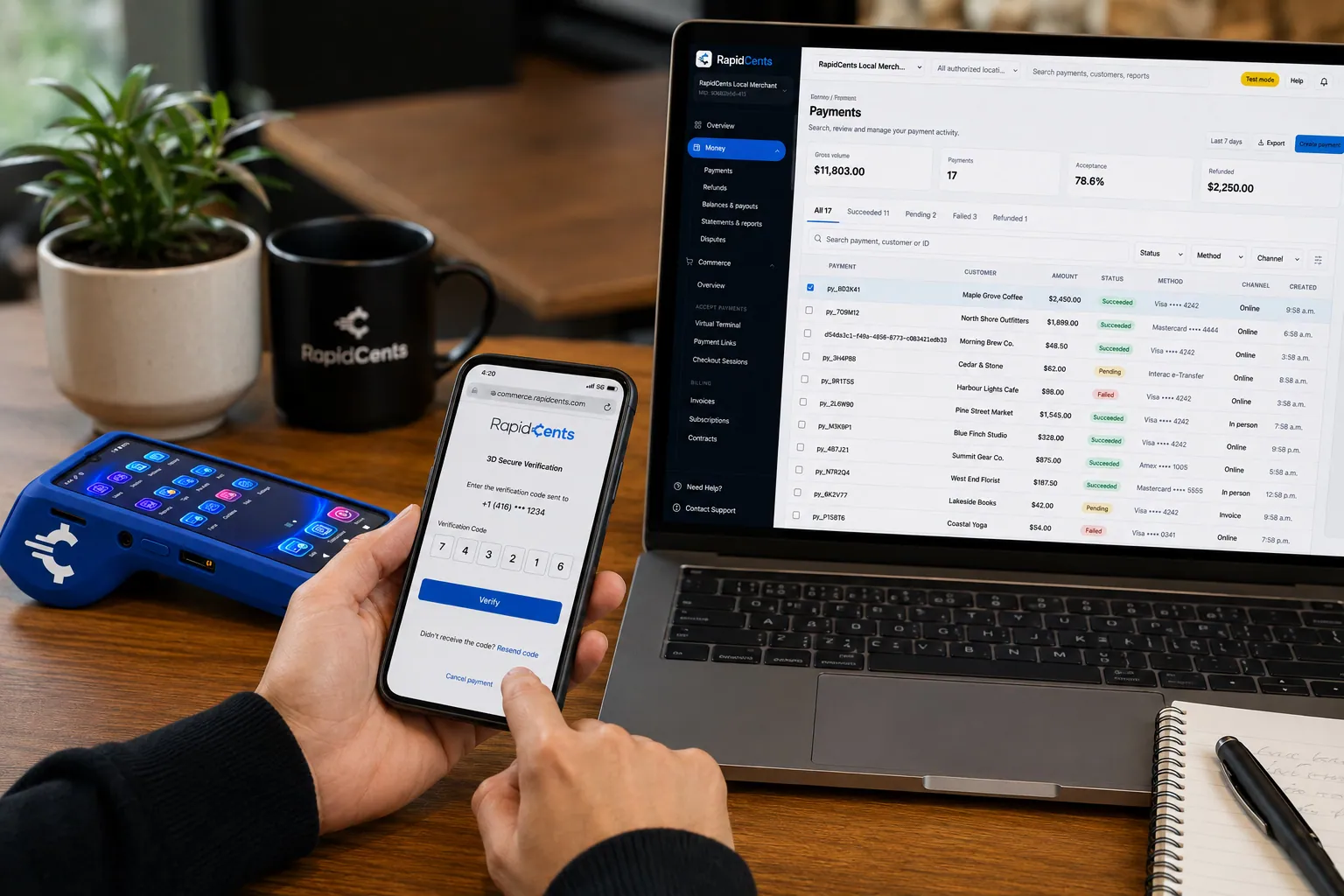
A cardholder completes 3-D Secure on RapidCents checkout, so the issuer can authenticate the online payment. 3-D Secure
Issuer authentication on online payments, which shifts fraud chargeback liability.
Explore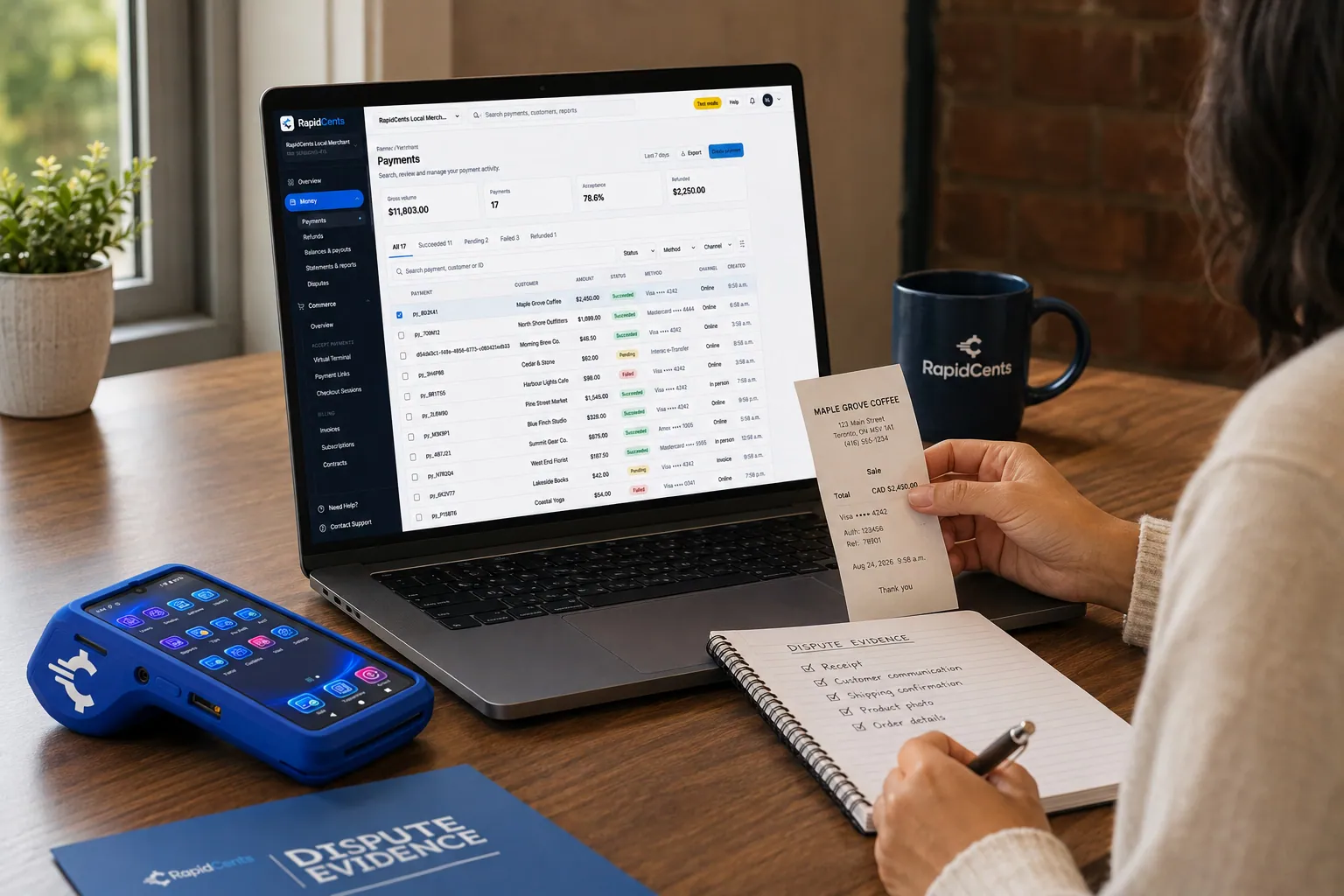
RapidCents assembles chargeback evidence from the original sale, with the terminal and receipts still at hand. Chargeback Protection
Dispute alerts and evidence assembly, so representment does not eat your week.
Explore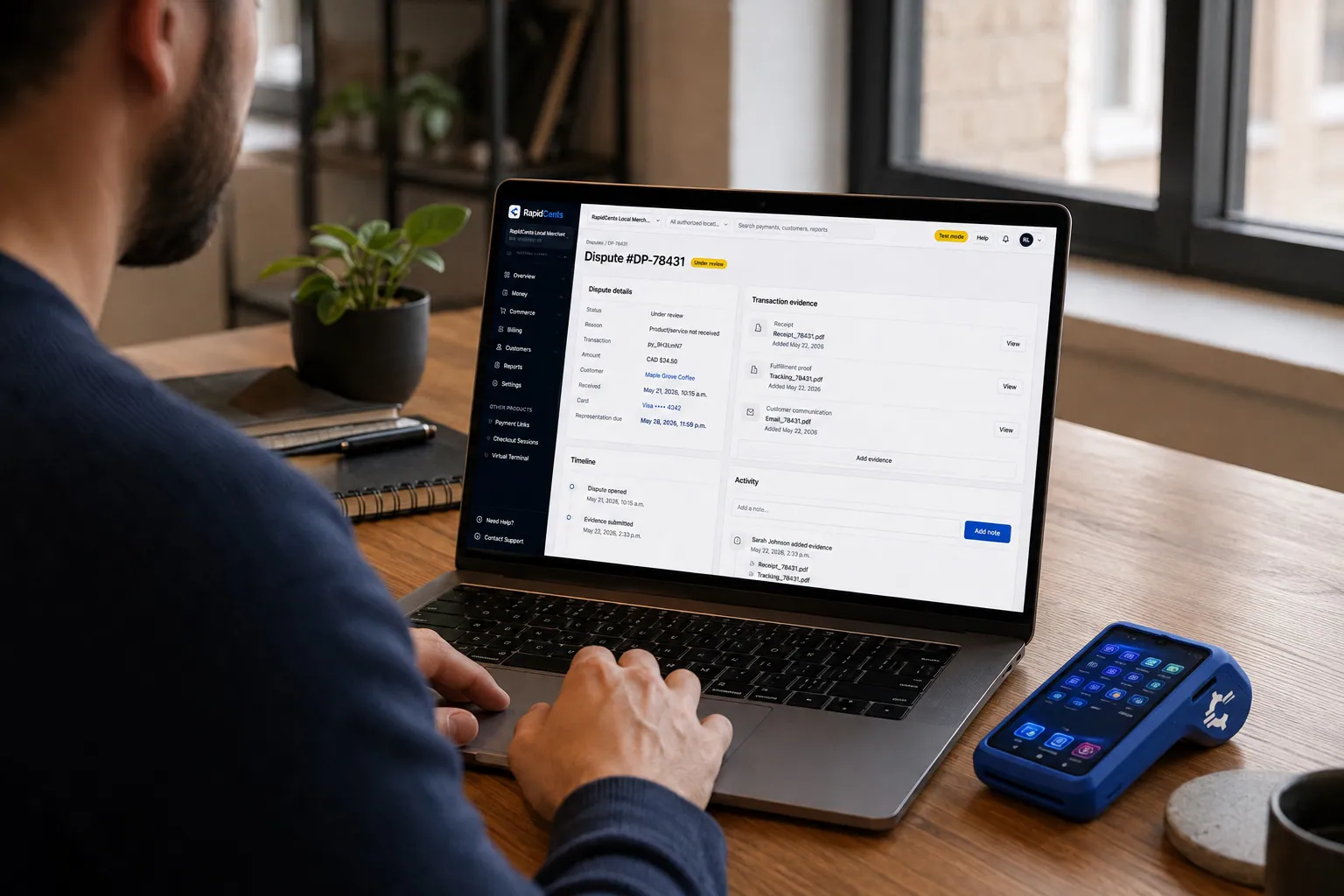
A merchant works a RapidCents dispute case on the dashboard, with the original terminal sale still on the desk. Dispute management
Every chargeback, its deadline and its evidence pack in one queue.
Explore
A payment-gateway integration desk: API response on screen, RapidCents terminal ready for a test sale. Payment gateway
The authorization layer every online RapidCents payment runs through.
Explore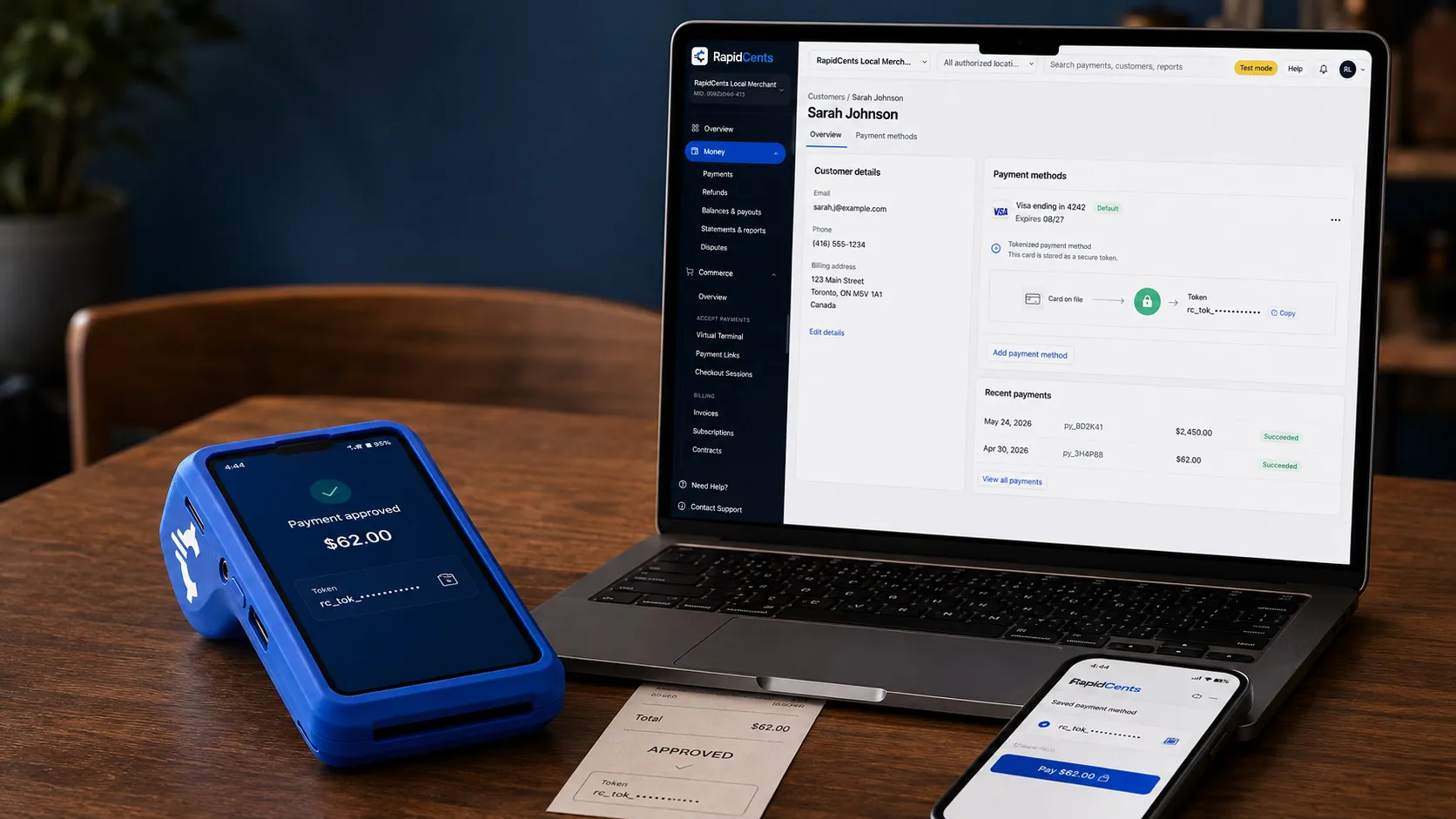
A stored RapidCents token stands in for the card number, with the terminal that captured the original credential beside it. Tokenization
Card numbers are replaced by a token, so nothing reusable is stored in your systems.
Explore


Security
PCI DSS Level 1
Processing runs on PCI DSS Level 1 audited infrastructure.
Tokenization
Card data is replaced with tokens, keeping raw credentials out of your systems.
Role-based access
Permissions and audit trails control who can see and do what.
Implementation
Discovery
A payment specialist reviews how your business gets paid today.
Configuration
Accounts, users and settings are prepared before you go live.
Testing
Run test transactions and confirm reporting before cutover.
Launch and support
Go live with training materials and post-launch support.
Pricing
Transparent pricing
Pricing depends on volume, card mix and configuration. Fee Check compares your current statement before you commit to anything.
For businesses in the USA
What fraud prevention does for a merchant in the USA, where it stops, and what to confirm.
The payment workflow
A customer pays online, and while the payment page is in use RapidCents captures device, network and behaviour signals. More than 180 parameters are checked in under a second, and the attempt appears in the Payment Attempts dashboard with its host response, suspect score and decision. You decide whether to fulfil, hold or refund.
The problem and the limit
No processor can guarantee zero fraud. 3-D Secure can shift liability to the issuer for eligible fraud chargebacks, but disputes about delivery or the product are not covered. Since implementing its enhanced fraud prevention system, RapidCents has not recorded a fraud-related chargeback to date. That is experience, not a guarantee.
What to confirm
Confirm which payment channels on your US merchant account are screened, who on your team can open the Payment Attempts dashboard, and how 3-D Secure is set up on your checkout. Pricing depends on volume, card mix and configuration.
Questions about Fraud Prevention
What does RapidCents check on a payment attempt?
More than 180 parameters, in under a second. They include device information, IP address and approximate location, timezone, VPN, proxy and Tor use, whether the card details were typed or pasted, and whether behaviour on the payment page looks human or automated. Some of the methods are proprietary and kept confidential, because publishing them would help the people they are built to catch.
Does RapidCents make the decision for me?
Each attempt gets a decision and a suspect score out of 100, and the detail behind both stays visible in the dashboard. You make the final call on whether to fulfil, hold or refund an order.
Can any processor guarantee zero fraud?
No, and a processor that promises it deserves hard questions. Since implementing its enhanced fraud prevention system, RapidCents has not recorded a single fraud-related chargeback to date. That is our experience so far, not a guarantee of future results.
Does it replace 3-D Secure or Chargeback Protection?
No. 3-D Secure can shift liability to the issuer for eligible fraud chargebacks when authentication succeeds, but it does not cover disputes about delivery or the product itself. Chargeback Protection handles the disputes that still arrive. Fraud prevention reduces how many get that far.
Why does attempt history matter more than approved or declined?
Someone testing stolen cards often fails several times before one goes through. Seeing every attempt, with the device and IP address behind it, shows that pattern. A list of approved sales on its own hides it.
Why does it matter whether card details were pasted?
Customers usually type their own card number or let the browser fill it in. Details pasted from somewhere else are a common sign of card data bought or stolen in bulk. It is one signal among more than 180, not a verdict on its own.
What should I ask any processor about fraud prevention?
Ask whether you can see failed attempts as well as approved ones, which device and network signals are checked, whether you get a score with the evidence behind it or only a yes or no, how 3-D Secure is applied and what it covers, and what their fraud-related chargeback record actually is.
Is fraud prevention priced separately for merchants in the USA?
Fraud screening is part of how transactions are authorized on a RapidCents account rather than an add-on licence. Account pricing in the USA depends on volume, card mix and configuration, and your advisor sets it out before anything is signed.
Does fraud prevention help with card testing on a US online store?
Yes. Card testing shows up as repeated attempts, often from the same device or network with different cards. The Payment Attempts dashboard records every attempt, declined ones included, so the pattern is visible rather than hidden behind a list of approved sales.
Related products
RapidCents assembles chargeback evidence from the original sale, with the terminal and receipts still at hand. Chargeback Protection
Disputes arrive with a deadline. Alerts, assembled evidence and tracked outcomes turn a scramble…
ExploreA cardholder completes 3-D Secure on RapidCents checkout, so the issuer can authenticate the online payment. 3D Secure
3-D Secure asks the issuer to verify the cardholder and, where it applies, shifts liability for…
ExploreA payment-gateway integration desk: API response on screen, RapidCents terminal ready for a test sale. Payment Gateway
The RapidCents payment gateway exposes REST endpoints for authorize, capture, void, refund and…
Explore
Take the next step
Talk to a RapidCents specialist
RapidCents Fee Check reads a processing statement and shows interchange separately from the markup. Upload a statement for an instant breakdown, or open a merchant account and start accepting payments on one account.
- No obligation
- Payment specialists, not a call centre
- Secure statement upload



