


Payment processing for flooring contractors
Flooring contractor payment processing has to cover two payments: the materials deposit taken at measurement and the balance taken when the crew finishes. With RapidCents, you send the deposit as a Payment Link, track the balance on an Invoice and take it on a Mobile Terminal or Payment Terminal, all on one record that matches your quote.

- PCI DSS Level 1
- SOC 2 Type II
- All major cards: Visa, Mastercard, Amex, Discover, UnionPay, Diners Club & Interac Debit
- Interchange-plus available
- Canadian support
How flooring contractors get paid
Flooring contractors get paid in stages: a materials deposit when the order is placed, a balance when the floor is installed, counter sales in the showroom, and refunds or adjustments when a special order changes. Each stage has a different payer moment and a different record for your office.
Materials deposits at measurement
The homeowner or property manager pays a deposit once the rooms are measured and the quote is approved. You collect it by Payment Link, so the supplier order is funded before stock is bought, and the receipt carries the quote number for your office.
Installation balances
The customer pays the remaining amount when the crew finishes. You collect it on a Mobile Terminal in the home or by Invoicing link afterward. If a punch-list item holds the final amount back, finance gets a closed record only once it is settled.
Showroom and counter sales
Walk-in customers buy sample boards, trim, underlayment, adhesive or small cut orders at the counter. You take chip, contactless and PIN payments on a countertop Payment Terminal, and the day's sales settle as one batch your bookkeeper can match to the till report.
Refunds and backorder adjustments
A special order gets cancelled before it ships, or a backorder changes the quantity or the material. You refund to the original card or send a payment link for the difference. Finance needs each adjustment tied to the original order so the ledger still reconciles.
How do you collect the materials deposit at measurement?
Flooring materials deposit collection works best as a Payment Link sent while the estimator is still in the home or just after the visit, so the special order is funded before any stock is bought. Flooring installation deposit payments stay clean when the customer approves the amount and pays on their own phone, and the receipt carries the quote number.
How the deposit runs
The estimator measures the rooms, the customer picks the plank, tile or carpet, and the office issues the quote. A Payment Link goes out by SMS or email for the agreed materials deposit. The customer pays by card, and your office releases the supplier order once the payment shows in the Merchant Dashboard.
What to set up first
Put the deposit terms on the quote before the link goes out: the amount, what it covers, and what happens if the order is cancelled after the supplier ships. If you want to keep the card for the balance, ask for the customer's authorization to store it and say when and why it will be charged.
A $5,200 vinyl plank order, deposit by link
Say a customer approves 650 square feet of luxury vinyl plank on a $5,200 quote and pays a $2,600 materials deposit by link. The supplier then reports a dye-lot shortage, so the office sends a second link for the extra boxes instead of changing the first payment. Both payments carry the same quote number.
How do you collect the installation day balance?
Collect the balance on the day the crew finishes, in the home on a Mobile Terminal or by an Invoicing link, after the customer has walked the floor. Flooring installation balance payments close the same order that took the deposit, so the open amount reaches zero on one record instead of two.
How the balance runs
When the install is complete, the lead installer or the customer hands over the card on a Mobile Terminal, or the office sends the invoice with a payment link. The customer sees the order total, the deposit already paid and the balance, then pays. The receipt prints or sends from the terminal.
What goes wrong on installation day
A card declines in the driveway, the person home is not the person who signed, or a transition strip is missing and the customer holds back payment. Send a payment link so the right person can pay later, and keep a punch-list note on the order so the remaining amount is easy to defend.
A $6,400 hardwood job, balance on site
Say a crew lays hardwood in two bedrooms against a $6,400 order with a $3,200 deposit already paid. The customer approves the work, the installer takes the $3,200 balance on a Mobile Terminal, and the office matches that payment to the open invoice. The customer's receipt shows both payments.
RapidCents products for flooring contractors
These products cover each stage of a flooring job: Payment Links for the materials deposit, Invoicing for the balance, Mobile Terminals for payment in the home, and Payment Terminals for the showroom counter.

The RapidCents payment links screen listing created links with their amount, status, click count and whether they have been paid, beside a phone showing the branded page a customer opens to pay $2,500.00. Payment Links
RapidCents payment links let staff generate branded pay-by-link URLs for invoices, deposits, balances and…
Explore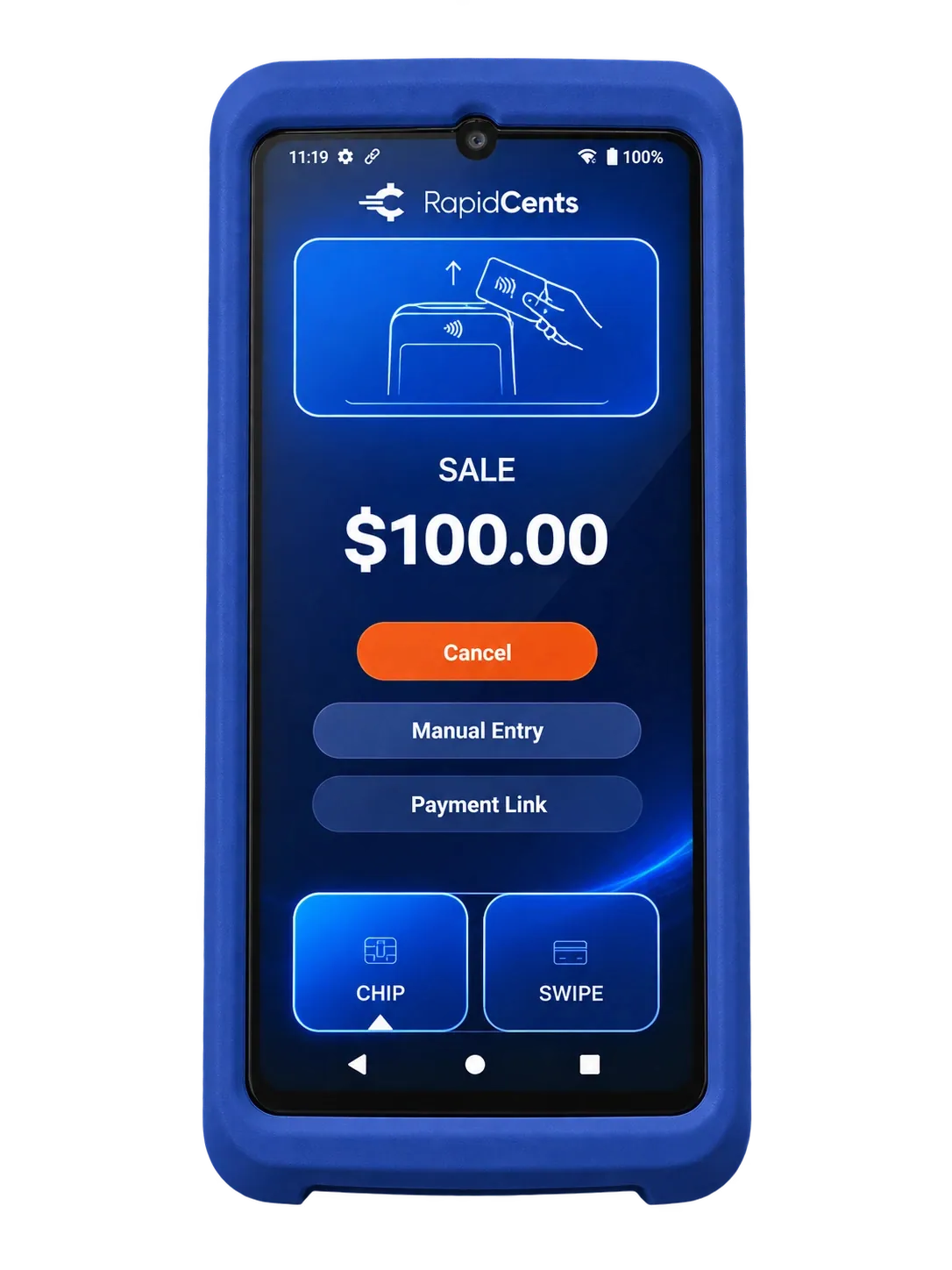
The RapidCents Rivo Go standing upright in its blue silicone case, showing the full-touch sale screen a customer reads across the counter. Payment Terminals
RapidCents payment terminals cover countertop, mobile and smart form factors so you can accept chip…
Explore
The RapidCents invoices screen: outstanding, overdue, paid and draft totals across the top, the invoice list below them, and a preview of one invoice on the right with its line items and a View & Record Payment button. Invoicing
RapidCents invoicing helps professional services, contractors and B2B suppliers create branded invoices…
Explore
A staff member takes a card payment on a RapidCents handheld terminal, with the same sale appearing on the dashboard. Mobile Terminals
RapidCents mobile terminals are battery-powered wireless devices with LTE and Wi-Fi so staff accept payments…
Explore


How are special order cancellation refunds handled?
Refund a cancelled special order to the original card, for the amount your written terms allow, and record why. Material already cut, shipped or restocked may not be fully refundable, so your deposit terms decide the amount, not the payment system. The refund references the same order as the deposit.
How the refund runs
The office checks with the supplier whether the order shipped, applies the cancellation terms on the quote, and issues the refund from the Merchant Dashboard against the original payment. Partial refunds work the same way. The customer sees the amount on their card statement, and your records show the order, the reason and the person who approved it.
What to set up first
Write the cancellation terms on the quote: when the deposit is refundable, what a restocking charge covers, and who may approve an exception. Give refund permissions only to office staff you trust, and keep the supplier's cancellation confirmation with the order so your records show why the amount was reduced.
Two cancelled orders, two different refunds
Say a customer cancels a custom-colour tile order after paying a $2,000 deposit. The supplier has not shipped, so the office refunds the full deposit. A second customer cancels a cut-to-length order that did ship, so the office refunds the deposit less the restocking amount in the signed terms.
How do you compare processing fees and total operating cost?
Compare flooring payment processing on interchange-plus pricing, where interchange passes through at cost and your RapidCents markup is set out in your Fee Schedule, plus fees for equipment or services if applicable. The plan is month to month with no fixed term. Your own card mix and channel split decide what you pay.
What drives the cost for a flooring business
Interchange varies with card type (debit, credit, premium, commercial) and with how the card is taken: tapped or inserted at the counter versus keyed or paid online. Large deposits on premium or commercial cards behave differently from small showroom sales, so a blended number hides the real picture.
What to bring to compare
Gather your last few processing statements, your average deposit and balance ticket, how much is taken in the home versus the showroom versus by link, and how many refunds and disputes you see on special orders. Ask each provider to quote against that mix in writing, with equipment and service fees listed.
Use Fee Check
Upload a processing statement to Fee Check and it shows interchange separately from markup, so you can see what is set by the card networks and what your provider adds. Then compare the markup in your Fee Schedule and any equipment or service fees against your current quote, line by line.
Does RapidCents work with RFMS, QFloors and your accounting software?
RapidCents integrates with many major platforms through APPIE and RapidBridge, and settled transactions, fees and refunds connect to QuickBooks Online and Xero. For flooring job software, the right option depends on your vendor and edition, and your RapidCents representative will walk you through it.
RFMS
RFMS runs quotes, orders and installation scheduling for many flooring businesses. RapidCents integrates with many major platforms through APPIE and RapidBridge, and the right option depends on your RFMS edition. Tell your RapidCents representative what you run, and start with Payment Links matched to the order number.
QFloors
QFloors handles estimates, purchasing and invoices for flooring dealers. The way payments flow between QFloors and RapidCents depends on the edition you run and the data you want to export. Your RapidCents representative will show you the option that fits, whether that is a connection or a clean file export.
MeasureSquare
MeasureSquare covers measurement, layouts and quoting, so your deposit link is usually triggered by the quote it produces. Copy the quote number into the Payment Link reference and payment and quote match every time. Your RapidCents representative can show you how to carry totals across for your edition.
Jobber
Jobber handles scheduling, quotes and invoicing for service businesses, and RapidBridge works with Jobber, so a card payment posts against the job and invoice you already have open. If you run flooring crews on Jobber, you keep your workflow and add RapidCents payments inside it.
QuickBooks
RapidCents connects settled transactions, fees and refunds to QuickBooks Online and Xero, so your bookkeeper sees each deposit with its fees broken out. Larger accounting systems such as SAP and NetSuite import settlement files rather than a live connector, and your RapidCents representative sets up whichever fits.
Payment options for flooring contractors in Canada
Flooring contractors in Canada usually combine Interac debit and credit cards for in-person sales, with bank payments for larger project balances. Your RapidCents representative sets up the options that fit your business when you open your account.
Cards and Interac debit
Customers tap or insert credit cards and Interac debit cards on your countertop or mobile terminal. Flooring invoice payment links are card payments too. Settlement is in Canadian dollars (CAD), and the receipt can show GST/HST where it applies to your sale.
Bank payments and provincial rules
For large balances, ask your representative about EFT or pre-authorized debit (PAD) on your account. A PAD needs the customer's written agreement on amount and timing. Deposit and cancellation rules can differ by province, so check yours before you write the terms.
What is the setup, switching and reconciliation checklist?
Once your account is approved, switch in a planned order: list what depends on your current provider, test one deposit, one refund and one balance, run both providers in parallel for a short period, and reconcile deposits to your ledger. Move live customers once a full test payment has matched your books.
Inventory before you move
List open orders with a deposit paid and a balance due, any stored cards with the customer's authorization, current terminals, payment links already sent, and which software reads your payment data. Saved cards may need a vendor-controlled migration, so talk to your RapidCents representative before promising customers anything.
Test, then run in parallel
Run a test deposit, a test balance on a Mobile Terminal and a test refund through the new account, and check that each lands in your records. Keep the old provider open for jobs already in progress, and put new quotes on the new Payment Links so no order is paid twice.
Reconcile every deposit
Match each bank deposit to a settlement report, and each payment to a quote or invoice number. Put the quote number in every Payment Link reference so deposits, balances and refunds line up. Settled transactions, fees and refunds then flow to your accounting software, with your representative setting up the connection.
Payment questions from flooring contractors
How should flooring contractors handle the materials deposit at measurement?
Take it as a card payment tied to the quote, sent before any special order is placed. With RapidCents, you send a Payment Link carrying the quote number, the customer gets a receipt, and any refund goes back against the original payment. Keep stored-card permission separate, because saving a card for the balance needs the customer's authorization.
How should flooring contractors handle installation day balance collection?
Collect it after the customer has walked the floor, on a Mobile Terminal in the home or by an invoice payment link. RapidCents shows the deposit already paid and the balance due on the same order. Plan for a declined card or a held-back punch-list amount, and settle the order only when the record is closed.
How should flooring contractors handle special order cancellation refunds?
Refund to the original card for the amount your written terms allow, and keep the reason on the order. RapidCents supports partial refunds, refund permissions for named staff and a report of every refund. Material already shipped or cut may not be fully refundable, so your signed deposit terms set the amount.
How should flooring contractors handle retail and installation invoice allocation?
Keep showroom sales and installation jobs on separate references so each payment lands on the right invoice. Take counter purchases on a Payment Terminal and installation payments by Payment Link or Mobile Terminal, each with its own order number. Then your bookkeeper can split materials, accessories and labour when matching settlements to the ledger.
Which payment options can a flooring contractor in Canada offer?
A flooring contractor in Canada can usually offer credit cards, Interac debit at the terminal, payment links and, for bank payments, EFT or pre-authorized debit. Settlement is in Canadian dollars (CAD). Your RapidCents representative sets up the methods on your account and shows what GST/HST appears on your receipts, so you can quote customers with confidence.
Which payment processor is best for flooring contractors, and what should we compare?
Judge a processor on how it handles your whole flooring job, not on one number: total cost on your own card mix, deposit and balance handling, terminals for the home and the showroom, settlement reporting, support, and how payments reach your quoting software. Upload a statement to Fee Check to see interchange separated from markup, and your RapidCents representative will price your real mix in writing.
What fees should flooring contractors expect for in-person and online card payments?
Expect interchange, set by the card networks and varying with card type and how the card is taken, plus your RapidCents markup in your Fee Schedule and fees for equipment or services if applicable. Card-present and keyed or online payments are priced differently, as are refunds and disputes. Ask for a written quote on your actual mix.
Can we use RapidCents with RFMS or QFloors?
RapidCents integrates with many major platforms through APPIE and RapidBridge. The right option depends on your software vendor and version, and it could be a connector, an amount transfer, a payment link, a file export or matching by hand. Tell your RapidCents representative which RFMS or QFloors edition you run, and they will walk you through it.
How can flooring contractors reduce payment disputes and protect stored card details?
Put deposit and cancellation terms on the quote, get the customer's approval, and send a receipt for every payment. Limit who can refund or view saved cards, and store cards only with the customer's authorization through tokenization. Keep the quote, delivery confirmation and installation sign-off together as evidence, though no process promises a dispute outcome.
How can flooring contractors switch payment providers without losing billing records?
List open orders with deposits paid, saved cards, terminals and software that depend on your current provider, then test one deposit, refund and balance on the new account before moving. Saved card details may need a vendor-controlled migration that both providers agree to. Reconcile a pilot payment and deposit to your ledger first.
What MCC is used for flooring contractors?
MCC 1752 is commonly associated with this type of business. RapidCents sets the correct merchant category when you open your account, based on what your business actually sells and installs. If your sales mix includes retail flooring, accessories or other services, your category may be reviewed, so describe your real operation when you apply.
Related industries
Painting, roofing, plumbing and other home service trades share the same stages: a deposit when the job is booked, a balance on completion, and refunds when scope changes. Compare their workflows to see how a similar setup fits.
HVAC Contractors
RapidCents lets you take the equipment deposit at the kitchen table, collect the balance…
Plumbing Contractors
Take the card at the job with Tap to Pay or a mobile terminal, send deposit links before…
Electricians
Take a materials deposit before the order goes in, get change orders approved and paid…
Construction Contractors
RapidCents helps construction contractors bill draws, collect released retainage and…
Home Services
Card payments for the work your crews finish in customers' homes: tap at the door…
Landscaping
RapidCents handles spring deposits by payment link, monthly maintenance on autopay…
Cleaning Services
RapidCents helps cleaning businesses collect recurring cleans from a card on file, deep…
Roofing Contractors
Take the deposit that orders the shingles, bill the balance at tear-off and completion…
Take the next step
Compare your flooring payment costs
Upload a recent processing statement to Fee Check and see interchange separated from markup, then compare it with the deposit and balance workflow you run today.
- No obligation
- Canadian payment specialists
- Secure statement upload



