


Payment processing for membership clubs and their dues
Payment processing for membership clubs has to handle dues, not only sales. RapidCents supports recurring dues on cards you hold with the member's authorization, hosted checkout and payment links for joining and event fees, and payment terminals for the pro shop, bar and front desk. RapidBridge works with WildApricot, GrowthZone and Member365.

- PCI DSS Level 1
- SOC 2 Type II
- All major cards: Visa, Mastercard, Amex, Discover, UnionPay, Diners Club & Interac Debit
- Interchange-plus available
- Canadian support
How membership clubs get paid
A membership club earns money in four different ways: a one-time joining fee, dues that repeat, fees for one-off events and guests, and sales at the bar or pro shop. Each one reaches the club through a different RapidCents tool, and the treasurer needs all four in the same books.
Joining fees and first dues
A new member joins online or at the front desk and owes an initiation fee plus a prorated first due. Hosted Checkout or a Payment Link collects it, the member agrees to the dues schedule, and the receipt and payment reference go to the membership record.
Recurring dues
Members pay the same due each month, quarter or year from a card they authorized you to keep. Recurring Payments charges on the agreed date and notifies the member first. Family and corporate memberships can bill one payer for several people.
Event fees and guest passes
A member, or a guest of a member, pays for a banquet, tournament, class or day pass. Staff send a Payment Link by text or email, or sell at the door on a terminal. Refunds follow the cancellation terms you published for that event.
Bar, pro shop and front desk sales
Members pay for drinks, merchandise and lessons in person. Payment Terminals take chip and contactless cards at the counter, and a Rivo terminal with an active SIM can follow staff to the patio or the course. Daily sales settle separately from dues.
How do membership clubs collect payments?
A membership club collects through three doors: online sign-up for members who join and renew on their own, links for fees staff request, and terminals for on-site sales. All three feed one settlement report, so the treasurer can see dues, event income and bar sales apart.
Match each door to its tool
Use Hosted Checkout for the public join page, Payment Links for event fees, guest passes and balances, and Payment Terminals for the counter. Before launch, decide which door each fee uses so members never meet two payment pages for one bill.
Set joining terms before you take money
Write down the initiation fee, proration rule, billing date, renewal terms and cancellation notice. Show them at sign-up. A member who agrees to a schedule and a cancellation route is less likely to dispute a charge they forgot.
A rowing club's spring enrollment
Say a rowing club opens spring enrollment. A new member pays a $400 joining fee and a prorated first due on Hosted Checkout, agrees to monthly dues, and is added to the roster. Later that week the same person pays for a guest pass by link.
How do membership dues recurring payments work?
Membership dues recurring payments run from a card on file that the member authorized for a stated amount, timing and cancellation route. RapidCents Recurring Payments charges on schedule, retries a decline, notifies the member and records each outcome so staff can see who paid.
Capture authorization first
Store a card only after the member agrees to the amount, the billing date and how to cancel, and keep that agreement with the member's record. A card cannot be charged for dues the member never approved, and an annual fee needs its own clear notice.
Handle changes in the middle of a term
Members upgrade to a family tier, add a junior, go on leave or resign. Change the schedule before the next charge, issue a refund only as your bylaws allow, and tell the member in writing. Proration is your rule, entered by staff, not set by the processor.
A tennis member upgrades to a family plan
Say a tennis club member moves from an individual plan to a family plan on the 12th. Staff update the schedule before the 15th billing date, charge the prorated difference by link, and the next due runs at the new amount.
RapidCents products for membership clubs
These products cover the four ways a club is paid: Recurring Payments for dues, Hosted Checkout for joining online, Payment Links for event fees and balances, and Payment Terminals for the bar, pro shop and front desk.

The RapidCents recurring payments screen showing active subscriptions, monthly recurring revenue, failed payments and upcoming renewals, above a list of subscriptions with their plan, amount, frequency and next billing date. Recurring Payments
RapidCents recurring payments manage subscription plans, membership renewals and installment schedules with…
Explore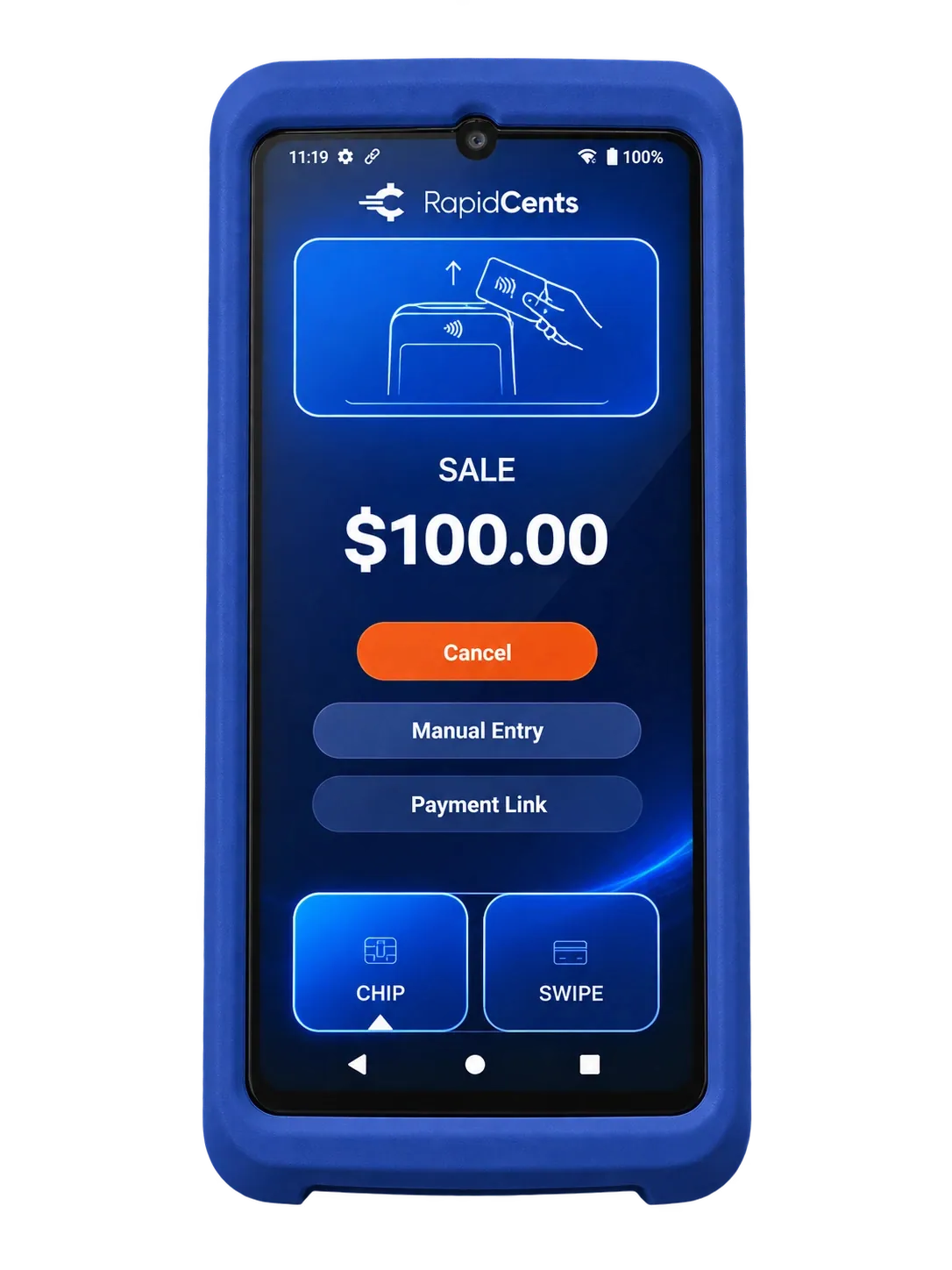
The RapidCents Rivo Go standing upright in its blue silicone case, showing the full-touch sale screen a customer reads across the counter. Payment Terminals
RapidCents payment terminals cover countertop, mobile and smart form factors so you can accept chip…
Explore
A RapidCents hosted checkout page at checkout.rapidcents.com, with the order summary and totals on the left and the card fields on the right, footed by SSL and PCI DSS assurances. Hosted Checkout
RapidCents hosted checkout delivers PCI-scoped payment pages you redirect customers to or embed via iframe…
Explore
The RapidCents payment links screen listing created links with their amount, status, click count and whether they have been paid, beside a phone showing the branded page a customer opens to pay $2,500.00. Payment Links
RapidCents payment links let staff generate branded pay-by-link URLs for invoices, deposits, balances and…
Explore


How does club renewal failed payment recovery work?
Club renewal failed payment recovery starts with the reason for the decline. An expired card, a replaced card or insufficient funds each call for a different step. RapidCents retries on a schedule, can update stored card details through Account Updater, and gives staff a list of dues still unpaid.
Sort failures by reason
An expired or reissued card usually needs a new card or an Account Updater refresh. A soft decline may clear on retry. A stolen-card or do-not-honor decline needs the member to use another card. Staff should contact the member before the grace period ends.
Send a Payment Link instead of chasing by phone
When a due fails, send the member a Payment Link by text or email for the exact balance. The member pays with a new card, and you can offer to store it for future dues, with the member's authorization.
300 annual renewals, eleven declines
Say a hunting and fishing club bills 300 annual renewals on April 1 and eleven decline. Staff sort them, refresh two cards, send links to six members and call three, then suspend voting privileges only after the notice period in the bylaws.
How do you compare fees for a membership club?
Compare fees by pricing model and by your real mix of dues, events and counter sales. RapidCents prices on interchange-plus: interchange passes through at cost, you pay your RapidCents markup as set out in your Fee Schedule, plus fees for equipment or services if applicable. Month to month, no fixed term.
What drives cost for a club
Cost follows card type (debit, credit, premium, commercial) and how the card is taken. Tapped or inserted cards at the bar differ from keyed dues or online sign-ups. Dues are recurring and card-not-present, so that share of your mix matters.
What to bring to a comparison
Gather three recent processing statements, the number of members on automatic dues, your average event ticket, the split between online and counter sales, and how many refunds and disputes you saw. Quotes only compare when they use the same mix.
Run Fee Check on a statement
Upload a processing statement to Fee Check. It separates interchange from markup so a board or finance committee can see what each part is. Your RapidCents Fee Schedule sets out your markup in writing before you sign.
Software compatibility: WildApricot, ClubExpress and other systems
RapidCents integrates with many major platforms through APPIE and RapidBridge, and RapidBridge ships ready detection packs for WildApricot, GrowthZone and Member365. For other club platforms the right option depends on your vendor and edition, and your RapidCents representative will walk you through it. Settled transactions, fees and refunds connect to QuickBooks Online and Xero.
WildApricot
WildApricot holds the member record and the dues renewal. RapidBridge works with WildApricot, so a card payment is taken inside the screens your staff already use and lands against the member you have open, with no change to WildApricot itself.
ClubExpress
ClubExpress runs club websites, dues and events. RapidCents integrates with many major platforms through APPIE and RapidBridge, and the right option depends on your edition. Tell your RapidCents representative how you use it, and they will show you how terminal sales and Payment Links reach the member's ledger.
MemberClicks, Glue Up and MembershipWorks
Each platform has its own payment settings and portal. Your RapidCents representative will walk you through whether card payments run inside the portal, through a connected option or by link, and how renewals and event registrations post to the member.
QuickBooks Online, Xero, SAP and NetSuite
RapidCents connects settled transactions, fees and refunds to QuickBooks Online and Xero, so the books match the deposits. SAP and NetSuite import settlement files. This sits apart from your membership software, so the treasurer's close works the same whichever club platform you run.
Payment options for membership clubs in Canada
A membership club in Canada can accept Interac debit and credit cards in person and online, collect dues by pre-authorized debit, and settle in CAD. RapidCents sets these up on your merchant account, and your representative walks you through each one.
Interac debit and credit cards
Members tap or insert Interac debit and credit cards at the bar, pro shop or front desk on a RapidCents terminal. Online joining and event fees use credit and debit cards through Hosted Checkout or a Payment Link.
Bank payments, CAD and GST/HST
Dues can be collected by EFT or pre-authorized debit (PAD), with a signed authorization from the member. Settlement is in CAD. Dues, event fees and sales may carry GST/HST, so ask your accountant how each one is treated.
Setup, refunds and payment reporting
Once your account is approved, switching a club's payments means moving stored cards, schedules and event links without a missed due. List what you have, test a sale and a refund, run both providers for a short overlap if needed, and reconcile the first deposits to the ledger before you close the old account.
Inventory before you move
List every member on automatic dues, their authorizations, open invoices, event links still live and pending refunds. Ask your current provider in writing whether stored cards can be exported. Both providers must agree, so plan for members who need to re-enter a card.
Test, then overlap
Run a test joining fee, a recurring due, a Payment Link and a refund on RapidCents before the first real billing date. If members may be mid-cycle, run the old schedule beside the new one for a short overlap so no due is skipped or charged twice.
Reconcile deposits to dues
Use Reporting to separate dues, event income and counter sales, with refunds and fees shown apart. Match each deposit to the settlement report, then to the ledger. CSV and PDF exports help the treasurer close the month and support club dues invoice reconciliation.
Payment questions from membership clubs
What should membership clubs compare before choosing a payment processor?
Compare the whole workflow, not one price. Check how dues recur, how a failed renewal is recovered, how event fees and counter sales are taken, what your membership software allows, total fees, settlement, refunds and support. Ask each provider to run your dues cycle in a demo. No single provider is best for every club.
How much does payment processing cost for membership clubs?
It depends on your card mix, channels and equipment, so no honest figure applies to every club. RapidCents prices on interchange-plus: interchange at cost, your RapidCents markup in your Fee Schedule, and fees for equipment or services if applicable. Month to month, no fixed term. Upload a statement to Fee Check to see interchange apart from markup.
Can I use WildApricot with RapidCents?
Yes. RapidBridge works with WildApricot, so card payments are taken inside the WildApricot screens your staff already use, with no change to WildApricot. A RapidCents terminal or Payment Link can also run beside it for counter and event sales. Your RapidCents representative will walk you through the setup for your plan.
How can my club handle membership dues recurring payments?
Store a card with the member's authorization, then schedule dues with Recurring Payments. The member agrees to the amount, the billing date and how to cancel. RapidCents charges on schedule, retries declines, notifies the member and records each result. Staff change plans before the next charge, and exceptions such as a leave of absence are handled by hand.
Which payment options can a membership club in Canada offer?
A membership club in Canada can offer Interac debit and Visa, Mastercard and American Express credit cards at the counter, online and by link, plus EFT or pre-authorized debit for dues. Settlement is in CAD. Your RapidCents representative will tell you which options go live on your merchant account, so you can promise members exactly what they will get.
What setup is needed for club renewal failed payment recovery?
Set a retry schedule, turn on Account Updater for stored cards, and agree a grace period in your bylaws. Staff then work a list of unpaid dues, sending Payment Links for the exact balance. Cards are stored for future dues only with the member's authorization, and a refund follows your published terms.
How should we manage club event payment processing?
Sell every event fee through one route, usually a Payment Link or Hosted Checkout, and take door sales on a terminal. Name who may change or refund a payment, tie each payment to the event and the member, and set cancellation terms before you sell. Failed payments should return to staff as a list, not a guess.
Can one platform handle member portal payment integration and club dues invoice reconciliation?
Yes, when your member portal and your payment records share one member and one settlement report. RapidCents integrates with many major platforms through APPIE and RapidBridge, and the right option depends on your software vendor and version. Tell your RapidCents representative which membership system you run, and they will show you how payments and reconciliation connect.
How do we reconcile card payments and bank deposits for membership clubs?
Separate gross sales, refunds, disputes, fees and deposits, then match each deposit to the settlement report by transaction ID and to the member's record. Reporting exports CSV and PDF, and RapidCents connects settled transactions, fees and refunds to QuickBooks Online and Xero. SAP and NetSuite import settlement files.
How do we switch payment providers without losing saved cards or disrupting dues?
List your authorizations and schedules, then ask your current provider in writing whether stored cards can be exported. Both providers must agree, so plan for members who re-enter a card. Test a sale, a recurring due and a refund first, run schedules in overlap if needed, and reconcile the first deposits before closing the old account.
What MCC is used for membership clubs?
MCC 8699 is commonly associated with membership organizations. RapidCents sets the right merchant category during onboarding, based on what your club actually sells. A club that runs a restaurant, golf course or retail shop may be categorized differently, so describe each source of income when you apply.
Related industries
Nonprofits, golf courses, events and education also collect recurring fees, deposits and one-off tickets. Their payment jobs overlap with club dues, but the buyer and the exceptions differ.
Nonprofits & Charities
Take one-time and monthly gifts online, sell event tickets by link and reconcile deposits…
Education
Take enrollment deposits online, run tuition installments on schedules families authorize…
Government
Take permit fees, counter payments and mailed-in payments from residents, then trace…
Events & Ticketing
Sell advance tickets online, take cards at the gate and concession stand, and give…
Travel Agencies
Take booking deposits, collect final balances and group installments, and match settled…
Agriculture
RapidCents helps farms invoice bulk buyers, take cards at the market stall and bill CSA…
Pet Services
RapidCents helps boarding kennels, dog daycares, groomers, trainers and pet sitters take…
Photography
Collect retainers, session balances and gallery print orders with payment links, invoices…
Take the next step
See what your club's dues really cost
Upload a recent processing statement to Fee Check and see interchange separated from markup, using your own dues, events and bar sales.
- No obligation
- Canadian payment specialists
- Secure statement upload



