Payment processing for sporting goods stores
Payment processing for sporting goods stores has to cover the sales floor, the service bench and the web store. RapidCents takes in-person, online and phone payments with Retail POS, Payment Terminals, Hosted Checkout, Payment Links and Multi-Location, so seasonal counter sales, rental deposits and repair invoices all land in one set of records.

- PCI DSS Level 1
- SOC 2 Type II
- All major cards: Visa, Mastercard, Amex, Discover, UnionPay, Diners Club & Interac Debit
- Interchange-plus available
- Canadian support
How sporting goods stores get paid
A sporting goods store collects money in four ways: gear sold over the counter, rental deposits, repair and tune-up invoices, and online orders with the returns that follow. Each one needs its own collection method and its own record for whoever closes the books.
Gear sold at the counter
Shoppers pay for skates, bikes, cleats or camping kit at the till by tap, insert or swipe on a payment terminal. The sale ends with a receipt, and finance gets a settled-transaction record tied to the register shift. If a shopper uses a gift card or splits the bill across two cards, the sale records both.
Rental and demo deposits
A customer renting skis, a kayak or a demo bike leaves a deposit against damage or late return. You take it with an authorization hold or a captured payment, and it is released or applied at return. Finance needs the rental ticket matched to the deposit.
Repairs, tunes and fittings
A rider drops off a bike for a tune, or a skier books a boot fitting. The shop quotes the work, then collects the balance by terminal, Payment Link or Invoicing when the job is done. Parts and labor should appear together on one invoice.
Online orders and returns
Web shoppers pay through Hosted Checkout, and staff pick the order from store stock. Returns come back to the original card, in the store or by mail. Finance matches each refund to the original sale, because returns spike after holidays and seasonal peaks.
Payment pages for specialized businesses
Some businesses in this sector take payments differently enough to need their own page. Each one covers its own payment jobs, software questions and buyer FAQs.
How do sporting goods stores collect payments at the counter?
Sporting goods stores collect counter payments on Payment Terminals tied to Retail POS, so each sale, split tender and refund lands in one record. Plan for seasonal peaks: ski tuning rushes in winter and bike sales climb in spring. Extra lanes matter more than extra features.
Run the till through the peak
A shopper brings a helmet, shoes and a water bottle to the counter. The associate rings them up in Retail POS, the customer taps a card on the Payment Terminal, and the receipt prints or sends by email. Add a mobile terminal for sidewalk sales and a Tap to Pay phone for line-busting.
Set up for gift cards, splits and special orders
Decide before the season how you handle a deposit on a special-order kayak, a split between two cards, or a gift card covering part of a basket. Write the steps down and train seasonal hires on them. Your RapidCents representative will show you how each one runs on your point-of-sale software.
Handle declines, voids and disputes
Say a customer buys a $950 road bike and the card declines. Staff void the attempt, ask for another card, and never re-run the same card without consent. If a cardholder later disputes a sale, Disputes tools help you gather the receipt, serial number and signature within the deadline.
How does sporting goods POS payment integration work?
Sporting goods POS payment integration means the sale amount reaches the terminal from your point-of-sale software, and the result returns to it. RapidCents integrates with many major platforms through APPIE and RapidBridge. Where a connection fits your software, the register drives the terminal; otherwise a standalone terminal takes the payment and staff match the record afterward.
Integrated or standalone
With Integrated Payments, the cashier rings up the sale, the amount appears on the terminal, and the approval writes back to the sale. With a standalone terminal, the associate keys the amount and later matches the payment to the ticket. Your RapidCents representative will tell you which fits your software before you buy hardware.
What to prove in a demo
Ask to see a sale, a split tender, a partial refund and a voided sale on your actual register, with your item catalogue and tax settings. Check that the payment reference appears on the receipt and in the report finance will use at month end.
When the connection fails
A store has a shaky connection during a Saturday rush. Know the fallback: a terminal on cellular data, a note on the sale that payment was taken separately, and a rule that no one rings the item through twice. Reconcile every fallback payment the same day.
RapidCents products for sporting goods stores
These products cover the counter, the web store and every location: Retail POS for the sales floor, Payment Terminals for chip and contactless, Hosted Checkout for online orders and Multi-Location for owners with several stores.
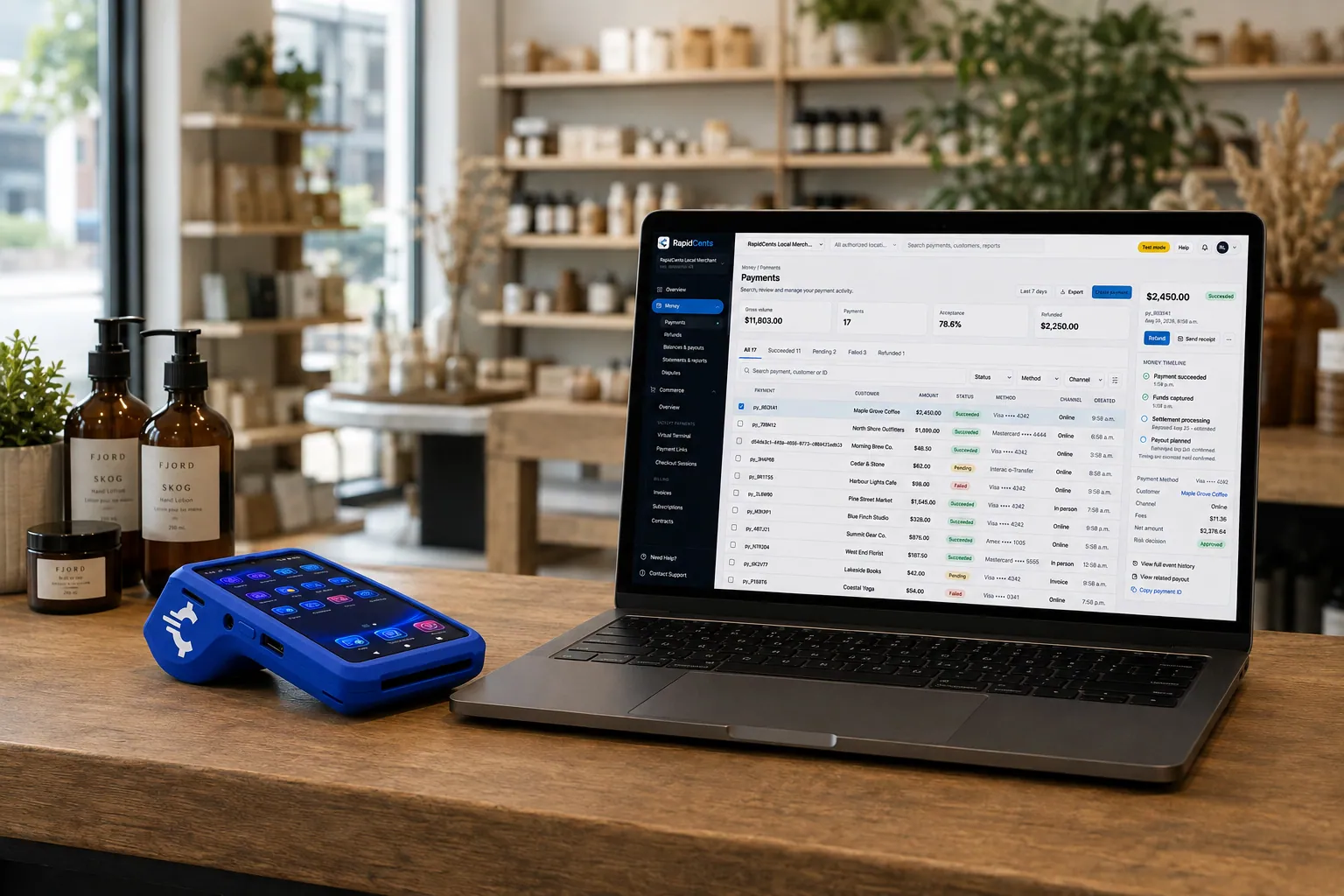
A retail counter ringing a basket on RapidCents POS, terminal taking the card and the dashboard showing the sale. Retail POS
Fast checkout, inventory that reflects what is on the shelf, and reporting that connects in-store and online…
Explore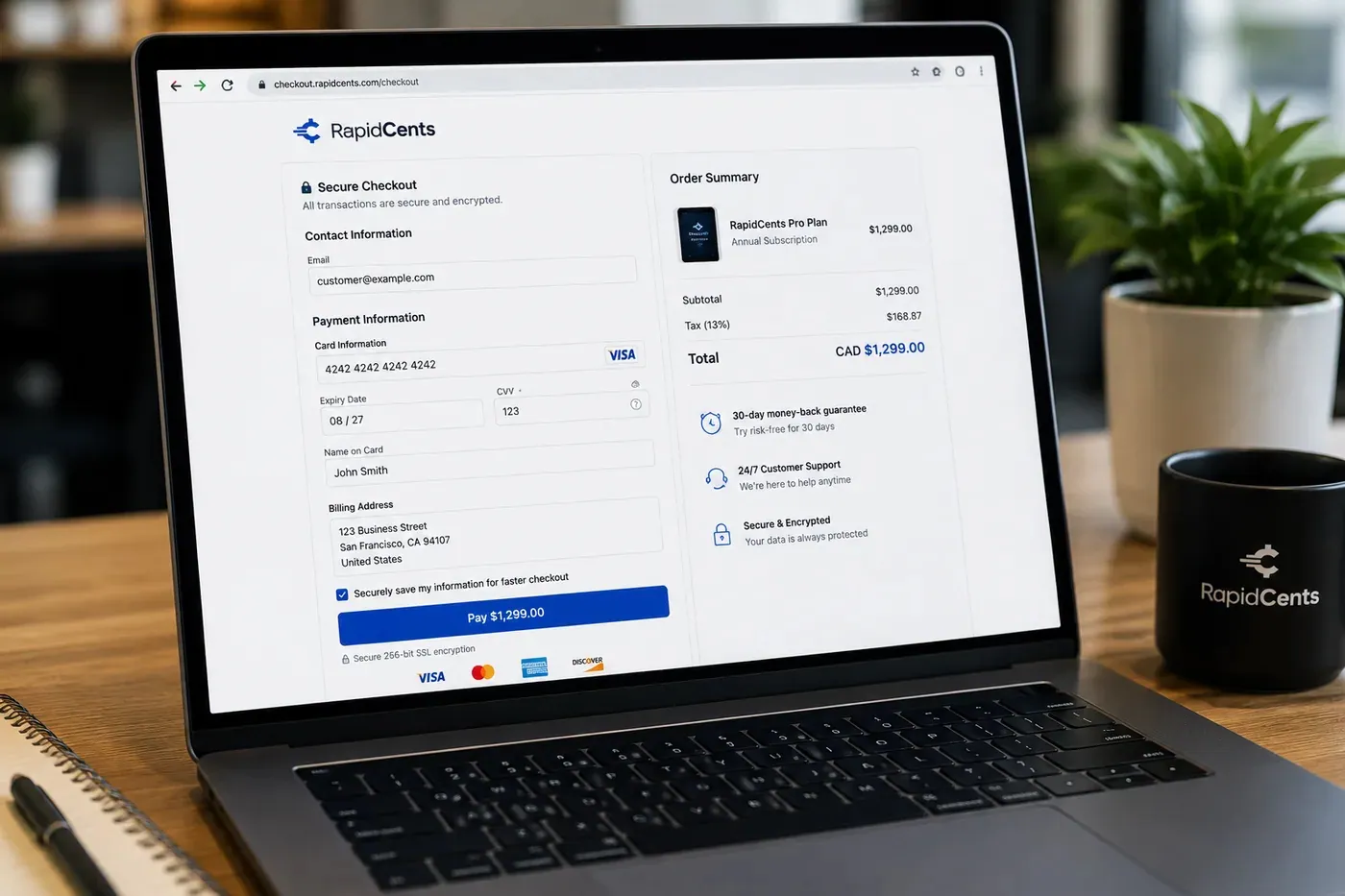
A RapidCents hosted checkout page at checkout.rapidcents.com, with the order summary and totals on the left and the card fields on the right, footed by SSL and PCI DSS assurances. Hosted Checkout
RapidCents hosted checkout delivers PCI-scoped payment pages you redirect customers to or embed via iframe…
Explore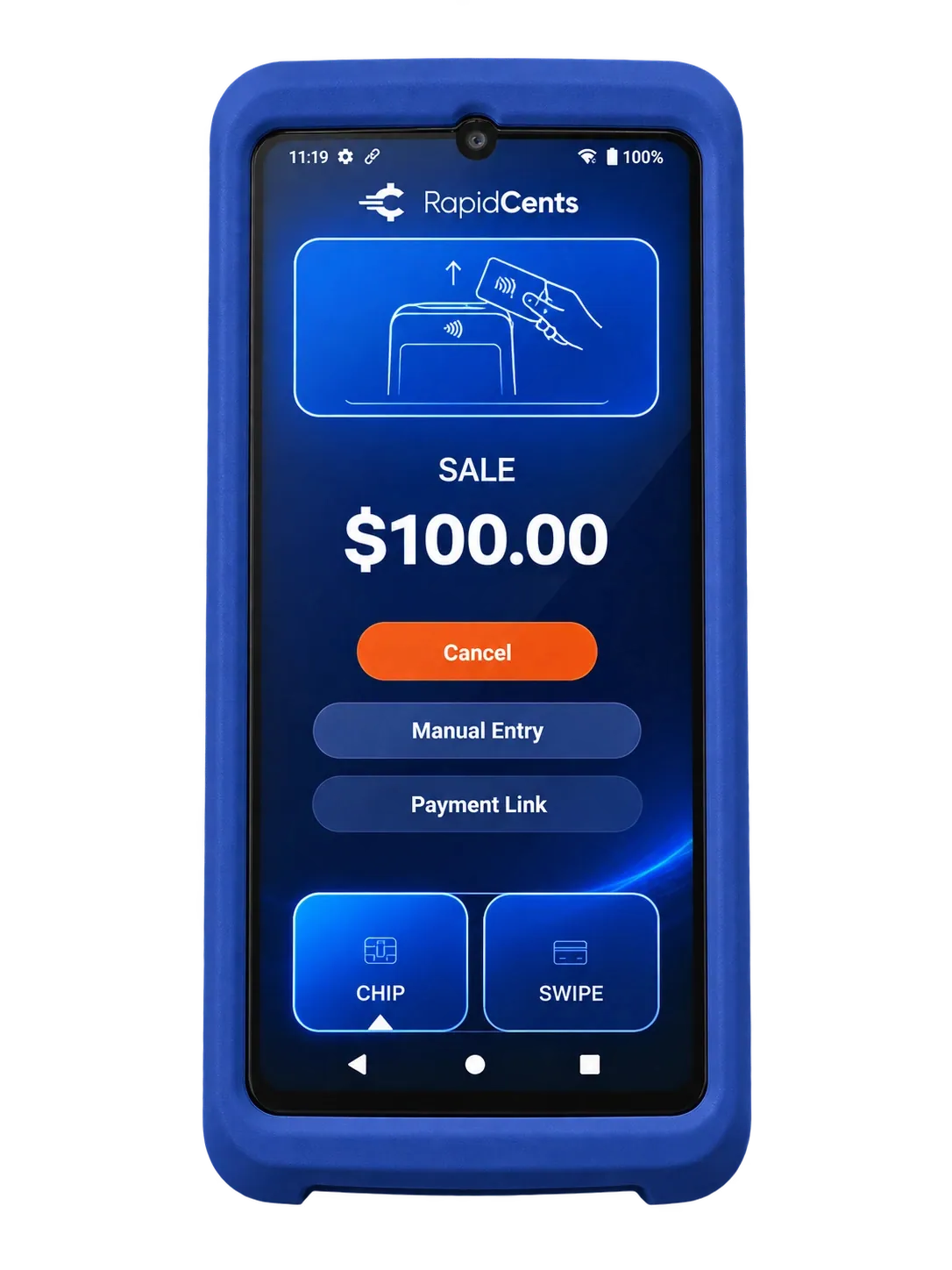
The RapidCents Rivo Go standing upright in its blue silicone case, showing the full-touch sale screen a customer reads across the counter. Payment Terminals
RapidCents payment terminals cover countertop, mobile and smart form factors so you can accept chip…
Explore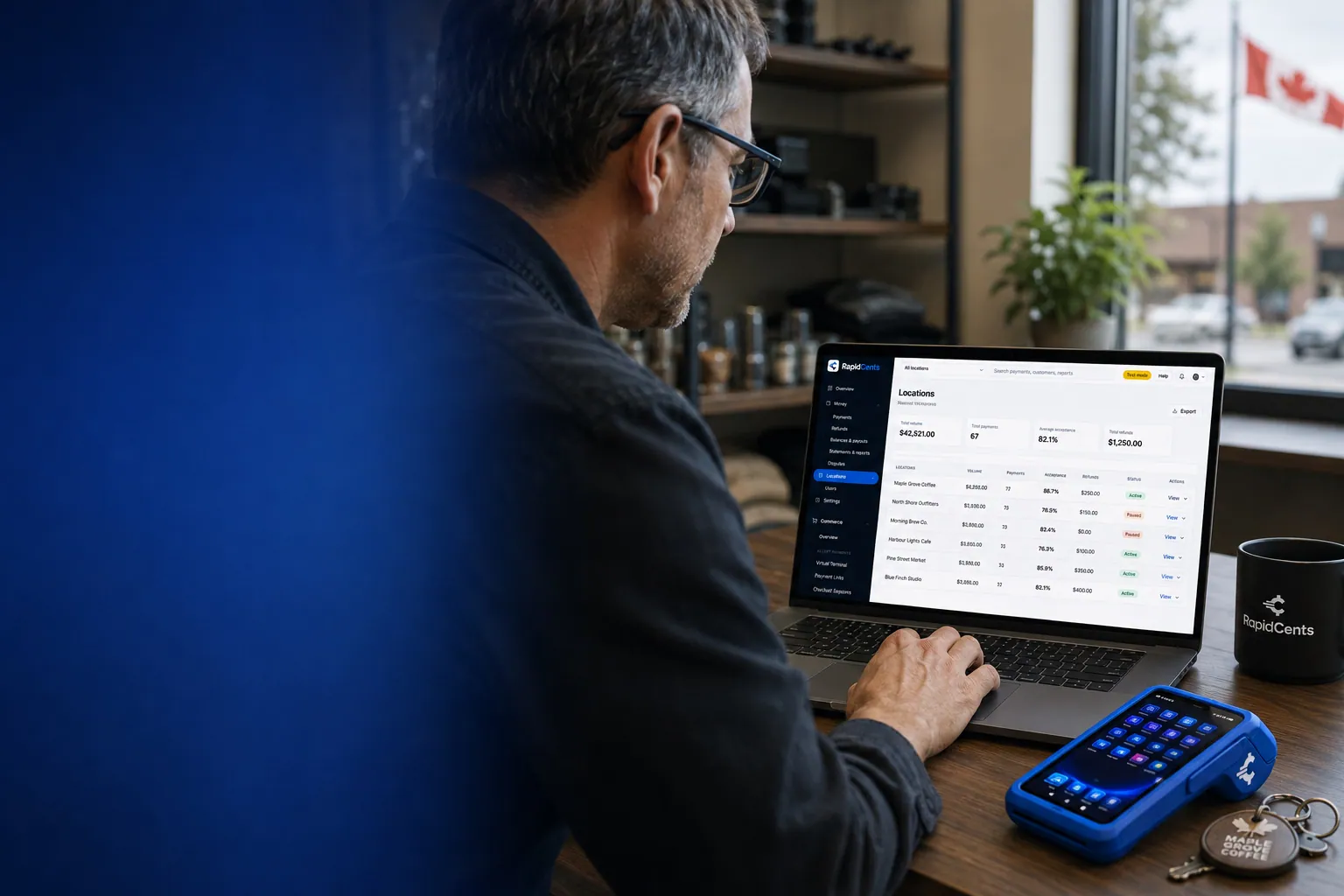
One RapidCents account comparing sales across locations, with a terminal representing the store-level capture. Multi-Location
RapidCents multi-location tools organize stores, franchises and regions in a hierarchy with location-level…
Explore


How do sporting goods stores take sports equipment rental deposits?
Sporting goods stores take rental deposits with an authorization hold or a captured payment, tied to a rental ticket and released or applied on return. Stored cards need the customer's authorization, and the damage or late-fee terms should be agreed in writing before any extra charge.
Hold or capture the deposit
A family rents four pairs of skis for a week. The associate runs a deposit on a terminal, the rental ticket records the reference, and the receipt shows the amount. A hold reserves funds; a captured payment is refunded or applied at return. Your RapidCents representative will help you pick the one that suits your rental counter.
Write the terms down first
Set out the deposit amount, what counts as damage, the late-return rule and the release process. Have the customer sign the rental agreement, with Contracts & eSignatures if you want it digital. A card kept on file for later charges needs separate, explicit authorization.
Handle damage, late returns and releases
Say a demo bike returns with a bent derailleur. Staff inspect, write up the repair cost, and charge only the amount the agreement allows, with the customer's authorization. If the item is fine, release the hold or refund the deposit and keep the record linked to the ticket.
How do you compare payment fees for a sporting goods store?
Compare fees on your real payment mix. RapidCents prices every account on interchange-plus: interchange passes through at cost, you pay your RapidCents markup shown in your Fee Schedule, and fees for equipment or services apply if relevant. Pricing is month to month, with no fixed term.
What drives the cost
Interchange varies with card type, whether debit, credit, rewards or commercial, and with how the card is taken. A tapped or inserted card differs from one keyed by phone or entered online. A store that sells in person, rents gear and ships online has all three patterns.
What to bring to a comparison
Gather recent processing statements, your average ticket for gear and for service work, the split between counter and web sales, and your refund and dispute volume. Seasonal stores should include a peak month and a slow month so the comparison reflects the whole year.
How Fee Check helps
Upload a processing statement to Fee Check and it separates interchange from markup. You can then compare quotes line by line, including terminals, gateway and any monthly service, before deciding. Ask every provider to put their terms in writing.
Which sporting goods software works with RapidCents payments?
RapidCents integrates with many major business platforms through APPIE and RapidBridge. APPIE lets the point-of-sale software you already run drive RapidCents terminals, settled transactions, fees and refunds connect to QuickBooks Online and Xero, and SAP and NetSuite import settlement files. Your RapidCents representative walks you through the option for your software.
Lightspeed Retail
Lightspeed Retail runs counter sales, inventory and returns. RapidCents integrates with many major platforms through APPIE and RapidBridge, and the right option depends on your Lightspeed edition and version. Tell your RapidCents representative which one you run, and they will show you how payments, receipts and refunds connect.
Celerant
Celerant handles retail and rental workflows in some stores. Tell your RapidCents representative which version you run, and they will walk you through how a deposit and a final sale reach the payment terminal, so you plan hardware with the full picture.
Shopify POS
Shopify POS pairs the in-store register with the online store, and RapidBridge works with Shopify for web orders. Your RapidCents representative will explain the setup for the counter and for online. Payment Links and Hosted Checkout take payments outside the software, with an export for reconciliation.
Square for Retail
Square for Retail bundles its own payment processing with its register. If you run it today, your RapidCents representative will walk you through your options, whether that means a standalone terminal, a separate invoice flow or a different register, so you know exactly what changes.
NCR Counterpoint
NCR Counterpoint is a desktop-style retail system with returns and open orders. Your RapidCents representative will walk you through how terminals connect for your version and how each return is matched to the original card sale.
Payment options for sporting goods stores in Canada
Canadian sporting goods stores typically take Interac debit and credit cards at the terminal, accept bank payments by EFT or pre-authorized debit (PAD) for larger orders, and settle in Canadian dollars (CAD). Your merchant account decides which of these you offer.
Interac debit and credit at the counter
Customers pay with Interac debit by chip and PIN or contactless, or with Visa, Mastercard or American Express. Your RapidCents representative turns on the card types you want to take.
Bank payments and tax on receipts
EFT or PAD can collect larger balances, such as a team order, with the buyer's authorization. GST/HST may appear on receipts, and provincial rules can affect how you show it. Your accountant can advise on your tax setup.
How do you switch payment processors and reconcile returns?
Switching works best off-season, with a written inventory of what you use today, tested sales and refunds before go-live, and a reconciliation of deposits to your ledger. Once your account is approved, your representative helps you plan the cutover. Stored cards move between processors only when both providers agree.
Inventory and test
List terminals, stored cards, rental authorizations, open invoices and online checkout settings. Then run a sale, a refund and a rental deposit on the new setup before moving real traffic. Run both systems in parallel for a short period if you can.
Reconcile deposits and returns
Match gross sales, refunds, disputes and fees to each bank deposit by transaction reference and location. Reports export as CSV or PDF, and settled transactions, fees and refunds map to QuickBooks Online or Xero, so the books close without retyping.
Run multiple stores
Say a three-store owner wants each shop's sales on its own line and one roll-up. Multi-Location gives location-level reporting and permissions, so a store manager sees only that store while the owner sees all of them.
Payment questions from sporting goods stores
What should sporting goods stores compare before choosing a payment processor?
Compare the whole acceptance workflow, not only the price: software fit, total fees, settlement, refunds, rental deposits and support. Ask to see sporting goods POS payment integration working on your register. RapidCents prices every account on interchange-plus, so upload a statement to Fee Check, then set our written quote beside your current one line by line.
How much does payment processing cost for sporting goods stores?
The cost depends on your card mix, how cards are taken, equipment and your RapidCents markup. Interchange passes through at cost and varies by card type. Your Fee Schedule shows your markup, and equipment or service fees apply if relevant. Pricing is month to month with no fixed term. Upload a statement to Fee Check to see the split.
Can I use Lightspeed Retail with a different payment processor?
Often yes. RapidCents integrates with many major platforms through APPIE and RapidBridge, and the right option depends on your Lightspeed Retail edition and version. Some setups bundle their own payments, while others use a standalone terminal or an export. Tell your RapidCents representative what you run, and they will walk you through it. Then test a sale and a refund.
How can my business handle sporting goods POS payment integration?
Tell your RapidCents representative which point-of-sale software, edition and version you run. RapidCents integrates with many major platforms through APPIE and RapidBridge, so the sale amount can pass to the terminal and the result return to the register. Where a standalone terminal fits better, staff match payments to tickets. Test a sale, a split tender and a refund before go-live.
Which payment options can a sporting goods store in Canada offer?
A sporting goods store in Canada can typically offer Interac debit, Visa, Mastercard and American Express at the terminal, plus online card payments and EFT or PAD bank payments. Settlement is in Canadian dollars (CAD). Receipts can show GST/HST. Your RapidCents representative lines up the methods with you as you set up.
How should we manage sporting goods ecommerce checkout?
Use Hosted Checkout so the payment page is hosted for you, styled with your logo and receipt wording. Link each order to its payment reference, decide who may refund, and set a rule for failed payments. Staff pick orders from store stock only after payment succeeds, and returns go back to the original card.
Can one platform handle sports store repair invoice payments and sporting goods returns reconciliation?
For payments, yes. RapidCents collects repair invoices through Invoicing, Payment Links or the terminal, and Reporting separates sales, refunds and fees. Whether returns and repairs share one customer record depends on your point-of-sale software, so ask your RapidCents representative for a demo and an export.
How do we reconcile card payments and bank deposits for sporting goods stores?
Separate gross sales, refunds, disputes, fees and each bank deposit, then match by transaction reference and location. Reporting exports as CSV or PDF. RapidCents connects settled transactions, fees and refunds to QuickBooks Online and Xero, and SAP and NetSuite import settlement files.
How do we switch payment providers without losing saved cards or disrupting sporting goods POS payment integration?
Do not assume saved cards move across. Token portability needs both providers to agree, so ask early. Inventory your terminals, stored cards, rentals and open invoices, test a sale, refund and deposit, then switch in stages. Customers who must re-enter a card need to authorize it again.
What setup is needed for sports equipment rental deposits?
You need a rental agreement, a deposit amount, a way to hold or capture the payment, and a release process. Link the reference to the rental ticket. A card kept for damage or late fees needs the customer's authorization. Your RapidCents representative will walk you through the deposit methods for your account and software.
What MCC is used for sporting goods stores?
MCC 5941 is commonly associated with sporting goods stores. The merchant category code groups your business for card networks. RapidCents sets the correct category during onboarding, based on what your store actually sells, so a store with a large service or rental side should describe its mix clearly.
Related industries
Retail, convenience, furniture and auto parts businesses share counter sales, special orders and returns with sporting goods stores, but each has its own mix of deposits and service work.
Retail
Take tap, chip and PIN payments at every register, sell on your website, refund returns…
Convenience Stores
RapidCents gives convenience stores countertop terminals for debit and credit taps, Tap…
Grocery
Credit, debit and contactless acceptance for supermarkets and independent grocers…
Liquor Stores
RapidCents gives liquor and wine retailers card terminals for the till, payment links for…
Jewellery Stores
Take high-ticket cards at the counter, collect repair and custom-order deposits, and…
Furniture Stores
Take order deposits at the desk, collect delivery balances by link or at the door, and…
Garden Centres & Nurseries
Take cards at the till, beside the shrubs and at the loading gate, and collect landscape…
Auto Parts Retailers
Take cards at the counter and on delivery, collect trade statements on the terms you set…
Take the next step
See what your sporting goods store really pays
Upload a recent processing statement to Fee Check and see interchange separated from your markup, before the next season's rush starts.
- No obligation
- Canadian payment specialists
- Secure statement upload