Music school payment processing for lessons, rentals and recitals
Music school payment processing lets you take cards at the desk, by payment link or by phone, and bill families on a schedule. It covers monthly lesson tuition, itemized invoices that combine tuition and instrument rental, and recital or event fees, all under one RapidCents account with clear interchange-plus pricing and one payment record per family.

- PCI DSS Level 1
- SOC 2 Type II
- All major cards: Visa, Mastercard, Amex, Discover, UnionPay, Diners Club & PIN Debit
- Interchange-plus available
- Specialist onboarding support
How music schools get paid
Music schools get paid through four repeating jobs: monthly or term lesson tuition, instrument rental charges, recital and event fees, and lessons paid by adult students. Each job has a different payer and trigger, so each runs through the RapidCents product that fits it.
Monthly lesson tuition
A parent agrees to a weekly lesson schedule and your office turns it into a monthly or term amount. Recurring Payments charges the saved card on the agreed date. A decline or a paused term becomes an exception for your office, and finance sees a dated record per family.
Instrument rental and supplies
A parent rents a violin, keyboard or guitar, or buys method books and strings. Your office adds the rental to an invoice or sends a payment link. Returns, damage charges and deposits are separate lines, so the family and finance can see what each payment covered.
Recital, exam and event fees
Families pay a recital, festival or exam-entry fee once per event. Your office sends a payment link by SMS or email with a reference to the event and the student. Refunds follow your published event policy, and the link status shows who has paid.
Adult students and walk-ins
Adult students and drop-in learners pay for their own lessons, workshops or trial classes. They tap or insert a card at the front desk, pay by link, or call the office and pay through the Virtual Terminal. Staff attach the student name to every receipt.
How do music schools bill weekly lessons by the month?
Music schools bill weekly lessons by the month with an authorized recurring schedule. The parent agrees to the amount, the charge date and how to cancel, your office saves the card, and Recurring Payments charges it on schedule. Finance then sees each charge, retry and refund against the student's profile.
Set up the schedule and the authorization
Build the plan from your term calendar, either equal monthly charges across the year or one charge per term. Before saving a card, get the parent's authorization for the amount, charge date and cancellation notice, and record it in the family's Customer Profile beside the student and teacher.
Declines, pauses and withdrawals
A card expires or declines mid-term. Account Updater can refresh saved cards where supported, and retries follow the rules you set, but a family that goes quiet needs a call from your office. A paused term or withdrawal changes the schedule only when your written policy says so.
A weekly piano lesson, billed on the first
Say a school offers a weekly 30-minute piano lesson. A parent authorizes one monthly charge on the first, with a notice beforehand. In a holiday month the teacher cancels one lesson, so the office adds a credit to the next invoice instead of changing the saved amount.
How can a parent pay tuition and instrument rental together?
A parent can pay tuition and instrument rental together on one itemized invoice. Invoicing lists each line, sends a payment link and tracks the status from draft to paid. The parent pays once, and your office still sees tuition and rental as separate lines for reporting.
Build one itemized invoice
Add tuition, the rental period, the method book and any registration line as separate lines, with the student's name and teacher in the reference field. The parent pays through the payment link by card, and partial payments apply to the open balance. Your RapidCents representative shows you how the lines flow into Reporting.
Rental terms, damage and returns
Agree rental terms in writing: period, replacement value and what happens on return. A damage or late-return charge is a new invoice line with the parent's agreement, not a surprise charge on a saved card. A returned instrument ends the rental line, and any refund follows your policy.
A term of violin lessons and a half-size violin
Say a parent enrolls a child in violin lessons for the term and rents a half-size violin. Your office sends one invoice with tuition, the rental and a method book. The parent pays by link, and finance exports the three lines separately.
RapidCents products for music schools
Recurring Payments, Invoicing, Payment Links and Customer Profiles cover the music school cycle: monthly tuition on a schedule, itemized invoices with rental, event links and one profile per family.
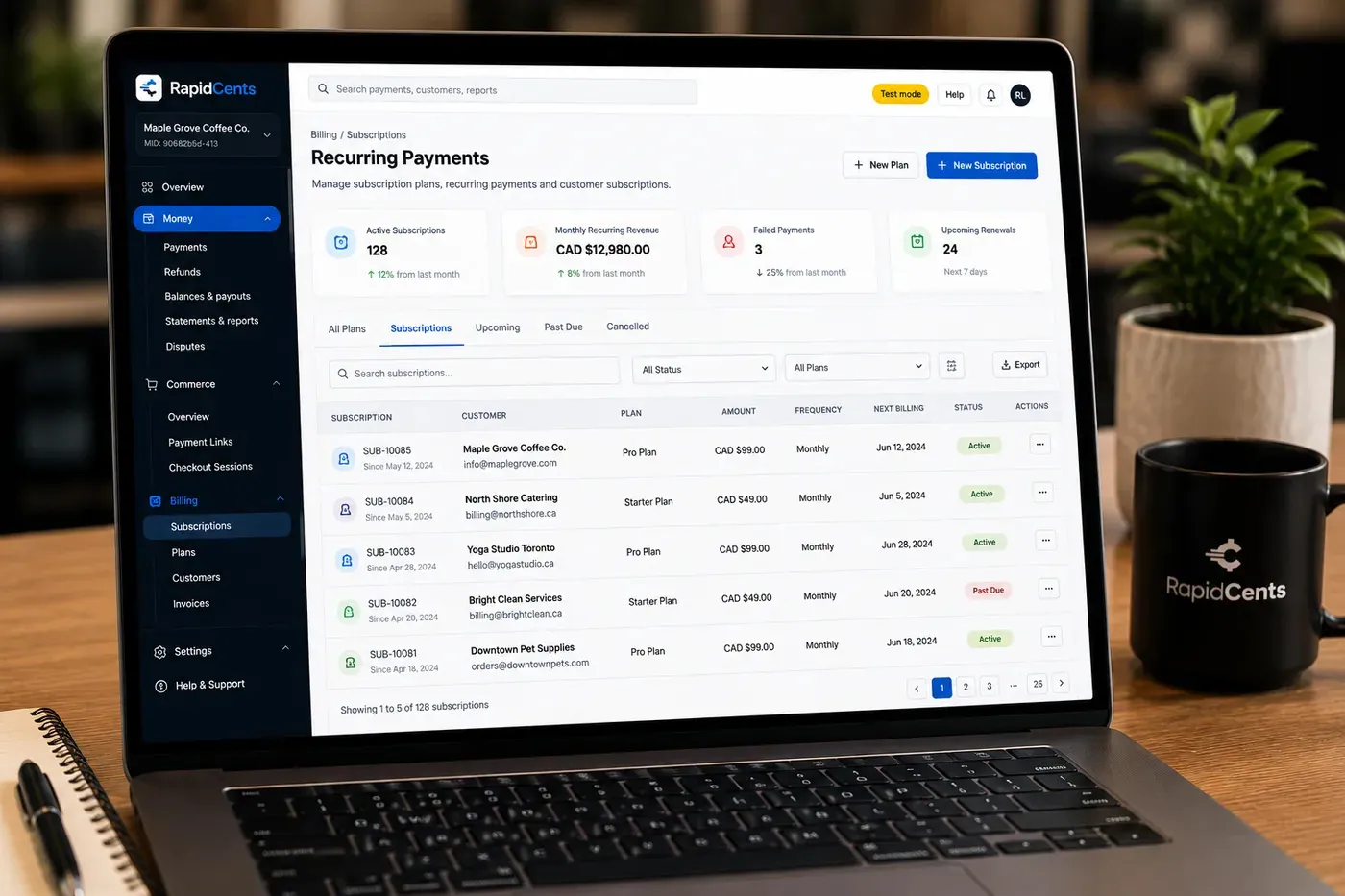
The RapidCents recurring payments screen showing active subscriptions, monthly recurring revenue, failed payments and upcoming renewals, above a list of subscriptions with their plan, amount, frequency and next billing date. Recurring Payments
RapidCents recurring payments manage subscription plans, membership renewals and installment schedules with…
Explore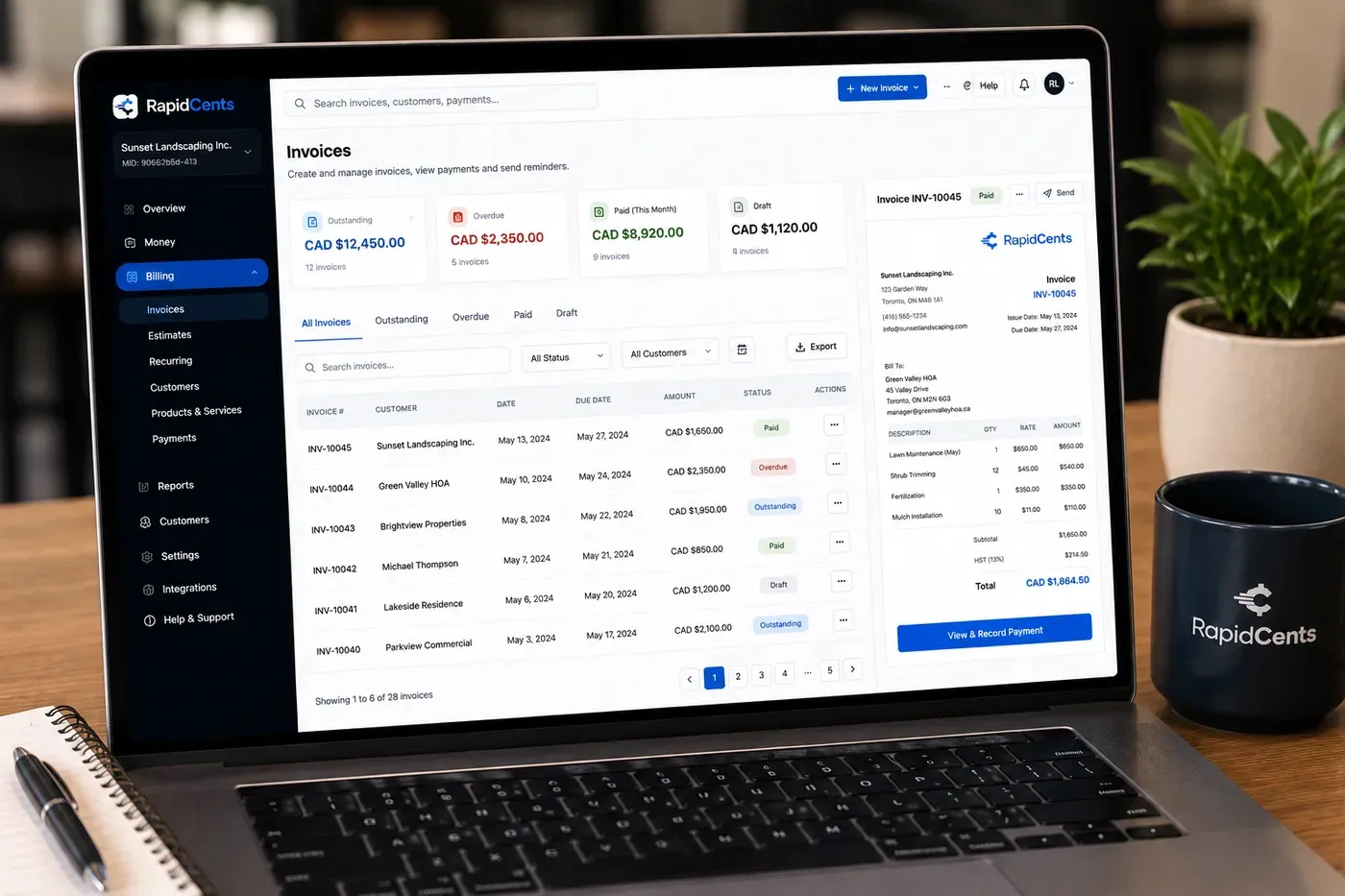
The RapidCents invoices screen: outstanding, overdue, paid and draft totals across the top, the invoice list below them, and a preview of one invoice on the right with its line items and a View & Record Payment button. Invoicing
RapidCents invoicing helps professional services, contractors and B2B suppliers create branded invoices…
Explore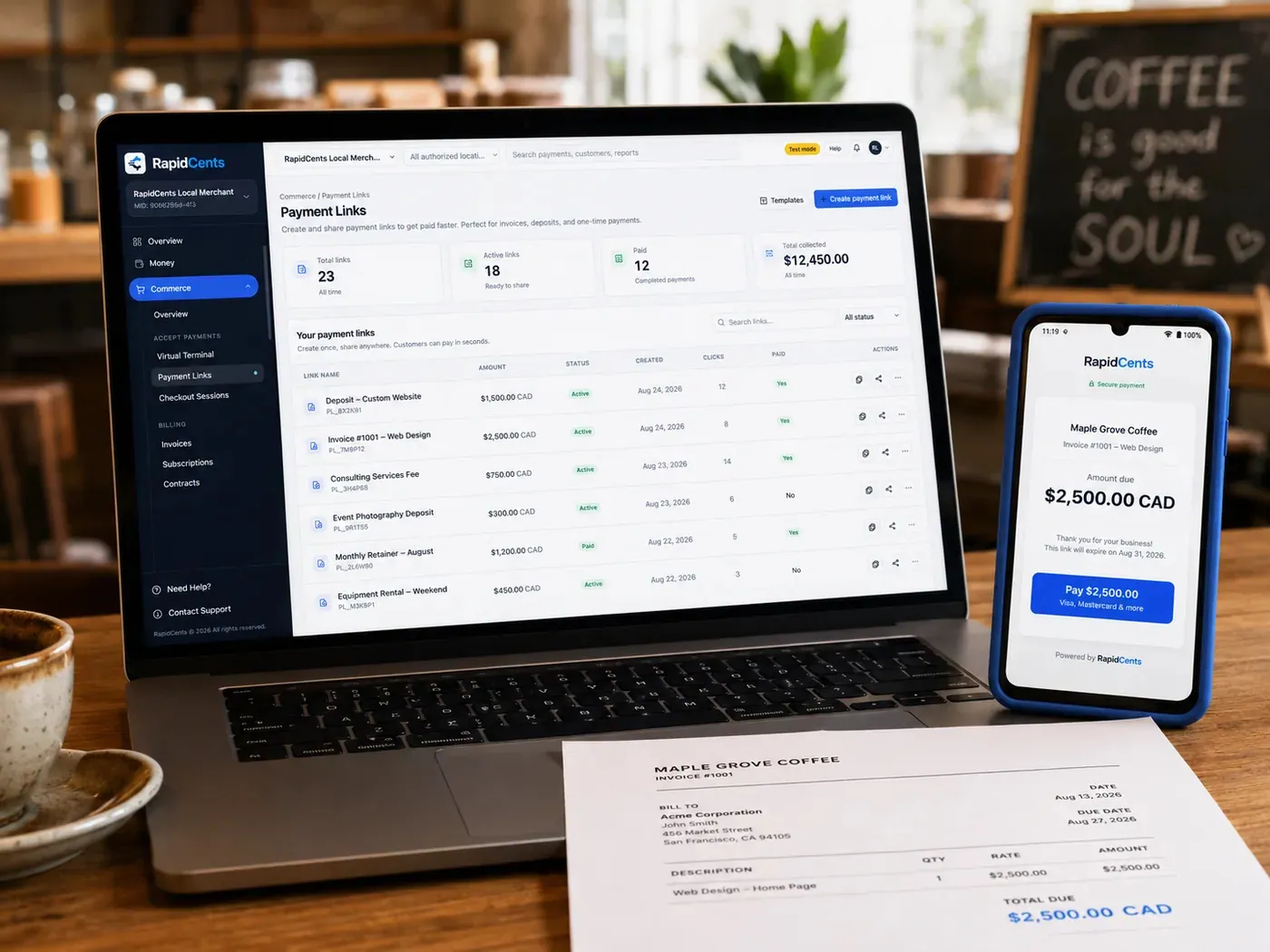
The RapidCents payment links screen listing created links with their amount, status, click count and whether they have been paid, beside a phone showing the branded page a customer opens to pay $2,500.00. Payment Links
RapidCents payment links let staff generate branded pay-by-link URLs for invoices, deposits, balances and…
Explore
A RapidCents customer profile holds saved cards and invoices, so a return visit can be charged without re-keying the card. Customer Profiles
A customer profile ties together transactions, stored payment methods, subscriptions and disputes so staff…
Explore


How do music schools collect recital and event fees?
Music schools collect recital, festival and exam fees with a payment link tied to the event and the student. Staff send the link by SMS or email, set an expiry date, and watch paid and unpaid links in the Merchant Dashboard. Each payment carries an event reference for reporting.
Send a link for each event
Create a Payment Link for each event with a reference such as the recital date and student. Send it by SMS or email, or post the QR code at the front desk. Optional expiry dates keep late payments from slipping past your hall booking or entry deadline.
Late payers, duplicates and refunds
Some families pay late or pay twice. Match duplicates by reference and refund the extra payment from the dashboard. If an event is canceled, refund by your published policy. Keep the event policy and the parent's receipt on file in case of a dispute.
A recital with forty families
Say a school sells recital participation to forty families. Staff send one link per student with the recital date as the reference. Two families pay twice, and the office refunds the duplicate. After the deadline, Reporting lists every paid and expired link.
How is music school payment processing priced?
Music school payment processing is priced on interchange-plus. Interchange, set by the card networks, passes through at cost, and your RapidCents markup is stated in your Fee Schedule, plus fees for equipment or services if applicable. It is month to month, with no fixed term.
What drives cost for your card mix
Interchange varies with card type, such as debit, credit, premium or commercial, and with how the card is taken. Cards tapped or inserted at the front desk differ from keyed or online payments, and monthly tuition charged to saved cards is a card-not-present payment.
What to bring to compare
Bring recent processing statements, your split between recurring tuition and one-time fees, your average lesson ticket, the front desk versus online share, and refund and chargeback volume. Compare written quotes line by line, and ask which equipment or service fees apply. Independent teachers who need music teacher credit card processing bring the same details.
Run Fee Check
Upload a processing statement to Fee Check to see interchange separated from markup. Use it to compare your current provider's markup with the RapidCents Fee Schedule, and your representative will walk you through the result line by line.
Does music school software work with RapidCents?
RapidCents integrates with many major platforms through APPIE and RapidBridge, so most music schools keep the software they run today. RapidBridge works with Jackrabbit Class and Amilia SmartRec, and settled transactions, fees and refunds connect to QuickBooks Online and Xero. The right option depends on your vendor and version.
FACTS Tuition Management and Blackbaud Tuition Management
Tuition billing systems like these each connect in their own way. Tell your RapidCents representative which one you use and which edition, and they will show you how payments, receipts and tuition billing connect through APPIE and RapidBridge.
Studio scheduling and management software
Music schools often run lessons in scheduling or studio management software. RapidBridge works with Jackrabbit Class and Amilia SmartRec, so a card payment posts against the family record you already have open. For other systems, your representative walks you through the option that fits your vendor and version.
QuickBooks Online, Xero, SAP and NetSuite
RapidCents connects settled transactions, fees and refunds to QuickBooks Online and Xero. SAP and NetSuite import settlement files. Your representative will also show you how tuition and rental lines map to your accounts.
Payment options for music schools in the United States
Music schools in the United States can typically offer credit and debit cards, including PIN debit where supported, and ACH bank payments for tuition, settled in USD. Your RapidCents representative will walk you through the methods set up on your account.
Cards at the desk and online
Parents can tap, insert or swipe Visa, Mastercard, American Express or Discover at the terminal, or pay a payment link by card. Debit and credit follow different interchange, so your card mix affects cost.
ACH payments and state rules
Parents who prefer a bank account can pay tuition by ACH with written authorization. Some states set rules for enrollment contracts and recurring charges, so check the requirements for your location with your accountant or attorney.
How do you switch music school merchant services?
You switch music school merchant services by listing what is stored, testing the new flow and running both providers briefly. Inventory saved cards, schedules, open invoices and refunds first. Then test a sale, a refund and a recurring charge before you move families over.
Inventory before you move
List every family's saved card, recurring schedule, open invoice, rental deposit and pending refund. Saved cards need the parent's authorization on the new provider. Token portability depends on both providers agreeing, so ask each one in writing, and plan to re-collect cards if they do not.
Test, then run in parallel
Once your account is approved, test a sale, a refund and a recurring charge with a staff card before term billing. Keep the old schedule running for a billing cycle while new families enroll on the new one. Do not move every family on the first day of a term.
Reconcile deposits to the ledger
Map payment references such as student name, teacher and event to your records. Reconcile each deposit to your ledger against settled transactions, fees and refunds in Reporting. Export CSV or PDF for your bookkeeper, or use the accounting connection your representative sets up for you.
Payment questions from music schools
What is the best payment processor for a music school?
The best processor is the one that fits your billing pattern and sets out its pricing in writing. Compare recurring billing, invoices with rental lines, payment links, reporting by teacher or location field, dispute tools and pricing that separates interchange from markup. Ask for written quotes from each provider and test the flow with your own lesson schedule before deciding.
How much does credit card processing cost for a music school?
The cost depends on your card mix and how cards are taken, so we quote no figure here. Interchange passes through at cost, your RapidCents markup is in your Fee Schedule, and equipment or service fees apply if applicable. It is month to month with no fixed term. Upload a statement to Fee Check to see interchange separated from markup.
Can my tuition billing software use a different payment processor?
It depends on the software. Some tuition billing and studio management systems bundle their own processor or require a named gateway, while others let you choose. RapidCents integrates with many major platforms through APPIE and RapidBridge, and the right option depends on your vendor and version. Tell your RapidCents representative which system you use, and they will walk you through it.
How can a music school switch processors without losing payment history?
You keep payment history by exporting it before you switch, and you rebuild saved cards with authorization. Export transaction and settlement reports, list saved cards, schedules, open invoices and rental deposits, and ask both providers whether tokens can move. If not, parents re-enter cards through a payment link. Run both providers briefly while you test.
Which payment options can a music school in the United States offer?
A music school in the United States can usually offer credit and debit cards, including PIN debit where supported, payment links, and ACH bank payments for tuition, all settled in USD. ACH needs the parent's written authorization. Your RapidCents representative will walk you through which methods are set up on your account before you share payment options with families.
Can I bill music lessons monthly?
Yes, with an authorized recurring schedule. The parent agrees in writing to the amount, charge date and cancellation terms, and your office saves the card for Recurring Payments. Charges then run on the schedule, with retries you set. Music lesson recurring payments suit monthly or term billing, but missed-lesson credits and withdrawals follow your written policy.
Can a parent pay tuition and instrument rental together?
Yes, on one itemized invoice. Invoicing lists tuition, rental, method books and registration as separate lines, sends a payment link and tracks status through to paid. The parent pays once while finance keeps separate lines. Partial payments apply to the open balance, and your representative shows you how the lines appear in Reporting.
Can different teachers' revenue be reported?
Yes, when the teacher is captured in a field. RapidCents does not split payouts between teachers automatically. Add the teacher or location in a reference field or Customer Profile, then filter Reporting and export CSV. Your representative will show you the staff and location fields on your account, and payroll or your accountant handles teacher pay.
What happens when a lesson is missed or a student withdraws?
Your written policy decides, and the payment record follows it. A missed lesson may earn a make-up credit, a credit line on the next invoice or no change, and a withdrawal may end the schedule and trigger a refund. Tell the parent in advance, adjust or cancel the recurring plan, and refund the card used.
How do we collect recital and event fees from parents?
Send a Payment Link for each event, tied to the student and the event date. Parents pay by card on their phones, and the Merchant Dashboard shows paid, open and expired links. Duplicates are refunded by reference. Set the refund rule on the event notice so parents know it before paying.
What MCC is used for music schools?
MCC 8299 is commonly associated with music schools and similar educational services. We set the right merchant category during onboarding, based on what your business actually sells, such as lessons, instrument rentals or retail items. If you sell instruments as well as lessons, tell your RapidCents representative so the account is set up correctly.
Related industries
Education is the parent page for school tuition. Tutoring centers share lesson packages and parent payers, and martial arts and dance studios share monthly memberships, event fees and family accounts.
Education
Take enrollment deposits online, run tuition installments on schedules families authorize…
Tutoring Centres
Sell prepaid lesson packages, bill monthly plans and send top-up links, with each…
Martial Arts & Dance Studios
Bill each student on their own membership, take grading and competition fees at the front…
Swim Schools
Collect term registrations, family payments, installment schedules and make-up credits…
Nonprofits & Charities
Take one-time and monthly gifts online, sell event tickets by link and reconcile deposits…
Government
Take permit fees, counter payments and mailed-in payments from residents, then trace…
Events & Ticketing
Sell advance tickets online, take cards at the gate and concession stand, and give…
Membership Clubs
RapidCents collects membership dues on a schedule, takes event fees and guest passes by…
Take the next step
See what your music school pays to take payments
Upload a recent processing statement to Fee Check and see interchange separated from markup, based on your tuition, rental and event mix.
- No obligation
- Payment specialists, not a call centre
- Secure statement upload