


DEVELOPER PLATFORM
Recurring Pagos API
El Recurring Pagos API builds subscriptions, memberships y instalment plans against el same billing engine el RapidCents dashboard uses, so un plan created en code behaves identically a one created por un operator. It owns el parts ese son tedious a rebuild: el schedule, el stored token each charge runs against, prorrateo cuando un plan changes mid-cycle, notifications sent antes de un charge, y el retry sequence después de un failed renewal. Each charge es un ordinary pago, con el same states y liquidación records as anything else.
- Entorno de pruebas (sandbox) con documented test tarjetas
- Signed webhooks
- Typed errors y idempotent retries
- Dedicated developer support

Qué crosses el wire
Dónde it sits
Above el pagos API rather than beside it. UN plan produces charges, y each charge es un ordinary pago con el same states, el same error codes y el same liquidación records as anything else en la cuenta.
Qué usted send
UN plan: el amount, el interval, any trial o cuota de instalación, el política de reintentos, y el token a bill. Then un subscriber attached a it. El reference names each field y states que son fixed en creation y que puede change later.
Qué comes back over time
Events, no un return value. UN renewal succeeding, un renewal failing, un retry succeeding, un plan changing, un suscripción ending — each arrives as un webhook (notificación HTTP), y un integration ese solo reads el creation response knows nothing después de el first cycle.
Cuando a use it
Revenue ese repeats
Any charge ese happens más than once en un schedule belongs here rather than en un job ese calls el pagos API en un timer y reimplements retries badly.
Instalment plans
UN fixed number de equal charges después de un depósito, common en healthcare y professional services, es un schedule con un end date rather than un open suscripción.
Plans ese change
Upgrades, downgrades y pauses mid-cycle need prorrateo y un rastro de auditoría. Both son easier a inherit than a build, y both son dónde hand-rolled billing quietly diverges desde el libro contable.
Cómo a implement Recurring Pagos API
Vault la tarjeta first y keep el token against el cliente record.
Create el plan con its amount, interval, trial y política de reintentos.
Captura y store el cliente’s consentimiento a facturación recurrente en signup.
Subscribe a el renewal, failure y retry events y act en them en su own system.
Give clientes un way a update la tarjeta, y route hard declines a it instead de retrying.
Qué fails, y cómo usted find out
Retrying un rechazo definitivo en el schedule
El retry sequence exists para soft declines. UN closed cuenta fails en day 3, day 7 y day 14 identically, against un emisor ese has already said no.
Cancelling en el first failure
Most failed renewals son un expired o reissued tarjeta rather than un cliente leaving. Ending el suscripción en el first decline turns un recoverable pago into un lost one.
Plan state living solo en su database
If su record says active y el engine says cancelled, el cliente experiences whichever one su product reads. Drive su state desde el events rather than desde qué usted wrote cuando usted created el plan.
No consent record
UN recurring charge un cliente disputes es defended con la autorización usted captured en signup. No storing it turns un ordinary disputa into one usted cannot answer.
Sandbox versus production
Cycles usted do no have a wait un month para
Entorno de pruebas (sandbox) es dónde un monthly plan puede ser observed mediante several renewals en un sitting, que es el solo practical way a test gestión de cobros por impago sin waiting para real calendar time a pass.
Failures en demand
UN documented decline tarjeta attached a un plan produces un failed renewal y el retry sequence ese follows it, so el recovery path puede ser asserted en rather than hoped para.
Updater results son simulated
Entorno de pruebas (sandbox) puede show un refreshed credential rescuing un renewal. Real recovery depends en network y emisor participation, so treat entorno de pruebas (sandbox) as proof su handling works rather than as un rate a plan around.
Questions Acerca de Recurring Pagos API
Cómo does el retry schedule work cuando un renewal fails?
Failed charges enter un retry queue y son attempted again en day 3, day 7 y day 14, con alerts, rather than immediately. Spacing attempts es deliberate: repeated immediate retries son treated as suspicious por issuers y reduce el chance el recovery succeeds.
Qué intervals son supported?
Weekly, monthly y quarterly, plus custom cadences, con trial periods y un optional cuota de instalación charged antes de el recurring cycle begins. El reference states cómo each es expressed en un plan.
Qué happens if un cliente changes plan mid-cycle?
Prorrateo calculates el credit o charge para el unused portion y applies it a el next bill, so el cliente es no billed twice para overlapping time y su revenue records stay consistent con qué fue actually delivered.
Puede un suscripción ser paused rather than cancelled?
Yes, y pausing keeps el stored token rather than discarding it, so resuming does no require el cliente a re-enter una tarjeta. Pause y cancel actions son both logged con el user quién made them.
Cómo should my application decide un subscriber has really churned?
En el events, después de el retry sequence has completed y un rechazo definitivo o un explicit cancellation has arrived. Anything earlier es guessing, y el usual cost de guessing early es ending un suscripción el updater would have rescued.
Puede I migrate existing subscriptions desde another system?
Schedules puede ser imported. El stored credentials son el hard part, because tokens son meaningful solo inside el vault ese issued them, so credential migration es un conversation con both providers rather than un API call.
Do I have a store el cliente's consentimiento a facturación recurrente?
Yes, y captura it en signup rather than reconstructing it later. UN recurring charge un cliente disputes es defended con la autorización usted took cuando they subscribed, so un integration con no consentimiento record turns un ordinary disputa into one ese cannot ser answered.
Why do I need webhooks if el plan es already created?
Because everything después de creation arrives as un evento, no as un return value. Renewals succeeding, renewals failing, retries, plan changes y endings son all delivered as webhooks, so un integration ese solo reads el creation response knows nothing después de el first cycle. Drive su own suscripción state desde those events.
Continue el integration
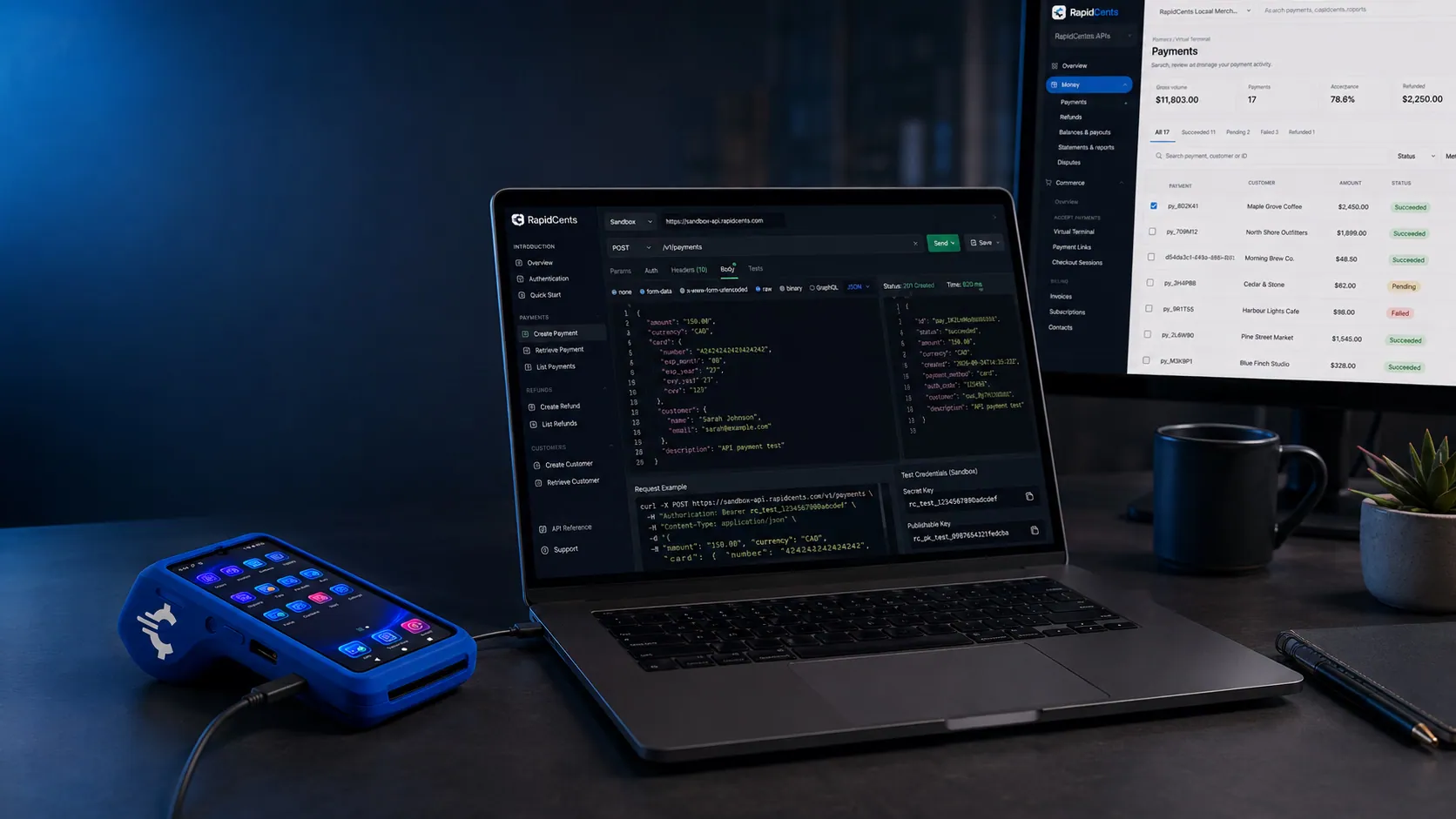
The RapidCents tokenization API returning a card token, so merchant software never stores the PAN. Tokenization API
Create, reuse y retire pago tokens programmatically so su systems never store tarjeta…
ExploreThe RapidCents account-updater API applying refreshed card credentials so a stored token survives a reissue. Servicio de actualización de tarjetas API
Query y apply refreshed tarjeta credentials so stored tokens keep working mediante un reissue.
Explore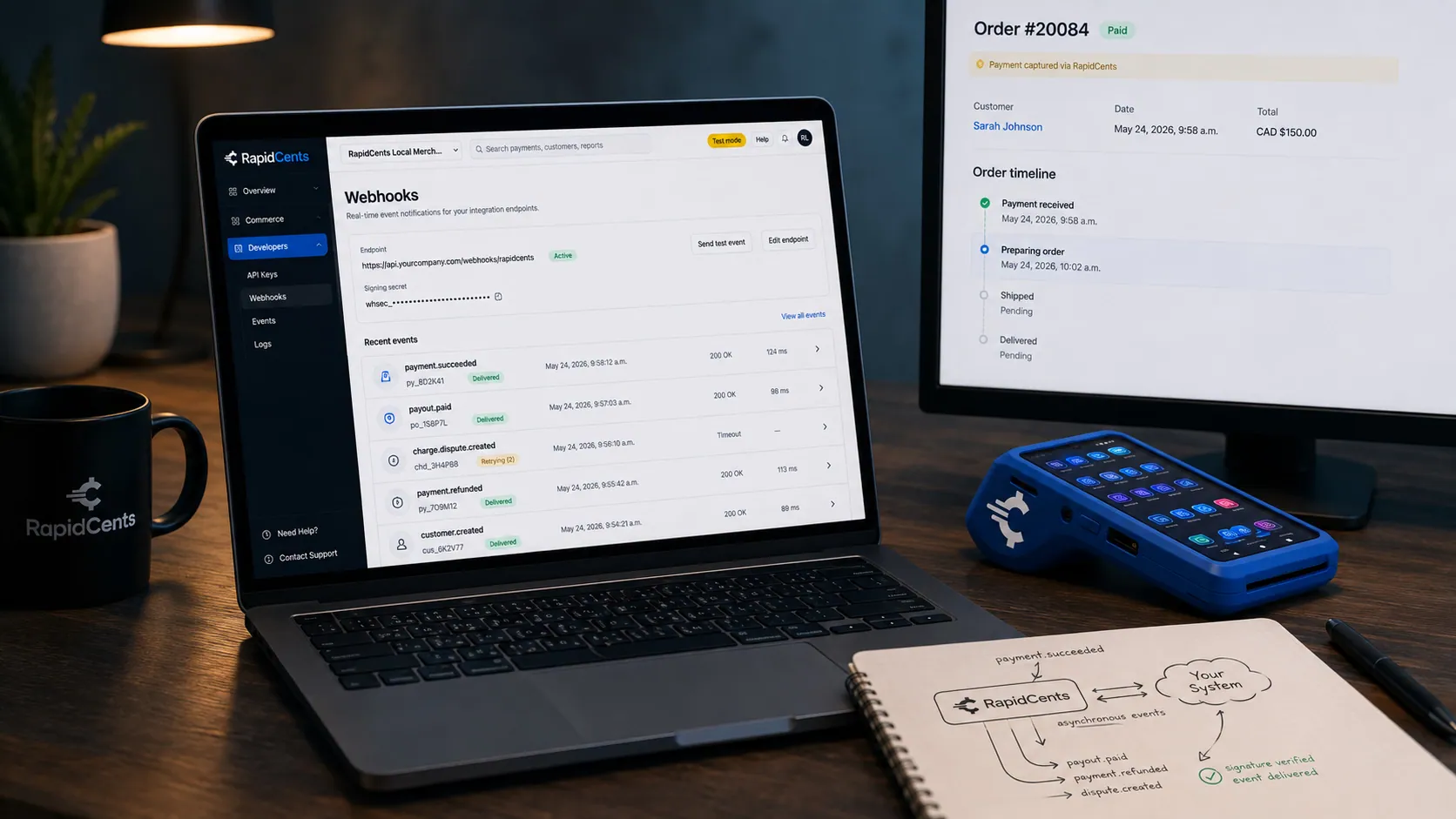
A RapidCents webhook delivery timeline next to the payment that triggered it, with a test terminal on the desk. Webhooks
Signed webhook (notificación HTTP) events para pago lifecycle con idempotent procesamiento guidance.
ExploreA typed RapidCents API error on screen, next to the declined sandbox terminal sale that produced it. Errors
Typed error codes, retry guidance y idempotencia patterns para production reliability.
Explore

Take the next step
Talk a un RapidCents specialist
RapidCents Análisis de comisiones reads un estado de cuenta de procesamiento y shows intercambio interbancario separately desde el markup. Upload un estado de cuenta para un instant breakdown, o open una cuenta de comerciante y start accepting pagos en one cuenta.
- No obligation
- Payment specialists, not a call centre
- Secure statement upload



