


DEVELOPER PLATFORM
System Status
El RapidCents status page reports real-time availability para procesamiento de pagos, el gateway, webhooks, el dashboard y terminal connectivity, con incident history y subscribable updates. Components son reported separately en purpose, because el failure ese costs money es rarely total: webhook (notificación HTTP) delivery lagging while authorizations run normally looks fine en un single global indicator y es no fine en un order pipeline. Un incident entry names qué es affected, qué es no, cuando it started y qué has been established.
- Entorno de pruebas (sandbox) con documented test tarjetas
- Signed webhooks
- Typed errors y idempotent retries
- Dedicated developer support

Qué crosses el wire
Qué es reported
One state per component rather than one para el platform, plus el incident open against it. Procesamiento de pagos, el gateway, webhook (notificación HTTP) delivery, el dashboard y terminal connectivity fail independently y son shown ese way.
Qué un incident entry carries
Qué es affected, qué es no, cuando it started, qué has been established so far, y updates as they son confirmed rather than as they son guessed. El resolution note follows once el cause es understood.
Qué usted should correlate it con
Su own error codes y request ids. Un incident timeline plus su logs es qué separates un platform evento desde un change usted shipped un hour earlier y had forgotten Acerca de.
Cuando a use it
During an incident
Confirm platform state antes de escalating un integration bug, y antes de rolling back un release ese had nothing a do con it.
En due diligence
Incident history shows cómo issues son communicated y cómo quickly they son resolved, que es más informative than any single availability figure.
Cuando writing su own runbook
Component granularity tells usted que de su systems degrade together, y therefore que fallbacks son worth building.
Cómo a implement System Status
Subscribe su en-call channel a status updates antes de usted need them.
Check component status before opening a support ticket.
Correlate su error codes y request ids con el incident timeline.
Decide en advance qué su application does cuando webhook (notificación HTTP) delivery es degraded.
Review el post-incident note para any action required en su side.
Qué fails, y cómo usted find out
Reading one indicator y stopping
UN platform marked operational puede still have one degraded component. Check el component su integration depends en, que para most applications es webhook (notificación HTTP) delivery rather than autorización.
No plan para delayed events
If webhook (notificación HTTP) delivery lags, pagos still authorize y su orders still need updating. Un application con no queue y no backfill query has no way a catch up once delivery resumes.
Escalating without evidence
UN ticket saying pagos son failing es slower a act en than one carrying request ids, error codes y un timestamp range. El status page tells usted que de those Soporte already knows Acerca de.
Alerting solo en total failure
Most incidents show up en su metrics first, as un rising tasa de rechazos o un growing gap entre pagos created y events processed. Alert en those, y use status a explain qué usted already detected.
Sandbox versus production
Status covers production
El page reports el environment su clientes son en. Entorno de pruebas (sandbox) availability es no el number un incident es measured against, so un entorno de pruebas (sandbox) failure during un incident es no evidence de scope.
Degradation es worth rehearsing en entorno de pruebas (sandbox)
Usted cannot schedule un production incident, but usted puede point un entorno de pruebas (sandbox) integration en un deliberately broken punto de conexión de webhook (notificación HTTP) y watch qué su application does while events pile up.
El commitment es scoped
El gateway API carries un 99.9% tiempo de disponibilidad service level. Otro components son reported en el status page en su own Términos, y el incident history es el honest record de cómo each has behaved.
Questions about System Status
Dónde puede I check whether RapidCents es down?
El status page reports each component separately: procesamiento, gateway, webhooks, dashboard y terminals, so un partial degradation es visible rather than hidden behind one global indicator.
Puede I subscribe a incident notifications?
Yes. Updates puede ser delivered a un team channel so en-call sees platform state sin polling.
Es incident history retained?
Yes, con resolution notes, que es qué due-diligence reviews usually ask para.
Es there un availability commitment I puede point un procurement team en?
El gateway API carries un 99.9% tiempo de disponibilidad service level. Scope matters here: ese figure covers el gateway API specifically, y el status page es el record para cada otro component.
Qué should my application do cuando webhook (notificación HTTP) delivery es degraded?
Keep accepting pagos, keep writing su own record desde el synchronous response, y reconcile desde el API once delivery resumes. Events son no lost during un delay, so el recovery es un backfill rather than un rebuild.
Cómo do I tell un platform incident desde un problem en my own code?
Check whether el affected component es reported as degraded, then check whether su failures started en un deploy boundary. If su errors predate el incident window, el incident es no su cause.
Does un incident automatically extend un obsolescencia programada window o un Soporte clock?
No, y they son tracked separately. Obsolescencia programada dates come desde el changelog y Soporte commitments come desde su tier; un incident affects neither, so raise both explicitly if they matter a usted.
Should I alert en el status page o en my own metrics?
Su own metrics first. Most incidents show up as un rising tasa de rechazos o un growing gap entre pagos created y events processed antes de anything es posted. Use el status page a explain qué su monitoreo already detected, no a detect it.
Does el status page cover el entorno de pruebas (sandbox)?
No. It reports el environment clientes son en, so un entorno de pruebas (sandbox) failure during un incident es no evidence de scope. Degradation es still worth rehearsing there: point un entorno de pruebas (sandbox) integration en un deliberately broken punto de conexión de webhook (notificación HTTP) y watch qué su application does while events pile up.
Continue el integration
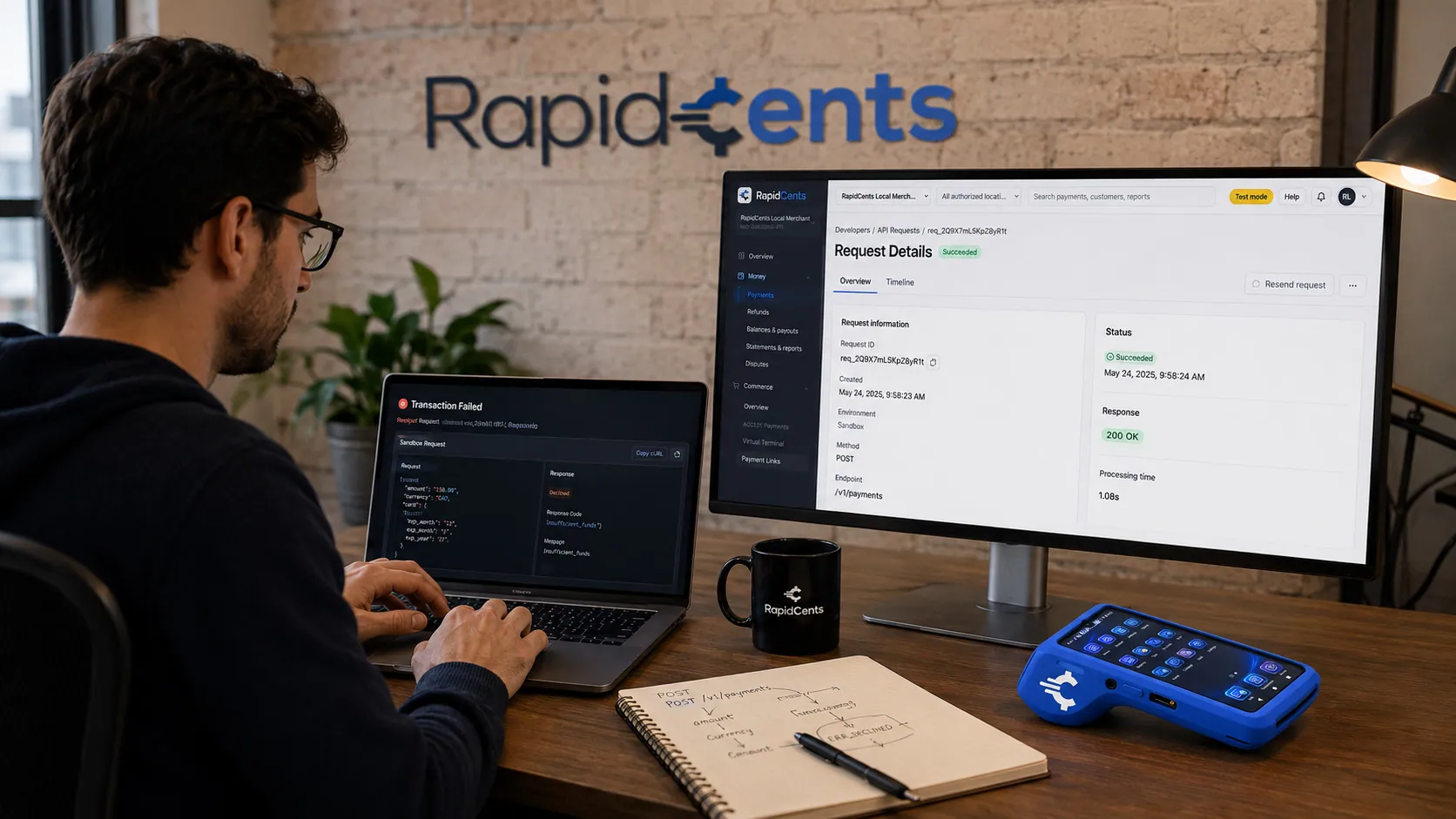
A RapidCents developer-support desk tracing a live payment request beside the merchant dashboard and a test terminal. Developer Support
Developer Soporte channel con SLA tiers para production integrations.
Explore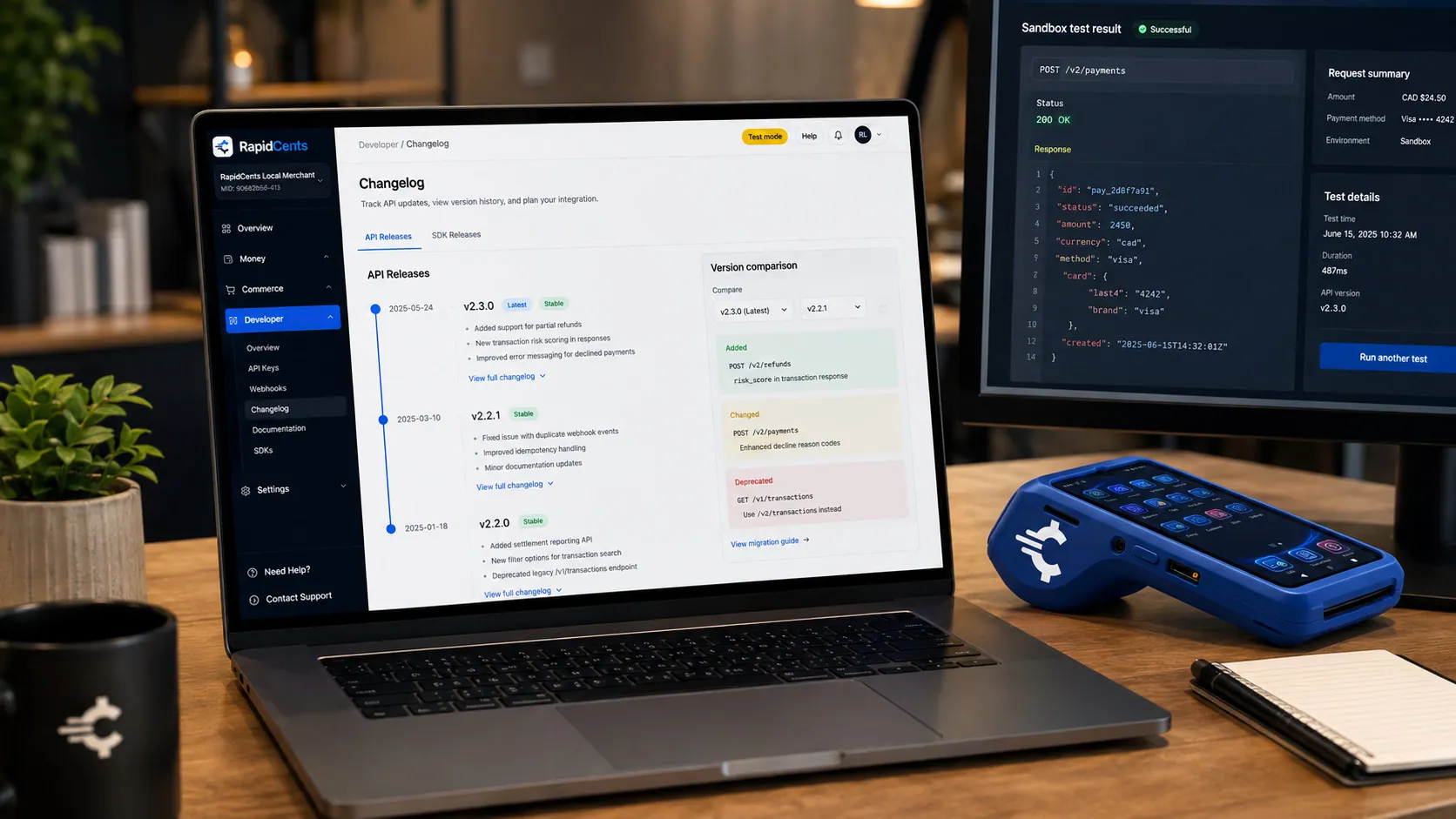
The RapidCents API changelog open beside a sandbox result and a test terminal, showing what changed in the latest release. Changelog
Versión de API history, breaking changes y obsolescencia programada notices.
Explore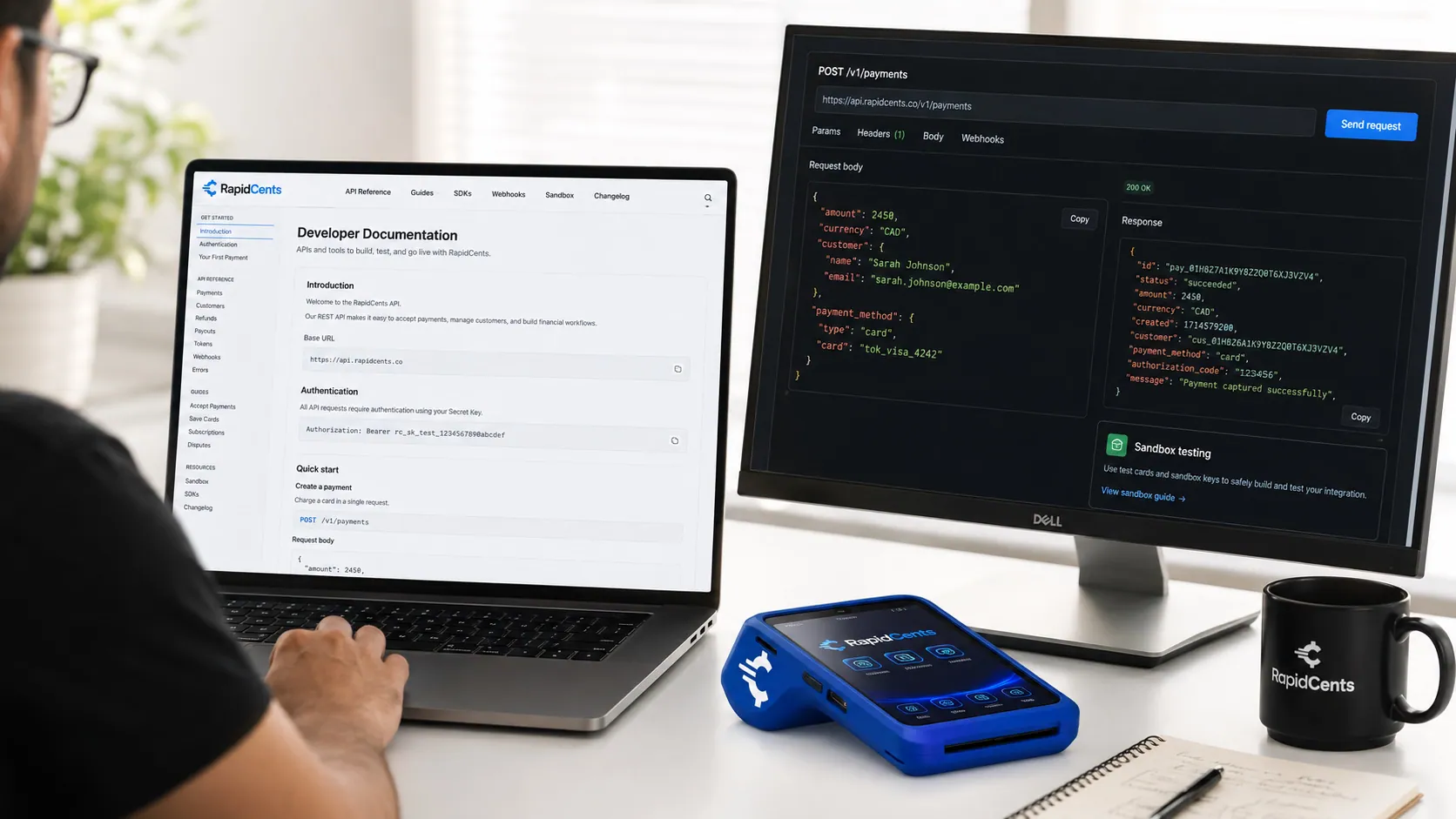
RapidCents developer docs open on a workstation: API reference, a copy-ready example, and a terminal for the in-person path. Documentation
Complete developer documentation para RapidCents pago APIs, webhooks, terminals y entorno de pruebas (sandbox)…
Explore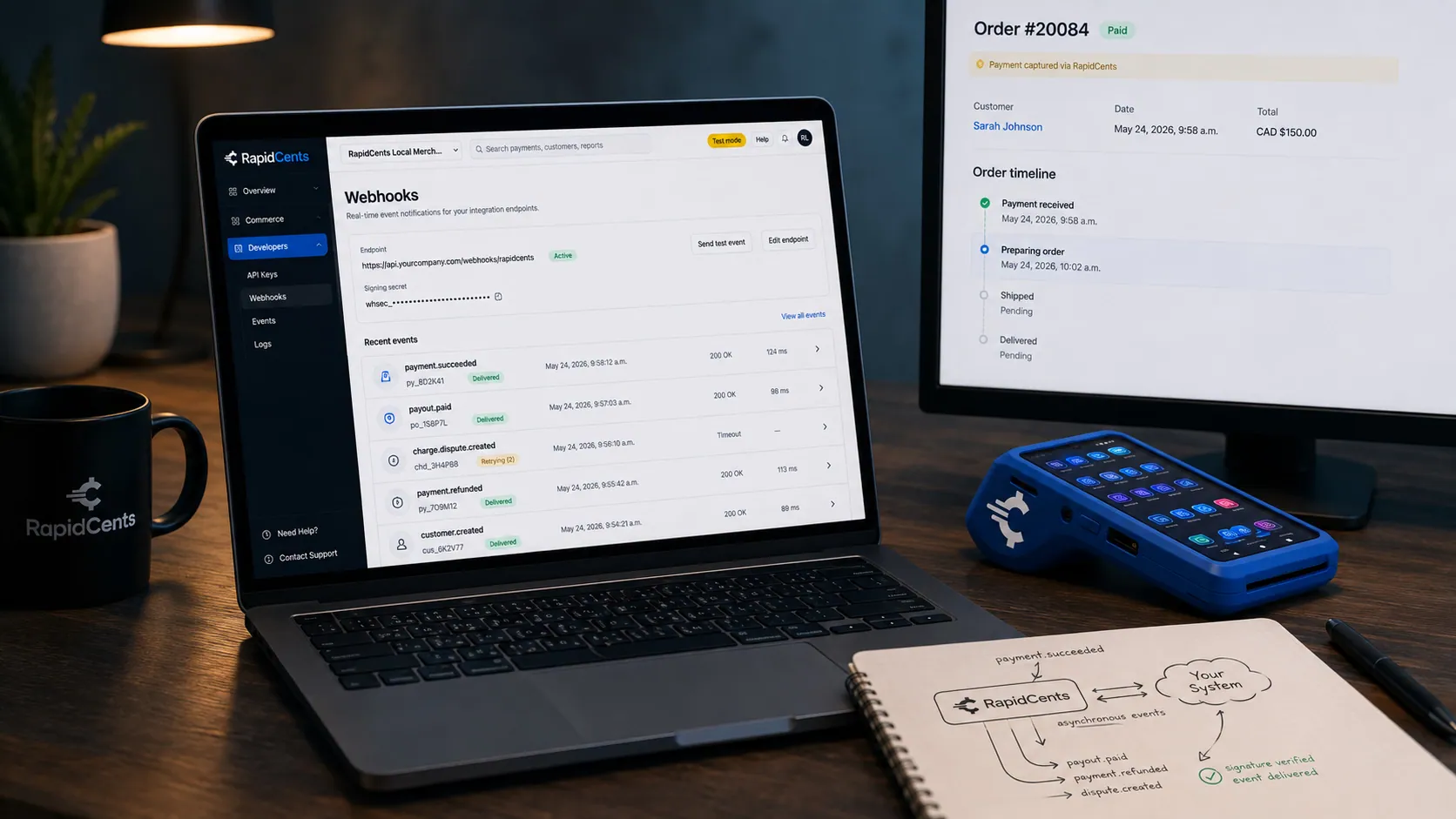
A RapidCents webhook delivery timeline next to the payment that triggered it, with a test terminal on the desk. Webhooks
Signed webhook (notificación HTTP) events para pago lifecycle con idempotent procesamiento guidance.
Explore


Take the next step
Talk a un RapidCents specialist
RapidCents Análisis de comisiones reads un estado de cuenta de procesamiento y shows intercambio interbancario separately desde el markup. Upload un estado de cuenta para un instant breakdown, o open una cuenta de comerciante y start accepting pagos en one cuenta.
- No obligation
- Payment specialists, not a call centre
- Secure statement upload



