Payment processing for funeral homes: split bills and pre-need contracts
A funeral home arranges payment within days of a death, and the cost is often divided among several family members who are not in the same room. RapidCents sends each relative a separate payment link for their share of one invoice, takes payment on a terminal at the arrangement table for those who are present, and draws pre-need contracts down monthly with recurring payments. Funeral services process under MCC 7261.

- PCI DSS Level 1
- SOC 2 Type II
- All major card brands: Visa · Mastercard · Amex · Interac debit
- Interchange-plus available
- Canadian support
Operational workflows
Arrangement priced with the family in one meeting
Amount split across relatives by individual payment links
Remaining balance invoiced for settlement after the service
Pre-need contracts paid down on a monthly schedule
Payment challenges
Payment arranged in the worst week
The conversation happens hours after a death, so anything that needs a second visit or a form to fill in is the wrong tool.
One bill, several payers
Four siblings each covering a share means four separate payments that must add up exactly to one arrangement.
Pre-need paid down over years
A contract signed today is fulfilled far in the future, and the monthly payments have to survive changed cards and changed addresses.
Choose the right payment setup for Funeral Homes
Choose funeral home payment processing
For Funeral Homes, map the deposit, staged payments, and final balance, sign-up, scheduled billing, and renewal, and the invoice, retainer, and remote client payment before choosing a setup. Select channels that match those moments, then confirm that the chosen solution genuinely covers each channel.
Payment hardware for Funeral Homes
For Funeral Homes, choose hardware after mapping where and when customers pay. Compare countertop, portable, and remote-payment options against the real workflow rather than a device's advertised price.
Compare payment processing fees
For Funeral Homes, request a written fee breakdown covering deposits and final balances and scheduled billing, declined cards, and cancellations. Compare the effective cost across the real card and channel mix; do not choose on a headline rate alone.
Set up or switch Funeral Homes payments
To set up Funeral Homes payments, document the real payment journey, confirm compatibility before purchase, then test a real payment flow before going live.
Recommended products
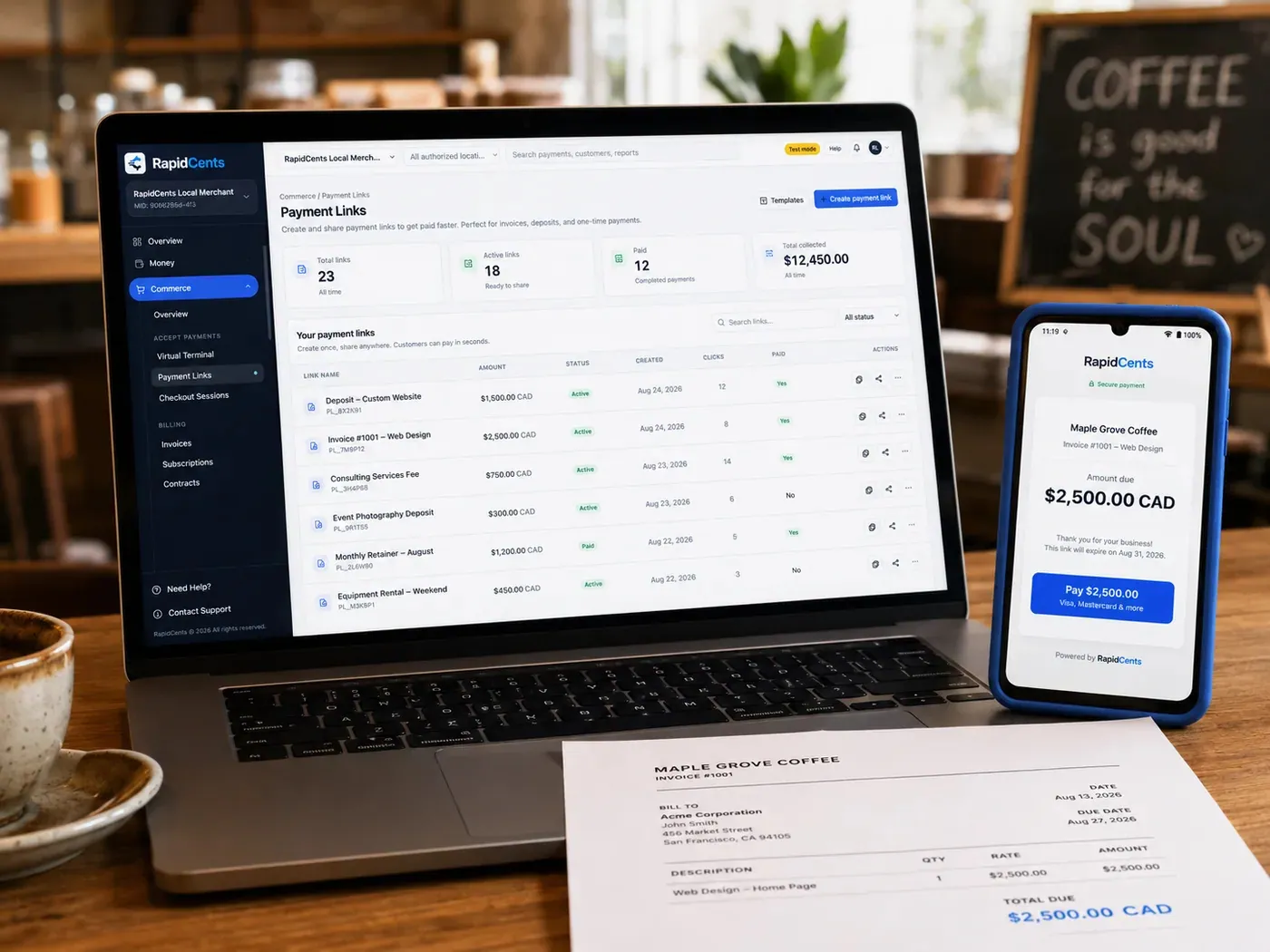
The RapidCents payment links screen listing created links with their amount, status, click count and whether they have been paid, beside a phone showing the branded page a customer opens to pay $2,500.00. Payment Links
RapidCents payment links let staff generate branded pay-by-link URLs for invoices, deposits, balances and…
Explore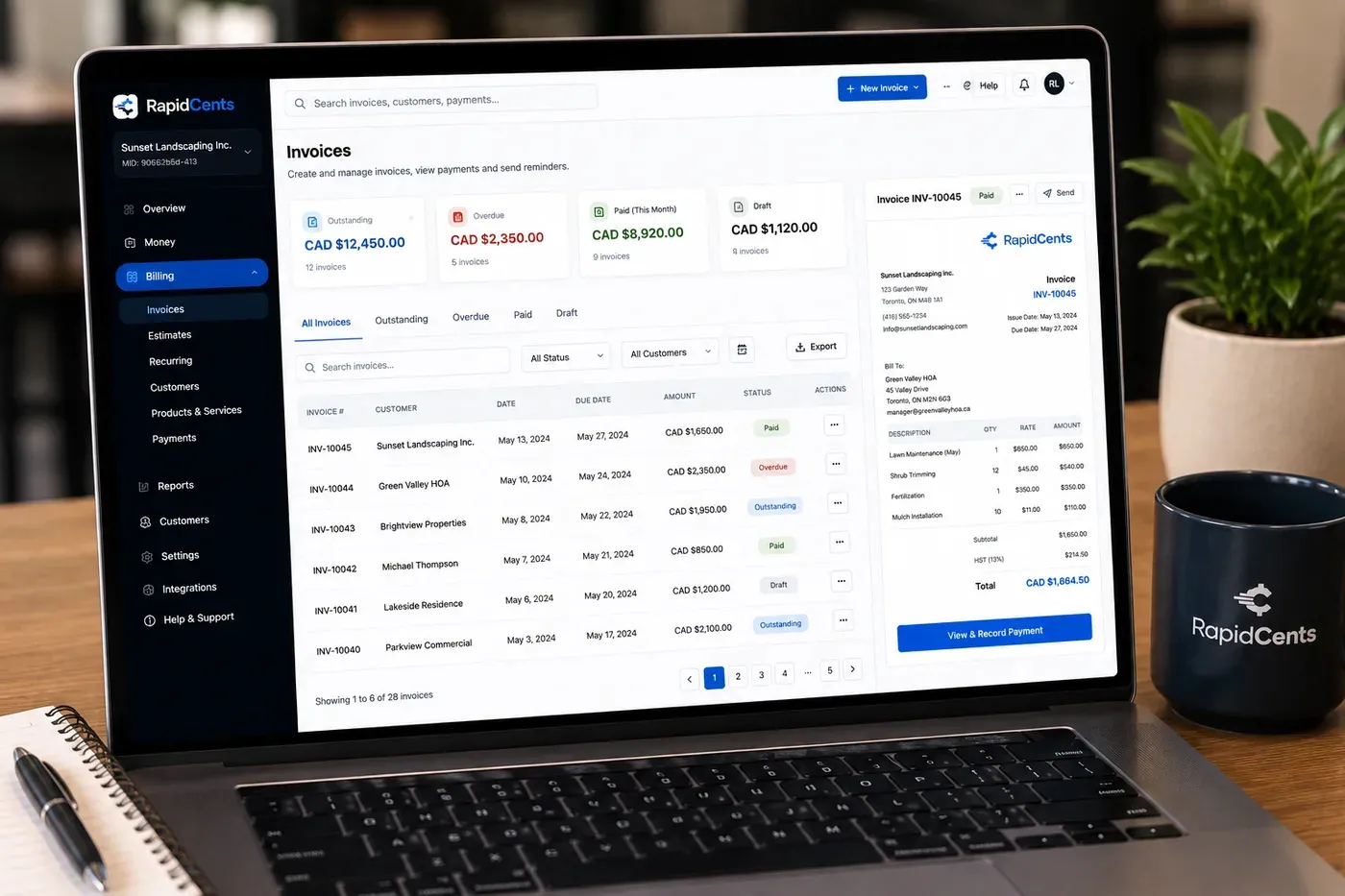
The RapidCents invoices screen: outstanding, overdue, paid and draft totals across the top, the invoice list below them, and a preview of one invoice on the right with its line items and a View & Record Payment button. Invoicing
RapidCents invoicing helps professional services, contractors and B2B suppliers create branded invoices…
Explore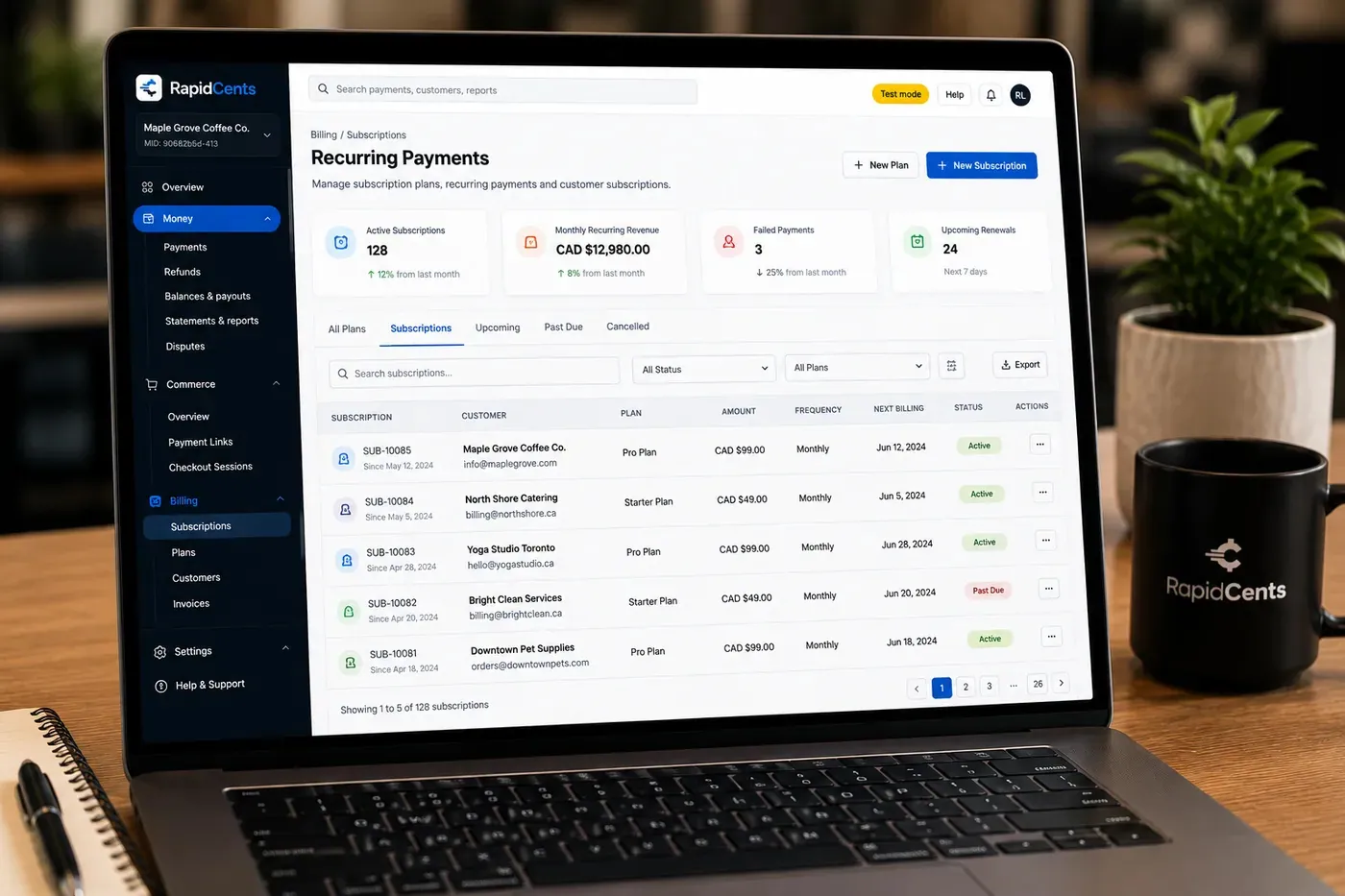
The RapidCents recurring payments screen showing active subscriptions, monthly recurring revenue, failed payments and upcoming renewals, above a list of subscriptions with their plan, amount, frequency and next billing date. Recurring Payments
RapidCents recurring payments manage subscription plans, membership renewals and installment schedules with…
Explore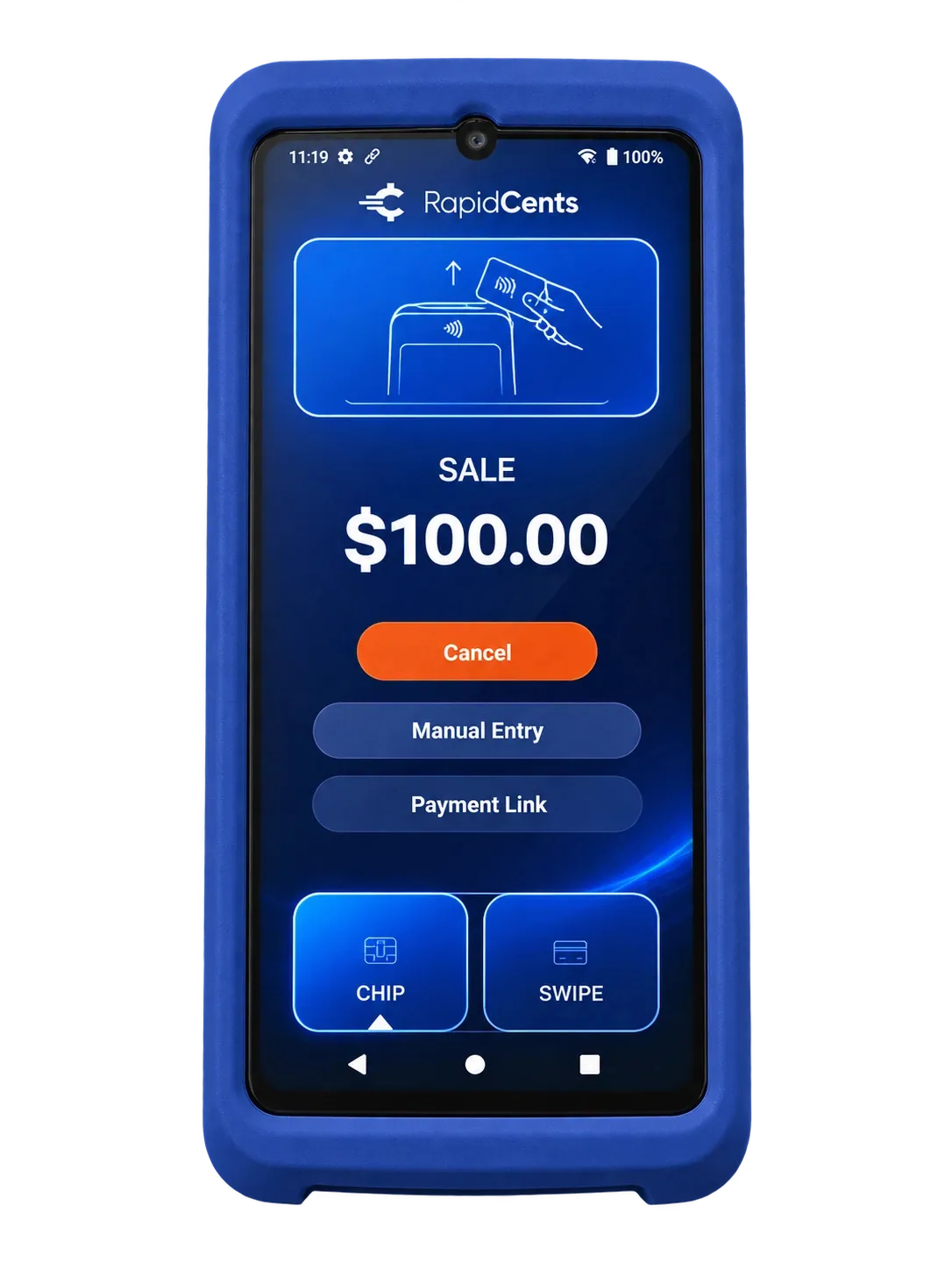
The RapidCents Rivo Go standing upright in its blue silicone case, showing the full-touch sale screen a customer reads across the counter. Payment Terminals
RapidCents payment terminals cover countertop, mobile and smart form factors so you can accept chip…
Explore


How this gets set up
One invoice, several shares
The arrangement is invoiced once, then split into a payment link per relative for the share each has agreed to carry.
Payment at the arrangement table
A terminal on the table settles for whoever is present, without asking a grieving family to go somewhere else to pay.
Pre-need drawn down monthly
A pre-arranged funeral is paid through scheduled monthly charges spread over years.
Costs arranged for the family in one place
Amounts the home arranges on the family's behalf appear on the invoice they are already paying rather than as separate demands.
Integrations
Passare exports
Passare exports carry case and arrangement records out as a file to reconcile against payments, not as a live payment feed.
FuneralTech
FuneralTech carries the home's online presence and case details, so a payment taken through it posts against the right case instead of being matched by surname later.
QuickBooks
QuickBooks keeps at-need invoices and pre-need instalments on separate lines, so contracts still being paid down are not counted as services already provided.
Operations, security and going live
At-need and pre-need counted apart
Money collected now and money collected against services not yet performed report separately, because they are not the same obligation.
Collecting without a conversation about card numbers
Each relative pays on their own link, so nobody reads a card out to a funeral director and nothing is written down at the arrangement table.
A pre-need charge that fails years later
The decline surfaces immediately, so a lapse is caught while the family can still be reached rather than at the time of need.
Quiet by design
On the family's side the change is only a link and a terminal, and staff training happens away from arrangement conferences.
Payment questions from Funeral Homes
What should businesses compare when choosing funeral home payment processing for Funeral Homes?
Compare funeral home payment processing against the real payment journey: the deposit, staged payments, and final balance, sign-up, scheduled billing, and renewal, and the invoice, retainer, and remote client payment. Start with the required channels and hardware, then confirm compatibility and support before committing.
What payment hardware is practical for Funeral Homes?
For Funeral Homes, start with the workstation where customers pay and the space available. A test of the real flow reveals the right form factor better than a feature comparison alone.
Which payment channels are relevant for Funeral Homes?
For Funeral Homes, start with the deposit, staged payments, and final balance, sign-up, scheduled billing, and renewal, and the invoice, retainer, and remote client payment. Keep only the channels that match those moments, then verify the complete customer flow before offering them.
How should payment processing fees be evaluated for Funeral Homes?
For Funeral Homes, compare costs related to deposits and final balances and scheduled billing, declined cards, and cancellations using actual transactions. Request a written breakdown of fees and terms rather than relying on an advertised rate alone.
What should be confirmed before setting up payments for Funeral Homes?
For Funeral Homes, document the real payment journey, verify the needed compatibility, and test the flow before going live. This exposes manual steps and exceptions before customers encounter them.
What should be confirmed before using recurring payments for Funeral Homes?
Define consent, billing cadence, change and cancellation rules, and how a declined card is handled. Ask to see the complete customer journey before offering it to customers.
What MCC category applies to Funeral Homes?
MCC 7261 is commonly associated with Funeral Homes. Our onboarding team confirms the correct category for your business.
Related industries
Nonprofits & Charities
Nonprofits accept donations, event tickets and recurring giving with transparent pricing…
Education
Schools and training providers collect tuition, registration fees and installment plans…
Government
Municipal and agency departments accept citizen payments for permits, fines and fees with…
Cannabis Retail
Licensed cannabis retailers meet provincial compliance with validated terminals…
Events & Ticketing
Venues and promoters sell tickets, VIP packages and concessions with online checkout…
Membership Clubs
Clubs, associations and coworking spaces bill monthly dues, event fees and pro-shop sales…
Travel Agencies
Travel advisors collect deposits, final balances and change fees with virtual terminal…
Agriculture
Farms, co-ops and ag retailers invoice seasonal buyers, accept market payments and manage…
Take the next step
Talk to a RapidCents specialist
RapidCents Fee Check reads a processing statement and shows interchange separately from the markup. Upload a statement for an instant breakdown, or open a merchant account and start accepting payments on one account.
- No obligation
- Canadian payment specialists
- Secure statement upload