Occupational therapy payment processing for home visits and invoices
Occupational therapy payment processing lets your practice take cards at the clinic, during home visits and by payment link, and collect employer and family invoices and session packages with a clear record. RapidCents gives you mobile terminals, Tap to Pay, Invoicing, Payment Links and Recurring Payments, and your representative shows you how they fit your practice software.

- PCI DSS Level 1
- SOC 2 Type II
- All major card brands: Visa · Mastercard · Amex · Discover · PIN debit
- Interchange-plus available
- Specialist onboarding support
How do occupational therapy practices get paid?
OT clinic payments come in four forms: card payments after home visits and clinic sessions, invoices paid by employers or family members, assessment and equipment charges, and scheduled payments for blocks of sessions. Each one has a different payer and a different record.
Home-visit and clinic session payments
A client or family member pays after a session at the clinic, a home, a school or a workplace. Staff take the card on a mobile terminal or Tap to Pay, or send a payment link. The receipt shows the date and amount, not clinical notes.
Employer and family invoices
An employer, a case manager or a family member pays for a workplace assessment or a series of visits. You send a branded invoice with a payment link and a reference number, and finance sees the status from sent to paid.
Assessments, reports and equipment
The initial assessment, a written report and adaptive equipment such as a bath bench or a reacher are separate charges. Each gets its own description so the payer understands the amount and finance can report each income type.
Session packages and payment plans
A client agrees to a block of weekly sessions and a schedule for paying it. With the client's written authorization, a stored card is charged on the agreed dates. The schedule is a way to collect your fee, not a loan.
How can a therapist take payment during a home visit?
An occupational therapist can take payment during a home visit with a mobile terminal, Tap to Pay on a supported phone, or a payment link sent when the session ends. The right one depends on the signal at the client's home, who is paying, and how your practice likes to work.
How the visit payment runs and what to set up
The clinician finishes the session, confirms the visit and amount with the client or family member, and takes the card. A receipt goes out by text or email. Give each clinician a separate login with limited permissions, and test the connection in a few homes before relying on it.
What goes wrong at the kitchen table
A declined card or a weak connection should not end the visit awkwardly. Send a payment link by text so the client can finish later, and note the first attempt so the front desk does not charge twice. A refund goes back to the same card.
A hip replacement client's bathroom safety visit
Say a clinician visits a client recovering from a hip replacement for a bathroom safety assessment. The client's daughter pays the visit amount on the mobile terminal at the kitchen table, and the receipt arrives by text before the clinician reaches the car.
How does an employer or family member pay an OT invoice?
An employer or family member pays an occupational therapy invoice through a payment link on a branded invoice, tied to an invoice reference and an authorized payer. The practice keeps clinical details off the invoice and out of the payment record, and shares only what the payer needs to approve and pay.
Invoice, reference and payment link
Occupational therapy invoice payments often come from someone other than the client, such as after a workplace ergonomic assessment or a return-to-work visit. Create the invoice in Invoicing with the employer's reference number, send the payment link to the person who approves it, and let them pay by card from a phone or desk.
Confirm the payer and split portions
Get the authorized payer in writing before you send anything. Share the amount and a plain service description, not session notes. If an employer pays part and the family pays the rest, issue two invoices so each payer sees only their own portion.
A $450 workplace assessment, paid by purchase order
Say a practice completes a workplace assessment for a client returning to an office job. The employer's accounts payable contact receives a $450 invoice with a purchase order number, pays by link, and the practice matches the payment to that reference when it reconciles.
RapidCents products for occupational therapy practices
These products cover the way occupational therapy practices collect: mobile terminals for visits, Payment Links and Invoicing for employers and families, and Recurring Payments for session packages.
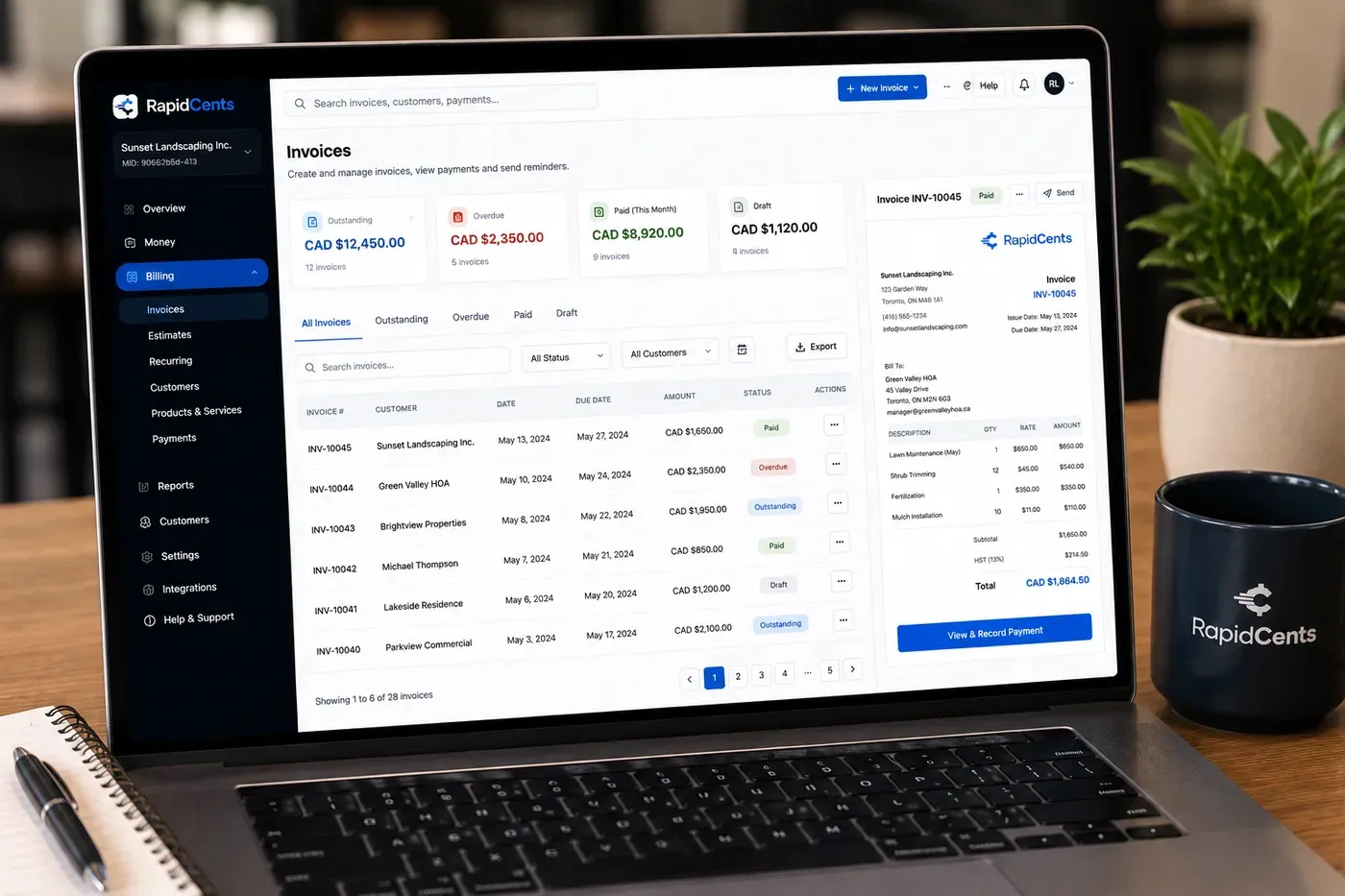
The RapidCents invoices screen: outstanding, overdue, paid and draft totals across the top, the invoice list below them, and a preview of one invoice on the right with its line items and a View & Record Payment button. Invoicing
RapidCents invoicing helps professional services, contractors and B2B suppliers create branded invoices…
Explore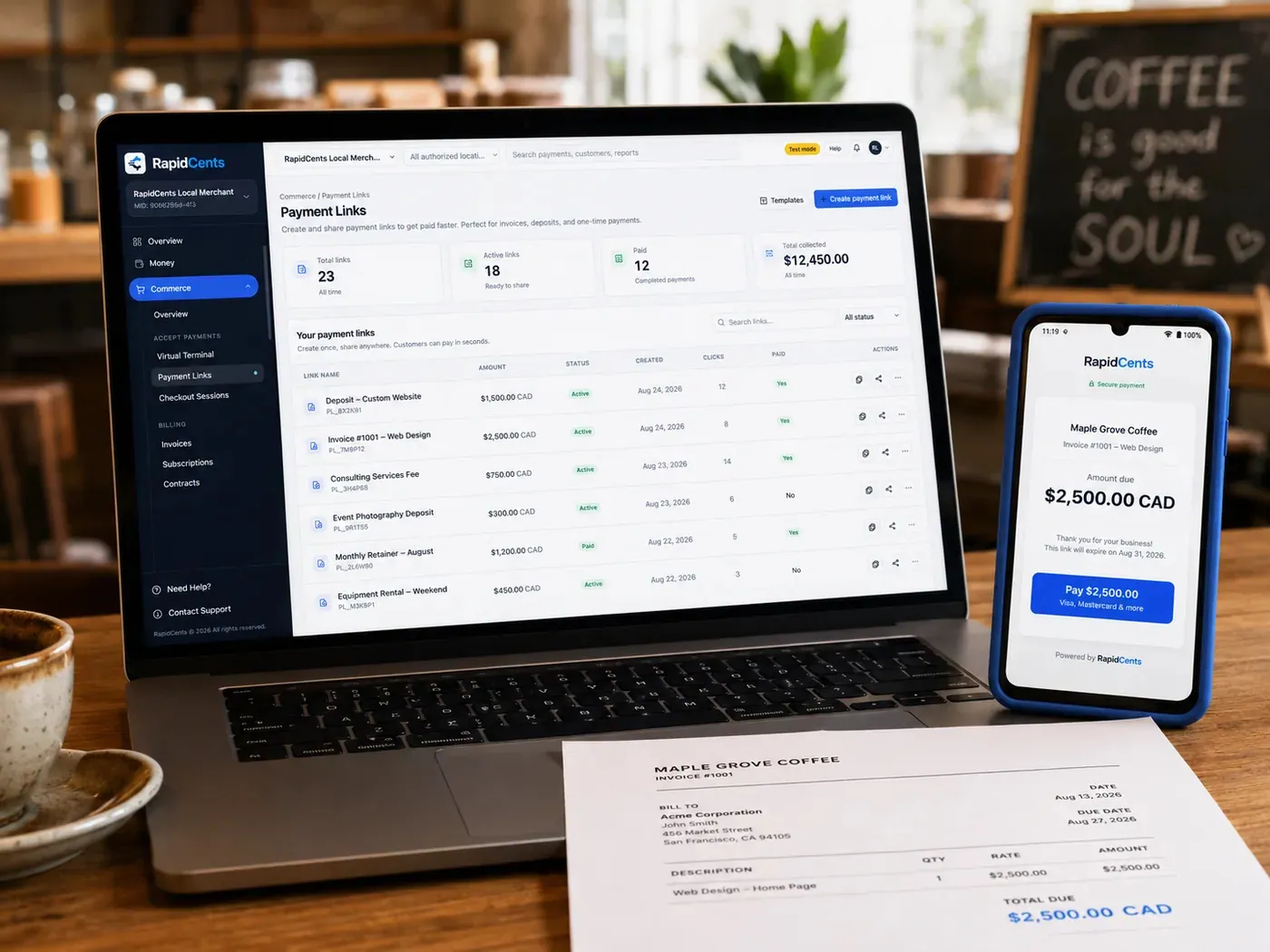
The RapidCents payment links screen listing created links with their amount, status, click count and whether they have been paid, beside a phone showing the branded page a customer opens to pay $2,500.00. Payment Links
RapidCents payment links let staff generate branded pay-by-link URLs for invoices, deposits, balances and…
Explore
A staff member takes a card payment on a RapidCents handheld terminal, with the same sale appearing on the dashboard. Mobile Terminals
RapidCents mobile terminals are battery-powered wireless devices with LTE and Wi-Fi so staff accept payments…
Explore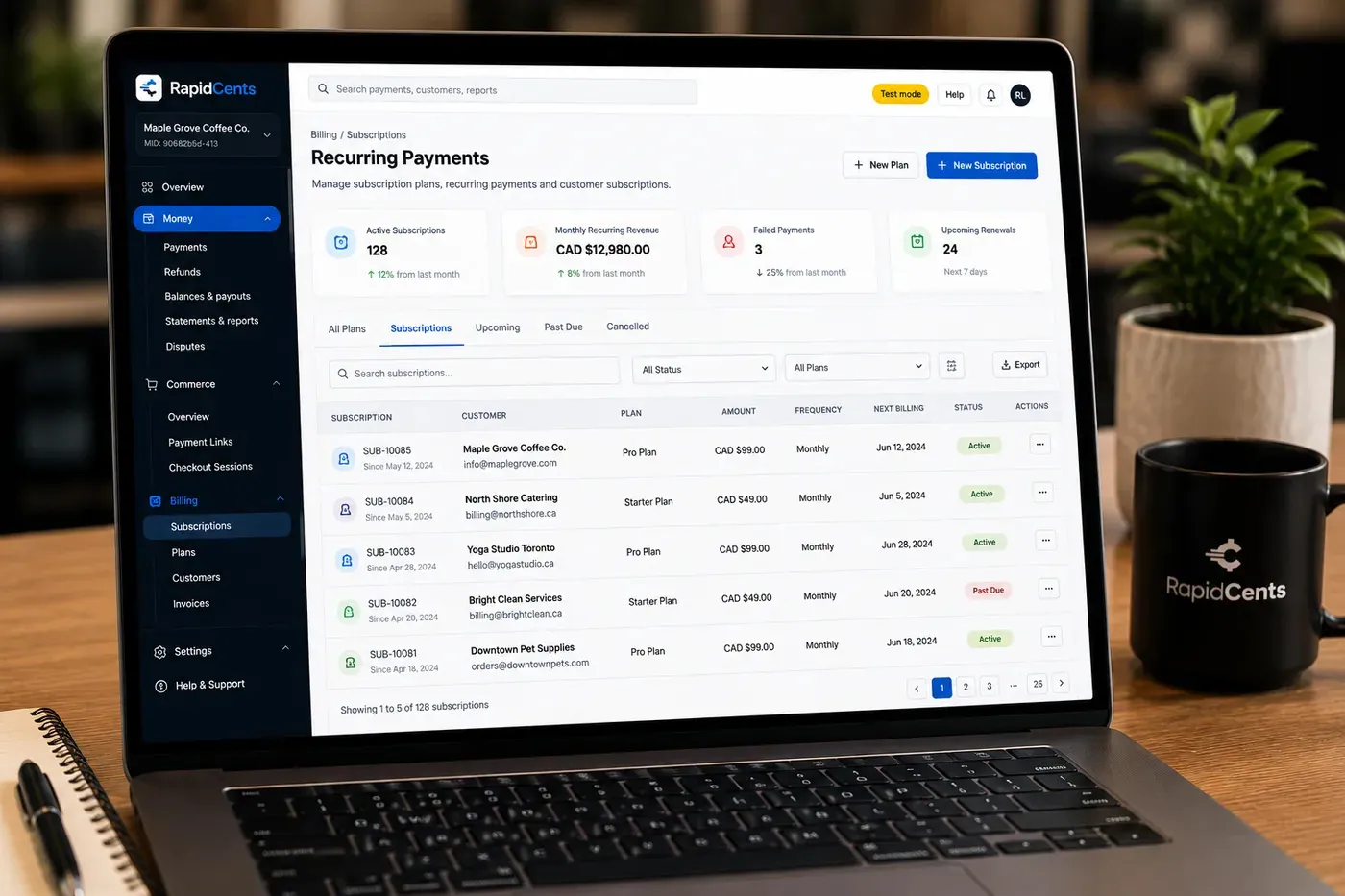
The RapidCents recurring payments screen showing active subscriptions, monthly recurring revenue, failed payments and upcoming renewals, above a list of subscriptions with their plan, amount, frequency and next billing date. Recurring Payments
RapidCents recurring payments manage subscription plans, membership renewals and installment schedules with…
Explore


How do you bill assessments, treatment and equipment separately?
Bill an assessment, each treatment session and any equipment as separate lines on the invoice or as separate charges, each with its own description and date. Separate lines let the payer see what they are paying for and let finance report assessment income, session income and equipment sales on their own.
Name each charge the way you deliver it
Start with your fee list. Give the initial assessment, the follow-up session, the written report and adaptive equipment their own line names, and use the same names on the invoice so the payment record matches what the clinician delivered.
Later sessions and equipment returns
If a client pays the assessment today and funds a block of sessions later, take the assessment on the terminal, then set up Recurring Payments for the sessions on the schedule you agreed. Refund an equipment return against its original line.
A $200 assessment, six sessions and a $90 bath bench
Say a practice charges a $200 assessment, six weekly sessions and a $90 bath bench. The family pays the assessment at the visit, the bench by payment link on delivery, and the sessions on a schedule they approved in writing, so each line reconciles separately.
What drives occupational therapy credit card processing costs?
Occupational therapist credit card processing cost depends on your card mix, your average ticket and how each card is taken. We price every account on interchange-plus: interchange is set by the card networks and passes through at cost, and your RapidCents markup is set out in your Fee Schedule, plus fees for equipment or services if applicable. Pricing is month to month with no fixed term.
Card mix and who pays
Debit, credit, premium and commercial cards carry different interchange. An employer paying with a corporate card looks different from a family paying with a personal debit card, so your mix of payers shapes your cost.
How the card is taken
A card tapped or inserted at the terminal is priced differently from a keyed card or a payment link. Home visits, phone payments and invoice links shift your channel mix, so count how many sessions fall into each.
What to bring to compare
Bring recent processing statements, your average ticket for assessments and sessions, your split between in-person and remote payments, and your refund and chargeback volume. Upload a statement to Fee Check to see interchange separated from markup.
Which practice software works with RapidCents payments?
Your practice software holds the schedule, the client file and the billing, and RapidCents payments sit right beside it. RapidBridge takes payments inside web-based software without changing it, and your RapidCents representative explains the options for your vendor and version.
Jane App, Cliniko and Tebra
RapidBridge works with Jane App, Cliniko and Tebra, so a card payment posts against the client account you already have open. You keep the software you know, and your staff stop matching terminal receipts to client files by hand.
TELUS CHR, Accuro EMR and other systems
RapidCents integrates with many major platforms through APPIE and RapidBridge. The right option depends on your software vendor and version; your RapidCents representative will walk you through it and show you how payments and receipts connect to your client records.
QuickBooks Online, Xero, SAP and NetSuite
RapidCents connects settled transactions, fees and refunds to QuickBooks Online and Xero, so your books match your deposits. SAP and NetSuite import settlement files. Your representative sets up the one that fits your accounting.
Payment options for occupational therapy practices in the United States
In the United States, an occupational therapy practice can offer credit and debit cards in person, card payments by payment link, and ACH bank payments. Settlement is in USD, and your RapidCents representative sets up the mix that suits your practice.
Credit and debit cards
Clients tap, insert or swipe Visa, Mastercard, American Express and Discover cards, and PIN debit where supported. A client may also present an HSA or FSA card; the card is accepted like any other card, with no promise of eligibility.
ACH bank payments and state rules
ACH can suit a long series of sessions where the client agrees in writing to the amount and timing. State rules for your profession and for recurring charges may apply, so check them with your advisor.
How do you move an OT practice to a new processor?
Switch in stages: list what you have on file, test the new flow, run both for a short period, and reconcile deposits to your ledger. Stored cards and schedules do not move on their own, and both providers must agree before any transfer. Plan the change around your busiest visit days.
Inventory cards, schedules and open invoices
List every client with a stored card, every active session schedule and every open invoice, with the written authorization for each. Stored cards move only if both providers agree. Otherwise ask clients to authorize their card again by payment link.
Test, then run in parallel
Once your account is approved, run a test sale and a refund on the mobile terminal and a payment link before live visits. Keep the old setup for in-progress invoices for a short period, and map each payment reference to the client record in your practice software.
Reconcile deposits to the ledger
During the first few weeks, tie deposits to your ledger: sales, refunds and fees should match the settlement report. With QuickBooks Online or Xero connected, settled transactions, fees and refunds arrive already mapped, and your representative helps you set that up.
Payment questions from occupational therapy practices
What is the best payment processor for occupational therapy practices?
The best fit is the processor that matches how your clinicians collect, not a single name. Compare mobile and Tap to Pay options for home visits, invoice payment links, stored-card permissions, reporting that separates assessments from sessions, pricing set out in writing, and support for your practice software. Ask each provider for a written quote based on the same statement.
How much does credit card processing cost for an occupational therapy practice?
The cost depends on your card mix, average ticket and channels, so no single amount applies. We price every account on interchange-plus: interchange passes through at cost, your RapidCents markup is in your Fee Schedule, and fees for equipment or services apply if relevant. Pricing is month to month. Upload a processing statement to Fee Check to see the split.
Can Jane, Cliniko or TELUS CHR use a different payment processor?
Yes for Jane and Cliniko. RapidBridge works with Jane App, Cliniko and Tebra, so a RapidCents card payment posts against the client account you already have open. For TELUS CHR, Accuro EMR and other systems, RapidCents integrates with many major platforms through APPIE and RapidBridge. The right option depends on your vendor and version; your RapidCents representative will walk you through it.
How can an occupational therapy practice switch processors without losing payment history?
Export your payment history from the current provider before you close anything, because reports may not stay available. List stored cards, active session schedules and open invoices, test a sale and a refund on the new setup, then run both for a short period. Stored cards move only if both providers agree; otherwise clients authorize again.
Which payment options can an occupational therapy practice in the United States offer?
An occupational therapy practice in the United States can usually offer credit and debit cards in person, including PIN debit where supported, card payments by payment link, and ACH bank payments, with settlement in USD. Clients may present HSA or FSA cards, which are accepted as cards. Your RapidCents representative will walk you through the methods on your account.
Can occupational therapists take payment during a home visit?
Yes, therapists can take payment at a home visit with a mobile terminal, Tap to Pay on a supported phone, or a payment link. Check the signal at the client's home, give each clinician a separate login, and keep a payment link as a fallback. Receipts show the service and amount, not clinical details.
Can an employer pay an occupational therapy invoice by card?
Yes, an employer can pay by card through a payment link, as long as the payer is authorized and the invoice carries their reference or purchase order number. Get the payer in writing before you send it, and send each payer only their own portion. Insurer or benefit payments are separate from the client's portion and are not card payments.
Can assessment and treatment charges be billed separately?
Yes, assessment, treatment and equipment charges can be separate lines or separate invoices, each with its own description and date. RapidCents records the payment, while your practice software remains the record of what was delivered. Your RapidCents representative can show you how your reports and accounting export present the lines.
Can a practice store a card for a block of sessions?
Yes, with the client's authorization. Agree in writing on the amount, timing and how to cancel before the first charge, and charge only what was agreed. A schedule of session payments is a collection schedule, not financing. Account Updater and automated retries help with expired or declined cards, and your representative sets them up with you.
How should receipts and disputes be handled without exposing clinical details?
Receipts and invoices should show your practice name, the service date, a plain description such as follow-up session, and the amount. Keep diagnoses and session notes in your practice software. Clear descriptions, signed authorizations and saved receipts help when a client questions a charge, and Disputes tools provide alerts, evidence and deadlines.
Related industries
Occupational therapy shares collection workflows with other practices that bill clients and third parties for scheduled care. Healthcare is the parent industry, and speech therapy, audiology, podiatry and telehealth cover home-visit, invoice and session-package payments.
Healthcare
Take visit payments at reception, send payment links for what insurance leaves unpaid and…
Audiology & Hearing Clinics
Take consultation fees, hearing-device deposits and fitting balances in the clinic or by…
Podiatry & Foot Care Clinics
Collect consultation fees, custom orthotic deposits, fitting balances and recurring…
Speech Therapy Practices
Collect weekly session fees, assessment packages and late-cancellation fees from parents…
Telehealth Providers
Collect virtual visit fees before or after the session, handle late cancellations and…
Dental Clinics
Take treatment plan deposits at the front desk or by text, run in-house installment plans…
Physio & Chiropractic
Collect visit fees and patient portions at the front desk or in the treatment room, sell…
Veterinary Clinics
Take deposits when owners sign surgery estimates, charge wellness plans monthly with…
Take the next step
Review how your OT practice gets paid
Upload a recent processing statement to Fee Check and see interchange separated from your markup, then compare it with your home-visit, invoice and session-package mix.
- No obligation
- Payment specialists, not a call centre
- Secure statement upload