


Payment processing for self storage facilities
Payment processing for self storage facilities revolves around monthly rent autopay, move-in payments and recovery of late balances. RapidCents takes cards at the rental counter or kiosk, online reservations through Hosted Checkout, Payment Links for balances owed, and Recurring Payments for each tenant's rent schedule, and integrates with many major platforms through APPIE and RapidBridge.

- PCI DSS Level 1
- SOC 2 Type II
- All major cards: Visa, Mastercard, Amex, Discover, UnionPay, Diners Club & Interac Debit
- Interchange-plus available
- Canadian support
How self storage facilities get paid
A self storage facility gets paid through four recurring jobs: move-in payments, monthly rent autopay, late-balance recovery and counter or kiosk payments. Each has its own trigger and its own exception, so we give each one a collection method that fits and a clear record for your office.
Online reservation and move-in
A new tenant reserves a unit online or at the rental counter and pays the first month, any admin fee and a prorated partial month. Your staff use Hosted Checkout or a terminal. The tenant gets a receipt, and your office matches it to the new lease.
Monthly rent autopay
An existing tenant agrees to automatic rent on a set day each month. Recurring Payments charges the stored card, retries failed charges on a schedule you set and sends notices. Your finance team sees each charge by unit and tenant in settlement reports.
Late balances and lockouts
When a tenant falls behind, the manager sends a Payment Link by text or email for the balance and late fee. Staff then lift the lockout in the management software. Partial payments and declined cards are a staff decision, made at the counter or by phone.
Counter and kiosk payments
A tenant pays at the counter terminal, or at a kiosk where your setup has one, with a tapped, inserted or keyed card. Walk-in renters and tenants clearing a balance use the same device. The receipt carries the unit number you enter as a reference.
How do self storage facilities collect payments at move-in?
Collect the first month, any admin fee and a prorated partial month in one payment, online through Hosted Checkout or at the rental counter on a terminal. The tenant agrees to autopay at that moment, so the card on file is ready for the next rent date.
How the move-in runs
The tenant picks a unit, reviews the rent and fee schedule, and pays. Online, they reach Hosted Checkout from your reservation page. At the counter, your staff use a countertop or mobile terminal. Add the unit number as a reference so finance can match the payment to the lease later.
Set up first, and handle declines
Decide what the first payment covers: first month, prorated days, admin fee and any protection plan you sell. Put the autopay agreement in the lease, with amount, timing and cancellation, and get the tenant's authorization before you store the card. If a card declines, keep the unit unreleased until another card works.
A 10-by-10 unit rented on the 19th
Say a tenant rents a 10-by-10 unit on the 19th. The office takes a prorated partial month, a one-time admin fee and the next full month's rent on a terminal, then stores the card for autopay on the 1st. The receipt lists each part separately, so the tenant sees exactly what was charged.
How does self storage rent autopay work?
We store the tenant's card with their authorization and charge rent through Recurring Payments on each unit's billing date. Failed charges retry on the schedule you set, the tenant is notified, and finance sees every charge by unit. Your staff step in only when retries run out.
Billing dates and notices
Choose between charging every unit on the first of the month or on each tenant's own move-in anniversary. Recurring Payments sends a notice before each charge, so a tenant is never surprised by a rent or fee change. Multi-unit tenants can have one charge per unit or one combined charge.
Declines, expired cards and refunds
A decline triggers automated retries and a notice asking the tenant to update the card, and Account Updater can refresh cards that were reissued. A tenant who prepaid several months and moves out early gets a refund to the original card, approved by a manager.
Two units, two due dates
Say a tenant rents two units, one climate-controlled and one drive-up, with rent due on the 5th and the 20th. Each unit has its own schedule on one stored card. When the card declines on the 5th, a retry and a notice go out, and the 20th charge runs as normal.
RapidCents products for self storage
Recurring Payments, Hosted Checkout, Payment Terminals and Payment Links cover autopay, online move-ins, rental counter sales and late-balance requests. Each works as a separate piece, so you can add them as your facility grows.

The RapidCents recurring payments screen showing active subscriptions, monthly recurring revenue, failed payments and upcoming renewals, above a list of subscriptions with their plan, amount, frequency and next billing date. Recurring Payments
RapidCents recurring payments manage subscription plans, membership renewals and installment schedules with…
Explore
A RapidCents hosted checkout page at checkout.rapidcents.com, with the order summary and totals on the left and the card fields on the right, footed by SSL and PCI DSS assurances. Hosted Checkout
RapidCents hosted checkout delivers PCI-scoped payment pages you redirect customers to or embed via iframe…
Explore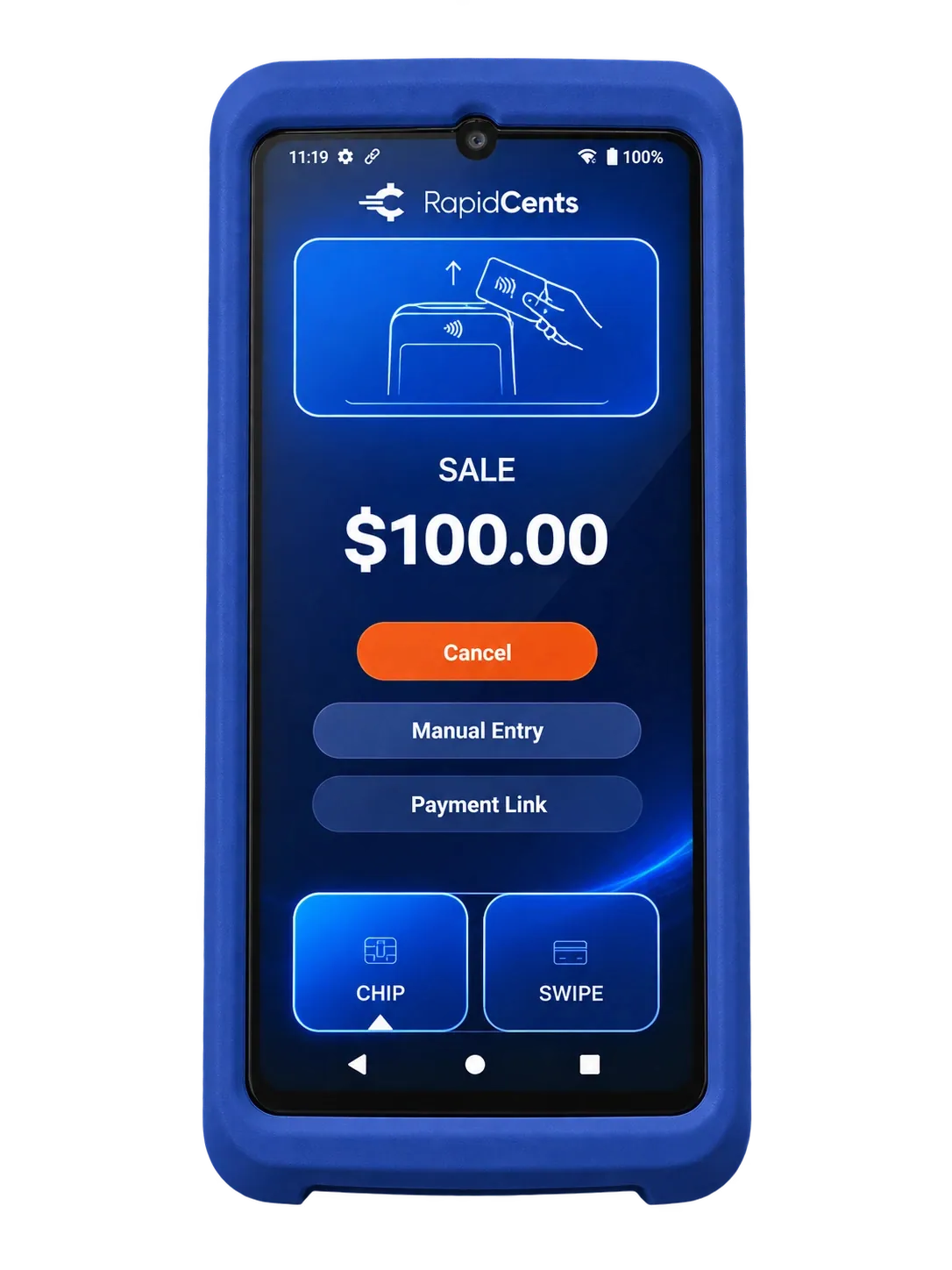
The RapidCents Rivo Go standing upright in its blue silicone case, showing the full-touch sale screen a customer reads across the counter. Payment Terminals
RapidCents payment terminals cover countertop, mobile and smart form factors so you can accept chip…
Explore
The RapidCents payment links screen listing created links with their amount, status, click count and whether they have been paid, beside a phone showing the branded page a customer opens to pay $2,500.00. Payment Links
RapidCents payment links let staff generate branded pay-by-link URLs for invoices, deposits, balances and…
Explore


How does a storage tenant payment portal collect balances?
A storage tenant payment portal lets tenants pay rent or a balance online without calling your office, using Hosted Checkout or a Payment Link tied to the unit. It also drives late payment recovery, because a link sent by text or email reaches the tenant wherever they are.
Portal and payment links
If your management software includes its own tenant portal, keep using it where it fits. Where it does not run on RapidCents, send a Payment Link by SMS, email or QR code for the exact balance, with an optional expiry and partial payments if you allow them. Put the unit number in the reference field.
Late balances and exceptions
When a balance is overdue, send the link and let the tenant pay by card. Payment does not lift a lockout by itself, so your staff update the account in your software. Decide in advance how you handle partial payments. Any further notices follow your lease and the law.
A $140 rent, 20 days late
Say a tenant is 20 days behind on a $140 rent plus a late fee. The manager texts a Payment Link for the full balance. The tenant pays that evening, the office sees the payment marked paid in the dashboard and lifts the lockout in the management software.
How do you compare fees for self storage payments?
Compare fees using your real payment mix. We price every account on interchange-plus: interchange passes through at cost, your RapidCents markup is set out in your Fee Schedule, and fees for equipment or services apply if applicable. It runs month to month with no fixed term.
What drives your cost
Interchange depends on card type, such as debit, credit, rewards or commercial, and on how the card is taken. Tapped or inserted cards at the counter or kiosk differ from keyed and online payments. Autopay is mostly stored-card payments, so your channel split matters.
What to bring
Bring recent processing statements, your split between autopay, online and counter payments, your average rent ticket, and your refund and dispute volume. A multi-facility operator should bring a statement per location. Fee Check reads an uploaded statement and shows interchange separately from markup.
Terminals, kiosks and extras
Ask for any equipment and service fees in writing, including for terminals or a kiosk. Put the Fee Schedule next to your current provider's contract and compare the same payment mix line by line, rather than one headline figure against another.
Does RapidCents work with SiteLink, storEDGE and other systems?
RapidCents integrates with many major platforms through APPIE and RapidBridge, so most facilities keep the management software they run today. The right option depends on your vendor and version, whether that is SiteLink, storEDGE, Easy Storage Solutions, Storeganise or 6Storage. Your RapidCents representative will walk you through it.
SiteLink and storEDGE
Both run unit rentals, tenant accounts and billing. Tell your RapidCents representative which edition you use, and they will show you how payments reach the tenant ledger. A Payment Link or standalone terminal also works alongside either system, with payments matched by unit number.
Easy Storage Solutions and Storeganise
Each handles payment gateways, tenant portals and kiosk hardware in its own way, and some platforms bundle their own processor. Share your edition with your RapidCents representative, and they will explain which option fits your setup and how receipts and balances stay in step.
6Storage and accounting software
For multi-facility reconciliation, your representative will show you how one payment account per facility fits 6Storage and which report it imports. On the accounting side, we connect settled transactions, fees and refunds to QuickBooks Online and Xero, and SAP and NetSuite import settlement files.
Payment options for self storage in Canada
Canadian self storage facilities can offer Interac debit at the counter or kiosk, credit cards, and EFT or pre-authorized debit (PAD) for bank-paid rent, with settlement in CAD. Your representative sets up each method for your merchant account before you offer it to tenants.
Cards and Interac debit
Tenants tap or insert Visa, Mastercard, American Express or Interac debit cards at the rental counter or kiosk. Interac debit is typically a card-present method, so it suits counter and kiosk payments more than autopay.
Bank payments and tax on receipts
EFT or PAD can collect monthly rent from a tenant's bank account under a signed authorization. GST/HST may appear on rent or fee receipts depending on your province and your own tax advice. RapidCents does not give tax advice.
How do you switch and reconcile self storage payments?
Switching starts with an inventory of stored cards, autopay schedules, open balances and prepaid rent. Once your account is approved, you test a sale, a refund and a recurring charge, run both providers side by side if needed, and reconcile deposits to your ledger before moving every unit.
Inventory and stored cards
List every tenant on autopay, the billing date, the amount and any prepaid months. Ask your current provider whether stored cards can move, since token portability needs both providers to agree. Where cards cannot move, collect new authorizations by Payment Link before the next rent date.
Test and run in parallel
Run a test sale, a refund and a recurring charge before live traffic. Move one facility or one billing cohort first, keep the old provider for cards that cannot move, and label every payment with the unit number so it maps to the tenant ledger in your software.
Reconcile and report
Match each bank deposit to settled transactions, minus refunds, disputes and fees, using the transaction ID and facility. Keep one report per location and a roll-up. Multi-Location gives location-level accounts and roll-up reporting, and your representative will set up the export your accounting software needs.
Payment questions from self storage facilities
What should self storage facilities compare before choosing a payment processor?
Compare the whole workflow, not one price. Check autopay, move-in, late-balance and counter payments, then your software's gateway limits, total fees, refunds, reporting and support. Ask each provider to demonstrate self storage rent autopay with a test charge, and compare written quotes line by line. We welcome that comparison with ours.
How much does payment processing cost for self storage facilities?
It depends on your payment mix, so no single figure applies. Interchange passes through at cost, your RapidCents markup appears in your Fee Schedule, and fees for equipment or services apply if applicable. Card type, counter versus online payments and refund volume all move the total. Upload a statement to Fee Check to see interchange separated from markup.
Can I use SiteLink with a different payment processor?
RapidCents integrates with many major platforms through APPIE and RapidBridge. The right option depends on your SiteLink product and version, and your RapidCents representative will walk you through it. A standalone terminal or Payment Link also works alongside any management software, with payments matched to the tenant ledger by unit number.
How can my business handle self storage rent autopay?
Store the tenant's card with their written or recorded authorization, then schedule rent through Recurring Payments on each unit's billing date. The authorization should cover amount, timing and cancellation. Staff watch failed charges, tenants get notices, and refunds go to the original card. Finance matches each charge to a unit by the reference you set.
Which payment options can a self storage facility in Canada offer?
A self storage facility in Canada can offer credit cards, Interac debit at the terminal, and EFT or PAD bank payments for rent, settled in CAD. Your RapidCents representative will set up the ones you want. Autopay on a stored card needs the tenant's authorization, and GST/HST treatment on receipts is a question for your accountant.
What setup is needed for a storage tenant payment portal?
You need a payment page and a way to tell it which unit and balance are being paid. Hosted Checkout or Payment Links provide the page, and your representative will explain how it sits next to your management software's own portal. Decide on partial payments, refunds and receipts first, and test each with a small charge before tenants see it.
How should we manage storage late payment recovery?
Send a Payment Link as soon as a balance is overdue, then handle exceptions by staff decision. Set who may accept partial payments or waive a late fee, and record each outcome against the unit. Payment does not lift a lockout by itself, so update the account in your software. Further steps follow your lease and the law.
Can one platform handle self storage kiosk card payments and storage multi facility reconciliation?
Yes for the counter and reporting side. Payment Terminals, Merchant Dashboard and Multi-Location cover counter payments and roll-up reporting across facilities. A kiosk depends on the hardware and software you run, so tell your RapidCents representative which kiosk you use and they will show you how it connects, and whether kiosk, counter and online payments share one settlement report.
How do we reconcile card payments and bank deposits for self storage facilities?
Match each bank deposit to a settlement report, then break it into gross sales, refunds, disputes and fees. Use the transaction ID and a unit or facility reference to tie payments to tenant ledgers. For the books, settled transactions, fees and refunds flow to QuickBooks Online and Xero, and SAP and NetSuite import our settlement files.
How do we switch payment providers without losing saved cards or disrupting self storage rent autopay?
Plan the switch around your stored cards, because both providers must agree to move tokens. Inventory every autopay schedule, test a sale, refund and recurring charge, then move one facility first. For cards that cannot move, ask tenants to re-authorize by Payment Link before the next rent date.
What MCC is used for self storage facilities?
MCC 4225 is commonly associated with self-storage and public warehousing. Your RapidCents representative sets the right merchant category when you open your account, based on what your business actually sells. A facility that also sells locks, boxes or truck rentals should describe every revenue stream when it applies.
Related industries
Self storage shares recurring billing, deposits and balance collection with Membership Clubs, Marinas, Pet Services and Golf Courses. Open a sibling industry where the buyer or the workflow differs from yours.
Nonprofits & Charities
Take one-time and monthly gifts online, sell event tickets by link and reconcile deposits…
Education
Take enrollment deposits online, run tuition installments on schedules families authorize…
Government
Take permit fees, counter payments and mailed-in payments from residents, then trace…
Events & Ticketing
Sell advance tickets online, take cards at the gate and concession stand, and give…
Membership Clubs
RapidCents collects membership dues on a schedule, takes event fees and guest passes by…
Travel Agencies
Take booking deposits, collect final balances and group installments, and match settled…
Agriculture
RapidCents helps farms invoice bulk buyers, take cards at the market stall and bill CSA…
Pet Services
RapidCents helps boarding kennels, dog daycares, groomers, trainers and pet sitters take…
Take the next step
Review your self storage processing costs
Upload a recent processing statement to Fee Check and see interchange separated from your current markup before you decide whether to switch.
- No obligation
- Canadian payment specialists
- Secure statement upload



