Pet boarding payment processing for kennels and daycares
Pet boarding payment processing from RapidCents covers stay deposits, checkout balances, daycare packs and approved extra-care charges, taken at the front desk, by payment link or by phone. Daycare plans bill on an agreed schedule, and your RapidCents representative will show you how it connects to your booking software.

- PCI DSS Level 1
- SOC 2 Type II
- All major cards: Visa, Mastercard, Amex, Discover, UnionPay, Diners Club & PIN Debit
- Interchange-plus available
- Specialist onboarding support
How pet boarding and daycare businesses get paid
A boarding business collects four kinds of payment: a deposit that holds the reservation, a balance at pickup, daycare packs or memberships, and extras the owner agrees to. Each has its own trigger, and each carries a clear reference so finance can match it to a stay.
Stay reservation deposits
The owner pays a deposit when you confirm a boarding reservation. Staff send a payment link by text or email, or key the card by phone in the virtual terminal. The reservation number goes in the reference field, so finance can match the deposit to the stay and any later refund.
Checkout balances
At pickup, the balance is the stay total less the deposit already paid. The owner taps or inserts a card on the countertop terminal, or pays a link sent to their phone. Early pickups and extended stays change the total, so staff confirm the final amount before charging.
Daycare packs and memberships
A pack is a one-time payment for a set number of visits. A membership bills on a schedule from a card the owner authorized. The payment records the money collected, while the booking system tracks visits used, expiry and which dog the pack belongs to.
Approved extra-care and late pickup charges
Baths, one-on-one walks, extra nights and late pickup fees are charged only after the owner agrees. Staff keep the owner's yes, add the items to the balance and issue an itemized receipt, so the owner sees exactly what was added and why.
How do you take a boarding deposit and collect the balance at checkout?
Pet boarding deposit payments are taken when the reservation is confirmed, by payment link or the virtual terminal, with the reservation number as the reference. At pickup, the balance is the stay total less that deposit, taken at the front desk terminal or from a card the owner authorized.
How the stay runs from booking to pickup
The owner books a run or suite, and staff send a payment link with the reservation number as the reference. Your booking confirmation sets out the deposit and cancellation terms before the owner pays. At pickup, staff take the balance on a countertop terminal, and both payments sit under one reservation.
Early pickups, cancelled holidays and declines
Early pickups, extended stays and cancelled holiday bookings each follow your written terms. Refund or keep the deposit as those terms say, and send any refund to the original card. If a balance is declined at the desk, retry it, take a second card or send a payment link.
A five-night holiday stay, deposit first
Say a kennel books a five-night holiday stay for a Labrador. The owner pays a $100 deposit by payment link at booking. At pickup the total is $340, so staff collect the remaining $240 on the terminal, and the receipt lists the deposit, the balance and the reservation number.
How do you sell daycare packs and bill memberships?
Sell a daycare pack as a one-time payment for a set number of visits, or bill a membership on a schedule with Recurring Payments. The payment records money received, and the booking system tracks the visits left. Both start with the owner agreeing to the amount, timing and cancellation.
How packs and memberships are collected
A ten-day pack is one payment at the front desk or by payment link. A monthly plan uses dog daycare recurring payments from a card the owner authorized in the Secure Card Vault. Agree the amount, billing date and how to cancel before the first charge, and send each owner a receipt.
Expired visits, shared packs and failed renewals
Packs raise questions a payment cannot answer alone: expired visits, a dog that leaves the program, a pack shared by two dogs. Write those rules down first. Failed renewals retry on the schedule you set, and Account Updater can refresh a replaced card, so staff are not chasing owners at drop-off.
A ten-visit pack that becomes a monthly plan
Say an owner buys a ten-visit pack for $300 at the desk, and the booking software adds ten visits. Two months later the owner moves to a monthly plan, agrees to the new amount and cancellation terms, and the card is saved for that plan only.
RapidCents products for pet boarding and daycare
Countertop Terminals take desk payments at pickup, Payment Links collect stay deposits, Recurring Payments bill daycare plans, and the Secure Card Vault keeps authorized cards for the next visit or an agreed add-on.
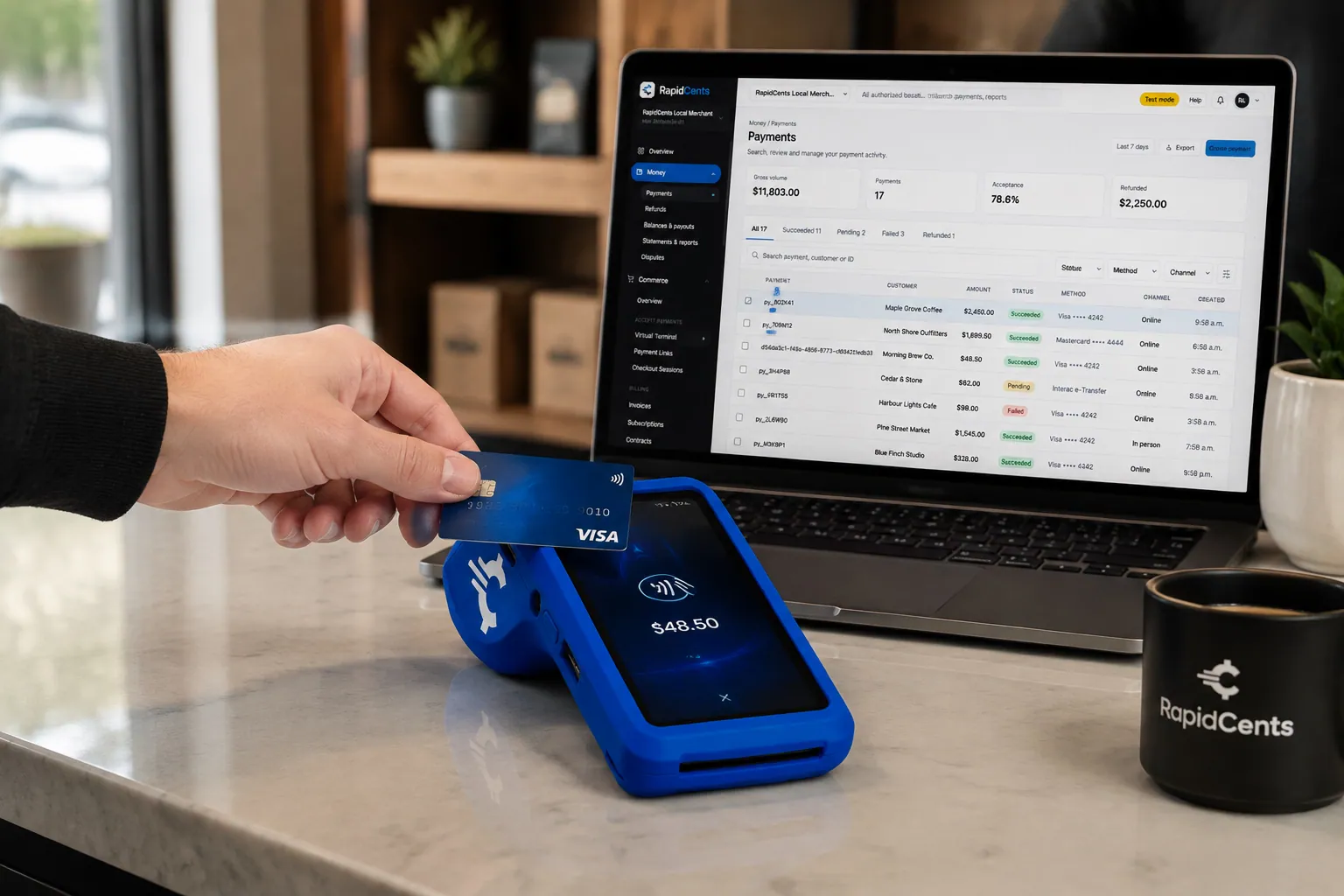
A fixed RapidCents countertop terminal taking card payments at the till, with settlement visible on the dashboard. Countertop Terminals
RapidCents countertop terminals sit at retail counters, restaurant hosts and reception desks where speed and…
Explore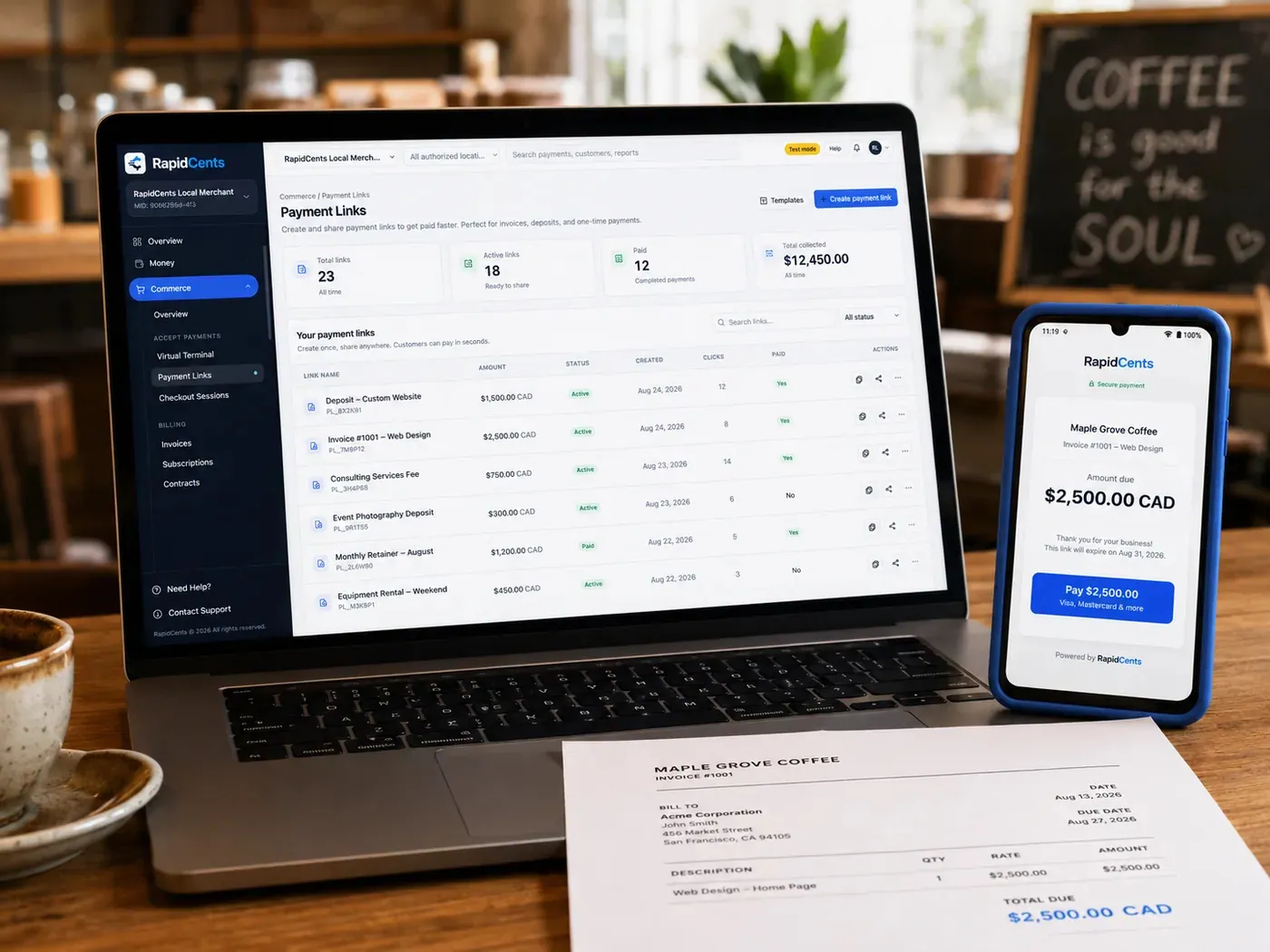
The RapidCents payment links screen listing created links with their amount, status, click count and whether they have been paid, beside a phone showing the branded page a customer opens to pay $2,500.00. Payment Links
RapidCents payment links let staff generate branded pay-by-link URLs for invoices, deposits, balances and…
Explore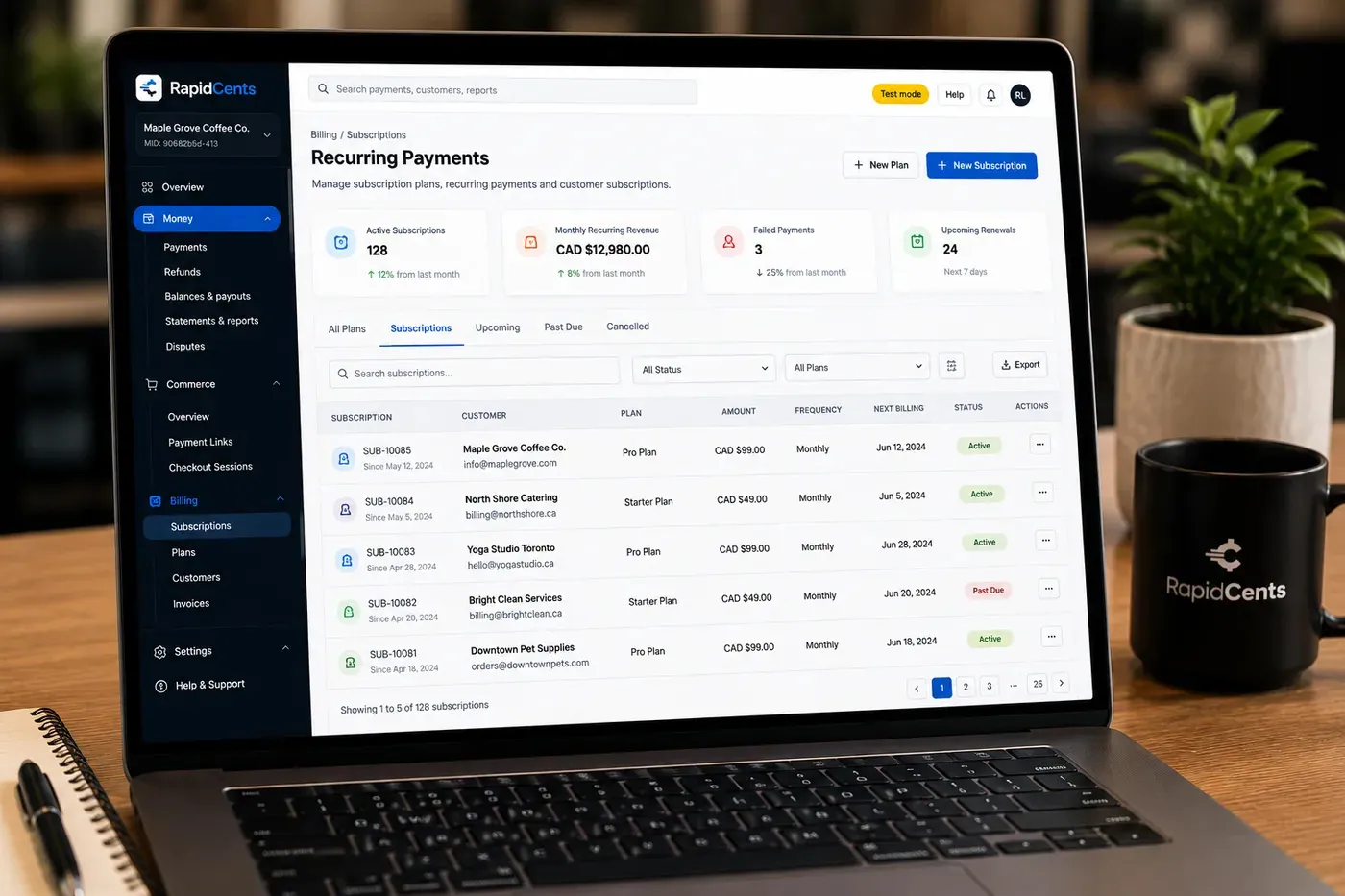
The RapidCents recurring payments screen showing active subscriptions, monthly recurring revenue, failed payments and upcoming renewals, above a list of subscriptions with their plan, amount, frequency and next billing date. Recurring Payments
RapidCents recurring payments manage subscription plans, membership renewals and installment schedules with…
Explore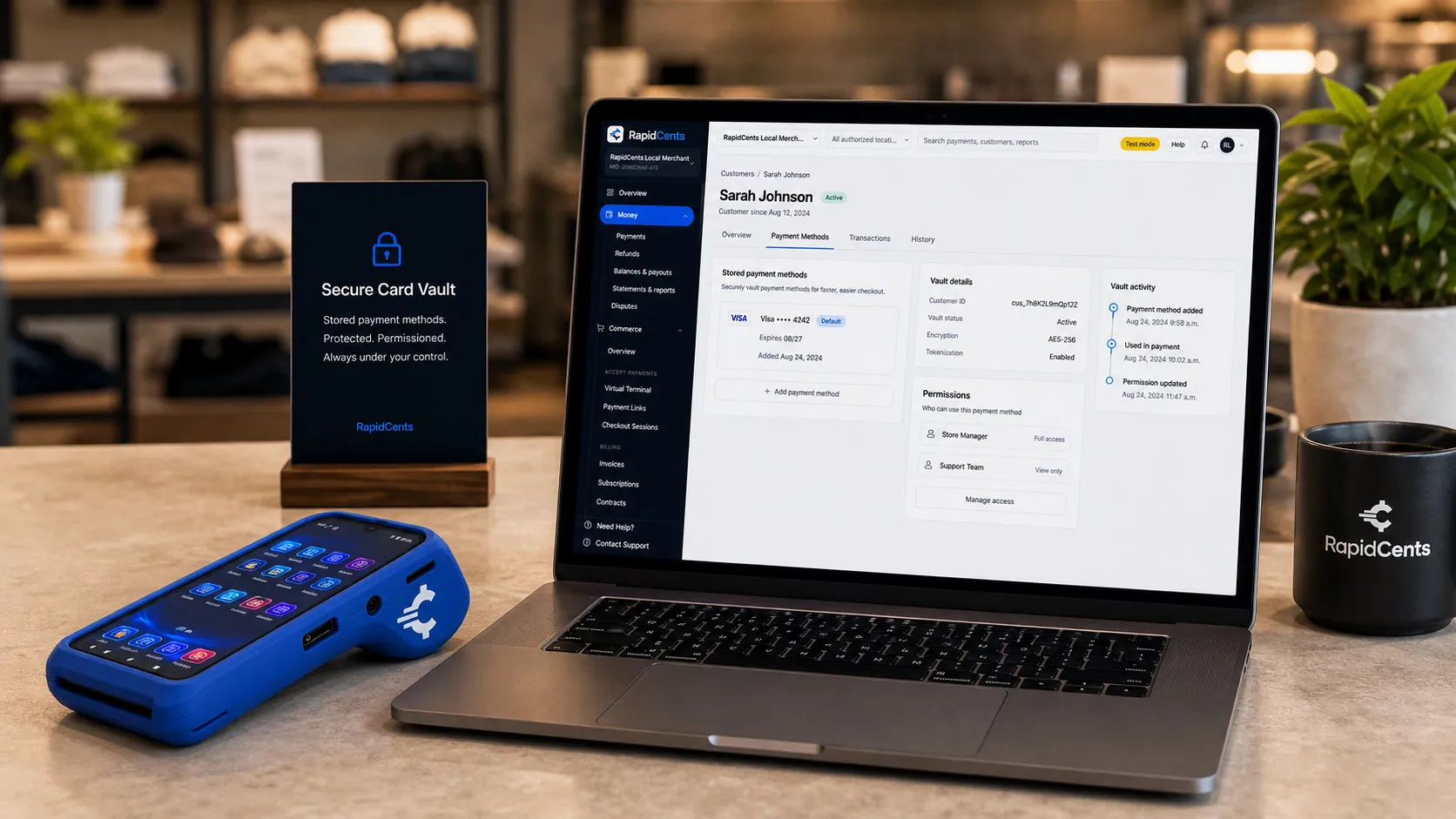
Card credentials sit in the RapidCents vault rather than in merchant software, with a terminal on the desk for new captures. Secure Card Vault
The vault stores tokenized payment methods against a customer record so staff can charge a returning…
Explore


How do you approve extra-care charges and late pickup fees?
Get the owner's yes before you charge extra care, and let the receipt list each item. Staff ask by text, phone or the booking portal, keep the owner's reply, then charge a card the owner authorized. Veterinary decisions and treatment stay outside the payment record.
How an add-on is quoted, agreed and charged
Add-ons such as a bath, a one-on-one walk or a playgroup upgrade are quoted to the owner first. After the owner agrees by text, phone or the booking portal, staff add the items to the checkout balance, and the itemized receipt names each one with its price.
Late pickup, extra nights and disputed add-ons
Late pickup fees and extra nights need terms the owner saw at drop-off. If an owner disputes an add-on, the itemized receipt and the saved reply are your evidence. Never charge a stored card for anything the owner has not agreed to.
A delayed flight and one extra night
Say a dog stays one extra night because the owner's flight is delayed. Staff text the extra-night price and a $25 bath, the owner replies yes, and both go onto the $180 balance. The receipt shows the base stay, the extra night and the bath as separate lines.
What drives pet boarding merchant services costs?
Pet boarding merchant services cost depends on your card mix and how cards are taken. We price every account on interchange-plus: interchange passes through at cost, you pay your RapidCents markup as set out in your Fee Schedule, plus fees for equipment or services if applicable. It runs month to month, with no fixed term.
What moves interchange
Interchange is set by the card networks and varies by card type, such as debit, credit, premium or commercial, and by how the card is taken. A tapped or inserted card at the front desk differs from a keyed or online deposit. Boarding mixes both, so ask for each channel to be shown separately.
What to bring to a comparison
Bring recent processing statements, your card mix, average stay and daycare ticket, the split between desk, phone and link payments, and your refund and dispute volume. Holiday peaks matter, so include a busy month. With that, quotes can be compared line by line.
Compare with Fee Check
Upload a statement to Fee Check to see interchange separated from markup. Then compare written quotes on the same volume, including equipment fees and any fee for services. Your Fee Schedule sets out your RapidCents markup, so you can read it before you decide.
Which pet care software works with RapidCents payments?
RapidCents integrates with many major platforms through APPIE and RapidBridge, so you can keep the booking software you run today. The right option depends on your software vendor and version, and your RapidCents representative will walk you through it. Payment links and the virtual terminal also work on their own, beside any software.
Gingr and PetExec
Gingr and PetExec are pet care management systems that hold reservations, owner profiles and visit counts. Most boarding businesses keep the system they already use. Tell your RapidCents representative which one you run, and they will show you how deposits, balances and receipts connect to it.
DaySmart Pet and MoeGo
DaySmart Pet and MoeGo run scheduling and owner communication for pet businesses. Tell your RapidCents representative which one you run and your version, and they will walk you through the option that fits. A payment link works beside the software from day one.
Revelation Pets and your accounting software
Revelation Pets is boarding management software, and your representative walks you through it the same way. For your books, RapidCents connects settled transactions, fees and refunds to QuickBooks Online and Xero, and SAP and NetSuite import settlement files.
Payment options for pet boarding in the United States
Pet boarding businesses in the United States commonly accept credit and debit cards, PIN debit where supported, and ACH bank payments, with settlement in USD. Your RapidCents representative sets up the methods you want on your merchant account.
Cards at the desk and online
Owners tap, insert or swipe credit and debit cards at the front desk, and PIN debit may be available where supported. Deposits by payment link or phone use credit and debit cards. Your RapidCents representative will walk you through the card options for your account.
ACH bank payments and state rules
Daycare plans and large holiday balances can use ACH on your account, with authorization from the owner. Refund, cancellation and deposit rules can vary by state, so check the rules that apply to your boarding business.
How do you switch pet boarding processors without losing deposits?
Switch in an order that protects reservations. List stored cards, daycare plans, open deposits and refunds, test the new flow, then move live traffic. Moving saved cards between processors takes both providers to agree, so plan for some owners to re-enter theirs.
Inventory before you move
List future reservations with deposits paid, active daycare packs and recurring plans, and the cards saved for each. Mark which owners authorized a stored card. Once your account is approved, plan the move for a quiet week, not a holiday weekend, when arrivals and pickups cluster.
Test and run in parallel
Before moving live traffic, run a test sale, a deposit by payment link, a refund and a recurring plan, and check that each shows the reservation number in the Merchant Dashboard. Keep the old processor active for refunds on old deposits until those stays are complete.
Reconcile by reservation number
Match each deposit and balance to a reservation number in the Merchant Dashboard and Reporting exports, then to the bank deposit and your ledger. Refunds and fees appear in the same reports, so finance can close the month without rekeying.
Payment questions from pet boarding and daycare businesses
What is the best payment processor for a pet boarding business?
The best processor is the one that fits your payment mix. Compare how it takes deposits by link, how it bills daycare plans, how it handles refunds, how it works with your booking software and how interchange and markup are shown. Ask for written quotes on the same volume. RapidCents offers interchange-plus pricing, month to month, with Fee Check for statements.
How much does credit card processing cost for a pet boarding business?
Kennel credit card processing cost depends on your card mix, ticket size and how cards are taken, so no single figure fits every business. With us, interchange passes through at cost and you pay your RapidCents markup from your Fee Schedule, plus fees for equipment or services if applicable. It is month to month, with no fixed term. Upload a statement to Fee Check to compare.
Can Gingr or other pet care software use a different payment processor?
Often, yes. RapidCents integrates with many major platforms through APPIE and RapidBridge, and the right option depends on your software vendor and version. Tell your RapidCents representative whether you run Gingr or another system, and they will walk you through it. Payment links and the virtual terminal also work beside any software, with references recorded by hand.
How can a pet boarding business switch processors without losing payment history?
With planning, yes, though stored cards need extra care. List active reservations, daycare plans, saved cards, open deposits and refunds. Keep your old processor for refunds on earlier payments, test a deposit, a balance and a refund on the new one, then reconcile. Moving saved cards takes both providers to agree, and some owners may need to re-enter them.
Which payment options can a pet boarding business in the United States offer?
A pet boarding business in the United States can typically offer credit and debit cards at the desk, PIN debit where supported, card payments by link or phone, and ACH bank payments for recurring daycare plans. Funds settle in USD. ACH needs the owner's authorization, and your RapidCents representative will set up the methods that suit your business.
Can a kennel take a boarding deposit by card?
Yes. A boarding deposit can be taken by payment link, by phone in the virtual terminal or at the desk. Put the booking reference in the reference field and send the refund policy with the confirmation, so the owner agrees to it before paying. Refunds usually return to the original card. The booking system, not the payment, holds the reservation itself.
Can I sell daycare packages and recurring plans?
Yes. A daycare pack is a payment, and the visit count lives in your booking system. RapidCents Payment Links and Recurring Payments collect the money and record each charge, while your pet care software tracks visits left, expiry and sharing between dogs. Agree the amount, billing date and cancellation with the owner, and tell your representative which software you use.
How are extra-care charges approved?
The owner says yes before you charge, and the receipt lists each item. Ask by text, phone or the booking portal, keep the reply, then add the items to the balance. Use a stored card only if the owner authorized it for add-ons. Veterinary decisions and treatment stay outside the payment record.
How do deposits, late pickup fees and cancellations show up in reconciliation?
Reconcile by reservation number. Each deposit, balance, add-on and refund carries the same reference, so Reporting exports line up the stay, the settled deposit and your ledger. Keep late pickup and cancellation fees on separate lines. RapidCents connects settled transactions, fees and refunds to QuickBooks Online and Xero for your books.
Can I keep an owner's card on file for the next stay?
Yes, but only with the owner's authorization. Ask the owner to agree to keep the card in the Secure Card Vault for a set purpose, such as the balance, agreed add-ons or a daycare plan, and explain how to cancel. Without that agreement, ask for the card again at each visit. A stored card cannot be charged for anything the owner did not agree to.
Related pet and animal care payments
Pet Services is the parent page, and Pet Groomers shares the same booking, tip and card-on-file workflows. Read them next if you also sell grooming or run boarding beside a spa.
Pet Services
RapidCents helps boarding kennels, dog daycares, groomers, trainers and pet sitters take…
Pet Groomers
Take grooming deposits by text, the balance and tip at the counter, card payments at the…
Nonprofits & Charities
Take one-time and monthly gifts online, sell event tickets by link and reconcile deposits…
Education
Take enrollment deposits online, run tuition installments on schedules families authorize…
Government
Take permit fees, counter payments and mailed-in payments from residents, then trace…
Events & Ticketing
Sell advance tickets online, take cards at the gate and concession stand, and give…
Membership Clubs
RapidCents collects membership dues on a schedule, takes event fees and guest passes by…
Travel Agencies
Take booking deposits, collect final balances and group installments, and match settled…
Take the next step
See what your boarding payments really cost
Upload a recent processing statement to Fee Check and see interchange separated from markup, so you can compare deposits, balances and daycare billing on your real payment mix.
- No obligation
- Payment specialists, not a call centre
- Secure statement upload