


Payment processing for campgrounds and RV parks
Payment processing for campgrounds and RV parks covers reservation deposits, arrival balances and camp store sales at the gate, monthly rent autopay for long-stay sites, and cancellation refunds. RapidCents gives you Hosted Checkout, Payment Links, Recurring Payments and Payment Terminals for these jobs, and your RapidCents representative sets them up around the reservation software you already run.

- PCI DSS Level 1
- SOC 2 Type II
- All major cards: Visa, Mastercard, Amex, Discover, UnionPay, Diners Club & Interac Debit
- Interchange-plus available
- Canadian support
How campgrounds and RV parks get paid
A campground collects money at four points: a deposit when the site is booked, a balance and store sales at arrival, monthly rent for long stays, and refunds or seasonal schedules when plans change. Each point has its own RapidCents tool and a reference your finance team can match.
Reservation deposits
A camper books a site months ahead and pays a deposit. Your office sends a payment link, or the booking page uses Hosted Checkout. The deposit is tied to the reservation number, and a refused card goes back to the camper through a fresh link.
Arrival balances and the camp store
The camper arrives and the gate attendant collects the remaining balance on a Payment Terminal. Firewood, ice, propane and late-arrival fees can join the same visit. Staff keep the site number in the reference so the receipt matches the reservation.
Monthly rent autopay
A long-stay guest agrees to monthly rent and utilities. Recurring Payments charges the saved card on the agreed day, with a notice before each charge. A decline starts retries and a message to the guest, and the manager sees the result in reporting.
Cancellations and seasonal schedules
A camper cancels or a storm closes the park, so staff refund the original card under your policy. Seasonal site holders can pay their fee on a collection schedule through the winter. The schedule is a way to collect your fee, never a loan.
How do campgrounds collect reservation deposit payments?
A campground collects a reservation deposit by sending a payment link, or by sending the camper to Hosted Checkout, when the site is booked. The deposit posts against the reservation number, the camper gets a receipt, and the balance stays open for arrival. You set the deposit terms before the first booking.
Send the deposit request at booking
A camper calls about a lakeside site or books through your page. Staff create a Payment Link by SMS or email, or the page uses Hosted Checkout. Put the reservation number and site type in the reference so finance can match the deposit later. Show your deposit and cancellation terms before payment.
Handle declines and changed dates
A card can be declined, or a group booking may have several people paying. Send a new link to the same reservation instead of keying the card again by phone. If the camper changes dates, adjust the reservation first, then collect or refund only the difference.
A $480 lakeside weekend, deposit first
Say a family books a three-night lakeside site for $480 and pays a $120 deposit through a payment link in March. The reservation number and arrival date sit in the reference. In July the gate attendant collects the remaining $360 on a terminal, and finance sees both payments under one reservation.
How does RV park monthly rent autopay work?
RV park monthly rent autopay charges a saved card on the agreed day each month, so long-stay guests do not have to pay at the office. It starts with the guest's authorization covering amount, timing and cancellation. Recurring Payments handles the schedule, the notice before each charge and retries after a decline.
Set up the authorization first
Before the first charge, the guest agrees to the monthly rent, utility add-ons, charge day and how to cancel. Contracts & eSignatures can capture that agreement, and the guest saves a card through a payment link. Storing the card and running the schedule both start from that authorization.
Plan for declines and move-outs
Cards expire and balances run short. Account Updater can refresh saved card details, and automated retries give the guest a second chance before staff step in. When electric charges change, tell the guest before the next charge. At move-out, cancel the schedule and refund any prepaid days under your lease.
A $650 full-hookup site for the winter
Say a winter worker rents a full-hookup site at $650 a month. The card is charged on the first of the month with a notice beforehand. If the card is declined and the retries fail, the manager sends a payment link. Reporting shows every charge against the site number.
RapidCents products for campgrounds and RV parks
Payment Links and Hosted Checkout take deposits, Payment Terminals handle the gate and camp store, and Recurring Payments runs monthly rent and seasonal schedules. Your RapidCents representative sets up the ones your park needs.

The RapidCents recurring payments screen showing active subscriptions, monthly recurring revenue, failed payments and upcoming renewals, above a list of subscriptions with their plan, amount, frequency and next billing date. Recurring Payments
RapidCents recurring payments manage subscription plans, membership renewals and installment schedules with…
Explore
The RapidCents payment links screen listing created links with their amount, status, click count and whether they have been paid, beside a phone showing the branded page a customer opens to pay $2,500.00. Payment Links
RapidCents payment links let staff generate branded pay-by-link URLs for invoices, deposits, balances and…
Explore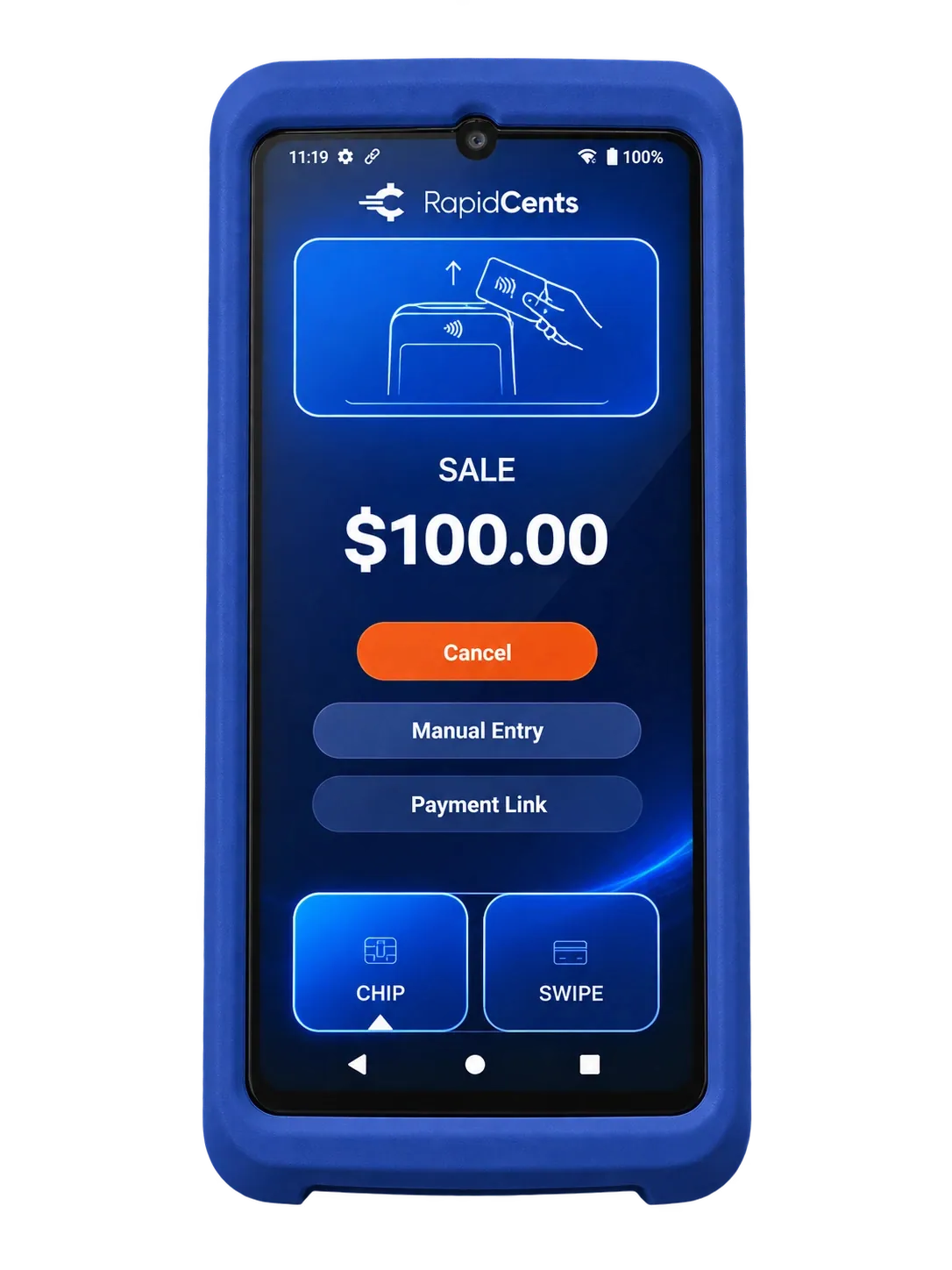
The RapidCents Rivo Go standing upright in its blue silicone case, showing the full-touch sale screen a customer reads across the counter. Payment Terminals
RapidCents payment terminals cover countertop, mobile and smart form factors so you can accept chip…
Explore
A RapidCents hosted checkout page at checkout.rapidcents.com, with the order summary and totals on the left and the card fields on the right, footed by SSL and PCI DSS assurances. Hosted Checkout
RapidCents hosted checkout delivers PCI-scoped payment pages you redirect customers to or embed via iframe…
Explore


How should campgrounds process cancellation refunds?
Campground cancellation refund processing returns money to the original card under the policy the camper accepted at booking. Staff refund from the reservation, record the reason and keep the original deposit linked. Partial refunds, non-refundable fees and weather closures each need a rule written down before the first cancellation arrives.
Refund to the original card
Find the payment by reservation number and refund it from the Merchant Dashboard or Virtual Terminal, up to the amount collected. Give role permissions only to the people who may refund, so the audit log shows who changed a payment. Update the reservation at the same time so the site is released.
Write the cancellation tiers
Decide which part is refundable: full, partial or none, by notice period, and how booking fees are treated. A camper who disputes a kept deposit with the card issuer starts a chargeback, so keep the accepted terms, booking date and messages ready as evidence.
A $120 deposit and a storm closure
Say a camper cancels a booking with a $120 deposit ten days out, and your policy keeps $40. Staff refund $80 to the original card, note the policy tier on the reservation and send the receipt. If a storm closes the park, the same steps refund the full deposit or move it to new dates.
What drives payment processing fees for campgrounds?
Campground payment processing fees follow your card mix and how cards are taken. RapidCents prices every account on interchange-plus: interchange passes through at cost, you pay the RapidCents markup set out in your Fee Schedule, and fees for equipment or services apply if relevant. It is month to month with no fixed term.
Card mix and how cards are taken
Interchange varies with debit versus credit, premium and commercial cards, and with tapped or inserted versus keyed or online payments. A park with many online deposits and phone bookings has a different mix than a gate-and-store operation. Seasonal swings change the mix as well.
What to bring to a comparison
Bring your last few processing statements, your average booking and store ticket, the split between online, phone and gate payments, and your refund and chargeback volume. Use Fee Check to upload a statement and see interchange shown apart from markup.
Other costs to ask about
Look at what your Fee Schedule lists for terminals, a Payment Gateway or a Virtual Terminal, and whether your reservation software adds its own processing terms. Compare written quotes against the same statement, and keep the term month to month.
Does RapidCents work with Campspot, RoverPass and other systems?
RapidCents integrates with many major platforms through APPIE and RapidBridge, and it maps settled transactions, fees and refunds to QuickBooks Online and Xero, while SAP and NetSuite import settlement files. Reservation software varies by vendor and version, so your RapidCents representative walks you through the option that fits your system.
Campspot and RoverPass
Campspot and RoverPass run reservations and often handle payments themselves. Tell your RapidCents representative which one you use and which edition. They will show you how deposits, balances and refunds connect, whether through the software itself or a payment link and terminal used alongside it.
Newbook, ResNexus and RMS Cloud
Newbook, ResNexus and RMS Cloud manage bookings, cancellations and store sales. Your RapidCents representative will walk you through how refunds post back to the reservation and how store sales on a standalone terminal reach your records, so your team never retypes a payment.
QuickBooks Online, Xero, SAP and NetSuite
RapidCents connects settled transactions, fees and refunds to QuickBooks Online and Xero. SAP and NetSuite import settlement files. Your bookkeeper gets deposit-level detail, and your RapidCents representative can show you what matching looks like for your books.
Payment options for campgrounds and RV parks in Canada
A campground in Canada can take Interac debit at the gate by chip and PIN or contactless, plus Visa, Mastercard and American Express. Monthly rent and seasonal schedules can use credit cards or EFT and pre-authorized debit (PAD), set up on your account by your RapidCents representative. Settlement is in CAD.
Interac debit and cards at the terminal
Gate and camp store sales often skew toward Interac debit by tap or chip and PIN, while online deposits are mostly credit cards. GST/HST may appear on receipts where it applies to your booking. Provincial lodging rules vary, so check the treatment with your accountant.
Bank payments for long stays
EFT and pre-authorized debit (PAD) can suit monthly rent when the guest signs a PAD agreement. Your RapidCents representative sets these up on your merchant account, so talk to them before you offer it to guests. Payments settle in CAD.
How do we switch and reconcile campground payments?
Switch in stages: list your stored cards, deposits and schedules, test a sale and a refund on the new setup, then move live traffic. Run both in parallel through a booking window if needed. Then match each bank deposit to your reservation records.
Take inventory before you move
List open reservations with deposits taken, saved cards, monthly autopay guests, seasonal schedules and pending refunds. Ask your current provider whether saved cards can move; both providers must agree, so never assume it. Plan to ask guests to authorize again if a card cannot move.
Test, then go live
Once your account is approved, run a deposit link, a gate sale, a monthly charge and a refund on the new setup before the season rush. Keep both setups running in parallel for a window if your reservation software still routes payments. Move the quiet months first, so a mistake costs little.
Reconcile deposits to reservations
Match each bank deposit to settled transactions, fees and refunds in Reporting, then to reservation and site numbers. Export CSV or PDF for your bookkeeper. Keep deposits, refunds and store sales on separate lines so a cancelled booking and a propane sale do not blur together.
Payment questions from campgrounds and RV parks
What should campgrounds and RV parks compare before choosing a payment processor?
Compare the whole workflow, not only the price list. Ask each provider to demonstrate a reservation deposit, a gate sale, a monthly autopay charge and a cancellation refund. Then compare restrictions from your reservation software, total fees on a written quote, settlement reporting and support. Run every comparison on your own payment mix.
How much does payment processing cost for campgrounds and RV parks?
The cost depends on your card mix, how cards are taken and any equipment or services you add. With RapidCents, interchange passes through at cost, you pay the RapidCents markup set out in your Fee Schedule, and fees for equipment or services apply if relevant. It is month to month. Upload a statement to Fee Check to see interchange separately from markup.
Can I use Campspot with a different payment processor?
RapidCents integrates with many major platforms through APPIE and RapidBridge, so most parks keep the reservation software they run today. The right option depends on your Campspot product, country and contract. Tell your RapidCents representative what you run, and they will show you how deposits and refunds post back to the reservation, with a payment link or standalone terminal as a companion.
How can my business handle campground reservation deposit payments?
Send a Payment Link by SMS or email, or route bookings to Hosted Checkout. The camper pays, receives a receipt, and the deposit is recorded against the reservation number. Set deposit and cancellation terms first, and keep the reservation number in the reference. Staff then collect the balance at arrival on a Payment Terminal or through another link.
Which payment options can a campground or RV park in Canada offer?
A campground in Canada can usually offer credit cards, Interac debit at the terminal, payment links and Hosted Checkout for deposits, and recurring card charges for monthly rent. EFT or pre-authorized debit (PAD) bank payments can serve monthly rent too. Settlement is in CAD. Your RapidCents representative walks you through the options for your merchant account.
How should we manage campground cancellation refund processing?
Refund to the original card under the cancellation policy the camper accepted, and link the refund to the reservation. Give refund permission only to named staff roles, so the audit log shows who acted. If a refund fails, for example on a closed card, contact the camper and agree another method. Keep the terms and booking record in case of a dispute.
Can one platform handle campground store payment terminals and seasonal campsite installment billing?
Yes. Payment Terminals handle store and gate sales while Recurring Payments runs seasonal schedules, and Reporting shows both. Whether they share one customer record depends on your reservation software and your Customer Profiles setup. If your software uses a separate processor, your RapidCents representative can show you an import or matching routine. Seasonal installments are a collection schedule, not financing.
How do we reconcile card payments and bank deposits for campgrounds and RV parks?
Match three layers: sales, fees and refunds in Reporting, then the bank deposit, then the reservation record. Separate gross sales, refunds, disputes and processing fees, and match by transaction reference and site number. RapidCents connects settled transactions, fees and refunds to QuickBooks Online and Xero, and your RapidCents representative can show you how it looks in your books.
How do we switch payment providers without losing saved cards or disrupting reservation deposits?
Switch in stages. List contracts, stored cards, monthly autopay guests and open deposits, then ask your current provider whether saved cards can move; both providers must agree, so do not assume it. Test a deposit, a gate sale and a refund on the new setup, run both in parallel through a booking window if needed, and ask guests to authorize any card that cannot move.
What MCC is used for campgrounds and RV parks?
MCC 7033 is commonly associated with campgrounds and trailer parks. RapidCents sets the right merchant category with you during onboarding, based on what your business actually sells. A park that also runs a large store or rents cabins may be reviewed on that mix, so describe your real lodging, store and other sales when you apply.
Related industries
Hotels, restaurants, food trucks and breweries share parts of this flow: deposits, gate or counter sales and recurring charges. Compare where the workflow differs before you copy a setup from a neighboring business.
Restaurants
Close bills at the table, split them across cards, settle tips before staff clock out and…
Fast Food & QSR
Card payments for fast food and QSR operators: countertop and mobile terminals, Tap to…
Food Trucks
Mobile terminals with LTE and Wi-Fi for the window, Tap to Pay on a phone for the queue…
Catering
RapidCents helps caterers take the booking deposit by payment link, invoice the event…
Cafés & Bakeries
Take tap payments in the morning rush, collect deposits on cake and pickup orders, and…
Hotels & Hospitality
Collect booking deposits, hold a card for incidentals at check-in and capture the final…
Bars & Nightclubs
Open tabs on a held card, take payments on the floor with a handheld, adjust tips at…
Breweries & Wineries
Take cards at the taproom bar, the tasting room and the farmers market, bill wine and…
Take the next step
Compare your campground's processing costs
Upload a processing statement to Fee Check and see interchange separated from your markup, with your deposit, gate and monthly autopay volume in mind.
- No obligation
- Canadian payment specialists
- Secure statement upload



