


Limousine payment processing for charter operators
Limousine payment processing from RapidCents covers the whole trip: payment links or the virtual terminal secure the booking, a mobile terminal settles the final fare, and invoicing handles corporate accounts. You take a booking deposit, adjust for wait time and gratuity after the run, and refund a charter that cancels, all on one record that dispatch and finance use.

- PCI DSS Level 1
- SOC 2 Type II
- All major cards: Visa, Mastercard, Amex, Discover, UnionPay, Diners Club & Interac Debit
- Interchange-plus available
- Canadian support
How limousine and charter operators get paid
A limousine or charter operator gets paid in stages: a deposit when the quote is accepted, a final fare once wait time and gratuity are known, invoices for corporate travel accounts, and refunds when a trip cancels. Each stage uses a different RapidCents tool.
Booking deposits and card holds
A customer, event planner or travel desk accepts your quote. Reservations sends a payment link by SMS or email, or keys the card by phone in the virtual terminal. If the card declines, send a fresh link. Finance gets a receipt carrying the trip reference.
Final fare collection
The passenger pays once the chauffeur finishes the run and wait time and gratuity are added. Staff tap or insert the card on a mobile terminal in the vehicle, or charge a card on file the customer authorized. If the customer disputes extra time, the quote and run log settle it.
Corporate account invoicing
A travel manager or executive assistant pays for runs billed to a company. You send a branded invoice with a payment link for each run or each month. If a purchase order number is missing or a payment arrives in part, invoice status shows exactly what is still open.
Cancelled charter refunds
A customer cancels inside or outside your cancellation window. You refund the original card, in full or in part, depending on the deposit terms on your quote. If a refund does not match the booking, the report ties it back to the trip so finance can correct it.
Should you take a booking deposit or only an authorization?
Take a booking deposit when you want money committed to the trip, and use an authorization when you only want to hold the card and charge later. Large charters usually suit a deposit, and short city runs often suit a hold. Charter bus booking deposit payments should always carry the trip reference.
How the booking runs
A reservations agent confirms the quote, then sends a payment link or keys the card by phone in the virtual terminal. The customer receives a receipt with the trip reference, pickup date and amount taken. The deposit settles with your other card sales and appears in the Merchant Dashboard and settlement reports.
What to set up first, and what goes wrong
Put the deposit amount, what it covers, what is refundable and your cancellation window on the quote. Get the customer's authorization before you keep a limo trip card on file for the final fare. If a hold expires or a card declines, send a new payment link instead of charging without agreement.
A $1,500 wedding-weekend coach deposit
Say a planner books a 50-seat coach for a wedding weekend and agrees to a $1,500 deposit. Reservations sends a payment link, the planner pays, and the trip reference goes on the receipt. The remaining balance is collected after the run, under the terms the planner accepted.
How do you handle wait time and gratuity adjustments?
Wait time and gratuity are known only after the run, so the final fare often differs from the quote. Settle the difference with a card on file the customer authorized, or on a mobile terminal in the vehicle. Limo final fare collection works best when the quote lists your wait-time rule and gratuity policy.
How the adjustment runs
The chauffeur logs wait time and extra stops, and dispatch totals the fare. The passenger taps a card on the mobile terminal and adds a gratuity on screen, or staff charge the adjusted amount to the stored card in the virtual terminal. The receipt itemizes fare, wait time and gratuity.
Limits and exceptions to plan for
Your RapidCents representative will walk you through how your account treats an adjustment above the original authorization, and how long a hold lasts. Separate an automatic gratuity listed on the quote from a tip the passenger chooses. If a customer disputes extra time, the quote, the run log and the receipt are your evidence.
A $400 airport run with a delayed flight
Say a $400 airport run waits 45 minutes for a delayed flight. The quote listed the wait-time rule, so dispatch adds a $60 wait charge. The passenger adds a $45 gratuity on the mobile terminal, and the single receipt shows all three amounts for reconciliation.
RapidCents products for limousine and charter operators
These products cover the trip from quote to ledger: Payment Links for deposits and balances, Virtual Terminal for phone bookings, Mobile Terminals for the vehicle, and Invoicing for corporate accounts.

The RapidCents payment links screen listing created links with their amount, status, click count and whether they have been paid, beside a phone showing the branded page a customer opens to pay $2,500.00. Payment Links
RapidCents payment links let staff generate branded pay-by-link URLs for invoices, deposits, balances and…
Explore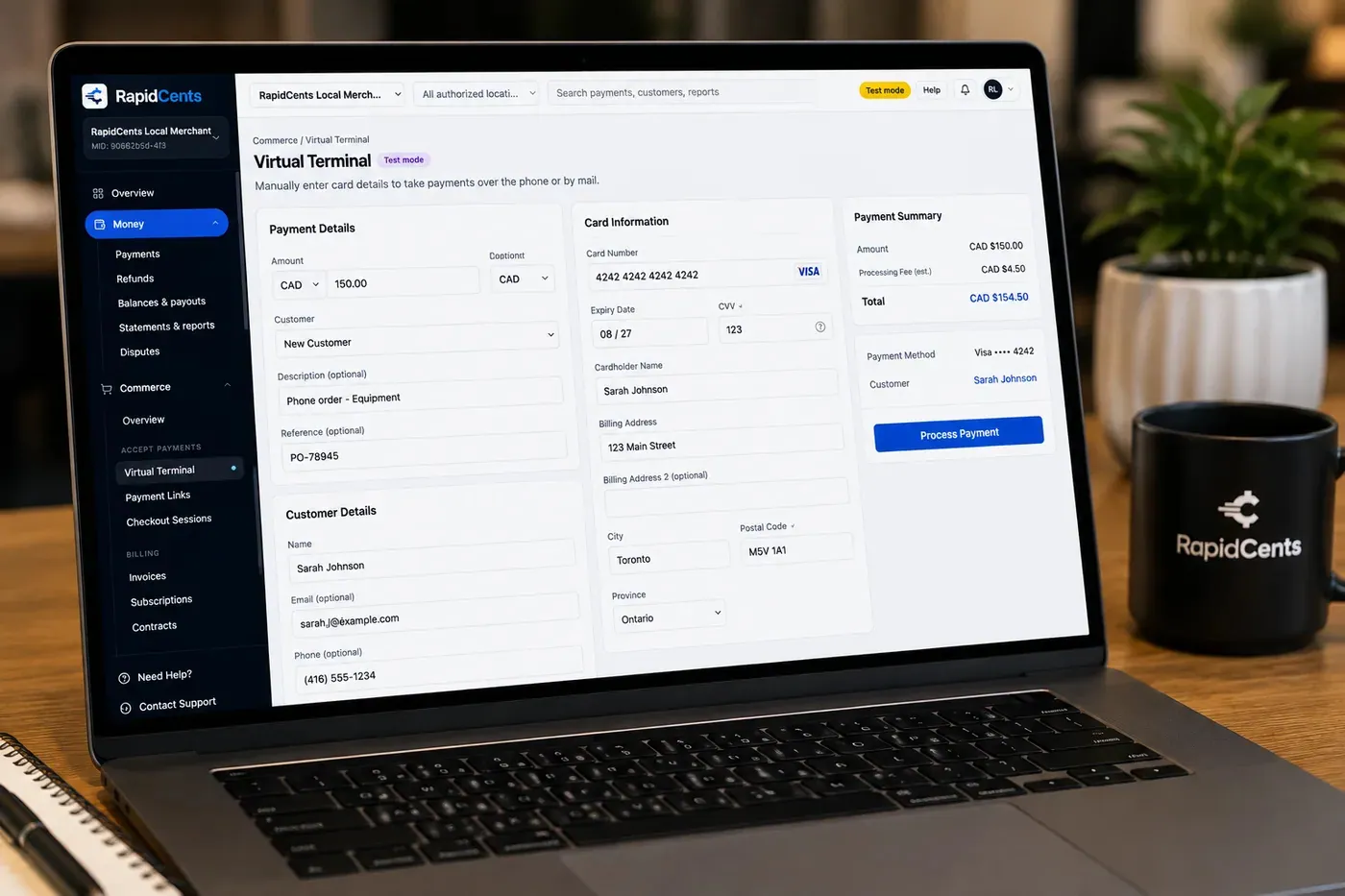
The RapidCents virtual terminal: payment details, card number, expiry and CVV keyed by hand on the left, with a payment summary on the right showing the amount, the estimated processing fee and a Process Payment button. Virtual Terminal
The RapidCents virtual terminal lets authorized staff enter mail-order and telephone-order payments through a…
Explore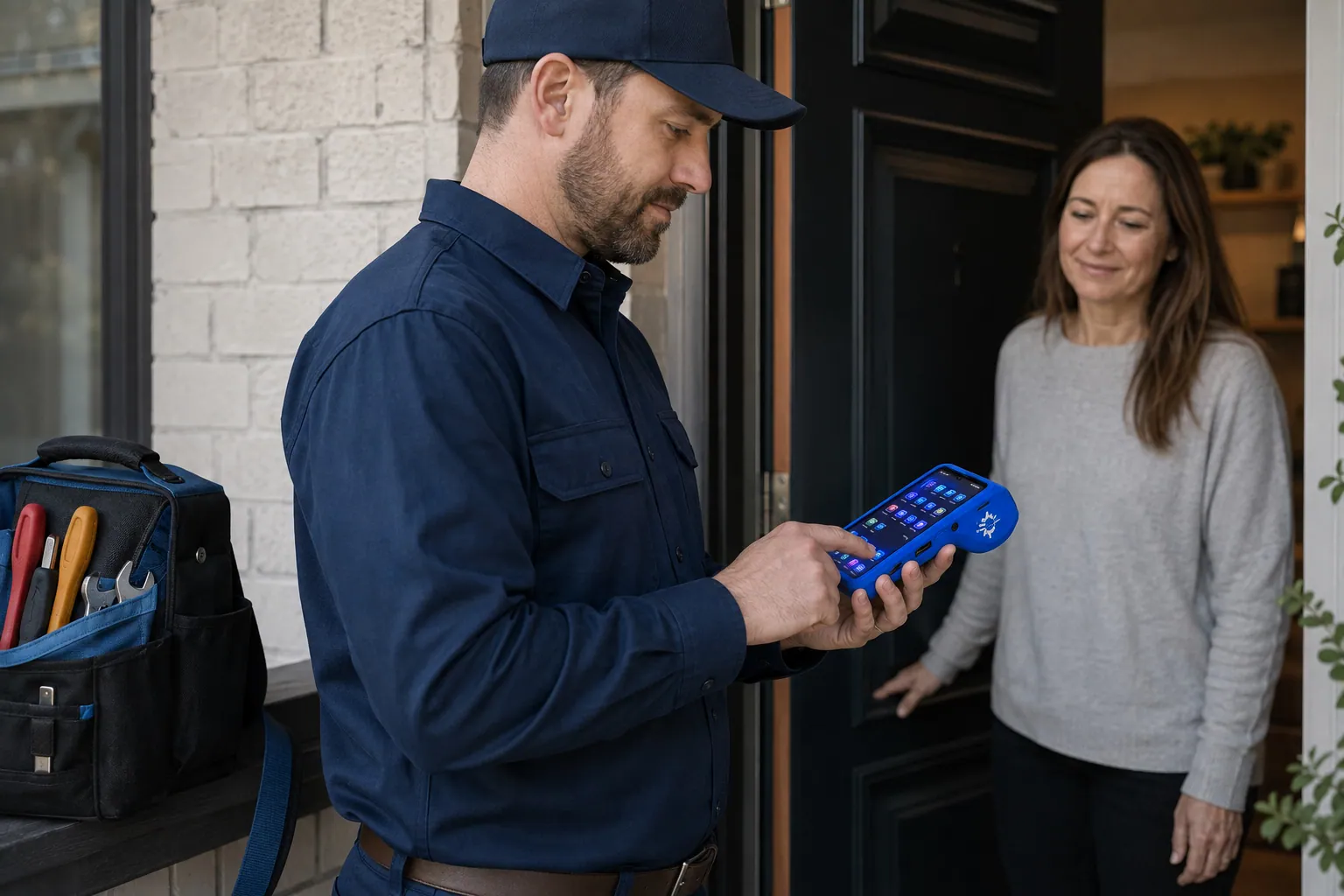
A staff member takes a card payment on a RapidCents handheld terminal, with the same sale appearing on the dashboard. Mobile Terminals
RapidCents mobile terminals are battery-powered wireless devices with LTE and Wi-Fi so staff accept payments…
Explore
The RapidCents invoices screen: outstanding, overdue, paid and draft totals across the top, the invoice list below them, and a preview of one invoice on the right with its line items and a View & Record Payment button. Invoicing
RapidCents invoicing helps professional services, contractors and B2B suppliers create branded invoices…
Explore


How does post trip capture work?
Post trip capture means charging the final amount after dispatch has closed the run. Dispatch confirms the trip, finance reviews the total, and the card is charged for the balance. Capture inside the window your account allows, and keep the run log with the receipt so the charge can be explained.
How the capture runs
Once dispatch marks the run complete, staff pull up the booking and key the final amount in the virtual terminal against the stored card. If there is no stored card, they send a payment link for the balance. The customer receives a receipt, and the sale joins the day's settlement.
Declines, partial payments and corrections
If the balance declines, contact the customer and offer a payment link rather than retrying blindly. A cardholder who is not the passenger may need a separate agreement. If you over-charged, refund the difference to the original card and note the booking so finance can match the entry.
A three-sedan corporate roadshow
Say a corporate roadshow books three sedans for two days. Dispatch closes each run and flags one extra stop. Finance totals the three balances, charges the company's stored card under the signed agreement, and refunds the single charge that was keyed twice.
Compare processing fees and total operating cost
Your cost depends on card type, how the card is taken and your mix of remote and in-person payments. RapidCents prices on interchange-plus: interchange at cost, your RapidCents markup in your Fee Schedule, and fees for equipment or services if applicable. Month to month, no fixed term.
What drives the cost
Interchange varies with card type: debit, credit, premium or commercial. It also varies with how the card is taken, so a phone-keyed booking can cost differently from a tapped payment. Limo credit card processing often mixes corporate cards, keyed deposits and tapped final fares.
What to bring to compare
Bring recent processing statements, your card mix, average trip ticket, the split between phone, link and in-vehicle payments, and your refund and dispute volume. Include any terminal rental or monthly fees so the comparison covers total operating cost, not one line.
How Fee Check helps
Upload a processing statement to Fee Check and it shows interchange separately from markup. Your Fee Schedule then sets out your markup in writing, along with any fees for equipment or services that apply to the mobile terminals, virtual terminal and payment links you plan to use.
How RapidCents fits with Limo Anywhere and your dispatch software
RapidCents integrates with many major platforms through APPIE and RapidBridge, so most operators keep the booking and dispatch software they run today. The right option depends on your vendor and edition, and your RapidCents representative will show you how amounts, receipts and refunds reach your ledger.
Limo Anywhere
Limo Anywhere is dispatch and booking software, and its vendor also offers its own payment option, Limo Anywhere Pay. RapidCents integrates with many major platforms through APPIE and RapidBridge. Tell your RapidCents representative which edition you run, and they will walk you through the right option.
Busify, GroundWidgets, Moovs and LimoWiz
Each is operations software for ground transport. Tell your RapidCents representative which one you use, and they will show you how payments, receipts and refunds connect to it, whether through an integration, a payment link outside the software or a settlement file.
QuickBooks Online, Xero, SAP and NetSuite
RapidCents connects settled transactions, fees and refunds to QuickBooks Online and Xero. SAP and NetSuite import settlement files. Your bookkeeper gets the fields they need, such as the trip reference, so each deposit and fare lines up with the ledger.
Payment options for limousine and charter operators in Canada
Limousine and charter operators in Canada can accept credit cards, Interac debit at the terminal, and bank payments by EFT or pre-authorized debit (PAD), with settlement in CAD. Your RapidCents representative sets up the Canadian methods for your merchant account.
Cards and Interac debit
Take Visa, Mastercard and American Express by payment link or phone for deposits. Use a mobile terminal for chip and PIN or contactless Interac debit and credit when the passenger pays in the vehicle.
Bank payments, tax and local rules
EFT or PAD suits a corporate account that has signed a written authorization. GST/HST may need to appear on your receipts and invoices. Livery and charter licensing differs by province, so check local rules separately.
Setup, switching and reconciliation checklist
Switch in an order that protects open bookings: list what is outstanding, test one full trip payment, then move live traffic. Run old and new flows side by side where you need to, and reconcile each deposit to your ledger before you close the old account.
Inventory what is open
List upcoming bookings with deposits, cards on file with their authorizations, open corporate invoices, refunds in progress and every terminal. Once your account is approved, your RapidCents representative helps you plan the move. Saved cards need both providers to agree, so plan to ask customers again where needed.
Test before going live
Run a deposit by payment link, a final fare on a mobile terminal and a refund, then check that each appears in reports with the trip reference. Test one phone-keyed booking in the virtual terminal as well. Keep the old flow running for open trips until the new one reconciles.
Reconcile to the ledger
Match settled deposits, fees and refunds to your bookkeeping each period. Use the trip reference as the key between dispatch, the receipt and the ledger. A pilot with one corporate account is a safe way to see the invoice, payment and entry line up.
Payment questions from limousine and charter operators
How should a limousine operator handle a booking deposit versus an authorization?
Use a deposit when you want money committed, and an authorization when you only need to hold the card. A deposit suits a long charter; a hold suits a short city run. Write the amount, refund terms and cancellation window on the quote, and keep the trip reference on the receipt so finance can match it later.
How should limousine operators handle wait time and gratuity adjustments?
Collect them after the run, using the card the customer authorized. List your wait-time rule and gratuity policy on the quote, log the wait in dispatch, then charge the adjusted total on a mobile terminal or the virtual terminal. Your RapidCents representative will explain how your account treats an amount above the original authorization.
How does post trip capture work for a charter operator?
Post trip capture charges the final amount after dispatch closes the run. Staff pull up the booking, key the total against the stored card in the virtual terminal, or send a payment link for the balance. Keep the run log with the receipt. Stored cards need the customer's authorization, agreed before the trip.
How should limousine operators invoice corporate trips?
Send a branded invoice with a payment link, either per run or monthly, and include the purchase order number and trip reference. Invoicing tracks status from draft to paid. Agree the terms in writing first, because a partial payment or a missing order number is the usual reason a corporate invoice stalls.
Which payment options can a limousine operator in Canada offer?
A limousine operator in Canada can offer credit cards, Interac debit at a terminal, and EFT or pre-authorized debit (PAD) for corporate accounts, with settlement in CAD. Deposits can be taken by payment link or phone. Your RapidCents representative helps you choose which methods to list on a quote.
Which payment processor is best for limousine and charter operators, and what should we compare?
No single processor is best for everyone, so compare in writing. Weigh total fees on your real payment mix, the tools for phone bookings and in-vehicle payments, settlement reporting, support, and how well it fits your dispatch software. Then ask each provider for a written quote and test the same booking, fare adjustment and refund.
What fees should limousine and charter operators expect for in-person and online card payments?
Expect interchange, which passes through at cost and varies with card type and how the card is taken, plus your RapidCents markup in your Fee Schedule and fees for equipment or services if applicable. Pricing is month to month with no fixed term. Fee Check shows interchange separate from markup on any statement you upload.
Can we use RapidCents with Limo Anywhere or Busify?
RapidCents integrates with many major platforms through APPIE and RapidBridge, so most operators keep the software they run today. The exact option depends on your vendor and edition. Tell your RapidCents representative whether you use Limo Anywhere or Busify, and they will show you how payments, receipts and refunds connect to it.
How can limousine and charter operators reduce payment disputes and protect stored card details?
Get clear agreement on the quote, deposit and cancellation terms, send a receipt with the trip reference, and limit who on staff can charge stored cards. RapidCents offers tools such as Payment Tokenization and dispute alerts, and your representative will show you which fit your account. Keep the run log as evidence. No tool can promise a dispute outcome.
How can limousine and charter operators switch payment providers without losing billing records?
List open bookings, deposits, saved-card arrangements, terminals and software dependencies first. Run a pilot deposit, fare and refund and reconcile them before moving live traffic. Saved cards may need vendor-controlled migration, with both providers agreeing, so plan to ask customers for new authorization where it cannot move.
What MCC is used for limousine and charter operators?
MCC 4111 is commonly associated with ground passenger transport, which covers many limousine and charter businesses. RapidCents sets the correct merchant category during onboarding, based on what your business actually sells, so the code assigned to your account can differ if your services are mixed.
Related industries
Taxi and transportation, parking, towing and roadside, and courier and delivery businesses share the same pattern: a quote or booking, a charge adjusted after the job, and invoices for repeat business accounts.
Taxi & Transportation
Take card fares and tips in the vehicle, reconcile each driver's takings by shift and…
Parking
Take cards at booths and event gates, let drivers pay by plate or QR code, and bill…
Towing & Roadside
Take release fees at the yard gate, card payments at the roadside and invoices for…
Automotive
Take the parts deposit, the phone-approved repair, the insurance deductible and the…
Car Wash
Single washes at the pay station, unlimited plans on monthly autopay and the renewals…
Car Dealerships
Take holding deposits by payment link, ring service and parts tickets on terminals, and…
Courier & Delivery
Bill business accounts on terms, take card payments from walk-in senders and collect from…
Driving Schools
RapidCents helps driving schools sell lesson packages online, collect installments and…
Take the next step
See what your limousine payments really cost
Upload a processing statement to Fee Check and see interchange separated from markup, using your own mix of deposits, final fares and corporate card payments.
- No obligation
- Canadian payment specialists
- Secure statement upload



