Payment processing for safety suppliers and PPE distributors
Payment processing for safety suppliers means collecting from the contractors, plants and facilities you supply, not from individual workers. RapidCents takes card payments by invoice link, phone order and counter sale, plus stored cards for repeat replenishment. Each payment carries the PO and site reference your finance team needs.

- PCI DSS Level 1
- SOC 2 Type II
- All major cards: Visa, Mastercard, Amex, Discover, UnionPay, Diners Club & PIN Debit
- Interchange-plus available
- Specialist onboarding support
How safety and PPE suppliers get paid
Safety and PPE suppliers get paid by the businesses they supply: construction firms, plants and facilities that order by site, by crew or by program. Payment follows a confirmed order, then an invoice or deposit request, then a receipt that carries the PO and site reference your finance team needs.
Site-level order payments
A site supervisor or purchasing lead signs off an order of gloves, harnesses and hi-vis for one job site. You send an invoice with a payment link carrying the PO and site reference. The payer pays by card, and finance receives a record matching that site.
Bulk uniform and PPE deposits
A company orders branded coveralls or hard hats before production. You confirm order details, quantities and deposit terms, then send a payment link for the deposit. The balance is requested at delivery, and each payment links back to the same order.
Repeat replenishment
A plant reorders earplugs, glasses and gloves on a regular rhythm. With the buyer's written authorization, a stored card in the Secure Card Vault pays each replenishment order, and a receipt goes to the contact the customer named.
Returns and credit adjustments
A wrong size or a short shipment changes the amount owed. You issue a refund to the original card or a credit note against the open invoice, and the adjustment is recorded so the account balance and the payment history still agree.
How do you collect PPE payments by job site?
You collect PPE payments by job site by issuing one invoice per confirmed site order and putting the site name, PO number and contact on the invoice and its payment link. These PPE invoice payments are made online or by phone, and the receipt repeats those references so finance can post each site separately.
How it runs and what to set up first
A site supervisor raises a request, purchasing signs off and issues a PO. You build the invoice in Invoicing, add the site and PO in the reference fields, and send Payment Links by SMS or email. Settle first who may order and who may pay for each site.
When a crew orders extra or head office pays two sites
A crew may add boxes after the PO was issued, or head office may pay one invoice covering two sites. Issue a supplementary invoice for the extra goods, or list both references on the payment. If a card is declined, the payer picks another method and the order stays open.
A $860 glove order on PO 5521
Say a contractor with three open sites orders 40 pairs of cut-resistant gloves for one site on PO 5521. You invoice $860 with the site code in the reference, the site office pays by link, and the receipt shows PO 5521 and the site, so accounts payable files it correctly.
How do you collect bulk uniform and PPE deposits?
Collect a bulk deposit once the order is settled: quantities, sizes, decoration, delivery date and deposit terms are confirmed in writing, and then you send the deposit request. The balance is a second request at delivery or pickup, so each of your PPE deposit payments matches a clear milestone.
How it runs and what to set up first
Send the order form through Contracts & eSignatures, capture the buyer's signature and take the deposit in the same flow, or send a payment link for the deposit amount. Put quantities, logo or decoration details and the balance due date on the form before any payment request goes out.
Size changes, cancellations and disputes
Decorated goods usually cannot be restocked, so say in writing whether the deposit is refundable when the buyer changes sizes or cancels. Refunds then follow those terms. If a cardholder disputes the charge, the signed order form and delivery record are your evidence.
A $9,600 jacket order with a $2,400 deposit
Say a roofing contractor orders 120 branded hi-vis jackets for $9,600. The signed order form sets a $2,400 deposit, collected by payment link before production. The $7,200 balance is requested when the jackets are delivered, each payment carrying the same order reference.
RapidCents products for safety and PPE suppliers
These products fit invoice-led B2B collections: Invoicing and Payment Links carry the PO and site, the Secure Card Vault holds authorized cards for replenishment, and Contracts & eSignatures captures the signed order before a deposit.
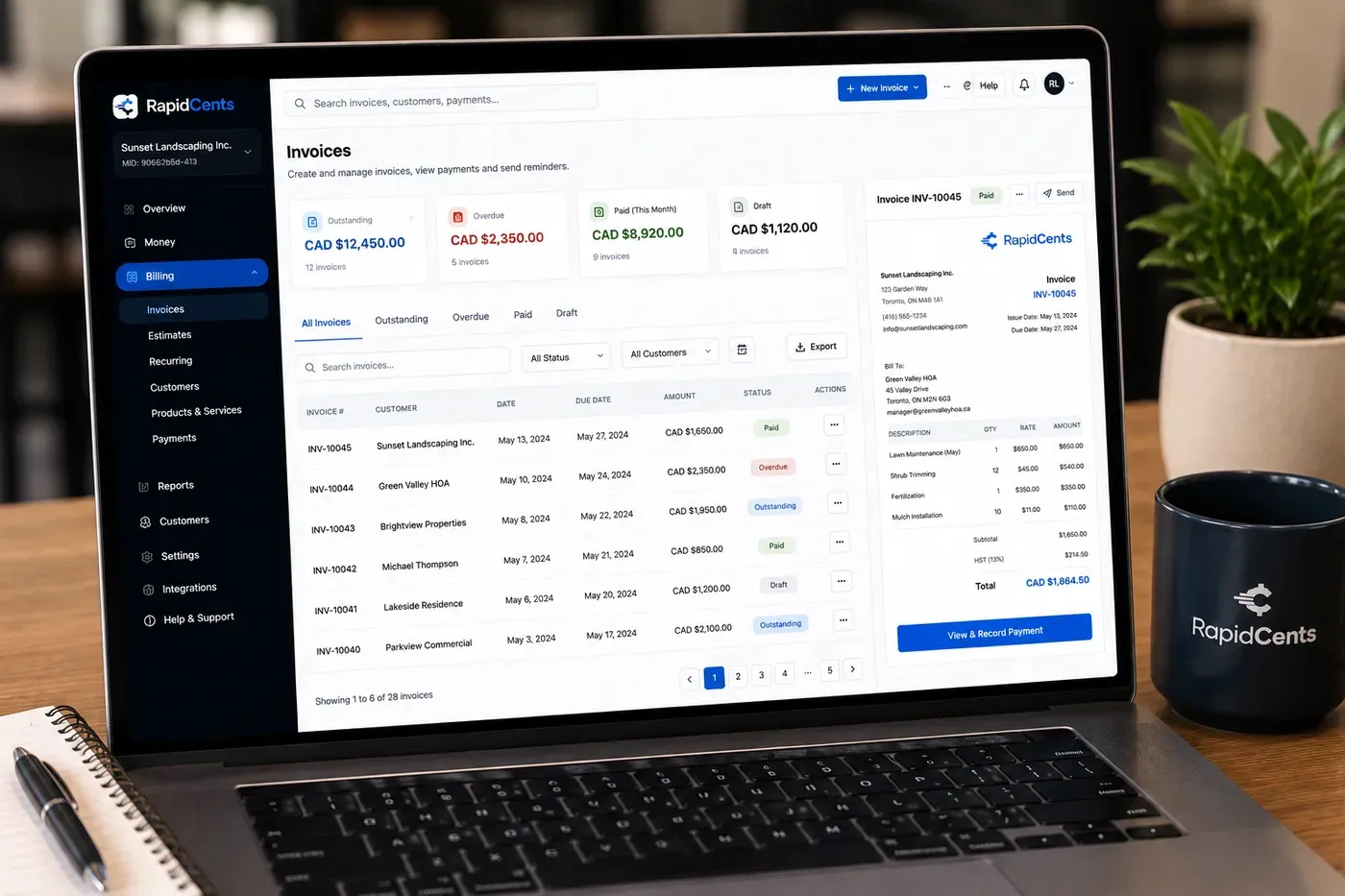
The RapidCents invoices screen: outstanding, overdue, paid and draft totals across the top, the invoice list below them, and a preview of one invoice on the right with its line items and a View & Record Payment button. Invoicing
RapidCents invoicing helps professional services, contractors and B2B suppliers create branded invoices…
Explore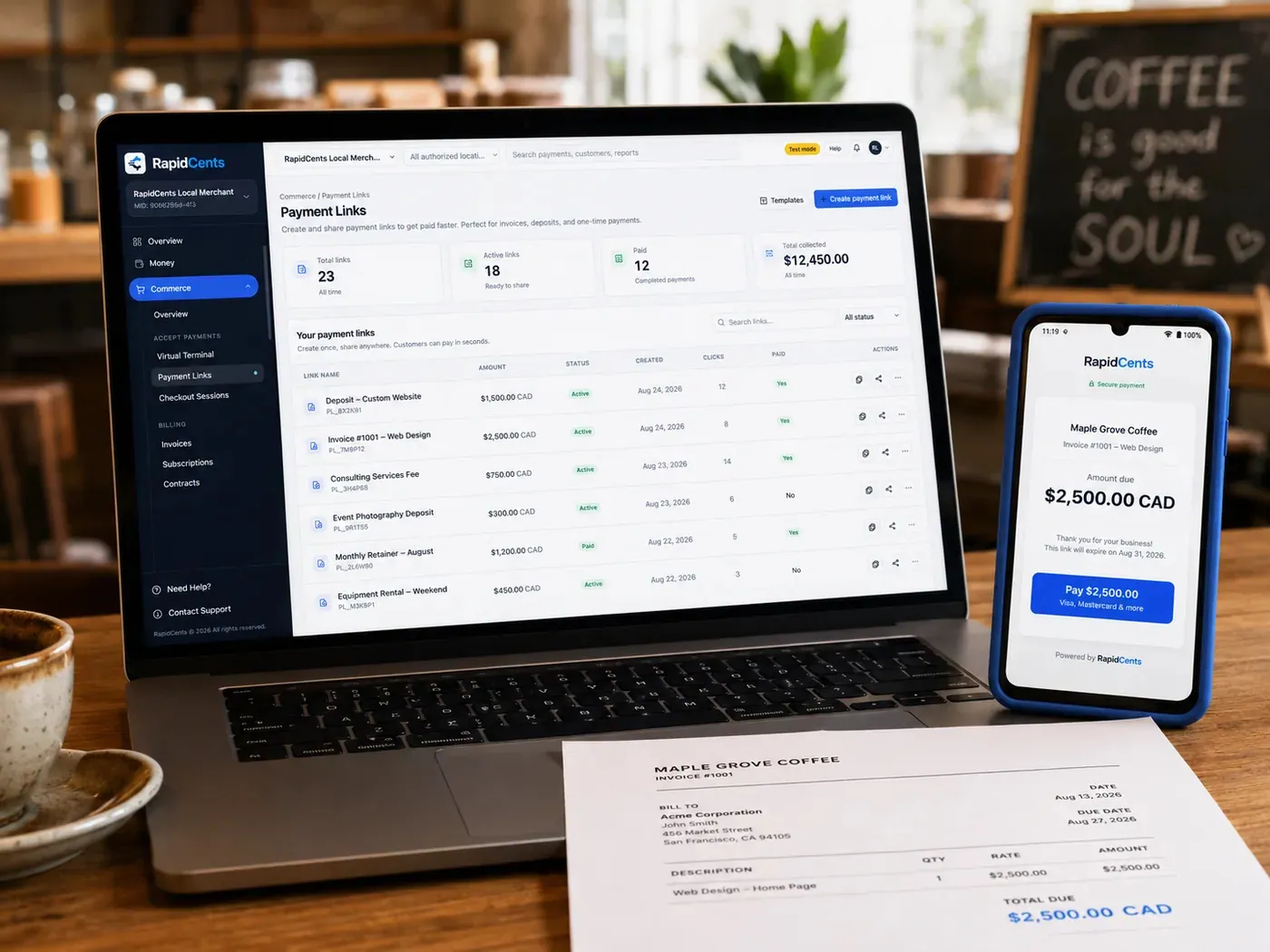
The RapidCents payment links screen listing created links with their amount, status, click count and whether they have been paid, beside a phone showing the branded page a customer opens to pay $2,500.00. Payment Links
RapidCents payment links let staff generate branded pay-by-link URLs for invoices, deposits, balances and…
Explore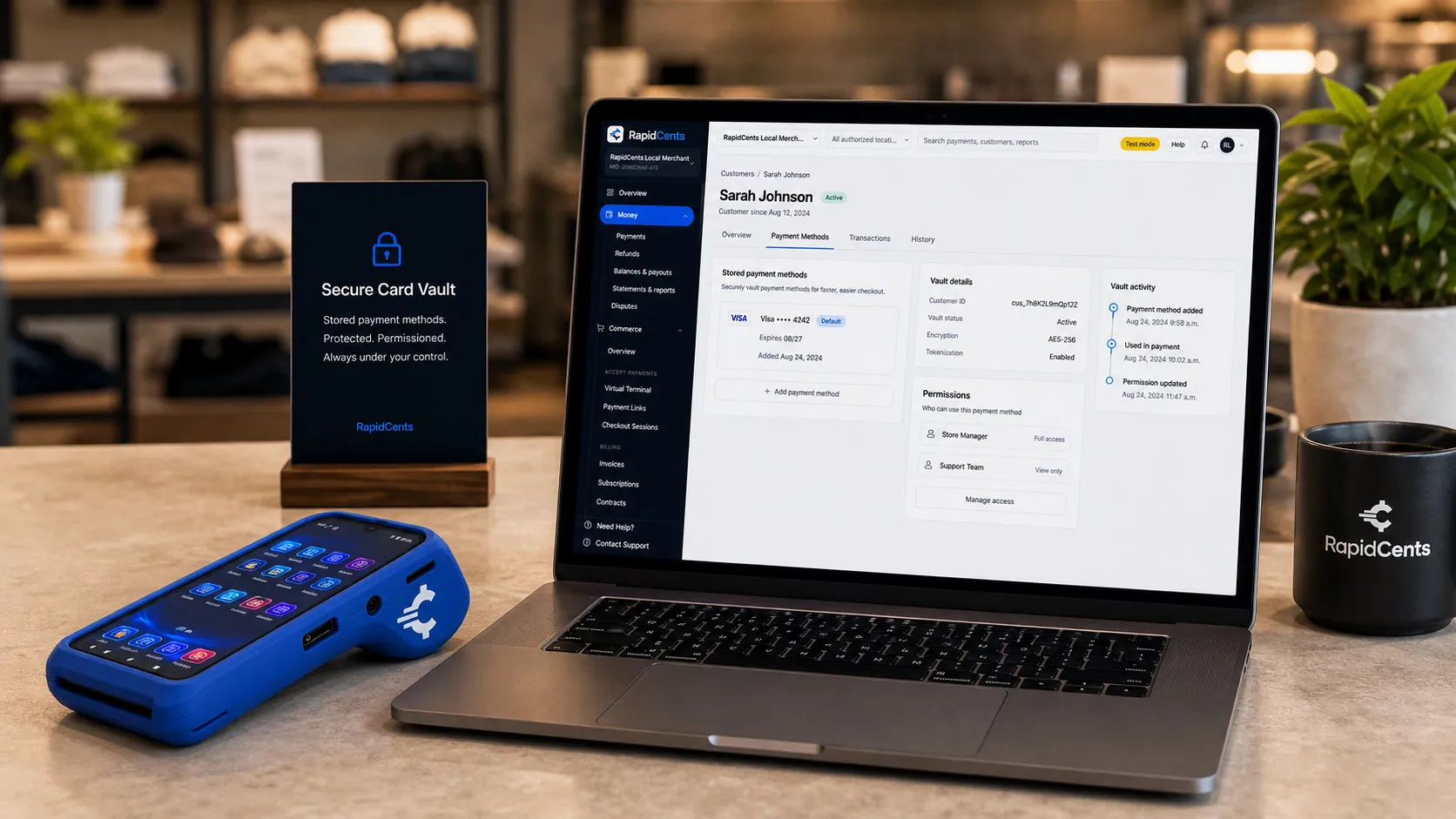
Card credentials sit in the RapidCents vault rather than in merchant software, with a terminal on the desk for new captures. Secure Card Vault
The vault stores tokenized payment methods against a customer record so staff can charge a returning…
Explore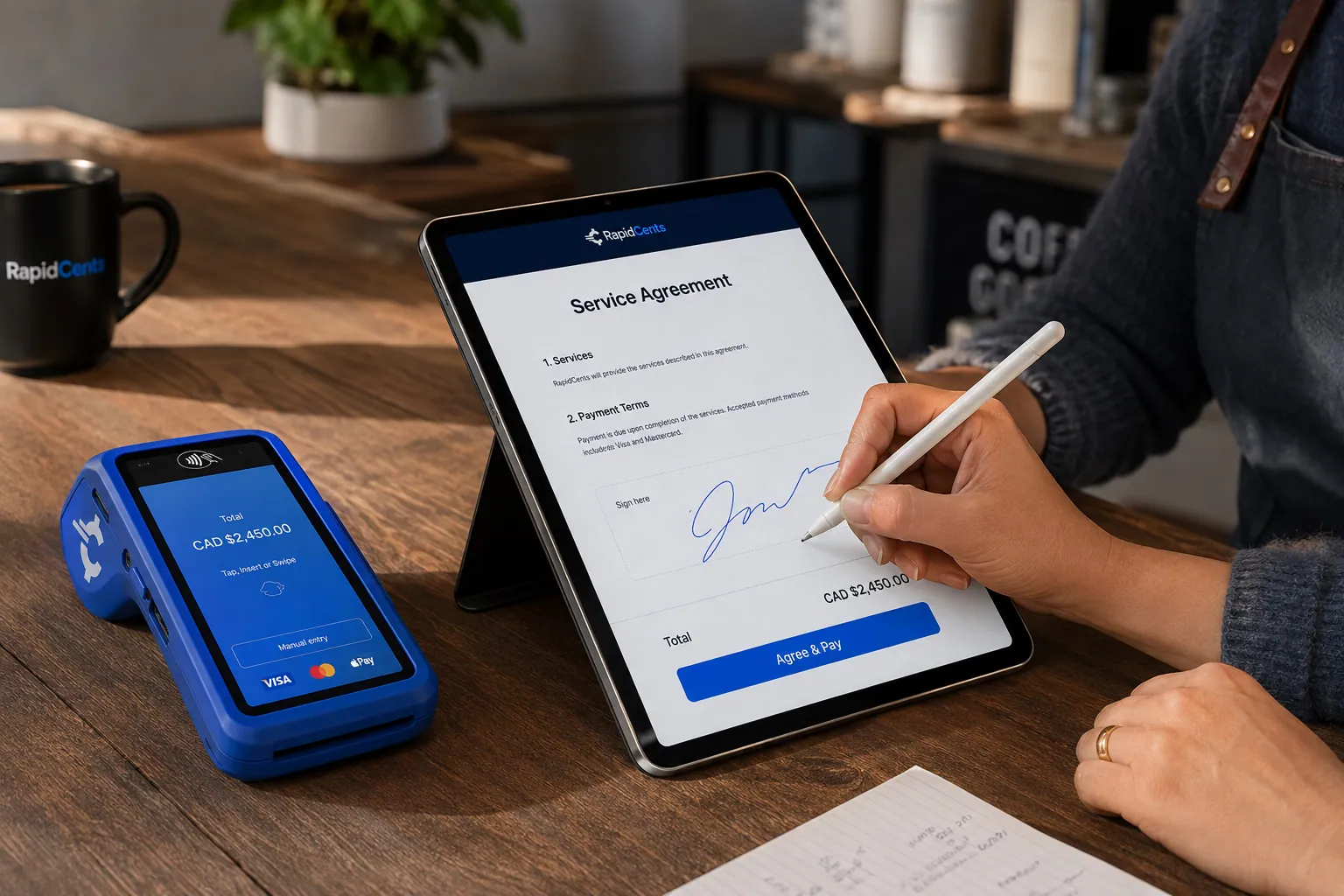
A merchant sends a RapidCents contract for e-signature with payment attached, terminal ready for an in-person counterpart. Contracts & eSignatures
Quotes, service agreements and enrolment forms usually end in a payment. Send the document, capture the…
Explore


How does repeat PPE replenishment run on stored cards?
Repeat replenishment runs on a stored card only when the buyer has authorized it, agreed the order trigger and amount limits, and knows how to cancel. Each charge is tied to a PO or release, and each receipt goes to the named contact so purchasing sees every replenishment order.
How it runs and what to set up first
Create a customer profile, send an authorization the buyer signs, and save the tokenized card in the Secure Card Vault. Record the trigger, such as a monthly release against a standing PO, the amount limit and the cancellation steps. Staff then charge the card from the Virtual Terminal or an invoice.
Expired cards, declines and changing quantities
Cards expire and purchasing contacts change. When a charge declines, contact the buyer for a new card or another method; do not retry blindly. If quantities rise above the agreed limit, get fresh sign-off first. Your RapidCents representative can tell you how card updates work on your account.
A $1,500 monthly release on a stored card
Say a fabrication plant reorders safety glasses and earplugs every month. The buyer signs an authorization for a stored card up to $1,500 per release PO. Each month you invoice the release, charge the card, and the receipt lists the PO for the plant's accounts payable.
What drives card processing costs for safety suppliers?
Card cost in safety equipment merchant services depends on who pays and how: debit, credit, premium or commercial cards, card present or keyed, and ticket size. We price every account on interchange-plus: interchange at cost, your RapidCents markup in your Fee Schedule, and fees for equipment or services, if applicable. Month to month, no fixed term.
Card mix and how the card is taken
Interchange is set by the card networks and varies with card type and entry method. A tapped or inserted card at your counter usually costs differently from a keyed phone order or an online invoice payment. Your own split of channels shapes your total more than any headline.
Commercial and purchasing cards
Construction and industrial buyers often pay with commercial or purchasing cards, which carry their own interchange. Your RapidCents representative will show you whether Level 2 and 3 data, such as PO and tax lines, can travel with those payments on your setup.
What to bring to compare
Bring recent processing statements, your card mix, average ticket, channel split, and refund and dispute volume. Upload a statement to Fee Check to see interchange separated from markup, then compare PPE distributor credit card processing quotes line by line on the same basis.
Which ERP and accounting software fits safety supplier payments?
B2B safety supply payments reach your books through an import file, a connection or a payment link, depending on your software. RapidCents integrates with many major platforms through APPIE and RapidBridge, and your RapidCents representative maps invoice, customer and PO references with you.
NetSuite and SAP Business One
SAP and NetSuite import settlement files, so settled transactions, fees and refunds land in your ledger as one import rather than a live feed. Your representative sets up which reference fields carry the PO and the site, so each line files against the right job.
Dynamics 365 Business Central, Acumatica and Epicor Prophet 21
RapidBridge works with Dynamics 365 Business Central and Acumatica, so a card payment posts inside the system you already use. For Epicor Prophet 21, the right option depends on your vendor and version; your RapidCents representative will walk you through it.
QuickBooks Online and Xero
RapidCents connects settled transactions, fees and refunds to QuickBooks Online and Xero. If your safety business runs on either, your representative shows you how invoice numbers and PO references appear on the entries, so the books match what customers paid.
Payment options for safety suppliers in the United States
A safety supplier in the United States collects from buyers who pay with business cards, debit at the counter and bank payments. The right mix depends on the payer and the size of the order, and your RapidCents representative sets up the rails that fit your business.
Credit and debit cards
Buyers at your counter can tap, insert or swipe Visa, Mastercard, American Express and Discover cards, and PIN debit is available where supported. Phone orders and invoice links take cards without the card present.
ACH and USD settlement
Larger site orders may suit ACH bank payments with the payer's written authorization. Settlement is in USD, and state sales tax rules may affect what appears on your invoices and receipts.
How do you move safety supply payments to RapidCents?
Once your account is approved, move safety supply payments in stages: inventory what you have, test the new flow, then switch accounts over while you reconcile to the ledger. Nothing about a move is instant, so plan the work around your busiest ordering weeks.
Inventory before you move
List stored cards and their written authorizations, standing replenishment schedules, open invoices, pending deposits and recent refunds. Export transaction and settlement history from your current provider. Moving stored cards needs both providers to agree, so start early and plan to re-authorize if not.
Test, then run in parallel
Run a test sale, a refund and a deposit request on the new setup before you move live traffic. Where it helps, keep the old processor for open items while new orders go to RapidCents, so no site order or deposit falls between the two.
Map references and reconcile
Map PO, site and invoice references to your operational software, then reconcile settlements to the ledger each period using the Reporting exports. Check that credit notes, refunds and fees appear against the right customer account.
Payment questions from safety and PPE suppliers
What is the best payment processor for safety and PPE suppliers?
The best processor is the one that fits how your accounts actually pay. Look for invoice payment links, phone-order acceptance, stored cards with authorization, PO and site references on receipts, credit adjustments, reporting finance can reconcile, and clear pricing. Bring your own statements, and we will build a written RapidCents quote on interchange-plus to set beside what you pay today.
How much does credit card processing cost for safety and PPE suppliers?
It depends on your card mix, ticket size and channels, so no single figure applies. We price every account on interchange-plus: interchange passes through at cost, your RapidCents markup is set out in your Fee Schedule, and fees for equipment or services apply if relevant. Month to month, no fixed term. Upload a statement to Fee Check to see interchange separated from markup.
Can NetSuite use a different payment processor?
Yes. NetSuite imports settlement files, so settled transactions, fees and refunds from RapidCents land in your ledger through an import rather than a live connector. Some ERP setups also use an API integration or a payment link outside the ERP. Your RapidCents representative will walk you through the option that fits your NetSuite edition and workflow.
How can safety suppliers switch processors without losing payment history?
Keep your history by exporting it before you move rather than expecting it to transfer. Download transaction and settlement reports from your current provider, list open invoices and every stored card authorization, and run test sales and refunds on the new setup first. Moving stored cards needs both providers to agree, so start early and plan to re-authorize if it cannot be done.
Which payment options can a safety supplier in the United States offer?
A safety supplier in the United States can typically accept Visa, Mastercard, American Express and Discover cards, PIN debit where supported, and ACH bank payments, with settlement in USD. ACH needs the payer's authorization. Your RapidCents representative will walk you through what is set up on your account before you quote customers.
Can a construction company pay PPE orders by job site?
Yes. Issue a separate invoice or payment link for each site order and put the site name, PO number and approving contact on it. The receipt repeats those references, so the construction company's accounts payable team can allocate each payment to the right job. If one payer covers several sites, list each site and PO on the payment. Your representative sets up the reference fields with you.
How are bulk uniform and PPE deposits collected?
Confirm the order first, then request the deposit. Put quantities, sizes, decoration, delivery date and deposit terms in a signed order form or invoice, then send a payment link for the deposit amount. The balance is a second request at delivery or pickup. Say in writing whether the deposit is refundable if the buyer changes sizes or cancels decorated goods.
Does a card authorization certify the safety product?
No. A card authorization only means the payer's bank accepted the amount. It does not verify that a helmet, glove or harness is certified, suitable for the hazard or right for the job. Product standards, labeling and fit stay with you, the manufacturer and the buyer's safety lead. Keep spec sheets and product lists with the order, separate from the payment record.
How do we handle a wrong size or a short shipment on a paid invoice?
Adjust the amount owed with a refund or a credit note, depending on whether the buyer wants money back or credit on the account. A refund returns funds to the original card, while a credit note reduces an open invoice. For a short shipment, invoice what shipped and request the remainder when the rest ships. Record the reason and PO on each adjustment.
How do we collect from head office when branches order separately?
Use one payer with several references. Head office can pay through a single payment link or terminal sale while the invoice lists each branch order, site and PO, so finance can split the receipt in the ledger. Get the head office buyer's authorization before charging a stored card for branch orders. A payment option does not change agreed net terms and is not financing.
Related supplier industries
Safety suppliers share PO references, deposits, credit adjustments and stored-card replenishment with other trade suppliers. Read B2B & Wholesale for the wider supplier workflow, then tool and hardware suppliers, industrial MRO suppliers and electrical supply wholesalers. Businesses collecting from their own customers have their own pages.
B2B & Wholesale
Collect net-terms invoices by payment link with the PO number attached, take commercial…
Tool & Hardware Suppliers
Take trade-counter sales, contractor account invoices, phone orders and tool returns…
Industrial MRO Suppliers
Get paid by the plants, mills and maintenance contractors you supply, from a breakdown…
Plumbing Supply Wholesalers
Collect counter sales, special-order fixture deposits and trade-account statements from…
Electrical Supply Wholesalers
Collect from electrical contractors and facility buyers at the will-call counter, by…
HVAC Supply Distributors
Collect furnace and condenser deposits, trade counter sales and contractor statement…
Dental Suppliers
From monthly consumables reorders to chair and imaging deposits, collect what clinics…
Veterinary Suppliers
Get invoices, standing orders and equipment deposits paid by the veterinary practices…
Take the next step
See how your processing costs break down
Upload a recent processing statement to Fee Check and see interchange separated from your markup, using your own mix of site orders, deposits and replenishment charges.
- No obligation
- Payment specialists, not a call centre
- Secure statement upload