In-vehicle payment terminals for taxi, limo and private hire fleets
Taxi & Transportation is for businesses in the USA. Fleet operator comparing in-vehicle payment collection and reporting without assuming meter integration or automatic driver payouts. The sections below separate the workflow, the control and its limit, and the account facts to confirm before you rely on them.

- PCI DSS Level 1
- SOC 2 Type II
- All major card brands: Visa · Mastercard · Amex · Discover · PIN debit
- Interchange-plus available
- Specialist onboarding support
Operational workflows
Fare metered and the trip closed in the vehicle
Card tapped in the back seat, tip added on screen
Corporate and account rides billed to the fleet
Driver-by-driver settlement reconciled at shift change
Payment challenges
Payment happens with the engine running
The card is presented at the curb with traffic behind, so the transaction has to end before the door does.
The money belongs to the driver
Fares and tips collected in the car have to be attributed to the right driver at the end of every shift.
Connectivity travels with the car
A trip can end in an underground garage or on a rural road, and the fare still has to be taken there.
Choose the right payment setup for Taxi & Transportation
Choose taxi payment terminal
For Taxi & Transportation, map the field and customer visits and the counter or service point before choosing a setup. Select channels that match those moments, then confirm that the chosen solution genuinely covers each channel.
Payment hardware for Taxi & Transportation
For Taxi & Transportation, prioritize a portable payment terminal when payment happens away from a fixed counter. If staff also collect at a desk, assess a separate countertop setup instead of forcing one device to cover two jobs.
Compare payment processing fees
For Taxi & Transportation, request a written fee breakdown covering device use in the field. Compare the effective cost across the real card and channel mix; do not choose on a headline rate alone.
Set up or switch Taxi & Transportation payments
To set up Taxi & Transportation payments, document testing the field workflow, confirm compatibility before purchase, then test a real payment flow before going live.
Recommended products
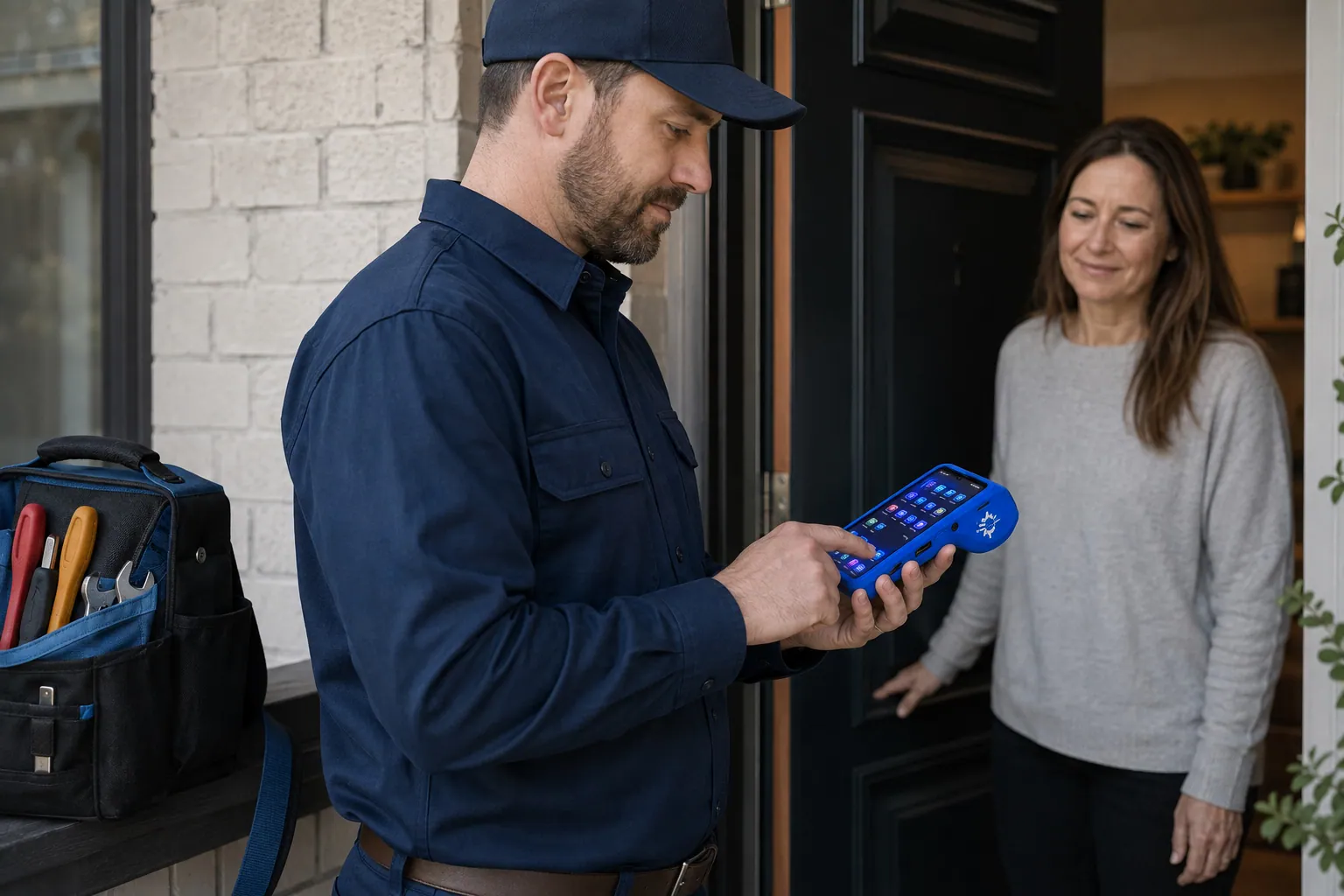
A staff member takes a card payment on a RapidCents handheld terminal, with the same sale appearing on the dashboard. Mobile Terminals
RapidCents mobile terminals are battery-powered wireless devices with LTE and Wi-Fi so staff accept payments…
Explore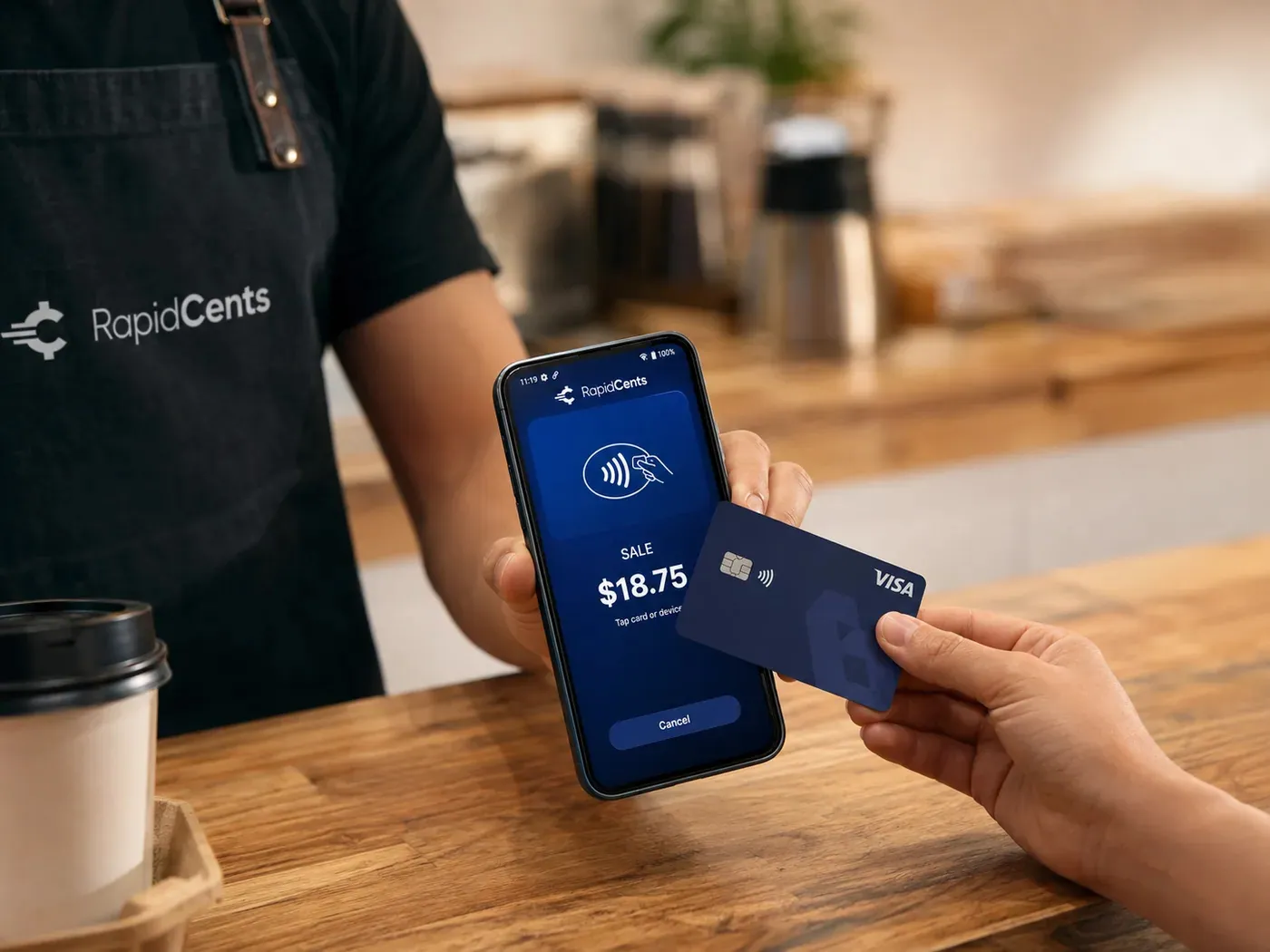
A café worker holds a phone running RapidCents Tap to Pay, showing an $18.75 sale and the contactless symbol, while a customer holds a Visa card to the screen. No separate card reader is present. Tap to Pay
RapidCents Tap to Pay turns supported iPhones and Android devices into contactless payment terminals without…
Explore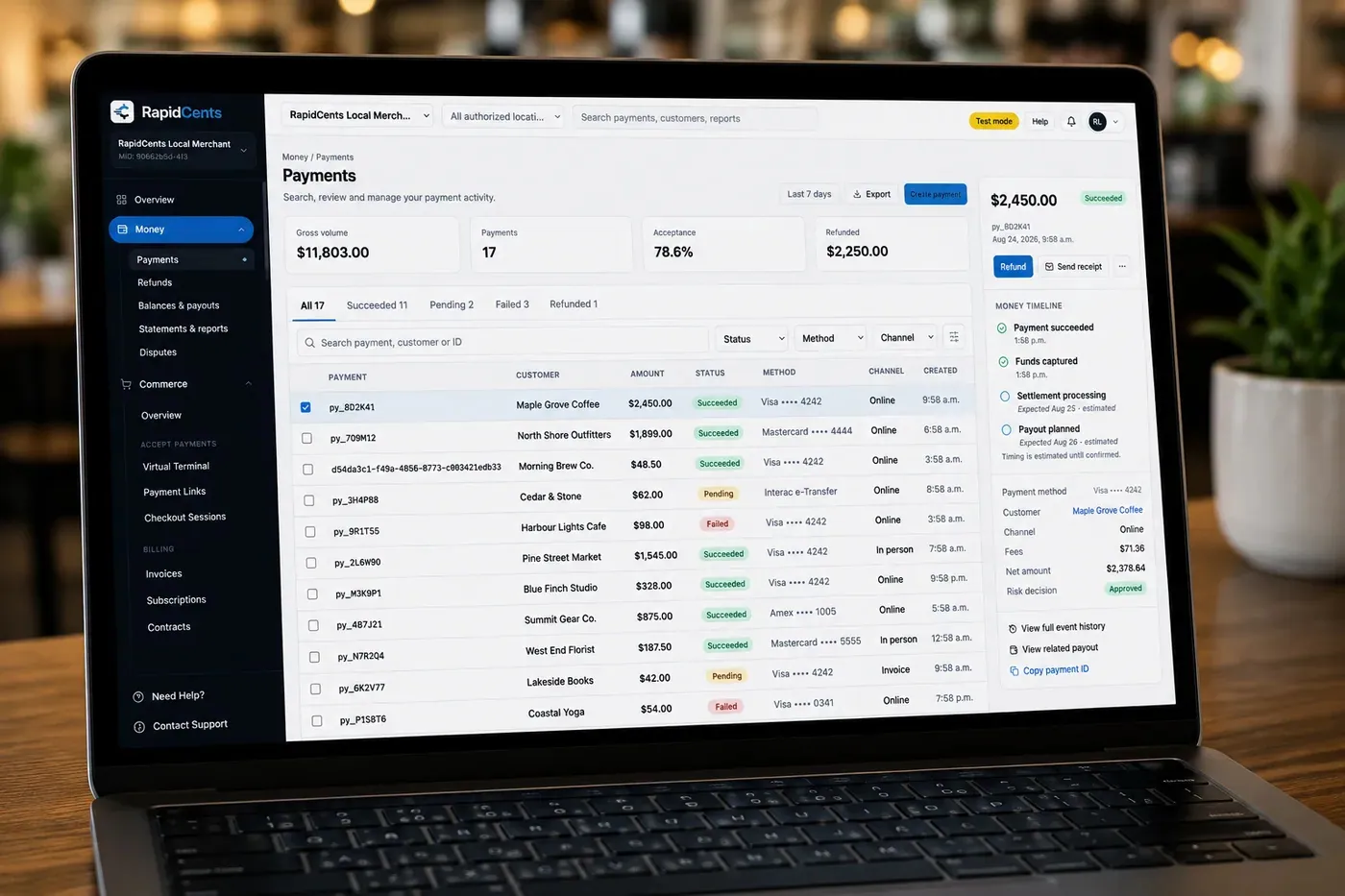
The RapidCents payments screen: gross volume, payment count, acceptance rate and refunds across the top, a filterable transaction list below, and a money timeline on the right tracing one payment from capture to planned payout. Merchant Dashboard
The RapidCents merchant dashboard gives owners, managers and finance staff a single signed-in view of live…
Explore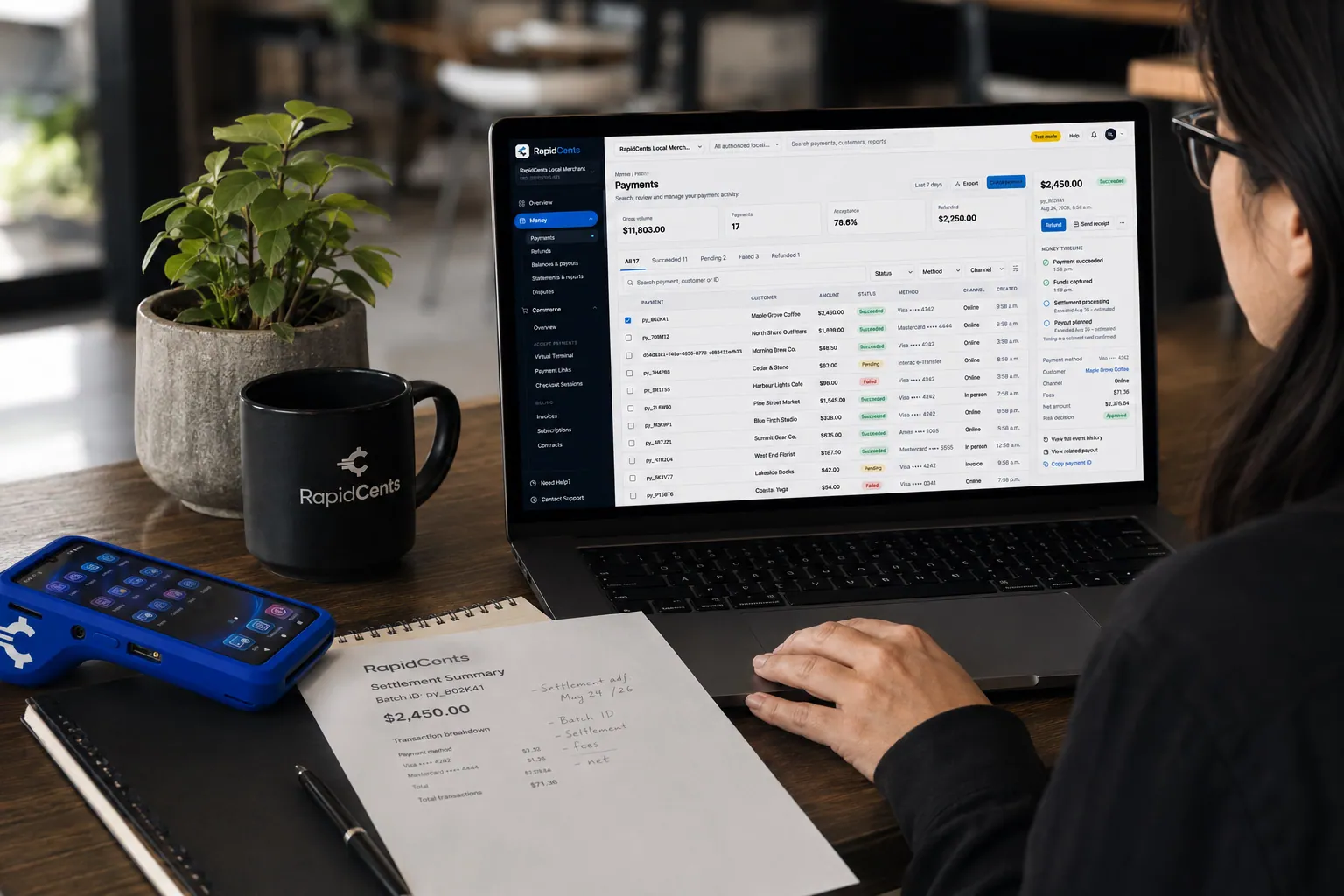
A merchant reviews RapidCents reports for volume, mix and payouts, with the terminal that took the sales on the desk. Reporting
RapidCents reporting delivers customizable transaction, settlement and fee reports with CSV and PDF export…
Explore


How this gets set up
A terminal fitted in the vehicle
Each cab gets a mobile terminal within reach of the back seat, because the fare is settled before the passenger's door opens.
Fare and tip on one screen
The passenger taps and adds the tip in the seconds the car is stopped, with no cash and no change to hand back.
Private hire on the driver's phone
A limo or contract job runs on Tap to Pay rather than a fitted device, because that vehicle is not always the same one.
Reconciled by shift, not by day
The operator reads takings per driver per shift, which is how a lease or commission settlement is actually calculated.
Integrations
Fleet dispatch exports
Fleet dispatch exports hand trip and payment records over as a file for the dispatch system's own reconciliation, not as a live feed.
iCabbi
iCabbi dispatches the job and prices the fare, and the in-vehicle payment closes that job so dispatch sees a completed, paid trip.
Autocab
Autocab handles booking and dispatch for private hire, and card payments attach to the booking so an account customer's trips reconcile.
Operations, security and going live
Driver-level reporting decides the payout
Every fare has to be attributable to the driver and shift that earned it, because that is what the operator settles against.
The tip belongs to the driver
Reporting separates the tip from the fare so the driver's share is not buried inside the fleet's card volume.
The device lives in a car all day
The card is read on the terminal in the vehicle, so nothing is keyed or noted by the driver and the number never stays in the cab.
Rolling out across a fleet
Vehicles are fitted in batches, with one car proving the setup on a live shift before the whole fleet is converted.
For businesses in the USA
A direct answer for a business in the USA: the workflow, the limit, and what to confirm next.
The payment workflow
Follow a US passenger from the confirmed fare to card payment, tip and receipt. Name the vehicle, driver and trip reference available in the tested payment configuration. Confirm eligibility, presentment currency, settlement currency and the enabled payment methods on the USA merchant account before quoting them. An illustrative amount is an example, not a fee or a funding promise. Taxi & Transportation does not, by itself, prove delivery or win a dispute.
The problem and the limit
In practice, uncertain transaction results, duplicate-charge review and device reassignment between shifts. Keep the fare calculation and driver compensation separate from payment authorization and merchant settlement. Confirm eligibility, presentment currency, settlement currency and the enabled payment methods on the USA merchant account before quoting them. An illustrative amount is an example, not a fee or a funding promise. Taxi & Transportation does not, by itself, prove delivery or win a dispute.
What to confirm
Use USD fares to show a fleet’s shift reconciliation and approved connectivity options. Verify meter or dispatch integration and account ownership before promising automated fare transfer or payments directly to drivers. Confirm eligibility, presentment currency, settlement currency and the enabled payment methods on the USA merchant account before quoting them. An illustrative amount is an example, not a fee or a funding promise. Taxi & Transportation does not, by itself, prove delivery or win a dispute.
Payment questions from Taxi & Transportation
What should businesses compare when choosing taxi payment terminal for Taxi & Transportation?
Compare taxi payment terminal against the real payment journey: the field and customer visits and the counter or service point. Start with the required channels and hardware, then confirm compatibility and support before committing.
What payment hardware is practical for Taxi & Transportation?
Because Taxi & Transportation also collects away from a fixed counter, test a portable terminal in real conditions. If staff also collect at a desk, validate the need for a separate countertop setup.
Which payment channels are relevant for Taxi & Transportation?
For Taxi & Transportation, start with the field and customer visits and the counter or service point. Keep only the channels that match those moments, then verify the complete customer flow before offering them.
How should payment processing fees be evaluated for Taxi & Transportation?
For Taxi & Transportation, compare costs related to device use in the field using actual transactions. Request a written breakdown of fees and terms rather than relying on an advertised rate alone.
What should be confirmed before setting up payments for Taxi & Transportation?
For Taxi & Transportation, document testing the field workflow, verify the needed compatibility, and test the flow before going live. This exposes manual steps and exceptions before customers encounter them.
Can the fare move automatically from the taxi meter to the terminal?
For a business in the USA, only a tested meter or dispatch connection can provide that handoff. Before you rely on this, confirm the exact system and version; otherwise staff must enter and check the amount through the approved workflow. This depends on the approved USA account setup and does not remove the merchant's own records or dispute duties.
How can a fleet match card payments to the correct driver and shift?
For a business in the USA, use the supported driver, vehicle or shift identifiers and reconcile them to the settlement report. Before you rely on this, confirm how reassigned devices retain attribution; payment reports do not automatically calculate driver compensation. This depends on the approved USA account setup and does not remove the merchant's own records or dispute duties.
What should a driver do if connectivity drops after the passenger taps?
For a business in the USA, check the trusted transaction status before requesting another payment. Follow the device-specific recovery instructions; cellular capability alone does not establish offline authorization or coverage at every location. This depends on the approved USA account setup and does not remove the merchant's own records or dispute duties.
Related industries
Parking
Parking operators accept pay-by-plate, monthly permits and event surcharges via…
Towing & Roadside
Tow operators capture release fees and roadside payments in the field with LTE mobile…
Automotive
Dealers and repair shops take service deposits, repair order payments and phone…
Car Wash
Car washes sell memberships, unlimited plans and single washes with fast lane terminals…
Car Dealerships
Dealerships take a card deposit to hold a vehicle, cap card payment on the purchase…
Limousine & Charter
Limo and charter operators quote a trip, take a card to secure the booking, and settle…
Courier & Delivery
Couriers bill business accounts on terms and retail senders at drop-off, with drivers…
Driving Schools
Driving schools sell course packages up front or on instalments then draw lessons down…
Take the next step
Talk to a RapidCents specialist
RapidCents Fee Check reads a processing statement and shows interchange separately from the markup. Upload a statement for an instant breakdown, or open a merchant account and start accepting payments on one account.
- No obligation
- Payment specialists, not a call centre
- Secure statement upload