


Payment processing for plastics suppliers and resin distributors
Payment processing for plastics suppliers means collecting card and bank payments against purchase orders, resin grades and scheduled releases. RapidCents gives you invoices with payment links, the Virtual Terminal for phone orders, stored cards with the buyer's authorization and bank payments. The jobs that define it are grade-specific deposits, call-off release invoices and out-of-spec return credits.

- PCI DSS Level 1
- SOC 2 Type II
- All major cards: Visa, Mastercard, Amex, Discover, UnionPay, Diners Club & Interac Debit
- Interchange-plus available
- Canadian support
How plastics, rubber and resin suppliers get paid
Plastics suppliers get paid through four jobs: grade-specific deposits, call-off release invoices, account balance payments and credits for out-of-spec returns. Each is tied to a PO and a reference, which keeps plastic material invoice payments traceable for your finance team.
Grade-specific deposits
A converter or fabricator accepts a quote for a resin grade or custom sheet, and you collect a deposit before you reserve material or schedule production. Send a payment link tied to the PO, record the accepted specification, and finance gets a receipt that names the order.
Call-off release invoices
A buyer holds a blanket PO and calls off material in releases. Each shipment gets its own invoice and release number, and you send a payment link or take the card by phone. Finance sees which release each payment cleared.
Account balance payments
A buyer on an open account pays an outstanding invoice, in full or in part, by card or bank payment. An authorized payer opens the invoice link, pays, and the status updates so your accounts receivable team sees what remains open.
Out-of-spec returns and credits
A buyer rejects a lot that misses the agreed specification. You agree the return first, then issue a credit note or a refund to the original payment, and finance reconciles it against the original invoice and the payment that cleared it.
How do plastics suppliers collect deposits for a resin grade or custom order?
Plastics suppliers collect a resin deposit by sending the buyer a payment link or invoice that carries the accepted grade, specification and purchase order number. The deposit then sits against that order reference, so a later balance invoice, release or credit can be matched back to the same agreement.
Run the deposit from the accepted quote
Confirm the grade, finish, packaging and quantity on the quote, then issue a Payment Link or Invoicing request with the PO number in the reference field. The authorized buyer pays and receives a receipt, and your team releases the order for scheduling.
Set up references and authorization first
Agree who may pay, which PO the deposit belongs to and whether the deposit is refundable if the specification changes. Keep the accepted specification sheet with the payment reference. Store a card in the Secure Card Vault only with the buyer's authorization.
A $3,000 deposit on a custom sheet order
Say a fabricator orders custom-cut sheet in a set thickness and you request a $3,000 deposit on the PO. A payment link carries the PO and quote number. If the buyer amends the thickness, you issue a revised quote and adjust the deposit before production.
Can call-off deliveries be billed and paid release by release?
Yes. Give each call-off release its own invoice and release identifier, then collect payment against that invoice instead of the whole blanket PO. Partial shipments, returns and payments stay traceable, and your finance lead can reconcile payment records against stock records release by release.
Run each release as its own invoice
When the buyer calls off a quantity under the blanket PO, issue an invoice with the PO number, release number and lot reference. Send a Payment Link, or take the card in the Virtual Terminal for phone orders. Each payment then clears one release.
Handle short shipments and partial payments
If a release ships short, invoice what shipped. A buyer may pay part of an invoice, and the open balance stays visible until cleared. Never split one charge to avoid a card limit. Use documented partial payments, or a bank payment for a large balance.
A blanket PO for molding resin, paid release by release
Say a molder holds a blanket PO for resin delivered in four releases. Release two ships, and its invoice carries release number two. The buyer's payables team pays the link, and your finance lead matches the receipt to that release in the stock and ledger records.
RapidCents products for plastics suppliers
RapidCents gives rubber supplier merchant services what invoice-and-reference work needs: Invoicing and Payment Links for deposits and releases, Bank Payments for large balances, and the Secure Card Vault for repeat orders with the buyer's authorization.
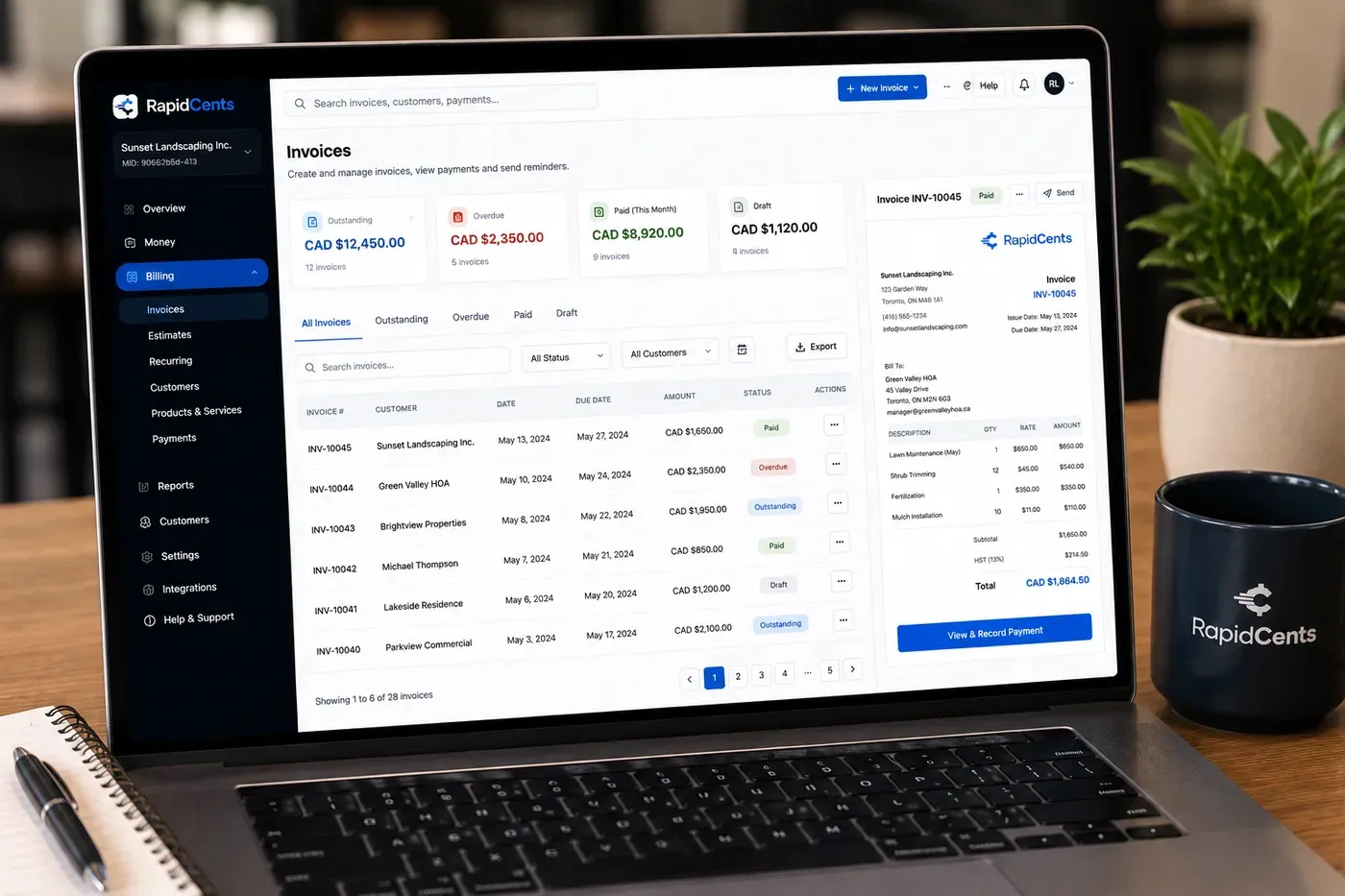
The RapidCents invoices screen: outstanding, overdue, paid and draft totals across the top, the invoice list below them, and a preview of one invoice on the right with its line items and a View & Record Payment button. Invoicing
RapidCents invoicing helps professional services, contractors and B2B suppliers create branded invoices…
Explore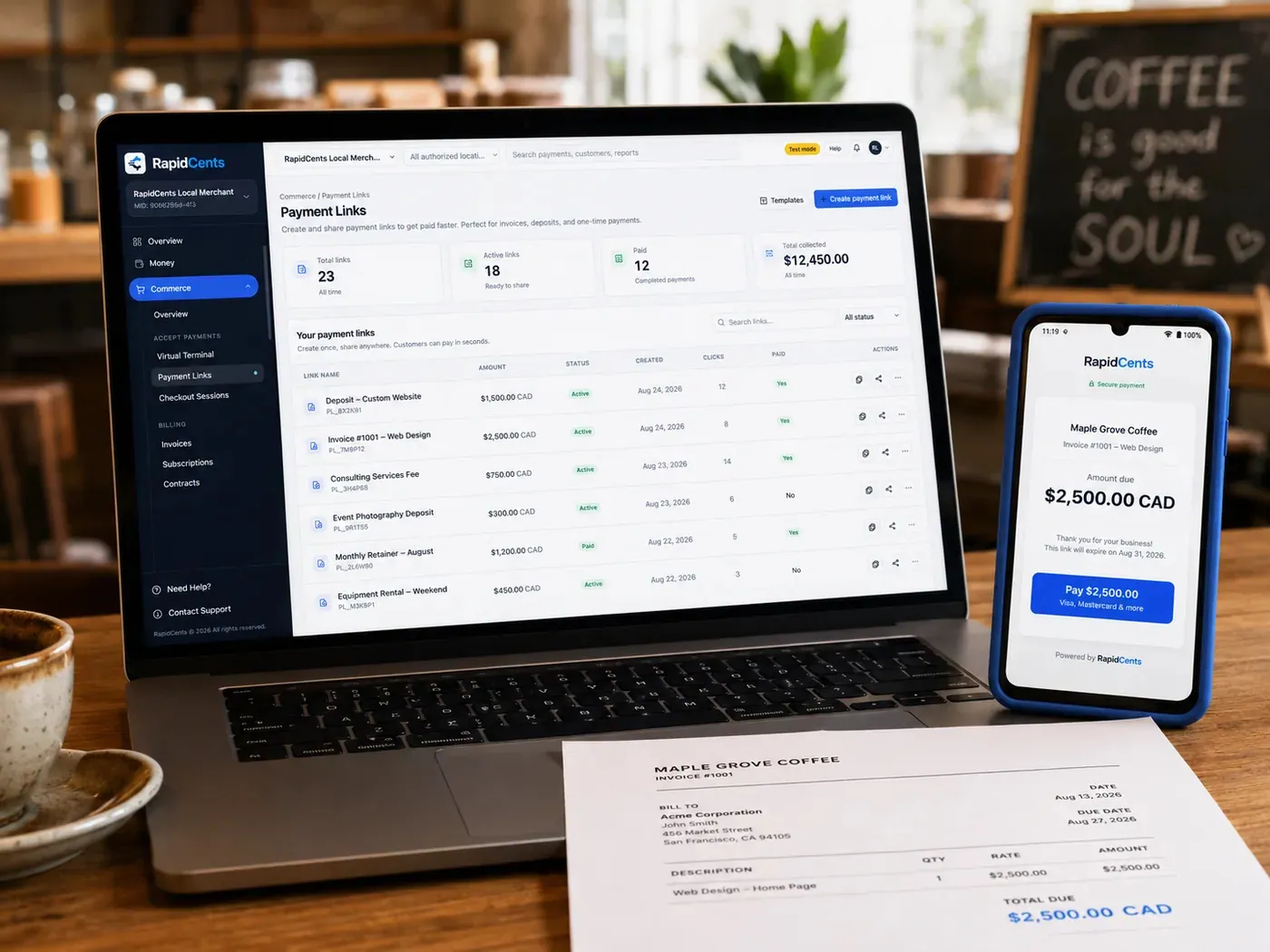
The RapidCents payment links screen listing created links with their amount, status, click count and whether they have been paid, beside a phone showing the branded page a customer opens to pay $2,500.00. Payment Links
RapidCents payment links let staff generate branded pay-by-link URLs for invoices, deposits, balances and…
Explore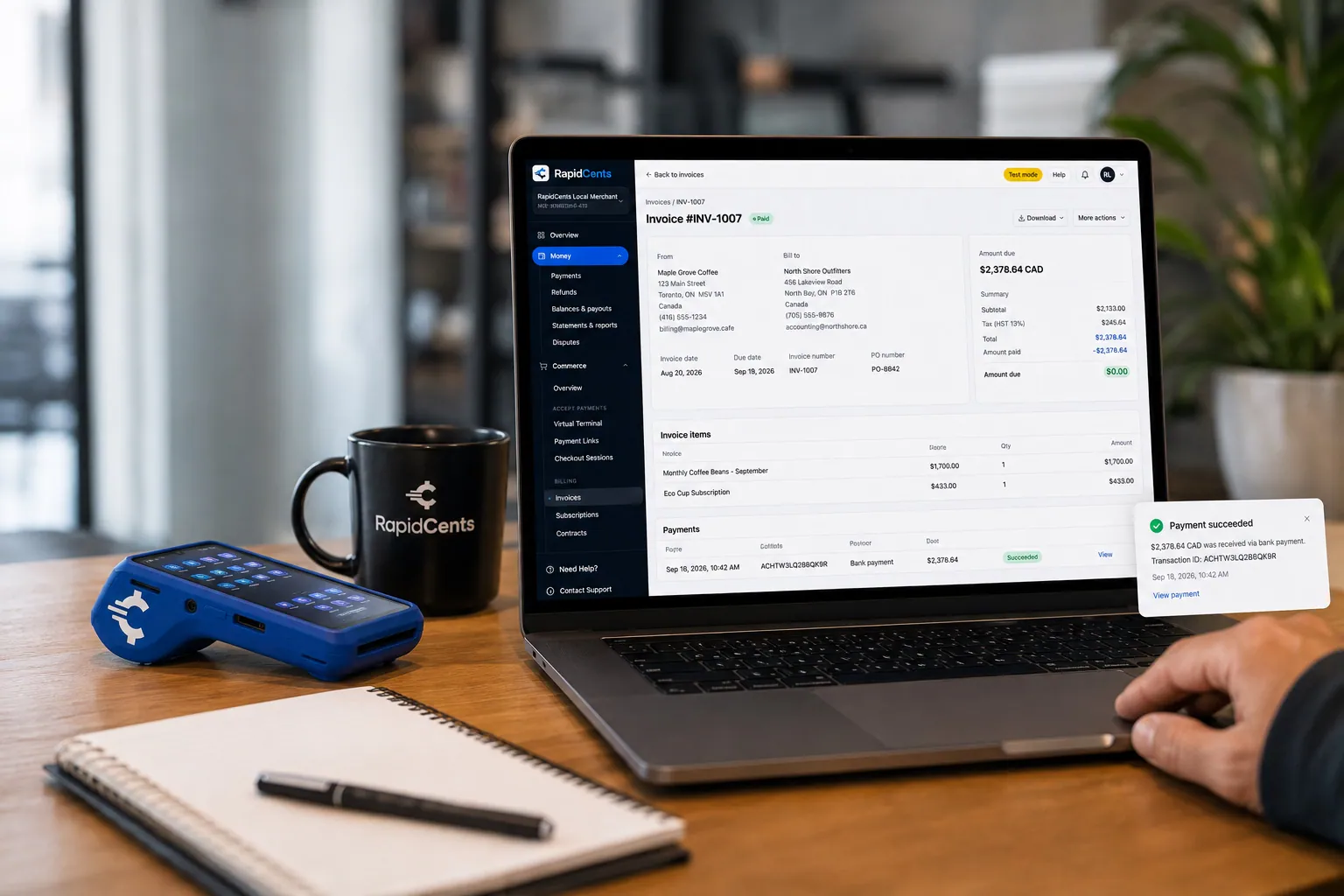
A merchant invoices a customer for bank debit through RapidCents, with card terminal capture available on the same desk. ACH / Bank Payments
Bank payments suit recurring and high-value invoices where card fees are the wrong tool. Collect directly…
Explore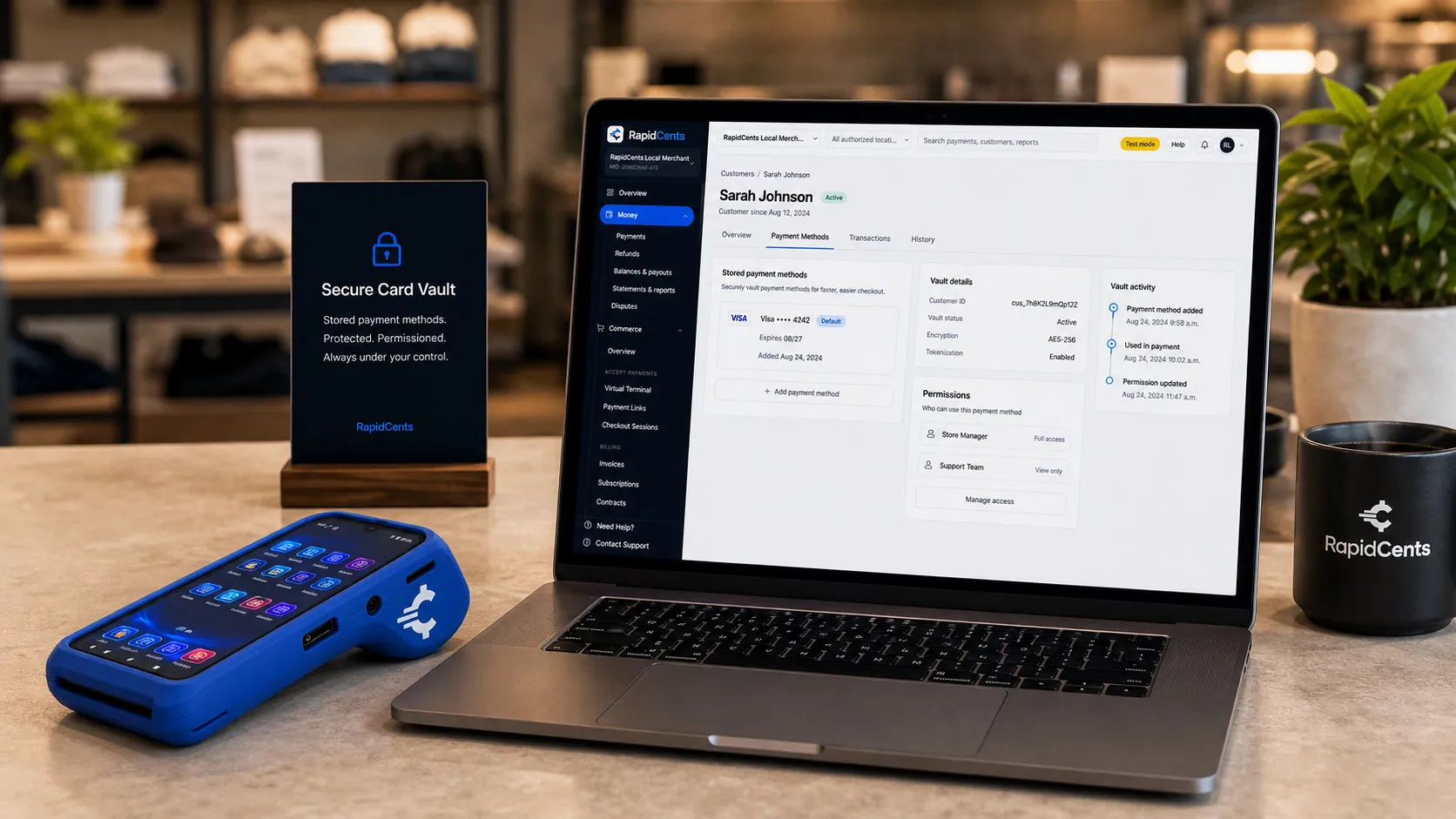
Card credentials sit in the RapidCents vault rather than in merchant software, with a terminal on the desk for new captures. Secure Card Vault
The vault stores tokenized payment methods against a customer record so staff can charge a returning…
Explore


How should an out-of-spec return be refunded or credited?
Handle an out-of-spec return by agreeing the return and the remedy first, then issuing either a credit note against the open invoice or a refund to the original payment, and reconciling it to the first invoice. A refund moves money back; a credit note changes what the buyer owes.
Agree the return before moving money
Record the lot number, the reason it missed specification and the remedy: replacement, credit note or refund. Keep the buyer's written sign-off with the original PO. Only then should staff issue a Virtual Terminal refund or adjust the invoice.
Match refunds to the original payment
A refund goes back to the card or bank account that paid, and a partial refund is possible where only part of the lot was rejected. Where the buyer still owes other invoices, a credit note applied to those may be cleaner. Your RapidCents representative can show you which fits your setup.
A rejected pallet of rubber compound
Say a buyer rejects one pallet of rubber compound after incoming inspection. You agree a partial credit, apply a credit note to the open release invoice, and refund the paid part to the original card. Finance links both entries to the first invoice.
How do plastics suppliers compare card processing costs?
Compare resin distributor credit card processing using your real order mix. RapidCents prices on interchange-plus: interchange passes through at cost, plus your RapidCents markup shown in your Fee Schedule, and fees for equipment or services, if applicable. It is month to month, with no fixed term.
What drives cost for resin and rubber orders
Interchange varies with card type, such as debit, credit, premium or commercial, and with how the card is taken. Large B2B invoices paid by commercial or purchasing cards behave differently from small counter sales. Enhanced commercial-card data can help where it applies to your setup.
What to bring to a comparison
Gather recent processing statements, your card mix, average invoice size, the split between invoice links, phone orders and counter sales, and your refund and dispute volume. These show which costs come from the cards and which come from markup.
Use Fee Check on a real statement
Upload a statement to Fee Check to see interchange separated from markup. Compare that with the markup in your Fee Schedule and any equipment or service fees. Bank payments may suit large recurring invoices, so compare them with card costs on your own numbers.
How do payments reach your ERP and accounting software?
RapidCents integrates with many major business platforms through APPIE and RapidBridge. Settled transactions, fees and refunds connect to QuickBooks Online and Xero, SAP and NetSuite import settlement files, and your RapidCents representative walks you through the option that fits your software.
NetSuite
NetSuite often holds the customer, invoice and PO records for a distributor. RapidBridge works with Oracle NetSuite, and settlement import templates post settled transactions, fees and refunds from a file. Your RapidCents representative will walk you through the fields that carry the PO and release number and who runs the import.
SAP Business One
SAP Business One may hold your sales orders, invoices and customer accounts. RapidBridge works with SAP Business One Web Client, and settlement import templates cover the rest. Your RapidCents representative will show you how the payment reference and release number map to each open invoice.
Dynamics 365 Business Central
Business Central may hold sales orders and invoices for your accounts. RapidBridge works with Dynamics 365 Business Central, so a card payment posts against the invoice you already have open. Your RapidCents representative will walk you through the setup for your edition and country.
Acumatica
Acumatica may manage orders, invoices and customer balances. RapidBridge works with Acumatica, so payments land against the invoice your team already has open. Tell your RapidCents representative which edition you run and which fields carry the PO number, and they will set it up with you.
Epicor Prophet 21
Distribution teams on Prophet 21 often manage blanket orders and releases. RapidCents integrates with many major platforms through APPIE and RapidBridge, and the right option depends on your edition and version. Your RapidCents representative will walk you through it.
Payment options for plastics suppliers in Canada
A plastics supplier in Canada can usually combine card payments, Interac debit and bank payments through EFT or pre-authorized debit (PAD), settled in CAD. Your RapidCents representative sets up the methods that fit your merchant account. Invoices may show GST/HST where it applies to the sale.
Cards and Interac debit
Buyers can pay by Visa, Mastercard or American Express, and by Interac debit with chip and PIN or contactless at the terminal. Counter pickups of small material orders suit the terminal, while larger invoices usually go out as a payment link.
EFT and pre-authorized debit
For large or repeat resin invoices, EFT or PAD bank payments can sit alongside cards, with the buyer's authorization for each debit arrangement. Your RapidCents representative will walk you through limits, and you keep the invoice reference on every bank payment.
What does it take to set up and reconcile a new payment flow?
Once your account is approved, move in stages: list stored cards, open invoices, blanket POs and pending credits, test a sale, a refund and a deposit on the new setup, and reconcile deposits to your ledger. Run the old and new flows in parallel where needed.
Inventory what is open
List stored card authorizations, deposits held against POs, open invoices, blanket orders with releases remaining and credits pending. Token portability between processors is never assumed, because both providers must agree, so plan to collect fresh authorizations if needed.
Test before moving live orders
Run a test deposit, a release invoice payment and a refund through the new flow. Check that the PO number and release reference reach your records. Keep the old processor active for open items until the new flow behaves as your team expects.
Reconcile deposits to the ledger
Map payment references to invoices, match settled batches to bank deposits, and check that fees and refunds post where your finance lead expects. Reporting exports can feed accounting import formats. Review the first deposits closely before you retire the old setup.
Payment questions from plastics, rubber and resin suppliers
What is the best payment processor for plastics suppliers?
The best fit is the one that matches how you invoice. RapidCents carries PO and release references on each payment and supports invoice payment links, phone-order entry in the Virtual Terminal, stored cards with the buyer's authorization, bank payments for large balances and refunds tied to the original payment. Pricing is interchange-plus, month to month, and settlement reports feed your accounting records. Compare any written quote on those same points.
How much does credit card processing cost for plastics suppliers?
It depends on your card mix, invoice size and channels, so no single figure applies. Pricing is interchange-plus, meaning interchange at cost, your RapidCents markup as set out in your Fee Schedule, and equipment or service fees if applicable. It is month to month with no fixed term. Fee Check reads a statement and separates interchange from markup.
Can NetSuite use a different payment processor?
Often yes. A payment link can sit outside NetSuite, RapidBridge works with Oracle NetSuite, and settlement import templates carry settled transactions, fees and refunds. Tell your RapidCents representative which NetSuite edition you run and whether it requires a gateway, and they will show you how the PO number and release reference reach each invoice.
How can plastics suppliers switch processors without losing payment history?
Export your payment history first, then list stored cards, open invoices, held deposits and blanket orders. Token portability between processors is never assumed, because both providers must agree, so you may need fresh buyer authorizations. Test a sale, a refund and a deposit, run both setups in parallel where needed, and reconcile the first deposits to your ledger.
Which payment options can a plastics supplier in Canada offer?
A plastics supplier in Canada can typically offer Visa, Mastercard and American Express cards, Interac debit at the terminal, payment links for invoices and EFT or PAD bank payments, with settlement in CAD. Your RapidCents representative sets up the mix that fits your account. Keep PO and release references on every payment so finance can reconcile.
How are deposits tied to a resin grade or custom material order?
Keep the accepted specification and the PO with the payment reference. Issue the deposit request as a Payment Link or invoice that carries the grade, quote number and PO number, so the receipt names the order. If the specification changes, issue a revised quote and adjust the deposit, with the buyer's written agreement kept on file.
Can call-off deliveries be billed separately?
Yes. Use a separate invoice for each release, with a release identifier and the blanket PO number, and collect payment against that invoice. Your finance lead can then reconcile payment records and stock records release by release. Partial payments are fine when documented, but never split a single charge to avoid a card limit.
How should an out-of-spec return be handled?
Agree the return and the remedy first, then reconcile it to the original payment and invoice. Record the lot number and reason, get the buyer's written sign-off, and choose a replacement, a credit note or a refund. A refund goes back to the original payment method, while a credit note reduces what the buyer owes. Your RapidCents representative can show you which fits your setup.
How can we keep a purchase order number with each payment?
Put the PO number and release reference in the invoice or payment link reference field before you send it. The receipt and the settlement reports then carry that reference, so finance can match each payment to the right order. Your RapidCents representative will show you how those reference fields reach your accounting or ERP records.
How can we accept a commercial card on a large resin invoice?
Send the invoice as a Payment Link, or enter the card in the Virtual Terminal for a phone order, with the buyer's authorization. Large invoices may suit a bank payment instead, so compare the costs. Enhanced commercial-card data is useful where it applies to your setup, and it does not change the agreed terms.
Related supplier pages
RapidCents also supports steel and metal suppliers and chemical suppliers, who share the same order-to-payment sequence of deposits, staged deliveries and credits. B2B and wholesale distributors in general, and manufacturers collecting from their own customers, have their own industry guides.
B2B & Wholesale
Collect net-terms invoices by payment link with the PO number attached, take commercial…
Steel & Metal Suppliers
Take deposits on cut-to-size orders, collect delivery balances once the final weight and…
Industrial Chemical Suppliers
Collect plant-account invoices, deposits on drum, tote and bulk orders and returnable…
Dental Suppliers
From monthly consumables reorders to chair and imaging deposits, collect what clinics…
Veterinary Suppliers
Get invoices, standing orders and equipment deposits paid by the veterinary practices…
Medical & Surgical Suppliers
RapidCents helps medical and surgical suppliers collect hospital, clinic and practice…
Laboratory & Scientific Suppliers
Collect on lab purchase orders, instrument deposits and staged deliveries, with the PO…
Pharmaceutical Wholesalers
Collect pharmacy account invoices, balances and deposits with payment links, invoicing…
Take the next step
Review my resin supplier invoice workflow
Upload a recent processing statement to Fee Check and see interchange separated from your RapidCents markup, then compare it with your deposit, release and credit workflow.
- No obligation
- Canadian payment specialists
- Secure statement upload



