DEVELOPER PLATFORM
Tokenization API
The Tokenization API lets systems create, reuse and retire payment tokens programmatically, so a card on file is a reference you hold rather than a card number you store. The card is entered on a RapidCents-hosted surface — embedded fields, hosted checkout, a terminal or the virtual terminal — and what comes back is a token mapped to that credential in the vault. The token is useless elsewhere: it is not a card number in disguise and cannot be replayed against another processor.
- Sandbox with documented test cards
- Signed webhooks
- Typed errors and idempotent retries
- Dedicated developer support

What crosses the wire
Where it sits
Between card entry and every later charge. The token is created once, from a hosted surface, and after that your systems reference it instead of a card: for a repeat purchase, a subscription, a deposit and balance, or a charge taken in a different channel.
What you send
For creation, nothing sensitive — the hosted surface supplies the credential and your server receives the reference. For reuse and lifecycle operations, the token itself plus the customer record it belongs to. The reference documents the exact fields.
What comes back
A token reference and enough non-sensitive detail to show a customer which card they are using: brand and last four digits, not the number. Anything that would let you reconstruct the credential is deliberately absent.
When to use it
Anything charged more than once
Subscriptions, instalments, memberships, deposits followed by a balance: each one needs a credential that survives the first transaction without your systems holding a card.
One-click and returning customers
A stored token turns a repeat purchase into a confirmation rather than a card entry, and it works whether the customer returns online or calls in.
Keeping PCI scope narrow
Storing tokens instead of card numbers keeps raw credentials out of your environment, which narrows what has to be assessed rather than adding controls around holding them.
How to implement Tokenization API
Capture the card on a RapidCents-hosted surface and receive the token server-side.
Store the token against your customer record, with the brand and last four for display only.
Charge the token through the payments API rather than re-collecting the card.
Enrol tokens you bill repeatedly in Account Updater so a reissue does not break the schedule.
Retire the token when the customer removes the method or the relationship ends.
What fails, and how you find out
Storing anything beside the token
Keeping the card number as well, even briefly, even encrypted, puts the credential back in your environment and undoes the reason for tokenizing at all.
A token nobody can attribute
A token stored without the customer record it belongs to becomes unusable the moment someone asks which card is on file. Write both in the same transaction.
Tokens that are never retired
A customer who deletes a card expects it gone. A vault that only ever grows is a compliance problem and a support problem, and the deletion path is the one integrations most often skip building.
Assuming a token outlives a reissue on its own
The token reference survives, but the credential behind it has to be refreshed. Without Account Updater enrolment, a reissued card fails on the next charge with a decline nobody caused.
Sandbox versus production
Tokens do not cross environments
A token created in sandbox has no production counterpart and cannot be charged with production keys. Every stored credential has to be created again in the environment it will be billed in.
Lifecycle operations are safe to rehearse
Creating, replacing and deleting tokens in sandbox is the practical way to prove your deletion path works, which is difficult to test convincingly against real customer records.
Updater behaviour is simulated
Sandbox can show a refreshed credential flowing through to a stored token, but real coverage depends on the network and issuer participating. Build the handling in sandbox; expect variation in production.
Questions about Tokenization API
How is a token different from an encrypted card number?
An encrypted card number is still a card number, and whoever holds the key holds the credential. A token carries no card data at all — it is a reference only RapidCents can resolve, and it is worthless to anyone who copies it.
Can I charge the same token online and in person?
Yes. A token created at any RapidCents-hosted surface can be charged across channels on the same account, so a card taken over the phone can be reused for an in-store purchase without asking for it again.
What happens to a token when the card expires?
The reference stays valid and the credential behind it is what needs refreshing. Account Updater applies reissues and expiry changes to the stored token, so the schedule keeps running without contacting the customer.
Does using tokens satisfy my PCI obligations?
It narrows them, which is not the same as removing them. Card data never entering your systems is the change that moves most integrations to a much smaller assessment; what remains in scope depends on your business and your assessor confirms it.
Can I move my tokens to another provider?
Tokens are meaningful only inside the vault that issued them, which is true of every tokenization service. Credential portability is a contractual and network question rather than an API one, so raise it as part of a provider decision rather than after one.
Do I need the Tokenization API if I only take one-off payments?
Not for the payment itself. It earns its place the moment a second charge is possible — a repeat order, a refund of a partial shipment, a deposit and balance — because the alternative is asking for the card again.
What has to happen when a customer deletes their saved card?
The token has to be retired, not just hidden in your interface. A customer who removes a card expects it gone, and a vault that only ever grows becomes both a compliance problem and a support problem. The deletion path is the part integrations most often leave unbuilt, and it is worth rehearsing in sandbox.
Do tokens created in sandbox work in production?
No. Tokens do not cross environments, so a sandbox token has no production counterpart and cannot be charged with production keys. Every stored credential has to be created again in the environment it will be billed in, which makes sandbox the right place to prove the lifecycle rather than to build a real vault.
Continue the integration
The RapidCents account-updater API applying refreshed card credentials so a stored token survives a reissue. Account Updater API
Query and apply refreshed card credentials so stored tokens keep working through a reissue.
ExploreA RapidCents subscription charge created over the API, using the same billing engine as the dashboard. Recurring Payments API
Build subscriptions, installments and retry logic against the same billing engine used by the…
Explore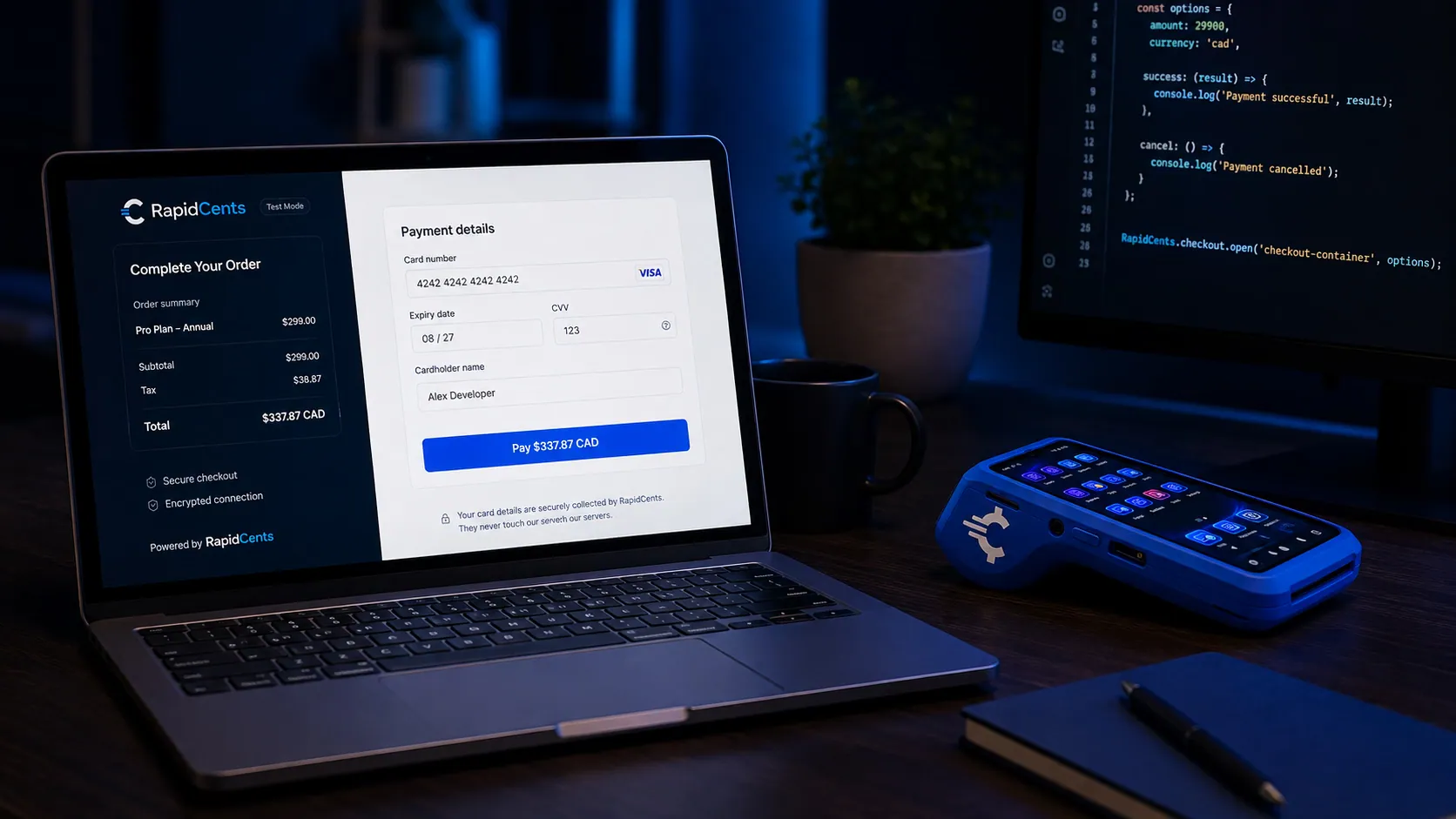
Rapid.js hosted card fields on a developer workstation, keeping card entry out of the merchant's PCI scope. Rapid.js
Embedded payment components for the web that keep card entry inside RapidCents-hosted fields…
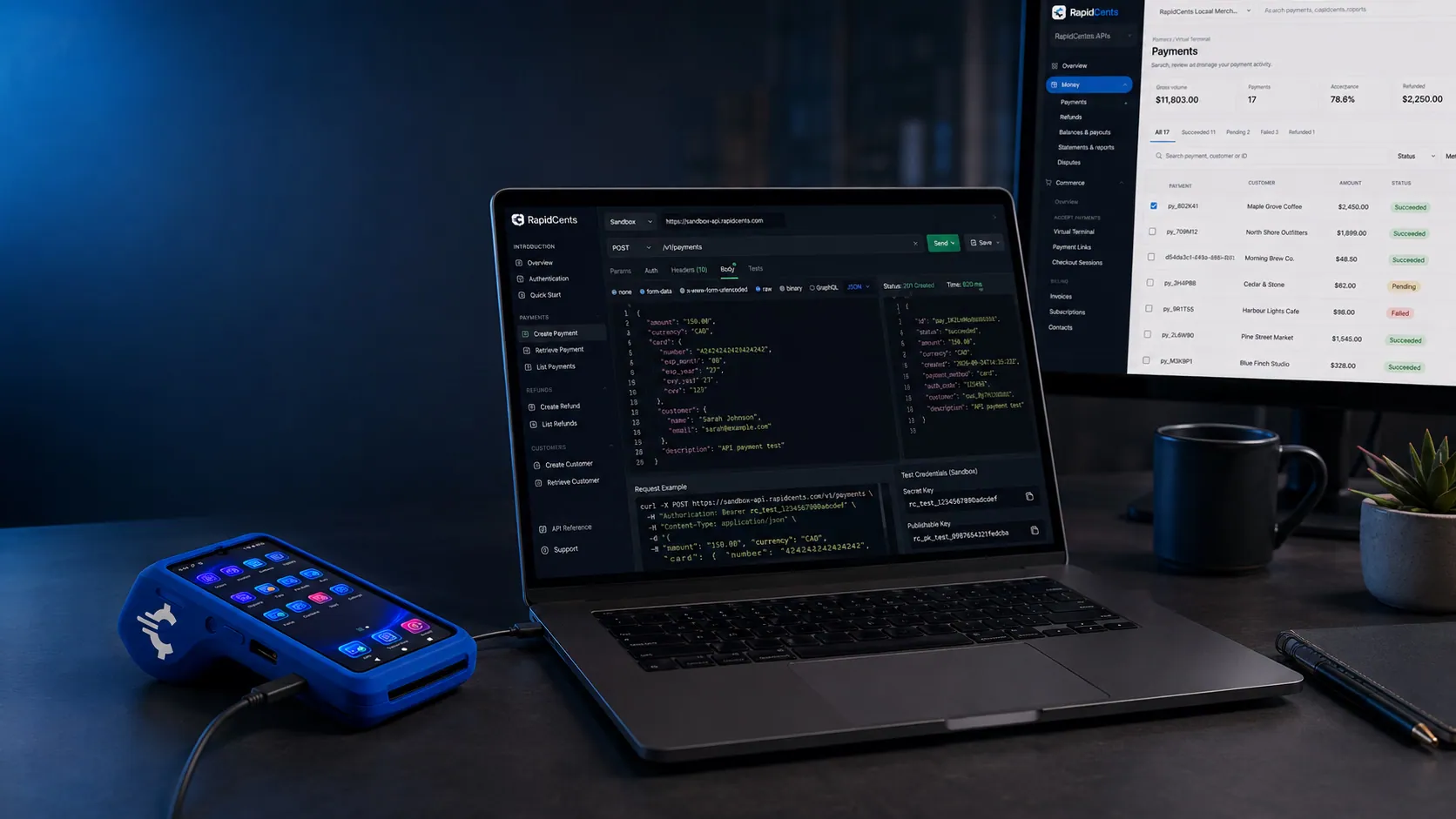
ExploreA RapidCents API request and its response on a developer workstation, with the merchant dashboard and a test terminal. RapidCents APIs
REST APIs for payments, refunds, customers, tokens and settlement, with predictable errors and…
Explore

Take the next step
Talk to a RapidCents specialist
RapidCents Fee Check reads a processing statement and shows interchange separately from the markup. Upload a statement for an instant breakdown, or open a merchant account and start accepting payments on one account.
- No obligation
- Payment specialists, not a call centre
- Secure statement upload