Cards without card data
Replace stored card numbers with tokens your systems can safely hold
Tokenization exchanges a card number for a token: a reference that only RapidCents can map back to the credential and that is useless anywhere else. Software stores the token against a customer record, so repeat billing and one-click checkout keep working while raw card data stays out of the merchant's environment, narrowing what a PCI assessment must cover. A token created at checkout, a terminal or the virtual terminal can be charged online, in person or through the API.
- Raw card data never stored
- Reusable for repeat billing
- Reduces PCI scope

- PCI DSS Level 1
- SOC 2 Type II
- Specialist support
- Interchange-plus available
- All major card brands: Visa, Mastercard, Amex, Discover, PIN debit
Who it's for
Subscription businesses
Charge the same customer repeatedly without storing cards.
Software platforms
Keep customer payment methods without holding card data.
Multi-channel merchants
Reuse a saved method online and in person.
Core capabilities
Token creation
Exchange a card entered at checkout, terminal or virtual terminal for a token.
Reuse across channels
Charge the same token online, in person or through the API.
Scope reduction
Your systems store the token, not the card number.
Lifecycle management
Update, replace or delete tokens as customer records change.
Works with recurring billing
Subscriptions and installments charge against the stored token.
How it works
The customer enters a card on a RapidCents-hosted surface.
RapidCents returns a token that maps to that credential.
Your system stores the token against the customer record.
Future charges reference the token instead of the card.
Tokens are updated or removed as the record changes.
Dashboard and reporting
Transactions, deposits and exceptions visible in the RapidCents merchant dashboard.
Try it, edit values and click buttons
Merchant dashboard
- Today
- $4,218
- Deposits
- $12,482
- Disputes
- 2 open
- In-person
- $842
- Online
- $1,104
- Virtual terminal
- $392
Demonstration data only
Integrations
Merchant dashboard
Every transaction, deposit and exception lands in one dashboard.
APIs and webhooks
Connect the product to your own software with REST APIs and signed webhooks.
Partner connectors
Certified connectors for common POS, ERP and commerce platforms.
Works with Payment Tokenization
Capabilities on the same account, so the parts below connect without a second integration or a second contract.
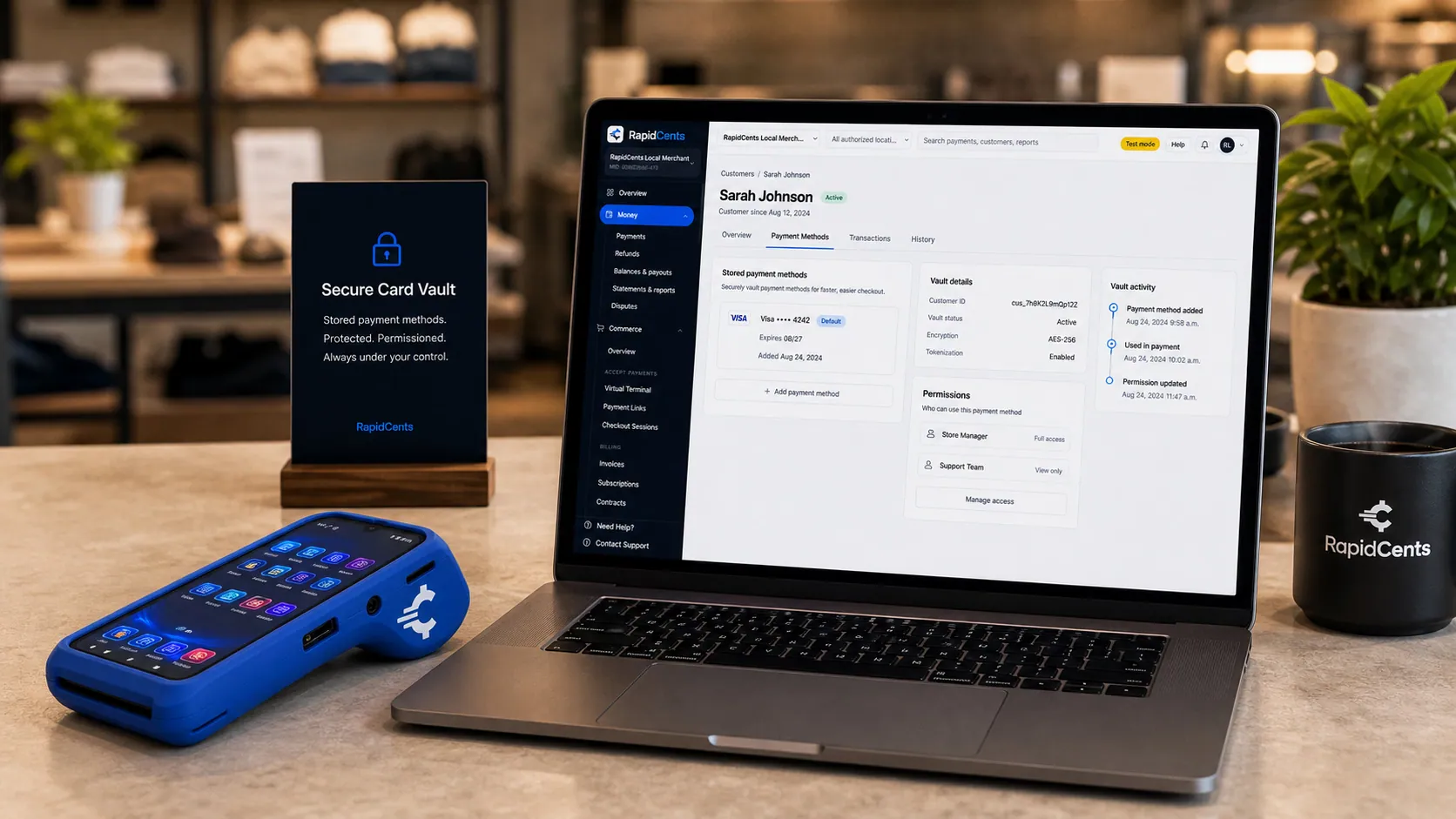
Card credentials sit in the RapidCents vault rather than in merchant software, with a terminal on the desk for new captures. Secure card vault
The PCI-scoped store the tokens point at, so card-on-file stays out of your scope.
Explore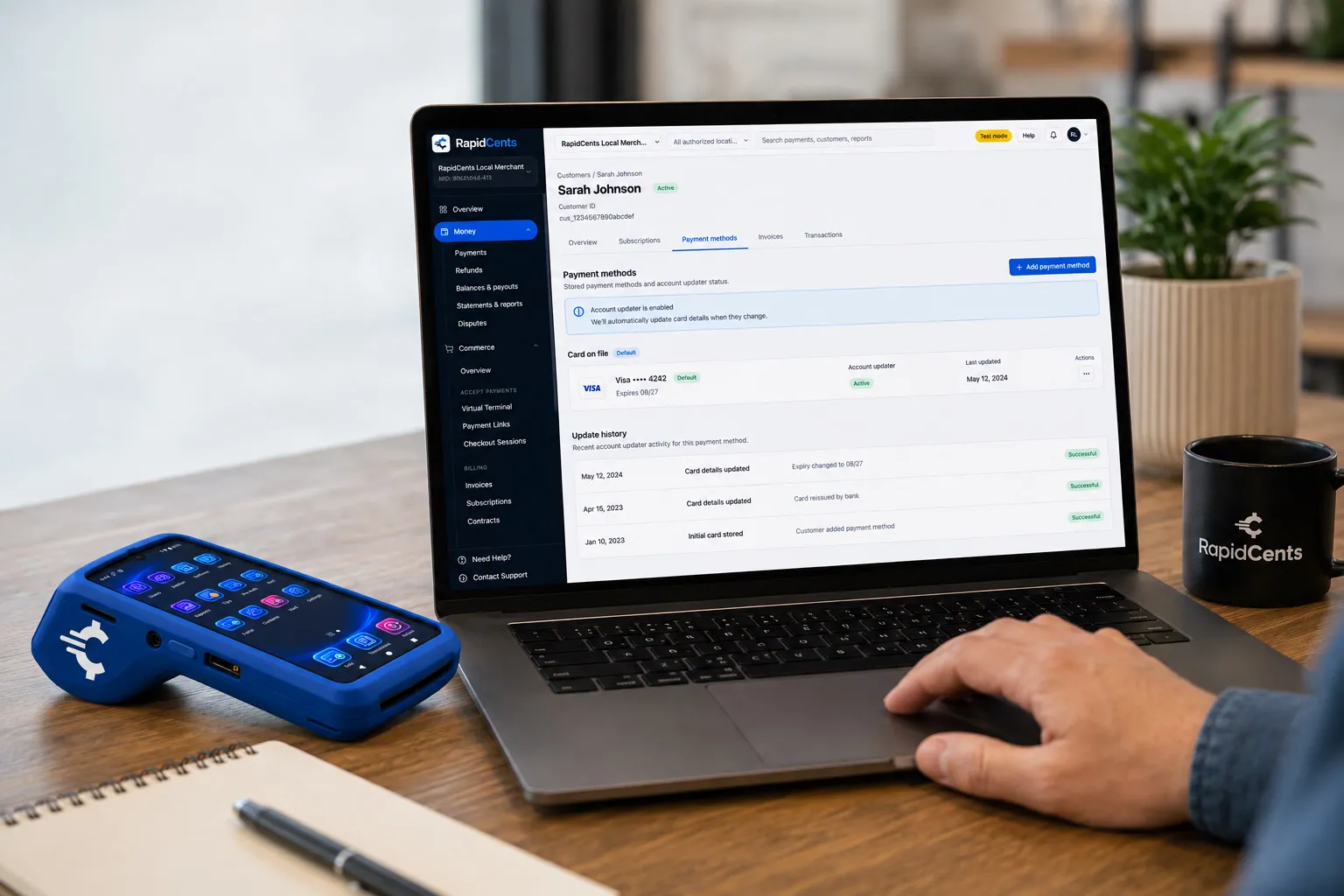
RapidCents refreshes a stored card after a reissue, so the vaulted credential keeps working without asking the customer again. Account Updater
Refreshes stored cards when they expire or get reissued, so repeat billing keeps working.
Explore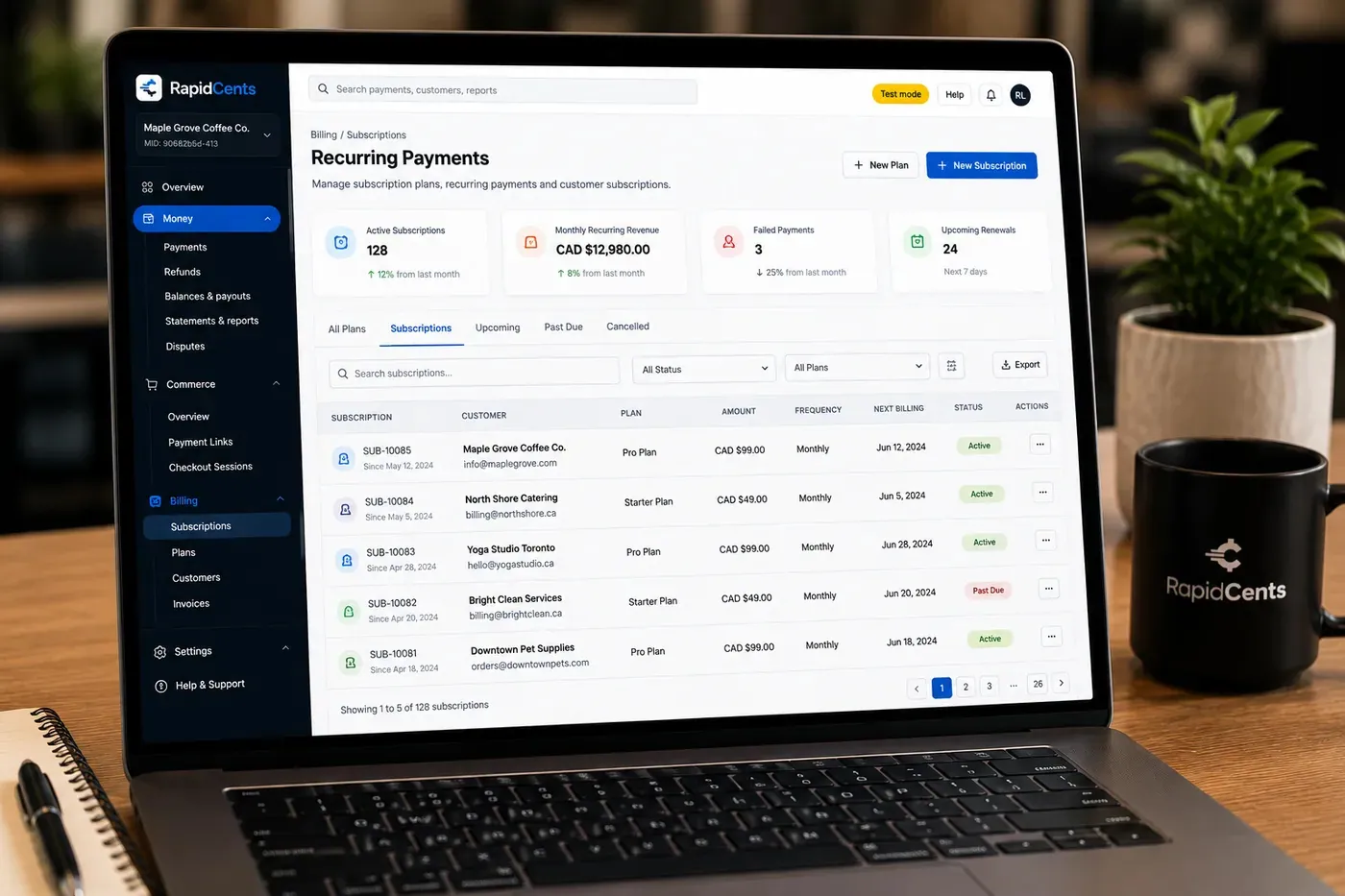
The RapidCents recurring payments screen showing active subscriptions, monthly recurring revenue, failed payments and upcoming renewals, above a list of subscriptions with their plan, amount, frequency and next billing date. Recurring payments
Schedules, subscriptions and instalments billed from a stored credential.
Explore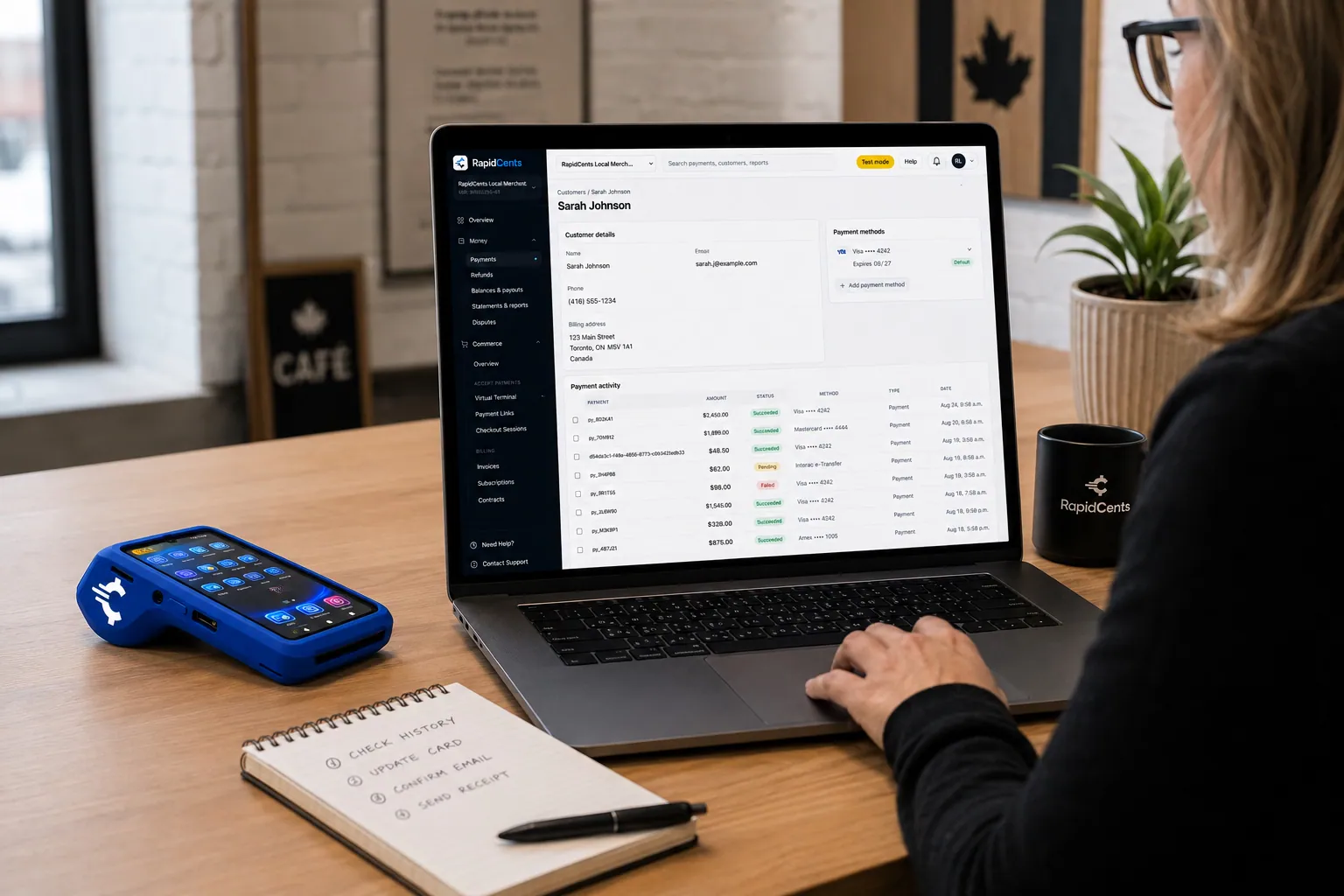
A RapidCents customer profile holds saved cards and invoices, so a return visit can be charged without re-keying the card. Customer profiles
One customer record holding contact details, stored credentials and payment history.
Explore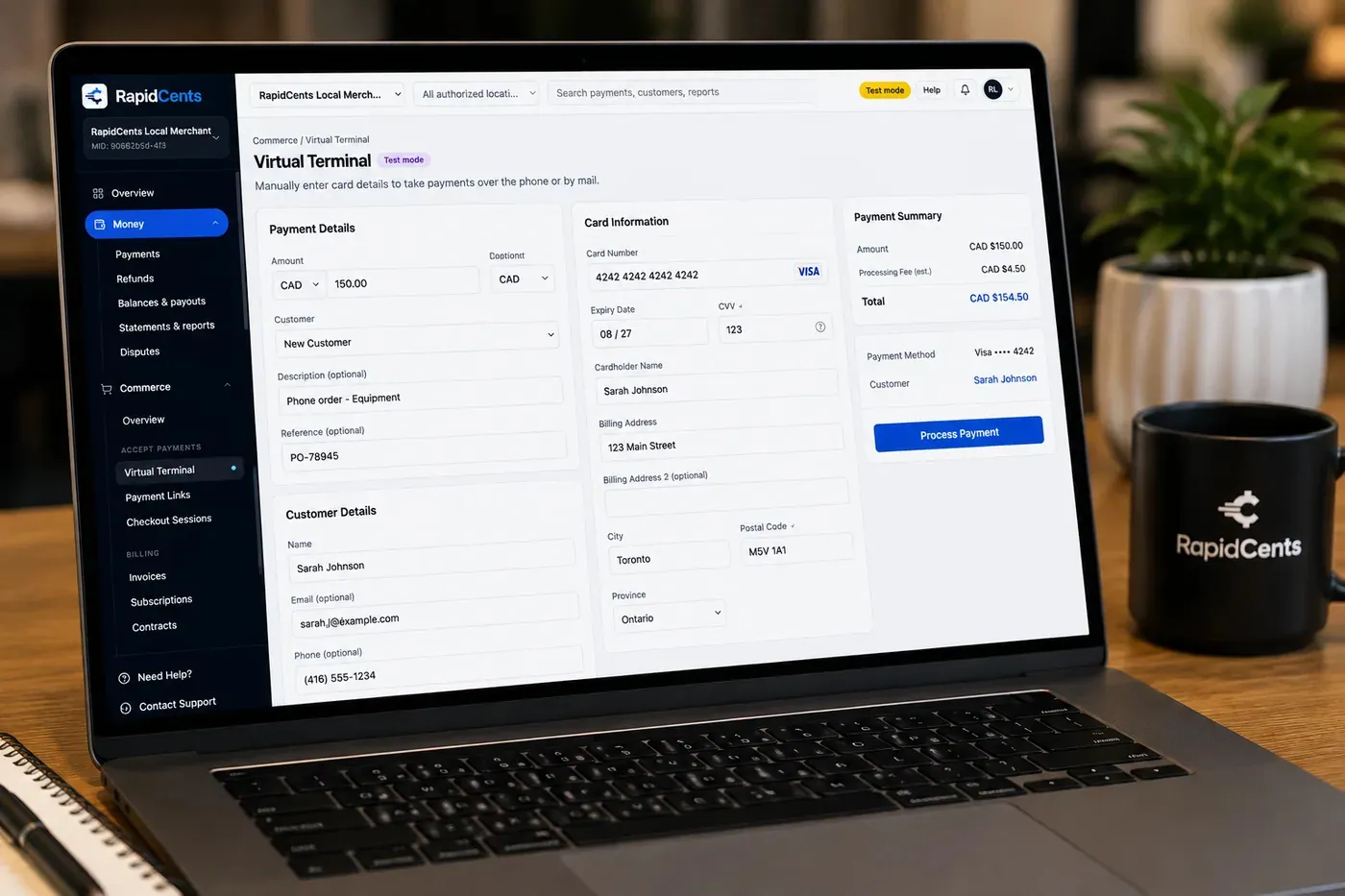
The RapidCents virtual terminal: payment details, card number, expiry and CVV keyed by hand on the left, with a payment summary on the right showing the amount, the estimated processing fee and a Process Payment button. Virtual Terminal
Key a card into a browser for phone, mail and back-office orders.
Explore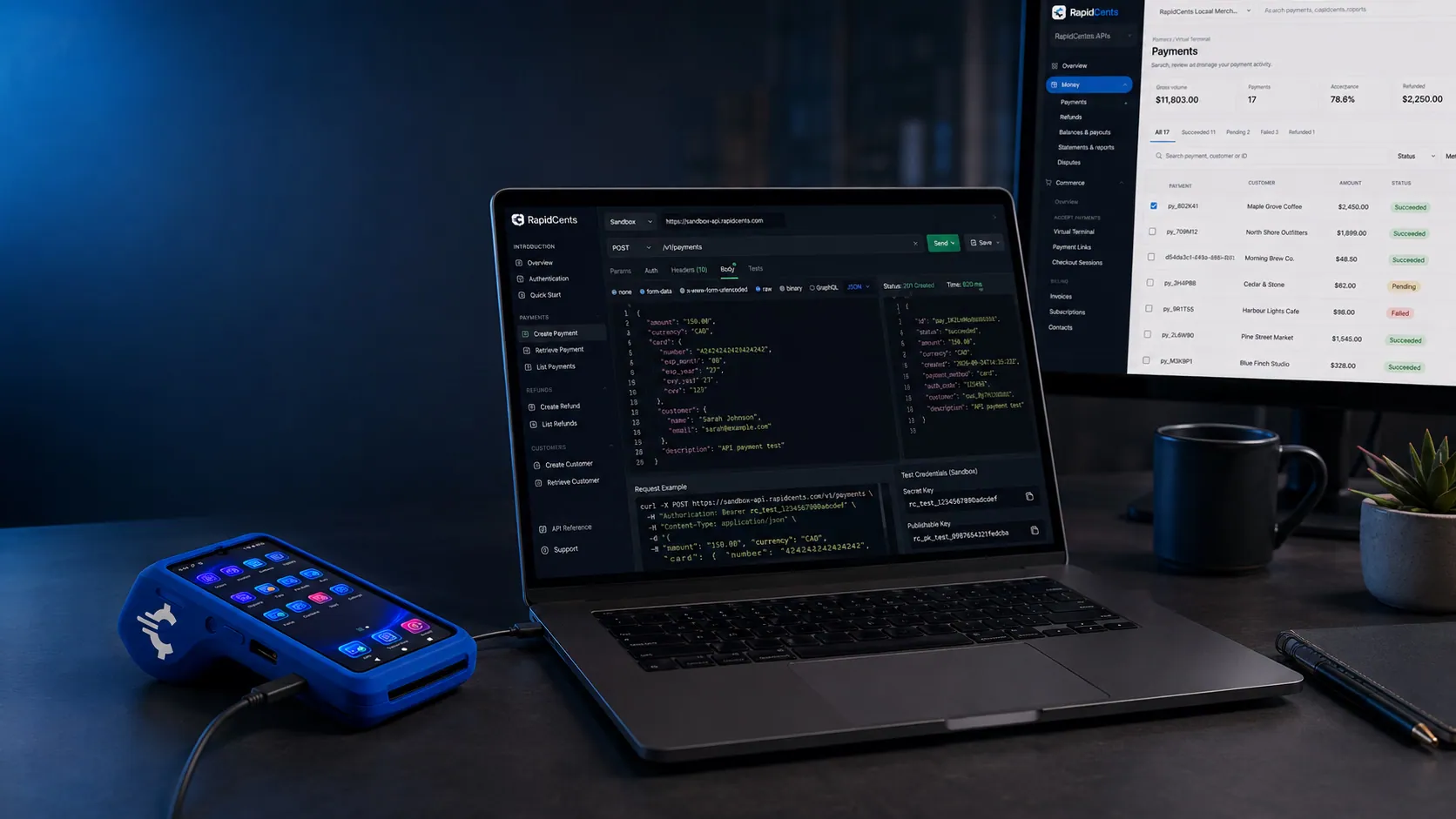
A RapidCents API request and its response on a developer workstation, with the merchant dashboard and a test terminal. RapidCents APIs
REST endpoints for payments, customers, refunds and reporting.
Explore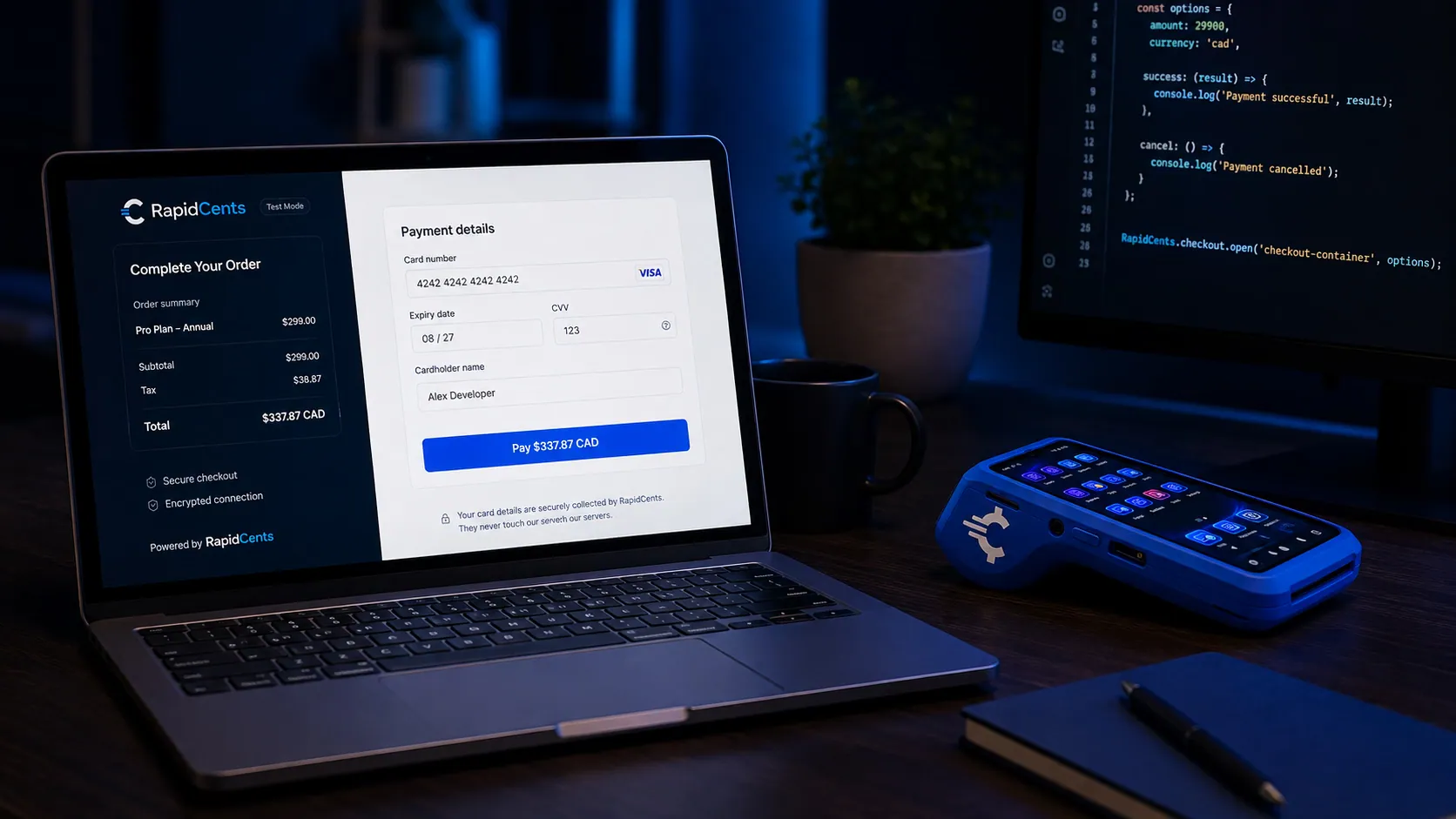
Rapid.js hosted card fields on a developer workstation, keeping card entry out of the merchant's PCI scope. Rapid.js
Embedded card fields that keep your checkout in your own design and out of PCI scope.
Explore


Security
PCI DSS Level 1
Processing runs on PCI DSS Level 1 audited infrastructure.
Tokenization
Card data is replaced with tokens, keeping raw credentials out of your systems.
Role-based access
Permissions and audit trails control who can see and do what.
Implementation
Discovery
A payment specialist reviews how your business gets paid today.
Configuration
Accounts, users and settings are prepared before you go live.
Testing
Run test transactions and confirm reporting before cutover.
Launch and support
Go live with training materials and post-launch support.
Pricing
Transparent pricing
Pricing depends on volume, card mix and configuration. Fee Check compares your current statement before you commit to anything.
Questions about Payment Tokenization
How is a token different from a card number?
A token is a reference that only RapidCents can map back to the credential. On its own it cannot be used elsewhere.
Does tokenization reduce PCI scope?
Yes. Storing tokens instead of card numbers keeps raw credentials out of your systems and narrows what has to be assessed.
What happens when a card expires?
Account Updater can refresh the underlying credential so the token keeps working.
Can I use a token in person and online?
Yes, a stored token can be charged across channels on the same account.
How is tokenization different from the Secure Card Vault?
Tokenization is the mechanism that produces the token. The vault is where tokenized methods are held against a customer record, with the consent that allowed it and the permissions that govern who may charge it.
Can my own software create and charge tokens?
The card has to be entered on a RapidCents-hosted surface, which is what keeps the credential out of your systems. Your software receives the token back and charges it through the API, online or in person, as often as the customer has authorized.
What happens to a token when a customer leaves?
Tokens have a lifecycle: they can be updated, replaced or deleted as the customer record changes, and expired or removed methods are cleaned out rather than left behind on the record.
Is tokenization charged for separately?
Tokenization is part of how RapidCents processes card payments, not a tool bought on its own. Pricing is quoted on the processing account, interchange-plus or bundled, and depends on volume, card mix and configuration.
Related products
Card credentials sit in the RapidCents vault rather than in merchant software, with a terminal on the desk for new captures. Secure Card Vault
The vault stores tokenized payment methods against a customer record so staff can charge a…
ExploreRapidCents refreshes a stored card after a reissue, so the vaulted credential keeps working without asking the customer again. Account Updater
Cards expire, get reissued and get replaced after fraud. Account Updater refreshes stored…
ExploreThe RapidCents recurring payments screen showing active subscriptions, monthly recurring revenue, failed payments and upcoming renewals, above a list of subscriptions with their plan, amount, frequency and next billing date. Recurring Payments
RapidCents recurring payments manage subscription plans, membership renewals and installment…
Explore
Take the next step
Talk to a RapidCents specialist
RapidCents Fee Check reads a processing statement and shows interchange separately from the markup. Upload a statement for an instant breakdown, or open a merchant account and start accepting payments on one account.
- No obligation
- Payment specialists, not a call centre
- Secure statement upload