Keep stored cards current
Keep stored cards current through expiry and reissue
Account Updater keeps stored card credentials current. Cards expire, get reissued and get replaced after fraud, and most failed renewals are those events rather than customers cancelling. RapidCents enrolls stored payment methods, receives reissue and expiry changes from the card networks, and applies them to the existing token so subscription and installment schedules keep running with no customer action. Update reporting shows what was refreshed and when, and methods that cannot be refreshed are flagged for outreach.
- Fewer involuntary failures
- Runs in the background
- Works with stored tokens

- PCI DSS Level 1
- SOC 2 Type II
- Specialist support
- Interchange-plus available
- All major card brands: Visa, Mastercard, Amex, Discover, PIN debit
Who it's for
Subscription businesses
Protect renewal revenue from card churn.
Membership organizations
Keep dues collecting through reissues.
Installment plans
Avoid broken schedules mid-term.
Core capabilities
Network refresh
Stored credentials are checked against network updates for new numbers and expiry dates.
Automatic application
Refreshed details apply to the stored token without customer action.
Recurring protection
Subscription and installment schedules keep running through a reissue.
Update reporting
See which stored methods were refreshed and when.
Fallback handling
Methods that cannot be refreshed are flagged for outreach.
How it works
Stored payment methods are enrolled in the updater.
Card networks report reissues and expiry changes.
RapidCents applies the update to the stored token.
Recurring charges continue on the refreshed credential.
Methods that cannot be refreshed are flagged for follow-up.
Dashboard and reporting
Transactions, deposits and exceptions visible in the RapidCents merchant dashboard.
Try it, edit values and click buttons
Merchant dashboard
- Today
- $4,218
- Deposits
- $12,482
- Disputes
- 2 open
- In-person
- $842
- Online
- $1,104
- Virtual terminal
- $392
Demonstration data only
Integrations
Merchant dashboard
Every transaction, deposit and exception lands in one dashboard.
APIs and webhooks
Connect the product to your own software with REST APIs and signed webhooks.
Partner connectors
Certified connectors for common POS, ERP and commerce platforms.
Works with Account Updater
Capabilities on the same account, so the parts below connect without a second integration or a second contract.
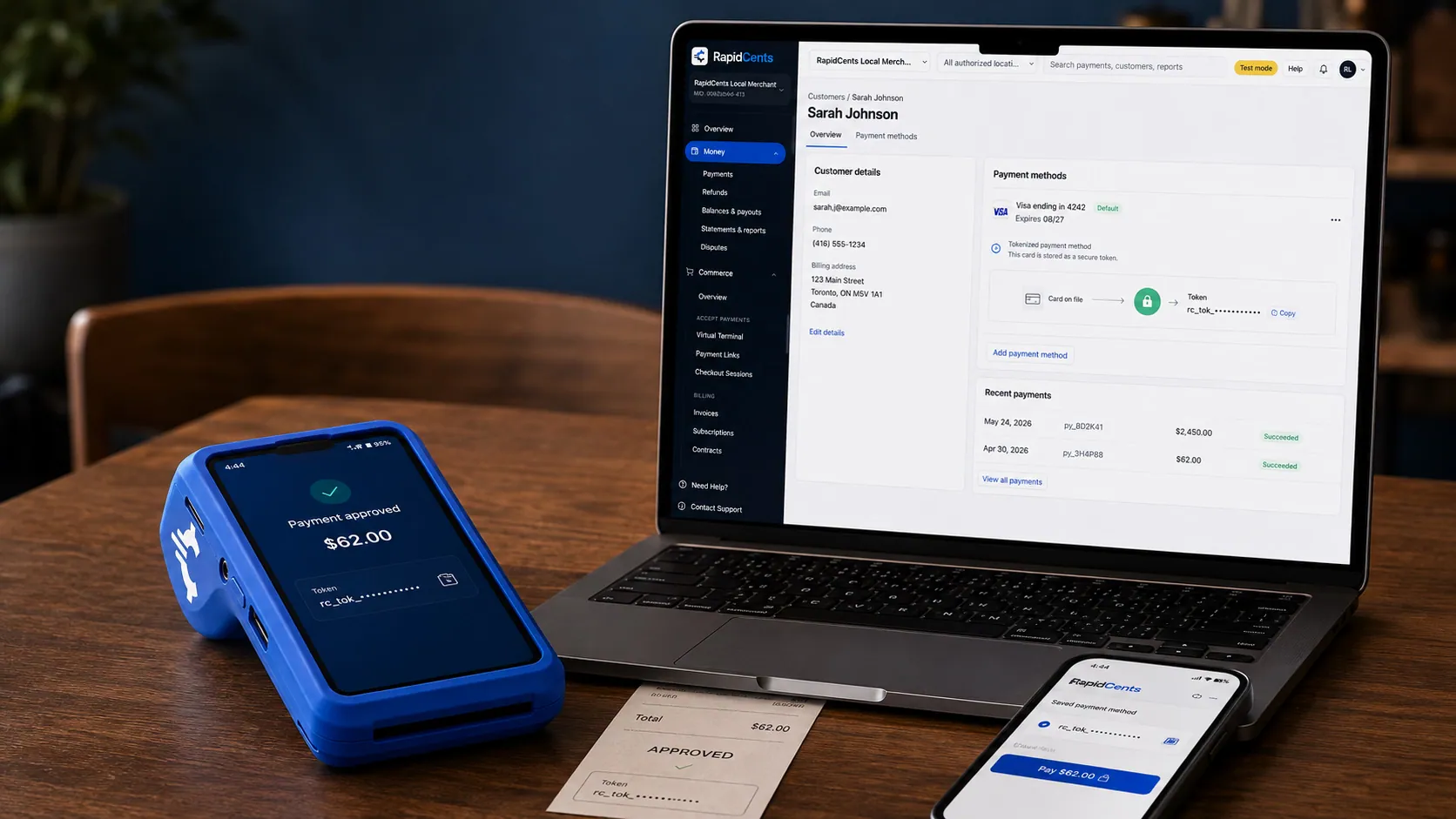
A stored RapidCents token stands in for the card number, with the terminal that captured the original credential beside it. Tokenization
Card numbers are replaced by a token, so nothing reusable is stored in your systems.
Explore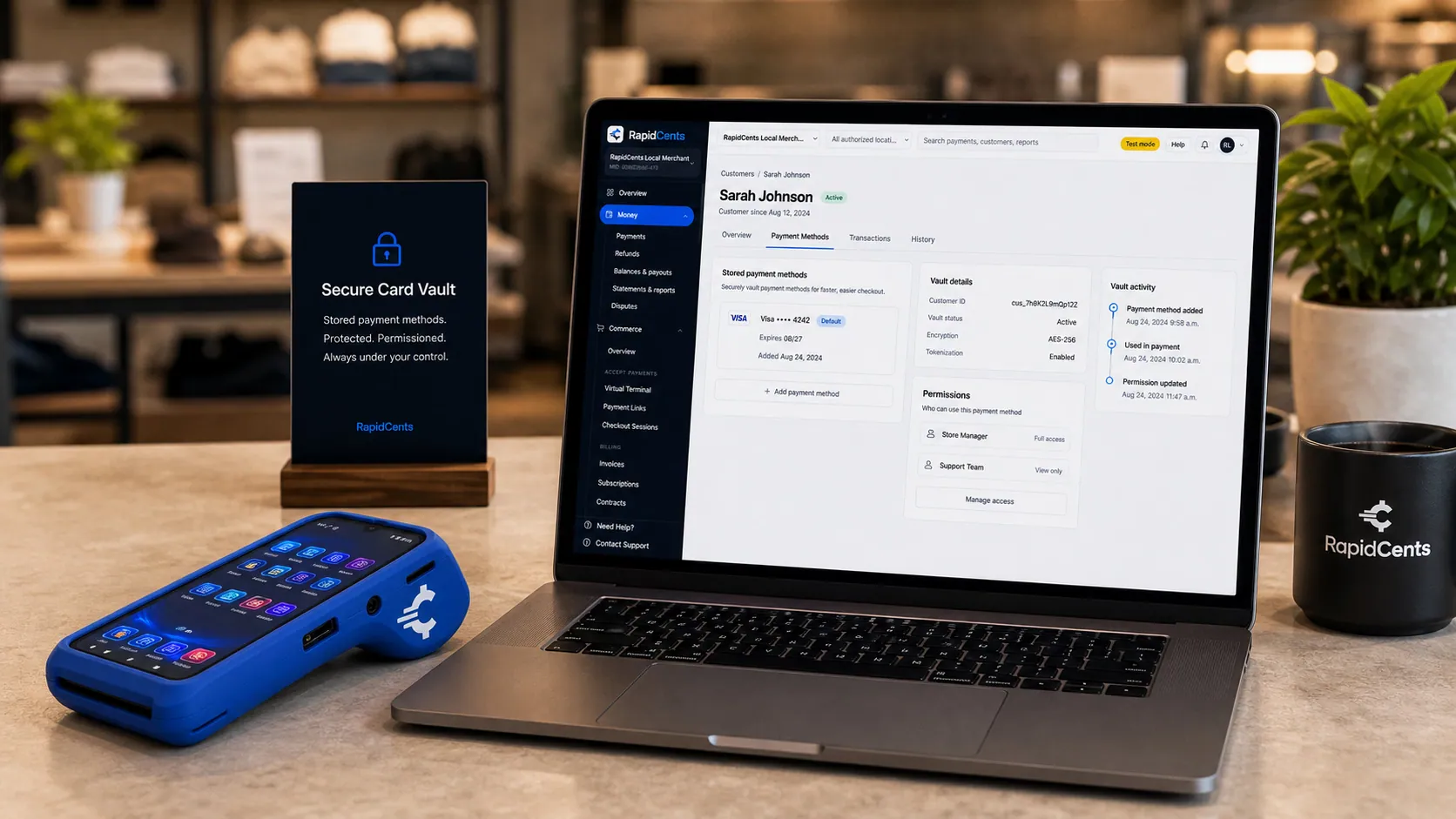
Card credentials sit in the RapidCents vault rather than in merchant software, with a terminal on the desk for new captures. Secure card vault
The PCI-scoped store the tokens point at, so card-on-file stays out of your scope.
Explore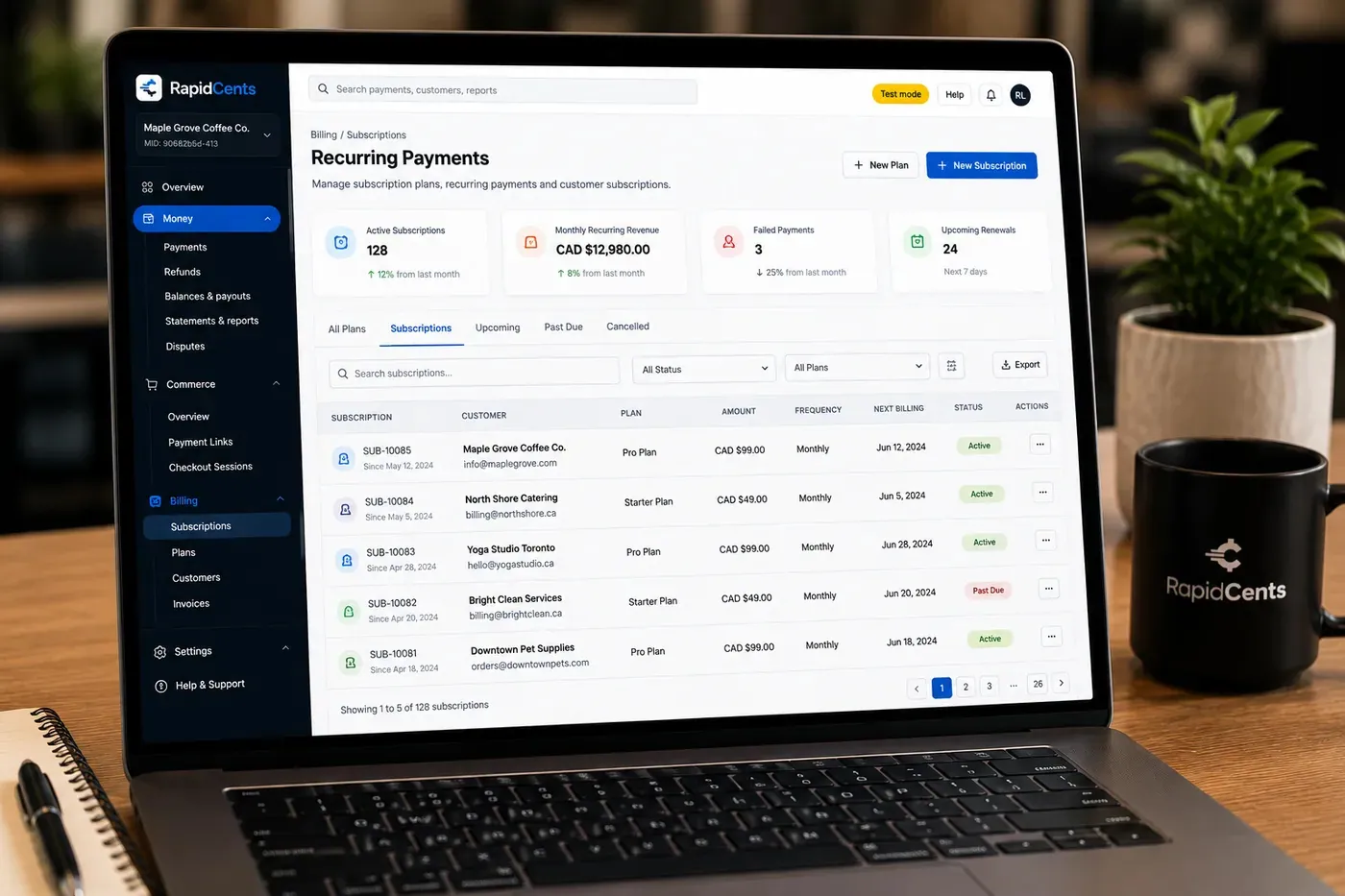
The RapidCents recurring payments screen showing active subscriptions, monthly recurring revenue, failed payments and upcoming renewals, above a list of subscriptions with their plan, amount, frequency and next billing date. Recurring payments
Schedules, subscriptions and instalments billed from a stored credential.
Explore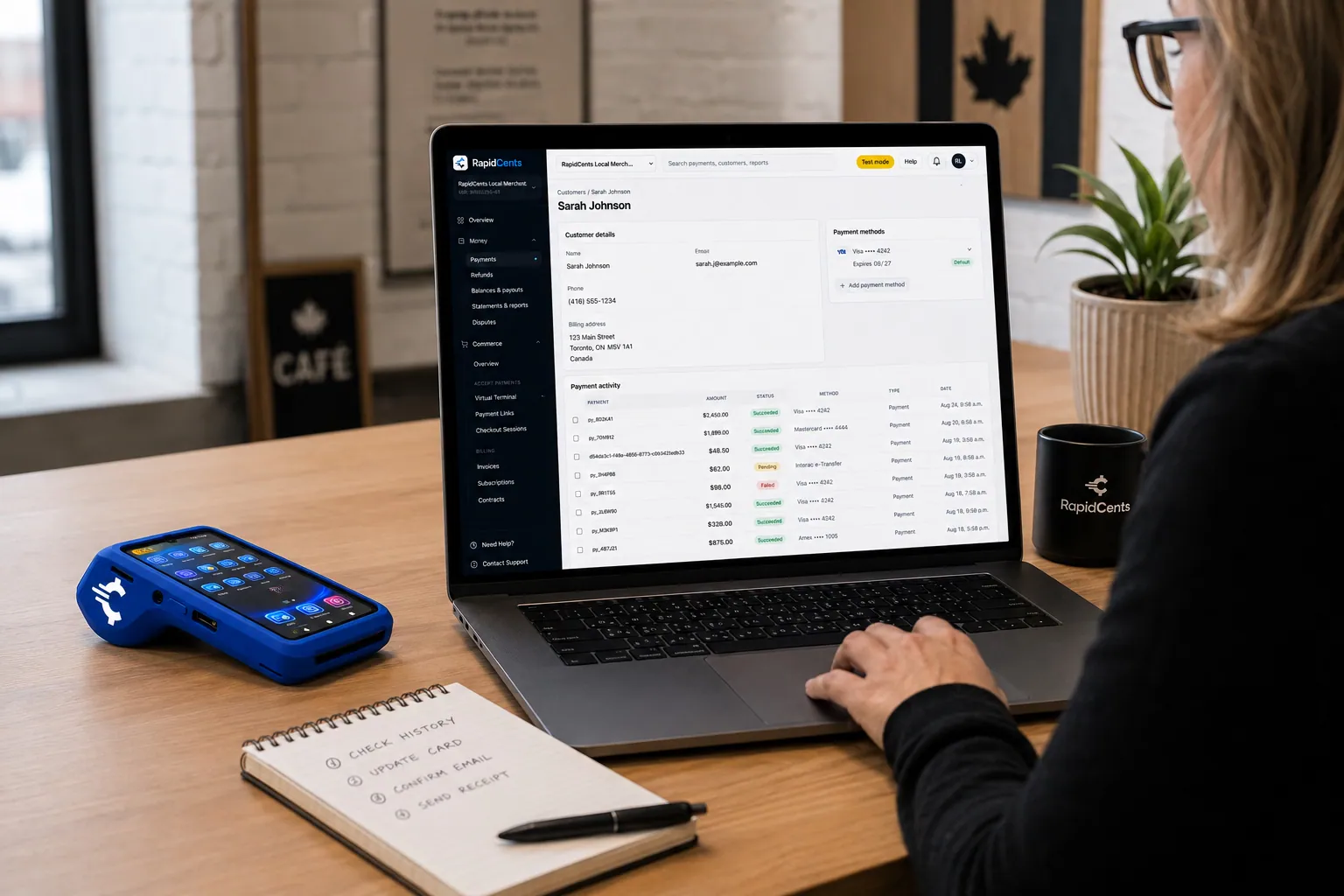
A RapidCents customer profile holds saved cards and invoices, so a return visit can be charged without re-keying the card. Customer profiles
One customer record holding contact details, stored credentials and payment history.
Explore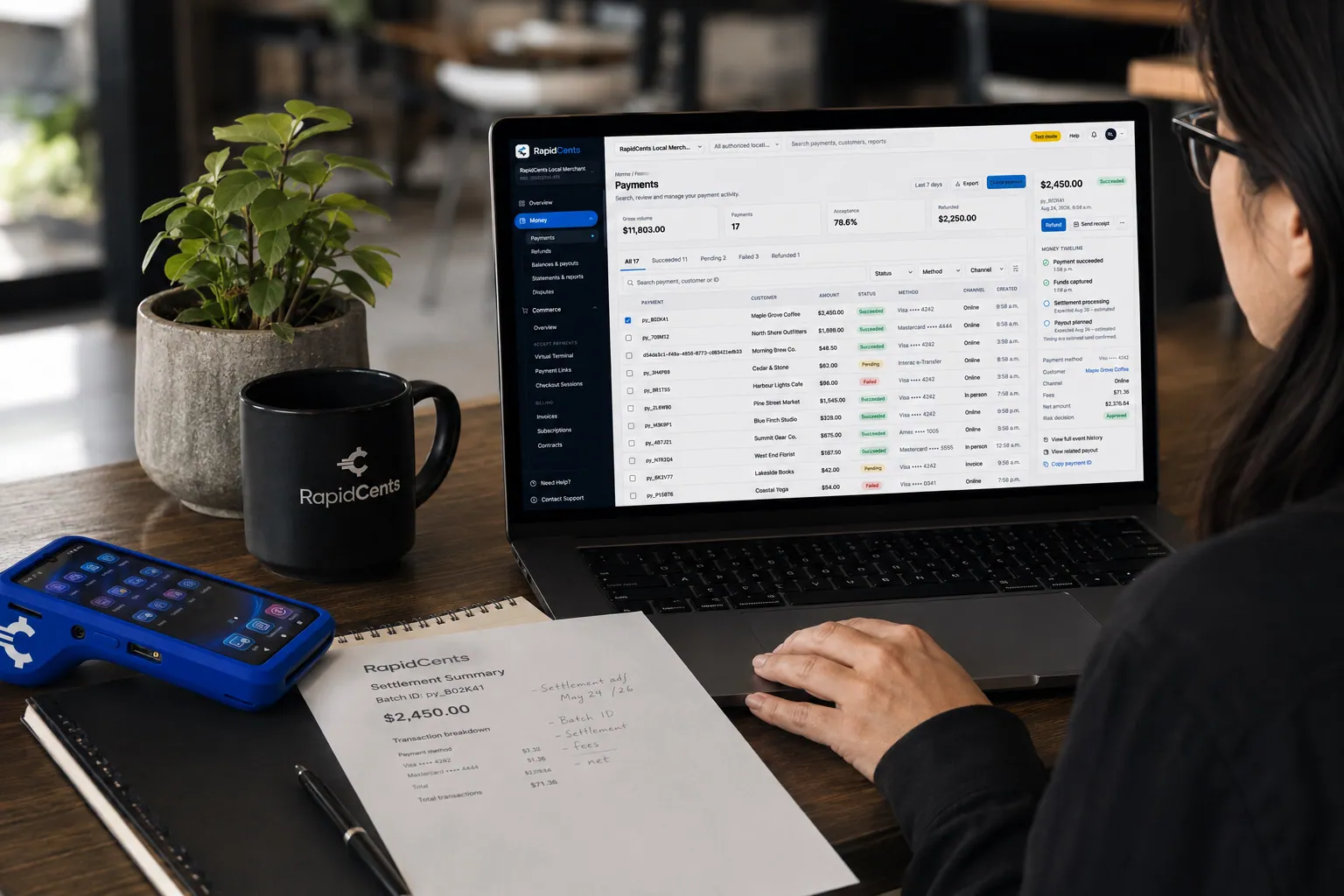
A merchant reviews RapidCents reports for volume, mix and payouts, with the terminal that took the sales on the desk. Reporting and reconciliation
Deposit-level detail that ties settlements back to the transactions behind them.
Explore


Security
PCI DSS Level 1
Processing runs on PCI DSS Level 1 audited infrastructure.
Tokenization
Card data is replaced with tokens, keeping raw credentials out of your systems.
Role-based access
Permissions and audit trails control who can see and do what.
Implementation
Discovery
A payment specialist reviews how your business gets paid today.
Configuration
Accounts, users and settings are prepared before you go live.
Testing
Run test transactions and confirm reporting before cutover.
Launch and support
Go live with training materials and post-launch support.
Pricing
Transparent pricing
Pricing depends on volume, card mix and configuration. Fee Check compares your current statement before you commit to anything.
Questions about Account Updater
What keeps renewals collecting?
Most interruptions are expired or reissued cards, not customers cancelling. Refreshing the credential keeps those charges collecting.
Does the customer have to do anything?
No. Updates apply to the stored token in the background.
Which cards are covered?
Coverage depends on the network and issuer participating in update services.
What if a card cannot be refreshed?
It is flagged so you can ask the customer for a new method before the next charge.
Does the token change when a card is refreshed?
No. The refreshed details are applied to the existing token, so the reference your software already stores keeps working and no schedule has to be rebuilt.
What should I do with a method that gets flagged?
A flagged method is one the networks could not refresh, so it needs the customer. Send them a secure link to replace the stored method before the next charge is due, rather than letting the renewal fail first.
Does it stop every failed charge?
No. It addresses expiry, reissue and replacement. A charge can still be declined for reasons an update cannot fix, which is why flagged methods and decline reporting still need to be worked.
How is Account Updater priced?
It is enrolled on stored payment methods on your RapidCents account rather than bought as standalone software. Pricing for the account depends on volume, card mix and configuration, and your advisor sets it out before you commit.
Related products
The RapidCents recurring payments screen showing active subscriptions, monthly recurring revenue, failed payments and upcoming renewals, above a list of subscriptions with their plan, amount, frequency and next billing date. Recurring Payments
RapidCents recurring payments manage subscription plans, membership renewals and installment…
ExploreA stored RapidCents token stands in for the card number, with the terminal that captured the original credential beside it. Payment Tokenization
Tokenization exchanges a card number for a reference your software can store and reuse. Repeat…
ExploreCard credentials sit in the RapidCents vault rather than in merchant software, with a terminal on the desk for new captures. Secure Card Vault
The vault stores tokenized payment methods against a customer record so staff can charge a…
Explore
Industries that run on Account Updater
Subscription Boxes
Subscription box brands bill a recurring plan against a fixed ship date. RapidCents runs…
Childcare & Daycare
Daycares bill tuition on a fixed monthly or biweekly cycle per child, handling subsidy…
Alarm & Monitoring
Alarm and monitoring companies bill a small monthly fee across a very large base…
Pest Control
Pest control runs on recurring service plans with quarterly visits, plus one-off…
IT & Managed Services
MSPs bill per seat or per device every month, add project and hardware charges on top…
Take the next step
Talk to a RapidCents specialist
RapidCents Fee Check reads a processing statement and shows interchange separately from the markup. Upload a statement for an instant breakdown, or open a merchant account and start accepting payments on one account.
- No obligation
- Payment specialists, not a call centre
- Secure statement upload