Sell online with checkout that fits how you actually sell
Selling online is a choice of surface before it is a choice of technology. A catalogue, a handful of products, a quote sent to one customer and a booking deposit are four different problems, and three of them need no storefront. RapidCents covers each: a hosted checkout page with your logo and wallet buttons, a durable payment page for a small range, a link generated for one amount, or an invoice carrying its own payment page. Online orders report beside counter sales.
- Payment specialists
- Interchange-plus available
- Guided migration
- Post-launch support
Who this solution is for
Businesses with a small product range
A few items, sold repeatedly. A page or a link does the job a full storefront would do badly.
Businesses with a catalogue
Where stock, variants and returns matter, and the online store has to agree with the shop floor.
Quote-and-invoice businesses
Where each sale is negotiated and the payment attaches to a document rather than to a cart.
Common challenges
Building more than the sale needs
A storefront for four products costs more to maintain than it earns, and every extra surface is another thing that can break.
Handling card data you did not need to touch
A checkout built directly against card fields widens the compliance assessment. Hosted pages and embedded fields avoid that without giving up the design.
Online and in-store treated as separate businesses
Separate stock counts and separate reporting produce two versions of the truth, and the return of an online order at the counter is where they collide.
The RapidCents approach
Decide what you are actually selling online: a catalogue, a few products, a service, or a deposit against work.
Pick the surface to match — hosted checkout, a payment page, a link, or an invoice carrying its own payment page.
Decide where the card is entered, because that sets both the build effort and the compliance scope.
Connect it to reporting so online sits beside in-store rather than in a separate system.
Test the whole loop — sale, receipt, refund, deposit — before it is public.
Recommended capabilities
Hosted checkout
A RapidCents-hosted page with your logo and accent colour, wallet buttons on supported browsers, and session expiry on abandoned carts.
Payment pages and links
A page or a URL for a small range or a single sale, with partial amounts, custom references and deactivation once paid.
Gateway API
For teams building their own checkout: authorize and capture separately, customer tokens, idempotency keys and signed webhooks.
3-D Secure by rule
Authentication triggered by amount, geography or risk signal rather than applied to every sale, so the friction is spent where the liability shift is worth it.
Reporting beside in-store
Online orders report alongside counter sales in the same dashboard, so the two are one business in the numbers.
Related products
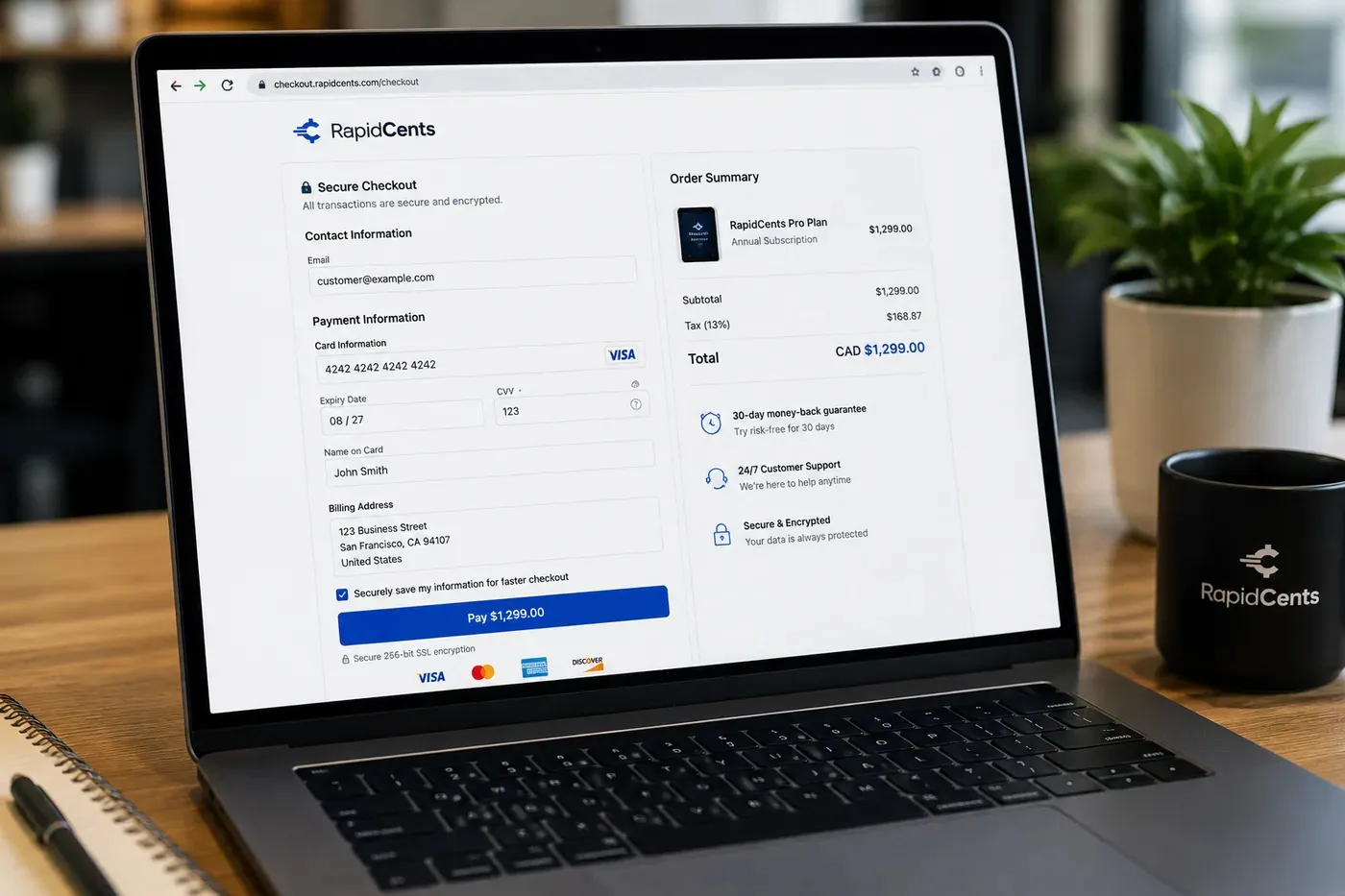
A RapidCents hosted checkout page at checkout.rapidcents.com, with the order summary and totals on the left and the card fields on the right, footed by SSL and PCI DSS assurances. Hosted Checkout
RapidCents hosted checkout delivers PCI-scoped payment pages you redirect customers to or embed via iframe…
Explore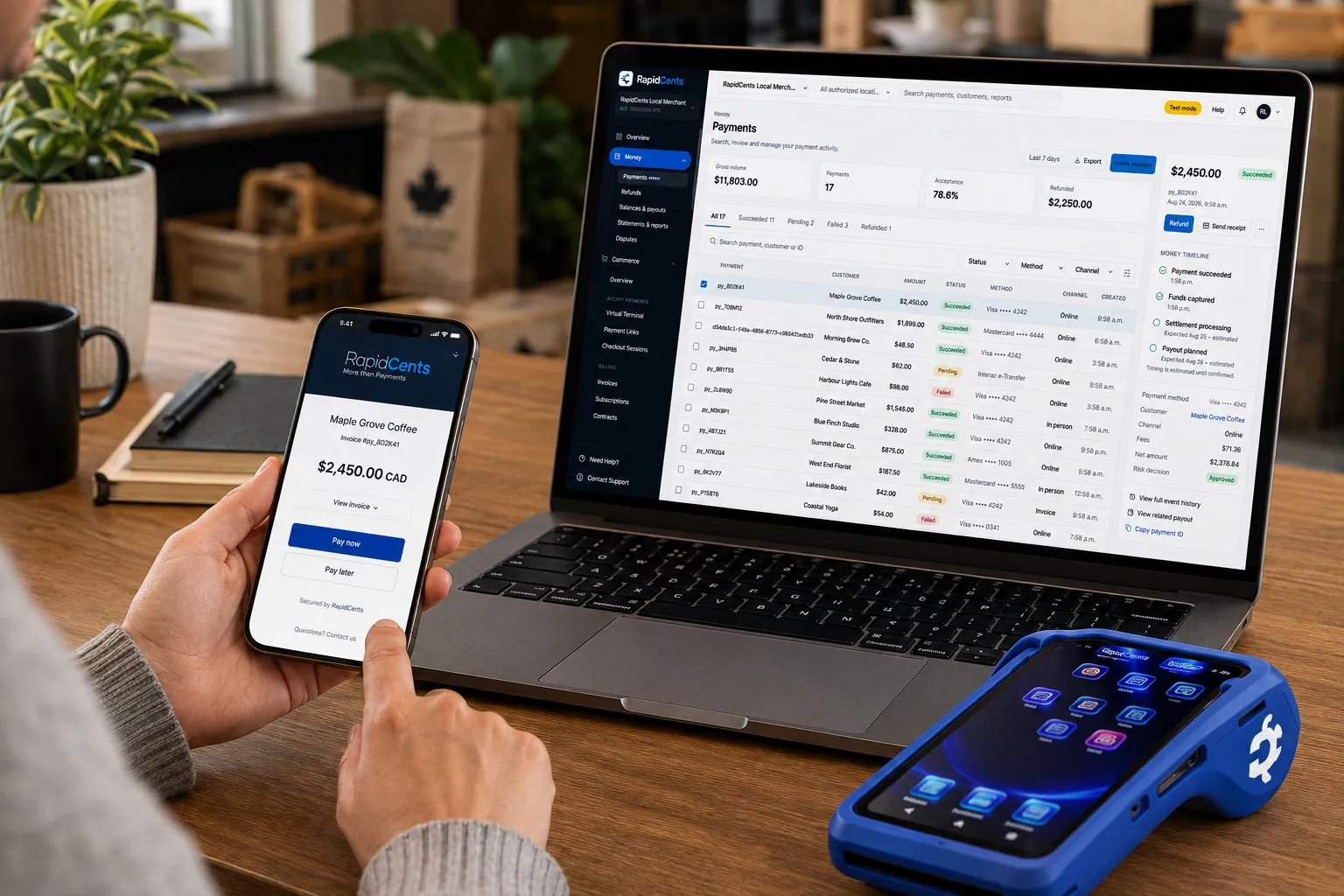
A branded RapidCents payment page open on laptop and phone, ready to collect a card or wallet payment. Payment Pages
Publish a secure, branded page that collects a payment for a product, service, deposit or event.
Explore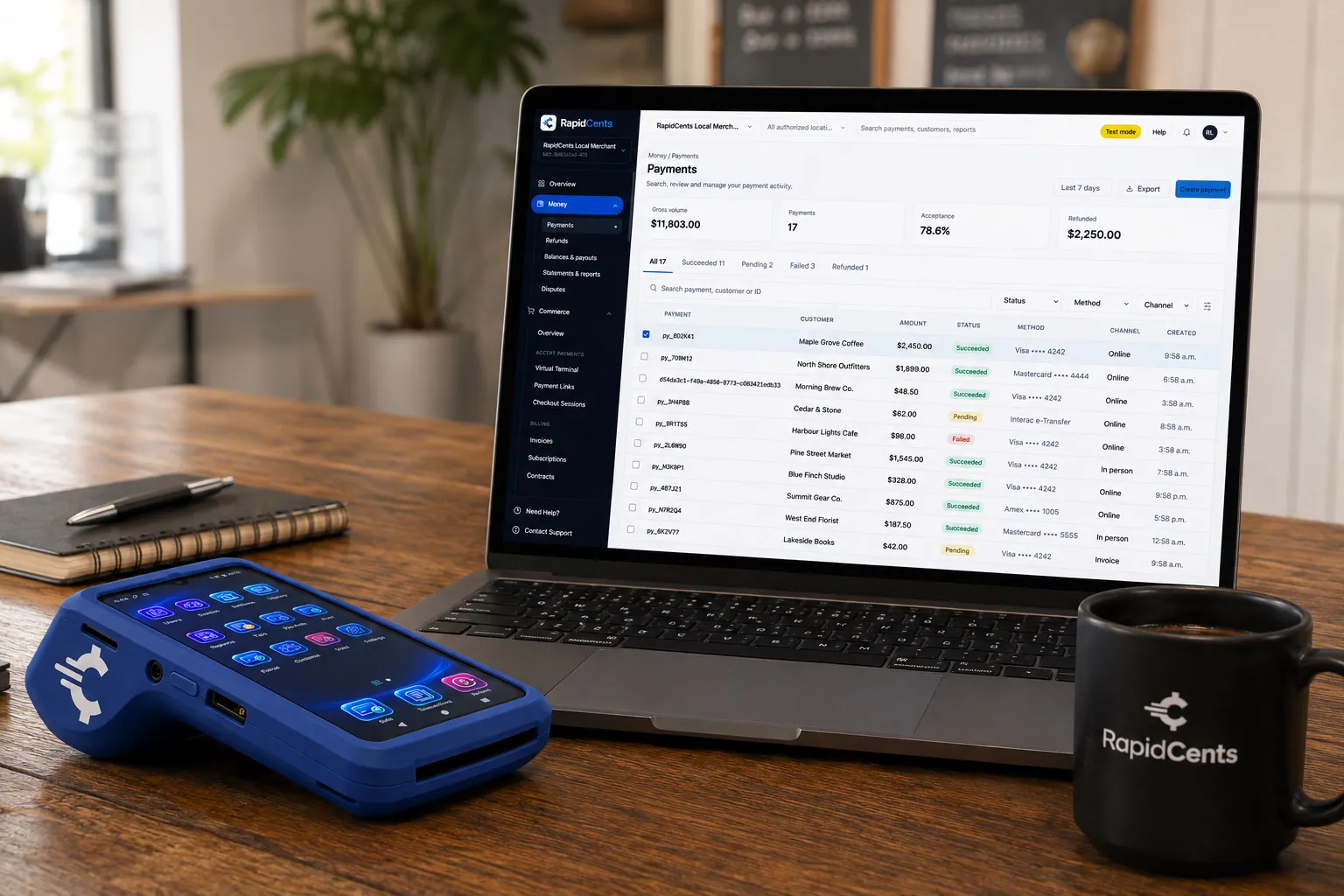
A payment-gateway integration desk: API response on screen, RapidCents terminal ready for a test sale. Payment Gateway
The RapidCents payment gateway exposes REST endpoints for authorize, capture, void, refund and tokenize…
Explore


Implementation approach
Choose the surface
Match the sale to the smallest thing that handles it properly. This is the decision that saves the most work later.
Configure and brand
Logo, accent colour, receipt content and return URLs set before anything is public.
Test the loop
A sale, a refund and a settlement checked end to end, including what the customer receives by email.
Launch and watch
Live for a period with monitoring on declines and settlement, before any previous route is retired.
What does not change
Your website
A hosted checkout is a step in the flow, not a replacement for your site. Customers return to your pages after paying.
Your in-store operation
Selling online does not change the counter. The same account and the same reporting cover both.
What you sell and how you price it
The surface is a way to collect payment. It does not impose a catalogue structure, a subscription model or a pricing scheme.
Frequently asked questions
Do I need a storefront to sell online?
No. A payment page or a link handles a small range or a one-off sale, and an invoice can carry its own payment page. A storefront earns its cost once you have a catalogue, stock and repeat browsing.
What is the difference between a payment page and a payment link?
A page is a durable surface a customer can return to. A link is generated for a specific amount and customer, often expires, and deactivates after payment. Pages suit repeat products; links suit one-off amounts.
How do returns work when the sale was online?
The refund is processed against the original authorization, so the money returns to the card that paid. If the customer brings the item to a store, the refund still references the online transaction, which is why one account across channels matters more than it sounds.
Will wallet buttons work for every customer?
Apple Pay and Google Pay appear on supported browsers and devices. Card entry stays available for everyone else, so wallet support is an addition rather than a requirement.
How do I stop abandoned carts sitting open?
Hosted checkout sessions and payment links expire. That limits how long an open payment surface exists, which is a security position as much as a housekeeping one.
Can I sell in more than one currency?
International cards are accepted, so a customer abroad can pay. Settlement is in USD for merchants worldwide, and cross-border arrangements need additional review, so raise them before you launch the channel rather than after.
Can an invoice collect the payment itself?
Yes. An invoice can carry its own payment page, so the customer pays from the document instead of being sent somewhere else to do it. That removes the second step where the delay usually lives, and the payment reconciles against the invoice rather than being matched afterwards.
Can I take a deposit online rather than the full amount?
Yes. A payment link can be issued for a partial amount, which suits a booking deposit or a stage payment against work, with a custom reference for reconciliation and deactivation once it is paid. The balance is collected the same way later.
Take the next step
Talk to a RapidCents specialist
RapidCents Fee Check reads a processing statement and shows interchange separately from the markup. Upload a statement for an instant breakdown, or open a merchant account and start accepting payments on one account.
- No obligation
- Payment specialists, not a call centre
- Secure statement upload