Stop the loss before it settles
Screen risky transactions without turning away good customers
Fraud prevention screens a transaction while it is being authorized, before it settles. RapidCents applies risk rules set by amount, geography, method and pattern, velocity checks that catch repeated attempts from the same card, device or address, and address or CVV verification where the risk justifies the extra step. Flagged transactions wait in a review queue for a human decision, and outcome reporting shows both what the rules caught and what they refused in error.
- Rules you control
- Velocity and verification checks
- Review before settlement

- PCI DSS Level 1
- SOC 2 Type II
- Specialist support
- Interchange-plus available
- All major card brands: Visa, Mastercard, Amex, Discover, PIN debit
Who it's for
Card-not-present merchants
Online sales carry most of the fraud risk.
High-ticket sellers
A single fraudulent order can be material.
Businesses with rising disputes
Screening reduces what reaches dispute stage.
Core capabilities
Risk rules
Set thresholds by amount, geography, method and pattern.
Velocity checks
Catch repeated attempts from the same card, device or address.
Address and CVV verification
Require verification where the risk justifies it.
Review queue
Hold flagged transactions for a human decision.
Outcome reporting
See what the rules caught and what they cost you in false positives.
How it works
Set rules for the risk your business actually sees.
Transactions are screened as they are authorized.
Flagged transactions go to a review queue.
Staff approve or decline held transactions.
Reporting shows what was caught and what was refused in error.
Dashboard and reporting
Transactions, deposits and exceptions visible in the RapidCents merchant dashboard.
Try it, edit values and click buttons
Merchant dashboard
- Today
- $4,218
- Deposits
- $12,482
- Disputes
- 2 open
- In-person
- $842
- Online
- $1,104
- Virtual terminal
- $392
Demonstration data only
Integrations
Merchant dashboard
Every transaction, deposit and exception lands in one dashboard.
APIs and webhooks
Connect the product to your own software with REST APIs and signed webhooks.
Partner connectors
Certified connectors for common POS, ERP and commerce platforms.
Works with Fraud Prevention
Capabilities on the same account, so the parts below connect without a second integration or a second contract.
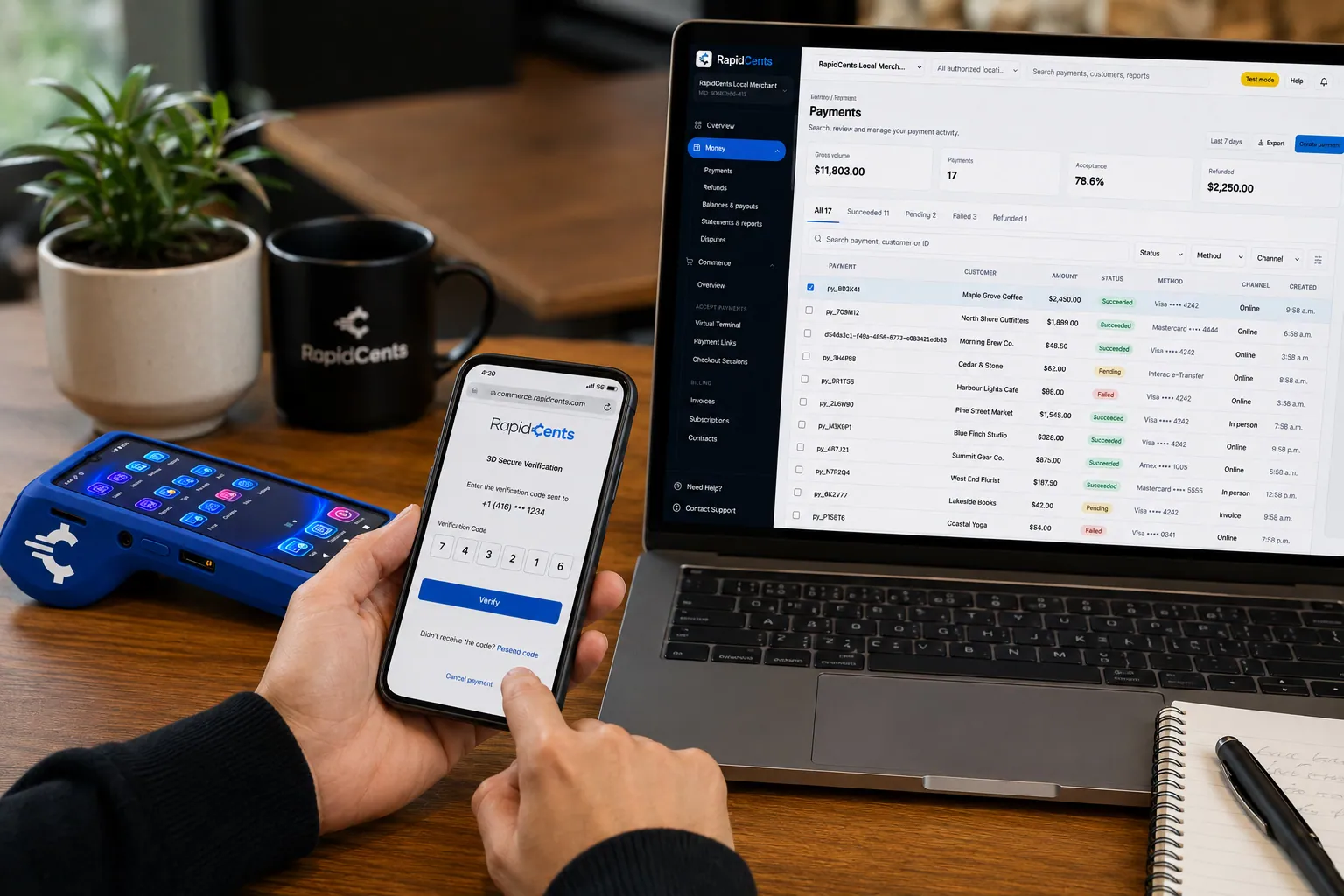
A cardholder completes 3-D Secure on RapidCents checkout, so the issuer can authenticate the online payment. 3-D Secure
Issuer authentication on online payments, which shifts fraud chargeback liability.
Explore
RapidCents assembles chargeback evidence from the original sale, with the terminal and receipts still at hand. Chargeback Protection
Dispute alerts and evidence assembly, so representment does not eat your week.
Explore
A merchant works a RapidCents dispute case on the dashboard, with the original terminal sale still on the desk. Dispute management
Every chargeback, its deadline and its evidence pack in one queue.
Explore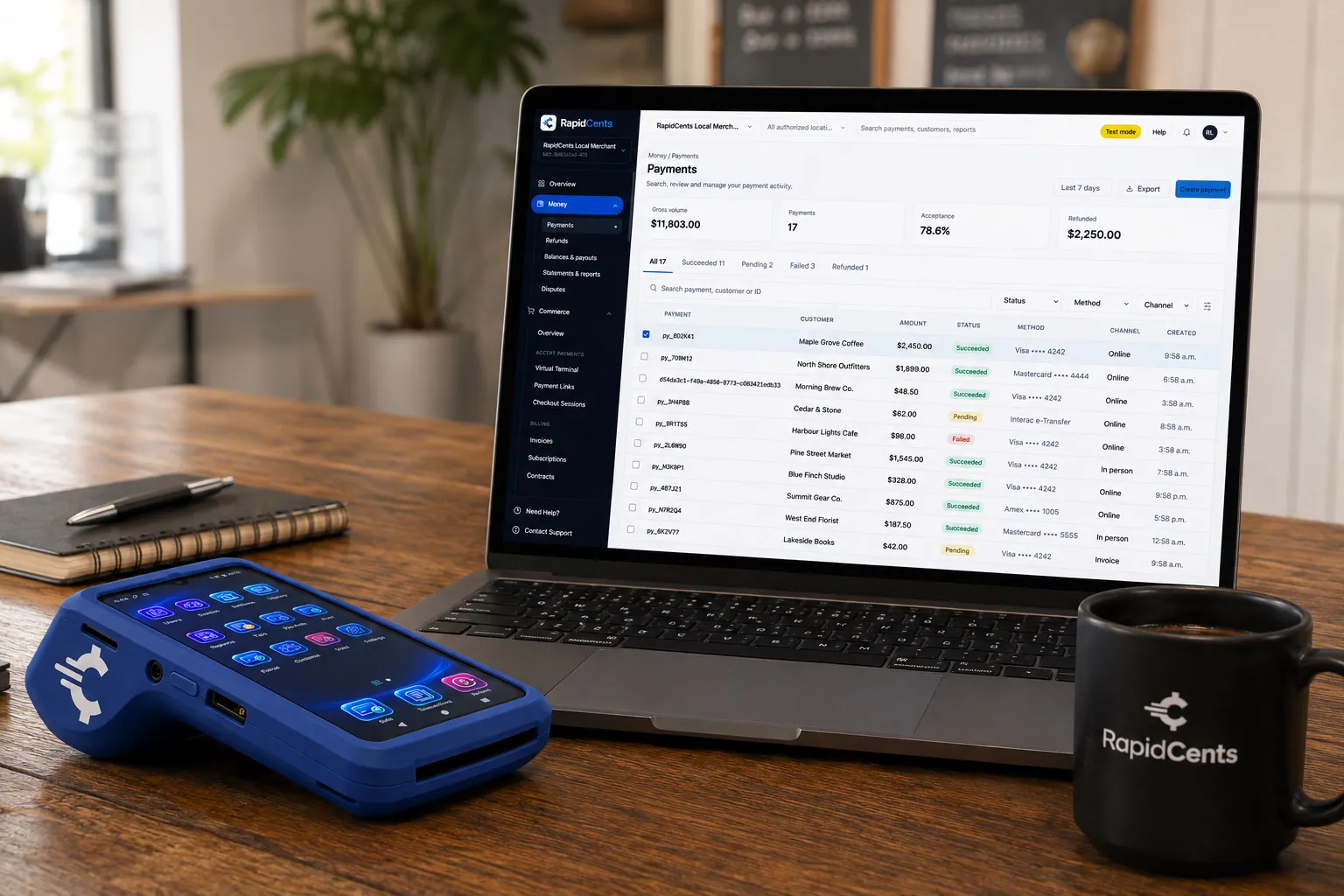
A payment-gateway integration desk: API response on screen, RapidCents terminal ready for a test sale. Payment gateway
The authorization layer every online RapidCents payment runs through.
Explore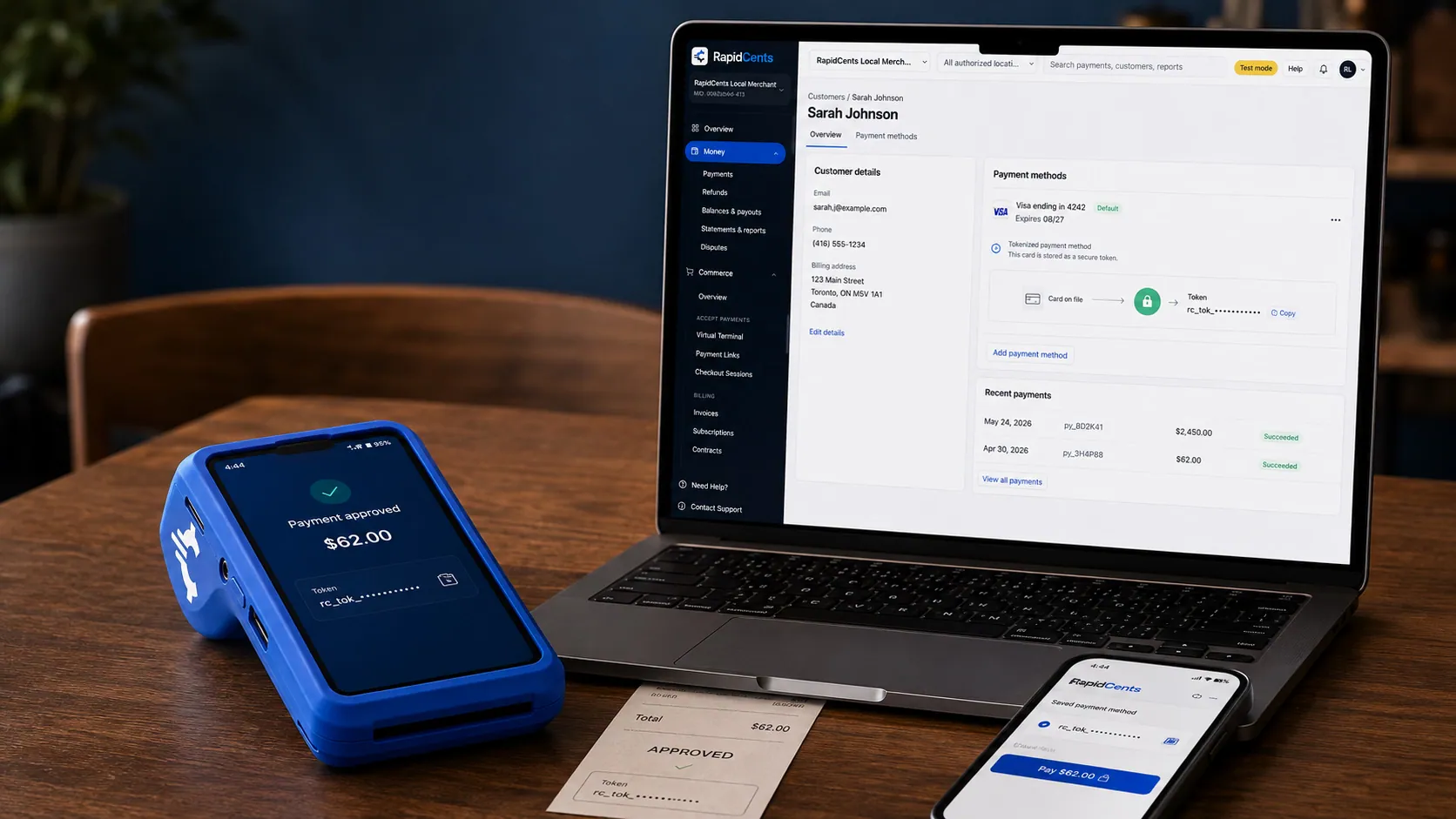
A stored RapidCents token stands in for the card number, with the terminal that captured the original credential beside it. Tokenization
Card numbers are replaced by a token, so nothing reusable is stored in your systems.
Explore


Security
PCI DSS Level 1
Processing runs on PCI DSS Level 1 audited infrastructure.
Tokenization
Card data is replaced with tokens, keeping raw credentials out of your systems.
Role-based access
Permissions and audit trails control who can see and do what.
Implementation
Discovery
A payment specialist reviews how your business gets paid today.
Configuration
Accounts, users and settings are prepared before you go live.
Testing
Run test transactions and confirm reporting before cutover.
Launch and support
Go live with training materials and post-launch support.
Pricing
Transparent pricing
Pricing depends on volume, card mix and configuration. Fee Check compares your current statement before you commit to anything.
Questions about Fraud Prevention
Will this block legitimate customers?
Rules set too tightly do. Reporting shows false positives so thresholds can be tuned rather than guessed.
Is screening automatic?
Screening is automatic; flagged transactions can be held for a human decision.
Does it replace chargeback protection?
No. Prevention reduces what reaches dispute stage; Chargeback Protection handles what still does.
Can rules differ by channel?
Yes, online and in-person risk can be treated differently.
Who works the review queue, and what can they do?
Staff you permit. A held transaction waits for a person to approve or decline it, and role-based access with audit trails records who made that call, which matters when a decision is questioned later.
How does this relate to 3-D Secure?
Screening applies your own rules on your side of the transaction. 3-D Secure asks the issuer to authenticate the cardholder and, where authentication succeeds and network rules apply, moves fraud liability to the issuer. They are used together, not instead of each other.
Does it work with my existing checkout or integration?
Yes. Screening runs on the authorization, so it applies through hosted checkout and gateway API integrations alike, and outcomes are readable through the dashboard, REST APIs and signed webhooks.
Is fraud screening priced separately?
Screening is part of how transactions are authorized on a RapidCents account rather than an add-on licence. Account pricing depends on volume, card mix and configuration, and your advisor sets it out before anything is signed.
Related products
RapidCents assembles chargeback evidence from the original sale, with the terminal and receipts still at hand. Chargeback Protection
Disputes arrive with a deadline. Alerts, assembled evidence and tracked outcomes turn a scramble…
ExploreA cardholder completes 3-D Secure on RapidCents checkout, so the issuer can authenticate the online payment. 3D Secure
3-D Secure asks the issuer to verify the cardholder and, where it applies, shifts liability for…
ExploreA payment-gateway integration desk: API response on screen, RapidCents terminal ready for a test sale. Payment Gateway
The RapidCents payment gateway exposes REST endpoints for authorize, capture, void, refund and…
Explore
Take the next step
Talk to a RapidCents specialist
RapidCents Fee Check reads a processing statement and shows interchange separately from the markup. Upload a statement for an instant breakdown, or open a merchant account and start accepting payments on one account.
- No obligation
- Payment specialists, not a call centre
- Secure statement upload