Growth & commerce, Articles
E-commerce, online ordering and revenue growth. 47 pieces in articles, written for merchants worldwide: what growth & commerce covers, what to check on your own statement, and the decisions it changes.
Growth & commerce
Growth & commerce
E-commerce, online ordering and revenue growth.
On this shelf
Online Payment Processing: The Growth Engine for Modern Businesses Online Payment Processing for Business Growth
Online payment processing lets businesses accept credit cards, debit cards, and mobile wallet payments over the internet. It grows revenue by reducing abandoned carts, speeds up cash flow through automated settlements and recurring billing, and gives merchants transaction insights. To enable it, a business needs a merchant account and a payment processor whose rates fit its needs.
Explore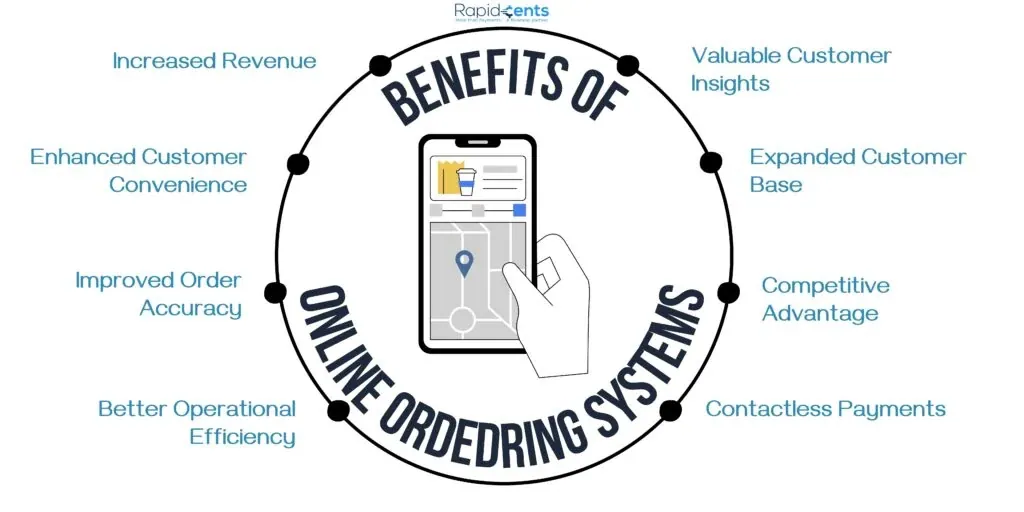
The Benefits of Using an Online Food Ordering System for Restaurants 8 Benefits of an Online Food Ordering System
An online food ordering system benefits restaurants in eight ways: bigger average orders and more revenue, greater customer convenience, improved order accuracy, better operational efficiency, valuable customer data, an expanded customer base beyond the dining room, a competitive edge over restaurants without online ordering, and secure contactless payments collected upfront.
Explore
10 Most Common E-Commerce Challenges 10 Most Common E-Commerce Challenges and How to Solve Them
The most common e-commerce challenges are driving website traffic, poor site usability, low conversion rates, inventory management, customer retention, cart abandonment, weak payment gateways, fraud, slow customer service, and returns. Most are solved by simplifying checkout, offering multiple payment options, automating fraud detection, and responding to customers quickly at every stage of the journey.
Explore
The Future of Checkout: 7 Emerging Trends Redefining Commerce in 2025 The Future of Checkout: 7 Emerging Trends
Checkout in 2025 is a growth and loyalty touchpoint, not a back-end utility. Seven trends are redefining it: contactless and tap-to-pay as the default, native social media checkout, biometric authentication replacing passwords, immersive AR/VR experiences, blockchain-verified transactions, AI-driven personalization of offers and payment methods, and sustainability options like carbon-neutral shipping and digital receipts.
Explore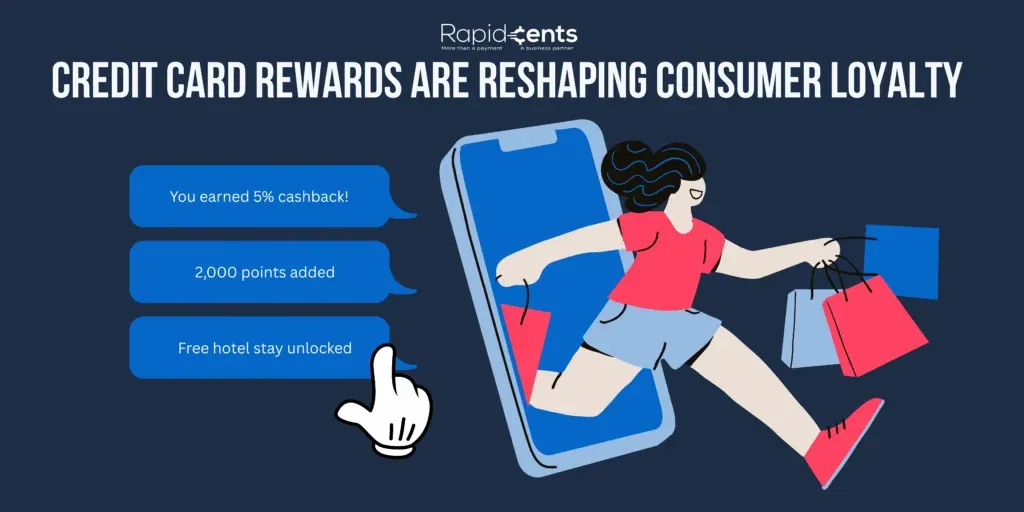
Loyalty Redefined: How Credit Card Rewards Programs Are Transforming Customer Behavior How Credit Card Rewards Programs Transform Customer Behavior
Credit card rewards programs are redefining loyalty: coupons and discounts are now baseline expectations, so card providers use detailed spending data to deliver personalized rewards. Consumers respond because frequent card use earns rewards quickly, rising confidence encourages spending, and exclusivity builds emotional bonds. For merchants, rewards drive repeat business, higher transaction values, and stronger customer retention.
Explore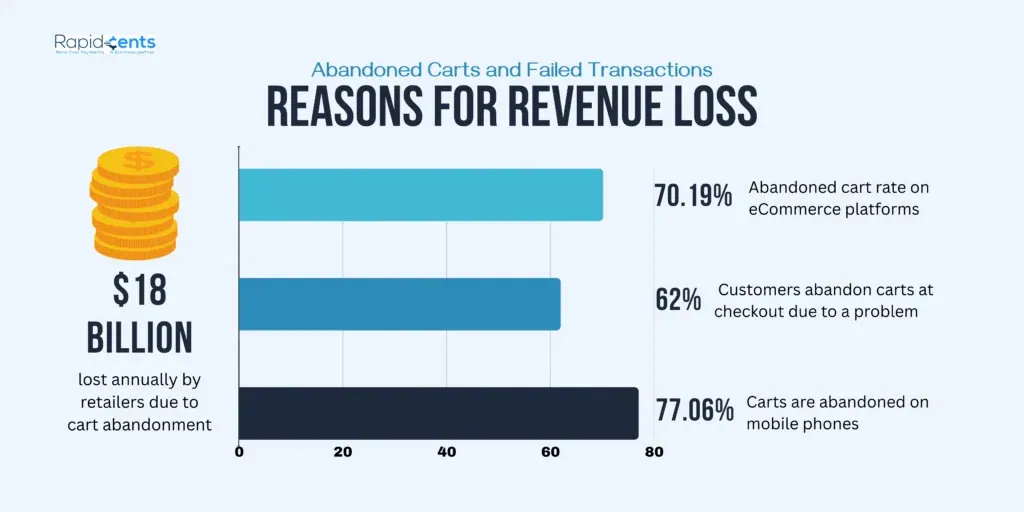
How Abandoned Carts and Failed Transactions Are Killing Sales in 2025 How Abandoned Carts and Failed Transactions Kill Sales
Abandoned carts and failed transactions are payment-processing problems, not marketing errors: retailers lose $18 billion annually to cart abandonment, the average abandonment rate is 70.19%, and 5%–10% of online payment attempts fail worldwide. Fixing them takes supported payment methods, smart routing and retry logic, transparent costs at checkout, and a frictionless, mobile-first payment experience.
Explore
The Entrepreneurs Guide on How to Sell Coffee Online How to Sell Coffee Online Successfully
To sell coffee online, pick a niche and audience, source beans by roasting in-house, partnering with local roasters or buying wholesale, and build a store on a platform like Shopify or WooCommerce. Add subscriptions and reviews, integrate a secure payment gateway with recurring billing, arrange reliable shipping, and grow through SEO, social media and email marketing.
Explore
6 Fundamentals You Need to Successfully Grow an eCommerce Business 6 Fundamentals to Successfully Grow an eCommerce Business
Successfully growing an eCommerce business requires six fundamentals: a data-driven strategy with a clear value proposition, capital to fund inventory and marketing, high-quality products that meet customer demand, the right technology for operations and customer experience, a talented collaborative team, and the patience to treat growth as a marathon rather than a sprint.
Explore
Ways to Improve Online Sales of Your Beard Care Line How to Sell More Beard Care Products Online
To sell more beard care products online, build a distinct brand identity around what makes your products unique, improve your website for mobile with high-quality product images, use SEO keywords and content marketing, engage audiences on social media, run promotions and loyalty programs, deliver responsive customer service, and continuously measure traffic and sales data to refine your approach.
Explore
The ONLY 3 Ways to Increase eCommerce Sales The Only 3 Ways to Increase eCommerce Sales
There are only three ways to increase eCommerce sales: bring more traffic to your online store through SEO, paid ads, and social media; convert more of those visitors into buyers with a simplified checkout, clear policies, and A/B testing; and increase average order value through upsells, bundles, and loyalty programs.
Explore
How International Payment Gateway Can Expand Your Business? How an International Payment Gateway Expands Your Business
An international payment gateway securely passes transaction details from customers to the merchant processor so a business can accept credit and debit card payments from abroad, not just domestically. It gives international customers the same instant, hassle-free checkout experience, letting merchants expand beyond a competitive domestic market, amplify their customer base, and increase sales and cash flow.
Explore
7 eCommerce Email Marketing Tactics to Increase Traffic & Sales 7 eCommerce Email Marketing Tactics
Seven proven email marketing tactics increase eCommerce traffic and sales: personalize emails around customer behaviour and past purchases, segment your list for targeted messages, send abandoned cart reminders within hours, automate welcome and post-purchase workflows, craft compelling subject lines, improve every email for mobile, and use clear, visually prominent calls-to-action. Together they turn routine campaigns into dynamic sales drivers.
Explore
How Buyer Personas Can Supercharge Your eCommerce Sales Buyer Personas for eCommerce: Boost Your Sales
Buyer personas are semi-fictional profiles of your ideal customers built from market research and real customer data. eCommerce stores use them to target marketing campaigns, create relevant content, guide product development, and segment audiences. To build one, gather customer data, identify shared traits, and write detailed profiles that inform your messaging, channels, and offers.
Explore
5 Reasons Why Customers Aren't Returning to Your Online Store Why Customers Don't Return to Your Online Store
Online stores lose repeat customers for five main reasons: a slow or confusing user experience, a lack of personalized recommendations and offers, inconsistent product quality, inadequate customer service, and no loyalty program rewarding repeat purchases. Fixing these five areas turns one-time shoppers into loyal, repeat customers and drives sustainable, profitable growth for the business.
Explore
Identifying and Leveraging Customer Profiles for Online Commerce: Tactics and Examples Identifying and Leveraging Customer Profiles in eCommerce
A customer profile is a detailed depiction of your ideal customer built from research and data points like location, age, interests, income, and shopping behavior. In e-commerce, profiles identify target customers, guide product selection, and power personalized campaigns. Identify buyer personas through audience research, customer feedback, email list segmentation, and behavioral analytics such as purchase frequency and spending.
Explore
Enhancing eCommerce Conversions: Three Key Strategies Three Key Strategies to Enhance eCommerce Conversions
eCommerce conversion rates improve through three staged strategies: Launch & Grow, which covers market research, website optimization, and email marketing; Accelerate, which adds A/B testing, mobile optimization, and social media marketing; and Elevate, which applies advanced analytics, retargeting, exceptional customer service, paid advertising, and a smooth, secure payment gateway that reduces cart abandonment.
ExploreRapidCents WooCommerce Payment Gateway Plugin RapidCents WooCommerce Payment Gateway Plugin
The RapidCents WooCommerce payment gateway plugin lets online merchants accept payments from major card brands like Visa, Mastercard, American Express, and Discover, plus wallets such as Google Pay and Apple Pay, directly on their own store without redirecting customers to another site. It supports subscriptions and recurring payments, Strong Customer Authentication, PCI DSS compliance, 3D Secure, and chargeback prevention.
Explore
How to Improve Customer Satisfaction through a Seamless Payment Process Customer Satisfaction Through Seamless Payments
To improve customer satisfaction through a smooth payment process, remove checkout friction: speed up page loads, simplify forms, display transparent pricing, offer guest checkout, and support multiple payment methods including mobile wallets. Visible security such as SSL and PCI compliance builds trust, while KPIs like conversion rate and cart abandonment show whether refinements are working.
Explore
How Payment Gateway Companies Can Help You Scale Your E-commerce Business How Payment Gateways Help You Scale E-commerce
Payment gateway companies help e-commerce businesses scale by acting as the secure link between a store and customers' banks. They expand market reach with international payment methods and currencies, reduce cart abandonment through fast, secure checkout, grow revenue via subscription billing and fraud prevention, and simplify operations with automation, real-time data, and high-volume scalability.
Explore
Future-Proof Your Business with Flexible Online Credit Card Processing Options Flexible Online Credit Card Processing Options
Flexible online credit card processing lets a business accept many payment methods—credit and debit cards, digital wallets and buy now, pay later—through one adaptable system. It supports multi-currency sales, mobile payments and subscription billing, which raises conversion rates, improves the customer experience and lets payment operations scale as markets and consumer habits change.
Explore
Optimizing Online Credit Card Gateways for High-Traffic Events and Sales Optimizing Credit Card Gateways for High-Traffic Sales
To improve an online credit card gateway for high-traffic events, load test the infrastructure against simulated peak traffic, plan capacity for the expected transaction volume, reduce latency with CDNs and caching, harden security with encryption, fraud detection, and PCI DSS compliance, and monitor gateway metrics in real time to catch bottlenecks before they cause payment failures.
Explore
Leveraging E-Payment Software for Business Growth and Strategy Leveraging E-Payment Software for Business Growth
E-payment software helps businesses grow by automating transaction processing, invoicing, and reconciliation, cutting administrative costs, and offering customers convenient payment options that lift conversion. It also enables cross-border sales in multiple currencies, generates transaction data for behaviour and trend analysis, and supports strategic moves such as new markets, recurring revenue models, and payment innovation.
Explore
Importance of User-Friendly Interfaces in Online Payment Processing Why User-Friendly Interfaces Matter in Online Payments
User-friendly interfaces matter in online payment processing because they reduce friction at checkout, which lifts conversion rates and cuts cart abandonment. Clear calls to action, simplified forms, responsive design across devices, and visible security indicators such as SSL badges build the trust customers need to complete a transaction and return to the platform.
Explore
How Restaurant Food Ordering Systems Boost Revenue and Cut Costs Food Ordering Systems: Boost Revenue, Cut Costs
Restaurant food ordering systems boost revenue by extending reach through web and mobile storefronts, improving order accuracy, enabling personalized upselling, and driving repeat business with built-in loyalty programs. They cut costs by automating order capture straight to the kitchen, tracking inventory in real time to reduce waste, and using predictive analytics to staff accurately for peak periods.
Explore
Fast Food for Thought: Analyzing the Impact of Ordering Systems on Restaurant Revenue How Ordering Systems Impact Restaurant Revenue
Digital ordering systems, spanning mobile apps, online platforms, and in-store kiosks, directly increase fast-food restaurant revenue. They speed up throughput so more customers are served, cut order abandonment with pre-ordering, extend reach beyond the local area, enable data-driven menu and pricing decisions, and create upsell opportunities through recommendations, bundle deals, and loyalty rewards.
Explore
Why Your Restaurant Needs an Online Takeaway Ordering System Why Your Restaurant Needs an Online Takeaway Ordering System
An online takeaway ordering system lets customers order directly from a restaurant's website or app, increasing sales through wider reach and higher average order values while reducing errors and overhead. With 51% of Canadians ordering food online from third-party platforms 2 to 4 times a month, direct online ordering has become essential for restaurant growth.
Explore
How Food Delivery Systems Are Changing the Way We Dine How Food Delivery Systems Are Changing Dining
Food delivery systems have moved from convenience to core restaurant infrastructure. App-based ordering expands a restaurant's reach, adds a revenue stream that is easier to control on slow days, and produces customer data for menu decisions. Success requires balancing delivery with in-store dining, protecting food quality in transit, and, for many restaurants, building a branded delivery platform of their own.
Explore
Enhancing Restaurant Operations with Online Ordering Systems Online Food Ordering System for Restaurants
An online food ordering system gives restaurants customer convenience, higher sales from an expanded catchment area and larger orders, better order accuracy through visual confirmation, simplified operations with POS integration, rich customer data, delivery-service integration, and contactless options. Setup and transaction fees are typically recovered through increased revenue, lower labour costs, and fewer order errors.
Explore
Online Ordering vs. Third-Party Delivery Apps: Which Is Better for Your Restaurant? Online Ordering vs Third-Party Delivery Apps
Third-party delivery apps give restaurants convenience and access to a large user base, but they charge commission fees on every order, reduce control over the delivery experience, and keep the customer data. A direct online ordering system offers a branded storefront, menu control, transparent pricing with low or no commissions, and full customer insights, favouring restaurants that want loyalty and margin.
Explore
Restaurant Ordering System That Every Restaurant Should Have Restaurant Ordering System Essentials
A restaurant ordering system is software that lets customers order digitally instead of by phone or in person. Every restaurant needs one with smooth online ordering, menu management, POS integration, real-time order tracking, inventory management, customer relationship tools, loyalty programs, and PCI-compliant secure payments, scalable from a single location to a multi-location chain.
Explore
Optimizing E-commerce: Enhancing Payment Processing for Online Businesses Enhancing Payment Processing for Online Businesses
To improve payment processing for an online business, choose a reliable payment gateway that encrypts transactions, support multiple payment methods, simplify checkout to a few clear steps, enforce security measures like PCI DSS compliance and tokenization, monitor transaction data for failures, and keep pricing and refund policies transparent to build customer trust.
Explore
Mastering Customer Retention: How to Create a Magnetic Online Store that Keeps Shoppers Coming Back Mastering Customer Retention for a Magnetic Online Store
To master customer retention, understand the psychology of loyalty: trust, emotional connection, perceived value, and social proof. Deliver outstanding experiences through user-friendly design, fast pages, simplified checkout, and personalization. Build trust with exceptional service, reviews, and loyalty programs, nurture customers with segmented email and content marketing, and track metrics like repeat purchase rate and churn while A/B testing improvements.
Explore
Effective Strategies to Drive Free Traffic to Your Online Store Effective Ways to Drive Free Traffic to Your Online Store
To drive free traffic to an online store, understand your target audience with market research and buyer personas, improve for search engines with keyword research and quality content, run consistent content marketing, engage audiences on the right social platforms, partner with relevant influencers, build and segment an email list, contribute to online communities, and publish guest posts on industry websites.
Explore
From SEO to Social Media: The Essentials of Digital Marketing for eCommerce Digital Marketing Essentials for eCommerce
Digital marketing for eCommerce rests on a handful of essentials: SEO to rank product and category pages, social media to build reach and engagement, paid advertising for targeted traffic, email marketing for direct personalized outreach, content marketing to build trust, and analytics to measure traffic, conversions, and ROI so campaigns keep improving.
Explore
The Customer Retention Checklist: How to Keep Customers Coming Back to Your Online Store Customer Retention Checklist: Keep Shoppers Coming Back
To keep customers coming back to an online store, learn about them through surveys and data analysis, personalize recommendations and offers, provide responsive multi-channel customer service, resolve complaints quickly, build proactive support like FAQ sections, reward loyalty with points and referral programs, simplify checkout to three steps, communicate through newsletters and social media, and continuously improve the website.
Explore
From Browsing to Buying: How Retargeting Can Convert Customers Retargeting: Turn Browsers Into Buyers
Retargeting is marketing to consumers who have already visited your website or shown interest in your products. Because these shoppers already know your brand, they convert more readily than cold audiences. Effective retargeting combines audience data, segmentation, personalized ads, A/B testing, controlled ad frequency, and cross-channel placement, measured with KPIs like click-through and conversion rates.
Explore
Why Pinterest is the Secret Weapon for Ecommerce Marketing Why Pinterest Is the Secret Weapon for Ecommerce Marketing
Pinterest is an overlooked ecommerce marketing channel with roughly 500 million monthly users who browse for ideas and inspiration rather than entertainment. Brands that post inspirational content, organize product boards, enable buyable pins and shopping ads, and link pins to product pages can reach committed shoppers — studies cited show 85% of weekly Pinterest visitors have purchased from pins they encountered.
Explore
Revolutionizing eCommerce: The Impact of Instagram Revolutionizing eCommerce: The Impact of Instagram
Instagram changed eCommerce by letting brands sell where consumers already spend their time. Shoppable posts let users buy without leaving the app, business accounts add audience analytics, and influencer partnerships extend reach. Combined with affordable targeted advertising and strong visual storytelling, Instagram gives even small businesses a cost-effective way to grow followers, brand awareness and sales.
Explore
Mastering the Art of CRO: Tips and Tricks for Success Mastering the Art of CRO: Tips and Tricks for Success
Conversion rate optimization (CRO) is the process of turning more website visitors into customers or subscribers. To master it, analyze your site with tools like Google Analytics, write a clear value proposition, craft visible calls to action, run A/B tests on design elements, and keep improving user experience with performance data.
Explore
The Impact of Pricing on eCommerce Sales The Impact of Pricing on eCommerce Sales
Pricing is often the deciding factor in whether an online shopper buys from your store or a competitor's. Avoid overpricing, which drives shoppers elsewhere, and underpricing, which signals low quality and erodes profit. Research competitor prices, match the market average while adding perks like free shipping, run well-planned discounts, and apply dynamic pricing carefully during peak demand.
Explore
Grow Your eCommerce Business with Conversion Rate Optimization Conversion Rate Optimization to Grow Your eCommerce Store
To grow an eCommerce business with conversion rate optimization, set clear conversion goals and key metrics, improve the website with visible CTAs, mobile-friendly design, A/B testing, and security, monitor strategies with heat maps, scroll maps, surveys, and metrics like bounce rate, then analyze the results to refine pages, campaigns, and content for higher conversions.
Explore
Exploring the Benefits of Conversion Rate Optimization Exploring the Benefits of Conversion Rate Optimization
Conversion rate optimization (CRO) is the process of increasing the share of website visitors who take action and make a purchase. Its benefits for ecommerce stores include improved user experience, content tuned to what visitors respond to, data-backed decisions through A/B testing, higher mobile conversion rates, better-performing landing pages, and ultimately more leads, sales, and revenue.
Explore
12 Proven Tactics to Boost Your eCommerce Email Marketing 12 Proven Tactics to Boost Your eCommerce Email Marketing
To boost eCommerce email marketing, personalize messages, segment your audience, write clear subject lines, add visible call-to-action buttons, improve for mobile, track analytics, A/B test campaigns, use visuals and interactive elements, offer exclusive deals, automate welcome and abandoned-cart emails, and create urgency with limited-time offers. These tactics increase open rates, engagement, and purchases.
Explore
The Benefits of Automated Email Marketing for Ecommerce The Benefits of Automated Email Marketing for Ecommerce
Automated email marketing helps ecommerce stores convert and retain customers at low cost. It lets you segment audiences and personalize messages, schedule sends for when customers actually read email, run A/B tests, and track opens and clicks instantly. Triggered emails such as welcome messages, cart reminders and price-drop alerts bring shoppers back to your store automatically.
ExploreOnline Payment Gateway: How Enabling One Can Boost Your Business Sales Online Payment Gateway: How It Boosts Business Sales
An online payment gateway is the secure link in an online transaction: it encrypts the customer's card information and forwards it to the payment processor, card company, and bank for approval. Enabling one lets a business accept payments around the clock and boosts sales through last-minute deals, online invoicing, affiliate programs, and automatic recurring payments.
ExploreThe Need of Adaptable Online Payment Tools in Your Business Why Your Business Needs Adaptable Online Payment Tools
Adaptable online payment tools let a business accept payment however the customer prefers — through an online store checkout, a virtual terminal, a QR code, or payment requests sent by text and email. They deliver instant, contactless transactions, better customer convenience, and higher payment reliability and security than relying on cash and cheques.
Explore
Rails of clothing on display in a retail store Why Your Business Needs Online Payment Solutions
Online payment solutions let merchants accept card-not-present transactions, credit and debit payments made through an online marketplace, with funds reaching the bank account within one or two business days. They enable international sales with prices shown in the customer's preferred currency, real-time checkout, and flexible payment modes that increase overall sales.
Explore


Frequently asked questions
How does the way I take payment affect conversion?
A checkout that asks for less, remembers a returning customer’s card through tokenization and offers the wallet the customer already uses converts better than one that does not; the articles here put numbers on each. Payment links and invoicing move the same logic into sales that never touch a checkout page.
Should I offer recurring billing or subscriptions?
Where the product supports it, recurring revenue smooths cash flow and raises lifetime value — and brings consent, disclosure and cancellation rules with it, which clause G.4 of the Services Agreement sets out. The articles explain what to collect at sign-up so a renewal is not a chargeback.
Does offering more payment methods always help?
Not always. Each method has a cost, a settlement time and a dispute profile, and a method nobody uses is a line on the statement. The articles describe how to read your own customers’ card mix before adding one.
How do I use payment data to grow?
The dashboard shows volume, average ticket, repeat customers and refunds by channel, which is enough to see where revenue comes from and where it leaks. The reporting articles explain which views matter and how to export them into whatever you use for planning.