Operations & finance, Articles
Deposits and reconciliation. 17 pieces in articles, written for merchants worldwide: what operations & finance covers, what to check on your own statement, and the decisions it changes.
Operations & finance
Operations & finance
Deposits and reconciliation.
On this shelf

Tax forms and a calculator laid out on a desk Net vs Gross Deposits: Why Your Bank Deposit Doesn't Match Your Sales
With gross deposits, your processor sends the full sale amount to your bank and collects its fees in one monthly debit. With net deposits, fees are subtracted from every payout before it lands. Gross makes bookkeeping and fee auditing dramatically easier because revenue and cost arrive as separate, visible numbers; net smooths cash flow but hides your true processing cost inside every deposit.
Explore
Fintech in Healthcare: Reduce No-Shows, Late Payments & Billing Errors Fintech in Healthcare: Reduce No-Shows & Billing Errors
Modern payment platforms help healthcare providers reduce no-shows, late payments, and billing errors by combining automated appointment reminders with pre-payment links and deposits, instant digital invoicing with multiple payment methods, and automated data entry and reconciliation. The result is faster collections, less administrative work for staff, and a clearer, more predictable billing experience for patients.
Explore
Which Provider Has the Best Virtual Terminal Features? Which Provider Has the Best Virtual Terminal Features?
The best virtual terminal combines an easy interface, recurring billing, multi-user permissions, advanced reporting, custom fields, PCI-DSS security, and integrations with CRM and accounting tools. PayPal, Stripe, Square, and Helcim all offer strong options, while RapidCents stands out with saved customer profiles, industry-specific customization, layered fraud protection, and transparent pricing.
Explore
Tired of Late Payments? 10 Ways to Get Clients to Pay Up on Time 10 Ways to Get Clients to Pay On Time
Getting clients to pay on time comes down to process, not luck: set payment terms in writing before work begins, invoice immediately, accept multiple payment methods, automate reminders, charge modest late fees, and use milestone payments for big projects and recurring billing for retainers. A 2023 PYMNTS survey found 81% of businesses reported an increase in delayed payments.
Explore
A Merchant's Risk Checklist for Choosing a Payment Processor A Merchant's Risk Checklist for Choosing a Payment Processor
Before signing with a payment processor, merchants should vet six risk areas: the provider's financial stability and funding sources, how regulatory compliance costs are passed on, the reliability of its technology infrastructure, the quality and consistency of customer service, its geographic reach for future expansion, and verifiable evidence of scalability — analysis that goes well beyond comparing prices.
Explore
How Payment Gateway Costs Influence Your Pricing Strategy How Payment Gateway Costs Shape Pricing Strategy
Payment gateway costs—per-transaction fees, setup charges, monthly fees and hidden extras like chargebacks and currency conversion—reduce the revenue kept from every sale. Businesses either raise prices to pass fees on or absorb them to stay competitive. Negotiating volume discounts, comparing providers and steering customers toward lower-fee payment methods keeps pricing profitable.
Explore
How Subscription-Based Businesses Can Manage Online Credit Card Processing Rates Managing Card Processing Rates for Subscriptions
Online credit card processing rates combine interchange charges, network assessment fees and negotiable processor markup. Because subscription businesses pay these fees on every renewal, small rate differences compound into thousands of dollars a year. Managing them means negotiating with volume data, offering lower-fee methods like ACH, seeking interchange-plus pricing and reviewing rates regularly.
Explore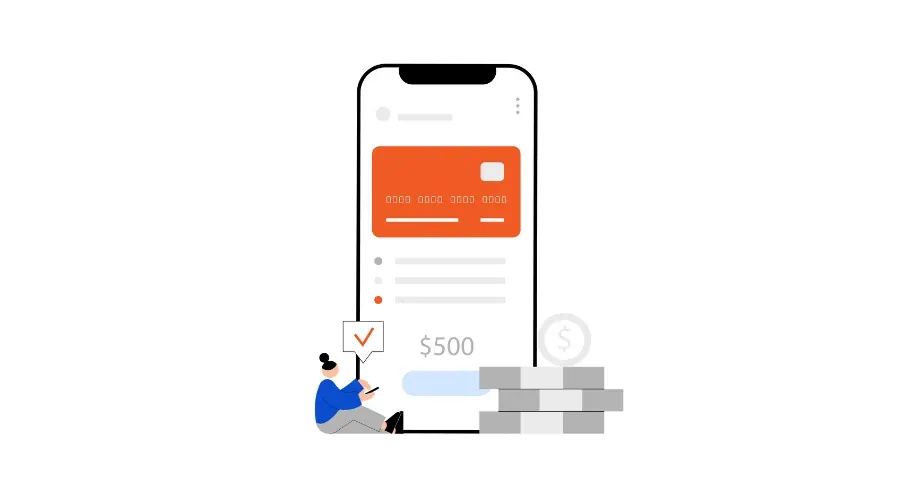
Virtual Terminal Processing for Subscription-Based Businesses Virtual Terminal Processing for Subscription Businesses
Virtual terminal processing lets subscription businesses enter and process card payments through an online interface, no card machine required, and automate recurring billing on custom schedules. That automation keeps revenue predictable, improves cash flow forecasting, reduces administrative overhead, and gives subscribers a hassle-free experience, with PCI compliance, encryption, and tokenization protecting stored payment details.
Explore
The Legal Implications of Payment in Process Disputes Payment in Process Disputes: Legal Implications
A payment in process is a transaction that has been authorized but not yet settled. Disputes at this stage include non-arrival of funds, amount or currency disagreements, chargebacks, and unauthorized transactions. Remedies range from direct negotiation and mediation to arbitration and litigation, while clear policies, strong verification, and thorough records help prevent disputes in the first place.
Explore
How Credit Processing Software Helps Businesses Stay Agile Credit Processing Software for Agility
Credit processing software automates the full payment lifecycle—accepting card payments, electronic transfers and recurring billing—while providing real-time transaction data. That automation removes manual bottlenecks, and live reporting lets businesses adjust pricing, add payment methods and respond to market changes quickly, making the organization more agile, efficient and secure.
Explore
Enhancing Efficiency in Payment Processing with Automation Enhancing Payment Processing Efficiency with Automation
Payment processing automation uses robotic process automation, artificial intelligence, and machine learning to replace manual tasks like data entry, invoice processing, payment verification, and reconciliation. The result is fewer human errors, processing times cut from days to minutes, real-time fraud detection, better scalability, and meaningful cost savings, provided businesses assess workflows, choose the right tools, train staff, and monitor performance.
Explore
Customizing Your Business Card Payment Processing Setup for Maximum Flexibility Customizing Your Card Payment Processing for Flexibility
A flexible card payment processing setup is built in five steps: assess your transaction volume, transaction types, and customer payment preferences; choose customization options such as tailored pricing, multiple payment methods, and branding; negotiate features and contract terms with processors; integrate with your existing systems; then monitor performance and adapt as your business and payment technology evolve.
Explore
Why You Should Use RapidCents' Billing and Invoicing System Why Use RapidCents' Billing and Invoicing System
An online billing and invoicing system replaces slow, error-prone paper invoicing with cloud-based invoices you can create in minutes and send instantly to domestic or international clients. RapidCents' system stores client data securely, supports recurring billing with payment reminders for subscription businesses, offers multi-currency invoicing with automatic tax calculation, and speeds up cash flow for merchants and freelancers alike.
Explore
Cost-Effective Solutions: How Transaction Processing Companies Can Save Your Business Money How Transaction Processing Companies Save Businesses Money
Transaction processing companies save businesses money by automating manual financial tasks, reducing errors and reconciliation work, offering competitive and negotiable transaction charges, and bundling extra services such as data analytics, fraud prevention, invoicing, and system integration. They also shoulder regulatory compliance monitoring, helping businesses avoid costly penalties while freeing staff for revenue-generating work.
Explore
Credit Card Transaction Fees and Chargebacks: Minimizing Financial Loss Credit Card Transaction Fees and Chargebacks
Credit card transaction fees break down into interchange fees (paid to cardholders' banks), processing fees (charged by payment processors), and assessment fees (charged by card networks like Visa and Mastercard). Chargebacks compound the cost: merchants lose the transaction amount plus dispute fees typically ranging from $15 to $100. Businesses minimize losses by monitoring transactions, publishing clear refund policies, keeping billing descriptors simple, documenting everything, and securing payment processing.
ExploreTax forms and a calculator laid out on a desk How to Better Manage Business Transactions
Better transaction management starts with an improved process: list every recurring task, assign owners and timelines, and review the system periodically. Add structured third-party management, adopt tools like virtual terminals that accept payments from anywhere, automate repetitive work such as invoicing and reconciliation, and set fixed times for transaction reviews and final approvals.
ExploreThe Need of Advanced Billing and Invoicing Software in the 21st Century Why Your Business Needs Advanced Billing Software
Advanced billing and invoicing software replaces error-prone paper invoices and spreadsheets with custom templates, ERP-linked data that stays up to date, and a single dashboard covering invoice creation through sales reporting. It reduces paperwork, tracks paid and outstanding amounts, and lets customers pay invoices online without visiting your shop.
Explore


Frequently asked questions
How do I reconcile card deposits against my bank statement?
Start from the settlement report in the dashboard, which lists every batch, the fees deducted and the deposit each one funded; match the deposit amount and date to the bank line. The articles on this shelf walk through the common mismatches — a batch that closed after cutoff, a refund netted against a sale, a reserve deduction.
What do I need to keep for my accountant and for a dispute?
Statements, settlement reports, receipts and proof of delivery, for the period the card networks and tax law require. Clauses G.2, G.4, G.6 and G.8 of the Services Agreement set the record-keeping duties, and the sixty-day window at clause H.5 for objecting to a statement is the reason to read them when they arrive.
When does money from a sale reach my account?
Settled funds are paid out on the schedule for your account; the date a credit or a deposit appears at your bank is the bank’s. Clause H.5 gives you thirty days to report a payout that did not arrive, so the time to raise one is the week it was due, not the quarter-end.
How should I budget for processing costs?
From your effective rate — total fees divided by processed volume — rather than from a headline rate, because the card mix moves the real number. The pricing-transparency guide explains the arithmetic, and Fee Check does it from your own statement.