


Connect payments to the systems you already use
Integrating payments with operational software removes the second keying: a total typed into the register and again into the terminal, reconciled by hand at day end. RapidCents connects through certified partner connectors for common POS, ERP and commerce platforms, through RapidBridge where no connector covers the system, and semi-integrated or fully integrated at the lane. Certification is granted against a specific software version, so that check comes before hardware is ordered, and one site pilots before an estate follows.
- Canadian specialists
- Interchange-plus available
- Guided migration
- Post-launch support
Who this solution is for
Retailers on an inventory POS
Where a sale should decrement stock and settle a card in one action rather than two.
Restaurants on a partner POS
Where a check closes at the terminal without a server re-keying the total.
Businesses on ERP or booking software
Where the payment has to land against the right invoice, job or appointment to be useful at all.
Common challenges
Double entry and transposed totals
Two keyings of the same number produce mismatches that day-end reconciliation finds and someone then has to chase.
Certification is version-specific
An integration certified for one POS version is not automatically certified for the next. This is the check that gets skipped.
Settlement that does not map to the ledger
Tips, taxes and refunds have to land in the right general ledger accounts, or finance rebuilds the mapping by hand every month.
The RapidCents approach
Confirm the software, the version and whether a certified integration exists for it.
Choose the depth: semi-integrated sends the amount, fully integrated sends line items.
Configure in the sandbox and run the partner certification test cases, refunds included.
Pilot on one lane or one site before the rest of the estate follows.
Have finance validate the first full settlement cycle against the ledger before the pilot is extended.
Recommended capabilities
Semi and full integration
Amount-only push from the register, or item-level detail that supports inventory-linked returns and richer reporting.
Certified partner connectors
Connectors for common POS, ERP and commerce platforms, with certification confirmed against your specific version.
RapidBridge
Connects RapidCents to software you already run without rebuilding it, for cases where no certified connector covers your system.
Two-way settlement sync
Batch totals post back to general ledger codes, with tips and taxes mapped to the accounts they belong in.
Refund from the register
A return initiated in the POS processes the card credit on the terminal, so the stock movement and the refund are one action.
Related products
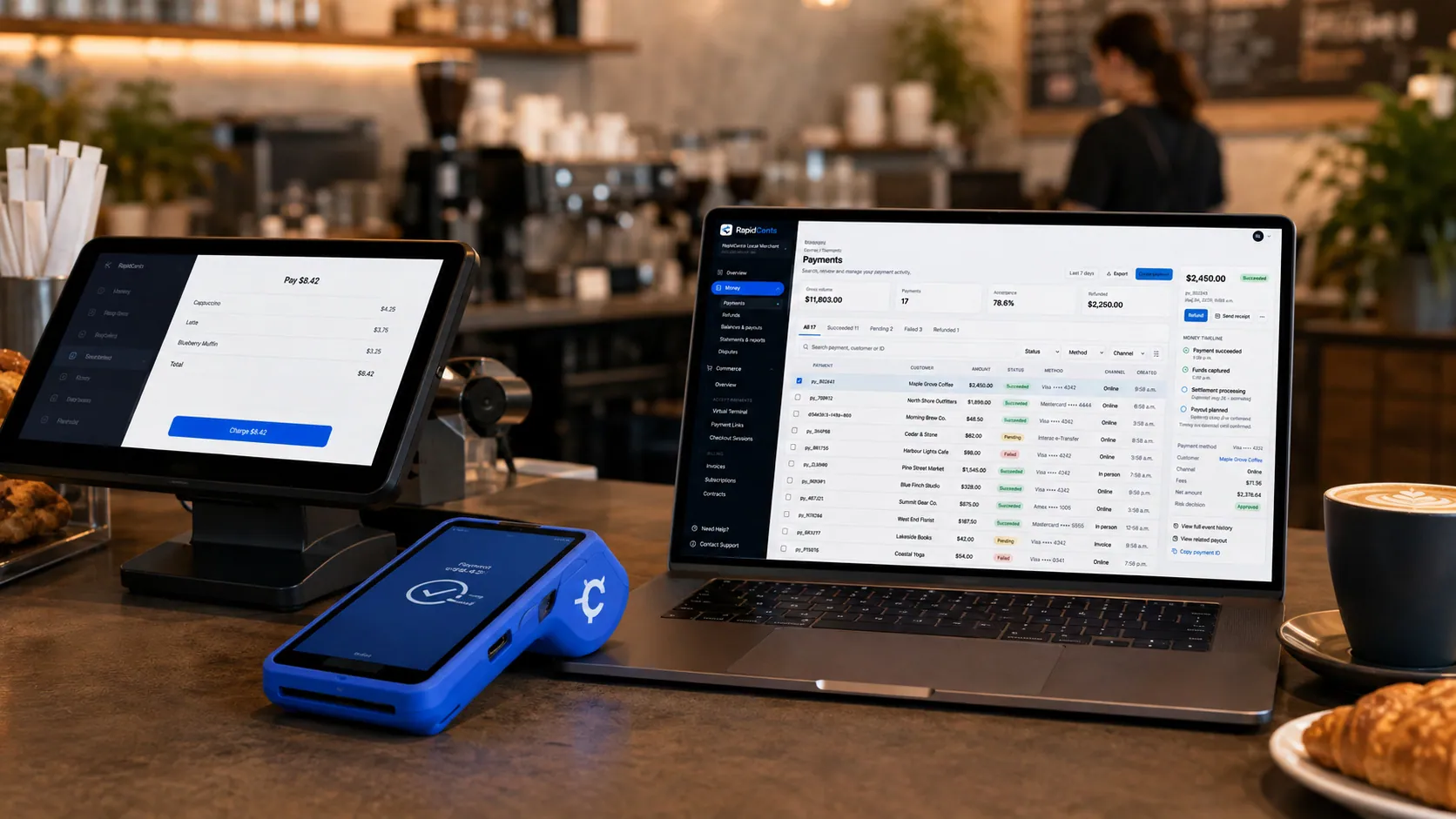
Payments taken inside existing business software through RapidCents, with the terminal and dashboard in the same workspace. Integrated Payments
RapidCents integrated payments connect certified POS and ERP systems so sale amounts, tips, refunds and…
Explore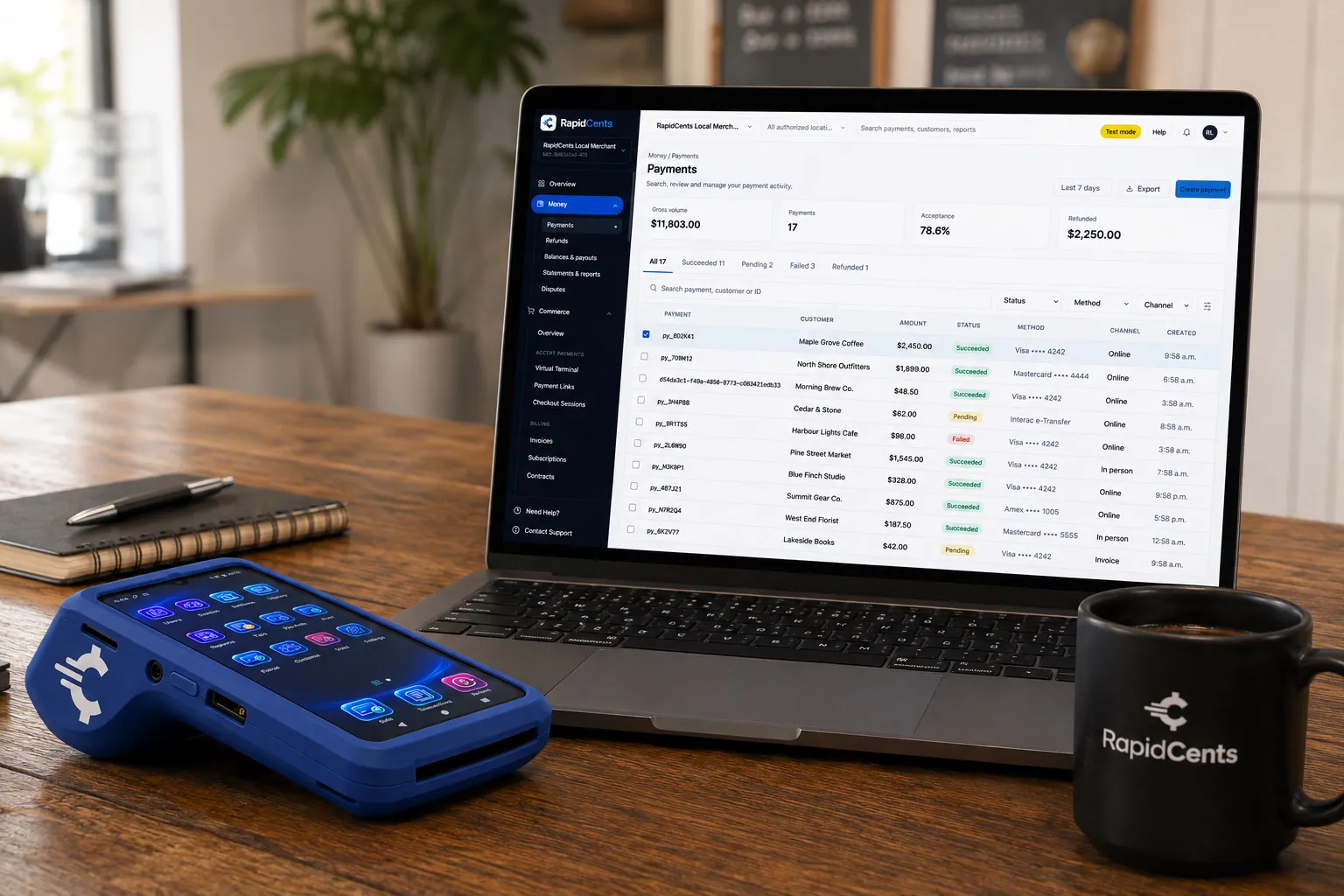
A payment-gateway integration desk: API response on screen, RapidCents terminal ready for a test sale. Payment Gateway
The RapidCents payment gateway exposes REST endpoints for authorize, capture, void, refund and tokenize…
Explore


Implementation approach
Discovery workshop
Document POS version, lane count and the chart of accounts the settlement has to map into.
Sandbox build
Partner certification test cases completed against test transactions, refunds included.
Pilot site
One location live before a chain rollout, which is where mapping errors surface cheaply.
Hypercare
Daily check-ins through the first settlement cycle, while reconciliation problems are still easy to correct.
What does not change
Your software
Integration connects to the POS, ERP or booking system you run. It does not replace it, and staff keep the interface they know.
Your chart of accounts
Settlement maps into the general ledger structure you already use rather than requiring a new one.
Staff workflow at the register
Cashiers scan and tender as before. What changes is that the terminal no longer needs the total typed into it.
Frequently asked questions
How do I find out whether my POS is certified?
An integration specialist confirms certification for your specific version, not just the product name. Version matters because certification is granted against a build, and an upgrade can move you off a certified one.
Semi-integrated or fully integrated?
Semi-integrated is less work and narrows what touches card data, and it is enough if you only need the totals to match. Fully integrated sends line items, which is what enables inventory-linked returns and item-level reporting.
What if there is no connector for my software?
RapidBridge exists for exactly that case: it connects RapidCents to software already in place without rebuilding it. Where the software has its own API, a custom integration against the REST API is the other route.
Will integration change how the terminal is used?
In one direction: the amount arrives from the register instead of being typed. Tips, receipts and batch close work as they do now.
Who resolves it when a sale posts but the payment does not?
That mismatch is what the pilot and the hypercare period exist to surface. The detail sits on both sides — the POS record and the RapidCents transaction — so the pair can be identified rather than inferred.
Does integration change my PCI scope?
It can, in either direction. A semi-integrated lane where the card is read on the terminal keeps card data out of the POS. An integration routing card data through your own systems widens the assessment. This is worth deciding deliberately rather than discovering at validation.
Can a refund be started from the register?
Yes, with an integrated lane. A return initiated in the POS processes the card credit on the terminal, so the stock movement and the refund are one action instead of two records someone has to match at day end.
How do tips and taxes reach the right ledger accounts?
Through the settlement sync: batch totals post back to general ledger codes with tips and taxes mapped to the accounts they belong in. Getting that mapping wrong is the most common integration defect, which is why a pilot site and a finance check on the first full settlement cycle come before a wider rollout.
Take the next step
Talk to a RapidCents specialist
RapidCents Fee Check reads a processing statement and shows interchange separately from the markup. Upload a statement for an instant breakdown, or open a merchant account and start accepting payments on one account.
- No obligation
- Payment specialists, not a call centre
- Secure statement upload



