Payments for laundry and dry cleaning: drop-off, pickup and route accounts
A dry cleaner collects at drop-off or at pickup, and the ticket is rarely paid by the person who dropped it off. RapidCents keeps a customer profile with the card on file so a regular's order is settled the moment it is tagged, runs a payment terminal at the counter, and invoices commercial route accounts, from hotels to uniform contracts, on a monthly recurring charge. Dry cleaning plants process under MCC 7216.

- PCI DSS Level 1
- SOC 2 Type II
- All major card brands: Visa · Mastercard · Amex · Discover · PIN debit
- Interchange-plus available
- Specialist onboarding support
Operational workflows
Ticket written and card on file authorized at drop-off
Garments tagged, cleaned and priced against the customer profile
Balance charged to the stored card at pickup
Hotel and restaurant route stops invoiced monthly
Payment challenges
Orders left on the rail
Garments cleaned weeks ago hang unclaimed, so the labour is spent long before anyone charges for the order.
Price known only after inspection
The drop-off ticket is an estimate until a stain or a torn lining changes the job, so the amount authorized is not the amount owed.
Route accounts on terms
Hotels and restaurants send bags every day and pay once a month, so a full month of routes rides on one invoice clearing.
Choose the right payment setup for Laundry & Dry Cleaning
Choose dry cleaning payment processing
For Laundry & Dry Cleaning, map sign-up, scheduled billing, and renewal, the counter or service point, and each location and consolidated oversight before choosing a setup. Select channels that match those moments, then confirm that the chosen solution genuinely covers each channel.
Payment hardware for Laundry & Dry Cleaning
For Laundry & Dry Cleaning, start with the place customers pay in person: a countertop terminal, smart terminal, or portable device depending on the workflow. Verify that the hardware fits the real volume and workspace.
Compare payment processing fees
For Laundry & Dry Cleaning, request a written fee breakdown covering scheduled billing, declined cards, and cancellations and cost detail by device and location. Compare the effective cost across the real card and channel mix; do not choose on a headline rate alone.
Set up or switch Laundry & Dry Cleaning payments
To set up Laundry & Dry Cleaning payments, document the real payment journey, confirm compatibility before purchase, then test a real payment flow before going live.
Recommended products
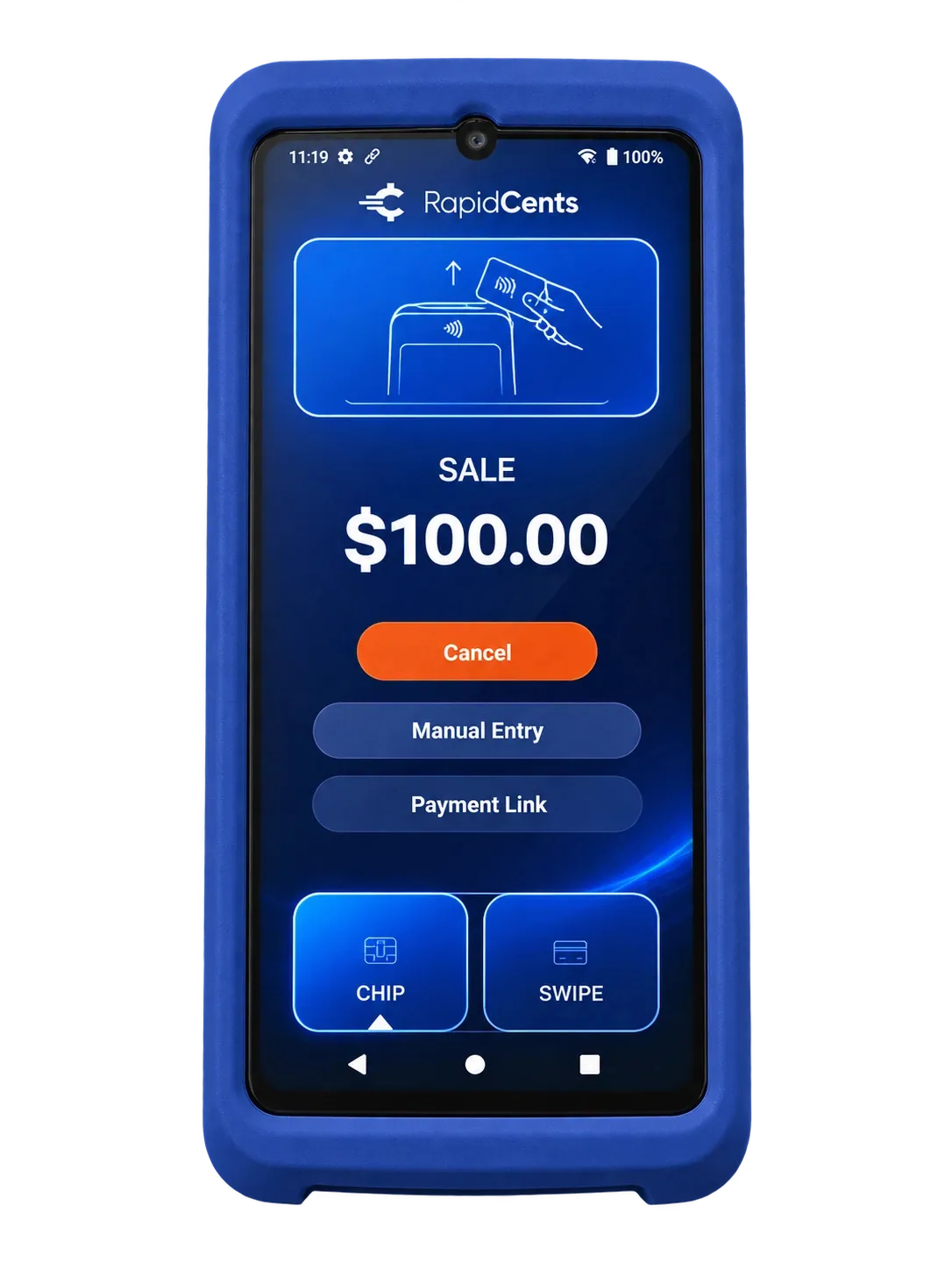
The RapidCents Rivo Go standing upright in its blue silicone case, showing the full-touch sale screen a customer reads across the counter. Payment Terminals
RapidCents payment terminals cover countertop, mobile and smart form factors so you can accept chip…
Explore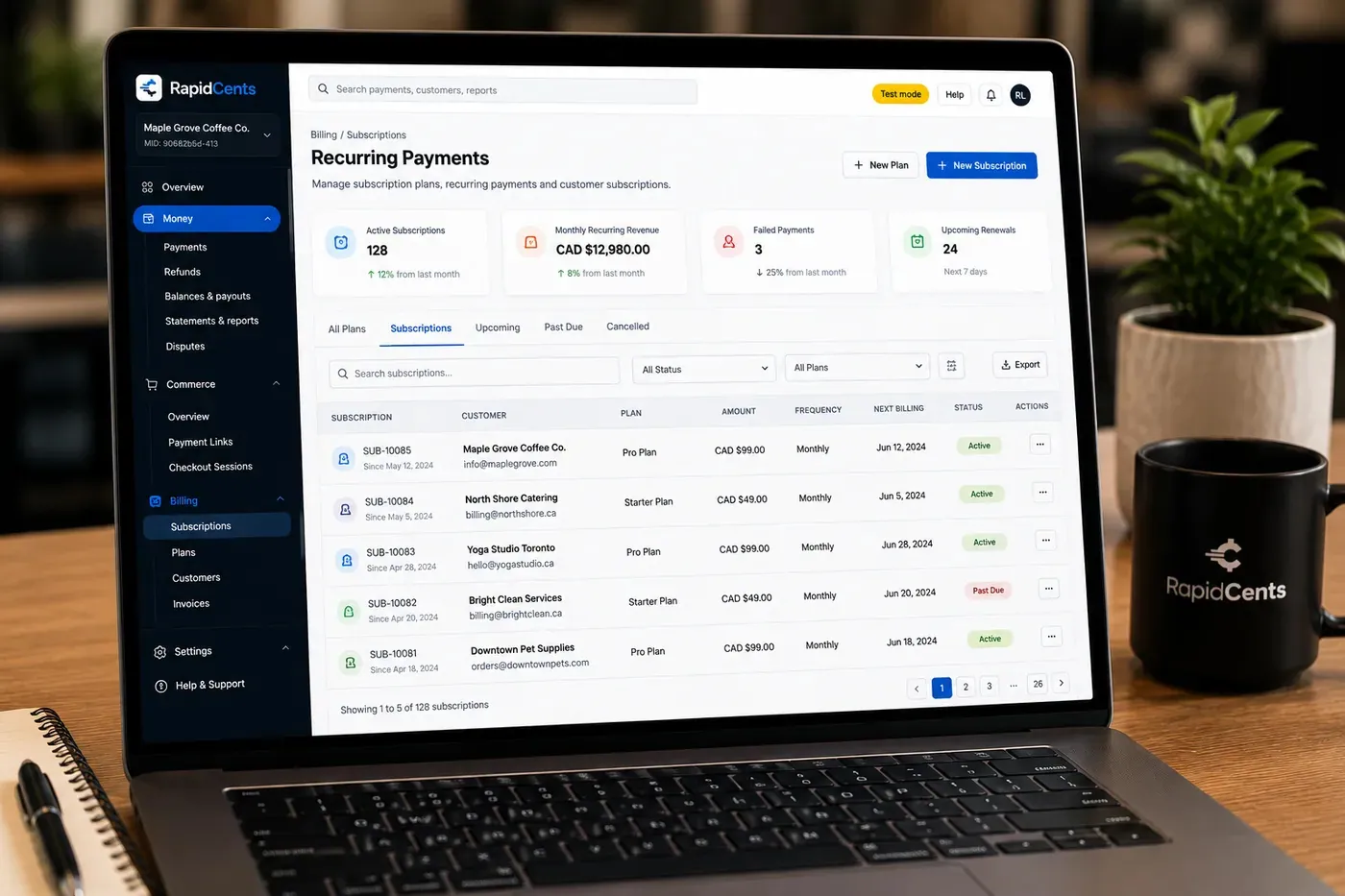
The RapidCents recurring payments screen showing active subscriptions, monthly recurring revenue, failed payments and upcoming renewals, above a list of subscriptions with their plan, amount, frequency and next billing date. Recurring Payments
RapidCents recurring payments manage subscription plans, membership renewals and installment schedules with…
Explore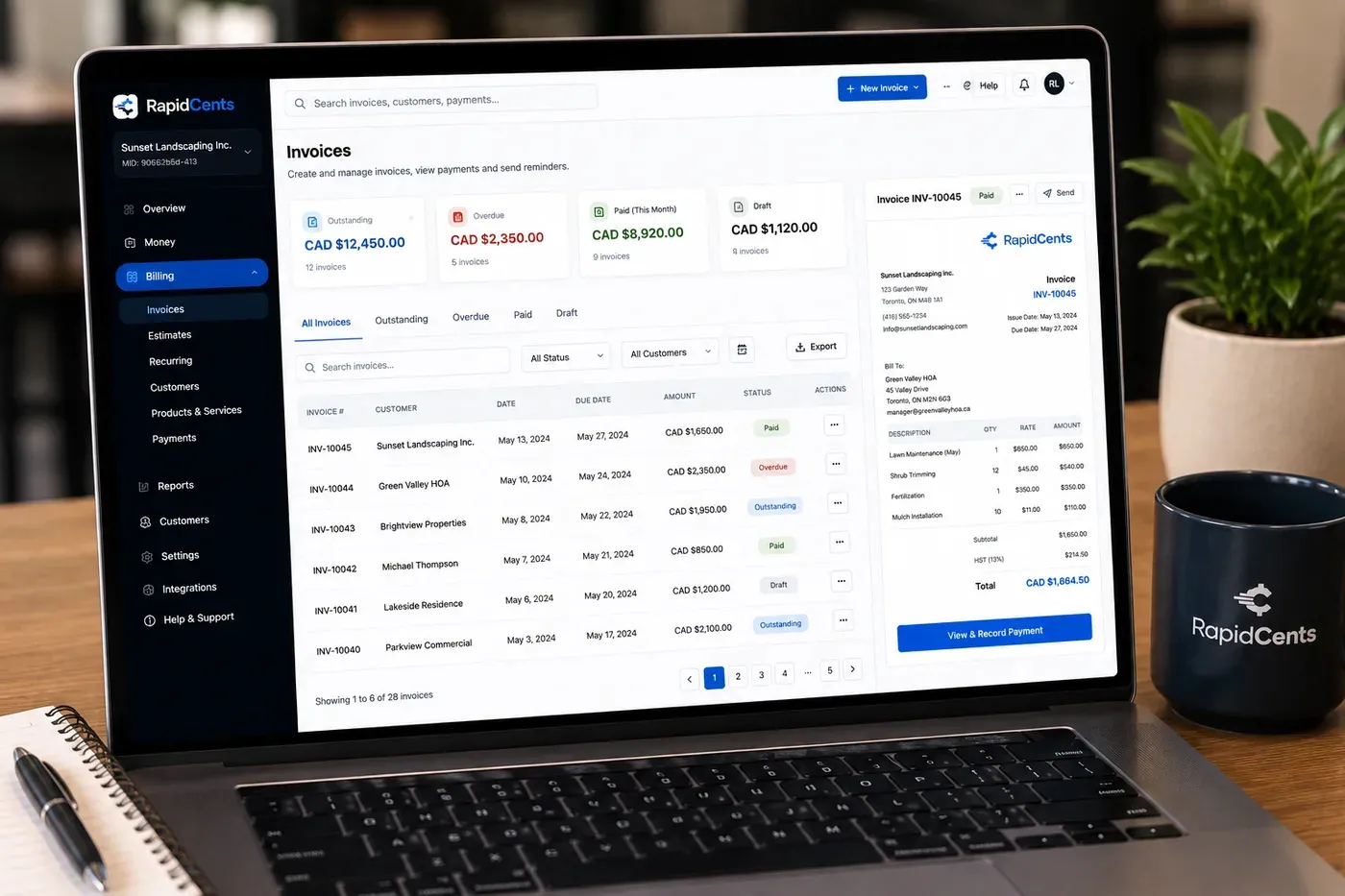
The RapidCents invoices screen: outstanding, overdue, paid and draft totals across the top, the invoice list below them, and a preview of one invoice on the right with its line items and a View & Record Payment button. Invoicing
RapidCents invoicing helps professional services, contractors and B2B suppliers create branded invoices…
Explore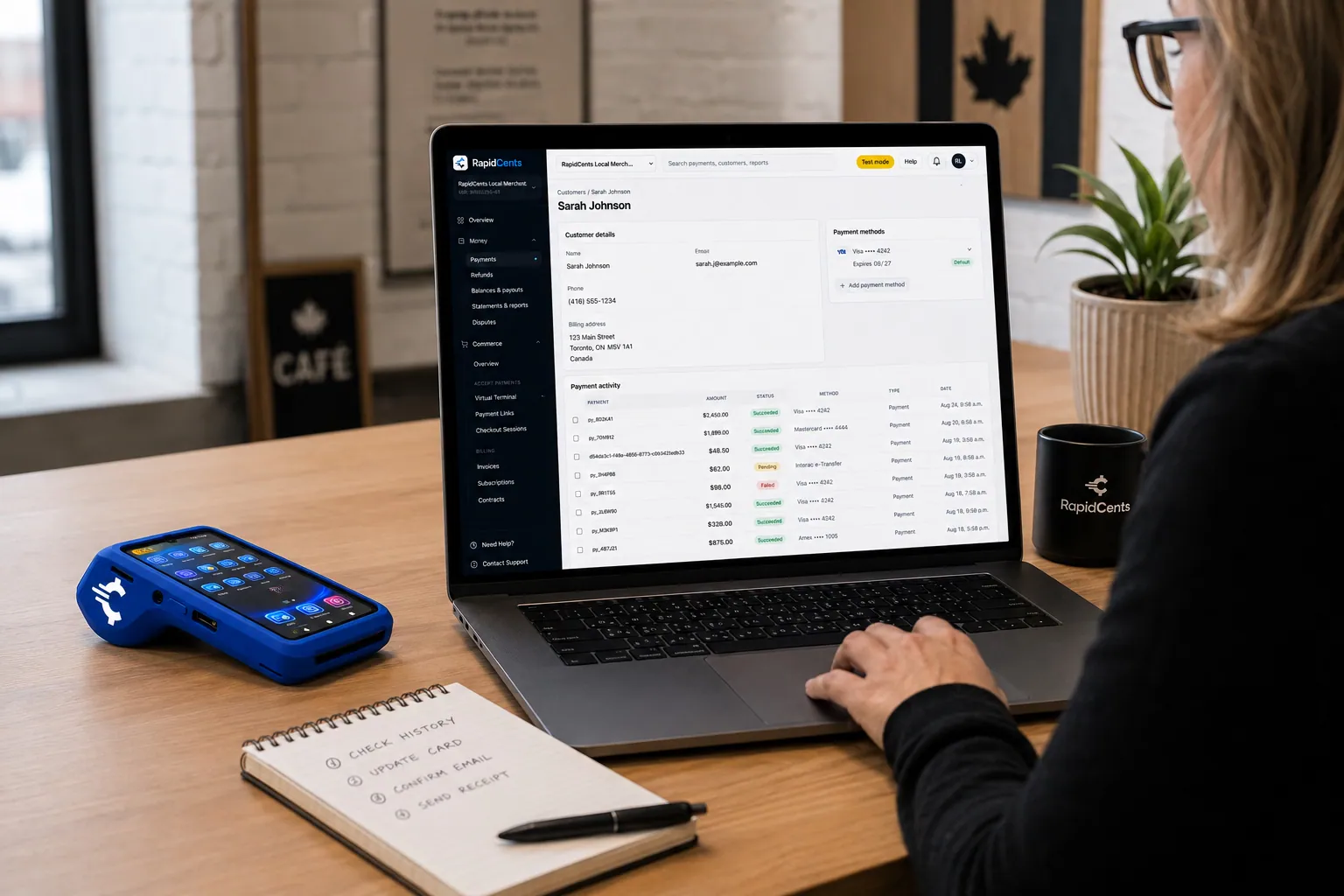
A RapidCents customer profile holds saved cards and invoices, so a return visit can be charged without re-keying the card. Customer Profiles
A customer profile ties together transactions, stored payment methods, subscriptions and disputes so staff…
Explore


How this gets set up
Take it at drop-off
A payment terminal at the counter lets the ticket be paid when the garment is tagged, instead of waiting for whoever eventually collects it.
A card on file for regulars
The customer profile holds the card as a token, so a regular's order closes itself and a spouse can pick up without paying again.
Route accounts off cheques
Hotels, restaurants and uniform contracts move onto a monthly recurring charge invoiced per route stop.
Each depot with its own totals
Agency counters and satellite depots settle under one merchant account while each keeps its own daily figures.
Integrations
SPOT
SPOT tracks the garment ticket, and the payment recorded against it clears the ticket so the rail shows what is already settled before the customer arrives.
CleanCloud
CleanCloud holds the customer and the order, so a card kept on that profile can be charged the moment a driver marks a delivery route order handed over.
QuickBooks
QuickBooks takes the daily counter totals and the monthly route invoices as separate lines, so retail and commercial revenue are not blended into one figure.
Operations, security and going live
What is paid, what is still owing on the rail
Reporting sets drop-off payments against pickups still unpaid, so an unsettled ticket is visible before the garment leaves the store.
Tokens, not numbers written on a ticket
A regular's card lives in the vault as a token, so counter staff charge an order without ever seeing or copying a card number.
Commercial accounts collected without a cheque run
Route invoices settle by ACH, so the monthly commercial billing does not depend on a cheque travelling back to the plant.
Counter first, route billing second
The front counter goes live before anything else; commercial route accounts are moved onto recurring billing one at a time.
Payment questions from Laundry & Dry Cleaning
What should businesses compare when choosing dry cleaning payment processing for Laundry & Dry Cleaning?
Compare dry cleaning payment processing against the real payment journey: sign-up, scheduled billing, and renewal, the counter or service point, and each location and consolidated oversight. Start with the required channels and hardware, then confirm compatibility and support before committing.
What payment hardware is practical for Laundry & Dry Cleaning?
For Laundry & Dry Cleaning, start with the workstation where customers pay and the space available. A test of the real flow reveals the right form factor better than a feature comparison alone.
Which payment channels are relevant for Laundry & Dry Cleaning?
For Laundry & Dry Cleaning, start with sign-up, scheduled billing, and renewal, the counter or service point, and each location and consolidated oversight. Keep only the channels that match those moments, then verify the complete customer flow before offering them.
How should payment processing fees be evaluated for Laundry & Dry Cleaning?
For Laundry & Dry Cleaning, compare costs related to scheduled billing, declined cards, and cancellations and cost detail by device and location using actual transactions. Request a written breakdown of fees and terms rather than relying on an advertised rate alone.
What should be confirmed before setting up payments for Laundry & Dry Cleaning?
For Laundry & Dry Cleaning, document the real payment journey, verify the needed compatibility, and test the flow before going live. This exposes manual steps and exceptions before customers encounter them.
What should be confirmed before using recurring payments for Laundry & Dry Cleaning?
Define consent, billing cadence, change and cancellation rules, and how a declined card is handled. Ask to see the complete customer journey before offering it to customers.
What MCC category applies to Laundry & Dry Cleaning?
MCC 7216 is commonly associated with Laundry & Dry Cleaning. Our onboarding team confirms the correct category for your business.
Related industries
Retail
Retailers use countertop terminals, e-commerce checkout, returns and inventory-linked…
Convenience Stores
C-stores need fast EMV contactless, lottery and fuel integrations with reliable…
Grocery
Grocers and markets accept EBT where supported, contactless lanes and online pickup…
Liquor Stores
Liquor retailers comply with state rules while accepting countertop and mobile…
Jewellery Stores
Jewellers sell high-value single items, hold custom orders on deposit and offer layaway…
Furniture Stores
Furniture retailers take a deposit at order and the balance on delivery weeks later, and…
Sporting Goods
Sporting goods stores swing hard by season, run a service counter for tuning and fitting…
Garden Centres & Nurseries
Garden centres compress most of the year into spring, add mobile checkout out in the…
Take the next step
Talk to a RapidCents specialist
RapidCents Fee Check reads a processing statement and shows interchange separately from the markup. Upload a statement for an instant breakdown, or open a merchant account and start accepting payments on one account.
- No obligation
- Payment specialists, not a call centre
- Secure statement upload