In-store and online payments for sporting goods retailers
A sporting goods store lives by the season, ski tuning in January and bikes in May, and sells the same catalogue at the counter, at the service desk and online. RapidCents runs the floor on retail POS with payment terminals, sells the web store through hosted checkout, and joins the branches under multi-location payments so each store reports separately while settlement stays in one place. Sporting goods stores process under MCC 5941.

- PCI DSS Level 1
- SOC 2 Type II
- All major card brands: Visa · Mastercard · Amex · Discover · PIN debit
- Interchange-plus available
- Specialist onboarding support
Operational workflows
Gear rung at the till through the season peak
Tunes and fittings booked at the service counter
Online orders picked from store stock
Retail and service reconciled across locations
Payment challenges
A season that arrives all at once
The first cold snap or the first warm weekend turns a quiet floor into a queue, and checkout has to absorb the spike without new lanes.
Service paid at a different counter
A tune or a boot fitting is dropped off, quoted and picked up days later, so the service ticket needs its own payment path away from the retail till.
Returns to the channel that did not sell it
Boots bought online come back to the store counter, and the refund has to find the original order.
Choose the right payment setup for Sporting Goods
Choose sporting goods payment processing
For Sporting Goods, map online checkout and remote payment, the counter or service point, and each location and consolidated oversight before choosing a setup. Select channels that match those moments, then confirm that the chosen solution genuinely covers each channel.
Payment hardware for Sporting Goods
For Sporting Goods, start with the place customers pay in person: a countertop terminal, smart terminal, or portable device depending on the workflow. Verify that the hardware fits the real volume and workspace.
Compare payment processing fees
For Sporting Goods, request a written fee breakdown covering online checkout and dispute handling and cost detail by device and location. Compare the effective cost across the real card and channel mix; do not choose on a headline rate alone.
Set up or switch Sporting Goods payments
To set up Sporting Goods payments, document the checkout, confirmation, and refund path, confirm compatibility before purchase, then test a real payment flow before going live.
Recommended products
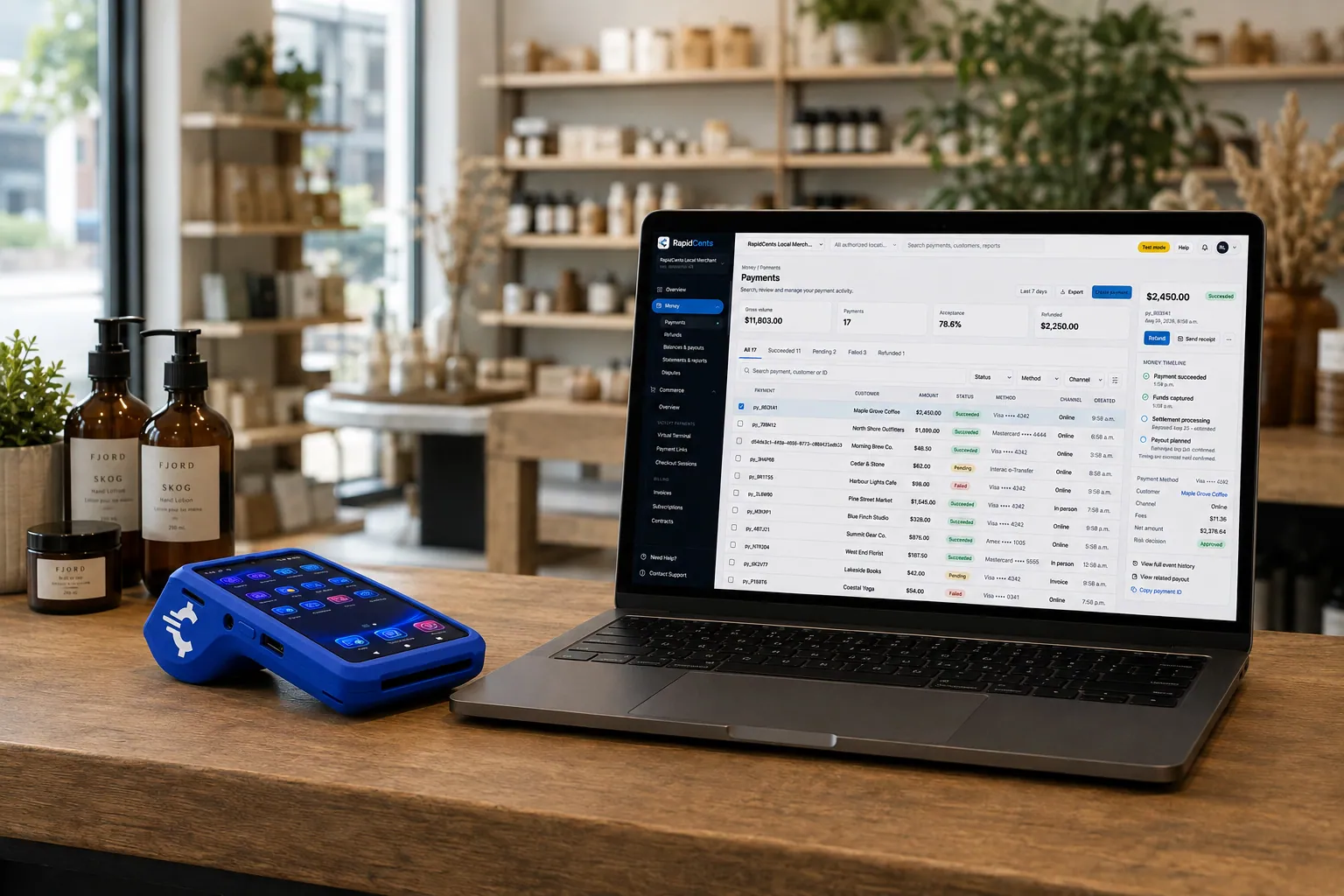
A retail counter ringing a basket on RapidCents POS, terminal taking the card and the dashboard showing the sale. Retail POS
Fast checkout, inventory that reflects what is on the shelf, and reporting that connects in-store and online…
Explore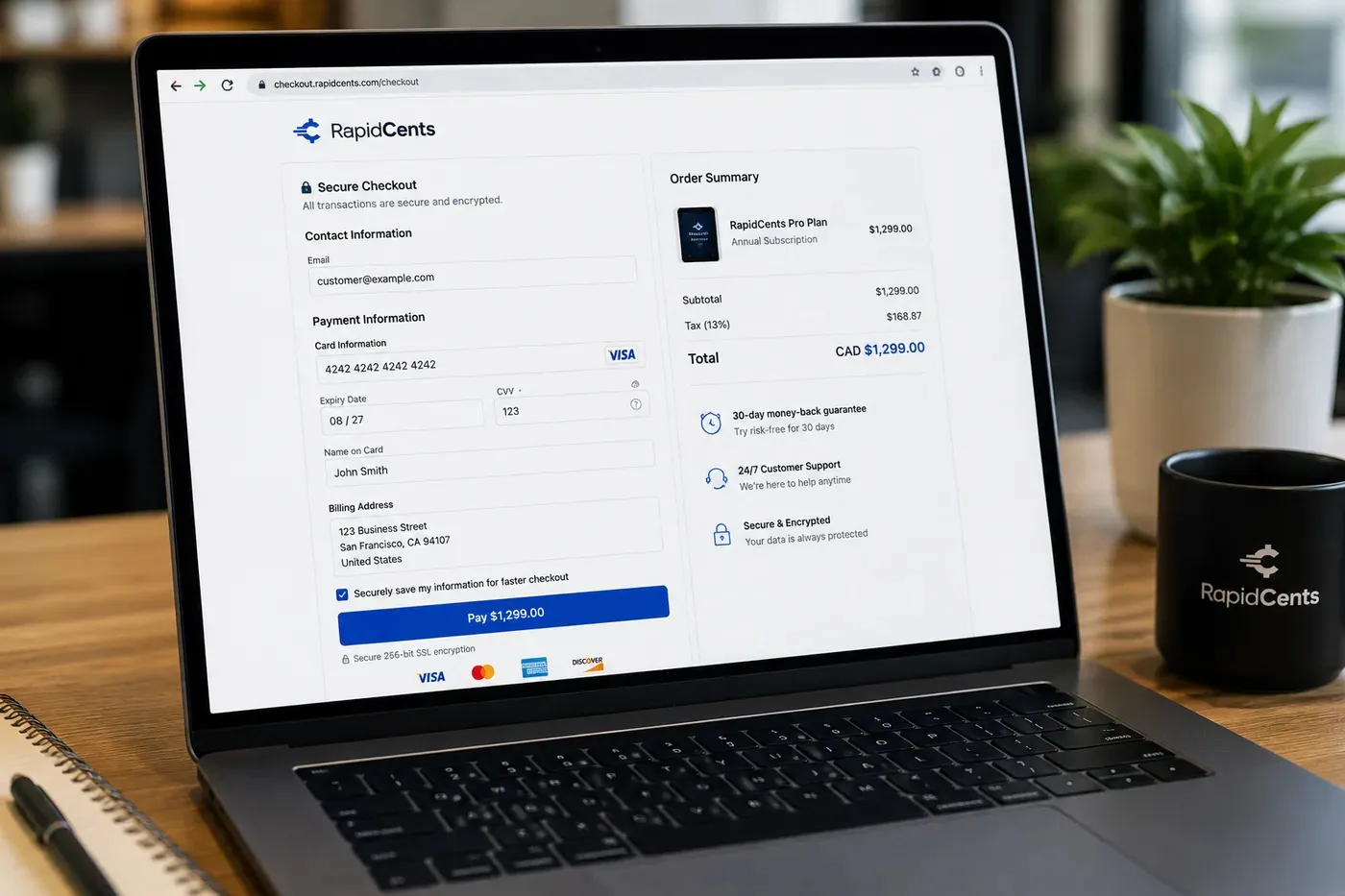
A RapidCents hosted checkout page at checkout.rapidcents.com, with the order summary and totals on the left and the card fields on the right, footed by SSL and PCI DSS assurances. Hosted Checkout
RapidCents hosted checkout delivers PCI-scoped payment pages you redirect customers to or embed via iframe…
Explore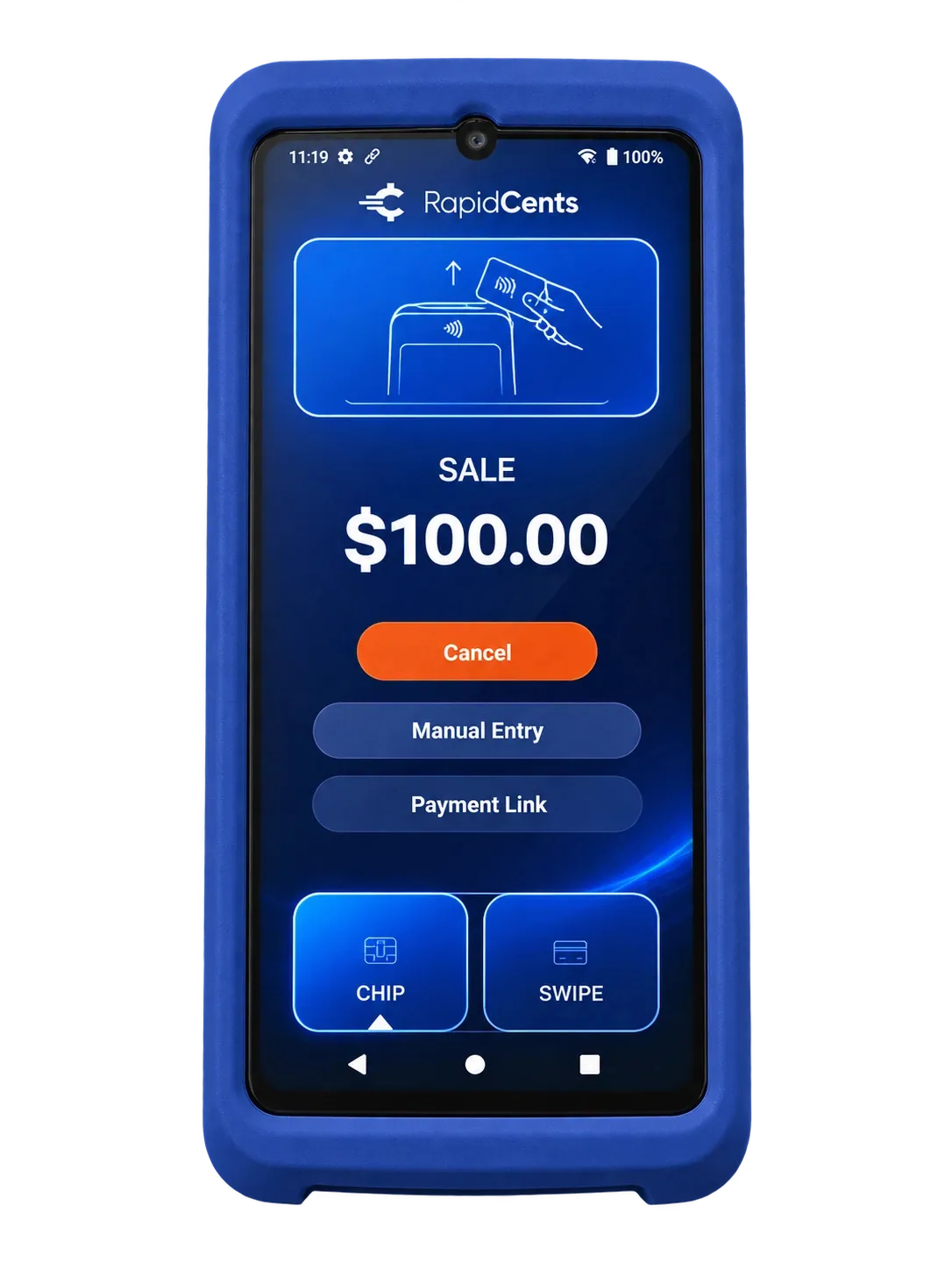
The RapidCents Rivo Go standing upright in its blue silicone case, showing the full-touch sale screen a customer reads across the counter. Payment Terminals
RapidCents payment terminals cover countertop, mobile and smart form factors so you can accept chip…
Explore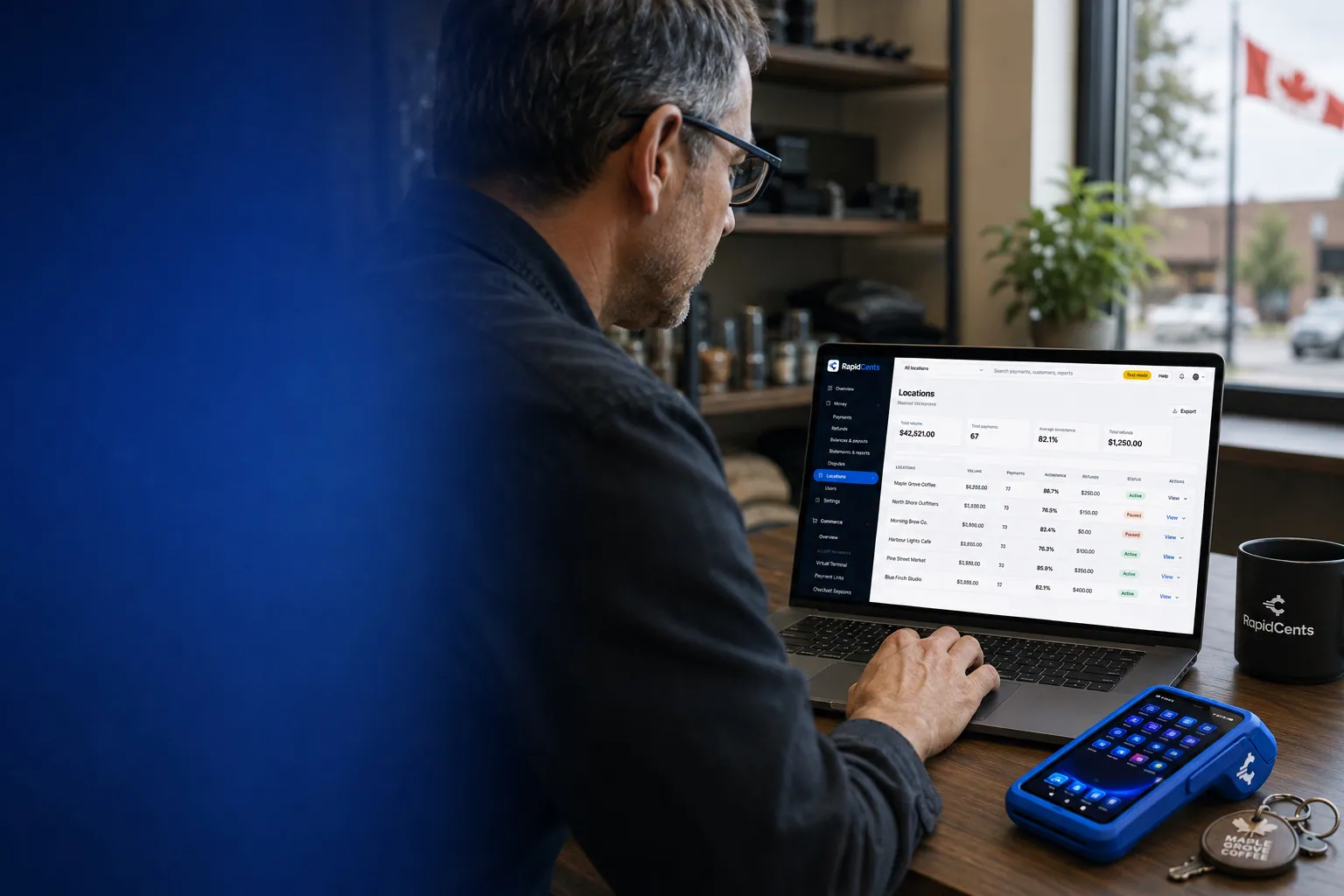
One RapidCents account comparing sales across locations, with a terminal representing the store-level capture. Multi-Location
RapidCents multi-location tools organize stores, franchises and regions in a hierarchy with location-level…
Explore


How this gets set up
Set up before the season arrives
Terminals and the POS are configured for the coming season's volume, skis in January and bikes in May, because the rush arrives in a week rather than a quarter.
Counter and service desk on one account
The till and the tuning bench both take card, so a tin of wax and an eighteen-hundred-dollar bike leave the same store in the same reporting.
Work orders paid at pickup
A tune or a bike fit is written up and paid when the customer collects, with a deposit on a special-order boot taken up front by link.
Same catalogue online
Hosted checkout sells the web store, and multi-location payments join the branches so each store reads its own season while settlement stays in one place.
Integrations
Lightspeed Retail
Lightspeed Retail holds inventory, work orders and the branch catalogue, so a tune paid at pickup closes the same work order the technician wrote.
Shopify
Shopify runs the web store, and taking its payments on your own merchant account means an online sale and a counter sale of the same SKU settle to the same place.
QuickBooks
QuickBooks receives goods and service revenue as separate income per location, which is what a seasonal business needs to compare one January with the last.
Operations, security and going live
Store by store through a season swing
Reporting per location and per department is how a chain sees that one branch's ski season carried the group while another's did not.
Service revenue apart from retail
Tuning and fitting labour has to report separately from goods sold, because the service desk's contribution disappears inside a single store total.
Online returns land at the counter
A web order returned in store is a refund to a card that was never present there, so matching the online transaction to the counter return before crediting it is the control that matters.
Rolled out one branch at a time
The first store goes live outside its own peak, then the rest join under multi-location payments, so no season is opened on untested tills.
Payment questions from Sporting Goods
What should businesses compare when choosing sporting goods payment processing for Sporting Goods?
Compare sporting goods payment processing against the real payment journey: online checkout and remote payment, the counter or service point, and each location and consolidated oversight. Start with the required channels and hardware, then confirm compatibility and support before committing.
What payment hardware is practical for Sporting Goods?
If Sporting Goods sells primarily online, do not choose physical hardware before validating checkout. Add hardware only for a clearly defined in-person payment need.
Which payment channels are relevant for Sporting Goods?
For Sporting Goods, start with online checkout and remote payment, the counter or service point, and each location and consolidated oversight. Keep only the channels that match those moments, then verify the complete customer flow before offering them.
How should payment processing fees be evaluated for Sporting Goods?
For Sporting Goods, compare costs related to online checkout and dispute handling and cost detail by device and location using actual transactions. Request a written breakdown of fees and terms rather than relying on an advertised rate alone.
What should be confirmed before setting up payments for Sporting Goods?
For Sporting Goods, document the checkout, confirmation, and refund path, verify the needed compatibility, and test the flow before going live. This exposes manual steps and exceptions before customers encounter them.
What should be compared in a checkout or payment gateway for Sporting Goods?
Compare the customer journey, reconciliation data, refund rules, and compatibility with the website or software. Validate the flow before publishing it.
What MCC category applies to Sporting Goods?
MCC 5941 is commonly associated with Sporting Goods. Our onboarding team confirms the correct category for your business.
Related industries
Retail
Retailers use countertop terminals, e-commerce checkout, returns and inventory-linked…
Convenience Stores
C-stores need fast EMV contactless, lottery and fuel integrations with reliable…
Grocery
Grocers and markets accept EBT where supported, contactless lanes and online pickup…
Liquor Stores
Liquor retailers comply with state rules while accepting countertop and mobile…
Jewellery Stores
Jewellers sell high-value single items, hold custom orders on deposit and offer layaway…
Furniture Stores
Furniture retailers take a deposit at order and the balance on delivery weeks later, and…
Garden Centres & Nurseries
Garden centres compress most of the year into spring, add mobile checkout out in the…
Auto Parts Retailers
Parts counters serve retail walk-ins and trade accounts on terms, so the same store needs…
Take the next step
Talk to a RapidCents specialist
RapidCents Fee Check reads a processing statement and shows interchange separately from the markup. Upload a statement for an instant breakdown, or open a merchant account and start accepting payments on one account.
- No obligation
- Payment specialists, not a call centre
- Secure statement upload