


Counter payments and trade accounts for auto parts retailers
A parts counter serves two customers at once: the retail walk-in paying by card and the shop buying on a trade account with terms. RapidCents runs the counter on retail POS with payment terminals, invoices trade accounts on their billing cycle, and settles those invoices by ACH or ACH so a garage's monthly statement does not go through a card. Auto parts retailers process under MCC 5533.

- PCI DSS Level 1
- SOC 2 Type II
- All major card brands: Visa · Mastercard · Amex · Discover · PIN debit
- Interchange-plus available
- Specialist onboarding support
Operational workflows
Part looked up by vehicle at the counter
Retail walk-ins paid by card at the till
Shop orders billed to a trade account on terms
Account statements settled by ACH each month
Payment challenges
Two kinds of customer at one counter
A retail walk-in pays now while a repair shop buys on terms, so the counter has to handle a card sale and an account charge in the same queue.
Cores and returns against an old ticket
A returned core or a wrong part credits back to an invoice from weeks ago, and the credit has to land on the right account.
Statements chased by phone
Trade balances come due on terms, and collecting them one call at a time pulls a clerk off the parts counter.
Choose the right payment setup for Auto Parts Retailers
Choose auto parts payment processing
For Auto Parts Retailers, map the counter or service point, each location and consolidated oversight, and the sale and reconciliation with business systems before choosing a setup. Select channels that match those moments, then confirm that the chosen solution genuinely covers each channel.
Payment hardware for Auto Parts Retailers
For Auto Parts Retailers, start with the place customers pay in person: a countertop terminal, smart terminal, or portable device depending on the workflow. Verify that the hardware fits the real volume and workspace.
Compare payment processing fees
For Auto Parts Retailers, request a written fee breakdown covering cost detail by device and location. Compare the effective cost across the real card and channel mix; do not choose on a headline rate alone.
Set up or switch Auto Parts Retailers payments
To set up Auto Parts Retailers payments, document how payment data moves into business systems, confirm compatibility before purchase, then test a real payment flow before going live.
Recommended products
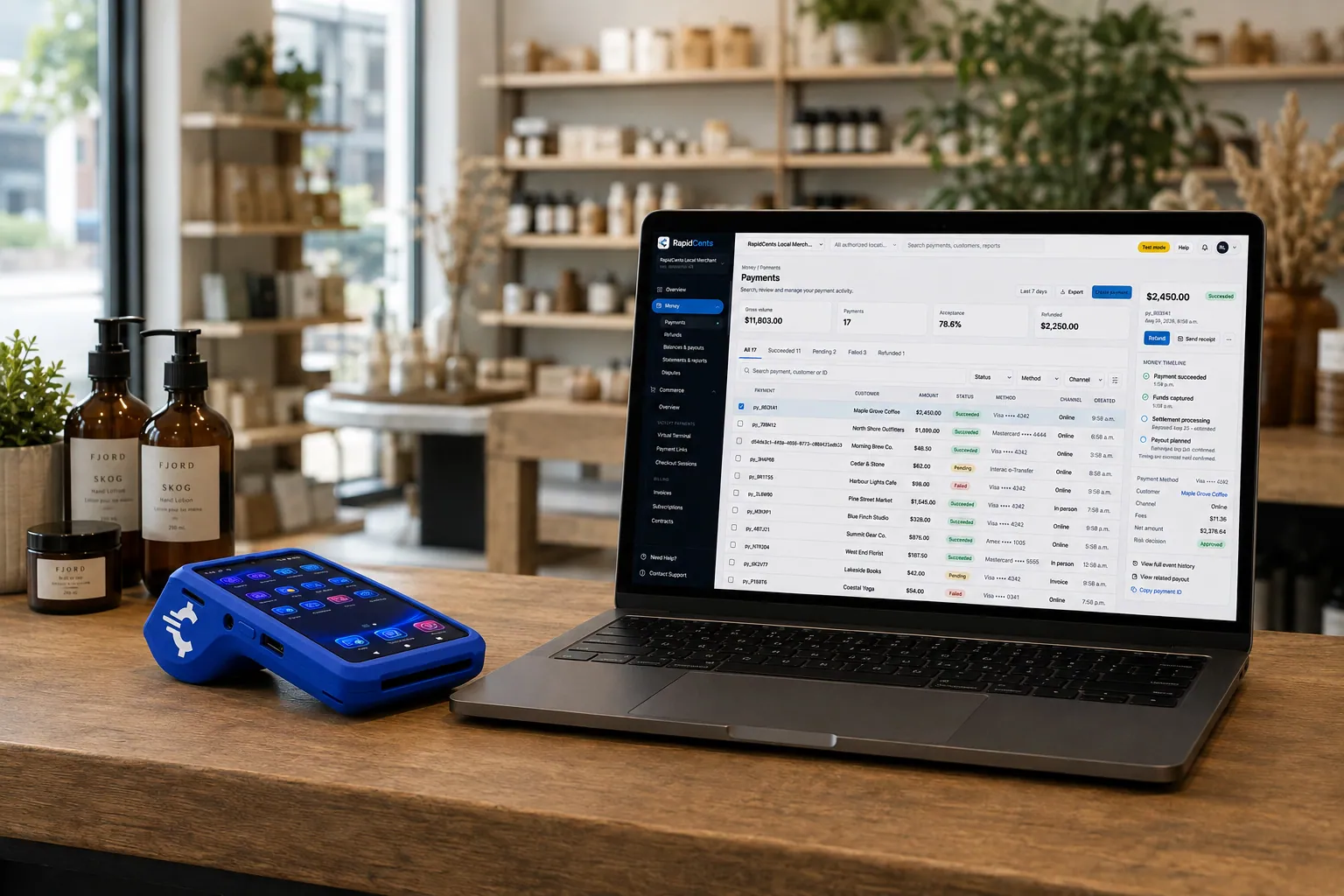
A retail counter ringing a basket on RapidCents POS, terminal taking the card and the dashboard showing the sale. Retail POS
Fast checkout, inventory that reflects what is on the shelf, and reporting that connects in-store and online…
Explore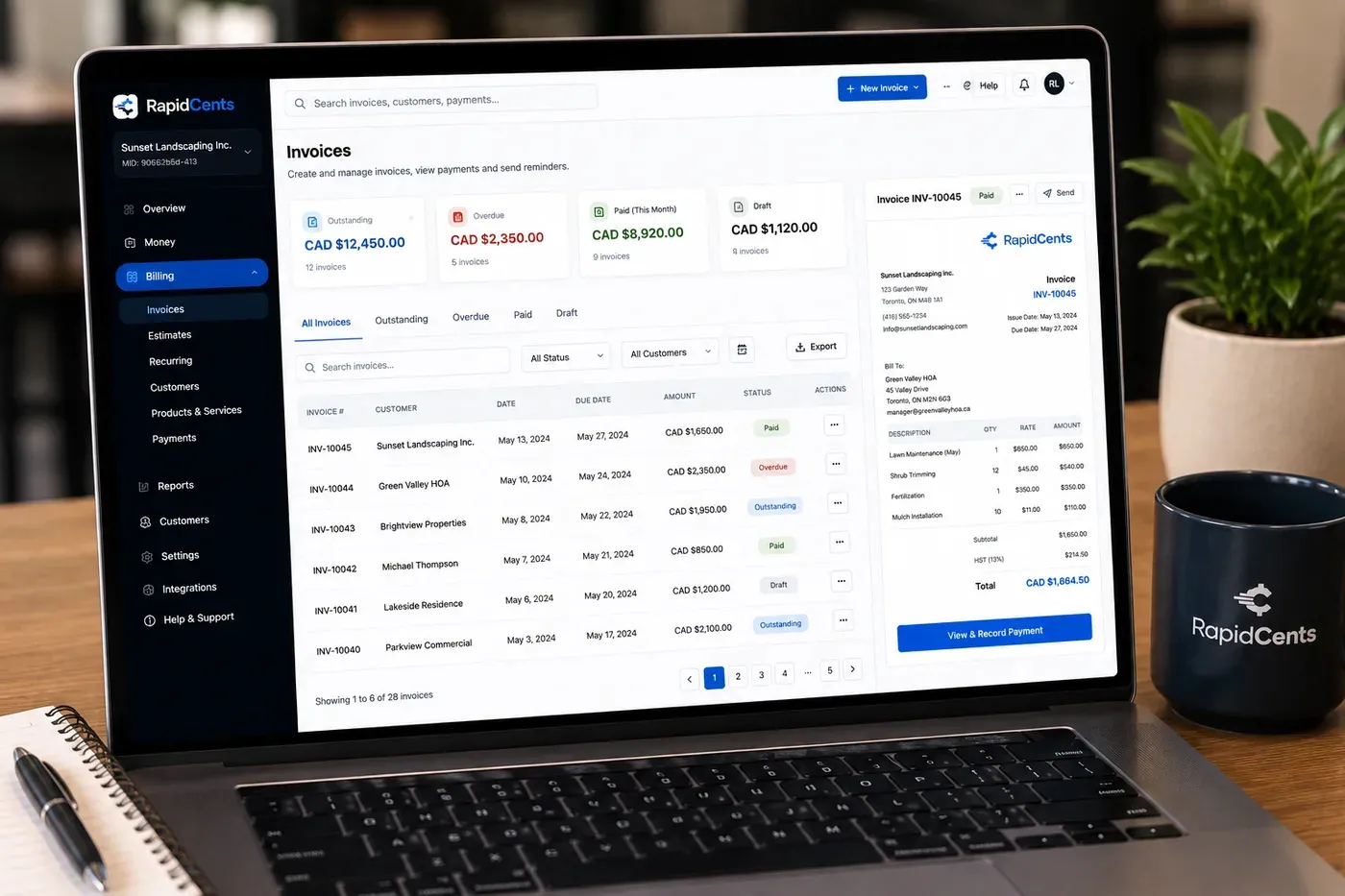
The RapidCents invoices screen: outstanding, overdue, paid and draft totals across the top, the invoice list below them, and a preview of one invoice on the right with its line items and a View & Record Payment button. Invoicing
RapidCents invoicing helps professional services, contractors and B2B suppliers create branded invoices…
Explore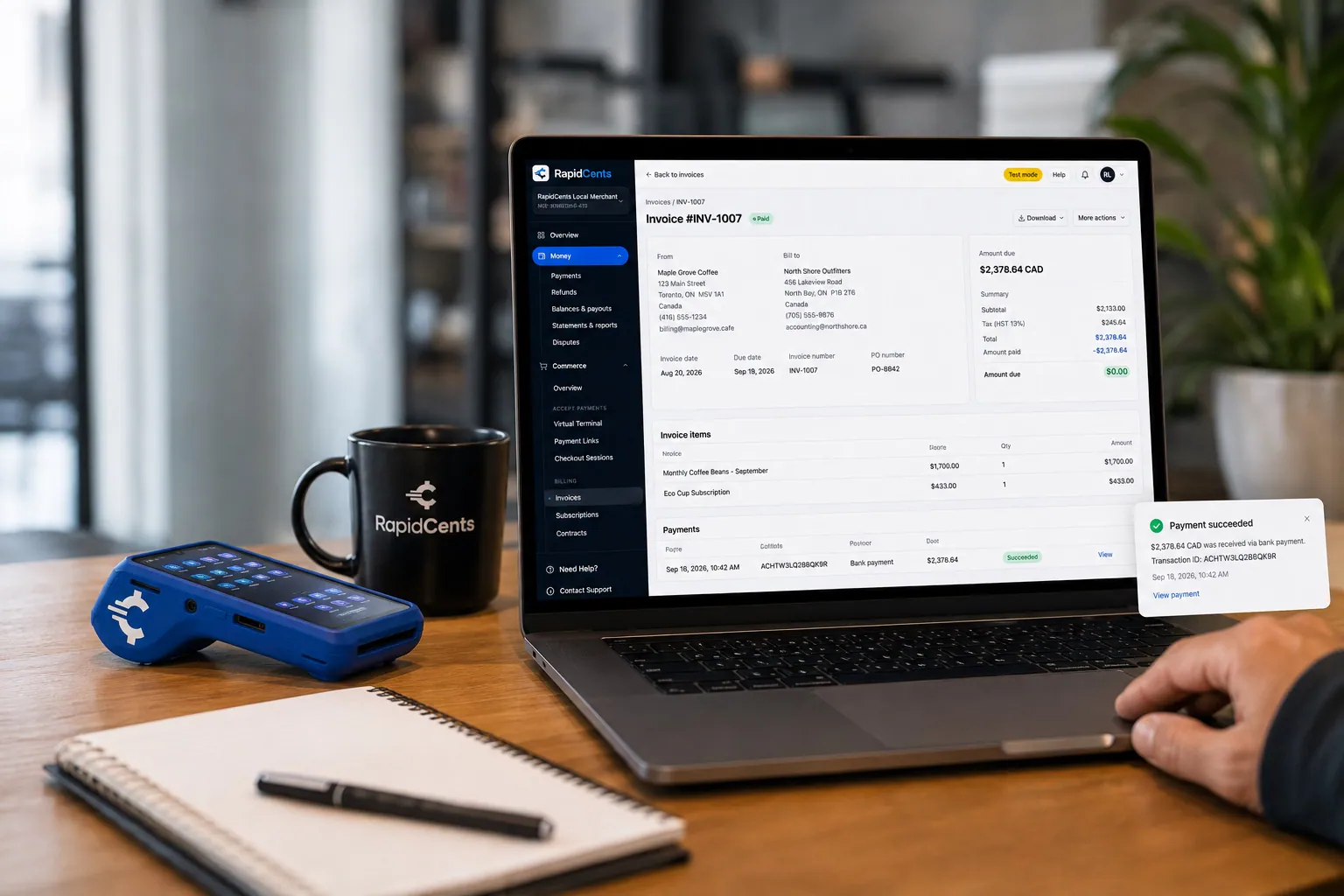
A merchant invoices a customer for bank debit through RapidCents, with card terminal capture available on the same desk. ACH / Bank Payments
Bank payments suit recurring and high-value invoices where card fees are the wrong tool. Collect directly…
Explore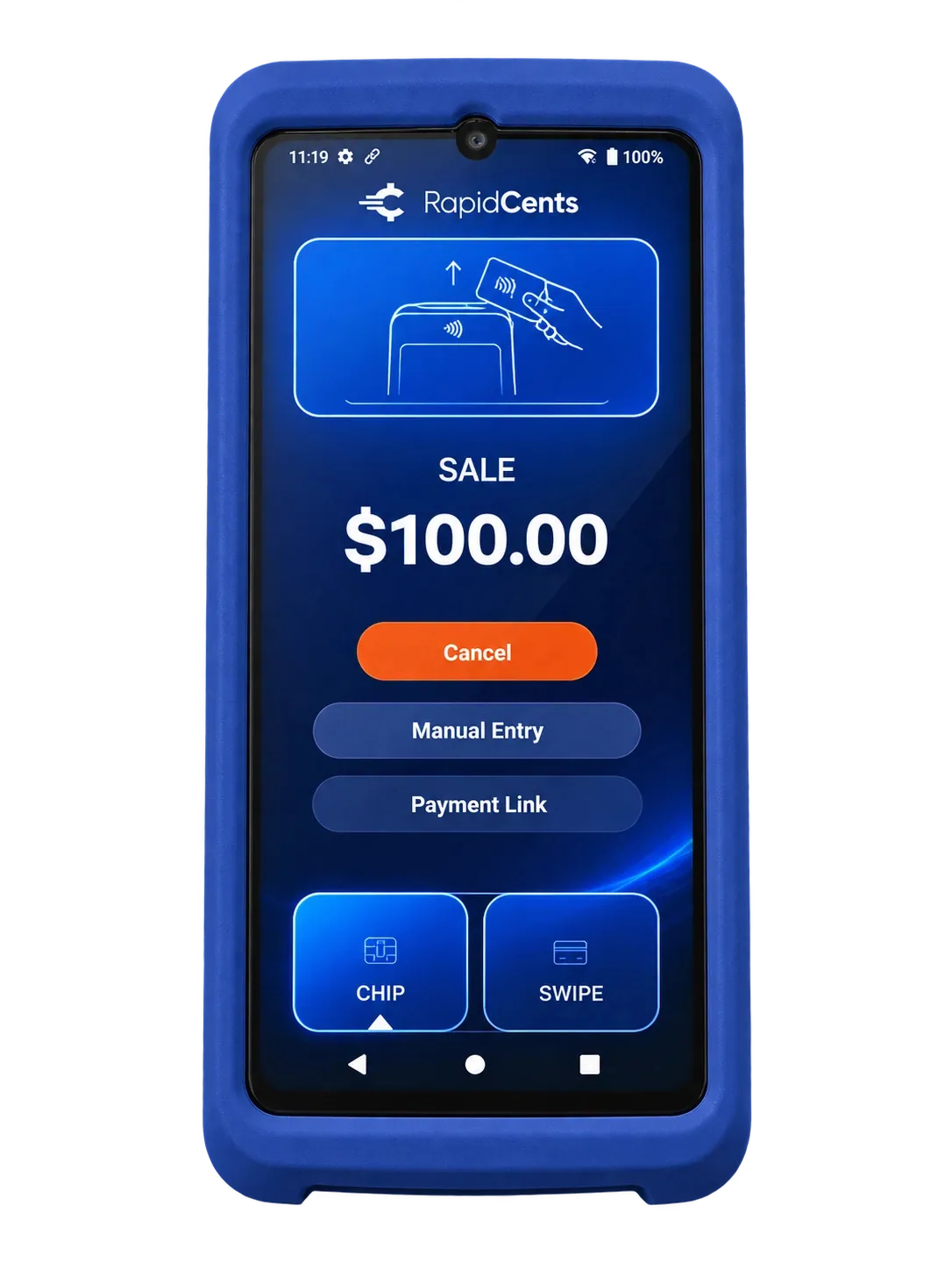
The RapidCents Rivo Go standing upright in its blue silicone case, showing the full-touch sale screen a customer reads across the counter. Payment Terminals
RapidCents payment terminals cover countertop, mobile and smart form factors so you can accept chip…
Explore


How this gets set up
Two customers, one counter
The counter is set up to serve a retail walk-in paying by card and a shop buying on terms without switching systems between them.
Retail rung on the POS
Retail POS with a counter payment terminal handles the cash sale, the core charge, and the return of the wrong alternator half an hour later.
Trade accounts opened on terms
A garage is set up with an account, a limit and a billing cycle, so the driver leaves with the part and the paperwork follows on the statement.
Statements settled by ACH
At cycle end the shop's statement is invoiced and settled by ACH or ACH, so a five-thousand-dollar month does not go through a card.
Integrations
Epicor exports
Epicor exports carry catalogue, inventory and account detail out as a file for reconciliation, so payments are matched to invoices rather than posted back into Epicor live.
Autologue
Autologue runs the counter's parts cataloguing and order entry, so a retail sale or a trade invoice is raised against the part actually pulled from the shelf.
QuickBooks
QuickBooks takes counter sales and trade-account invoices as separate income with receivables tracked, so a garage's outstanding statement sits next to the day's till.
Operations, security and going live
Counter cash and receivables read apart
Reporting has to separate what the till took today from what the trade accounts owe, because those are two different businesses sharing one building.
Core charges and wrong-part returns
A core credit or a returned part reverses against the original sale, and keeping that trail is how a shop's statement dispute is answered from records rather than memory.
Limits and slow payers
Selling on terms means exposure to a garage that stops paying, so aged account balances and failed bank debits belong in the same place as counter sales.
Counter live first, accounts next
The retail till and terminal go live first, then trade accounts move onto invoicing and bank settlement one billing cycle at a time so no statement is missed.
Payment questions from Auto Parts Retailers
What should businesses compare when choosing auto parts payment processing for Auto Parts Retailers?
Compare auto parts payment processing against the real payment journey: the counter or service point, each location and consolidated oversight, and the sale and reconciliation with business systems. Start with the required channels and hardware, then confirm compatibility and support before committing.
What payment hardware is practical for Auto Parts Retailers?
For Auto Parts Retailers, start with the workstation where customers pay and the space available. A test of the real flow reveals the right form factor better than a feature comparison alone.
Which payment channels are relevant for Auto Parts Retailers?
For Auto Parts Retailers, start with the counter or service point, each location and consolidated oversight, and the sale and reconciliation with business systems. Keep only the channels that match those moments, then verify the complete customer flow before offering them.
How should payment processing fees be evaluated for Auto Parts Retailers?
For Auto Parts Retailers, compare costs related to cost detail by device and location using actual transactions. Request a written breakdown of fees and terms rather than relying on an advertised rate alone.
What should be confirmed before setting up payments for Auto Parts Retailers?
For Auto Parts Retailers, document how payment data moves into business systems, verify the needed compatibility, and test the flow before going live. This exposes manual steps and exceptions before customers encounter them.
How should a multi-location setup be evaluated for Auto Parts Retailers?
Ask how devices, users, deposits, and reporting are separated by location. Verify that the team can see the detail it needs without complicating daily operations.
What MCC category applies to Auto Parts Retailers?
MCC 5533 is commonly associated with Auto Parts Retailers. Our onboarding team confirms the correct category for your business.
Related industries
Retail
Retailers use countertop terminals, e-commerce checkout, returns and inventory-linked…
Convenience Stores
C-stores need fast EMV contactless, lottery and fuel integrations with reliable…
Grocery
Grocers and markets accept EBT where supported, contactless lanes and online pickup…
Liquor Stores
Liquor retailers comply with state rules while accepting countertop and mobile…
Jewellery Stores
Jewellers sell high-value single items, hold custom orders on deposit and offer layaway…
Furniture Stores
Furniture retailers take a deposit at order and the balance on delivery weeks later, and…
Sporting Goods
Sporting goods stores swing hard by season, run a service counter for tuning and fitting…
Garden Centres & Nurseries
Garden centres compress most of the year into spring, add mobile checkout out in the…
Take the next step
Talk to a RapidCents specialist
RapidCents Fee Check reads a processing statement and shows interchange separately from the markup. Upload a statement for an instant breakdown, or open a merchant account and start accepting payments on one account.
- No obligation
- Payment specialists, not a call centre
- Secure statement upload



