Security & fraud, Articles
3-D Secure, chargebacks and fraud prevention. 19 pieces in articles, written for merchants worldwide: what security & fraud covers, what to check on your own statement, and the decisions it changes.
Security & fraud
Security & fraud
3-D Secure, chargebacks and fraud prevention.
On this shelf
Understanding and Strengthening Fraud Prevention in the Digital Era Fraud Prevention in the Digital Era
Fraud prevention is the use of strategies and technologies — machine learning, real-time monitoring, automation, and data feedback loops — to stop fraudulent online transactions before they happen. It protects businesses and consumers from financial and reputational damage, deters attacks through layered verification, cuts investigation costs, and builds customer confidence across banking, insurance, healthcare, and the public sector.
Explore
How Secure Credit Card Processing Can Boost Your Sales How Secure Credit Card Processing Boosts Sales
Secure credit card processing protects transactions with encryption, tokenization and PCI DSS compliance. That protection boosts sales in measurable ways: customers who trust a checkout complete more purchases and return more often, fraud losses and chargeback fees fall, and a visibly secure, fast payment experience reduces cart abandonment and sets the business apart from competitors.
Explore
3D Secure: The Smart Way to Prevent Chargebacks and Fraud 3D Secure: The Smart Way to Prevent Chargebacks and Fraud
3D Secure prevents chargebacks and fraud by adding an authentication step, such as a one-time password or biometric check, before an online card payment completes. Authenticated transactions filter out unauthorized charges, make friendly fraud harder to claim, and shift chargeback liability from the merchant to the card issuer, while 3D Secure 2.0 keeps the checkout experience fast and frictionless.
Explore
5 Chargeback Myths That Are Hurting Your Bottom Line 5 Chargeback Myths That Are Hurting Your Bottom Line
Common chargeback myths cost merchants real money. Chargebacks are not always the customer's fault, disputes are winnable with proof of delivery and signed records, chargebacks are not an unavoidable cost of business, refunds and chargebacks are fundamentally different, and prevention tools usually deliver better ROI than manual handling. Fees run $20 to $100 per dispute, and high ratios can raise rates or end a merchant account.
Explore
Common PCI Compliance Mistakes And How to Avoid Them Common PCI Compliance Mistakes and How to Avoid Them
The most common PCI compliance mistakes are assuming outsourcing payments equals full compliance, believing not storing card data removes obligations, using weak or shared passwords, skipping software updates and patches, and failing to reassess compliance annually. Avoid them by completing the right SAQ, enforcing MFA, keeping systems patched, and reducing scope through tokenization and hosted checkout pages.
Explore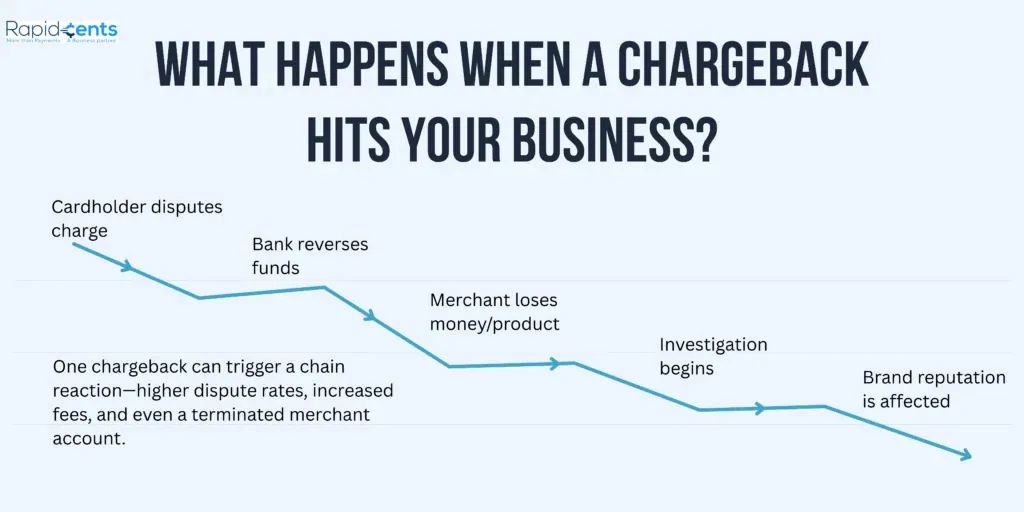
Chargebacks & Payment Fraud Prevention in 2025: Tactics, Tools, and Insights Chargebacks & Payment Fraud Prevention in 2025
Preventing chargebacks and payment fraud in 2025 means understanding why disputes happen (fraud, friendly fraud, delivery and billing issues), fighting them through representment with reason codes and evidence submitted within 7 to 30 days, considering chargeback insurance as a backstop, and deploying AI-powered detection with machine learning risk scoring, behavioral biometrics, and device fingerprinting alongside clear policies and billing descriptors.
Explore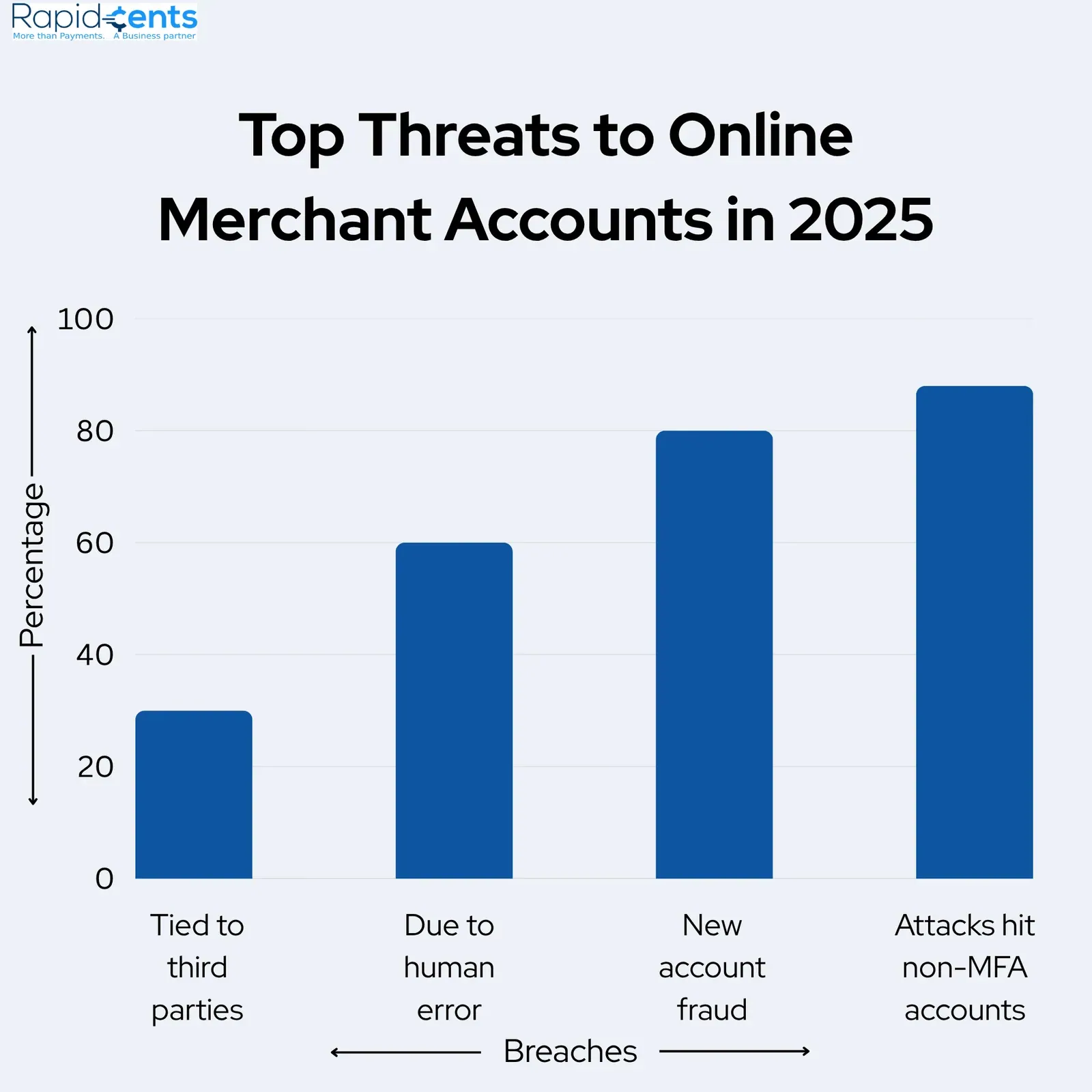
Security Tips to Protect Your Merchant Account Online in 2025 Security Tips to Protect Your Merchant Account Online
To protect an online merchant account, adopt AI-powered fraud detection that monitors transaction behavior in real time, comply with PCI DSS v4.0.1, require multi-factor authentication on all logins, screen for synthetic identity fraud, audit third-party integrations, train staff against phishing, patch software promptly, and monitor transactions with live fraud scoring. Layered defenses reduce fraud losses and build customer trust.
Explore
Inside the Numbers: How AI Detects 91.7% of Fraud in Real-Time Financial Transactions How AI Detects 91.7% of Fraud in Real-Time Transactions
DeFiSentinel, RapidCents' AI-powered decentralized financial security architecture, detects fraud with a 91.7% F1 score (92.4% precision, 91.1% recall) at 2.3 ms per transaction. It combines a deep neural network trained on 450,000 transactions with federated learning that keeps raw data local, blockchain ledgers for tamper-proof records, and smart contracts for automated verification.
Explore
The Role of Virtual Terminal Solutions in Reducing Payment Fraud How Virtual Terminals Reduce Payment Fraud
Virtual terminal solutions reduce payment fraud by combining encryption and tokenization of card data, PCI DSS-compliant infrastructure, two-factor and biometric authentication, and risk tools like transaction velocity checks, IP geolocation, and blacklisting. Because merchants process phone, mail, and online payments through a secure web portal, sensitive card data never depends on physical hardware.
Explore
Strategies for Detecting and Preventing Unauthorized Card Usage Detecting and Preventing Unauthorized Card Usage
Unauthorized card usage — from skimming and phishing to card-not-present fraud and account takeovers — is detected through real-time transaction monitoring that flags deviations from a cardholder's baseline spending, machine learning models trained on legitimate and fraudulent transactions, and configurable alerts. Prevention combines two-factor and biometric authentication, encryption, tokenization, and awareness training for customers and employees.
Explore
How AI is Transforming Payment Processing and Fraud Detection How AI Transforms Payment Processing and Fraud Detection
AI transforms payment processing and fraud detection by analyzing vast transaction data in real time, recognizing legitimate behavior patterns, and flagging anomalies as they occur. Machine learning models continuously learn from new data, so they adapt to evolving fraud tactics, achieve higher accuracy than rule-based systems, and reduce false positives that block legitimate customers.
Explore
The Encryption Behind Software Credit Card Processing The Encryption Behind Software Credit Card Processing
Encryption protects credit card data by scrambling card numbers, names, expiry dates, and security codes into unreadable ciphertext that only the holder of the decryption key can restore. Payment software combines SSL/TLS for data in transit, AES for stored data, RSA for key exchange, and PCI DSS-mandated key management to keep transactions secure.
Explore
The Evolution of Payment Fraud The Evolution of Payment Fraud
Payment fraud has evolved from forged bills and counterfeit banknotes to card skimming, phishing, large-scale data breaches, advanced persistent threats, and SIM swapping. Each wave has been answered by new countermeasures — SSL/TLS encryption, tokenization, two-factor and biometric authentication, and machine-learning fraud detection — while regulations like PCI DSS and GDPR set baseline security obligations for anyone handling payment data.
Explore
How to Handle Refunds and Chargebacks in Credit Card Processing How to Handle Refunds and Chargebacks
To handle refunds, locate the transaction in your payment platform, issue the refund matching the original amount, notify the customer with a timeline, and document everything. For chargebacks, respond to notifications within the processor's deadline (often 7-45 days), submit thorough evidence like delivery proof and transaction records, and prevent future disputes with clear billing descriptors, AVS/CVV checks, and fraud detection tools.
Explore
The Benefits of EMV Chip Technology in Credit Card Processing EMV Chip Technology in Credit Card Processing
EMV chip technology secures credit card processing by generating a unique, single-use cryptogram for every transaction, making counterfeit card fraud nearly impossible. Beyond stronger security, EMV shifted fraud liability to the party using less secure technology, built customer trust, achieved global acceptance, and enabled contactless payments — though merchants still need separate protection for card-not-present fraud.
Explore
The Importance of PCI DSS Compliance in Online Payment Security PCI DSS Compliance in Online Payment Security
PCI DSS, the Payment Card Industry Data Security Standard, is a security framework created through the collaboration of Visa, MasterCard, Amex, Discover, and JCB to protect cardholder data. Compliance reduces breach risk, avoids fines and lawsuits, and builds customer trust. Achieving it involves scoping, data flow mapping, risk assessment, gap analysis, remediation, security controls, employee training, and continuous monitoring.
Explore
A padlock resting on a backlit computer keyboard 3D Secure Authentication: How It Works and Benefits
3D Secure authentication, also called payer authentication, is a security procedure for online credit and debit card transactions. Launched by Visa in 2001 as Verified by Visa, it asks the cardholder for an extra password or one-time PIN before a purchase completes, which reduces online fraud and chargebacks and shifts liability for unauthorized transactions from the merchant to the issuing bank.
Explore
Security Steps That Internet Merchant Account Holders Should Use Security Steps for Internet Merchant Account Holders
Internet merchant account holders can protect themselves from fraudsters with inexpensive security steps: keep your operating system updated so security holes are patched, store strong, long passwords in an encrypted password manager, never send account passwords by email, and install anti-malware and anti-virus software with a personal firewall on every device, whatever the operating system.
ExploreCoronavirus Has Mitigated the Number of Credit Card Frauds How the Coronavirus Pandemic Reduced Credit Card Fraud
Credit card fraud fell during the COVID-19 pandemic because consumers stopped visiting brick-and-mortar stores, where fraudsters use skimmers and shimmers attached to payment terminals to steal card data for sale on the dark web. Cybersecurity firm Sixgill credited the drop to reduced in-store card use, alongside Russian law enforcement closing dark web markets and shutting down almost 90 websites in March 2020.
Explore


Frequently asked questions
What is the single most effective thing I can do against card fraud?
Keep card data off your own systems. Hosted checkout, hosted fields and validated terminals mean a card number never touches your server, your staff or your spreadsheets, which removes the thing a breach would take. Everything else on this shelf — 3-D Secure, descriptors, delivery proof — is about disputes rather than data.
How do I spot a fraudulent online order?
Mismatched billing and shipping addresses, a rush on delivery, several cards tried in sequence, an order far larger than your average, a disposable email. None is proof on its own; the articles explain how to weigh them and when to use 3-D Secure to move the liability to the issuer.
What should I do if a terminal looks tampered with?
Stop using it, do not open it, and report it to RapidCents by phone and in writing within twenty-four hours, as clause B.7 of the Services Agreement requires. A device that has been opened or serviced by anyone but RapidCents is treated as compromised whether or not harm has resulted.
Who is liable for a fraudulent transaction?
It depends on how the card was taken. A chip or tap transaction that the issuer authorized generally leaves counterfeit liability with the issuer; a keyed or swiped one leaves it with the merchant; a card-not-present sale authenticated with 3-D Secure shifts the fraud liability to the issuer. The articles set out the rules by channel.