Market Stall, Farm Gate and Seasonal Invoicing Payments for Agriculture
Farm income arrives seasonally and in two very different sizes. RapidCents invoices a bulk buyer or an ag retailer, sends a payment link for the balance, and runs CSA share subscriptions on recurring payments so a season is billed in instalments. At the farmers' market stall, Tap to Pay takes a card on a phone, with no terminal or counter to set up. Agricultural co-operatives carry MCC 0763.

- PCI DSS Level 1
- SOC 2 Type II
- All major card brands: Visa · Mastercard · Amex · Discover · PIN debit
- Interchange-plus available
- Specialist onboarding support
Operational workflows
Bulk buyer invoiced on terms after loading
Balance settled by payment link
CSA shares billed in instalments across the season
Market stall takes a card by Tap to Pay
Payment challenges
Income arrives in a season, costs do not
Money comes in over a few harvest months, so a share billed in instalments has to keep clearing while nothing else is selling.
Two sizes of payment in one business
A truckload invoice and a five-dollar basket of tomatoes both run through the same merchant account.
The stall has no counter and no line to plug into
Selling at a market or the farm gate means taking cards with no till, no printer and no fixed connection.
Choose the right payment setup for Agriculture
Choose agriculture payment processing
For Agriculture, map the deposit, staged payments, and final balance, the counter or service point, and the sale and reconciliation with business systems before choosing a setup. Select channels that match those moments, then confirm that the chosen solution genuinely covers each channel.
Payment hardware for Agriculture
For Agriculture, start with the place customers pay in person: a countertop terminal, smart terminal, or portable device depending on the workflow. Verify that the hardware fits the real volume and workspace.
Compare payment processing fees
For Agriculture, request a written fee breakdown covering deposits and final balances. Compare the effective cost across the real card and channel mix; do not choose on a headline rate alone.
Set up or switch Agriculture payments
To set up Agriculture payments, document how payment data moves into business systems, confirm compatibility before purchase, then test a real payment flow before going live.
Recommended products
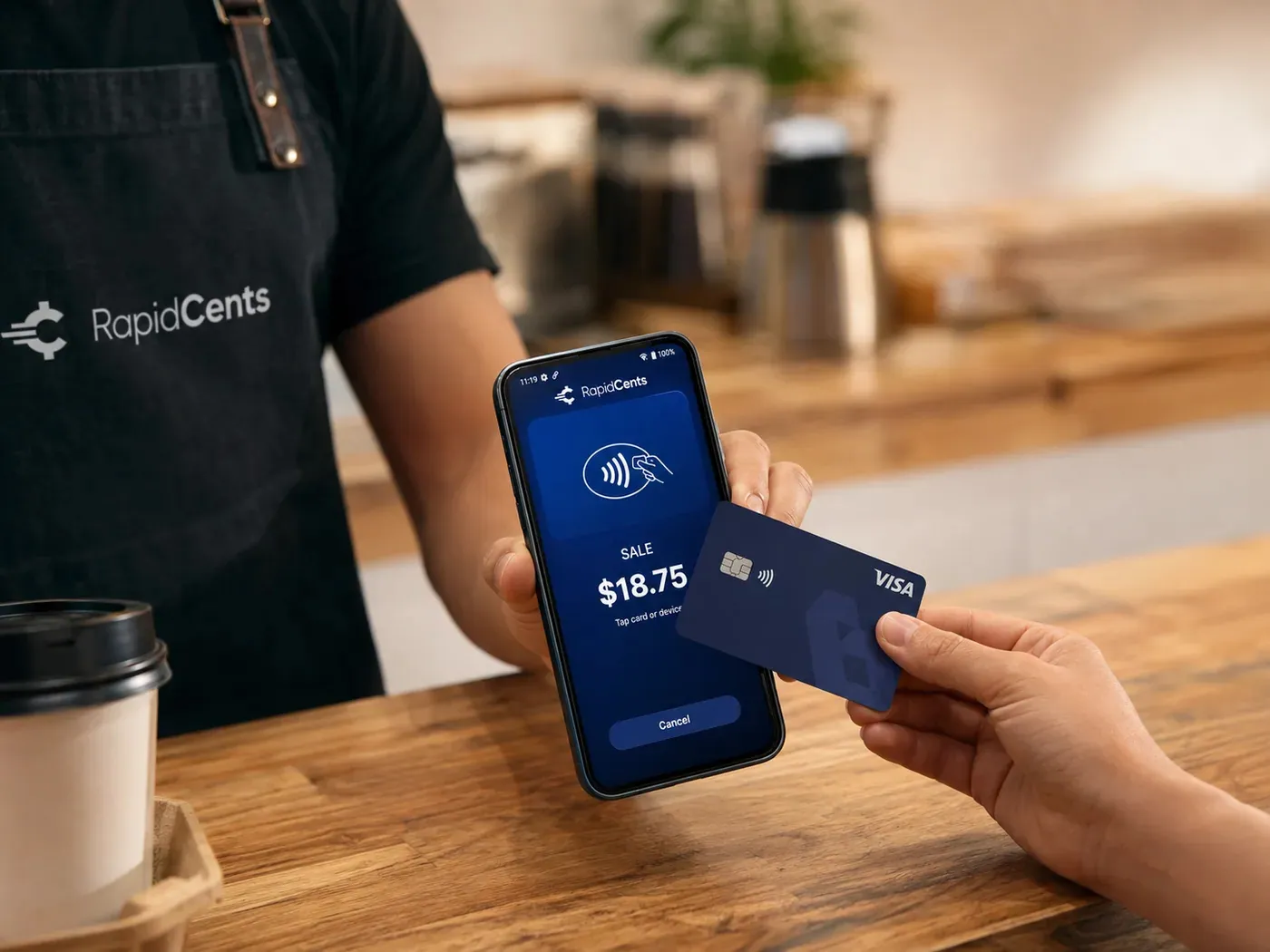
A café worker holds a phone running RapidCents Tap to Pay, showing an $18.75 sale and the contactless symbol, while a customer holds a Visa card to the screen. No separate card reader is present. Tap to Pay
RapidCents Tap to Pay turns supported iPhones and Android devices into contactless payment terminals without…
Explore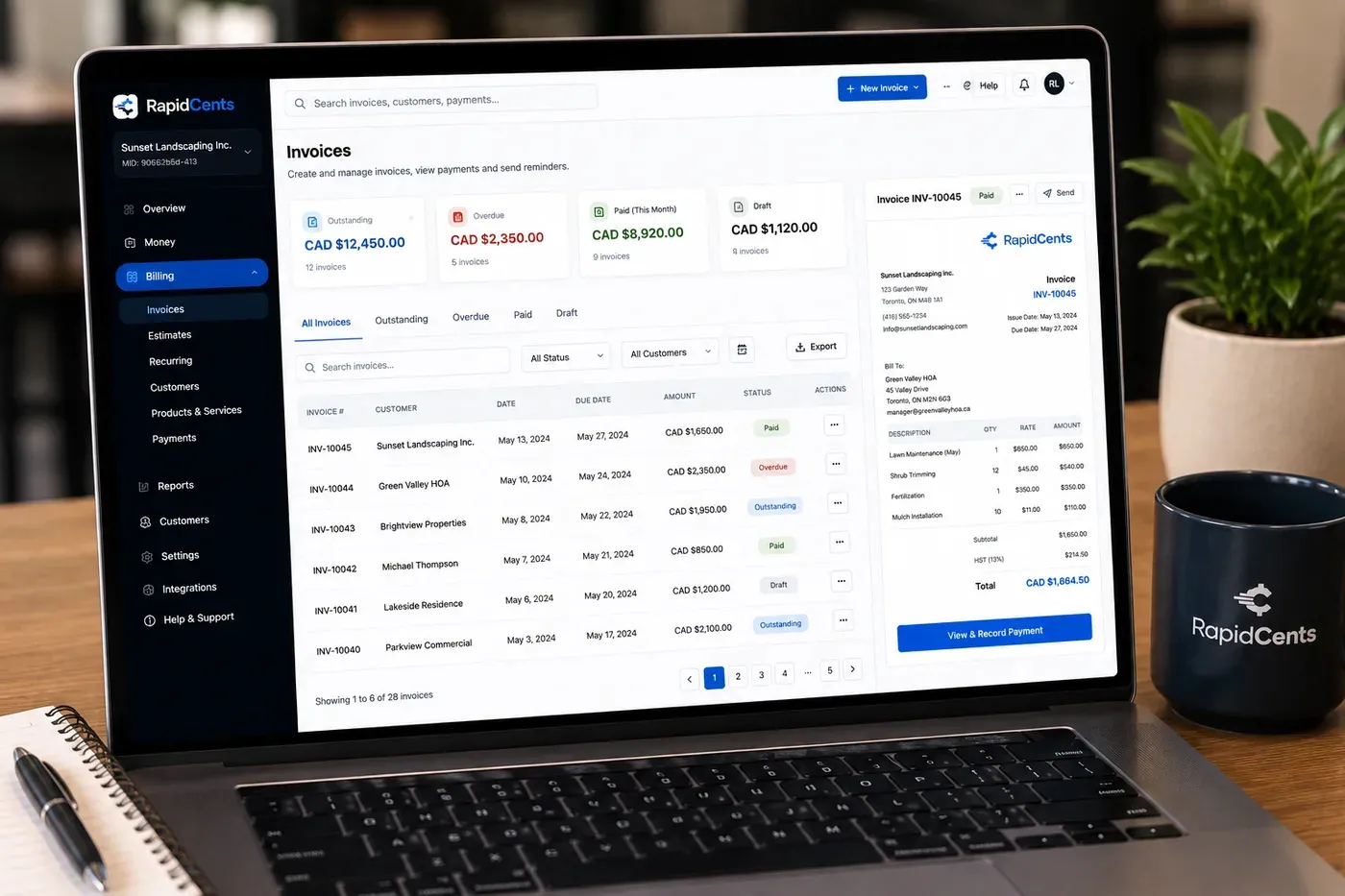
The RapidCents invoices screen: outstanding, overdue, paid and draft totals across the top, the invoice list below them, and a preview of one invoice on the right with its line items and a View & Record Payment button. Invoicing
RapidCents invoicing helps professional services, contractors and B2B suppliers create branded invoices…
Explore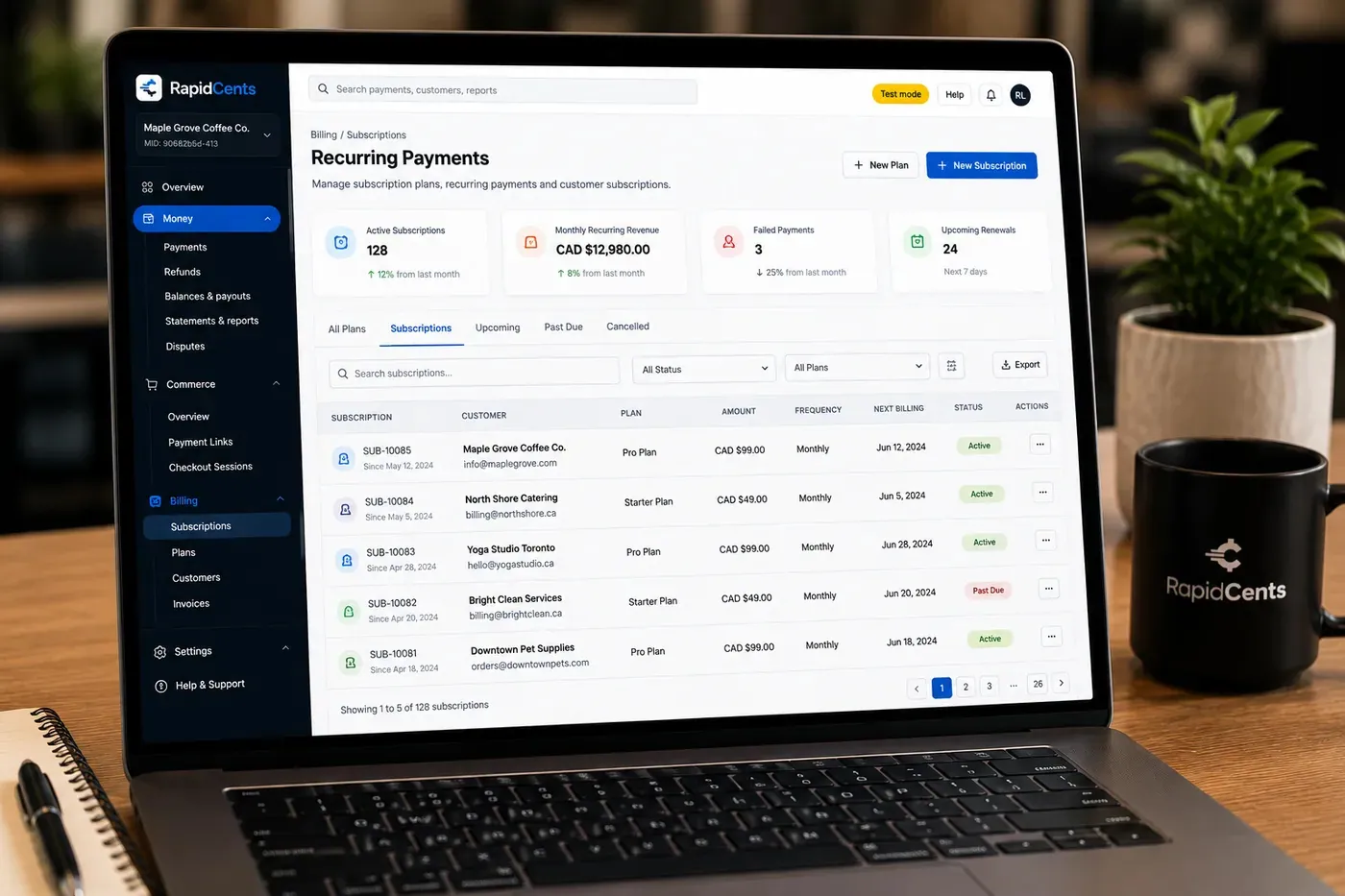
The RapidCents recurring payments screen showing active subscriptions, monthly recurring revenue, failed payments and upcoming renewals, above a list of subscriptions with their plan, amount, frequency and next billing date. Recurring Payments
RapidCents recurring payments manage subscription plans, membership renewals and installment schedules with…
Explore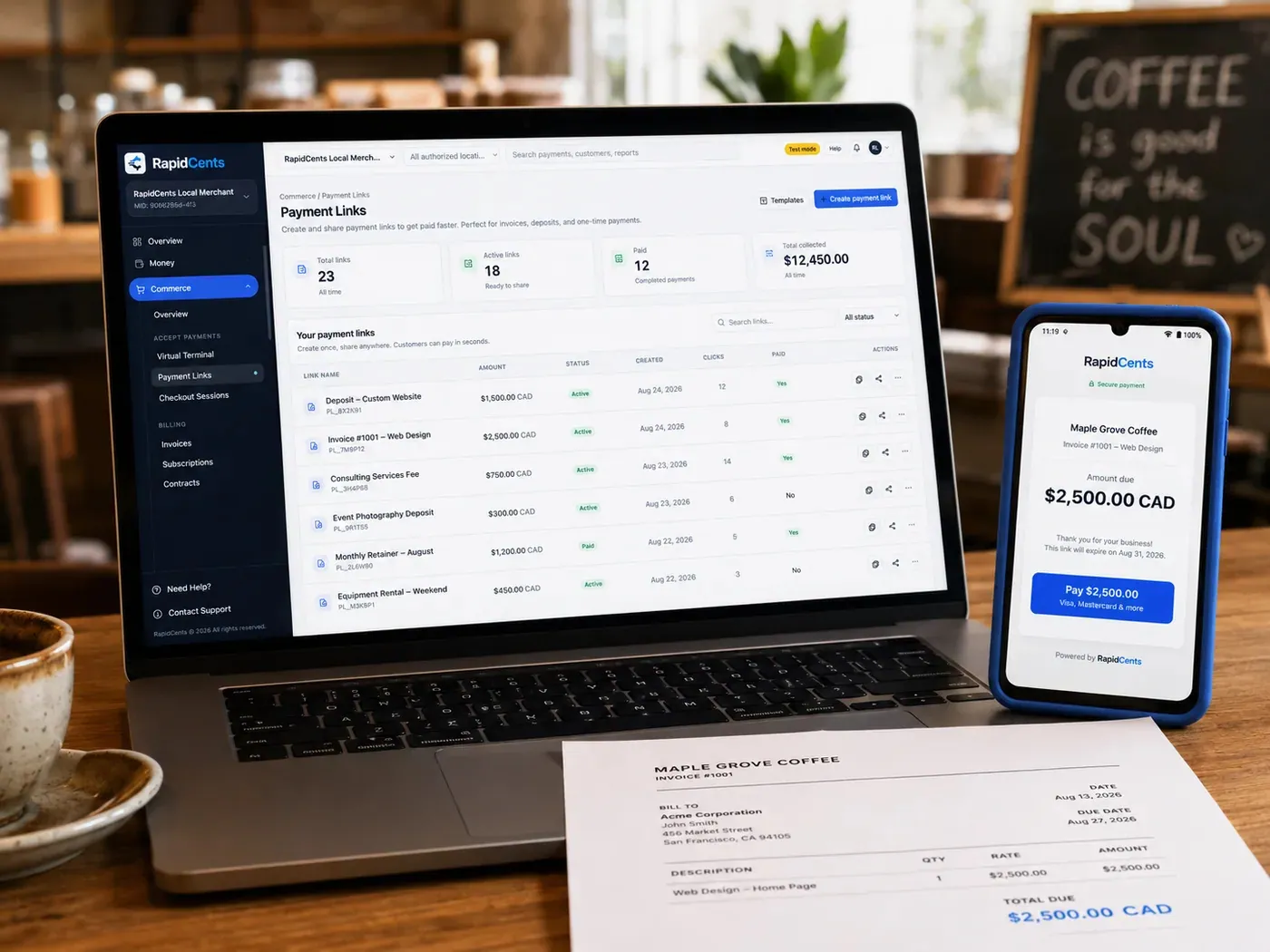
The RapidCents payment links screen listing created links with their amount, status, click count and whether they have been paid, beside a phone showing the branded page a customer opens to pay $2,500.00. Payment Links
RapidCents payment links let staff generate branded pay-by-link URLs for invoices, deposits, balances and…
Explore


How this gets set up
The market stall, on a phone
Tap to Pay takes a card at the farmers' market with no terminal, no counter and nothing to plug in.
Bulk buyers invoiced on terms
An elevator, wholesaler or ag retailer gets an invoice with a payment link, so a large balance clears without a cheque in the mail.
CSA shares spread over the season
A share is split into instalments on recurring payments, so a member pays through the growing season rather than in one spring amount.
Out of season
Invoicing and links keep working when the stall is closed, so a winter order or a late balance is still collectable.
Integrations
Granular exports
Granular exports pull field and operations records out as a file, so revenue can be lined up with the enterprise that earned it.
QuickBooks
QuickBooks is the farm's books, so a settled invoice or CSA instalment posts to the ledger instead of being re-entered.
Operations, security and going live
Two shapes of revenue in one report
Market-day card sales and a five-figure grain invoice live on the same account but not on the same line.
Cash at an unstaffed stall
Taking cards on a phone means the person at the stall is not carrying the day's takings home, which is the real security question.
Cash flow read by season
Reporting is read by cycle: what a CSA season has collected and what remains, rather than a rolling monthly figure.
Ready before the first market
Tap to Pay is tested on a real card before opening weekend, because a market day is a fixed number of hours and does not repeat.
Payment questions from Agriculture
What should businesses compare when choosing agriculture payment processing for Agriculture?
Compare agriculture payment processing against the real payment journey: the deposit, staged payments, and final balance, the counter or service point, and the sale and reconciliation with business systems. Start with the required channels and hardware, then confirm compatibility and support before committing.
What payment hardware is practical for Agriculture?
For Agriculture, start with the workstation where customers pay and the space available. A test of the real flow reveals the right form factor better than a feature comparison alone.
Which payment channels are relevant for Agriculture?
For Agriculture, start with the deposit, staged payments, and final balance, the counter or service point, and the sale and reconciliation with business systems. Keep only the channels that match those moments, then verify the complete customer flow before offering them.
How should payment processing fees be evaluated for Agriculture?
For Agriculture, compare costs related to deposits and final balances using actual transactions. Request a written breakdown of fees and terms rather than relying on an advertised rate alone.
What should be confirmed before setting up payments for Agriculture?
For Agriculture, document how payment data moves into business systems, verify the needed compatibility, and test the flow before going live. This exposes manual steps and exceptions before customers encounter them.
How should deposits and high-value payments be planned for Agriculture?
Separate the deposit, staged payments, and final balance in the process. Confirm the authorization and refund rules that apply to the business before communicating terms to a customer.
What MCC category applies to Agriculture?
MCC 0763 is commonly associated with Agriculture. Our onboarding team confirms the correct category for your business.
Related industries
Nonprofits & Charities
Nonprofits accept donations, event tickets and recurring giving with transparent pricing…
Education
Schools and training providers collect tuition, registration fees and installment plans…
Government
Municipal and agency departments accept citizen payments for permits, fines and fees with…
Events & Ticketing
Venues and promoters sell tickets, VIP packages and concessions with online checkout…
Membership Clubs
Clubs, associations and coworking spaces bill monthly dues, event fees and pro-shop sales…
Travel Agencies
Travel advisors collect deposits, final balances and change fees with virtual terminal…
Pet Services
Groomers, boarders and pet sitters accept appointment deposits, retail add-ons and…
Photography
Photographers invoice sessions, sell print packages and collect wedding retainers through…
Take the next step
Talk to a RapidCents specialist
RapidCents Fee Check reads a processing statement and shows interchange separately from the markup. Upload a statement for an instant breakdown, or open a merchant account and start accepting payments on one account.
- No obligation
- Payment specialists, not a call centre
- Secure statement upload