


Payment processing for travel agencies: deposits, balances and changes
Payment processing for travel agencies has to follow a trip that is paid in stages, and RapidCents is built for that. You take booking deposits by payment link, key cards on the Virtual Terminal when a client phones, sell packaged departures through Hosted Checkout, and run balances and group installments with Recurring Payments.

- PCI DSS Level 1
- SOC 2 Type II
- All major cards: Visa, Mastercard, Amex, Discover, UnionPay, Diners Club & PIN Debit
- Interchange-plus available
- Specialist onboarding support
How travel agencies get paid
A travel agency collects money in stages: a deposit that holds the trip, a final balance before the supplier's deadline, installments for groups, and adjustments when an itinerary moves. Each stage needs its own trigger, authorization and record.
Booking deposits
A client confirms an itinerary and the advisor sends a payment link by text or email. The client pays the deposit that holds the trip, and the receipt shows the booking reference. Finance sees the deposit as a settled transaction, separate from the balance still owed.
Final balances
Before the supplier's final payment date, the advisor collects the remaining balance from a card the client authorized earlier, or sends a payment link. Declines are retried or replaced. The record shows which booking each payment closed and what is still open.
Group trip installments
A group organizer or each traveler pays a share on an agreed collection schedule. Each traveler's payments run against their own record, so a missed payment affects one traveler, not the whole group. Reports show who has paid, who is behind and what remains.
Changes, upgrades and refunds
A client adds a night, upgrades a cabin or cancels. Staff key the change fee or refund on the Virtual Terminal, or send a new link. Supplier rules decide the amount, and the payment record keeps the adjustment tied to the original booking.
Payment pages for specialized businesses
Some businesses in this sector take payments differently enough to need their own page. Each one covers its own payment jobs, software questions and buyer FAQs.
How do travel agencies take booking deposit payments?
Travel agency booking deposit payments run in three moves. The advisor sends a payment link or keys the card, the client pays the deposit that holds the trip, and the receipt ties the payment to the booking reference. Authorization and cancellation terms come first, and refunds follow the supplier's rules.
How the deposit runs
The advisor confirms the itinerary, then sends a payment link by SMS, email or QR code, or keys the card on the Virtual Terminal when the client phones. The client pays the deposit, receives a receipt with the booking reference, and the settled payment appears in your reports.
What to set up first
Agree the deposit amount, the due date for the balance and the cancellation terms before the link goes out. If you plan to charge the card again, get the client's authorization to store it. Decide which staff may refund or adjust a payment.
A $6,800 itinerary, deposit first
Say a client books a $6,800 two-week itinerary and pays a $1,500 deposit by payment link. The balance is due before the supplier's final payment date. When the client later adds a hotel night, the advisor sends a second link rather than altering the first payment.
How do group trip installment payments work?
Group trip installment payments work best when each traveler has a separate collection schedule. Recurring Payments runs agreed amounts on agreed dates, and the organizer's record shows who has paid. These are collection schedules for money owed, not financing.
One schedule per traveler
Give every traveler their own schedule with the amount, dates and cancellation terms in writing. Travelers pay by payment link or a stored card they authorized. Separate schedules mean one declined card affects one traveler, not the organizer or the rest of the group.
When an installment fails
A declined installment is retried automatically, and Account Updater can refresh a replaced card. If retries fail, staff contact the traveler for another card or send a payment link. Set a late-payment policy before departure, since suppliers set their own deadlines.
A villa week for twelve travelers
Say a family reunion of twelve travelers books a villa week. Each household pays a deposit by link, then four scheduled installments before the supplier's final date. One household's card expires and the retry fails, so the advisor sends a link while the others stay on schedule.
RapidCents products for travel agencies
The Virtual Terminal, Payment Links, Hosted Checkout and Recurring Payments cover the stages of a trip: deposit, balance, packaged sales and installments. Staff use the same dashboard to see settlement and refunds.
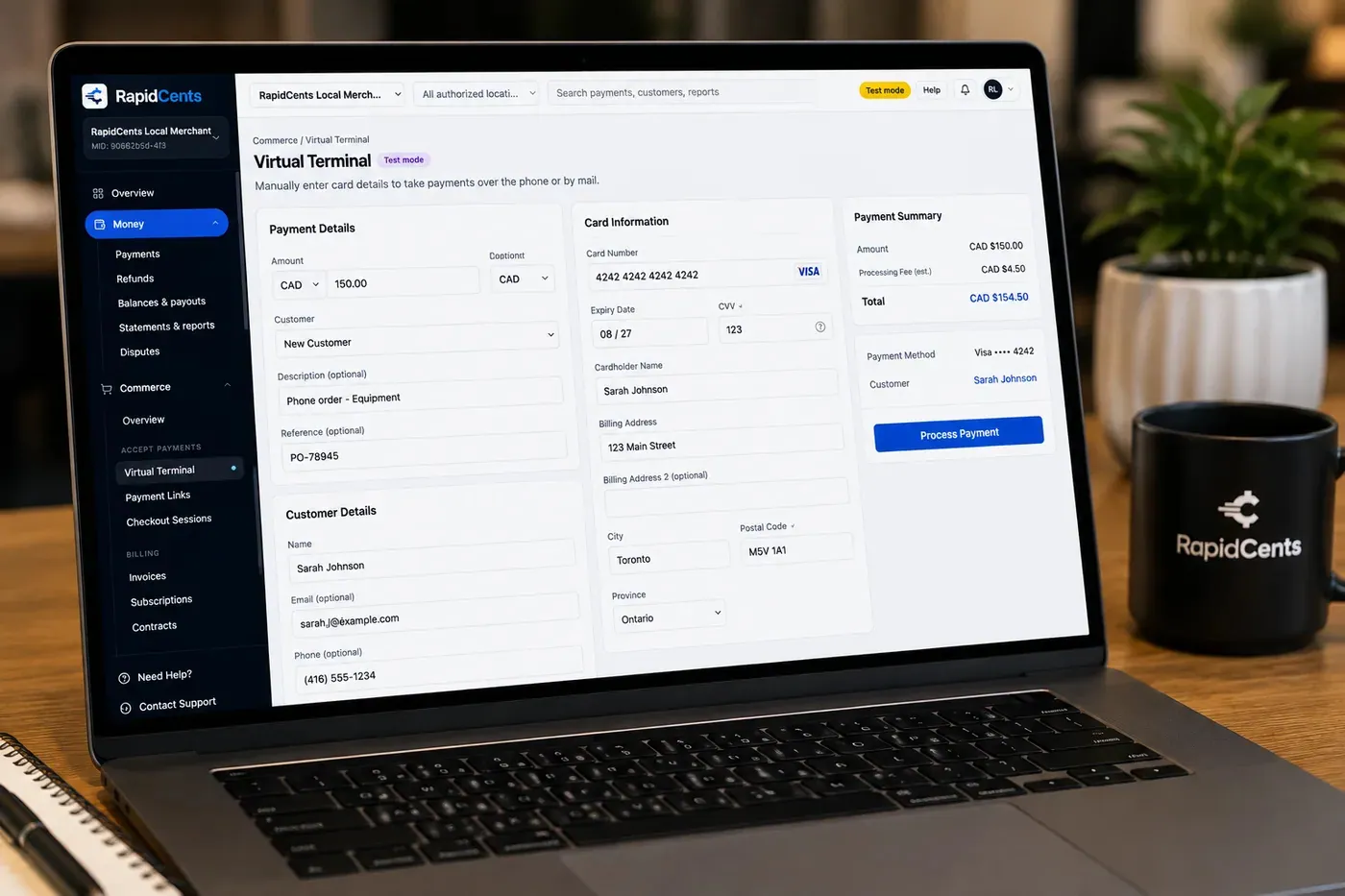
The RapidCents virtual terminal: payment details, card number, expiry and CVV keyed by hand on the left, with a payment summary on the right showing the amount, the estimated processing fee and a Process Payment button. Virtual Terminal
The RapidCents virtual terminal lets authorized staff enter mail-order and telephone-order payments through a…
Explore
The RapidCents payment links screen listing created links with their amount, status, click count and whether they have been paid, beside a phone showing the branded page a customer opens to pay $2,500.00. Payment Links
RapidCents payment links let staff generate branded pay-by-link URLs for invoices, deposits, balances and…
Explore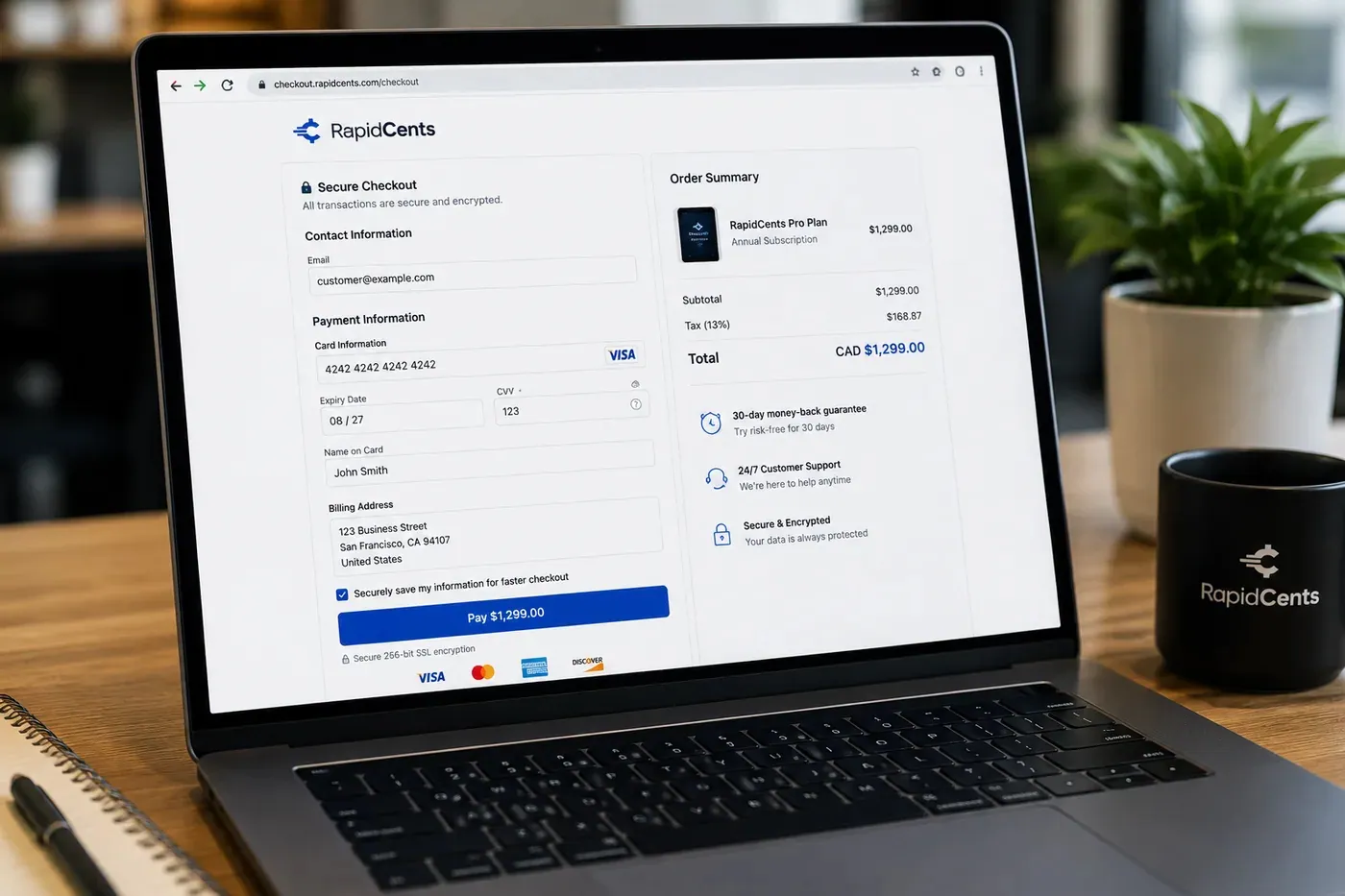
A RapidCents hosted checkout page at checkout.rapidcents.com, with the order summary and totals on the left and the card fields on the right, footed by SSL and PCI DSS assurances. Hosted Checkout
RapidCents hosted checkout delivers PCI-scoped payment pages you redirect customers to or embed via iframe…
Explore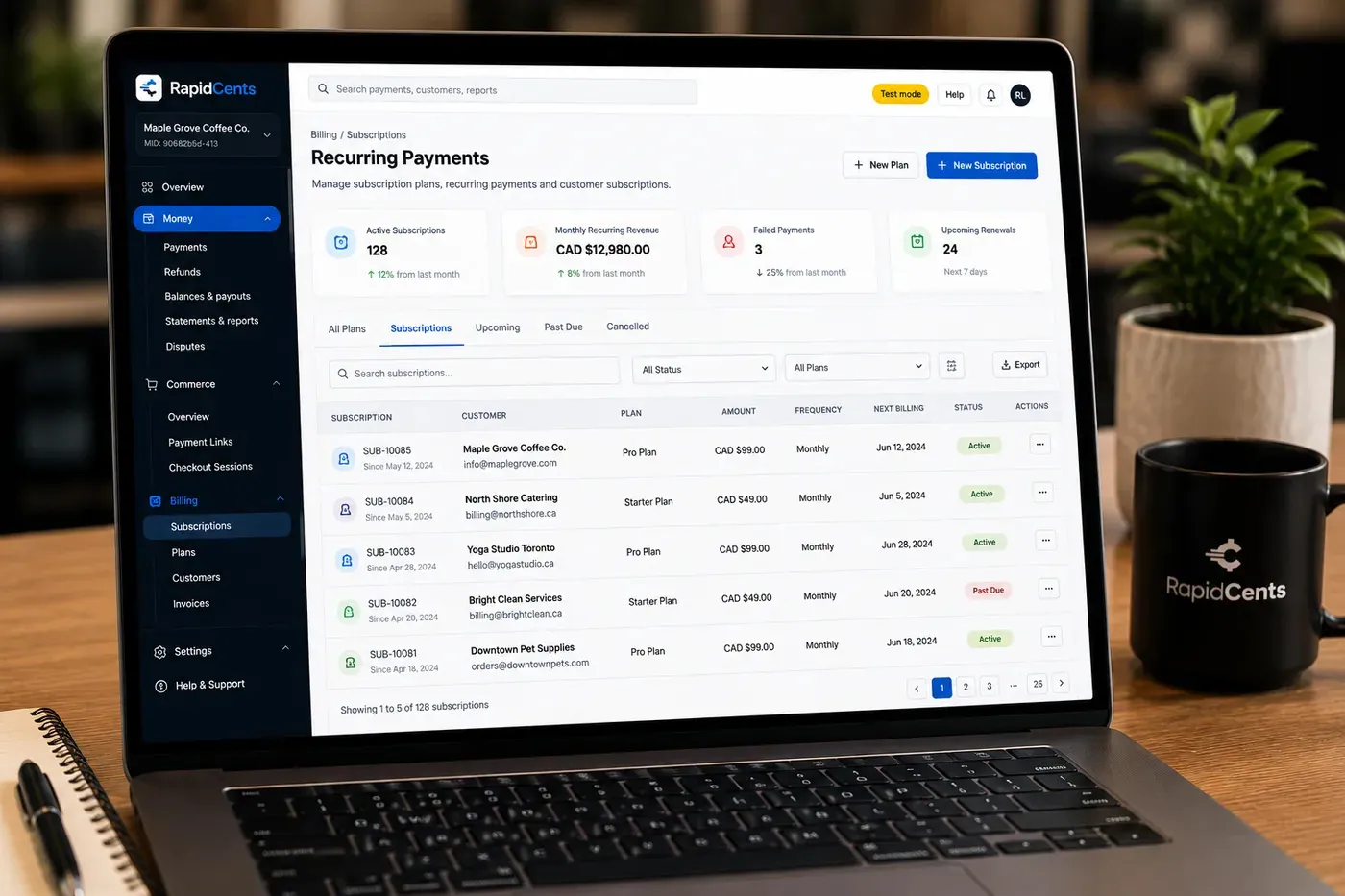
The RapidCents recurring payments screen showing active subscriptions, monthly recurring revenue, failed payments and upcoming renewals, above a list of subscriptions with their plan, amount, frequency and next billing date. Recurring Payments
RapidCents recurring payments manage subscription plans, membership renewals and installment schedules with…
Explore


How do you manage client authorization forms and chargebacks?
Travel agency client authorization forms record what the client agreed to charge, on which card and when. Paired with travel agency chargeback protection tools, they give you evidence if a payment is disputed. Collect the signed form first, then charge, then keep both with the booking.
What the form covers
A credit card authorization form names the cardholder, the card, the amounts or schedule, the travel dates and the cancellation terms the client accepted. Contracts & eSignatures can send the document and capture the signature.
Disputes in travel
Common disputes include a client who says a trip was not delivered, a supplier that cancels, or a cardholder who does not recognize the charge. Disputes and Chargeback Protection provide alerts, evidence and deadlines. Respond with the form, itinerary, supplier confirmation and receipt.
A $4,200 balance disputed months later
Say a cardholder disputes a $4,200 balance months after booking. The agency's file holds the signed authorization, the itinerary the client approved, the supplier confirmation and the payment receipt. The advisor submits that evidence before the deadline shown in the dispute alert.
What drives card processing costs for a travel agency?
Interchange, your card mix and how each card is taken drive the cost of travel agency payments. RapidCents prices on interchange-plus: interchange at cost, your RapidCents markup in your Fee Schedule, and fees for equipment or services, if applicable. Month to month, no fixed term.
Large tickets and card types
Travel tickets are large, so card type matters. Debit, credit, premium and commercial cards carry different interchange, and business travel may arrive on commercial cards. A mix with many premium cards will cost differently from one with mostly debit.
Keyed and remote payments
How the card is taken changes interchange. Cards tapped or inserted at a terminal differ from keyed, online and payment link payments. Most agency payments are remote, so ask your RapidCents representative how your Fee Schedule treats them and what happens when a payment is disputed.
What to bring to compare
Bring your last few processing statements, your card mix, average ticket, split between remote and in-person payments, and your refund and dispute volume. Upload a statement to Fee Check to see interchange separated from markup, then compare written quotes line by line.
Software compatibility: TravelJoy, Travefy and other systems
RapidCents integrates with many major platforms through APPIE and RapidBridge, so most agencies keep the booking tools they run today. The right option depends on your software vendor and version, and your RapidCents representative will walk you through it. Settled transactions, fees and refunds connect to QuickBooks Online and Xero, and SAP and NetSuite import settlement files.
TravelJoy
Many advisors keep client records, proposals and deposit requests in TravelJoy. Tell your RapidCents representative which plan you run, and they will show you how deposits taken by payment link or the Virtual Terminal reach the booking record.
Travefy
If you build group itineraries in Travefy, installments can run on a RapidCents collection schedule beside it. Your RapidCents representative will walk you through how each settled payment matches back to the right traveler for your edition.
WeTravel
WeTravel often collects group payments through its own checkout, so the first question is who is merchant of record. Your RapidCents representative will explain the options for your plan and how signed authorizations and payments stay tied together.
TravelWorks
If TravelWorks holds your booking records, ask your RapidCents representative how transactions reach them, by integration or by export, so a disputed payment can be traced back to its booking.
Tern
For agencies that track supplier commitments in Tern, your RapidCents representative will show you how client payments stay separate from supplier payments and which settlement formats you can import.
Payment options for travel agencies by country
RapidCents serves merchants in Canada and the United States. The card brands, bank-payment options and settlement currency a travel agency uses depend on the country of the merchant account, and your RapidCents representative will walk you through what is enabled on yours before you quote clients.
Card and remote payments
Card payments at the terminal and remote payments by link, Virtual Terminal or Hosted Checkout work the same way for the advisor in every edition. What differs is the set of methods enabled for your account and the currency you settle in.
Merchant of record
Decide with your RapidCents representative whether your agency or the supplier is merchant of record, how client authorization is captured and what your country requires at onboarding. They will set it up around how you actually sell.
How do you switch processors and reconcile supplier payments?
Switch in stages and handle travel supplier payment reconciliation as you go. List stored cards, authorizations, schedules and open balances; once your account is approved, test a deposit, a refund and a balance payment, then match each settled deposit to bookings. Moving saved cards needs both providers to agree.
Take inventory first
List every stored card and authorization, each installment schedule, open balances by departure date and pending refunds. Ask your current provider what it will export. Do not assume saved cards move, and do not plan around instant setup.
Test, then run in parallel
Run a test deposit, a balance payment, a change fee and a refund on the new setup before you move live bookings. Keep both providers active for a short time if departures are close, so no client is charged twice or missed.
Reconcile to suppliers
Reconciliation separates what clients paid, what you owe each supplier and your own commission. Match each settled deposit to booking references, then export settlement and fee reports to your ledger. Supplier payments made from your bank remain a separate step.
Payment questions from travel agencies
What should travel agencies compare before choosing a payment processor?
Compare the full acceptance workflow, not a single price. Ask each provider to demonstrate a booking deposit, a final balance, a change fee and a refund, then compare written quotes, restrictions your booking software places on gateways, settlement reports, refund handling and support. No provider is best for every agency, so decide against your own payment mix.
How much does payment processing cost for travel agencies?
Cost depends on your card mix, how cards are taken and the services you add. RapidCents prices on interchange-plus: interchange passes through at cost, plus your RapidCents markup in your Fee Schedule and fees for equipment or services, if applicable. Premium cards, keyed payments and large tickets all shape the total. Upload a statement to Fee Check to see interchange separated from markup.
Can I use TravelJoy with a different payment processor?
RapidCents integrates with many major platforms through APPIE and RapidBridge, and your plan and version decide the best option for TravelJoy. A payment link or Virtual Terminal sale sits outside the software, so you record it against the booking yourself. Tell your RapidCents representative which plan you run, and they will walk you through the options.
How can my business handle travel agency booking deposit payments?
Send the client a payment link for the deposit, or key the card on the Virtual Terminal while the client is on the phone. The receipt carries the booking reference, and the settled payment appears in your reports. Before you start, agree the deposit amount and cancellation terms with the client, and tell staff who may change or refund a payment.
Which payment options do travel agencies get in each country?
The payment options a travel agency uses depend on the country of its merchant account. RapidCents serves merchants in Canada and the United States, and each country has its own card, bank-payment and settlement choices. Your RapidCents representative will show you which methods and settlement currency are enabled on your account, and whether your agency or its suppliers act as merchant of record.
What setup is needed for group trip installment payments?
Set up a collection schedule for each traveler, with the amount, timing and cancellation terms agreed in writing. Recurring Payments can run the schedule on a card the traveler authorized, with automated retries and Account Updater. An installment schedule collects money you are owed. It is not financing, and RapidCents does not lend to travelers.
How should we manage travel agency client authorization forms?
Use a written authorization for every card you will charge later, and keep it with the booking. The form should name the card, the amounts or schedule, the travel dates and what the client accepts when a trip changes. Staff with permission run the charge, and if it fails they contact the client for another card.
Can one platform handle travel agency chargeback protection and travel supplier payment reconciliation?
Yes, the same reports usually serve both. Disputes and Chargeback Protection tools sit beside settlement reports in the Merchant Dashboard, so a disputed payment can be traced to its settled deposit. Supplier payments you make from your own bank may need a separate import or ledger step, and your RapidCents representative will show you how the records link in your setup.
How do we reconcile card payments and bank deposits for travel agencies?
Match by transaction ID and booking reference, and separate gross sales, refunds, disputes, fees and the bank deposit. Reporting offers transaction, settlement and fee reports with CSV and PDF export. RapidCents connects settled transactions, fees and refunds to QuickBooks Online and Xero, and SAP and NetSuite import settlement files.
How do we switch payment providers without losing saved cards or disrupting booking deposits?
Plan a staged switch and do not assume saved cards move. Token portability depends on both providers agreeing, so ask your current provider what it will export. List stored cards, authorizations, schedules and open balances, then test a deposit, a refund and a reconciliation before you move live bookings. Run both providers in parallel briefly if bookings are in flight.
What MCC is used for travel agencies?
MCC 4722 is commonly associated with travel agencies and tour operators. Your RapidCents representative sets the right merchant category with you during onboarding, based on what your agency actually sells. An agency that sells tickets, tours or packages as merchant of record may be reviewed differently from one that only books for suppliers, so describe your business accurately when you apply.
Industries with similar payment workflows
Events & Ticketing, Wedding Services, Membership Clubs and other deposit-led industries share these workflows: a deposit, a schedule and refund terms. See how each sibling industry handles the same payment jobs differently.
Nonprofits & Charities
Take one-time and monthly gifts online, sell event tickets by link and reconcile deposits…
Education
Take enrollment deposits online, run tuition installments on schedules families authorize…
Government
Take permit fees, counter payments and mailed-in payments from residents, then trace…
Events & Ticketing
Sell advance tickets online, take cards at the gate and concession stand, and give…
Membership Clubs
RapidCents collects membership dues on a schedule, takes event fees and guest passes by…
Agriculture
RapidCents helps farms invoice bulk buyers, take cards at the market stall and bill CSA…
Pet Services
RapidCents helps boarding kennels, dog daycares, groomers, trainers and pet sitters take…
Photography
Collect retainers, session balances and gallery print orders with payment links, invoices…
Take the next step
Review your travel agency processing costs
Upload a recent processing statement to Fee Check and see interchange separated from your current markup, then compare it with a quote for your deposits, balances and remote payments.
- No obligation
- Payment specialists, not a call centre
- Secure statement upload



