


Payment processing for pet care businesses, from booking to pickup
Payment processing for pet care businesses has to cover four moments: a deposit at booking, a fee when a client misses an appointment under your written no-show policy, prepaid or monthly daycare packages, and the balance plus tip when the pet goes home. RapidCents connects to many major booking platforms through APPIE and RapidBridge.

- PCI DSS Level 1
- SOC 2 Type II
- All major cards: Visa, Mastercard, Amex, Discover, UnionPay, Diners Club & PIN Debit
- Interchange-plus available
- Specialist onboarding support
How pet care businesses get paid
Pet care businesses get paid before a visit or stay (a booking deposit), on a schedule (daycare memberships and training installments), at the end (the balance, add-ons and tip) and after a missed appointment (a no-show fee). The pet owner pays each time, by link, stored card or terminal, and each payment carries your booking reference.
Boarding reservation deposits
The owner pays part of a stay when a kennel run or suite is reserved, often weeks before a holiday, through a Payment Link or a card keyed in Virtual Terminal during a phone booking. If the owner cancels inside your refund window, your policy decides what comes back. Finance gets a deposit tied to the reservation number and credited against the final bill.
Daycare packages and memberships
Daycare clients buy a prepaid pack of days or a monthly membership for set days each week. A pack is paid once; a membership renews through Recurring Payments on a card the owner agreed to store, and now and then a renewal fails on a replaced card. Finance sees each purchase and renewal, while the count of days left lives in your booking software.
Grooming checkout with add-ons and tips
When the owner collects a freshly groomed dog or cat, the bill is the groom, anything added on the table such as de-matting or a nail grind, and any shampoo from the shelf. The owner taps or inserts a card and adds a tip on screen. Watch for disputes over add-ons the owner did not approve. Finance needs tips kept apart from service and retail sales.
No-show and late-cancellation fees
A client who misses a grooming slot, or cancels a boarding stay inside your notice period, may owe a fee under your written policy. It goes on a card stored with the owner's authorization, or is requested by Payment Link. A client who forgot the policy may file a chargeback. Finance sees a separate charge naming the missed booking.
Training programs and class series
Owners pay for a puppy class series up front, or for a multi-week board-and-train program in parts: a deposit to hold the start date, then an installment schedule on Recurring Payments agreed in advance. That schedule is a collection plan, not financing. If a dog leaves early, your refund terms apply. Finance sees each scheduled charge against the program.
Walks, sitting visits and mobile grooming
Dog walkers, pet sitters and mobile groomers get paid away from a counter. Tap to Pay turns a supported iPhone or Android phone into a contactless terminal at the door or in the grooming van, and a week of walks can go out as an invoice with a payment link, which also covers a client who is out. Finance sees each payment by client and service date.
Payment pages for specialized businesses
Some businesses in this sector take payments differently enough to need their own page. Each one covers its own payment jobs, software questions and buyer FAQs.
How do pet boarding deposit payments work?
Pet boarding deposit payments hold a run or suite once the owner pays part of the stay in advance, usually through a Payment Link sent when the reservation is confirmed. The deposit is credited against the final bill, and the balance and extras are paid on the terminal at pickup. Your written policy decides when a deposit stops being refundable; the owner's card authorization decides whether extra nights can be charged without asking again.
From reservation to pickup
When a reservation is confirmed, staff send a Payment Link for the deposit with the reservation number as the reference, and set an expiry so an unpaid hold can be released. The owner pays on their phone and gets a receipt automatically. At pickup, the desk adds an exit bath, extra playtime or a medication fee, credits the deposit, and the owner taps or inserts a card for the balance.
Terms and permissions to set first
Decide the deposit amount, such as the first night or half the stay, the date it becomes non-refundable, and whether peak weeks carry stricter terms. If you want to charge extra nights or a late pickup to a card on file, the boarding agreement must say so and the owner must authorize storing the card. Contracts & eSignatures can send that agreement for signature and take the deposit.
Cancellations, extended stays and disputes
Refund a deposit against the original payment, in full or in part as your policy allows, whether the owner cancels or you turn a dog away because its vaccination record has lapsed. Charge extra nights from a delayed flight to the stored card only if the agreement covers it; otherwise send a Payment Link. For a disputed deposit, Disputes and Chargeback Protection tracks the deadline and the signed policy is your evidence.
A holiday stay for two dogs, deposit first
Say a family books ten nights over the winter holidays for two dogs and pays a deposit equal to two nights by Payment Link. At drop-off, the owner signs an agreement allowing charges to a card kept on file. Their flight home is delayed and a friend collects the dogs, so the kennel credits the deposit, charges the balance, two extra nights and two exit baths to that card, and emails the receipt.
Dog daycare recurring payment packages: memberships and prepaid days
Dog daycare recurring payment packages come in two forms: a membership that Recurring Payments charges on a set date each month, or a prepaid pack of days the owner buys again when it runs low. Before the first charge, the owner agrees to the amount, the billing date and how to cancel, and authorizes you to store the card. Your booking software counts attendance; RapidCents collects and reports the payments.
How memberships and prepaid packs run
A membership for three days a week becomes a Recurring Payments plan with a fixed amount and billing date, and the owner is notified before each charge. A ten-day pack is one payment at the desk, by Payment Link or on a Payment Page, and your software counts down the days. Drop-in days and a new dog's temperament evaluation are paid at check-in or pickup.
What the owner agrees to first
Put the membership terms in writing: the amount, which days it covers, the billing date, how much notice cancels it, and what happens to unused days or a pack's expiry. The owner accepts those terms and authorizes you to store the card before the first charge; Customer Profiles and the Secure Card Vault hold the card as a token. With that agreement on file, a renewal stands on solid ground.
Failed renewals, pauses and cancellations
Recurring Payments retries a failed renewal automatically, and Account Updater can refresh card details when the issuer provides an update. If the charge still fails, decide whether the dog keeps attending while the owner pays by Payment Link. Set out whether a vacation pause skips a billing date or extends the term. A cancellation stops future charges; any refund for the current month follows your terms.
From day packs to a membership
Say an owner who keeps buying twenty-day packs moves to a membership for five days a week. Staff start the plan the day the last pack runs out, send the terms for acceptance and store the card with permission. In month three the renewal is declined because the card was replaced and the retry fails, so the desk takes the new card at drop-off and the plan continues.
RapidCents products for pet care businesses
Four products cover the pet care payment day: Payment Links for deposits and balances owed, Recurring Payments for daycare memberships and training installments, Payment Terminals for checkout and tips at the front desk, and Tap to Pay for walkers, sitters and mobile groomers working away from a counter.

A café worker holds a phone running RapidCents Tap to Pay, showing an $18.75 sale and the contactless symbol, while a customer holds a Visa card to the screen. No separate card reader is present. Tap to Pay
RapidCents Tap to Pay turns supported iPhones and Android devices into contactless payment terminals without…
Explore
The RapidCents payment links screen listing created links with their amount, status, click count and whether they have been paid, beside a phone showing the branded page a customer opens to pay $2,500.00. Payment Links
RapidCents payment links let staff generate branded pay-by-link URLs for invoices, deposits, balances and…
Explore
The RapidCents recurring payments screen showing active subscriptions, monthly recurring revenue, failed payments and upcoming renewals, above a list of subscriptions with their plan, amount, frequency and next billing date. Recurring Payments
RapidCents recurring payments manage subscription plans, membership renewals and installment schedules with…
Explore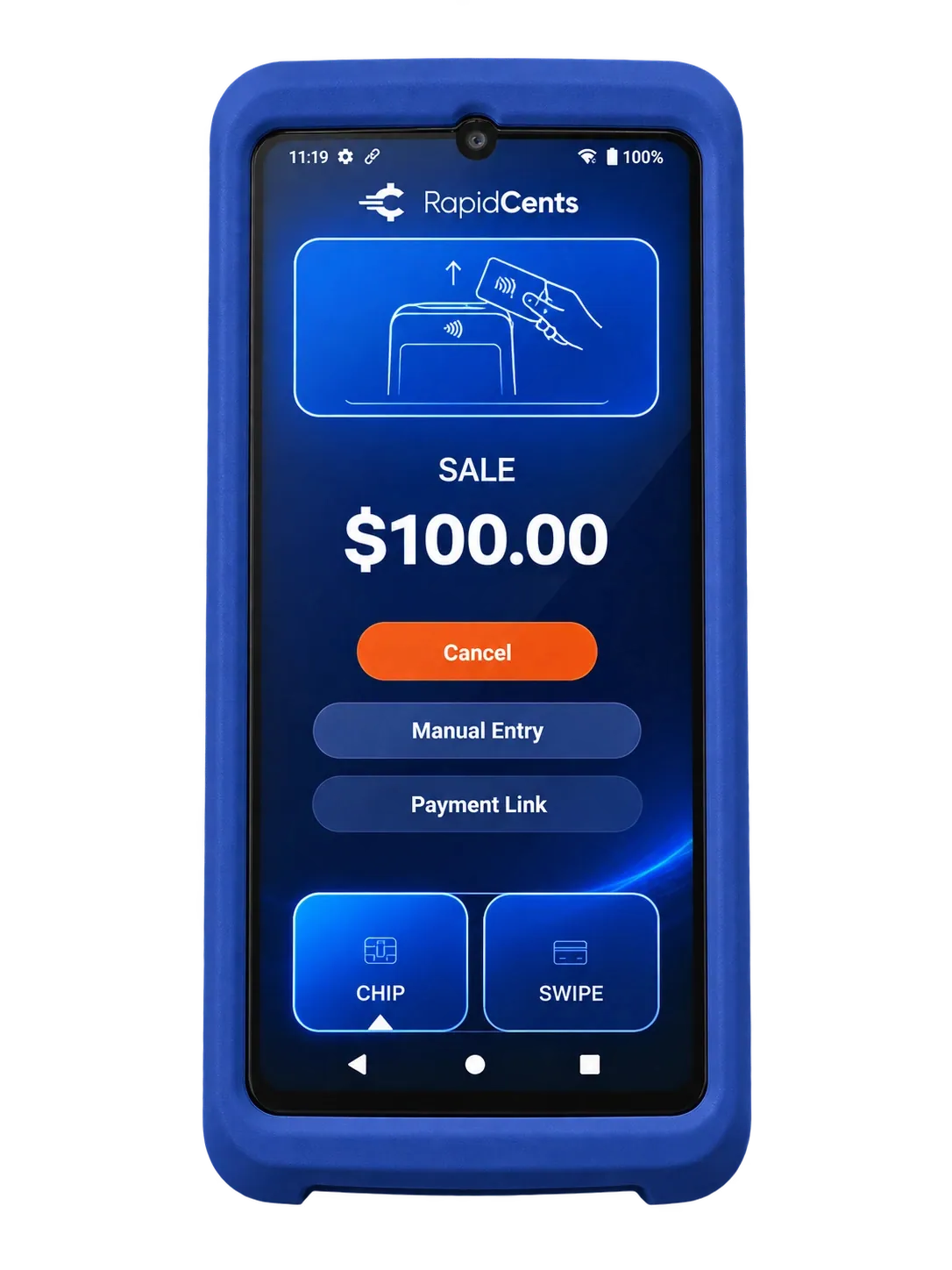
The RapidCents Rivo Go standing upright in its blue silicone case, showing the full-touch sale screen a customer reads across the counter. Payment Terminals
RapidCents payment terminals cover countertop, mobile and smart form factors so you can accept chip…
Explore


How should groomers handle tips and no-show fees?
A grooming salon takes tips on the payment terminal at pickup, where the owner adds the tip on screen before paying, and backs its pet care no-show payment policy with a card the owner agreed to keep on file. Both need setup before the first appointment: the tip screen turned on, refunds and voids limited to a manager, and a no-show fee the client accepted when booking.
Checkout and tips at the terminal
When the dog is ready, the front desk rings up the groom, add-ons such as teeth brushing or a de-shedding treatment, and retail. The owner taps or inserts a card and chooses a tip on screen before paying; for a mobile groomer, Tap to Pay shows an optional tip screen on the phone. Record the groomer's name on the booking so tips reach the right person through payroll.
Setting up the no-show policy
Show the policy before the client books: the fee, how much notice cancels without charge, and that the stored card may be charged. Collect the card with the owner's authorization at booking or at the first visit, and keep any reminder messages you send, since they help if a client disputes the fee. When you charge it, the receipt names the missed appointment and its date.
Refunds, errors and duplicate charges
Limit refunds and voids to a manager role, so a disputed de-matting charge is decided by someone who can see the booking notes. If the terminal shows an error or loses its connection mid-payment, check the transaction list before running the card again, so nobody pays twice. For phone payments, Virtual Terminal adds role permissions and an audit log of who keyed, refunded or voided each one.
A missed Saturday groom, charged Monday
Say a regular client books a Saturday full groom for a doodle and accepts the salon's policy: half the service for a no-show or a cancellation with less than a day's notice. The dog never arrives and the client does not answer. On Monday the manager charges the fee to the stored card, emails a receipt naming the missed slot, and files the accepted policy with the booking.
What drives pet care business credit card processing fees?
Pet care business credit card processing fees come down to which cards owners pay with and whether the card is present when it is charged. RapidCents prices every account on interchange-plus: the interchange that card networks set for each card type and entry method is passed through at cost, and your RapidCents markup, along with any equipment or service fees, is set out in your Fee Schedule. The agreement runs month to month, with no fixed term.
Remote deposits and renewals versus pickups
A balance tapped or inserted at pickup is a card-present payment. A boarding deposit paid by link, a membership renewal and a no-show fee charged to a stored card are card-not-present, which generally means higher interchange and more dispute exposure. When much of your revenue arrives before the visit, through deposits and memberships, your channel mix shapes the cost as much as total volume does.
Debit, rewards and commercial cards
Debit generally costs less to accept than credit, and premium rewards cards cost more than standard ones. Look at where your largest tickets land: a two-week boarding stay or a board-and-train program on a premium rewards card falls in a higher interchange category than a nail trim paid by debit. Company cards used by breeders and show handlers fall into commercial categories.
Refunds, chargebacks, devices and software
Boarding cancellations create refunds and no-show fees invite occasional disputes, so look at how refunds and chargebacks are priced in any quote you weigh. Count the devices you need: a countertop terminal at the desk, a mobile terminal for the grooming room or kennel floor, Tap to Pay phones for walkers. Your representative lays out equipment costs, and any booking-software payment pricing belongs on the same sheet.
Settlement, and what to bring to Fee Check
A deposit taken weeks before a stay settles with the batch it was paid in, not when the dog arrives. For a like-for-like comparison, bring three recent processing statements, your average groom and average boarding invoice, your split between terminal, link and recurring payments, and monthly refund and chargeback counts. Fee Check reads the statement you upload and separates interchange from markup.
Booking software compatibility: Gingr, PetExec and other pet care systems
Pet services booking payment integration depends on your platform: some booking systems take deposits and stored cards through their own payment service, while others let you choose a processor. RapidCents integrates with many major platforms through APPIE and RapidBridge, and the right option depends on your software vendor and version. Your RapidCents representative will walk you through it, and Payment Links, terminals and Recurring Payments run alongside your software with the booking reference on each payment.
Gingr
If Gingr holds your reservations, check-ins and daycare packages, boarding deposits and cards on file may start inside it. The right RapidCents option depends on your Gingr edition and version. Tell your RapidCents representative how you take online deposits and stored cards today, and they will show you how payments post back to the reservation.
PetExec
When PetExec runs your daycare schedule and packages, membership billing normally lives there too. The right RapidCents option depends on your PetExec edition and version, and your representative will walk you through it. Bring your questions about how a payment taken by Payment Link is marked against the client's package, and they will show you how each membership payment lines up.
DaySmart Pet
Groomers who check out in DaySmart Pet need the tip and the ticket to agree. Most salons keep the software they run today. Tell your RapidCents representative which DaySmart Pet setup you use, and they will show you how a tip entered on the terminal reaches the ticket and your payroll figures.
MoeGo
If your salon or mobile grooming calendar runs in MoeGo, the no-show rule and clients' saved cards may already live there. The right RapidCents option depends on your MoeGo setup, and your representative will walk you through it. They will show you how a no-show fee is charged and how Tap to Pay sales taken in a van are recorded against the client.
Revelation Pets
Where clients book boarding, daycare or grooming online through Revelation Pets, the deposit ideally comes with the booking itself. Tell your RapidCents representative how your online bookings work, and they will show you the best way to take the deposit and carry the booking number onto each payment export.
QuickBooks Online and Xero
RapidCents connects settled transactions, fees and refunds to QuickBooks Online and Xero. If your booking software also pushes invoices into the same ledger, decide which system records sales and which records payments, or a groom gets counted twice. Your RapidCents representative will help you set up the split so your books match your settlements.
Payment options for pet care businesses by account country
RapidCents serves pet care businesses in Canada and the United States. Card payments at pickup, deposits by Payment Link and recurring membership charges work the same way in both, while the local debit network, bank-payment options and settlement currency follow the country where your merchant account is opened. Your RapidCents representative walks you through the methods for your country.
What works the same in both markets
Visa, Mastercard and American Express cards can be tapped or inserted at pickup, paid through Payment Links and charged on a recurring schedule for memberships, once the owner authorizes you to store the card. Tips on the terminal, no-show fees charged under a written policy, and refunds against the original payment work the same way whichever country your account is in.
What depends on your account country
The local debit network, whether memberships can be collected from a bank account instead of a card, and the currency your payments settle in all depend on the country of your merchant account. Tax on grooming, boarding and retail comes from your own software and advisor. Talk to your RapidCents representative before you build deposits or memberships around a method.
Switching processors: setup, refunds and payment reporting
Switch processors in stages: list everything tied to the old account, test the new payment flows, move one channel at a time and keep the old account open until its deposits and refunds are settled. Saved cards may not move, because a token migration needs both providers to agree, so plan to collect fresh authorization for memberships and cards on file if they cannot be transferred.
Take inventory first
List every active daycare membership and its billing date, cards on file for no-show fees and extended stays, deposits already collected for future stays, open training invoices and refunds still owed. Note which payments run through your booking software and which through standalone terminals or links. Prepaid package days are records in your software, so a processor change does not touch them.
Saved cards and fresh authorization
Ask your current provider whether it will release stored card tokens, and ask your RapidCents representative about accepting them; a migration happens only when both agree. If it cannot, ask each member to enter a card and accept the membership terms on RapidCents before their next billing date, and have clients covered by your no-show policy authorize a new card at their next visit.
Test, then move one channel at a time
Once your account is approved, run a deposit by link, a terminal sale with a tip, a full and a partial refund and a recurring charge, then check how each appears in your reports and booking software. Move the front desk first and memberships on their next billing dates. Refund deposits taken on the old account through that account, and keep it open until those stays are over.
References and daily reconciliation
Put the reservation or invoice number and the pet's name in each payment reference so every deposit matches its booking. Each day, match the bank deposit to the settlement report, separating gross sales, tips, refunds, chargebacks and fees; Reporting exports to CSV or PDF, and Multi-Location gives each site its own MID with roll-up reports. Ask your accountant how to record deposits for future stays and unused package days.
Payment questions from pet care businesses
What should a pet care business compare before choosing a payment processor?
Compare how each provider handles deposits, memberships, checkout and your booking software, not just a headline price. When you weigh pet care business merchant services, ask for a demonstration of pet boarding deposit payments from booking link to pickup, then look at software restrictions, how stored cards are billed, how refunds and chargebacks are priced, the settlement schedule and who answers the phone on a busy Saturday. Compare written quotes built on your own statements, markup line by line.
How much does payment processing cost for a pet care business?
The cost of payment processing for a pet care business depends on your card mix and how each card is taken, so a fair figure needs your own statements. Under RapidCents interchange-plus pricing, interchange passes through at cost and varies by card type and by whether the card was tapped at pickup or paid remotely; your RapidCents markup and any equipment or service fees are set out in your Fee Schedule. Count software payment fees, terminals and chargebacks too. Fee Check separates interchange from markup on an uploaded statement.
Can I use Gingr with a different payment processor?
RapidCents integrates with many major platforms through APPIE and RapidBridge, so most pet care businesses keep the booking software they run today. The right option depends on your Gingr edition and version. Tell your RapidCents representative how you take online deposits and stored cards now, and they will walk you through how payments, receipts and package records connect, including whether a terminal sale posts back to the reservation.
How can my boarding business handle pet boarding deposit payments?
Send a Payment Link for the deposit as soon as a reservation is confirmed, with the reservation number as its reference, and credit the deposit against the bill at pickup. Staff can see whether each link is open, paid or expired, so an unpaid hold can be released on time. Before you start, write the deposit amount, refund window and peak-date terms into your boarding agreement, and get the owner's authorization if you plan to charge a stored card for extra nights.
Which payment options can pet care businesses use in Canada and the United States?
Pet care businesses in Canada and the United States can take card payments on the terminal at pickup, deposits and balances by Payment Link, and recurring charges for daycare memberships and training installments on cards owners authorize you to store. The debit network, any bank-payment option for memberships and the settlement currency follow the country of your merchant account, and your RapidCents representative walks you through the setup for yours.
What setup is needed for dog daycare recurring payment packages?
You need written membership terms, the owner's authorization to store a card, and a Recurring Payments plan with the amount, billing date and cancellation terms the owner accepted. Decide in advance how renewals that still fail after automated retries are handled, whether a vacation pause skips a charge, and what happens to unused days. Your booking software keeps attendance and package counts, while RapidCents collects each charge, notifies the owner beforehand and reports every renewal for reconciliation.
How should we manage tips on a pet grooming payment terminal?
Turn on the tip screen so the owner adds the tip on the terminal before paying, and note on the booking which groomer did the work so payroll can pass the tip on. Limit tip adjustments, refunds and voids to a manager role. If a payment fails or the terminal drops its connection, look up the transaction before trying again so the owner is not charged twice. Your RapidCents representative can show you how terminal tips appear alongside your booking tickets.
Can one platform handle our no-show policy and our booking payments?
Yes. RapidCents integrates with many major platforms through APPIE and RapidBridge, and the right option depends on your booking software vendor and version. Where your software runs its own payment service, the no-show fee, the deposit and the booking can share one client record. Where RapidCents runs next to it, the stored card and the fee live in RapidCents, staff note the charge on the booking, and the settlement report matches both by reference. Your representative will walk you through the setup that fits.
How do we reconcile card payments and bank deposits for a pet care business?
Reconcile by matching each bank deposit to its settlement report, then each payment to its booking. One bank deposit can combine booking deposits for future stays, pickups, renewals and refunds from one settlement batch, so use the RapidCents settlement report to separate gross sales, tips, refunds, chargebacks and fees, and match payments by transaction ID or booking reference. RapidCents connects settled transactions, fees and refunds to QuickBooks Online and Xero, so your books follow your settlements.
How do we switch payment providers without losing saved cards or disrupting boarding deposits?
Plan on saved cards not moving automatically, because a token migration happens only when the current and new provider both agree; ask early and have a re-authorization plan ready. Keep the old account open until every deposit it collected has been applied or refunded, since a refund goes back through the processor that took the payment. Test deposits, refunds, tips and a membership charge on RapidCents first, then move the front desk, then memberships on their next billing dates.
What MCC is used for pet services?
MCC 7299, Miscellaneous Personal Services (Not Elsewhere Classified), is commonly associated with pet grooming, boarding, daycare and pet sitting businesses. Your RapidCents representative will set the right merchant category with you, based on what your business actually sells. If you also sell food and supplies from a retail shelf, run training programs or share premises with a veterinary clinic, describe each activity so your account matches how you take payments.
Industries with similar payment workflows
Photography and wedding services also take a deposit at booking and collect the balance later, membership clubs and golf courses bill recurring dues, and self-storage charges stored cards every month. Their pages show how the same deposit, membership and stored-card workflows run with different customers.
Nonprofits & Charities
Take one-time and monthly gifts online, sell event tickets by link and reconcile deposits…
Education
Take enrollment deposits online, run tuition installments on schedules families authorize…
Government
Take permit fees, counter payments and mailed-in payments from residents, then trace…
Events & Ticketing
Sell advance tickets online, take cards at the gate and concession stand, and give…
Membership Clubs
RapidCents collects membership dues on a schedule, takes event fees and guest passes by…
Travel Agencies
Take booking deposits, collect final balances and group installments, and match settled…
Agriculture
RapidCents helps farms invoice bulk buyers, take cards at the market stall and bill CSA…
Photography
Collect retainers, session balances and gallery print orders with payment links, invoices…
Take the next step
See what your deposits, memberships and pickups cost to process
Upload a recent processing statement to Fee Check. It separates interchange from markup, so you can see what your mix of link deposits, daycare renewals and tapped pickups costs before you compare a written RapidCents quote.
- No obligation
- Payment specialists, not a call centre
- Secure statement upload



