Online Giving, Recurring Donations and Kiosk Payments for Congregations
A congregation receives money in two places at once: a giving terminal in the lobby on a Sunday, and a payment link or hosted checkout a member uses at home during the week. RapidCents handles both, schedules recurring giving for members who commit monthly, tracks a building-fund pledge as its own recurring charge, and takes hall rentals and event registrations on the same account. Places of worship are classified under MCC 8661.

- PCI DSS Level 1
- SOC 2 Type II
- All major card brands: Visa · Mastercard · Amex · Discover · PIN debit
- Interchange-plus available
- Specialist onboarding support
Operational workflows
Lobby kiosk takes giving on service day
Recurring giving scheduled for monthly commitments
Building-fund pledges tracked as their own charge
Hall rentals and event registrations invoiced
Payment challenges
Giving concentrated in one hour a week
Most of the week's gifts arrive during a single service, at a kiosk with nobody standing beside it to help.
A pledge is not a subscription
A building-fund commitment runs toward a total the giver named, so it has to be followed to that total rather than repeated indefinitely.
The hall is a second business
Rentals and event registrations land on the same account as donations and have to be told apart in the books.
Choose the right payment setup for Religious Organizations
Choose church payment processing
For Religious Organizations, map sign-up, scheduled billing, and renewal, online checkout and remote payment, and the counter or service point before choosing a setup. Select channels that match those moments, then confirm that the chosen solution genuinely covers each channel.
Payment hardware for Religious Organizations
For Religious Organizations, start with the place customers pay in person: a countertop terminal, smart terminal, or portable device depending on the workflow. Verify that the hardware fits the real volume and workspace.
Compare payment processing fees
For Religious Organizations, request a written fee breakdown covering scheduled billing, declined cards, and cancellations and online checkout and dispute handling. Compare the effective cost across the real card and channel mix; do not choose on a headline rate alone.
Set up or switch Religious Organizations payments
To set up Religious Organizations payments, document the checkout, confirmation, and refund path, confirm compatibility before purchase, then test a real payment flow before going live.
Recommended products
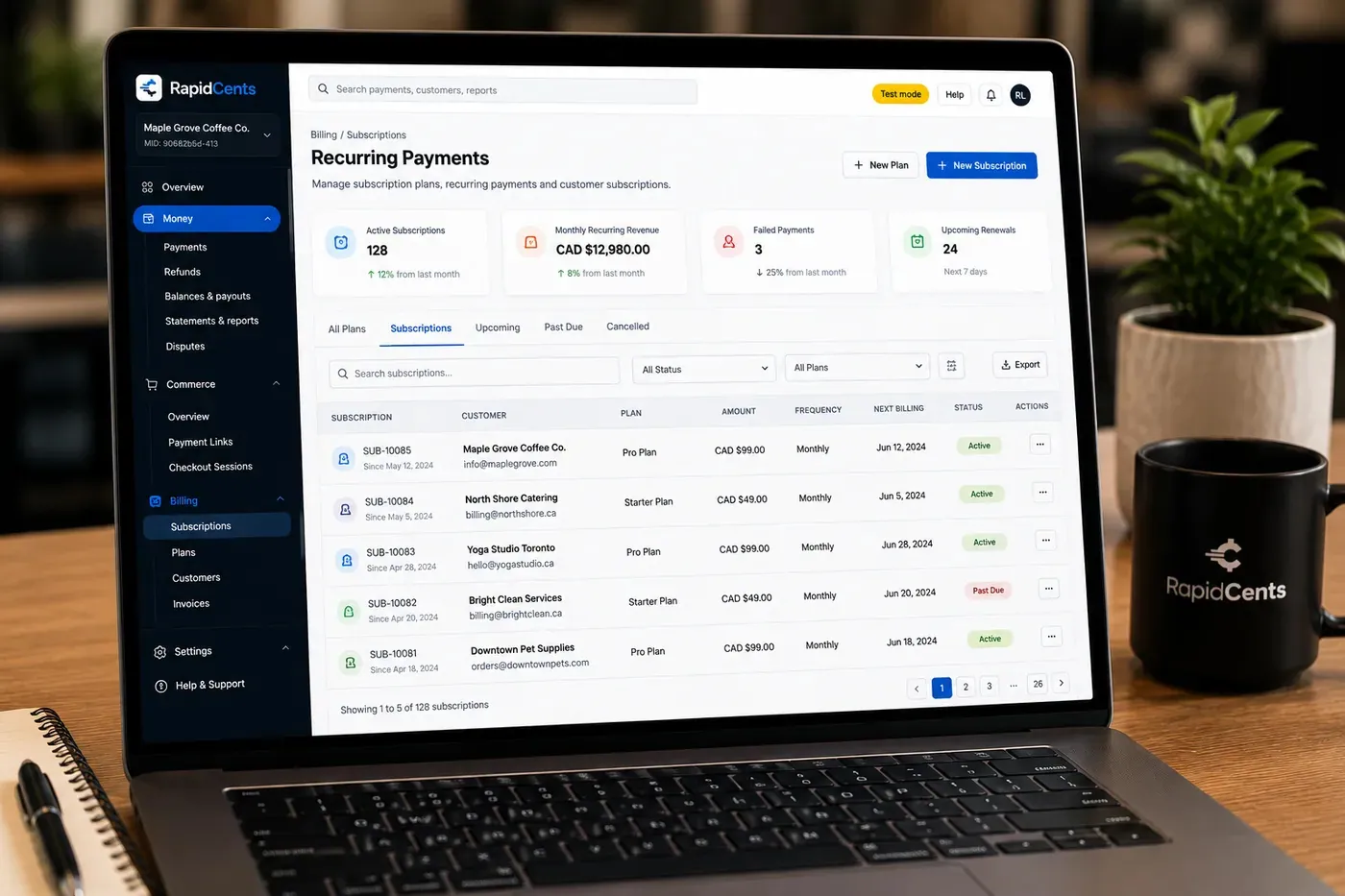
The RapidCents recurring payments screen showing active subscriptions, monthly recurring revenue, failed payments and upcoming renewals, above a list of subscriptions with their plan, amount, frequency and next billing date. Recurring Payments
RapidCents recurring payments manage subscription plans, membership renewals and installment schedules with…
Explore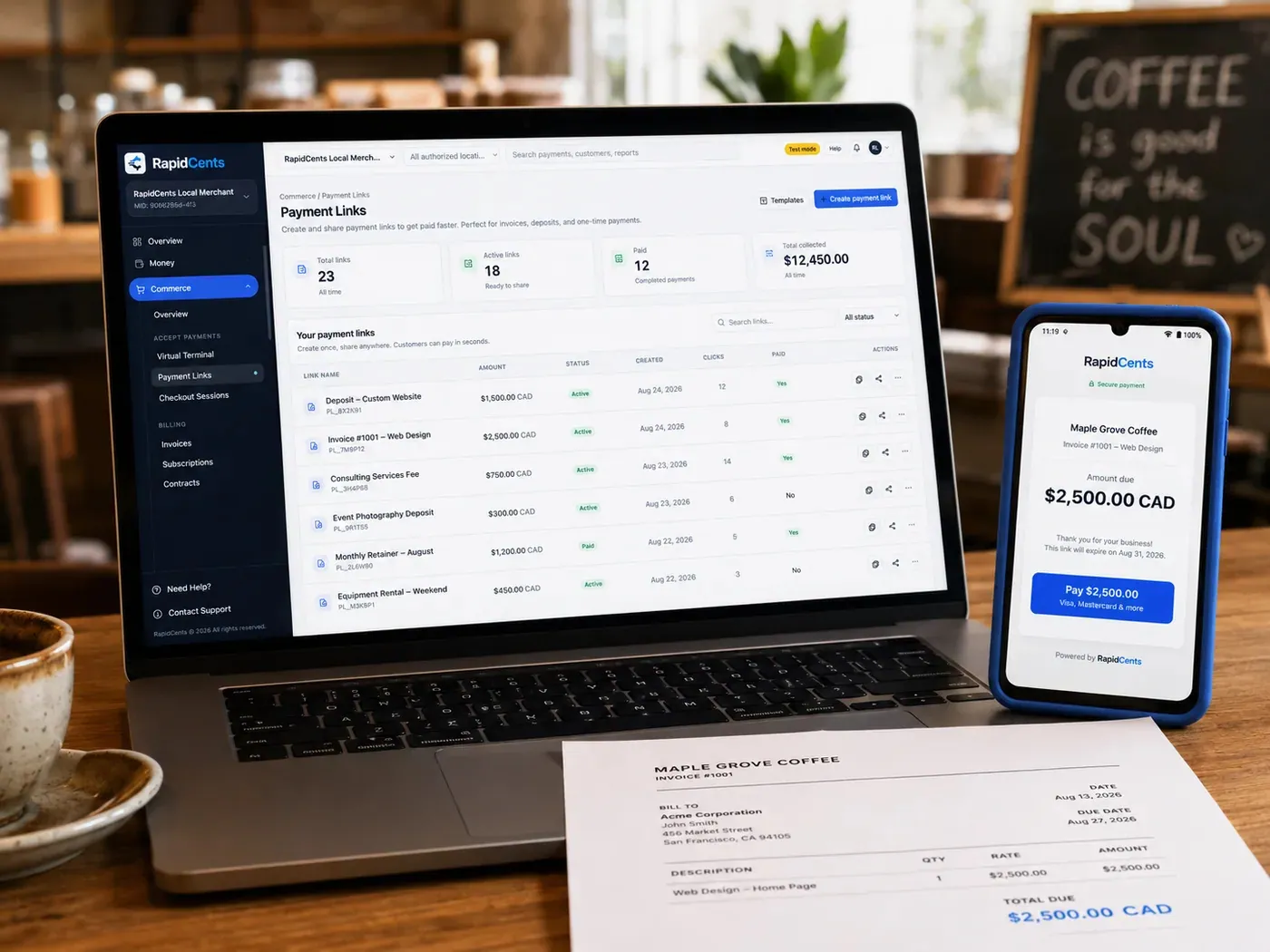
The RapidCents payment links screen listing created links with their amount, status, click count and whether they have been paid, beside a phone showing the branded page a customer opens to pay $2,500.00. Payment Links
RapidCents payment links let staff generate branded pay-by-link URLs for invoices, deposits, balances and…
Explore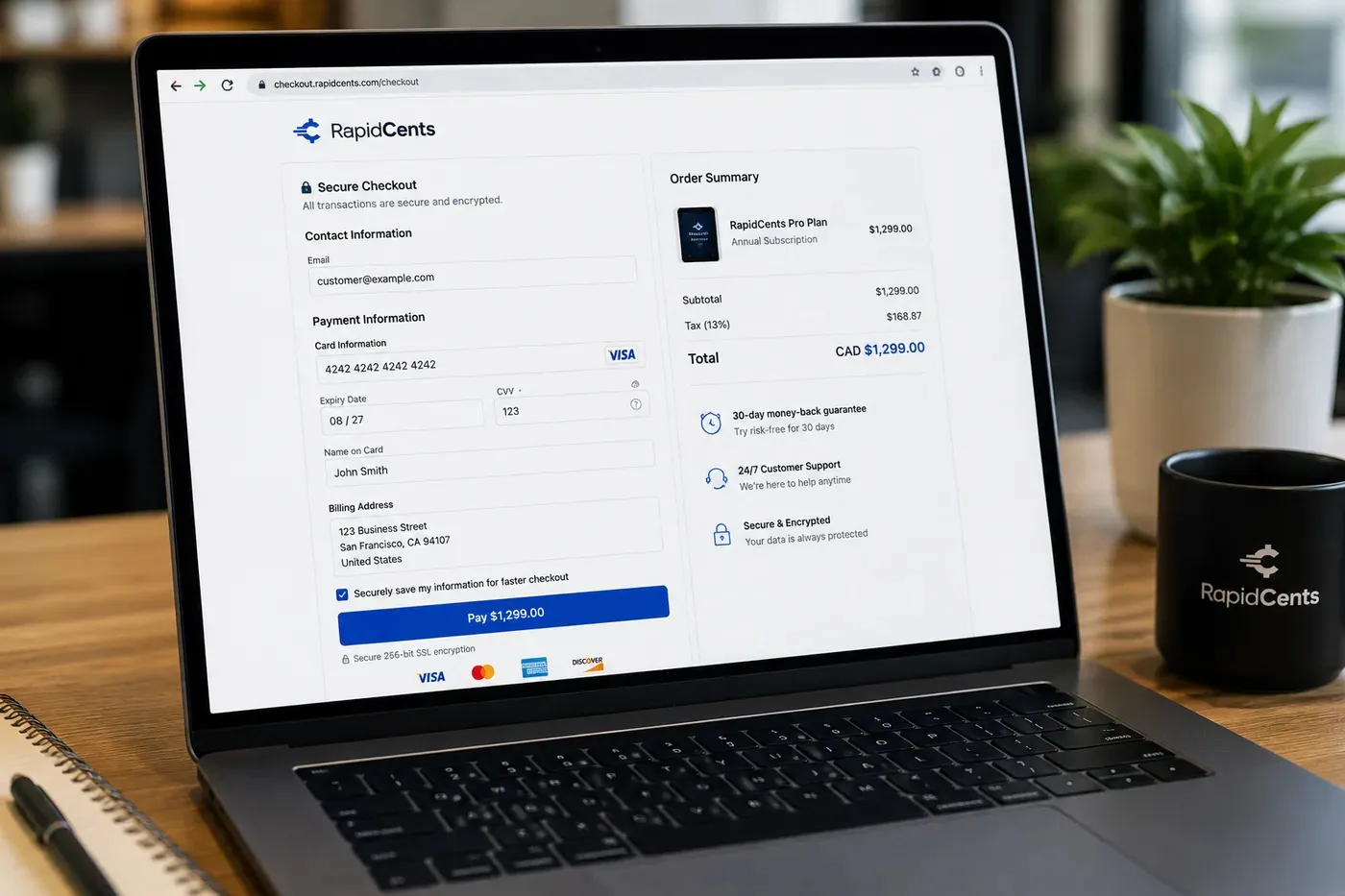
A RapidCents hosted checkout page at checkout.rapidcents.com, with the order summary and totals on the left and the card fields on the right, footed by SSL and PCI DSS assurances. Hosted Checkout
RapidCents hosted checkout delivers PCI-scoped payment pages you redirect customers to or embed via iframe…
Explore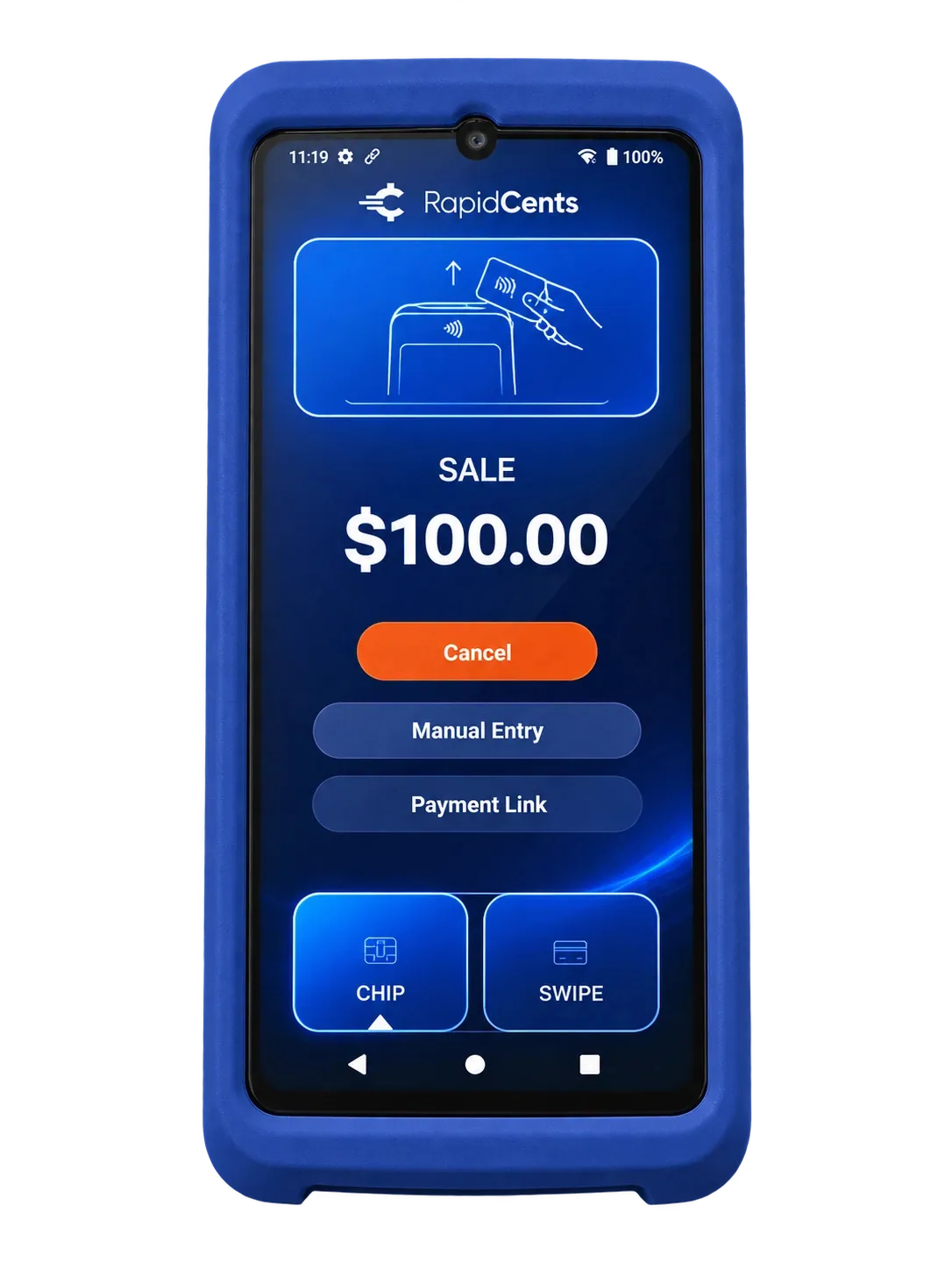
The RapidCents Rivo Go standing upright in its blue silicone case, showing the full-touch sale screen a customer reads across the counter. Payment Terminals
RapidCents payment terminals cover countertop, mobile and smart form factors so you can accept chip…
Explore


How this gets set up
A giving terminal in the lobby
A payment terminal on a stand near the entrance takes a tap or a card for the offering during and after a service.
Regular givers moved to a monthly schedule
Members who give the same amount each month authorize a recurring charge instead of remembering an envelope.
Building-fund pledges tracked on their own
A pledge to a capital campaign runs as a separate recurring commitment, so general offering and the fund never blend.
Hall rentals and event registrations invoiced
A wedding, a funeral reception or a community booking of the hall is paid by payment link or on a hosted page.
Integrations
Tithe.ly exports
Tithe.ly exports bring giving history across as a file for the congregation's records rather than a live link to the giving app.
PowerChurch
Contributions posted into PowerChurch stay attached to the fund they were given to and the member who gave them.
QuickBooks
Offering, designated funds and rental income land in QuickBooks on separate accounts for the treasurer's report.
Operations, security and going live
General offering, designated funds and rentals reported apart
Reporting keeps each fund on its own line, which is what the treasurer presents back to the congregation.
Less cash on the counting table
Card giving at the terminal and on the hosted page reduces what two volunteers have to count, bag and deposit.
Volunteers never handle a donor's card
Givers enter their own details at the terminal or on the hosted page, so nobody at the welcome table sees a card number.
Go-live before a high-giving season
The terminal and the recurring schedules are set up ahead of the season when giving peaks, not during it.
Payment questions from Religious Organizations
What should businesses compare when choosing church payment processing for Religious Organizations?
Compare church payment processing against the real payment journey: sign-up, scheduled billing, and renewal, online checkout and remote payment, and the counter or service point. Start with the required channels and hardware, then confirm compatibility and support before committing.
What payment hardware is practical for Religious Organizations?
If Religious Organizations sells primarily online, do not choose physical hardware before validating checkout. Add hardware only for a clearly defined in-person payment need.
Which payment channels are relevant for Religious Organizations?
For Religious Organizations, start with sign-up, scheduled billing, and renewal, online checkout and remote payment, and the counter or service point. Keep only the channels that match those moments, then verify the complete customer flow before offering them.
How should payment processing fees be evaluated for Religious Organizations?
For Religious Organizations, compare costs related to scheduled billing, declined cards, and cancellations and online checkout and dispute handling using actual transactions. Request a written breakdown of fees and terms rather than relying on an advertised rate alone.
What should be confirmed before setting up payments for Religious Organizations?
For Religious Organizations, document the checkout, confirmation, and refund path, verify the needed compatibility, and test the flow before going live. This exposes manual steps and exceptions before customers encounter them.
What should be confirmed before using recurring payments for Religious Organizations?
Define consent, billing cadence, change and cancellation rules, and how a declined card is handled. Ask to see the complete customer journey before offering it to customers.
What MCC category applies to Religious Organizations?
MCC 8661 is commonly associated with Religious Organizations. Our onboarding team confirms the correct category for your business.
Related industries
Chambers of Commerce
Chambers bill annual and monthly memberships alongside event tickets, sponsorship…
Professional Associations
Professional bodies collect annual member dues, certification and exam fees…
Labour Unions
Unions collect dues by payroll deduction or card, plus initiation fees, benefit…
Coworking Spaces
Coworking operators run monthly desk and office memberships alongside day passes…
Subscription Boxes
Subscription box brands bill a recurring plan against a fixed ship date. RapidCents runs…
Sports Leagues & Clubs
Leagues and clubs collect seasonal registration, team fees, tournament entries and…
Summer Camps
Camps take a deposit at booking then instalments before the session starts, plus canteen…
Childcare & Daycare
Daycares bill tuition on a fixed monthly or biweekly cycle per child, handling subsidy…
Take the next step
Talk to a RapidCents specialist
RapidCents Fee Check reads a processing statement and shows interchange separately from the markup. Upload a statement for an instant breakdown, or open a merchant account and start accepting payments on one account.
- No obligation
- Payment specialists, not a call centre
- Secure statement upload