Payment processing for wedding businesses
Payment processing for wedding businesses has to follow a booking signed months ahead: a retainer that holds the date, installment invoices, a final balance and sometimes a cancellation refund. RapidCents sends each milestone as a payment link or invoice, runs agreed schedules on Recurring Payments and keys phone payments through the Virtual Terminal.

- PCI DSS Level 1
- SOC 2 Type II
- All major cards: Visa, Mastercard, Amex, Discover, UnionPay, Diners Club & PIN Debit
- Interchange-plus available
- Specialist onboarding support
How wedding businesses get paid
Wedding businesses get paid in stages: a retainer when the contract is signed, installments through the planning period, a final balance before the day, and occasional add-ons or refunds. Each stage has a different payer, trigger and record.
Retainer at contract signing
A couple signs with a photographer, venue, florist or planner, and the retainer holds the date. You send a payment link or invoice with the contract, the couple pays by card, and finance sees a paid status tied to the booking.
Installments through the planning period
Many bookings split the fee into milestones, such as dress fittings, design approval or a venue walkthrough. You issue invoices on the agreed dates or run a schedule the couple authorized, and each paid milestone reduces the open balance.
Final balance before the day
Most vendors want the balance in hand before the wedding, not on it. You send a payment link or invoice a set number of weeks ahead. If a card is declined, your team calls the couple and keys the payment into the Virtual Terminal.
Add-ons, overtime and refunds
Extra hours, rush prints, additional guests or a changed menu add charges after booking, while cancellations may trigger a full or partial refund under your contract. Each adjustment is a separate invoice or refund on the original payment record.
How do wedding businesses collect payments?
Wedding businesses collect payments by attaching a payment request to each contract milestone: retainer, installments and final balance. RapidCents supports this with Payment Links, Invoicing, Recurring Payments and the Virtual Terminal, so each charge matches a date in the signed agreement and leaves a record finance can reconcile.
Match each charge to the contract
Start with the payment schedule in your signed agreement. Every milestone becomes one invoice or payment link with the same amount, due date and booking reference, so a couple never pays something the contract does not say.
Choose the channel by client habit
Couples planning from different cities often pay from a phone link, while older relatives paying a parent's share may call the office. Use Payment Links for remote payers and the Virtual Terminal for phone payments, with the cardholder's agreement.
A $4,800 photography package, paid in four parts
Say a photographer books a $4,800 package. The couple pays a $1,200 retainer by link at signing, two $1,200 installments on invoice, and the final $1,200 four weeks before the date. Each payment appears against one booking.
How do you handle wedding vendor retainer payments?
Wedding vendor retainer payments are handled by sending the retainer request with the contract and treating payment as part of acceptance. RapidCents Payment Links or Invoicing collect the retainer by card, and your contract should say clearly whether the retainer is refundable, transferable or applied to the final balance.
Set the retainer terms first
Write down whether the retainer holds the date only, covers a design fee or counts toward the total. Couples dispute unclear retainers more than clear ones, and your terms are the first evidence you submit in any dispute.
Collect, check and record
Send the link with the contract, check the receipt and mark the date as held only after payment shows as paid. If two couples request the same date, the paid retainer decides who holds it, not the order of inquiries.
A $2,000 barn venue hold
Say a barn venue asks for a $2,000 retainer to hold a Saturday. The couple pays by link, the venue sends a receipt, and the payment is recorded against the booking. If the couple moves the date, the same retainer carries over under the contract.
RapidCents products for wedding businesses
These products cover the wedding payment cycle: Payment Links for retainers, Invoicing for milestones, Recurring Payments for authorized schedules and the Virtual Terminal for payments taken by phone.
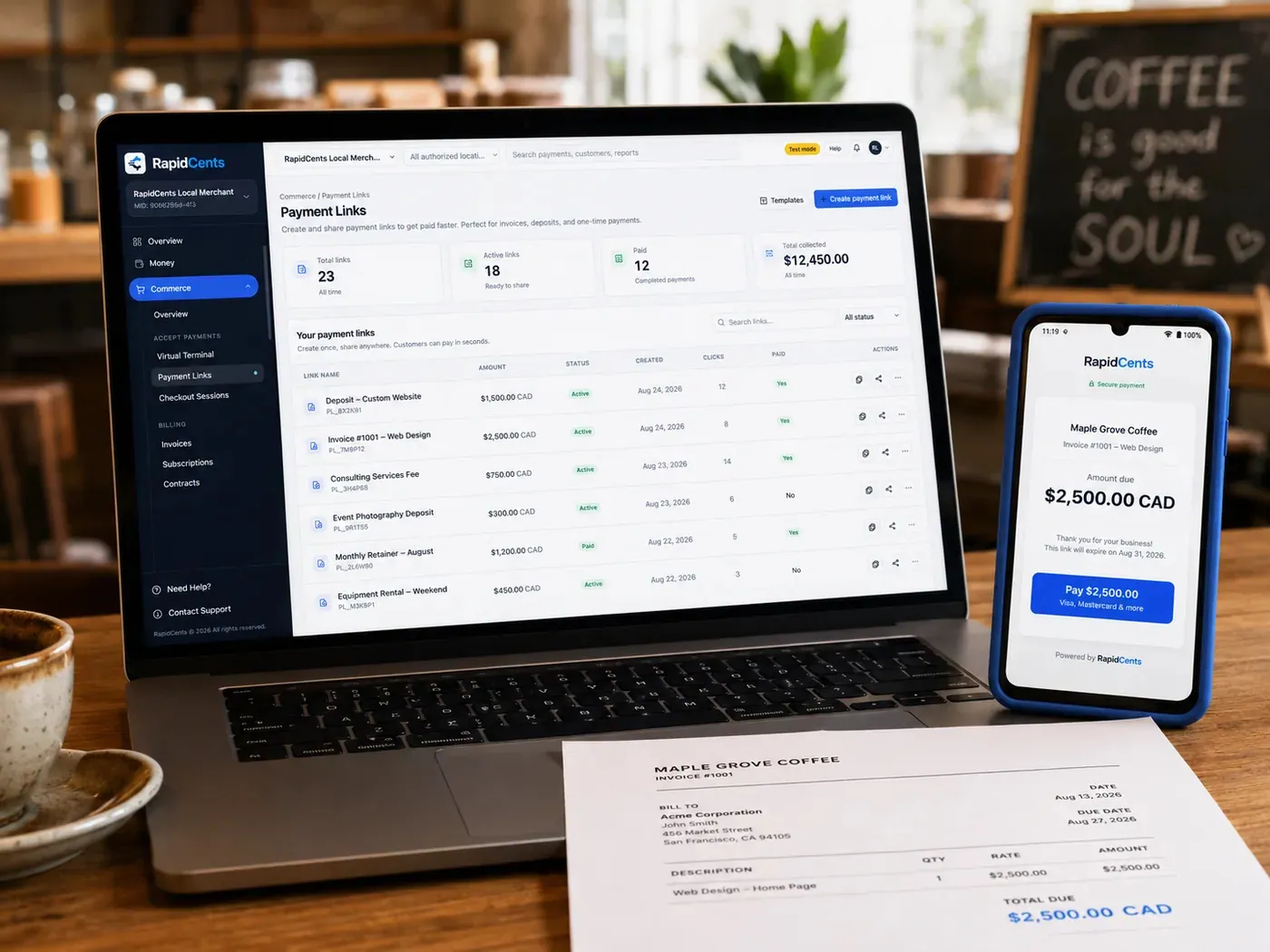
The RapidCents payment links screen listing created links with their amount, status, click count and whether they have been paid, beside a phone showing the branded page a customer opens to pay $2,500.00. Payment Links
RapidCents payment links let staff generate branded pay-by-link URLs for invoices, deposits, balances and…
Explore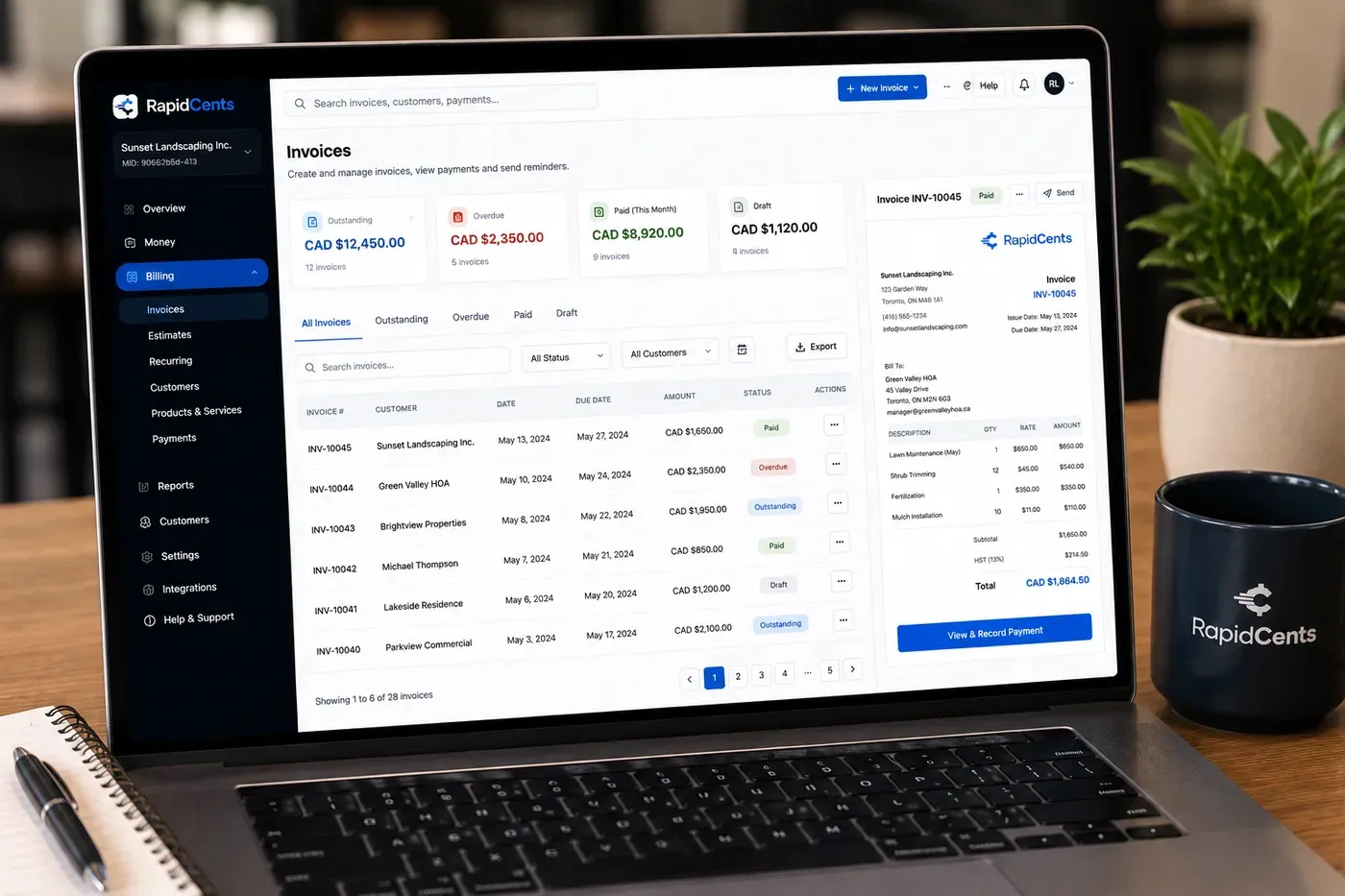
The RapidCents invoices screen: outstanding, overdue, paid and draft totals across the top, the invoice list below them, and a preview of one invoice on the right with its line items and a View & Record Payment button. Invoicing
RapidCents invoicing helps professional services, contractors and B2B suppliers create branded invoices…
Explore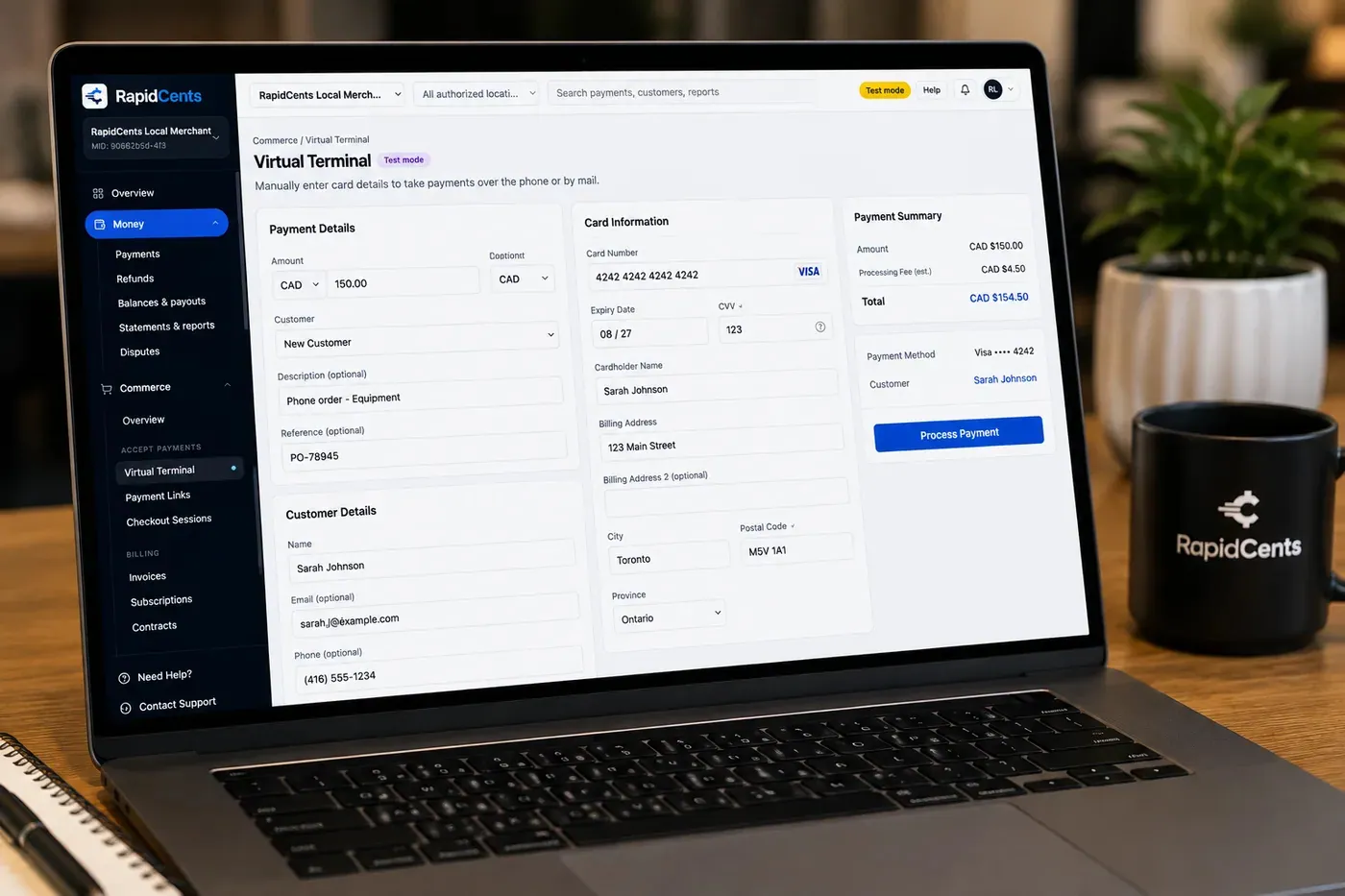
The RapidCents virtual terminal: payment details, card number, expiry and CVV keyed by hand on the left, with a payment summary on the right showing the amount, the estimated processing fee and a Process Payment button. Virtual Terminal
The RapidCents virtual terminal lets authorized staff enter mail-order and telephone-order payments through a…
Explore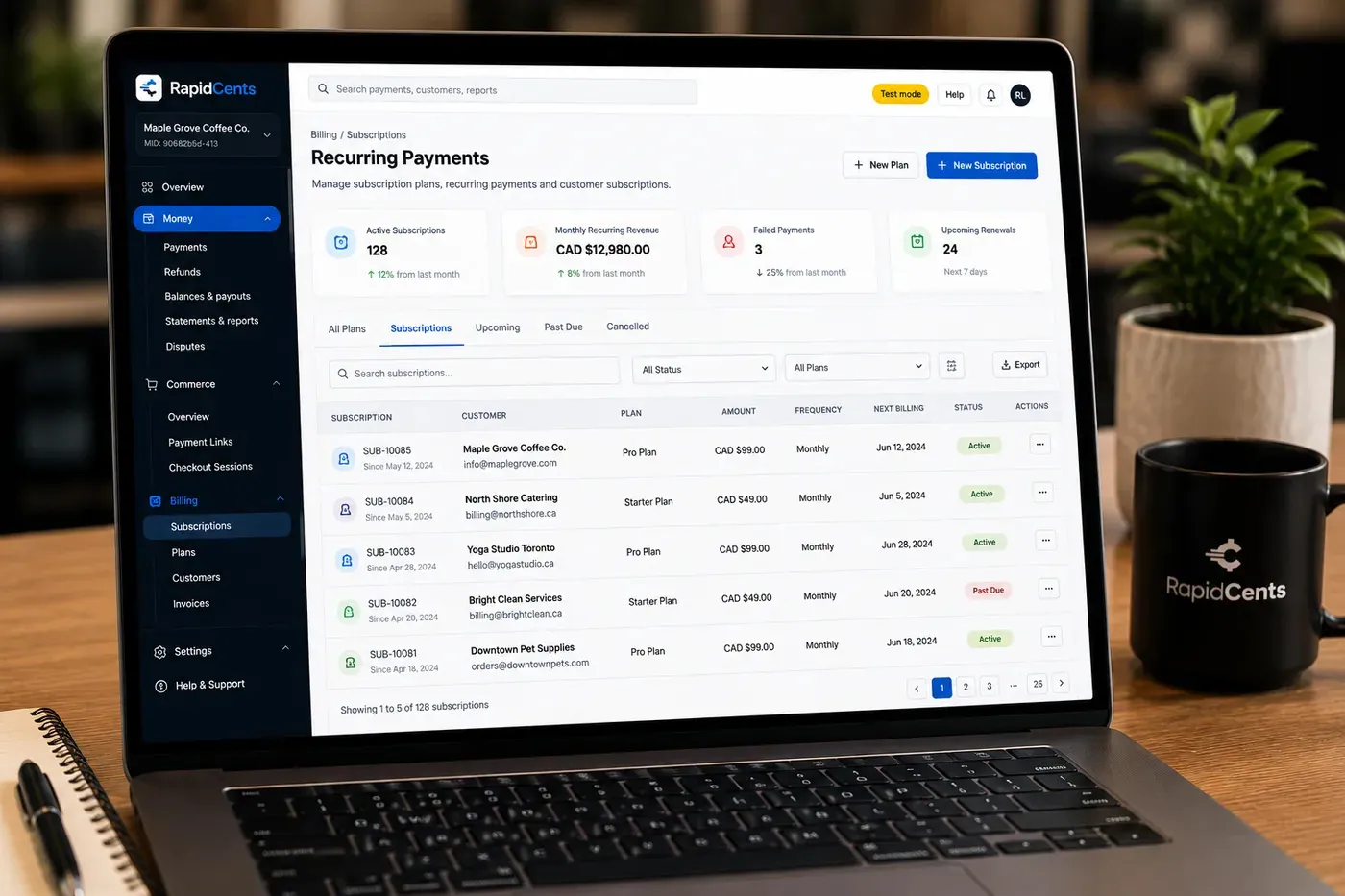
The RapidCents recurring payments screen showing active subscriptions, monthly recurring revenue, failed payments and upcoming renewals, above a list of subscriptions with their plan, amount, frequency and next billing date. Recurring Payments
RapidCents recurring payments manage subscription plans, membership renewals and installment schedules with…
Explore


How do wedding invoice installment payments and final balances work?
Wedding invoice installment payments are collection schedules, not financing: you divide your own fee into agreed milestones and the couple pays each one. RapidCents Invoicing, Payment Links and Recurring Payments carry the schedule through to wedding final balance collection, and a stored card needs the couple's written authorization.
Choose invoices or an authorized schedule
Invoices suit milestones that depend on approvals, because you send each one when the work is done. A Recurring Payments schedule suits fixed dates, but the couple must agree to the amount, timing and cancellation terms before a card is saved.
Plan for declines and changes
Cards expire or hit limits months after the first payment. Account Updater can refresh stored cards where supported, and your team should reach out to the couple early. If the guest count changes, issue a revised invoice rather than editing a paid one.
A $6,000 planning package over ten months
Say a planner agrees $6,000 for full-service planning over ten months. The couple authorizes four scheduled card payments and receives a final-balance invoice six weeks out, which includes a late guest-count change.
What drives wedding business credit card processing fees?
Wedding business credit card processing fees are driven by card type, how the card is taken and how much comes through disputes and refunds. RapidCents prices on interchange-plus: interchange passes through at cost, plus your RapidCents markup in your Fee Schedule, plus fees for equipment or services if applicable, month to month with no fixed term.
High tickets and keyed payments change the mix
Wedding bookings are large single payments, often on premium or rewards credit cards, and many are keyed or paid online rather than tapped. Interchange varies with card type and entry method, so your own mix matters more than a headline number.
What to gather before you compare
Bring recent processing statements, your average booking and balance sizes, the split between links, invoices and in-person payments, and your refund and chargeback volume. Seasonal peaks in spring and fall matter, so use a busy month and a quiet one.
Use Fee Check
Fee Check reads an uploaded processing statement and shows interchange separately from markup, so you can see what is set by the card networks and what is negotiated. Compare written quotes, including equipment, gateway and any monthly fees.
Which wedding software works with RapidCents payments?
RapidCents integrates with many major platforms through APPIE and RapidBridge, so most wedding businesses keep the planning and client-management software they run today. The right option depends on your software vendor and version, and your RapidCents representative will walk you through it. Settled transactions, fees and refunds connect to QuickBooks Online and Xero, and SAP and NetSuite import settlement files.
HoneyBook
HoneyBook runs proposals, contracts and invoices, and may handle retainer payments inside its own payments. Tell your RapidCents representative which plan you use, and they will show you how retainers reach your ledger, whether inside the software or by payment link.
Aisle Planner
Aisle Planner organizes timelines, budgets and vendor lists, with invoicing for planners. Tell your RapidCents representative which edition you run, and they will show you how installments and paid milestones connect to your RapidCents account.
Dubsado, Planning Pod and Curate
Dubsado ties payments to contracts, Planning Pod tracks balances and Curate handles refunds and deposits. Talk to your RapidCents representative about the setup you use, and they will walk you through payments in the software or by link outside it.
Payment options for wedding businesses by country
RapidCents serves merchants in Canada and the United States. The payment methods you can offer wedding clients, the bank-payment options and the settlement currency all depend on the country of your merchant account, and your RapidCents representative sets them out for yours.
Cards work across channels
Credit and debit cards can be taken through payment links, invoices, the Virtual Terminal and a terminal at your studio or venue. Which debit networks apply depends on the country where your account is held.
Bank payments and currency vary
Bank payments suit large balances when the payer authorizes them in advance, but the method and the currency you are paid in depend on your account. Ask your RapidCents representative which apply before you quote clients.
How do you switch, set up and reconcile wedding payments?
Once your account is approved, switching wedding payments takes a staged plan: list open bookings, test the new flow, then move new bookings first. Reconcile every deposit to the ledger by transaction reference. Saved cards move only when both providers agree and the couple's authorization still applies.
Inventory open bookings
List every couple with a scheduled payment, stored card, unpaid invoice or refund pending. Weddings booked a year ahead mean your old processor stays active for months, so plan a clean cutoff date for new bookings.
Test before moving live
Run a test retainer, a test installment and a test refund on the new setup. Check the receipt, the booking reference and the report entry. Keep both providers running in parallel until scheduled payments on the old one are complete.
Reconcile deposits to bookings
Match each settlement to the payments it covers, then to the bookings in your software or ledger. Refunds and disputed payments should show separately, and RapidCents Reporting exports settlement and fee data in formats your accountant can import.
Payment questions from wedding businesses
What should wedding businesses compare before choosing a payment processor?
Compare the full workflow, not a single price. Check how the processor handles retainers, installments, final balances and refunds, which software it works with, how fees are broken out, how settlement is reported and how support responds. Ask for written quotes on your own card mix and run a demo of wedding vendor retainer payments.
How much does payment processing cost for wedding businesses?
It depends on your card mix, average booking size and how payments are taken. RapidCents uses interchange-plus pricing: interchange at cost, plus your RapidCents markup in your Fee Schedule, plus fees for equipment or services if applicable, month to month. Upload a processing statement to Fee Check to see interchange separated from markup.
Can I use HoneyBook with a different payment processor?
It depends on your HoneyBook plan and country, since some platforms bundle their own payments and limit which gateways you can use. RapidCents integrates with many major platforms through APPIE and RapidBridge. Tell your RapidCents representative your plan and country, and they will show you the option that fits, including payment links outside the software.
How can my business handle wedding vendor retainer payments?
Send the retainer request with the contract and mark the date as held only after payment shows as paid. RapidCents Payment Links or Invoicing collect the retainer by card and leave a receipt. Set out in your contract whether the retainer is refundable, transferable or applied to the final balance.
Which payment options can a wedding business offer?
A wedding business can typically offer card payments through links, invoices, the Virtual Terminal and terminals, with bank payments where enabled. RapidCents serves merchants in Canada and the United States, and the exact methods, bank-payment options and settlement currency depend on the country of your merchant account. Your RapidCents representative will walk you through yours.
How should we manage wedding contract payment integration?
Link every payment to the contract milestone it covers. Use one invoice or link per milestone, record the booking reference on each, and restrict who can refund or change an amount. RapidCents connects settled transactions, fees and refunds to QuickBooks Online and Xero, and your representative will walk you through your planning software.
Can one platform handle wedding final balance collection and wedding cancellation deposit refunds?
Yes. One RapidCents account handles both, because a refund is issued against the original payment. Wedding final balance collection runs through invoices or links, and wedding cancellation deposit refunds follow your contract. Your RapidCents representative will show you how both reach your booking records and reports.
How do we reconcile card payments and bank deposits for wedding businesses?
Match each bank deposit to a settlement report, then match the settlement to the payments, refunds and fees inside it. Use the transaction reference and booking reference to tie each payment to a couple. RapidCents Reporting exports settlement and fee data, and the QuickBooks Online or Xero connection reduces manual entry.
How do we switch payment providers without losing saved cards or disrupting wedding vendor retainer payments?
Saved cards move only when both providers agree to transfer tokens and the couple's authorization still applies. List open bookings, test a retainer, installment and refund on the new setup, keep both providers running for scheduled payments and move new bookings first. Your RapidCents representative will walk you through the steps.
What MCC is used for wedding services?
MCC 7299 is commonly associated with this type of business. The correct merchant category depends on what you actually sell, since a florist, caterer or venue may be classified differently from a planner. RapidCents confirms the right merchant category during onboarding, based on your business description.
Related industries
Event ticketing, photography, travel agencies and membership clubs share the same deposit, milestone and balance workflows. Open the industry that fits your business.
Nonprofits & Charities
Take one-time and monthly gifts online, sell event tickets by link and reconcile deposits…
Education
Take enrollment deposits online, run tuition installments on schedules families authorize…
Government
Take permit fees, counter payments and mailed-in payments from residents, then trace…
Events & Ticketing
Sell advance tickets online, take cards at the gate and concession stand, and give…
Membership Clubs
RapidCents collects membership dues on a schedule, takes event fees and guest passes by…
Travel Agencies
Take booking deposits, collect final balances and group installments, and match settled…
Agriculture
RapidCents helps farms invoice bulk buyers, take cards at the market stall and bill CSA…
Pet Services
RapidCents helps boarding kennels, dog daycares, groomers, trainers and pet sitters take…
Take the next step
See what your wedding payments really cost
Upload a recent processing statement to Fee Check and see interchange separated from your markup, so you can compare retainer, installment and balance payments on your own numbers.
- No obligation
- Payment specialists, not a call centre
- Secure statement upload