


Payment processing for beverage distributors: route and deposit billing
Payment processing for beverage distributors lets a non-alcoholic drink wholesaler collect route invoices, container deposits and standing-order balances from retail and foodservice accounts. RapidCents gives you invoice payment links, mobile terminals for the driver at the dock or counter, and recurring payments for authorized repeat orders, connected to the route or ERP software you already run.

- PCI DSS Level 1
- SOC 2 Type II
- All major cards: Visa, Mastercard, Amex, Discover, UnionPay, Diners Club & PIN Debit
- Interchange-plus available
- Specialist onboarding support
How beverage distributors get paid
Beverage distributors get paid through four jobs: route invoices at delivery, container deposits and return credits, standing orders that repeat, and account balances paid by owners or head office. Each job carries its own reference, so finance can match every payment to the right invoice.
Route invoices at delivery
A store manager or kitchen lead pays the delivery invoice when the driver arrives, by card at the dock or through a payment link. A short-shipped case or refused pallet changes the amount. Finance receives the invoice number and account on each receipt.
Container deposits and return credits
Crates, reusable kegs and bottles carry a deposit that the buyer pays with the delivery and recovers when empties come back. The office records the return as a credit on the account, so deposits and credits reconcile line by line.
Standing delivery orders
A cafe or diner takes the same drinks every week. With the buyer's authorization, a stored card is charged on the agreed schedule. If quantities change, the amount is confirmed first. A cancellation request stops the next cycle.
Account balances and head office payments
A chain's head office pays for deliveries to several stores, or an owner clears an open balance by phone. The office sends a payment link for each invoice or takes the card by phone, and keeps the store number with every payment.
How do beverage distributors collect on route deliveries?
A beverage distributor collects on a route delivery by tying the payment to the delivery invoice: the driver takes the card on a mobile terminal at the dock, or the office sends a payment link for the same invoice. Either way, the receipt carries the invoice number and the account it belongs to.
How the delivery payment runs
The confirmed order becomes a delivery invoice. At the dock, the buyer taps or inserts a card on the driver's Mobile Terminal. If nobody is on site, the office texts a Payment Link. Decide first who may pay for each account and which reference every payment carries, such as the order or store number.
What goes wrong and how we handle it
Short-shipped cases, dented pallets and refused deliveries change the invoice after the driver has left. Adjust the invoice first, then collect the corrected amount or refund the difference to the original card. A declined card leads to a payment link, not repeated keyed attempts at the dock.
Forty cases of sparkling water, two arrive dented
Say a driver delivers forty cases of sparkling water and eight cases of cold brew to a cafe, and two cases arrive dented. The office credits them on the invoice, and the owner pays the corrected balance from a payment link sent before the truck reaches the next stop.
How are container deposits and return credits handled?
Container deposits and return credits are handled as separate lines on the invoice. The deposit is charged with the delivery, and a return credit is recorded against the same account when empties come back. Keeping the lines visible lets the buyer and your finance team agree on what was owed and what was refunded.
Show deposits as their own lines
List each deposit-bearing item, such as crates, bottles, reusable kegs or pallets, apart from the product. The buyer then sees the product total, the deposit total and the invoice total separately, and your finance team can report on each one.
Return credits, refunds and disputed counts
When empties come back, record a credit on the account. Apply it to the next invoice, or refund it to the original card when the buyer asks and your terms allow. A credit note and a card refund are different records, so choose one and note it. If the count is disputed, settle it before crediting.
Twenty crates out, sixteen back
Say a grocery store receives twenty crates with a deposit line on the invoice. A week later the route driver collects sixteen empty crates. The office credits sixteen deposits and leaves four open, so the next invoice shows the remaining deposit balance.
RapidCents products for beverage distributors
Invoicing and Payment Links cover route invoices and account balances. Recurring Payments handles authorized standing orders. Mobile Terminals let drivers take cards at the dock or counter. Your RapidCents representative sets them up around your routes.

The RapidCents invoices screen: outstanding, overdue, paid and draft totals across the top, the invoice list below them, and a preview of one invoice on the right with its line items and a View & Record Payment button. Invoicing
RapidCents invoicing helps professional services, contractors and B2B suppliers create branded invoices…
Explore
The RapidCents payment links screen listing created links with their amount, status, click count and whether they have been paid, beside a phone showing the branded page a customer opens to pay $2,500.00. Payment Links
RapidCents payment links let staff generate branded pay-by-link URLs for invoices, deposits, balances and…
Explore
The RapidCents recurring payments screen showing active subscriptions, monthly recurring revenue, failed payments and upcoming renewals, above a list of subscriptions with their plan, amount, frequency and next billing date. Recurring Payments
RapidCents recurring payments manage subscription plans, membership renewals and installment schedules with…
Explore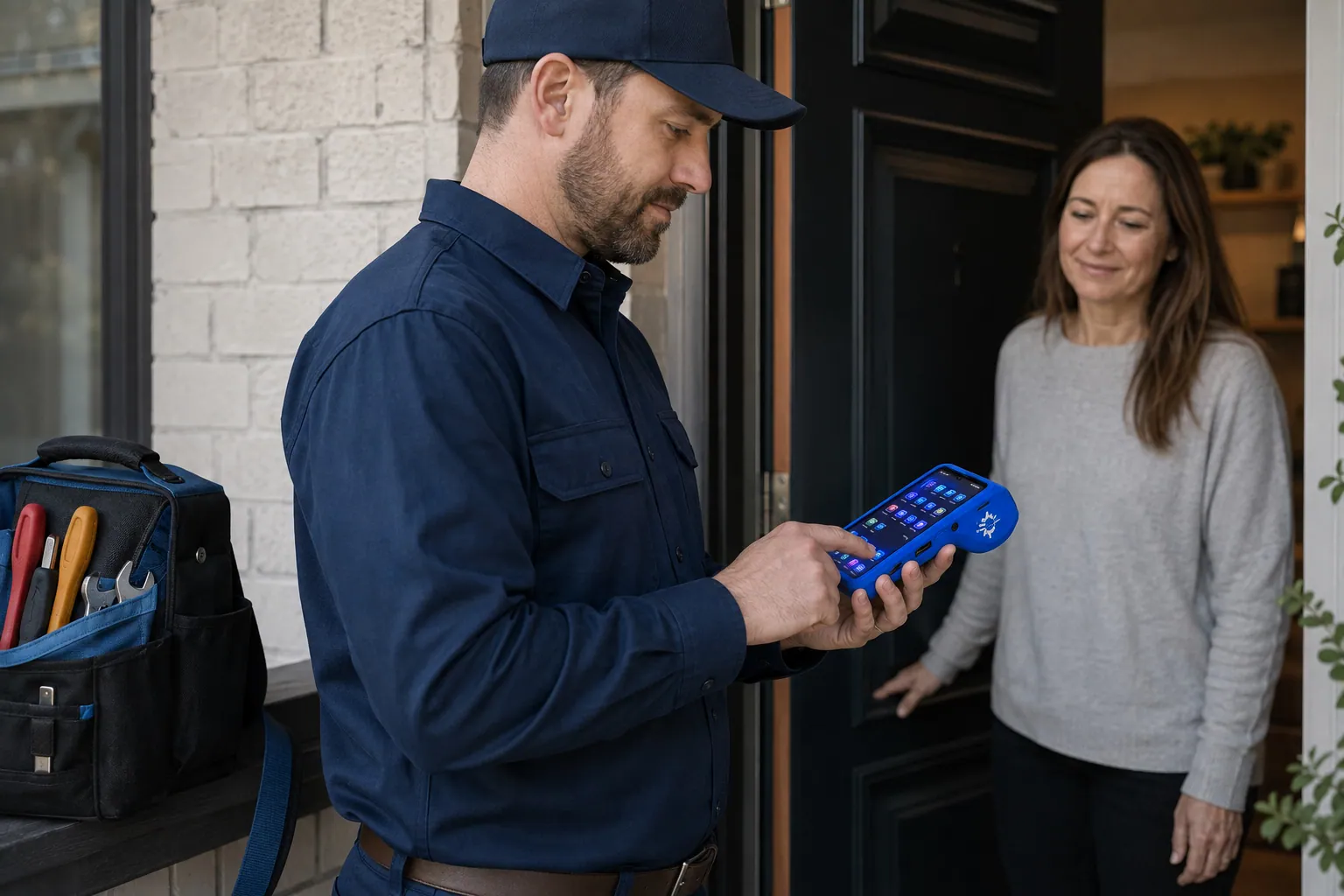
A staff member takes a card payment on a RapidCents handheld terminal, with the same sale appearing on the dashboard. Mobile Terminals
RapidCents mobile terminals are battery-powered wireless devices with LTE and Wi-Fi so staff accept payments…
Explore


Can recurring delivery orders be charged automatically?
Yes, when the buyer has authorized it and each charge matches the order. Recurring Payments can run standing deliveries on a schedule, but variable quantities need a confirmed amount before every charge. If amount, timing and cancellation are not agreed, send an invoice with a payment link instead.
Authorization comes first
Storing a card needs the buyer's authorization. Get their written agreement to the amount, timing and cancellation terms of each standing order, and keep it with the customer profile. Without it, do not charge a stored card.
Variable amounts and failed charges
Weekly orders rarely stay identical. Fix the amount for a set standing order, or confirm the final invoice amount with the buyer before charging. A failed charge goes to a retry and a reminder. Do not keep re-running a card the buyer has declined.
A diner's Monday syrup and juice order
Say a diner agrees to a Monday delivery of syrup boxes and juice cases. The office confirms the final quantities on Friday, charges the stored card on Monday as agreed, and a cancellation request from the diner stops the next cycle.
How do you compare fees for beverage distribution?
Compare fees using your real payment mix: debit and credit cards, commercial cards from larger accounts, keyed and tapped payments, and your refund volume. RapidCents prices on interchange-plus: interchange at cost, your RapidCents markup in your Fee Schedule, and fees for equipment or services, if applicable. Month to month, no fixed term.
What moves your cost
Interchange varies with card type, such as debit, credit, premium or commercial, and with how the card is taken. A card tapped at the dock differs from one keyed by phone or paid online. Large invoices paid on company cards change your mix.
What to bring to a comparison
Bring recent processing statements, your average invoice, the split between dock, phone and link payments, and your refund and chargeback volume. Container returns and delivery credits add refunds, so include them. Then upload a statement to Fee Check to see interchange apart from markup.
Reading your Fee Schedule
Your Fee Schedule sets out your RapidCents markup, plus any fees for equipment such as mobile terminals or for services. Ask for it in writing and compare quotes line by line. There is no fixed term, so you can review the arrangement month to month.
Which route and ERP software can work with RapidCents?
RapidCents integrates with many major platforms through APPIE and RapidBridge, so most distributors keep the route, order and ERP software they run today. Settled transactions, fees and refunds connect to QuickBooks Online and Xero. The right option depends on your software vendor and version, and your RapidCents representative will walk you through it.
NetSuite and SAP Business One
SAP and NetSuite import RapidCents settlement files, so deposits, fees and refunds post to your ledger with the invoice and customer references you already use. Your RapidCents representative will walk you through the template your edition needs and how deposit lines and refunds map.
Dynamics 365 Business Central, Acumatica and Fishbowl
RapidBridge works with Dynamics 365 Business Central, Acumatica, Fishbowl Inventory, Cin7 and Unleashed, so a card payment posts against the order or invoice you already have open, without changing that software. Tell your RapidCents representative which edition you run and they will show you how payments arrive.
QuickBooks Online, Xero and route software
Settled transactions, fees and refunds connect to QuickBooks Online and Xero. Route-accounting and van-sales software varies by vendor, and RapidCents integrates with many major platforms through APPIE and RapidBridge. Tell your RapidCents representative which system the driver's device uses, and they will show you how those payments reach it.
Payment options for beverage distributors by country
RapidCents serves merchants in Canada and the United States. The card brands, bank-payment options and settlement currency a beverage distributor uses depend on the country of the merchant account. Your RapidCents representative will walk you through what fits your setup before you quote payment methods to buyers.
Cards at delivery
A driver's mobile terminal accepts major card brands by chip, contactless or PIN where the country of your account supports them. The receipt carries the invoice number so the dock payment matches the delivery.
Bank payments and currency
Bank-payment options for standing accounts, and the currency you settle in, depend on your country. Each bank payment needs the buyer's signed authorization. Your RapidCents representative will walk you through the options for your country.
How do you switch processors and reconcile deposits?
Switching processors takes a short inventory and a test before live routes move. List stored cards with their authorizations, open invoices, standing orders and refunds in progress, then test a sale, a deposit line and a refund. Run both providers in parallel where needed, then reconcile deposits to your ledger.
Take inventory first
List every stored card and the authorization behind it, each standing order, open invoices and pending credits. Stored cards move between processors only if both providers agree, so do not assume it. Plan to ask buyers to authorize again where they cannot move.
Test before routes go live
Once your account is approved, test a dock sale, a payment link, a container-deposit line and a refund. Check that the invoice number and customer reference appear on each receipt. Start with one route or one group of accounts, then add the rest.
Run in parallel and reconcile
Keep your old provider for open items while new invoices use RapidCents. Match each deposit to the invoices it covers, including deposit lines and credits, and map references to your accounting software. Close the old account only when open balances have cleared.
Payment questions from beverage distributors
What is the best payment processor for beverage distributors?
The best processor is the one that fits your route, invoice and deposit workflow at a price you can read. Compare written quotes on interchange-plus pricing, mobile terminals for drivers, payment links, container-deposit invoice lines, authorized recurring orders, reporting and software compatibility. Ask each provider to put its terms in writing.
How much does credit card processing cost for beverage distributors?
Your cost depends on your payment mix, not a single figure. We price every account on interchange-plus: interchange passes through at cost, and you pay the RapidCents markup set out in your Fee Schedule, plus fees for equipment or services, if applicable. Commercial cards, keyed payments and refund volume change interchange. Upload a recent statement to Fee Check to see interchange separated from markup. Month to month, no fixed term.
Can our distribution ERP or route software use RapidCents?
Most can. RapidCents integrates with many major platforms through APPIE and RapidBridge, and the right option depends on your software vendor and version. SAP and NetSuite import settlement files, and QuickBooks Online and Xero receive your settled transactions, fees and refunds. Your RapidCents representative will walk you through your setup.
How can beverage distributors switch processors without losing payment history?
Export your old reports before you close the account, then move live routes in stages. Inventory stored cards, standing orders, open invoices and pending credits. Stored cards move between providers only if both agree, so plan for buyers to authorize again where needed. Test a sale, a deposit line and a refund before the first route goes live.
Which payment options are available to beverage distributors in each country?
The options depend on the country of your merchant account. RapidCents serves merchants in Canada and the United States, and card brands, bank-payment methods and settlement currency differ between them. Your RapidCents representative will walk you through what fits your setup, and you keep container deposits on separate invoice lines whichever method the buyer uses.
How are bottle or keg-container deposits shown on an invoice?
Show each deposit as its own invoice line, apart from the product, so the buyer sees both. When empties return, record a credit against the same account and reconcile it to the next invoice or to a refund. Invoicing carries the lines, and reports show settled payments, fees and refunds. Your RapidCents representative will walk you through how deposit lines reach your accounting software.
Can recurring delivery orders be charged automatically?
Yes, when the buyer has authorized it and the amount is correct for each delivery. Get written agreement on amount, timing and cancellation, and store the card only with the customer's authorization. Variable quantities need a confirmed amount before each charge. Your RapidCents representative will set up the recurring schedule with you.
Do you work with alcohol distributors?
No. We work with non-alcoholic beverage distributors: water, soft drinks, juice, coffee, tea and similar drinks sold to retail and foodservice accounts. If your product mix is broader than non-alcoholic drinks, talk to your RapidCents representative during onboarding and they will tell you where we can and cannot help.
How do you handle a delivery credit or a short-shipped case?
Adjust the invoice first, then collect or refund the difference. If the buyer has not paid, issue a corrected invoice or a credit note and send a new payment link for the balance. If the card was charged, refund the difference to the original card. Keep the credit reason with the order number so finance can reconcile it.
How can head office pay for several store deliveries and keep each reference?
Use one authorized payer and one reference per invoice. Head office can pay each invoice through its own payment link, carrying the invoice or store number, or by phone through Virtual Terminal. Your RapidCents representative will walk you through how payments for several invoices post to your accounts. Never divide a charge to avoid card limits.
Related supplier industries
Restaurant suppliers, grocery and food distributors, produce wholesalers, meat and seafood wholesalers and bakery ingredient suppliers share route invoices, adjustments and credit workflows. B2B and Wholesale covers the general supplier payment journey. Retailers and cafes collecting from their own customers have their own industries.
B2B & Wholesale
Collect net-terms invoices by payment link with the PO number attached, take commercial…
Restaurant Suppliers
For dealers and distributors that sell kitchen equipment, smallwares and consumables to…
Grocery & Food Distributors
Get paid for every delivery to grocery stores, restaurants and institutional kitchens…
Produce Wholesalers
Collect on final weights, apply quality credits to the right delivery, and keep…
Meat & Seafood Wholesalers
Invoice catch-weight orders, collect on scheduled deliveries and settle freshness credits…
Bakery & Ingredient Suppliers
Collect from the bakeries and food manufacturers you supply: repeat flour orders…
Dental Suppliers
From monthly consumables reorders to chair and imaging deposits, collect what clinics…
Veterinary Suppliers
Get invoices, standing orders and equipment deposits paid by the veterinary practices…
Take the next step
Review my beverage invoice workflow
Upload a processing statement to Fee Check and see interchange separated from your markup, using your own mix of dock, phone and link payments.
- No obligation
- Payment specialists, not a call centre
- Secure statement upload



