Payment gateway for game studios, in-game purchases and esports venues
In-game commerce is thousands of small purchases from accounts that are not always the cardholder, which is why disputes matter more here than the ticket size suggests. RapidCents gives studios and esports venues a payment gateway and embedded payments through an API, recurring billing for battle passes and season subscriptions, and dispute handling with the evidence attached. Game arcades and video amusement fall under MCC 7994, the code used for gaming operations.

- PCI DSS Level 1
- SOC 2 Type II
- All major card brands: Visa · Mastercard · Amex · Interac debit
- Interchange-plus available
- Canadian support
Operational workflows
In-game purchase through the gateway API
Card tokenized to the player account
Battle pass renewed each season
Dispute answered with the account's purchase log
Payment challenges
The account holder is not the cardholder
A child or a shared account can spend on a parent's stored card, and the chargeback arrives as an unauthorized transaction.
Small tickets, expensive disputes
Micro-purchases are individually tiny, and each contested one still costs a full dispute file to answer.
Stolen cards buying instant currency
In-game currency is delivered the moment the charge clears, which makes it a favourite way to move stolen numbers.
Choose the right payment setup for Gaming
Choose gaming payment processing
For Gaming, map sign-up, scheduled billing, and renewal, online checkout and remote payment, and the sale and reconciliation with business systems before choosing a setup. Select channels that match those moments, then confirm that the chosen solution genuinely covers each channel.
Payment hardware for Gaming
For Gaming, physical hardware may be secondary to the checkout flow. Prioritize gateway or payment-page requirements first, then add a terminal only when an in-person payment point is genuinely needed.
Compare payment processing fees
For Gaming, request a written fee breakdown covering scheduled billing, declined cards, and cancellations and online checkout and dispute handling. Compare the effective cost across the real card and channel mix; do not choose on a headline rate alone.
Set up or switch Gaming payments
To set up Gaming payments, document how payment data moves into business systems and the checkout, confirmation, and refund path, confirm compatibility before purchase, then test a real payment flow before going live.
Recommended products
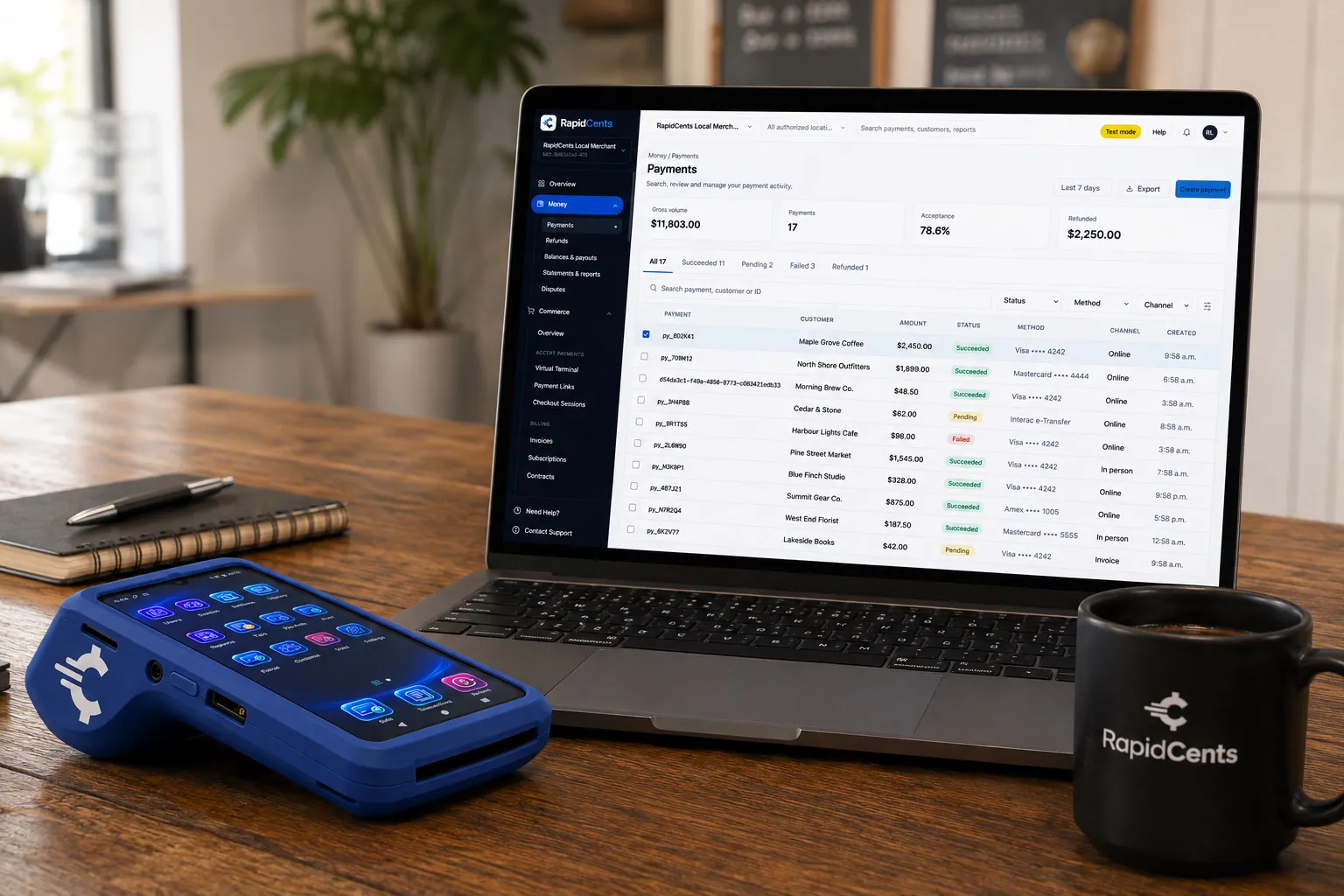
A payment-gateway integration desk: API response on screen, RapidCents terminal ready for a test sale. Payment Gateway
The RapidCents payment gateway exposes REST endpoints for authorize, capture, void, refund and tokenize…
Explore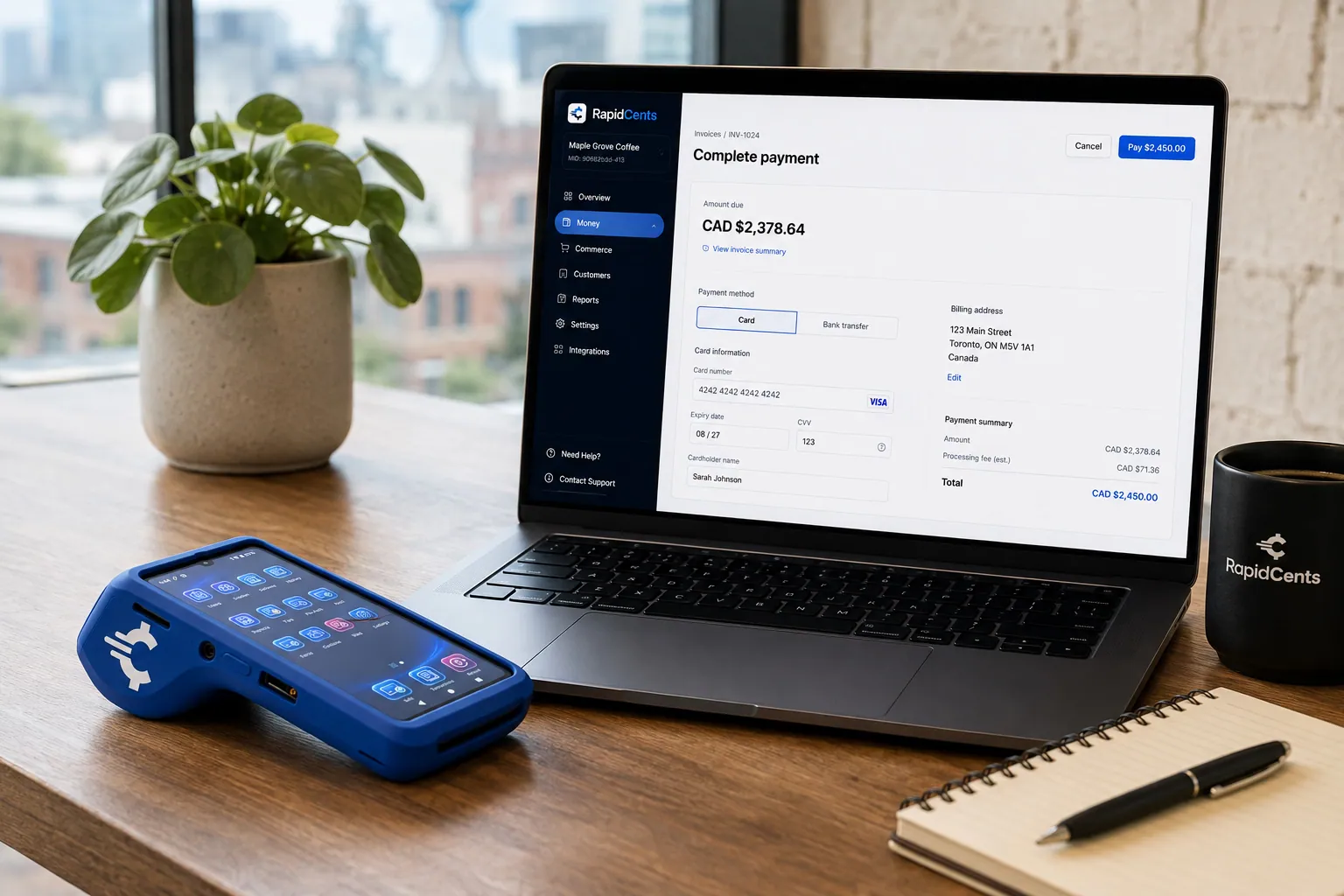
Card fields hosted by RapidCents sit inside a merchant checkout, with a terminal and the payments dashboard beside them. Embedded Payments
RapidCents embedded payments provide drop-in UI components, card fields, wallet buttons and payment status…
Explore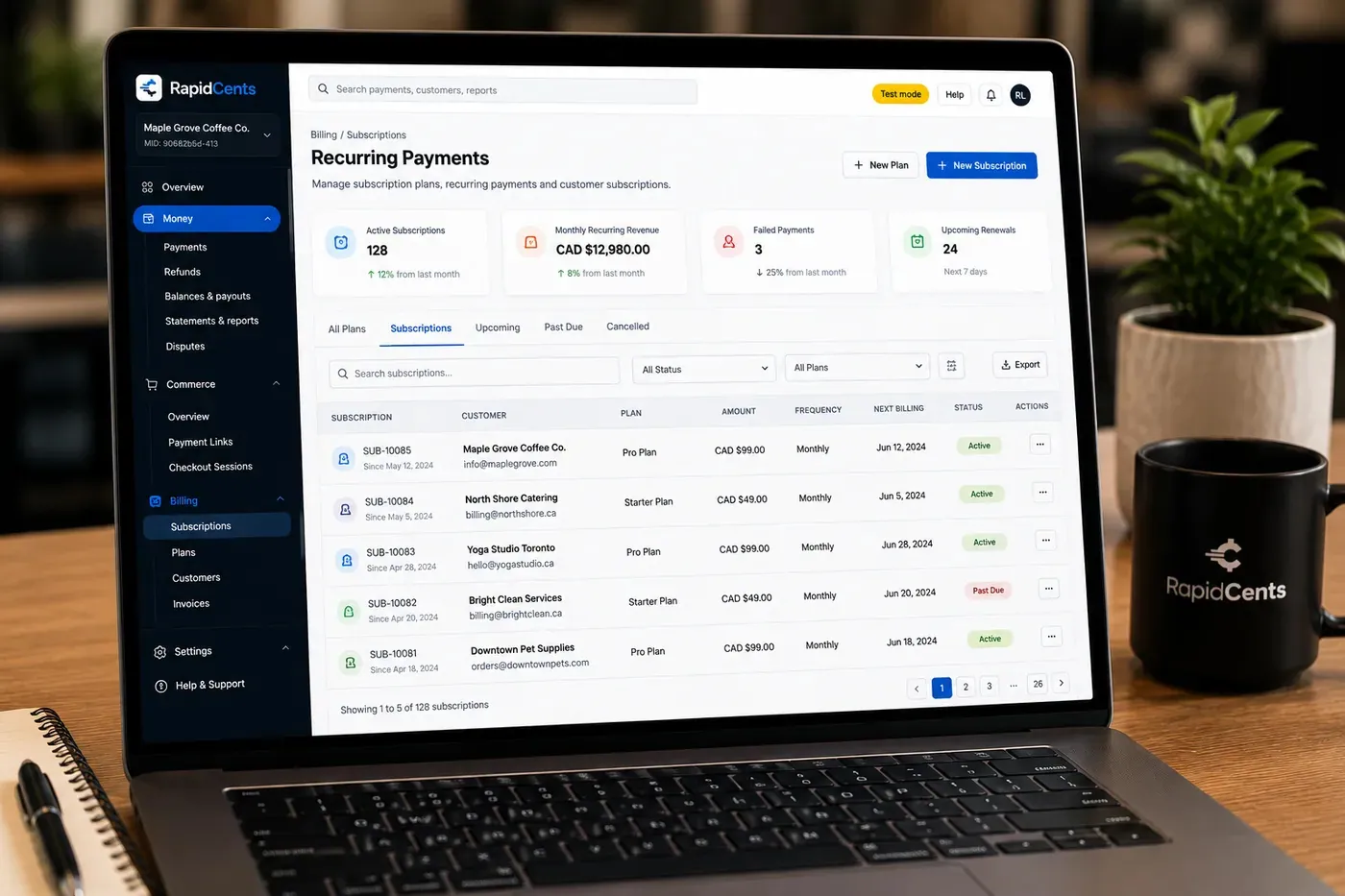
The RapidCents recurring payments screen showing active subscriptions, monthly recurring revenue, failed payments and upcoming renewals, above a list of subscriptions with their plan, amount, frequency and next billing date. Recurring Payments
RapidCents recurring payments manage subscription plans, membership renewals and installment schedules with…
Explore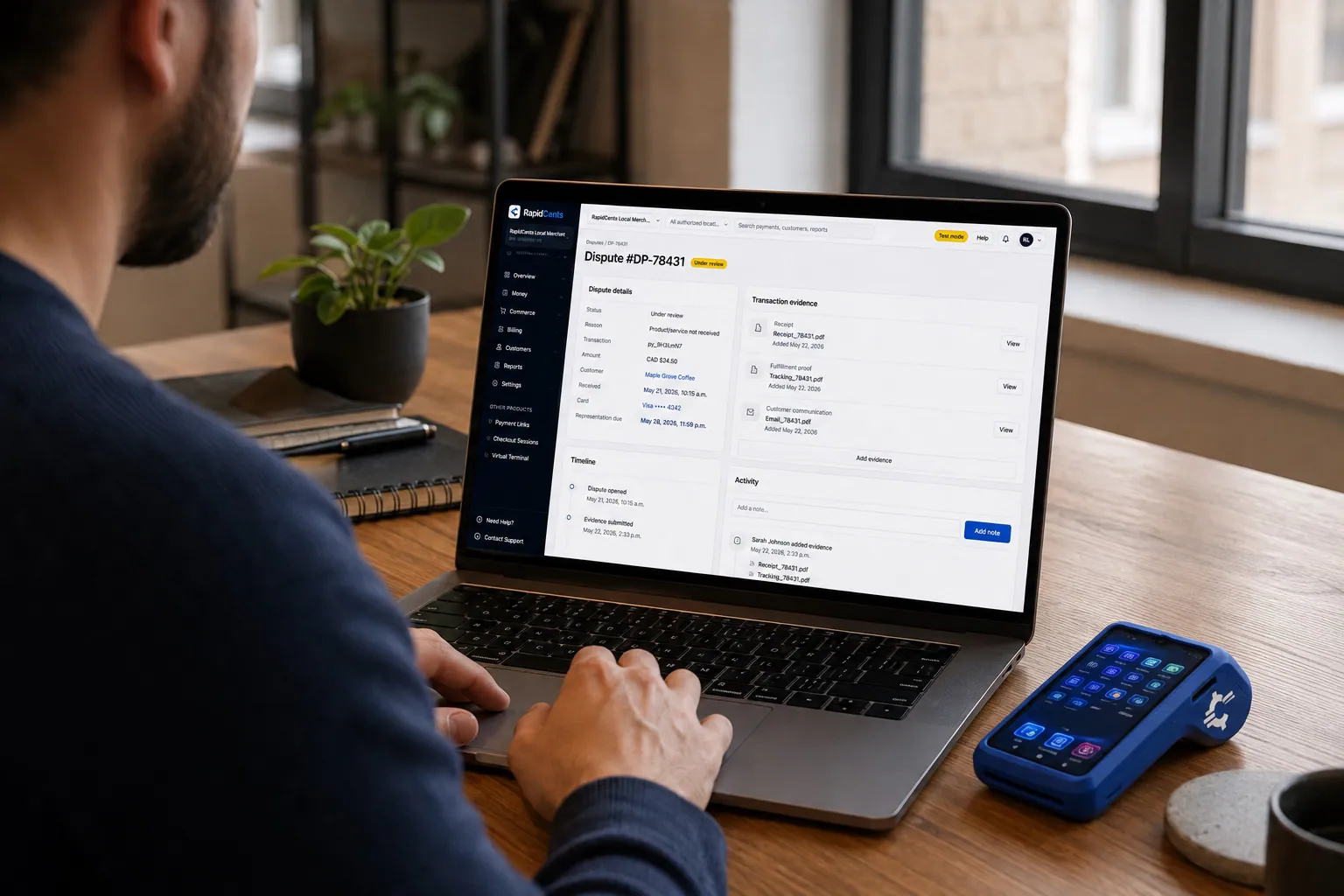
A merchant works a RapidCents dispute case on the dashboard, with the original terminal sale still on the desk. Disputes
RapidCents disputes centralizes chargeback notifications, response deadlines and evidence upload in an inbox…
Explore


How this gets set up
The store inside the game
Embedded payments put the purchase in the client or the web shop, so a player buys currency without leaving the session they are in.
Thousands of small authorizations
The gateway is tuned for many low-value charges from one account, where a single player's spending run looks like fraud until the rules say otherwise.
Season passes that renew
Recurring payments bill battle passes and season subscriptions from the stored card, and a lapsed draw is what ends a player's progression.
The chargeback from a parent
A dispute filed weeks after a purchase made by someone who was not the cardholder is answered with the account and transaction evidence attached.
Integrations
Unity IAP exports
Unity IAP exports bring your in-app purchase records out as a file for matching against settlements: a reconciliation input, not a live connection.
Steam partner billing
Steam partner billing stays the biller for copies sold there, so RapidCents covers the direct web store you run alongside it and the two settle separately.
PlayFab
PlayFab holds the player account and entitlement, and grants the item on the payment result RapidCents returns for that purchase.
Operations, security and going live
Reporting by title and by item, not just by day
Which SKU earns, which one gets refunded, and which patch changed both: the day's deposit has to break down that far to be useful.
Disputes are the cost line here, not the ticket size
Small purchases plus friendly fraud make dispute volume the number to watch, and chargeback protection and attached evidence are what move it.
The account is not the cardholder
Tokenized cards on a player account, held in the vault, let you recognize a returning buyer without a card number ever sitting in the game backend.
Sandbox against a real build
Test keys let the purchase flow be exercised end to end in a build before a store submission freezes the client.
Payment questions from Gaming
What should businesses compare when choosing gaming payment processing for Gaming?
Compare gaming payment processing against the real payment journey: sign-up, scheduled billing, and renewal, online checkout and remote payment, and the sale and reconciliation with business systems. Start with the required channels and hardware, then confirm compatibility and support before committing.
What payment hardware is practical for Gaming?
If Gaming sells primarily online, do not choose physical hardware before validating checkout. Add hardware only for a clearly defined in-person payment need.
Which payment channels are relevant for Gaming?
For Gaming, start with sign-up, scheduled billing, and renewal, online checkout and remote payment, and the sale and reconciliation with business systems. Keep only the channels that match those moments, then verify the complete customer flow before offering them.
How should payment processing fees be evaluated for Gaming?
For Gaming, compare costs related to scheduled billing, declined cards, and cancellations and online checkout and dispute handling using actual transactions. Request a written breakdown of fees and terms rather than relying on an advertised rate alone.
What should be confirmed before setting up payments for Gaming?
For Gaming, document how payment data moves into business systems and the checkout, confirmation, and refund path, verify the needed compatibility, and test the flow before going live. This exposes manual steps and exceptions before customers encounter them.
What should be confirmed before using recurring payments for Gaming?
Define consent, billing cadence, change and cancellation rules, and how a declined card is handled. Ask to see the complete customer journey before offering it to customers.
What MCC category applies to Gaming?
MCC 7994 is commonly associated with Gaming. Our onboarding team confirms the correct category for your business.
Related industries
Software & SaaS
SaaS companies embed payments, manage platform revenue share and use developer APIs for…
Digital Products
Sell ebooks, templates, media and digital goods with instant checkout, fraud tools and…
Downloadable Software
License keys, one-time purchases and upgrade paths for downloadable software with global…
Edtech & eLearning
Course platforms, bootcamps and LMS providers collect tuition, installments and corporate…
E-commerce
Online merchants unify checkout, subscriptions, buy-now-pay-later where supported and…
Take the next step
Talk to a RapidCents specialist
RapidCents Fee Check reads a processing statement and shows interchange separately from the markup. Upload a statement for an instant breakdown, or open a merchant account and start accepting payments on one account.
- No obligation
- Payment specialists, not a call centre
- Secure statement upload