Premium Billing and Payment Processing for Insurance Agencies
An insurance agency collects premiums rather than selling at a counter. RapidCents bills renewals on recurring payments, sends a payment link when a policyholder pays a first instalment, and lets a producer key a card over the phone through the virtual terminal. Agencies fall under MCC 6300, the insurance sales and underwriting code. Reporting shows which renewals collected and which still need a follow-up, so exceptions surface as a working list rather than as a month-end surprise.

- PCI DSS Level 1
- SOC 2 Type II
- All major card brands: Visa · Mastercard · Amex · Discover · PIN debit
- Interchange-plus available
- Specialist onboarding support
Operational workflows
First premium taken by payment link at binding
Renewal set up on recurring payments
Phone payment keyed on the virtual terminal
Declined renewals worked from the report
Payment challenges
The policy lapses at the card, not the coverage
A policyholder who never cancelled loses coverage because the card on file expired between annual renewals.
Instalment plans that outlive the card
A premium split over ten months crosses a reissue, so a mid-term charge fails on a policy the client believes is paid.
Card numbers read out to a producer
A client dictates a card over the phone, so the number has to be keyed once and never end up written on the file copy.
Choose the right payment setup for Insurance
Choose insurance agency payment processing
For Insurance, map sign-up, scheduled billing, and renewal, online checkout and remote payment, and the invoice, retainer, and remote client payment before choosing a setup. Select channels that match those moments, then confirm that the chosen solution genuinely covers each channel.
Payment hardware for Insurance
For Insurance, physical hardware may be secondary to the checkout flow. Prioritize gateway or payment-page requirements first, then add a terminal only when an in-person payment point is genuinely needed.
Compare payment processing fees
For Insurance, request a written fee breakdown covering scheduled billing, declined cards, and cancellations and online checkout and dispute handling. Compare the effective cost across the real card and channel mix; do not choose on a headline rate alone.
Set up or switch Insurance payments
To set up Insurance payments, document the checkout, confirmation, and refund path, confirm compatibility before purchase, then test a real payment flow before going live.
Recommended products
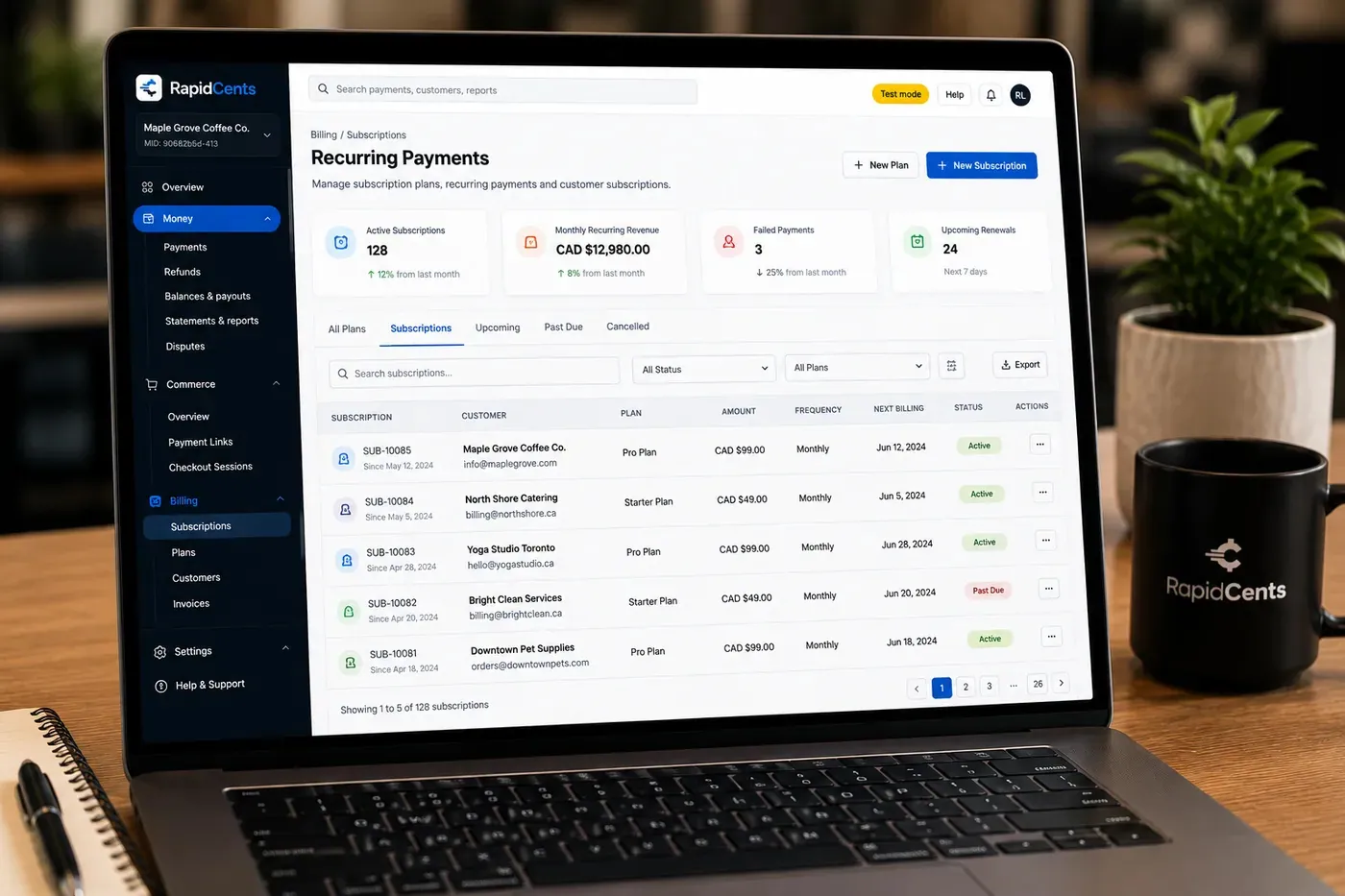
The RapidCents recurring payments screen showing active subscriptions, monthly recurring revenue, failed payments and upcoming renewals, above a list of subscriptions with their plan, amount, frequency and next billing date. Recurring Payments
RapidCents recurring payments manage subscription plans, membership renewals and installment schedules with…
Explore
The RapidCents payment links screen listing created links with their amount, status, click count and whether they have been paid, beside a phone showing the branded page a customer opens to pay $2,500.00. Payment Links
RapidCents payment links let staff generate branded pay-by-link URLs for invoices, deposits, balances and…
Explore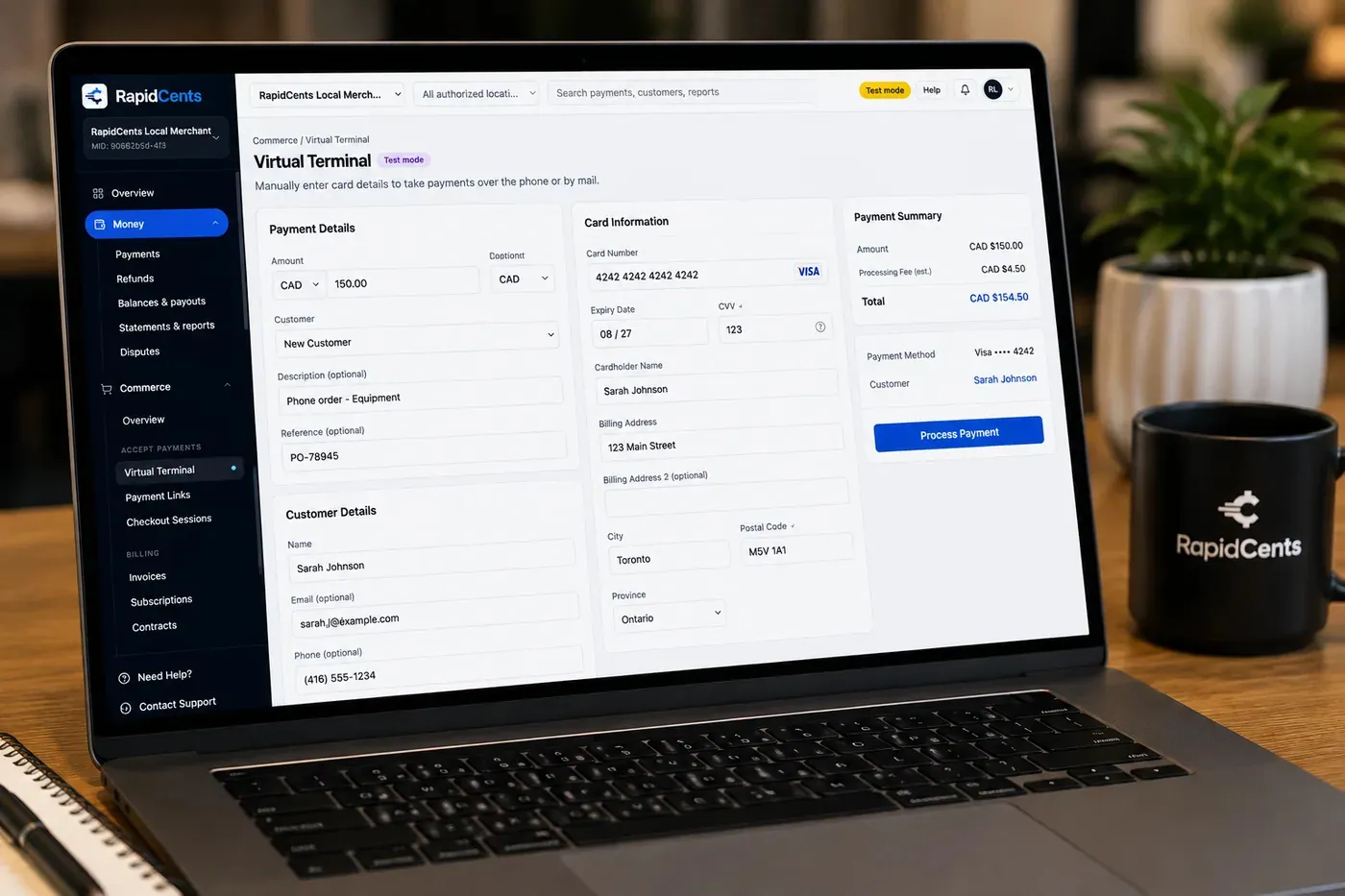
The RapidCents virtual terminal: payment details, card number, expiry and CVV keyed by hand on the left, with a payment summary on the right showing the amount, the estimated processing fee and a Process Payment button. Virtual Terminal
The RapidCents virtual terminal lets authorized staff enter mail-order and telephone-order payments through a…
Explore
A merchant reviews RapidCents reports for volume, mix and payouts, with the terminal that took the sales on the desk. Reporting
RapidCents reporting delivers customizable transaction, settlement and fee reports with CSV and PDF export…
Explore


How this gets set up
First instalment at binding
A new policy is bound and the producer sends a payment link for the down payment before coverage starts.
Card on file for the term
The policyholder authorises the remaining instalments once, and recurring payments carries them to the end of the term.
Phone payment when a policyholder calls
A client who calls in to clear a lapse notice is keyed through the virtual terminal while still on the line.
Renewal season
Renewal charges run on schedule and any cycle that still needs a person comes back as a working list the service team clears before coverage lapses.
Integrations
Applied Epic exports
Applied Epic exports carry settled premium detail into the agency management system as a file, not a live feed.
Salesforce
Salesforce holds the client record, so a posted premium payment shows on the account the producer already works from.
Operations, security and going live
Instalments reported against the policy
Reporting shows which instalments collected and which still need a follow-up, policy by policy, rather than one premium deposit total.
Card data never sits in the agency file
Tokenization and the card vault keep stored premium cards out of spreadsheets and paper applications on a producer's desk.
A decline is a service task, not an accounting one
A failed instalment is a coverage problem, so the exception list goes to whoever can phone the insured instead of waiting for month-end.
Go live on one book of business
Testing renewal billing on a single book first keeps a mis-scheduled charge from reaching every policyholder at once.
Payment questions from Insurance
What should businesses compare when choosing insurance agency payment processing for Insurance?
Compare insurance agency payment processing against the real payment journey: sign-up, scheduled billing, and renewal, online checkout and remote payment, and the invoice, retainer, and remote client payment. Start with the required channels and hardware, then confirm compatibility and support before committing.
What payment hardware is practical for Insurance?
If Insurance sells primarily online, do not choose physical hardware before validating checkout. Add hardware only for a clearly defined in-person payment need.
Which payment channels are relevant for Insurance?
For Insurance, start with sign-up, scheduled billing, and renewal, online checkout and remote payment, and the invoice, retainer, and remote client payment. Keep only the channels that match those moments, then verify the complete customer flow before offering them.
How should payment processing fees be evaluated for Insurance?
For Insurance, compare costs related to scheduled billing, declined cards, and cancellations and online checkout and dispute handling using actual transactions. Request a written breakdown of fees and terms rather than relying on an advertised rate alone.
What should be confirmed before setting up payments for Insurance?
For Insurance, document the checkout, confirmation, and refund path, verify the needed compatibility, and test the flow before going live. This exposes manual steps and exceptions before customers encounter them.
What should be confirmed before using recurring payments for Insurance?
Define consent, billing cadence, change and cancellation rules, and how a declined card is handled. Ask to see the complete customer journey before offering it to customers.
What MCC category applies to Insurance?
MCC 6300 is commonly associated with Insurance. Our onboarding team confirms the correct category for your business.
Related industries
Law Firms
Law firms collect retainers, trust-account coordination and client invoices with secure…
Accounting Firms
Accounting and bookkeeping firms bill recurring engagements, project milestones and…
Professional Services
Consultancies and agencies use invoicing, retainers, recurring billing and virtual…
B2B & Wholesale
Wholesale distributors accept large ticket B2B cards, invoicing and net-term payment…
Real Estate
Brokerages and property managers collect application fees, lease deposits and maintenance…
Property Management
Property managers run tenant rent portals, maintenance invoicing and HOA assessments with…
Freight & Logistics
Carriers and 3PLs invoice shippers, collect COD balances and manage fuel surcharge…
Marketing Agencies
Agencies bill monthly retainers plus project milestones and pass-through ad spend, so one…
Take the next step
Talk to a RapidCents specialist
RapidCents Fee Check reads a processing statement and shows interchange separately from the markup. Upload a statement for an instant breakdown, or open a merchant account and start accepting payments on one account.
- No obligation
- Payment specialists, not a call centre
- Secure statement upload