


Med spa payment processing for packages and memberships
Med spa payment processing has to cover three jobs: treatment package deposits taken before the first session, memberships billed monthly from a stored card, and package balances collected across several visits. RapidCents handles them with Payment Terminals, Payment Links and Recurring Payments, and RapidBridge works with Aesthetic Record, Boulevard, Mindbody and Jane App.

- PCI DSS Level 1
- SOC 2 Type II
- All major cards: Visa, Mastercard, Amex, Discover, UnionPay, Diners Club & PIN Debit
- Interchange-plus available
- Specialist onboarding support
How medical spas get paid
Medical spas get paid through five payment jobs: a deposit that holds an appointment, a treatment package paid in full or in stages, a monthly membership, a package balance collected across visits, and retail with tips at checkout. Each job has its own trigger, and each should leave one payment record your front desk and bookkeeper can trace.
Appointment deposits
Med spa appointment deposits protect a practitioner's time. A new client books a consultation or a long treatment slot and pays by payment link or at the desk. The deposit is credited against the final bill, and a no-show follows your written policy. Finance gets a payment record dated to the booking.
Treatment packages
A client buys a series of sessions after the consultation, paid in full or as a deposit with the balance later. Staff collect at the terminal, by payment link or by phone in the Virtual Terminal. If the plan changes at the first visit, the agreement and payment record show what was sold and what was paid.
Memberships
A member agrees to a monthly fee that often includes a service credit and member pricing on retail. The charge runs on the billing date from an authorized card through Recurring Payments. If a renewal declines or a member asks for a freeze, staff handle it under your policy. Finance sees one dated charge per member per month in Reporting.
Package balances and installments
A client who paid a deposit owes the rest, due at the next visit or in set installments agreed in writing. Staff collect at the terminal, by payment link or from a stored card on the agreed dates. If an installment declines before the final session, staff reach out for another card. The record ties each charge to the package.
Retail and tips at checkout
A client leaves with a serum or sunscreen and may tip the practitioner. Staff take the sale at the front desk terminal or on a supported phone with Tap to Pay, and confirm tip entry on the terminal model you choose. A retail return refunds to the original card. Finance usually wants retail and treatment on separate lines.
How should a med spa take treatment package deposits?
A med spa should take a treatment package deposit as a card payment the client has authorized in writing, collected by payment link or at the terminal before the first session and recorded against the package in your booking software. Treatment package deposits are the first of the med spa treatment package payments you will reconcile, so the agreement should say what the deposit covers, what is refundable and when the balance is due.
From consultation to deposit
After the consultation, the practitioner's plan becomes a package with a price, a session count and a deposit. For med spa text to pay, the coordinator sends a payment link by SMS or email, or takes the deposit at the desk. With Contracts & eSignatures, the agreement can be signed and the deposit taken in one step. The client receives a receipt.
Authorize before you charge
Before the deposit is charged, the client should agree in writing to the amount, what it covers, when the balance is due and the refund terms. Keeping the card for the balance needs the client's separate, explicit authorization. Use Payment Tokenization and the Secure Card Vault for saved cards instead of copying details into client notes.
Declines, plan changes and refunds
A large deposit can decline at the card issuer on a spending limit or fraud check even when the card is valid. Ask the client to approve it with the issuer, use another card, or pay by bank where enabled on your account. If the plan changes after the first visit, record the change and refund only under your written terms.
A six-session package at $1,500, deposit first
Say a clinic prices a six-session skin treatment package at $1,500 after a consultation. The coordinator sends the agreement and a $300 deposit link the same afternoon. The deposit is recorded against the package, the $1,200 balance is set for the first visit, and the bookkeeper matches one payment record to one ledger line.
How do med spas manage membership renewals and freezes?
Med spa membership billing should run as a recurring charge on a card the member authorized, with a clear date, amount and cancellation route, plus a written freeze policy that says when billing pauses and when it resumes. RapidCents Recurring Payments runs the schedule; your agreement and booking software decide what a freeze means for credits and visits.
How a membership charge runs
The member signs the membership agreement, and the front desk saves the card in Customer Profiles, so the med spa card on file is tokenized where supported rather than written in a note. Recurring Payments then charges the agreed amount on the billing date and can notify the member before each charge.
Put the schedule in writing
A membership charge needs the member's agreement on how much, when and how to cancel. List the monthly fee, billing date, any credit that rolls over, freeze rules and cancellation notice in the agreement, and keep the signed copy with the profile. If the monthly amount changes, agree the new amount with the member again.
Freezes, declines and reissued cards
A freeze is a clinic policy first and a billing instruction second: set how long it can last, whether a fee applies and when billing resumes. Your RapidCents representative will show you how a pause applies to a schedule in your account. If a renewal declines, automated retries and Account Updater can help where the issuer takes part, but staff should still contact the member.
A two-month freeze on a $180 plan
Say a member on a $180 monthly plan asks to freeze for two months before a trip. The coordinator records the freeze in the booking software, updates the member's schedule before the next billing date and confirms the resume date in writing. If the member cancels instead, the notice period in the agreement decides the last charge.
RapidCents products for medical spas
A medical spa payment terminal covers treatment checkout and retail at the front desk, Tap to Pay lets a practitioner take a card on a supported phone, Payment Links send deposits and balances by SMS or email, and Recurring Payments runs memberships and installment schedules.
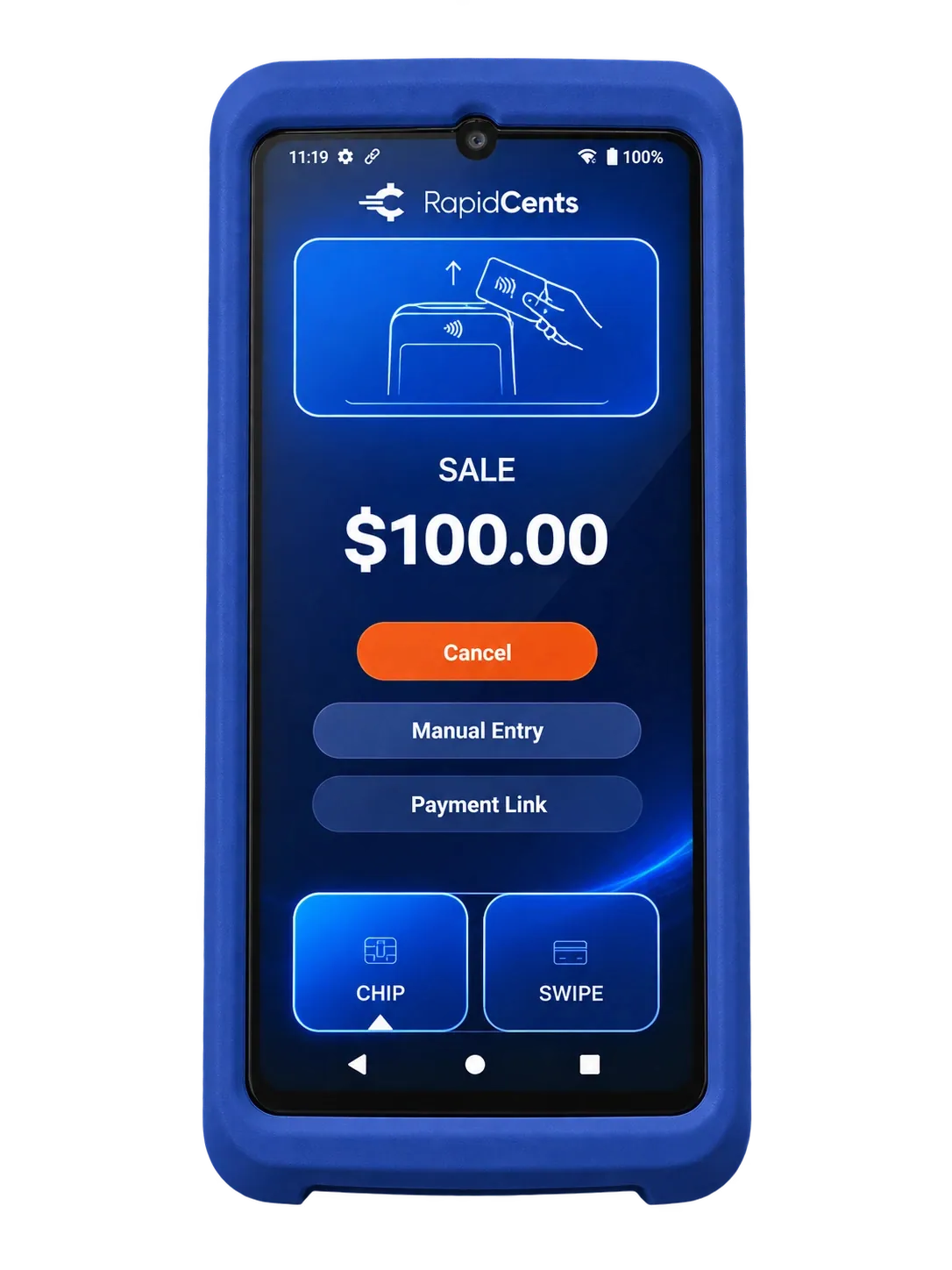
The RapidCents Rivo Go standing upright in its blue silicone case, showing the full-touch sale screen a customer reads across the counter. Payment Terminals
RapidCents payment terminals cover countertop, mobile and smart form factors so you can accept chip…
Explore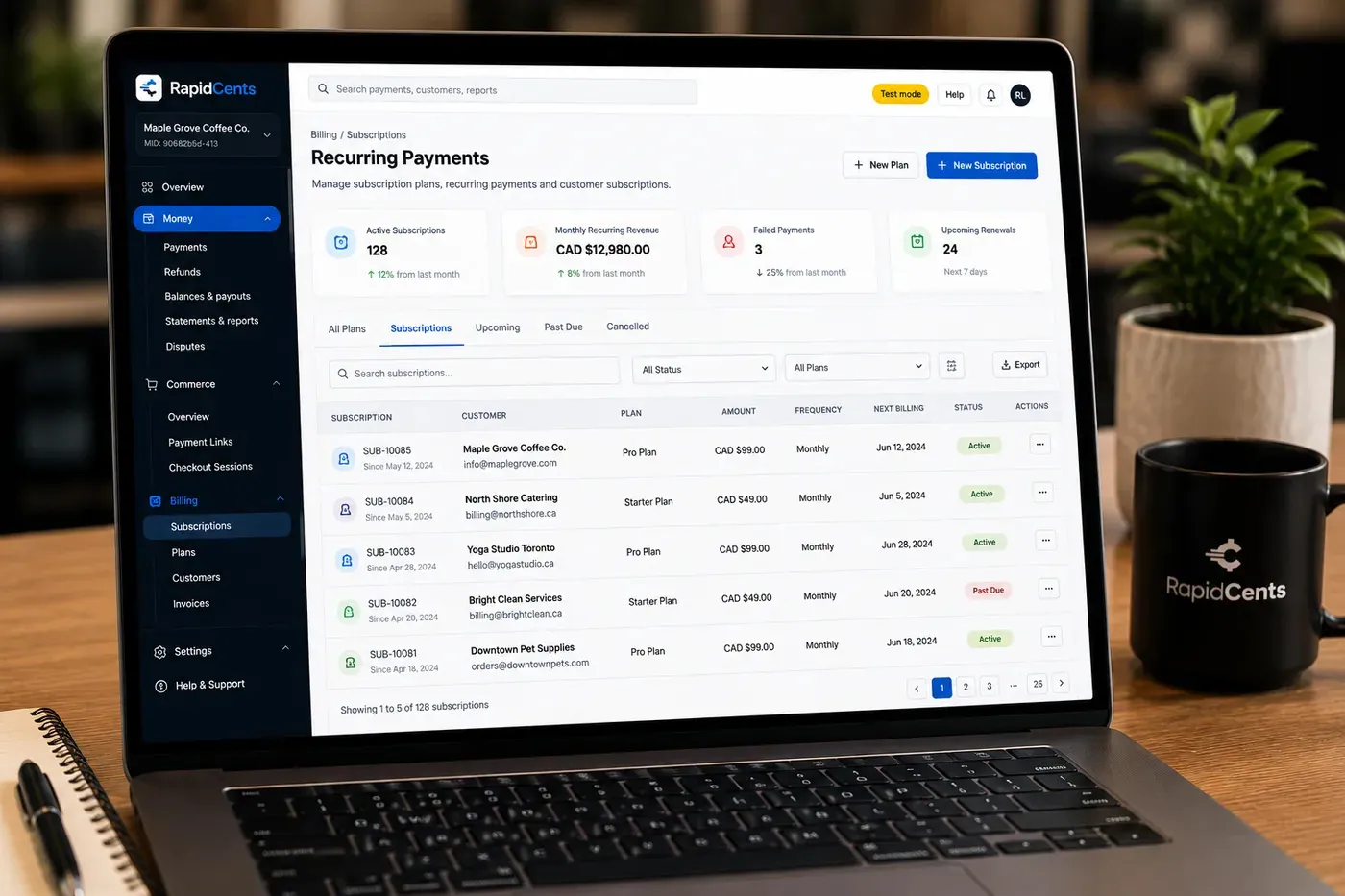
The RapidCents recurring payments screen showing active subscriptions, monthly recurring revenue, failed payments and upcoming renewals, above a list of subscriptions with their plan, amount, frequency and next billing date. Recurring Payments
RapidCents recurring payments manage subscription plans, membership renewals and installment schedules with…
Explore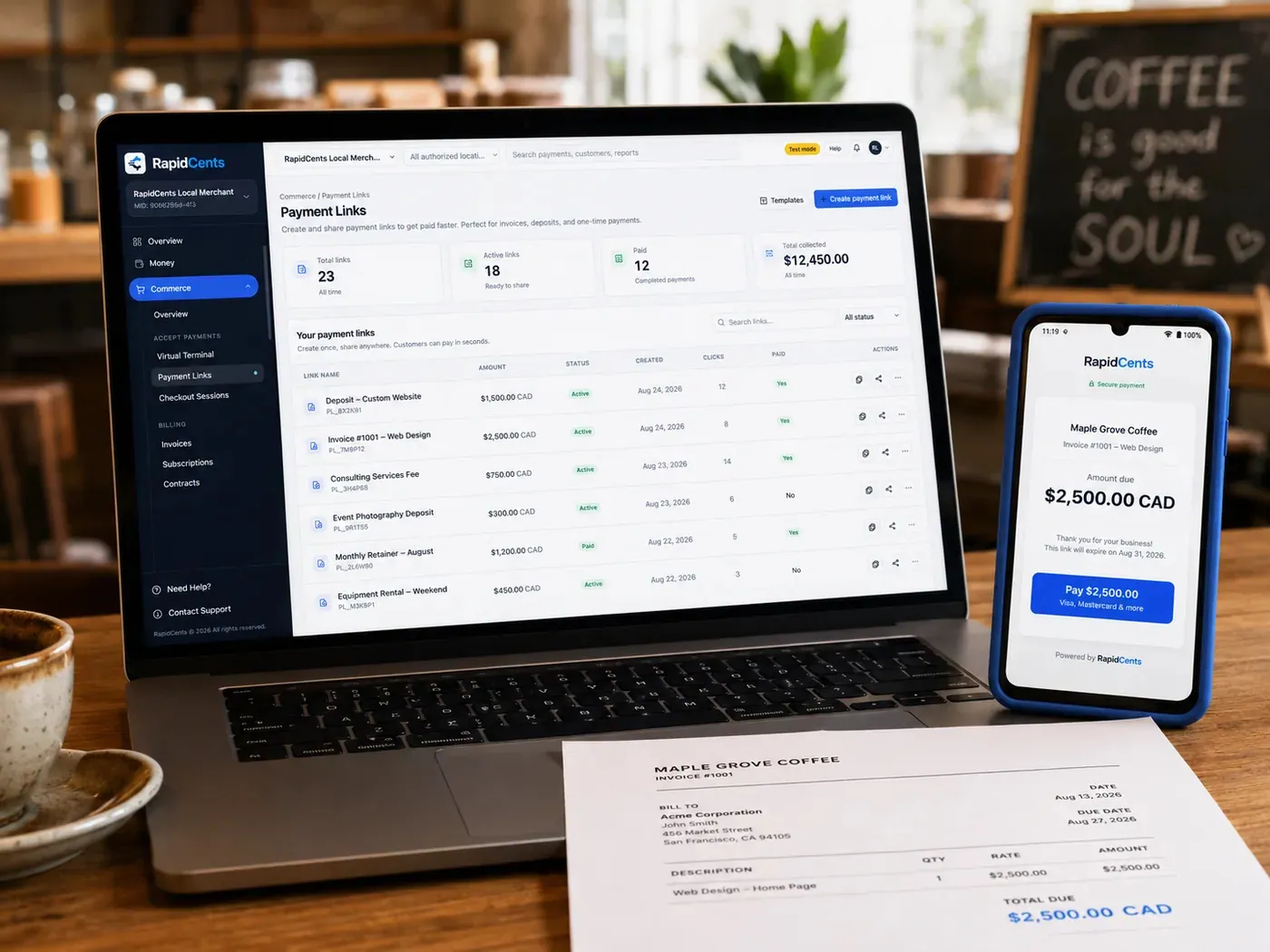
The RapidCents payment links screen listing created links with their amount, status, click count and whether they have been paid, beside a phone showing the branded page a customer opens to pay $2,500.00. Payment Links
RapidCents payment links let staff generate branded pay-by-link URLs for invoices, deposits, balances and…
Explore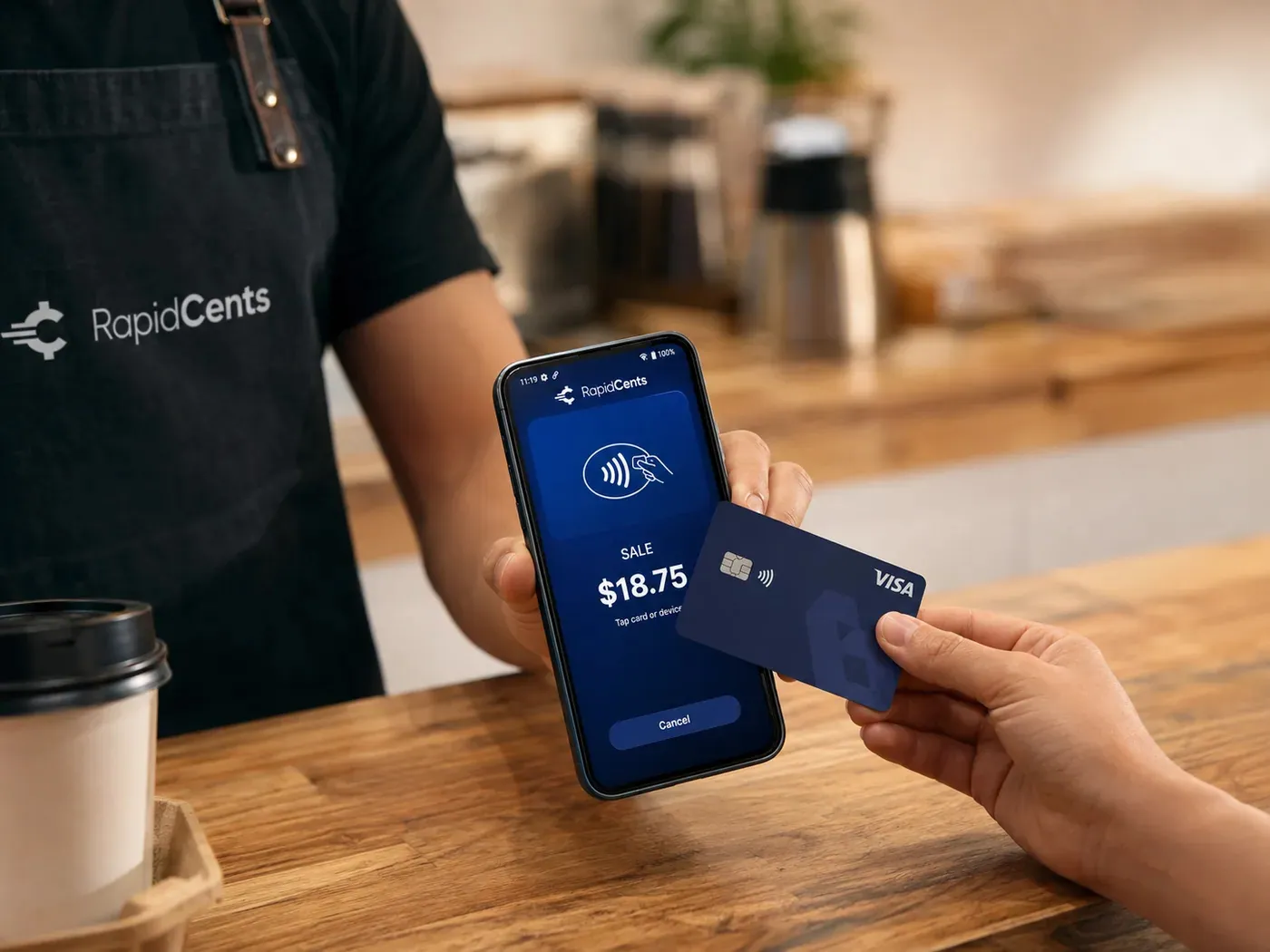
A café worker holds a phone running RapidCents Tap to Pay, showing an $18.75 sale and the contactless symbol, while a customer holds a Visa card to the screen. No separate card reader is present. Tap to Pay
RapidCents Tap to Pay turns supported iPhones and Android devices into contactless payment terminals without…
Explore


How are multi session package balances collected at a med spa?
A med spa collects multi session package balances by tying each charge to a milestone in the package: a deposit at signing, a balance at the first visit, or fixed installments agreed in writing, with the last payment due before the last session. These are clinic managed installments, a collection schedule you set. They are not a loan, and RapidCents does not lend to your clients.
Three ways to collect the balance
Take payment in full at signing, a deposit with the balance at the first visit, or a deposit plus a set of installments. The first two are payments at the terminal, by Payment Links, or on a phone with Tap to Pay. Installments run through Recurring Payments from a card the client authorized, with automated retries after a decline.
Agree dates, expiry and unused sessions
Write down each amount and date, which card is charged, what happens to sessions not used by an expiry date, and whether a package can be transferred. The client agrees before the first installment. Schedule the last installment before the last session, so no treatment is delivered against an unpaid balance.
When an installment fails or a client stops
If an installment declines, contact the client for another card and note it against the package, because retries help only with temporary declines. If a client stops mid-package, return unused value under your written terms to the original card where possible. A later dispute is answered with the agreement, the session log and the receipts.
Eight sessions paid in installments
Say a $3,000 eight-session package is paid as $600 at signing, then four $600 installments on the first of each month, with the last installment due before session eight. The client moves away after session three. The clinic refunds the unused portion the agreement allows, and the package record shows sessions used, amounts paid and the refund.
How should a med spa compare processing fees?
A med spa should compare processing fees on its own payment mix, not on a headline number: treatment checkout at the desk, remote deposits and membership renewals, the average ticket, and refund and chargeback volume. RapidCents prices on interchange-plus, so interchange passes through at cost, your markup is set out in your Fee Schedule, and equipment or service fees are added if applicable.
What drives interchange for a med spa
Interchange, the pass-through fee set by the card networks, changes with the card a client presents (debit, credit, premium or commercial) and with how it is taken. In aesthetic clinic credit card processing, a treatment paid at the desk is tapped or inserted, while a deposit link, a keyed phone payment and a membership renewal are remote, so one quote can hide two cost profiles.
Markup, equipment and other charges
For a med spa, interchange-plus means every treatment, deposit and renewal passes interchange through at cost, with the RapidCents markup from your Fee Schedule added on top, plus fees for equipment or services only if they apply. Pricing is month to month with no fixed term. Ask for every line in writing, including how refunds, disputes and terminal hardware are treated, so the total operating cost is clear.
Compare quotes with Fee Check
Compare quotes line by line on the same statement, because a bundled quote shows one blended number that mixes card-present and remote payments. When you compare medical spa merchant services quotes, bring two or three recent statements, your split between treatment checkout, deposits and memberships, your average ticket, and your refund and chargeback volume. Fee Check shows interchange separated from markup on an uploaded statement.
Is RapidCents compatible with Aesthetic Record and other med spa software?
RapidCents integrates with many major platforms through APPIE and RapidBridge, and RapidBridge ships ready-made detection packs for Aesthetic Record, Boulevard, Mindbody and Jane App. For PatientNow and other med spa software, the right option depends on your vendor and version, and your RapidCents representative will walk you through it.
Aesthetic Record
RapidBridge works with Aesthetic Record, so a card payment can post against the package or client record you already have open, without changing the software your team uses. Your RapidCents representative will walk you through the setup for your edition, including how deposits, balances and receipts land on the package ledger.
PatientNow
RapidCents integrates with many major platforms through APPIE and RapidBridge, and the right option for PatientNow depends on your vendor and version. Tell your RapidCents representative how you run deposits and recurring membership charges today, and they will show you how payments, receipts and membership freezes connect to it.
Boulevard
RapidBridge works with Boulevard, so cards on file, deposits and memberships can be taken inside the booking and checkout flow your team already knows. Your RapidCents representative will walk you through how each one is handled in your setup, so the front desk keeps working the way it does today.
Mindbody
RapidBridge works with Mindbody, so a RapidCents payment posts against the client and appointment you already have open, with no new software to learn. Your RapidCents representative will explain the options for your Mindbody setup and show you how terminals, payment links and receipts line up with it.
Jane App
RapidBridge works with Jane App, so a card payment posts against the appointment or invoice you already have open. Your RapidCents representative will show you how in-person terminal payments, payment links and receipts line up with your Jane App setup, and how a payment taken outside the software is recorded in it.
Payment options for medical spas by country
Payment methods, bank-payment options and settlement currency for a medical spa depend on the country of the merchant account. RapidCents serves merchants in Canada and the United States, and each country has its own debit networks, bank-payment rails and currency. Your RapidCents representative will tell you what is live on your account before you promise a method to a client.
Cards in person and remotely
Credit and debit cards can be taken on a RapidCents terminal, on a supported phone with Tap to Pay, by payment link or by phone, where your account is enabled for them. Visa, Mastercard and American Express cards are supported subject to your account setup.
Bank payments depend on the account
Bank payments for package balances and memberships use the rails of the country your merchant account is in, so authorization wording differs by country. Ask your RapidCents representative which bank-payment options are enabled on your account before you offer one.
Settlement currency and receipts
Funds settle in the currency set for your merchant account, and tax or licensing rules for receipts follow where your clinic operates. RapidCents does not give tax or legal advice, so check those points with your accountant or regulator.
What is the checklist for switching med spa payment processing?
Switching med spa payment processing runs in four moves: list every live arrangement, test a sale, a refund and a deposit on the new account, run old and new side by side where needed, and reconcile the first deposits to your ledger. Do not assume saved cards carry over, because both providers must agree to any migration.
List what is live
List every member on a stored card, every package with an open balance or installment schedule, unpaid invoices, open deposits and each terminal in use. Keep the signed agreement for each, because a new setup may need fresh authorization. Once your account is approved, your RapidCents representative will plan the move with you, including any controlled migration of saved cards that both providers agree to.
Test, then map references
Run a test sale, a refund and a deposit-to-balance cycle in each channel you use, such as a payment link, a card at the desk and a phone with Tap to Pay, before real clients move. Carry a booking or invoice number as the reference so your booking software and reports match. Keep any processing your booking software runs itself live until the new flow is working.
Reconcile deposits to the ledger
Match each settlement in the Merchant Dashboard or Reporting to the day's deposits, membership charges, retail and refunds, then to your ledger. RapidCents connects settled transactions, fees and refunds to QuickBooks Online and Xero, and your representative will walk you through the setup. With more than one clinic, reconcile each location, using Multi-Location roll-up reporting for the group, and close the old account only after its last deposit and any late dispute are reconciled.
Payment questions from medical spas
How should medical spas handle treatment package deposits when choosing a payment provider?
A medical spa should take the deposit as a card payment the client has authorized in writing, and record it against the package. Look for a provider that offers payment links by SMS or email, a terminal at the desk and a receipt showing amount and date. The agreement should say what the deposit covers and when it is refundable. Treatment notes, consent forms and any insurer claim stay in your clinical software; the card payment only records what the client paid.
How should medical spas handle membership renewals and freezes when choosing a payment provider?
A medical spa should choose a provider that can run a recurring charge on a stored card with advance notice to the member, automated retries after a decline and Account Updater for reissued cards. Put the amount, billing date, freeze rules and cancellation notice in the membership agreement, and get the member's agreement before the card is stored. Ask the provider exactly how a freeze is applied to a schedule.
How should medical spas handle multi session package balances when choosing a payment provider?
A medical spa should pick a provider that supports a deposit followed by a balance or by fixed installments, and set each amount and date in writing before the first charge. Collect the last installment before the last session. Installments are a collection schedule you run, not a loan, so you carry the risk of a decline. Ask how refunds to the original card work if a client stops mid-package.
How should medical spas handle retail and treatment split reporting when choosing a payment provider?
A medical spa should decide whether retail and treatment are one charge or two, because a card payment records a single amount. Two payments give two clear lines in your reports; one payment leaves the split to the itemized invoice in your booking software, matched by date, amount and reference. Ask the provider to export transaction and settlement reports as CSV or PDF so your bookkeeper can allocate each line.
Which payment options can a medical spa offer, and does it depend on the country?
Which payment options a medical spa can offer depends on the country of its merchant account. RapidCents serves merchants in Canada and the United States, and card payments, bank payments and settlement currency follow the rules of the account's country. Your RapidCents representative will tell you what is enabled on your account, and you should get the client's authorization before you store a card or set up a bank payment.
How should medical spas handle financing versus clinic managed installments when choosing a payment provider?
Handle clinic managed installments and third-party financing as two different arrangements. Clinic managed installments are a payment schedule you set and collect from the client's stored card, and RapidCents does not lend to your clients. Financing is a loan between the client and a lender, with its own approval and terms. With installments the collection risk stays with you. Ask each provider which one it supplies.
Which payment processor is best for medical spas, and what should we compare?
No single processor suits every medical spa, so compare them on your own workflow. Check how each handles package deposits, memberships and freezes, the total cost under a written fee schedule, terminal and Tap to Pay options, settlement and fee reporting, support when a deposit goes wrong, and which software it works with. Ask for written quotes on your real payment mix, then run a recent statement through Fee Check.
What fees should medical spas expect for in-person and online card payments?
Medical spas should expect interchange, a processor markup and sometimes equipment or service fees, with in-person and remote payments assessed differently. Under RapidCents interchange-plus pricing, interchange passes through at cost, the markup is set out in your Fee Schedule, and pricing is month to month. Ask for the quote in writing based on your volume and channel split, including how refunds, disputes and hardware are treated.
Can we use RapidCents with Aesthetic Record or PatientNow?
Yes. RapidBridge works with Aesthetic Record, so a card payment posts against the package you already have open. For PatientNow, RapidCents integrates with many major platforms through APPIE and RapidBridge, and the right option depends on your vendor and version. Tell your RapidCents representative which system you run, and they will walk you through how deposits, memberships and receipts connect to it.
How can medical spas reduce payment disputes and protect stored card details?
Medical spas reduce disputes with clear authorization and clean records, and protect stored cards with tokenization and limited staff access. Get a signed agreement before a deposit or membership charge, and keep the receipt, refund policy and session log together. Use Payment Tokenization and the Secure Card Vault for saved cards, limit keyed payments with Virtual Terminal role permissions, and use Disputes and Chargeback Protection for alerts, evidence and deadlines. No tool prevents every dispute, and the card issuer decides each one.
How can medical spas switch payment providers without losing billing records?
A medical spa keeps its billing records by listing what is live, testing the new setup and reconciling before the old account closes. List open balances, stored card arrangements, installment schedules, terminals and dependent software, then run a test sale, refund and deposit. Saved cards may need a controlled migration that both providers agree to, so do not assume they carry over. Keep the old account's reports.
What MCC is used for medical spas?
MCC 7298, Health and Beauty Spas, is commonly associated with medical spas. RapidCents sets the correct merchant category during onboarding, based on what your business actually sells. When you apply, describe your treatments, memberships and retail accurately, so the category on your account matches the business you run.
Industries with similar payment workflows
Salons & Spas, Gym & Fitness Studios and Dental Clinics share parts of this workflow: deposits against booked time, memberships billed from a stored card, and treatment plans paid in stages. Compare how each handles them.
Healthcare
Take visit payments at reception, send payment links for what insurance leaves unpaid and…
Dental Clinics
Take treatment plan deposits at the front desk or by text, run in-house installment plans…
Physio & Chiropractic
Collect visit fees and patient portions at the front desk or in the treatment room, sell…
Veterinary Clinics
Take deposits when owners sign surgery estimates, charge wellness plans monthly with…
Pharmacies
Collect the patient portion once your dispensing system has adjudicated the claim, ring…
Optometry
Take exam fees and copays at checkout, deposits when frames and lenses go to the lab…
Gym & Fitness Studios
Bill monthly dues on stored cards, recover failed payments, sell class packs at the front…
Salons & Spas
Take booking deposits, charge no-show fees to cards clients agreed to store, collect tips…
Take the next step
Check how your med spa is priced today
Upload a recent processing statement to Fee Check and see interchange separated from markup, so your package deposits, memberships and retail checkout are compared on your real payment mix.
- No obligation
- Payment specialists, not a call centre
- Secure statement upload



