Optometry payments: exam fees, eyewear deposits and insurance balances
An eye exam is paid at the desk; a pair of frames with custom lenses is a deposit at order and a balance when they arrive weeks later. RapidCents handles both with payment terminals at reception, payment links sent when the eyewear is ready, a virtual terminal for keyed and phone payments, and recurring payments for contact lens supply plans. Insurance often covers only part of the total. Optometrists are classified under MCC 8042.

- PCI DSS Level 1
- SOC 2 Type II
- All major card brands: Visa · Mastercard · Amex · Discover · PIN debit
- Interchange-plus available
- Specialist onboarding support
Operational workflows
Exam fee taken at reception
Deposit collected when frames are ordered
Lab order placed against that deposit
Balance link sent when eyewear arrives
Payment challenges
Weeks between the deposit and the pickup
Custom lenses are ordered on one card and collected weeks later, by which time the balance needs a fresh authorization.
Eyewear made for one face
A frame-and-lens order cannot be resold if the patient never comes back for it, so the deposit is what covers the lab cost.
The insurer pays only part of the frame
Vision coverage applies to a portion of the total, and the patient's share is only known once that portion is applied.
Choose the right payment setup for Optometry
Choose optometry payment terminal
For Optometry, map booking, the appointment, and follow-up, the deposit, staged payments, and final balance, and the counter or service point before choosing a setup. Select channels that match those moments, then confirm that the chosen solution genuinely covers each channel.
Payment hardware for Optometry
For Optometry, start with the place customers pay in person: a countertop terminal, smart terminal, or portable device depending on the workflow. Verify that the hardware fits the real volume and workspace.
Compare payment processing fees
For Optometry, request a written fee breakdown covering deposits and final balances. Compare the effective cost across the real card and channel mix; do not choose on a headline rate alone.
Set up or switch Optometry payments
To set up Optometry payments, document deposit and post-appointment payment rules, confirm compatibility before purchase, then test a real payment flow before going live.
Recommended products
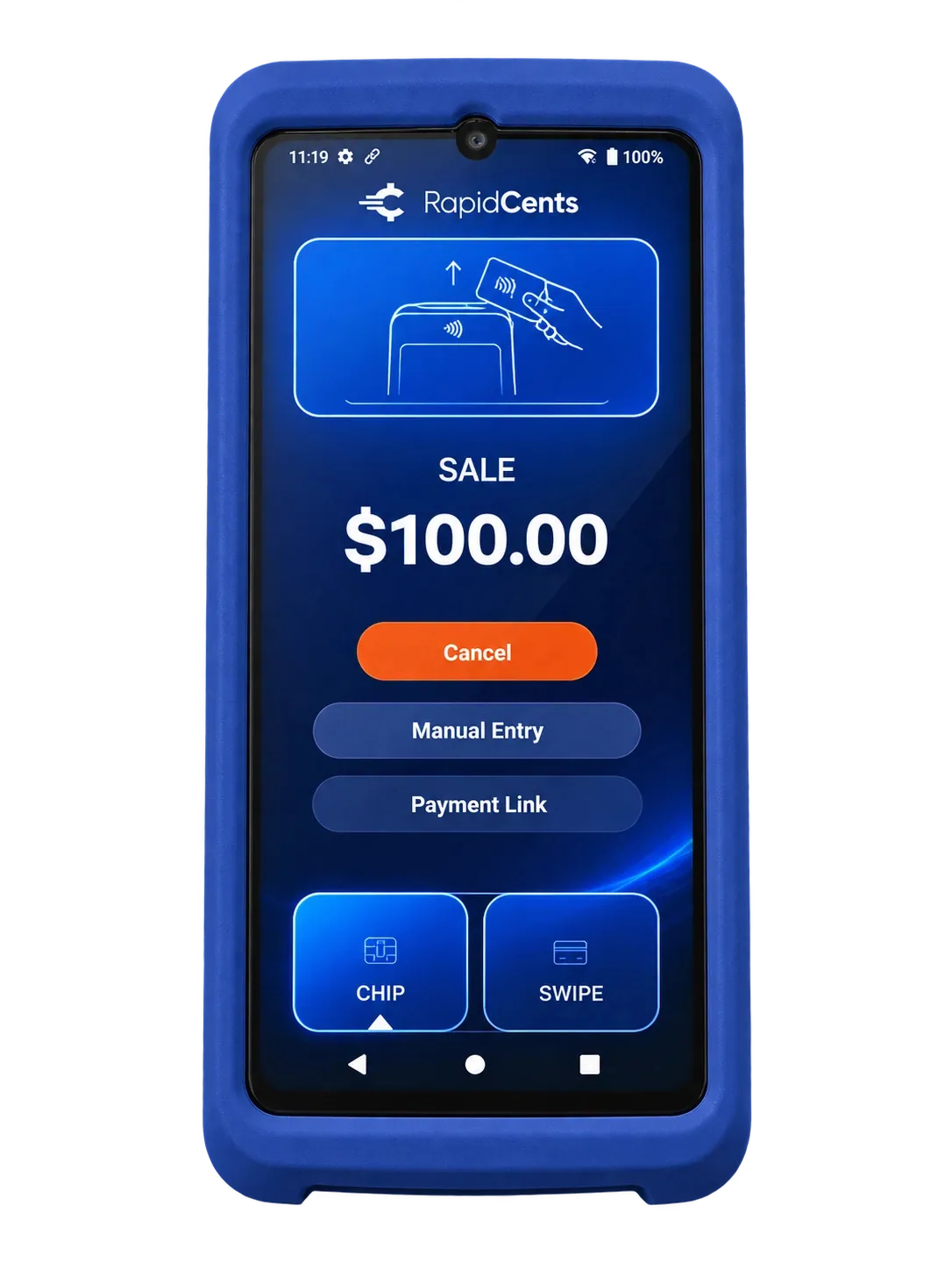
The RapidCents Rivo Go standing upright in its blue silicone case, showing the full-touch sale screen a customer reads across the counter. Payment Terminals
RapidCents payment terminals cover countertop, mobile and smart form factors so you can accept chip…
Explore
The RapidCents payment links screen listing created links with their amount, status, click count and whether they have been paid, beside a phone showing the branded page a customer opens to pay $2,500.00. Payment Links
RapidCents payment links let staff generate branded pay-by-link URLs for invoices, deposits, balances and…
Explore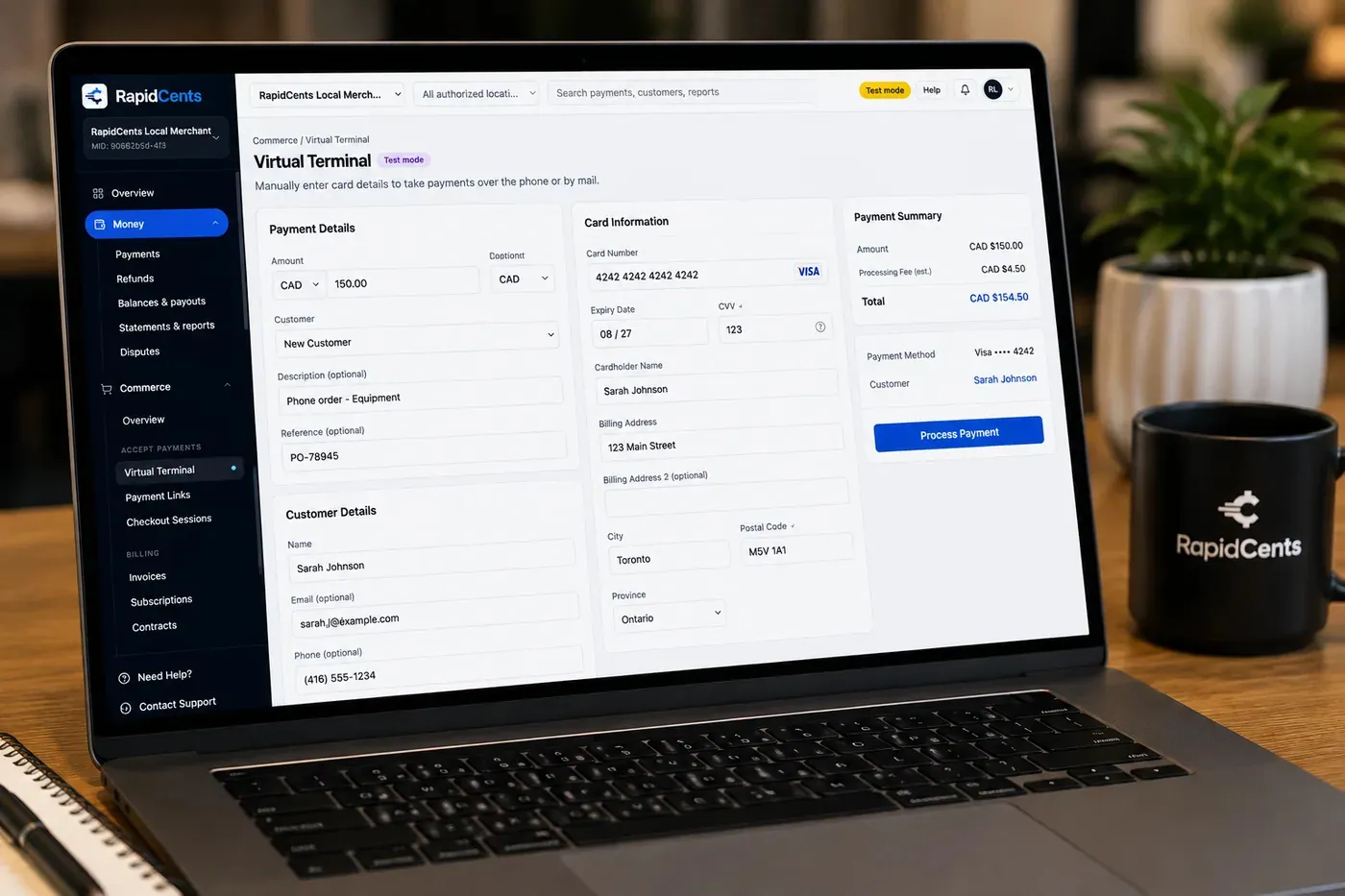
The RapidCents virtual terminal: payment details, card number, expiry and CVV keyed by hand on the left, with a payment summary on the right showing the amount, the estimated processing fee and a Process Payment button. Virtual Terminal
The RapidCents virtual terminal lets authorized staff enter mail-order and telephone-order payments through a…
Explore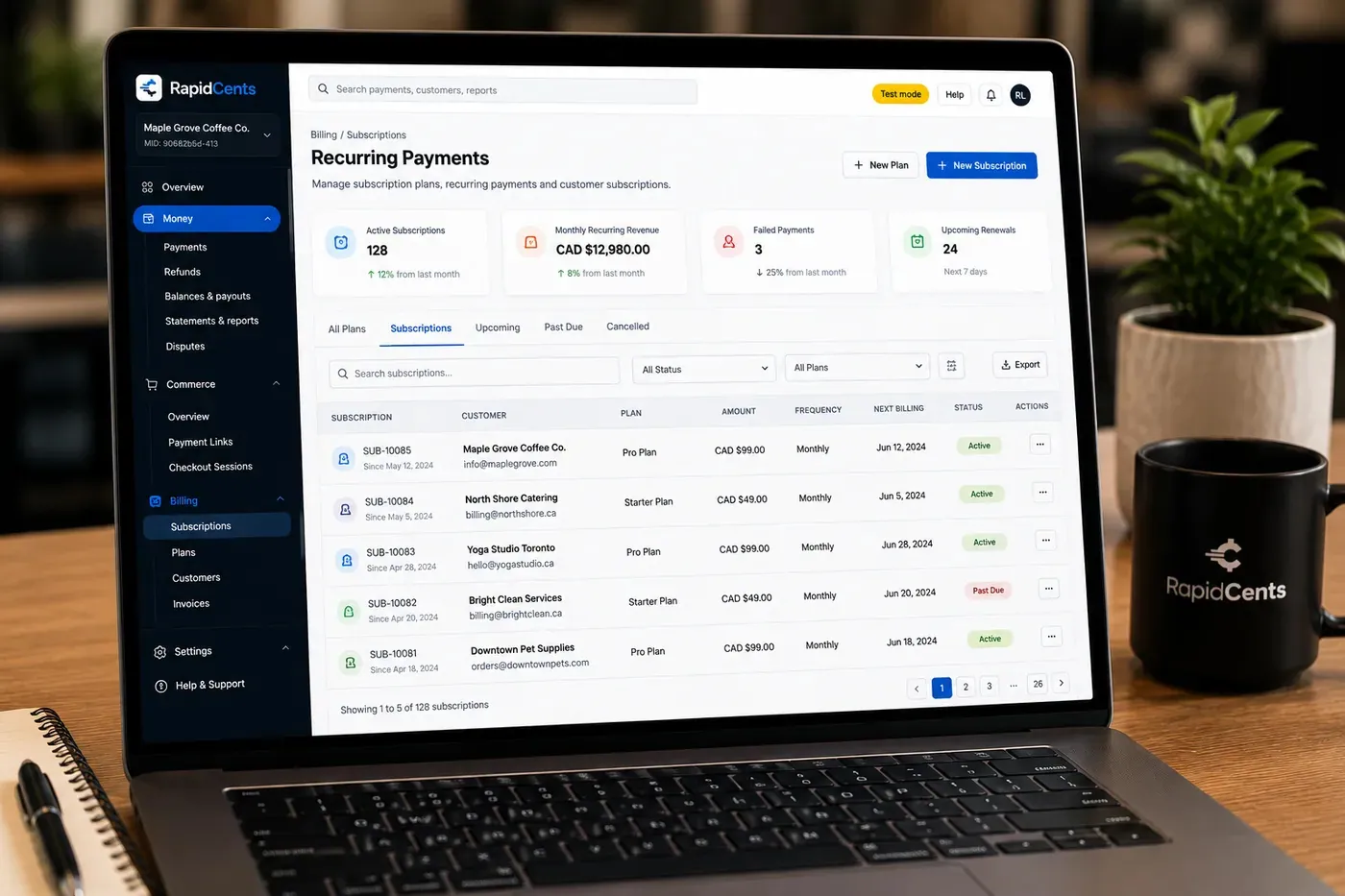
The RapidCents recurring payments screen showing active subscriptions, monthly recurring revenue, failed payments and upcoming renewals, above a list of subscriptions with their plan, amount, frequency and next billing date. Recurring Payments
RapidCents recurring payments manage subscription plans, membership renewals and installment schedules with…
Explore


How this gets set up
The exam, paid at the desk
The fee is collected at reception on a terminal as the patient leaves the lane, before the eyewear conversation even begins.
A deposit when the frames are ordered
Custom lenses are ground for one prescription and cannot be resold, so the deposit taken at order is what covers the lab bill if the patient never returns.
The balance when the glasses arrive
Weeks later, a payment link sent with the ready-for-pickup message collects the rest, so the handoff at the counter is not also a payment negotiation.
The contact lens supply plan
An annual supply billed as a scheduled draw on a stored card replaces the reorder phone call every three months.
Integrations
Crystal PM
Crystal PM carries the patient ledger and the optical order, so a deposit and the later balance both post against the job the lab is building.
RevolutionEHR exports
RevolutionEHR exports let you match its patient and claim records against settlements as a file; it is a reconciliation feed, not a live payment link.
Operations, security and going live
Exam revenue and optical revenue read separately
One is professional fees, the other is dispensed goods with a lab cost behind it, and a single sales total tells the practice nothing about either.
Deposits outstanding on unfinished jobs
At any moment a practice has lenses in production against partial payments, and that liability has to be visible per order rather than as a monthly figure.
Supply-plan cards in a vault, not a drawer
Tokenization holds the recurring card, which replaces the paper authorizations that pile up behind an optical desk.
Going live between orders
New deposits and balances move to RapidCents while jobs already at the lab finish out on the arrangement they were sold under.
Payment questions from Optometry
What should businesses compare when choosing optometry payment terminal for Optometry?
Compare optometry payment terminal against the real payment journey: booking, the appointment, and follow-up, the deposit, staged payments, and final balance, and the counter or service point. Start with the required channels and hardware, then confirm compatibility and support before committing.
What payment hardware is practical for Optometry?
For Optometry, start with the workstation where customers pay and the space available. A test of the real flow reveals the right form factor better than a feature comparison alone.
Which payment channels are relevant for Optometry?
For Optometry, start with booking, the appointment, and follow-up, the deposit, staged payments, and final balance, and the counter or service point. Keep only the channels that match those moments, then verify the complete customer flow before offering them.
How should payment processing fees be evaluated for Optometry?
For Optometry, compare costs related to deposits and final balances using actual transactions. Request a written breakdown of fees and terms rather than relying on an advertised rate alone.
What should be confirmed before setting up payments for Optometry?
For Optometry, document deposit and post-appointment payment rules, verify the needed compatibility, and test the flow before going live. This exposes manual steps and exceptions before customers encounter them.
How should deposits and high-value payments be planned for Optometry?
Separate the deposit, staged payments, and final balance in the process. Confirm the authorization and refund rules that apply to the business before communicating terms to a customer.
What MCC category applies to Optometry?
MCC 8042 is commonly associated with Optometry. Our onboarding team confirms the correct category for your business.
Related industries
Healthcare
Healthcare providers collect patient payments at reception, via payment links and…
Dental Clinics
Dental practices accept front-desk, remote and scheduled payments with card-on-file…
Physio & Chiropractic
Physiotherapy and chiropractic clinics collect copays, package payments and recurring…
Veterinary Clinics
Vet clinics take exam-room payments, estimate deposits and recurring wellness plan…
Pharmacies
Independent and specialty pharmacies accept countertop, contactless and phone payments…
Medical Spas
Med spas combine high-ticket treatment packages, memberships and retail add-ons with…
Gym & Fitness Studios
Gyms and boutique fitness studios run memberships, class packs, retail and front-desk…
Salons & Spas
Salons and spas use mobile Tap to Pay, countertop terminals and appointment deposits with…
Take the next step
Talk to a RapidCents specialist
RapidCents Fee Check reads a processing statement and shows interchange separately from the markup. Upload a statement for an instant breakdown, or open a merchant account and start accepting payments on one account.
- No obligation
- Payment specialists, not a call centre
- Secure statement upload