Veterinary payments: exam-room terminals, estimates and wellness plans
A vet clinic asks for money in the exam room, while the owner is still holding the animal, and often against an estimate signed before surgery. RapidCents supports a deposit taken on that estimate, Tap to Pay or a payment terminal carried to the room instead of the counter, recurring payments for monthly wellness plans, and payment links for a bill settled after discharge. Veterinary services carry MCC 0742.

- PCI DSS Level 1
- SOC 2 Type II
- All major card brands: Visa · Mastercard · Amex · Discover · PIN debit
- Interchange-plus available
- Specialist onboarding support
Operational workflows
Estimate signed before the procedure
Deposit authorized against that estimate
Terminal carried into the exam room
Wellness plan billed monthly on file
Payment challenges
Surgery that ends above the estimate
A procedure that finds complications finishes past the amount the owner approved, and the difference has to be collected at discharge.
An emergency nobody budgeted for
An animal arrives after hours with a bill decided in minutes, and the card the owner has on them may not carry it.
Paying while holding an animal
Asking an owner to walk to a counter with a distressed pet is why the payment has to happen in the room.
Choose the right payment setup for Veterinary Clinics
Choose vet clinic payment terminal
For Veterinary Clinics, map booking, the appointment, and follow-up, the deposit, staged payments, and final balance, and sign-up, scheduled billing, and renewal before choosing a setup. Select channels that match those moments, then confirm that the chosen solution genuinely covers each channel.
Payment hardware for Veterinary Clinics
For Veterinary Clinics, choose hardware after mapping where and when customers pay. Compare countertop, portable, and remote-payment options against the real workflow rather than a device's advertised price.
Compare payment processing fees
For Veterinary Clinics, request a written fee breakdown covering deposits and final balances and scheduled billing, declined cards, and cancellations. Compare the effective cost across the real card and channel mix; do not choose on a headline rate alone.
Set up or switch Veterinary Clinics payments
To set up Veterinary Clinics payments, document deposit and post-appointment payment rules, confirm compatibility before purchase, then test a real payment flow before going live.
Recommended products
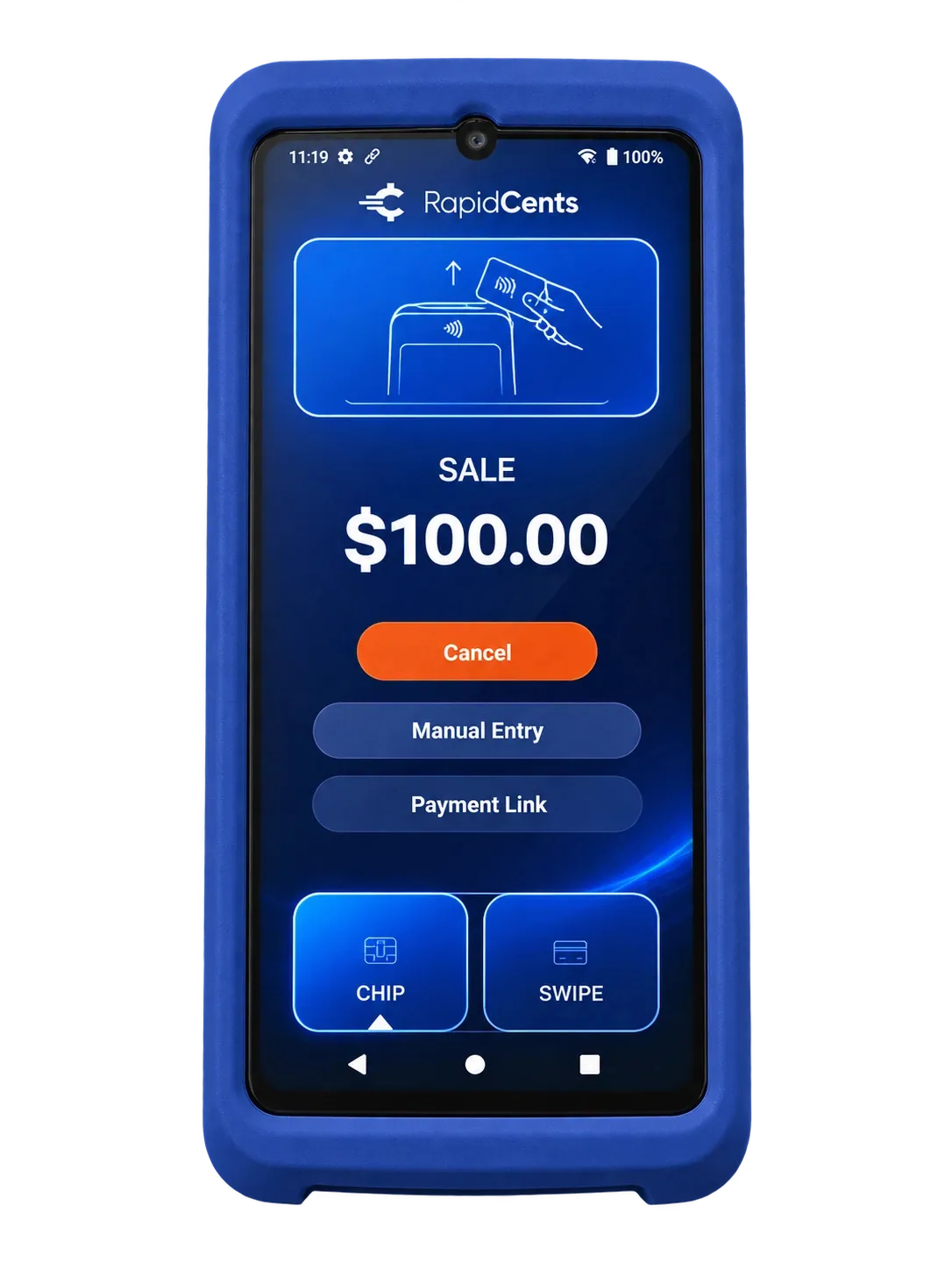
The RapidCents Rivo Go standing upright in its blue silicone case, showing the full-touch sale screen a customer reads across the counter. Payment Terminals
RapidCents payment terminals cover countertop, mobile and smart form factors so you can accept chip…
Explore
A café worker holds a phone running RapidCents Tap to Pay, showing an $18.75 sale and the contactless symbol, while a customer holds a Visa card to the screen. No separate card reader is present. Tap to Pay
RapidCents Tap to Pay turns supported iPhones and Android devices into contactless payment terminals without…
Explore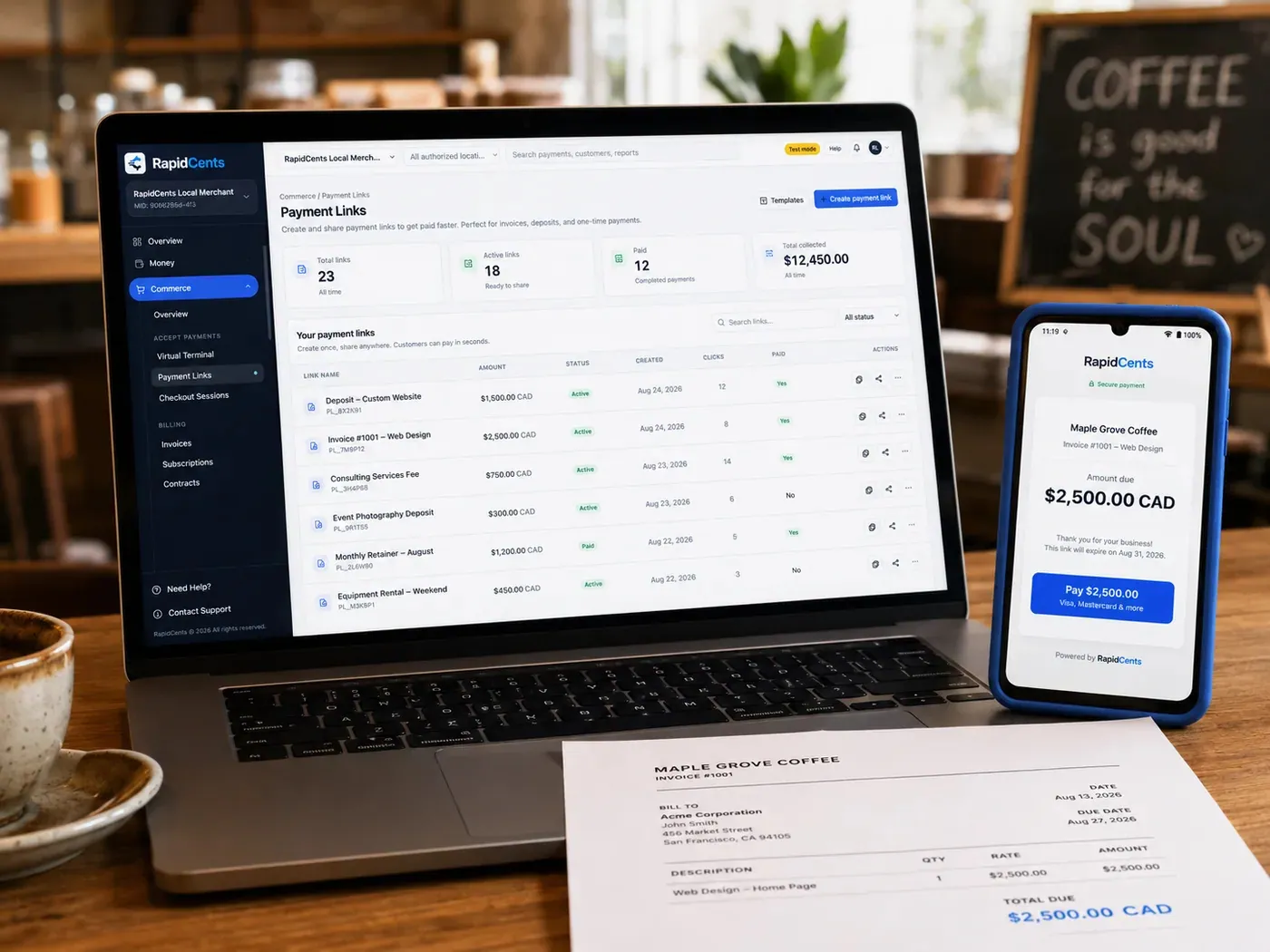
The RapidCents payment links screen listing created links with their amount, status, click count and whether they have been paid, beside a phone showing the branded page a customer opens to pay $2,500.00. Payment Links
RapidCents payment links let staff generate branded pay-by-link URLs for invoices, deposits, balances and…
Explore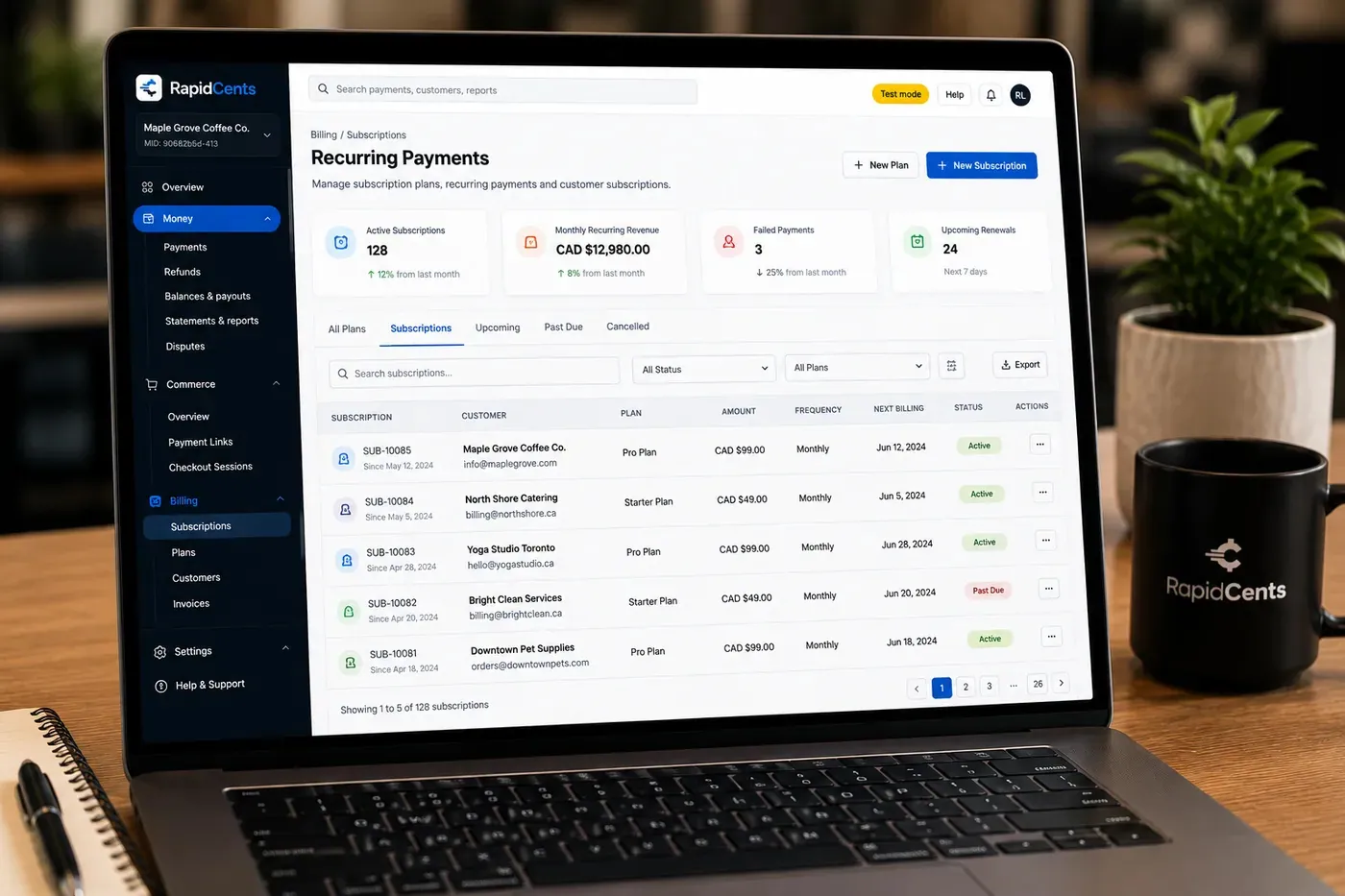
The RapidCents recurring payments screen showing active subscriptions, monthly recurring revenue, failed payments and upcoming renewals, above a list of subscriptions with their plan, amount, frequency and next billing date. Recurring Payments
RapidCents recurring payments manage subscription plans, membership renewals and installment schedules with…
Explore


How this gets set up
The estimate signed before surgery
The owner approves a range and leaves a deposit against it, taken at the counter before the animal is prepped rather than after.
Payment in the exam room
Tap to Pay on a phone or a terminal carried into the room means the owner pays while still holding the animal, not in a line-up afterwards.
The bill after discharge
When the final total lands above or below the estimate, a payment link settles the difference without a second trip to the clinic.
The monthly wellness plan
Vaccines, exams and preventives bundled into a plan draw from the card on file, turning one large annual invoice into a predictable monthly amount.
Integrations
eVetPractice
eVetPractice holds the invoice and the client account, so an exam-room payment posts to the same record the estimate was built in.
Cornerstone
Cornerstone is the practice ledger, and matching its client balances against the day's settlement is how a multi-doctor clinic closes out.
AVImark
AVImark carries the patient history and the charges behind an estimate, which is what a deposit and a final balance are measured against.
Operations, security and going live
Estimate, deposit and final invoice as one thread
Reporting has to connect a deposit to the invoice it was taken against, or the front desk cannot tell an owner what is still owed.
Some visits cannot end at the counter
Euthanasia and emergency cases make a payment conversation at the desk impossible, so a link sent afterwards is not a convenience but the only workable route.
A wellness plan cancelled mid-term
Stopping a plan partway leaves services already delivered against draws not yet taken, and settling that needs the full draw history for the client.
Terminals that leave the counter
Going live means choosing which rooms get a device and which staff carry Tap to Pay, then training on refunds before the first busy Saturday.
Payment questions from Veterinary Clinics
What should businesses compare when choosing vet clinic payment terminal for Veterinary Clinics?
Compare vet clinic payment terminal against the real payment journey: booking, the appointment, and follow-up, the deposit, staged payments, and final balance, and sign-up, scheduled billing, and renewal. Start with the required channels and hardware, then confirm compatibility and support before committing.
What payment hardware is practical for Veterinary Clinics?
For Veterinary Clinics, start with the workstation where customers pay and the space available. A test of the real flow reveals the right form factor better than a feature comparison alone.
Which payment channels are relevant for Veterinary Clinics?
For Veterinary Clinics, start with booking, the appointment, and follow-up, the deposit, staged payments, and final balance, and sign-up, scheduled billing, and renewal. Keep only the channels that match those moments, then verify the complete customer flow before offering them.
How should payment processing fees be evaluated for Veterinary Clinics?
For Veterinary Clinics, compare costs related to deposits and final balances and scheduled billing, declined cards, and cancellations using actual transactions. Request a written breakdown of fees and terms rather than relying on an advertised rate alone.
What should be confirmed before setting up payments for Veterinary Clinics?
For Veterinary Clinics, document deposit and post-appointment payment rules, verify the needed compatibility, and test the flow before going live. This exposes manual steps and exceptions before customers encounter them.
What should be confirmed before using recurring payments for Veterinary Clinics?
Define consent, billing cadence, change and cancellation rules, and how a declined card is handled. Ask to see the complete customer journey before offering it to customers.
What MCC category applies to Veterinary Clinics?
MCC 0742 is commonly associated with Veterinary Clinics. Our onboarding team confirms the correct category for your business.
Related industries
Healthcare
Healthcare providers collect patient payments at reception, via payment links and…
Dental Clinics
Dental practices accept front-desk, remote and scheduled payments with card-on-file…
Physio & Chiropractic
Physiotherapy and chiropractic clinics collect copays, package payments and recurring…
Pharmacies
Independent and specialty pharmacies accept countertop, contactless and phone payments…
Medical Spas
Med spas combine high-ticket treatment packages, memberships and retail add-ons with…
Optometry
Optometry practices collect exam fees, eyewear deposits and insurance balance payments at…
Gym & Fitness Studios
Gyms and boutique fitness studios run memberships, class packs, retail and front-desk…
Salons & Spas
Salons and spas use mobile Tap to Pay, countertop terminals and appointment deposits with…
Take the next step
Talk to a RapidCents specialist
RapidCents Fee Check reads a processing statement and shows interchange separately from the markup. Upload a statement for an instant breakdown, or open a merchant account and start accepting payments on one account.
- No obligation
- Payment specialists, not a call centre
- Secure statement upload