Parking payment terminals, pay by plate, monthly permits and event rates
Parking is paid without staff. A driver enters a plate number at a machine or scans a QR code on the sign, a monthly permit holder is charged automatically, and event rates change for one night only. RapidCents supplies the payment terminals in the lane, QR and hosted checkout for pay-by-plate, and recurring payments for monthly permits, all reporting into one account. Parking lots and garages are classified under MCC 7523.

- PCI DSS Level 1
- SOC 2 Type II
- All major card brands: Visa · Mastercard · Amex · Discover · PIN debit
- Interchange-plus available
- Specialist onboarding support
Operational workflows
Driver pays by plate at the lane or on a QR sign
Monthly permits charged on a recurring schedule
Event and overnight rates applied to the same lot
Revenue reconciled lot by lot against occupancy
Payment challenges
Nobody on site to ask
The machine is the only staff on the lot, so RapidCents keeps stored cards current and reports any cycle that still needs a person — before it becomes an unpaid stall and a call the next day.
Permits that all renew on the first
Hundreds of monthly parkers are charged on the same date, and each failure turns into a gate that will not lift.
A rate that changes for one evening
Event pricing has to be applied to a lot that is normally hourly, then taken back off the next morning.
Choose the right payment setup for Parking
Choose parking payment terminal
For Parking, map sign-up, scheduled billing, and renewal, the counter or service point, and the sale and reconciliation with business systems before choosing a setup. Select channels that match those moments, then confirm that the chosen solution genuinely covers each channel.
Payment hardware for Parking
For Parking, start with the place customers pay in person: a countertop terminal, smart terminal, or portable device depending on the workflow. Verify that the hardware fits the real volume and workspace.
Compare payment processing fees
For Parking, request a written fee breakdown covering scheduled billing, declined cards, and cancellations. Compare the effective cost across the real card and channel mix; do not choose on a headline rate alone.
Set up or switch Parking payments
To set up Parking payments, document how payment data moves into business systems, confirm compatibility before purchase, then test a real payment flow before going live.
Recommended products
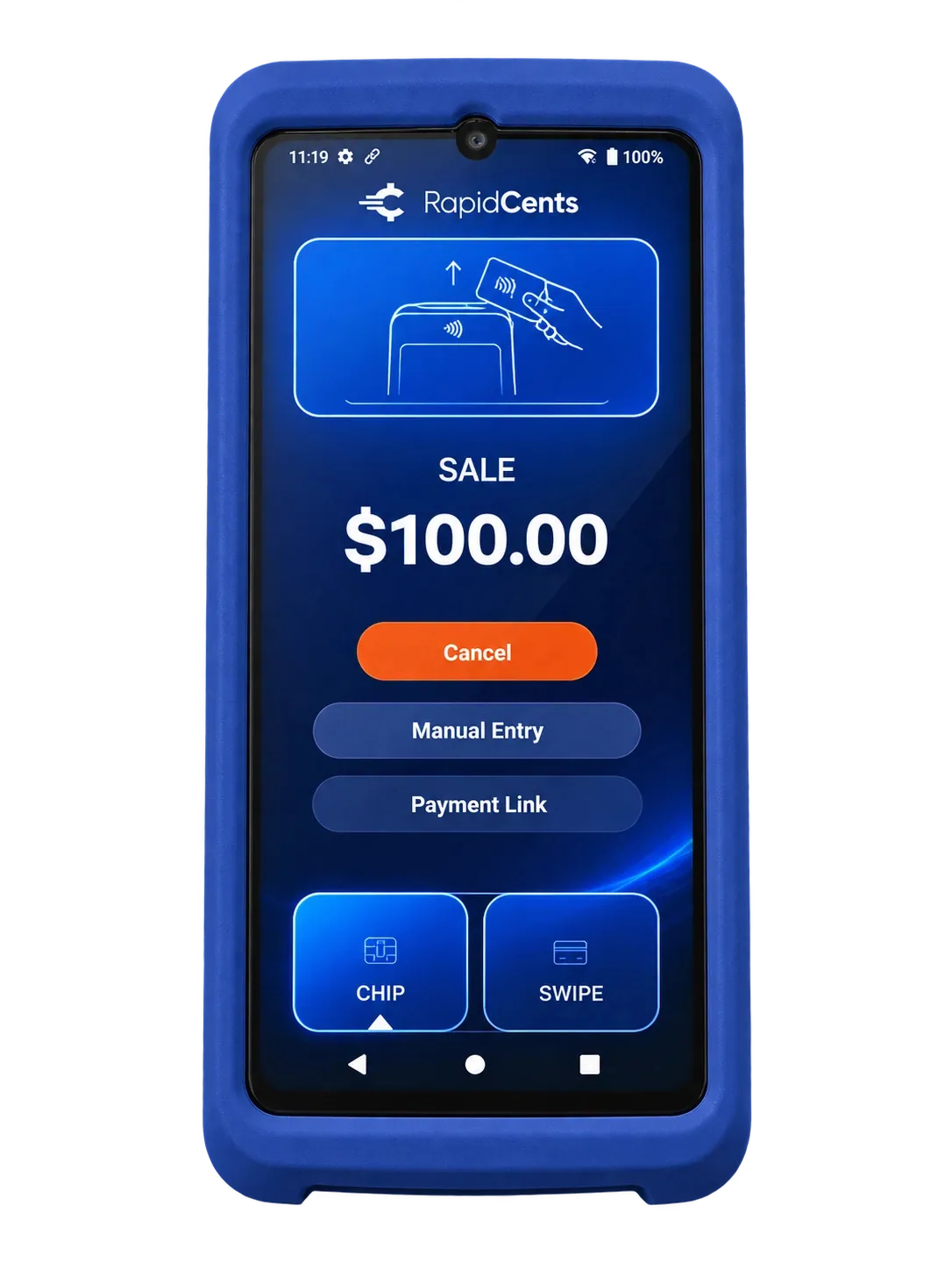
The RapidCents Rivo Go standing upright in its blue silicone case, showing the full-touch sale screen a customer reads across the counter. Payment Terminals
RapidCents payment terminals cover countertop, mobile and smart form factors so you can accept chip…
Explore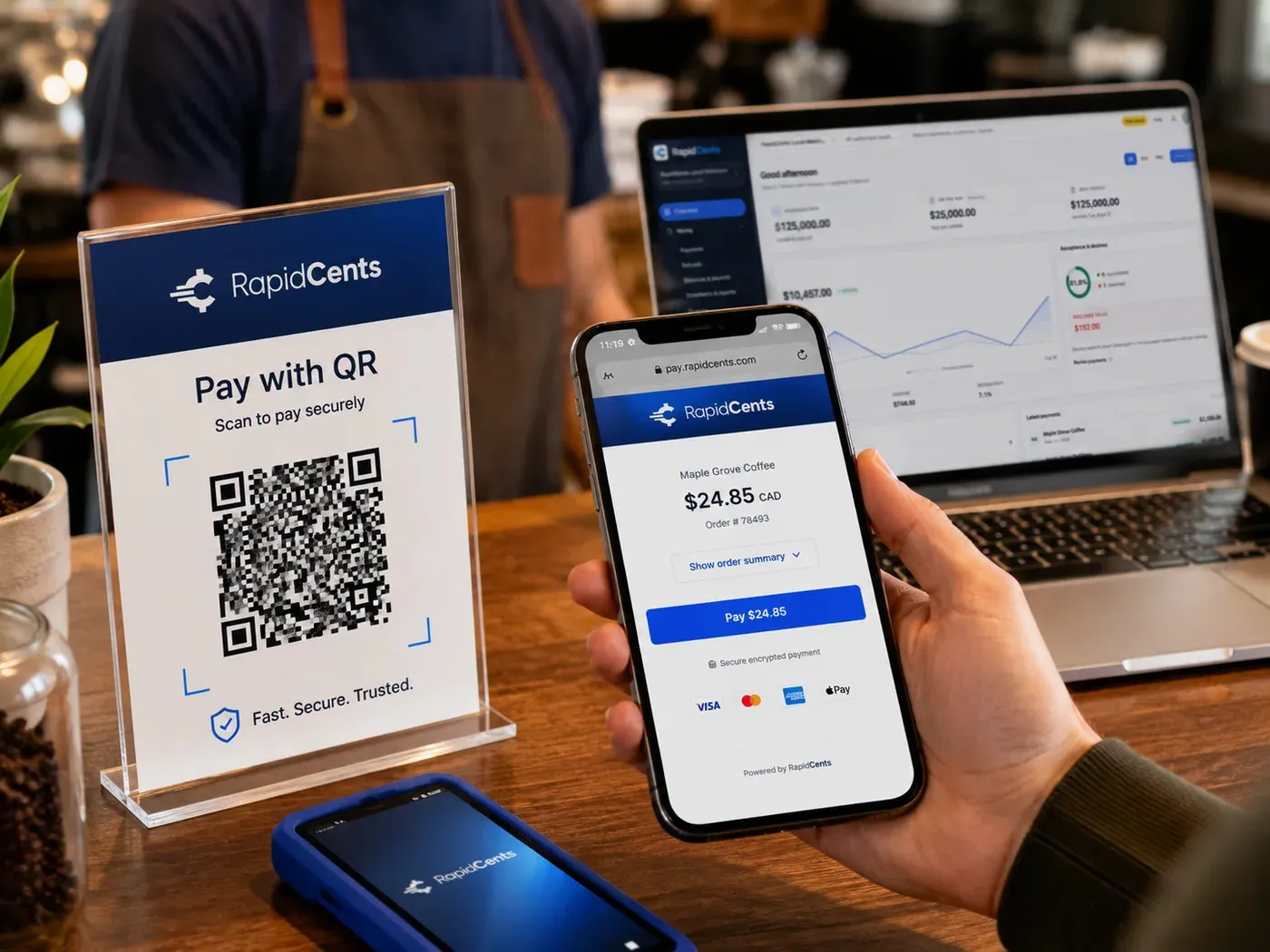
A scan-to-pay QR card standing on a café counter while a customer holds a phone showing the RapidCents payment page for a $24.85 order, with the merchant dashboard open on a laptop behind. QR Payments
RapidCents QR payments generate dynamic or static QR codes customers scan with their phone camera to open a…
Explore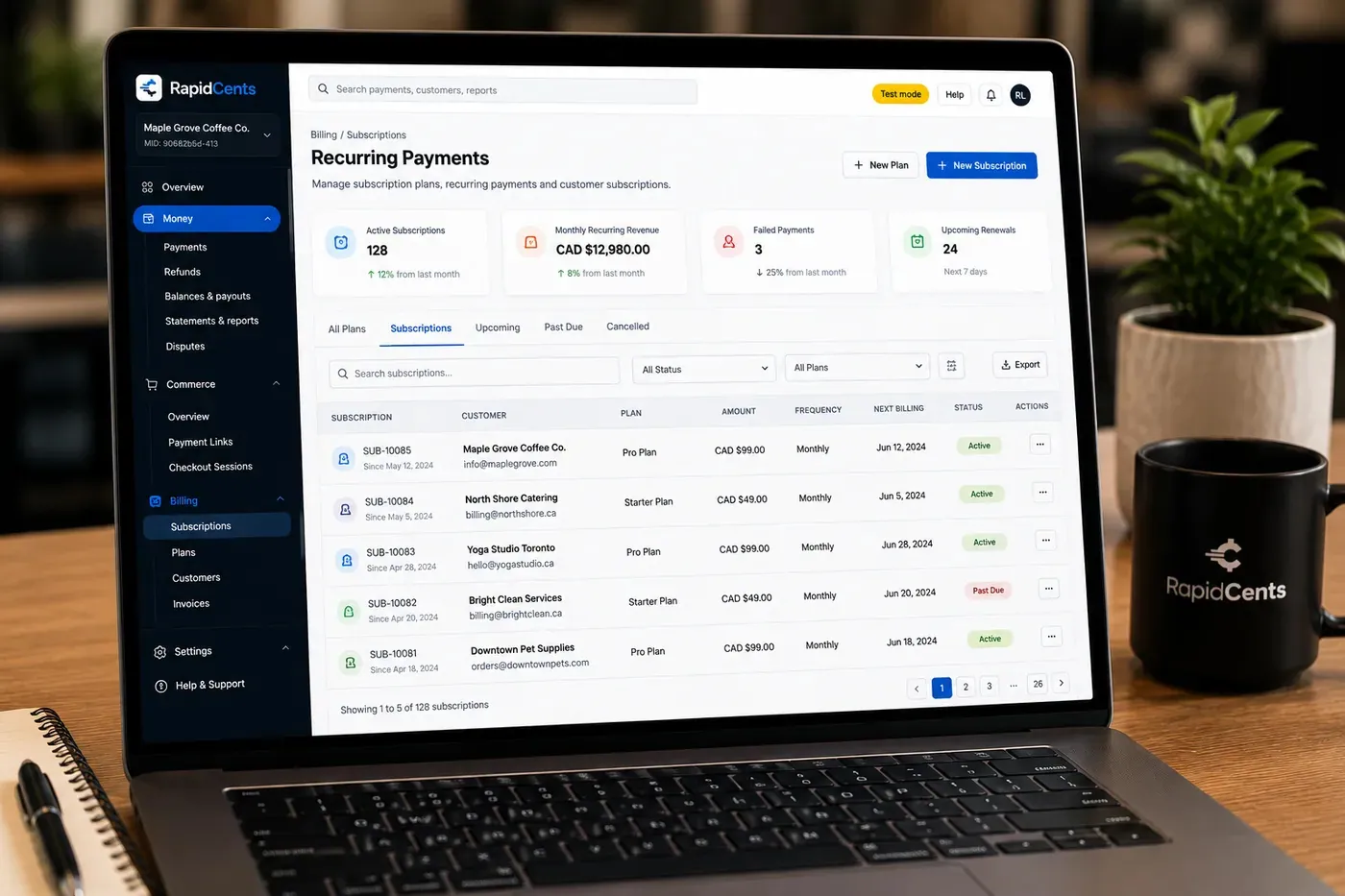
The RapidCents recurring payments screen showing active subscriptions, monthly recurring revenue, failed payments and upcoming renewals, above a list of subscriptions with their plan, amount, frequency and next billing date. Recurring Payments
RapidCents recurring payments manage subscription plans, membership renewals and installment schedules with…
Explore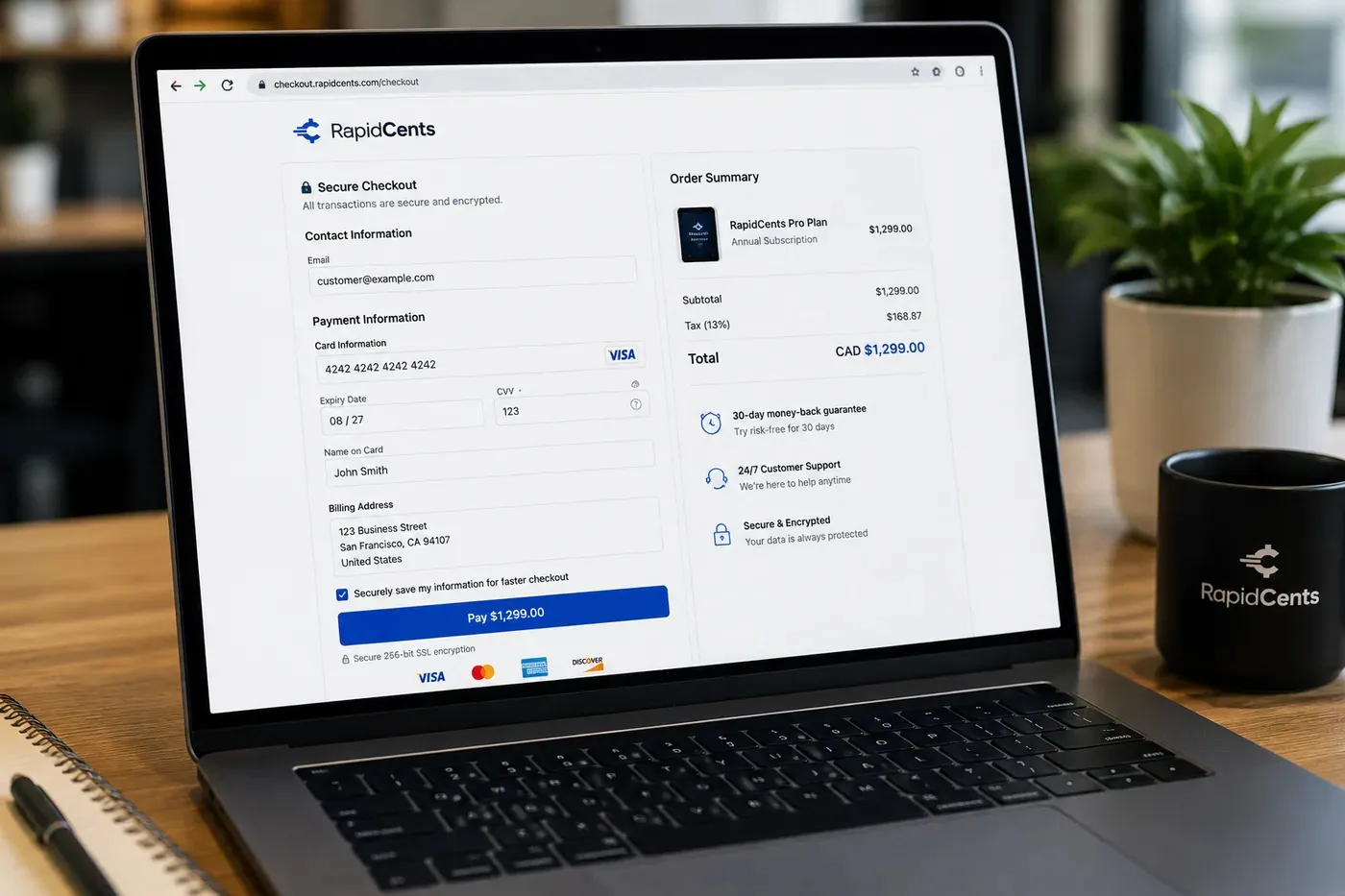
A RapidCents hosted checkout page at checkout.rapidcents.com, with the order summary and totals on the left and the card fields on the right, footed by SSL and PCI DSS assurances. Hosted Checkout
RapidCents hosted checkout delivers PCI-scoped payment pages you redirect customers to or embed via iframe…
Explore


How this gets set up
Pay station in the lane
A payment terminal at the entrance or on the island takes the tap with no attendant on site.
Plate typed, or a code scanned
The driver enters a plate at the machine, or scans the code on the sign and pays from their own phone through hosted checkout.
Monthly permits on autopay
Permit holders are charged on recurring payments, so the same two hundred cars are not queuing at a machine on the first of the month.
Event pricing for one night
A game or concert rate is published to the checkout for that date only, then the lot returns to its normal tariff.
Integrations
T2 Flex exports
T2 Flex exports pass transaction detail into a T2-based parking system as a reconciliation file, not as a live posting.
Passport Parking
Passport Parking runs the pay-by-plate session on the driver's phone, and the payment settles the session for that plate and that zone.
Operations, security and going live
Revenue per lot, per rate
Reporting has to separate transient taps, permit renewals and event pricing, because the three say completely different things about a lot.
An unattended machine has nobody to ask
A lane at two in the morning has no attendant, so RapidCents keeps stored cards current and makes any cycle that still needs a person visible in reporting rather than arriving as a complaint.
The card expires, the permit does not
A stored card that needs updating is refreshed or listed for follow-up before the pass stops working at the gate.
Live lane by lane
Each entry and pay station is configured and tested before the lot is left unattended on it.
Payment questions from Parking
What should businesses compare when choosing parking payment terminal for Parking?
Compare parking payment terminal against the real payment journey: sign-up, scheduled billing, and renewal, the counter or service point, and the sale and reconciliation with business systems. Start with the required channels and hardware, then confirm compatibility and support before committing.
What payment hardware is practical for Parking?
For Parking, start with the workstation where customers pay and the space available. A test of the real flow reveals the right form factor better than a feature comparison alone.
Which payment channels are relevant for Parking?
For Parking, start with sign-up, scheduled billing, and renewal, the counter or service point, and the sale and reconciliation with business systems. Keep only the channels that match those moments, then verify the complete customer flow before offering them.
How should payment processing fees be evaluated for Parking?
For Parking, compare costs related to scheduled billing, declined cards, and cancellations using actual transactions. Request a written breakdown of fees and terms rather than relying on an advertised rate alone.
What should be confirmed before setting up payments for Parking?
For Parking, document how payment data moves into business systems, verify the needed compatibility, and test the flow before going live. This exposes manual steps and exceptions before customers encounter them.
What should be confirmed before using recurring payments for Parking?
Define consent, billing cadence, change and cancellation rules, and how a declined card is handled. Ask to see the complete customer journey before offering it to customers.
What MCC category applies to Parking?
MCC 7523 is commonly associated with Parking. Our onboarding team confirms the correct category for your business.
Related industries
Taxi & Transportation
Taxi, limo and private hire fleets equip drivers with in-vehicle mobile terminals, fleet…
Towing & Roadside
Tow operators capture release fees and roadside payments in the field with LTE mobile…
Automotive
Dealers and repair shops take service deposits, repair order payments and phone…
Car Wash
Car washes sell memberships, unlimited plans and single washes with fast lane terminals…
Car Dealerships
Dealerships take a card deposit to hold a vehicle, cap card payment on the purchase…
Limousine & Charter
Limo and charter operators quote a trip, take a card to secure the booking, and settle…
Courier & Delivery
Couriers bill business accounts on terms and retail senders at drop-off, with drivers…
Driving Schools
Driving schools sell course packages up front or on instalments then draw lessons down…
Take the next step
Talk to a RapidCents specialist
RapidCents Fee Check reads a processing statement and shows interchange separately from the markup. Upload a statement for an instant breakdown, or open a merchant account and start accepting payments on one account.
- No obligation
- Payment specialists, not a call centre
- Secure statement upload