


Payment terminals for towing and roadside, release fees collected at the scene
Towing gets paid at the worst possible moment, at the roadside or at the impound gate before a vehicle is released. RapidCents gives operators Tap to Pay on the driver's phone, LTE mobile terminals that work where there is no counter, payment links for a release fee someone else is paying, and a virtual terminal for keyed authorizations, with emailed receipts an insurer will accept. Towing and roadside services are classified under MCC 7549.

- PCI DSS Level 1
- SOC 2 Type II
- All major card brands: Visa · Mastercard · Amex · Discover · PIN debit
- Interchange-plus available
- Specialist onboarding support
Operational workflows
Call taken, truck dispatched to the scene
Roadside payment collected before the hook comes off
Release and storage fees paid at the yard
Insurers and fleets invoiced with the job report
Payment challenges
The customer is not having a good day
Payment is taken at a breakdown or a collision, from someone who did not choose to be there.
No release without payment
The vehicle does not leave the yard until storage is settled, so the charge has to go through at the gate.
Three payers, one tow
The driver, the insurer and the fleet may each owe part of the same job, and only one of them is standing in front of you.
Choose the right payment setup for Towing & Roadside
Choose towing payment terminal
For Towing & Roadside, map the deposit, staged payments, and final balance, the field and customer visits, and the counter or service point before choosing a setup. Select channels that match those moments, then confirm that the chosen solution genuinely covers each channel.
Payment hardware for Towing & Roadside
For Towing & Roadside, prioritize a portable payment terminal when payment happens away from a fixed counter. If staff also collect at a desk, assess a separate countertop setup instead of forcing one device to cover two jobs.
Compare payment processing fees
For Towing & Roadside, request a written fee breakdown covering deposits and final balances and device use in the field. Compare the effective cost across the real card and channel mix; do not choose on a headline rate alone.
Set up or switch Towing & Roadside payments
To set up Towing & Roadside payments, document testing the field workflow, confirm compatibility before purchase, then test a real payment flow before going live.
Recommended products
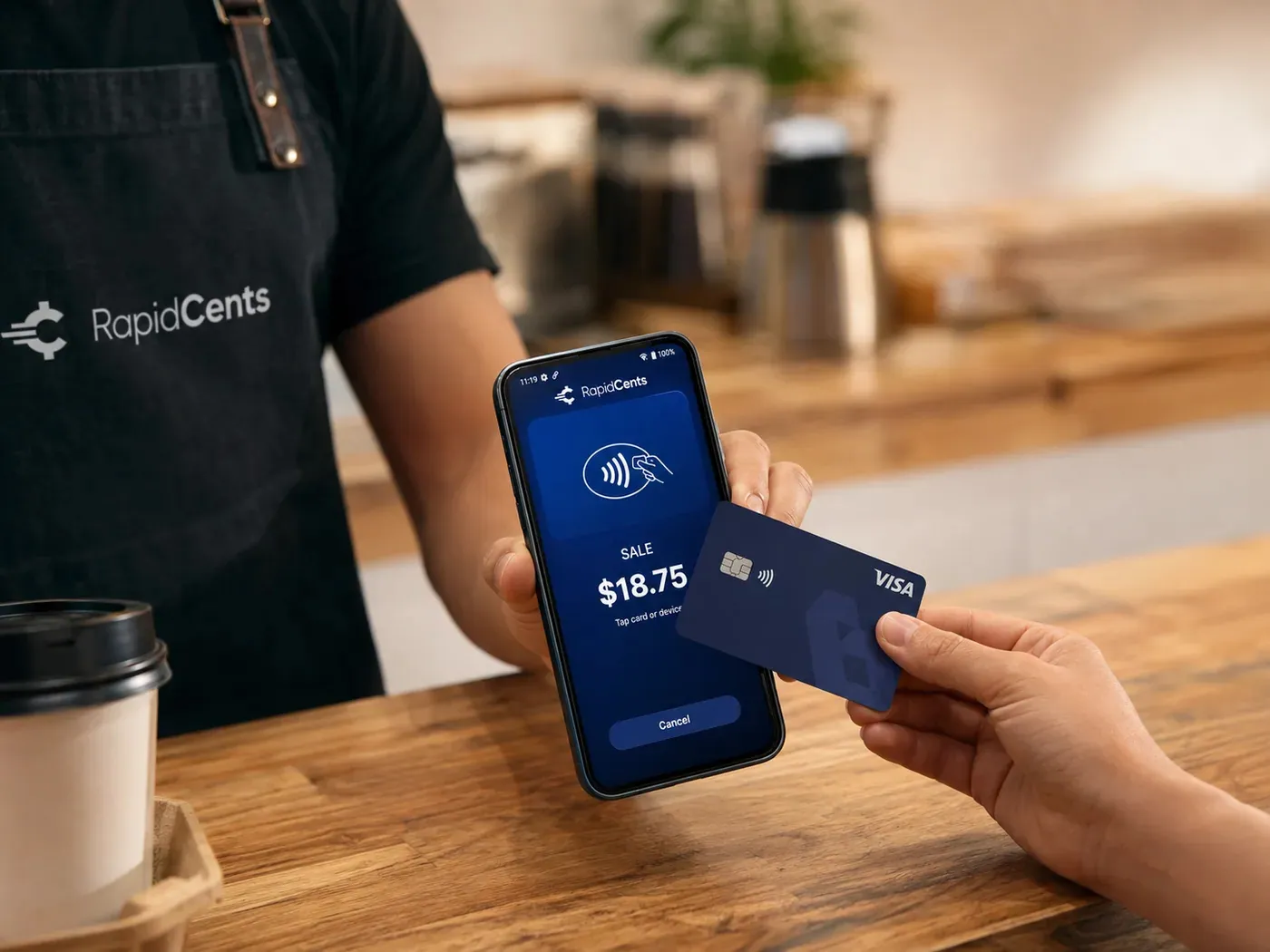
A café worker holds a phone running RapidCents Tap to Pay, showing an $18.75 sale and the contactless symbol, while a customer holds a Visa card to the screen. No separate card reader is present. Tap to Pay
RapidCents Tap to Pay turns supported iPhones and Android devices into contactless payment terminals without…
Explore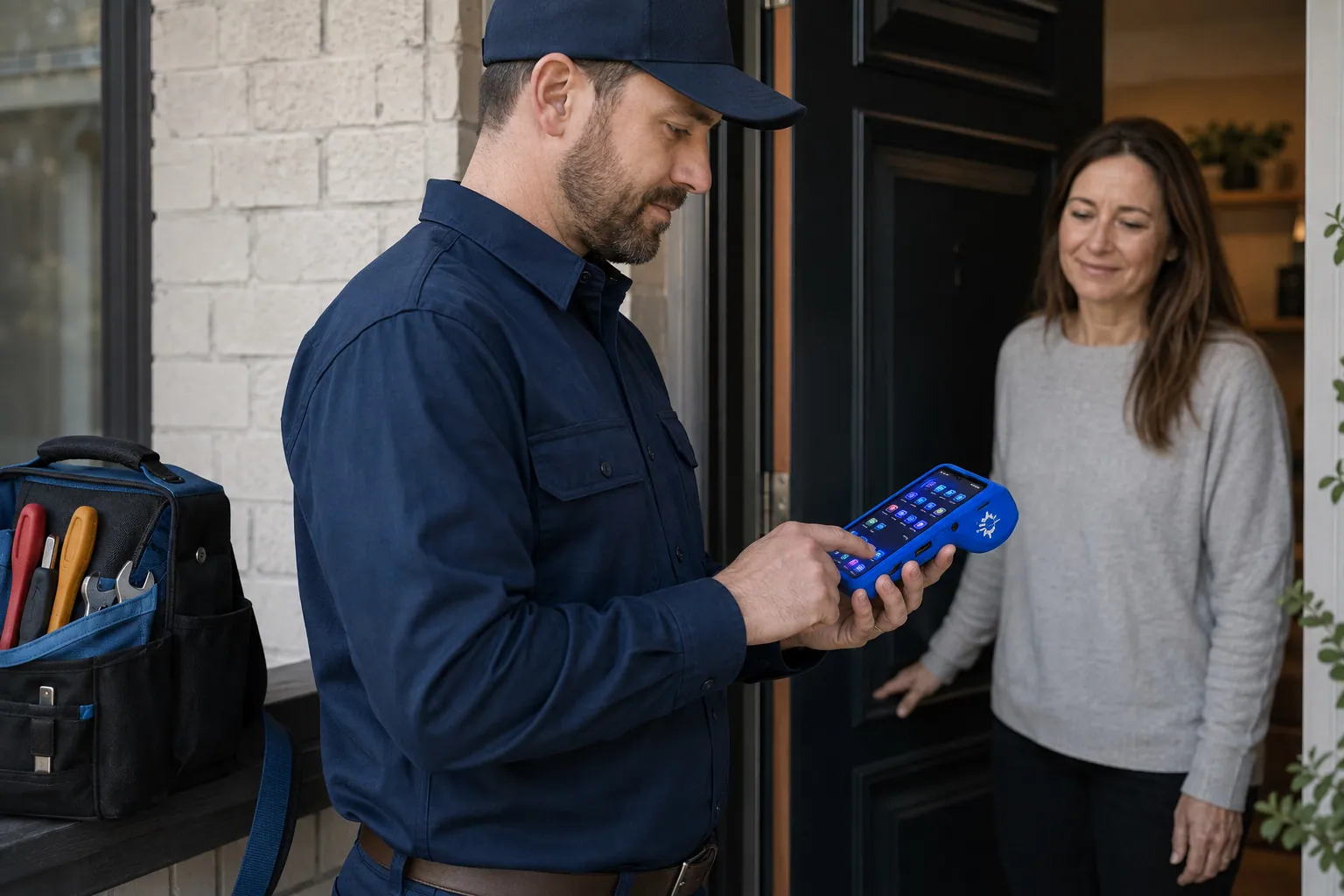
A staff member takes a card payment on a RapidCents handheld terminal, with the same sale appearing on the dashboard. Mobile Terminals
RapidCents mobile terminals are battery-powered wireless devices with LTE and Wi-Fi so staff accept payments…
Explore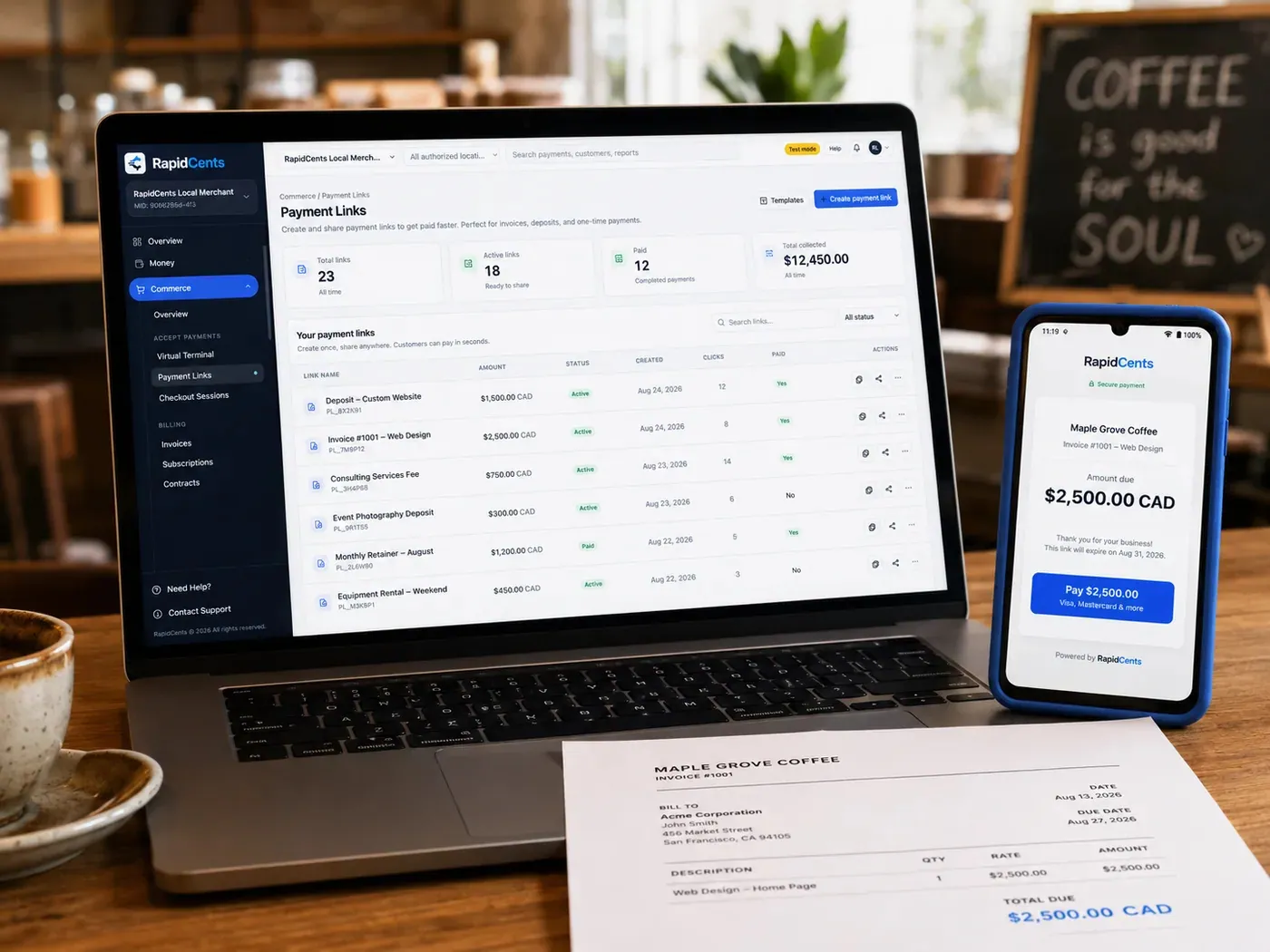
The RapidCents payment links screen listing created links with their amount, status, click count and whether they have been paid, beside a phone showing the branded page a customer opens to pay $2,500.00. Payment Links
RapidCents payment links let staff generate branded pay-by-link URLs for invoices, deposits, balances and…
Explore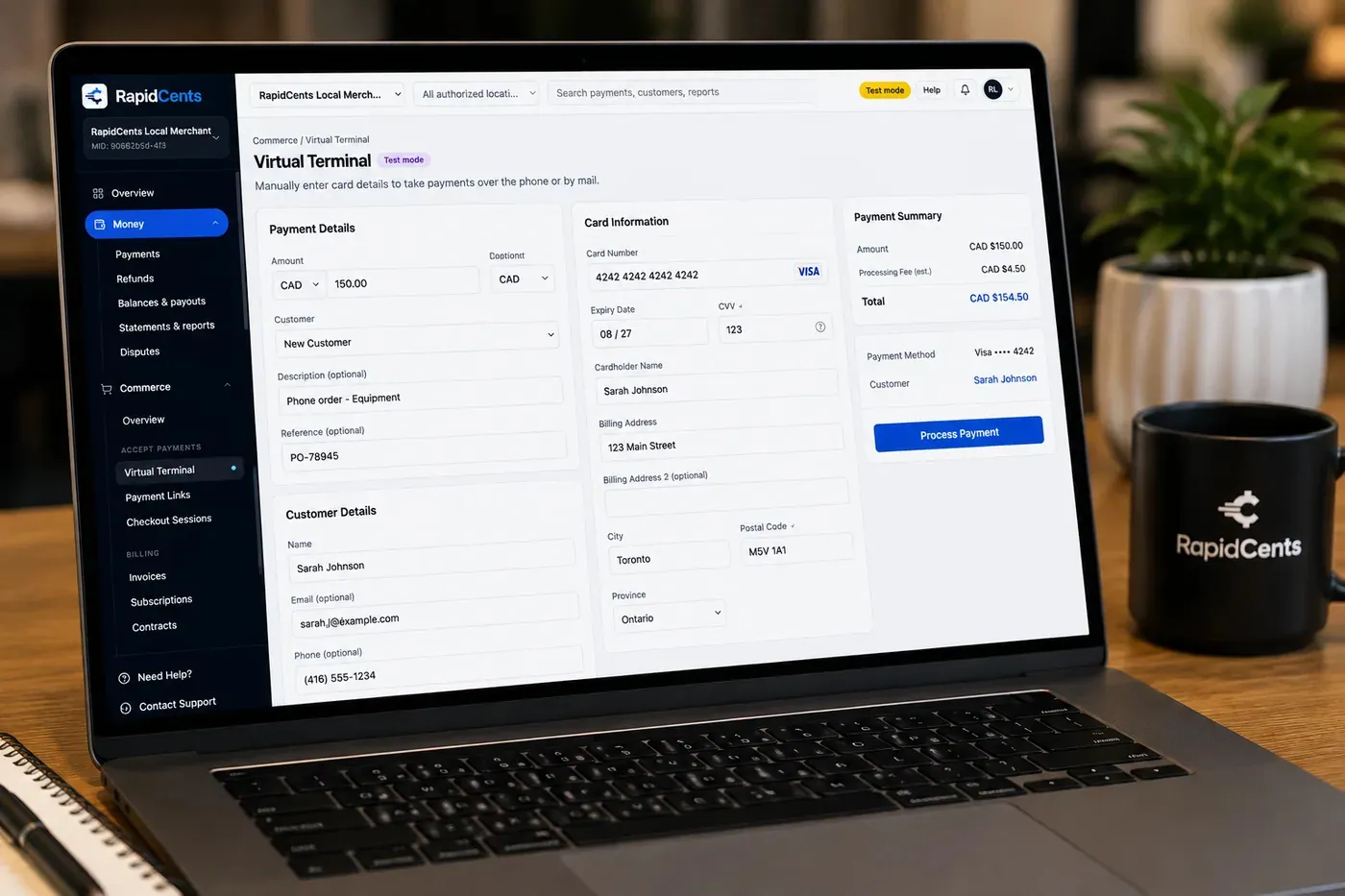
The RapidCents virtual terminal: payment details, card number, expiry and CVV keyed by hand on the left, with a payment summary on the right showing the amount, the estimated processing fee and a Process Payment button. Virtual Terminal
The RapidCents virtual terminal lets authorized staff enter mail-order and telephone-order payments through a…
Explore


How this gets set up
Card taken at the scene
The driver taps the motorist's card on a phone at the roadside, because the vehicle is leaving and so is the customer.
Release fee at the impound gate
Storage and release charges are collected at the yard before the vehicle is handed over, on an LTE terminal rather than at a counter.
When a third party is paying
If an insurer, a fleet or a property manager is covering the bill, the charge goes out as a payment link or is keyed in the virtual terminal.
Receipt emailed before the truck leaves
The emailed receipt naming the vehicle and the charges is what the motorist submits to their own insurer.
Integrations
Towbook
Towbook holds the call, the vehicle and the storage clock, and the payment posts to that call so the yard knows a vehicle is cleared for release.
Omadi exports
Omadi exports move dispatch and payment detail out as a file for the operator's own records — an export, not a live sync.
Operations, security and going live
Tow, storage and release read as separate charges
Reporting has to show which part of a bill was the tow and which was daily storage, because those are the lines a customer disputes.
Disputes come weeks after the tow
A chargeback on a release fee is answered with the receipt and the record of who authorised the tow, not from memory.
No card numbers on a tow slip
Tapping at the scene or keying in the virtual terminal keeps card details off the paper slip that rides in the truck.
Live on every truck, not just the office
Going live means each driver's phone or in-cab terminal is enrolled and tested, since the yard counter is rarely where the money is taken.
Payment questions from Towing & Roadside
What should businesses compare when choosing towing payment terminal for Towing & Roadside?
Compare towing payment terminal against the real payment journey: the deposit, staged payments, and final balance, the field and customer visits, and the counter or service point. Start with the required channels and hardware, then confirm compatibility and support before committing.
What payment hardware is practical for Towing & Roadside?
Because Towing & Roadside also collects away from a fixed counter, test a portable terminal in real conditions. If staff also collect at a desk, validate the need for a separate countertop setup.
Which payment channels are relevant for Towing & Roadside?
For Towing & Roadside, start with the deposit, staged payments, and final balance, the field and customer visits, and the counter or service point. Keep only the channels that match those moments, then verify the complete customer flow before offering them.
How should payment processing fees be evaluated for Towing & Roadside?
For Towing & Roadside, compare costs related to deposits and final balances and device use in the field using actual transactions. Request a written breakdown of fees and terms rather than relying on an advertised rate alone.
What should be confirmed before setting up payments for Towing & Roadside?
For Towing & Roadside, document testing the field workflow, verify the needed compatibility, and test the flow before going live. This exposes manual steps and exceptions before customers encounter them.
How should deposits and high-value payments be planned for Towing & Roadside?
Separate the deposit, staged payments, and final balance in the process. Confirm the authorization and refund rules that apply to the business before communicating terms to a customer.
What MCC category applies to Towing & Roadside?
MCC 7549 is commonly associated with Towing & Roadside. Our onboarding team confirms the correct category for your business.
Related industries
Taxi & Transportation
Taxi, limo and private hire fleets equip drivers with in-vehicle mobile terminals, fleet…
Parking
Parking operators accept pay-by-plate, monthly permits and event surcharges via…
Automotive
Dealers and repair shops take service deposits, repair order payments and phone…
Car Wash
Car washes sell memberships, unlimited plans and single washes with fast lane terminals…
Car Dealerships
Dealerships take a card deposit to hold a vehicle, cap card payment on the purchase…
Limousine & Charter
Limo and charter operators quote a trip, take a card to secure the booking, and settle…
Courier & Delivery
Couriers bill business accounts on terms and retail senders at drop-off, with drivers…
Driving Schools
Driving schools sell course packages up front or on instalments then draw lessons down…
Take the next step
Talk to a RapidCents specialist
RapidCents Fee Check reads a processing statement and shows interchange separately from the markup. Upload a statement for an instant breakdown, or open a merchant account and start accepting payments on one account.
- No obligation
- Payment specialists, not a call centre
- Secure statement upload



